
How to Water Your Lawn Without Wasting Money This Summer


Every summer it happens. The weather turns hot, the lawn starts looking tired, and otherwise sensible people start dragging sprinklers around the yard like they’re trying to rescue the Sahara one gallon at a time. Somewhere in the neighborhood, there’s always one sprinkler faithfully watering the sidewalk. Good news: your lawn doesn’t need more water. It needs smarter water, and that’s the part nobody tells you.
Here’s a number worth sitting with: outdoor watering can eat up close to a third of a household’s total water use in summer, and for a lot of homes, that’s enough to double the water bill compared to the rest of the year. All for a lawn that, half the time, still looks patchy and stressed by August.
That’s the part that gets me. More water almost never fixes it. Most of us aren’t watering too little, we’re watering wrong, and the habit that feels the most responsible is usually the one doing the most damage.
Stop watering a little every day
This is the mistake almost everyone makes, and it feels like the responsible thing to do. Plants need water, right? So a little water every day must be good.
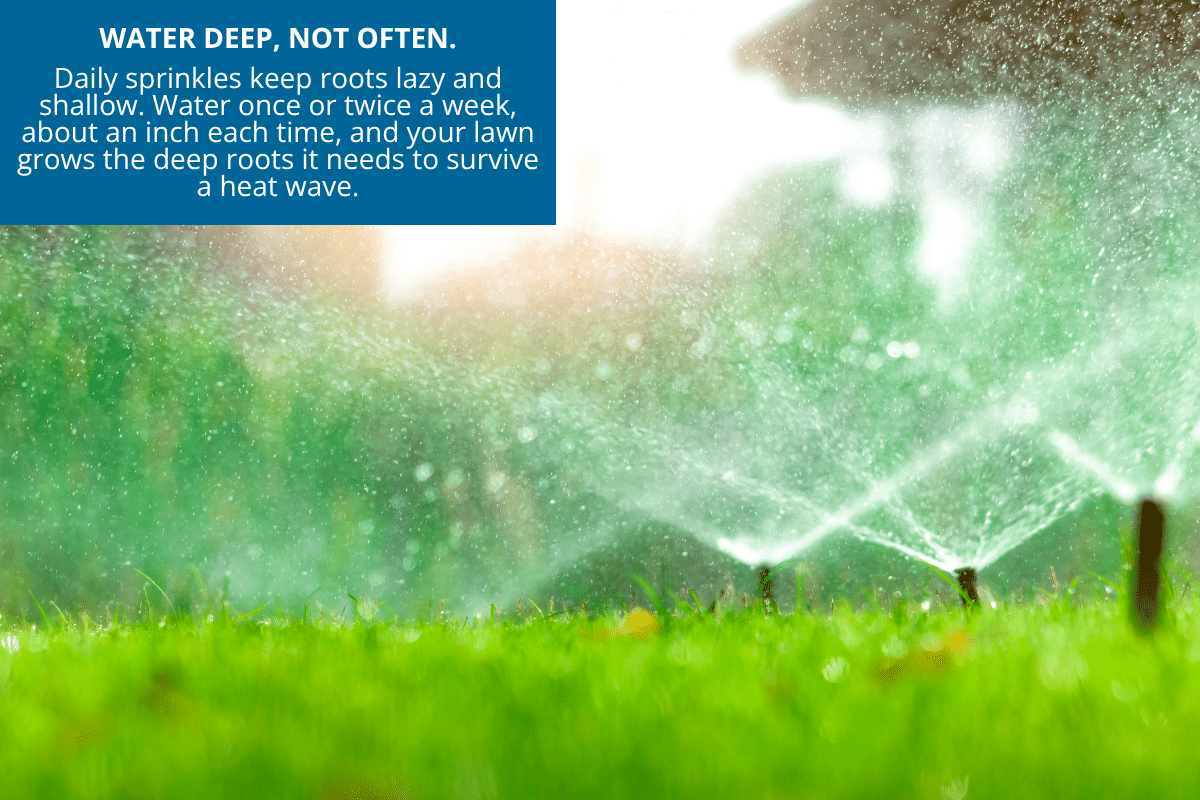
Except it isn’t. Frequent, shallow watering trains grass roots to stay near the surface, since that’s where the water shows up. Those roots never bother growing deeper, because why would they? Then a heat wave hits, the top inch of soil dries out in an afternoon, and your lawn has nothing to fall back on.
The fix is to water deeply and less often. Aim for about an inch to an inch and a half of water a week during dry stretches, delivered in one or two sessions rather than a daily sprinkle. That pushes roots down into the soil where it’s cooler and damper, and deep roots are what get a lawn through August without turning into straw.
How do you know when you’ve hit an inch? Lawn experts recommend setting an empty tuna can (or cat food can, whatever’s in the recycling bin) out in the yard while the sprinkler runs. When it fills to about the one-inch mark, you’re done. It’s not fancy, but it works, and it beats guessing based on how tired your arm is from holding the hose.
Watch your soil, not just the calendar
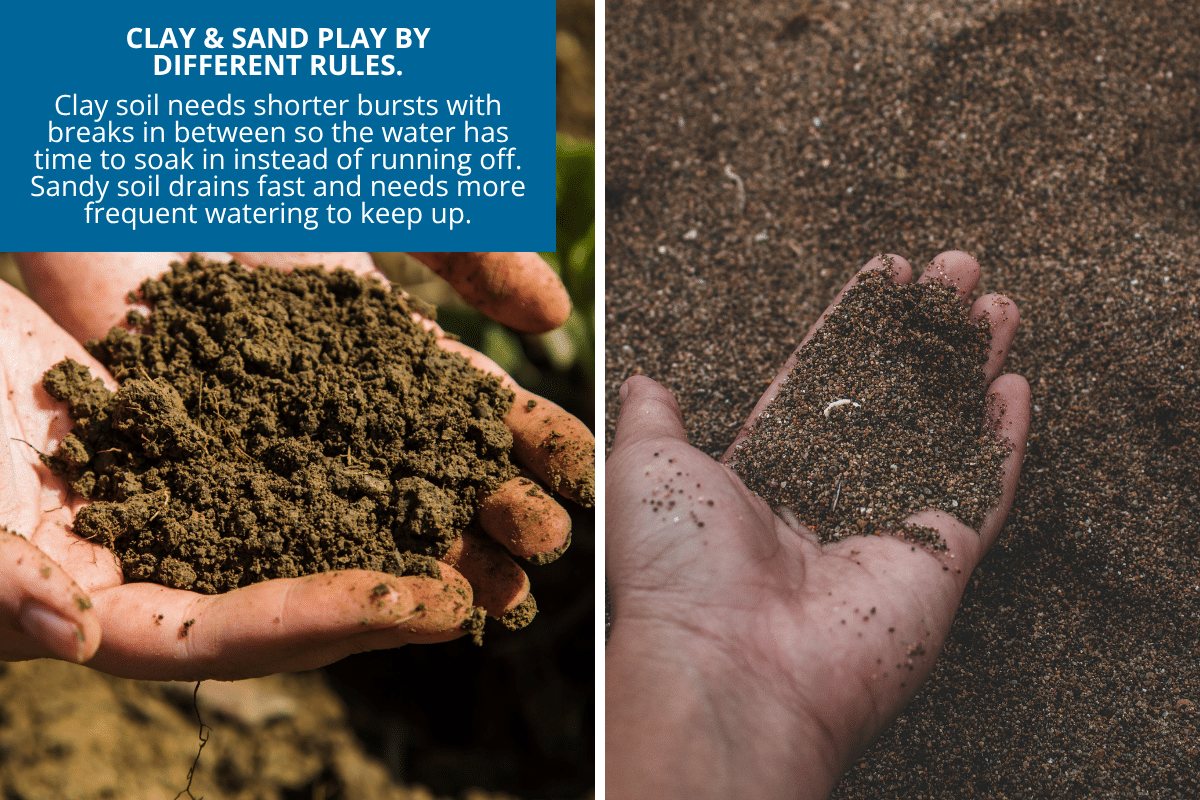
Clay soil and sandy soil play by completely different rules, and this is where a lot of otherwise careful watering schedules fall apart.
Clay soil
Clay holds onto water for a long time but takes forever to let it in, so the water runs off the surface before it soaks in. If you’ve got clay, you’re better off watering in shorter bursts with breaks in between rather than one long soak. Gardeners call this cycle-and-soak: run the sprinkler for ten minutes, let it rest for twenty so the water has time to sink in, then repeat. It sounds fussy. It saves a surprising amount of water once you actually try it, because none of it runs down the driveway.
Sandy soil
Sandy soil is the opposite problem. It drains fast, so it needs more frequent watering to keep the roots from drying out between sessions. If you’re not sure which one you’ve got, dig a small hole after it rains. Clay stays sticky and holds its shape. Sand falls apart in your hand.
Time it right, or you’re just watering the air
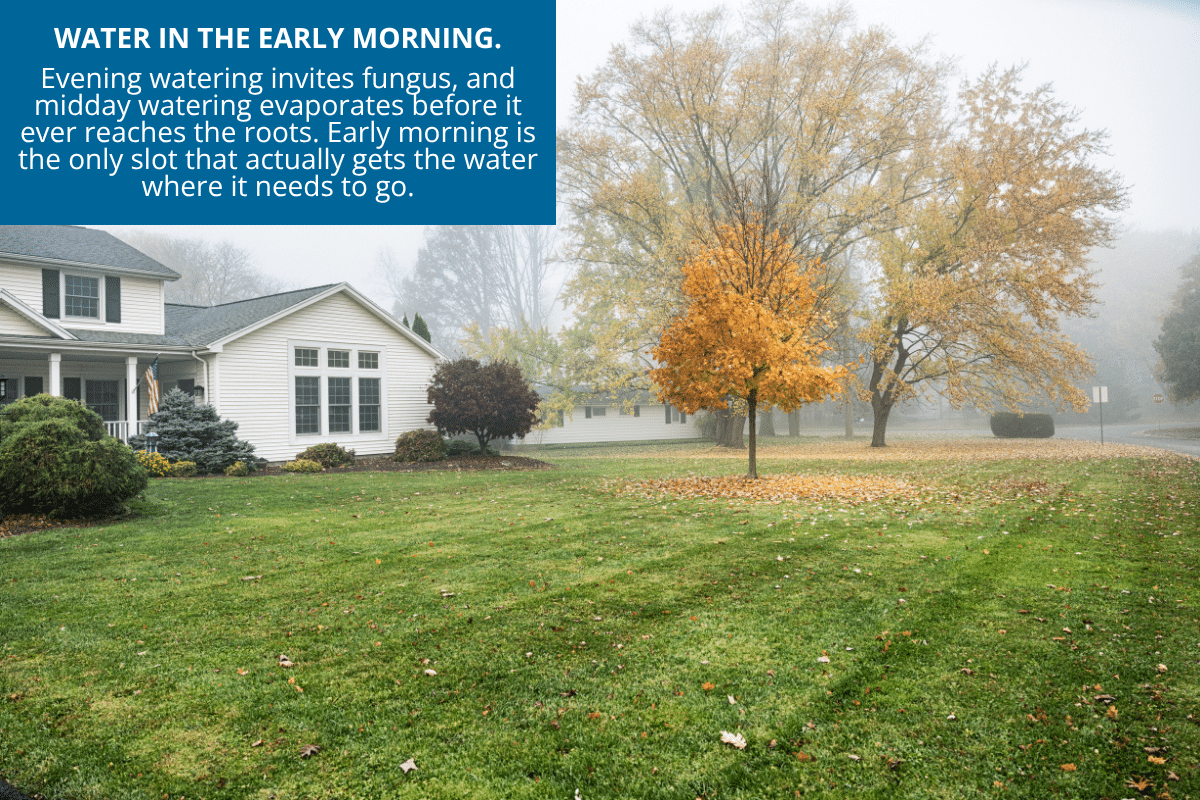
If you’ve been watering in the evening because it’s cooler out, I get the instinct. It also might be why you’ve got fungus problems.
Water that sits on grass blades overnight creates exactly the damp, warm conditions that fungus loves. Your lawn doesn’t need that kind of company.
Midday isn’t much better, just for a different reason. A good chunk of the water evaporates before it ever reaches the soil, so you’re paying for water your lawn never actually gets.
Early morning is the sweet spot, and it’s not close. Temperatures are cooler, wind is usually calmer, and the grass has all day to dry out before evening rolls around and the fungus-friendly window opens back up.
Let your mower do some of the work
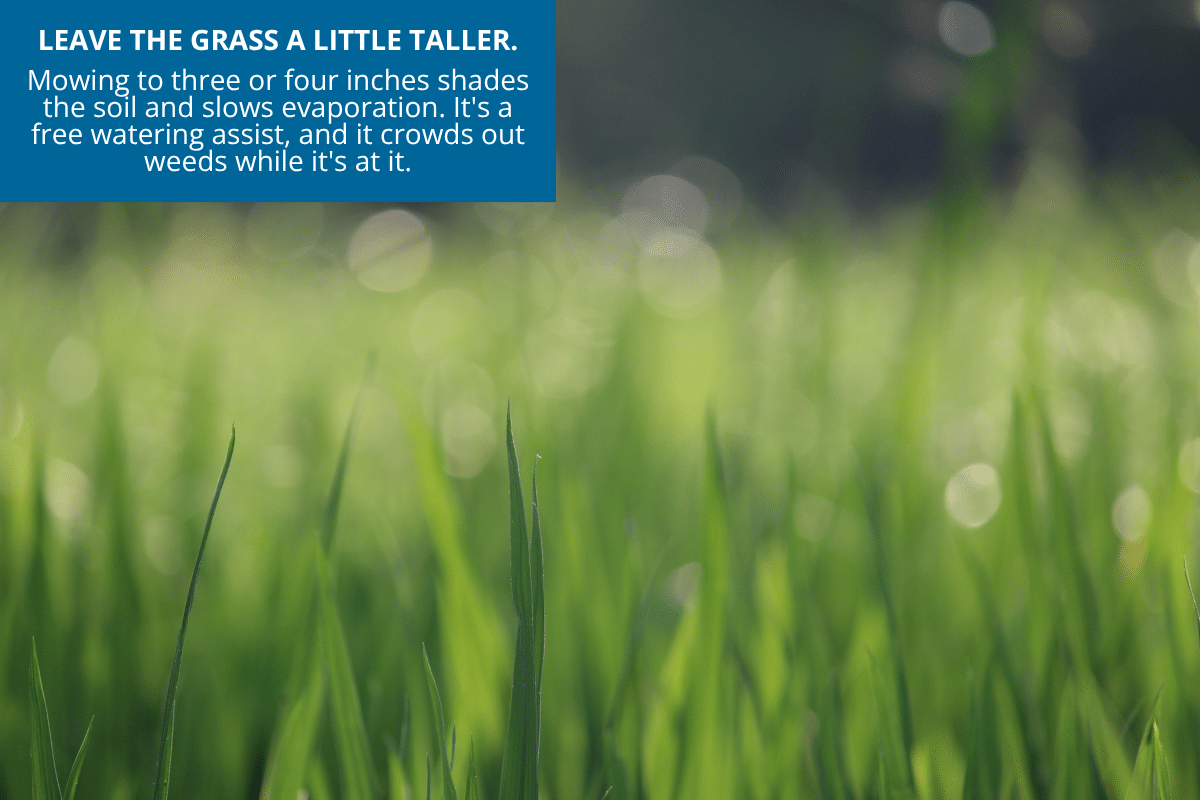
If you love that short, tidy, golf-course cut, I hate to break it to you, but your lawn does not share your enthusiasm.
Grass cut too short exposes bare soil to direct sun, and bare soil dries out fast. Leave your mower deck set so the grass stays three to four inches tall, and that height creates enough shade to keep the soil underneath cooler and damper. It’s a free watering assist you get every time you mow. Taller grass also tends to crowd out weeds, since there’s less bare, sunny soil for weed seeds to take hold in. Less competition means more water actually goes to your grass instead of getting split with the dandelions.
Skip “watering day” when it just rained
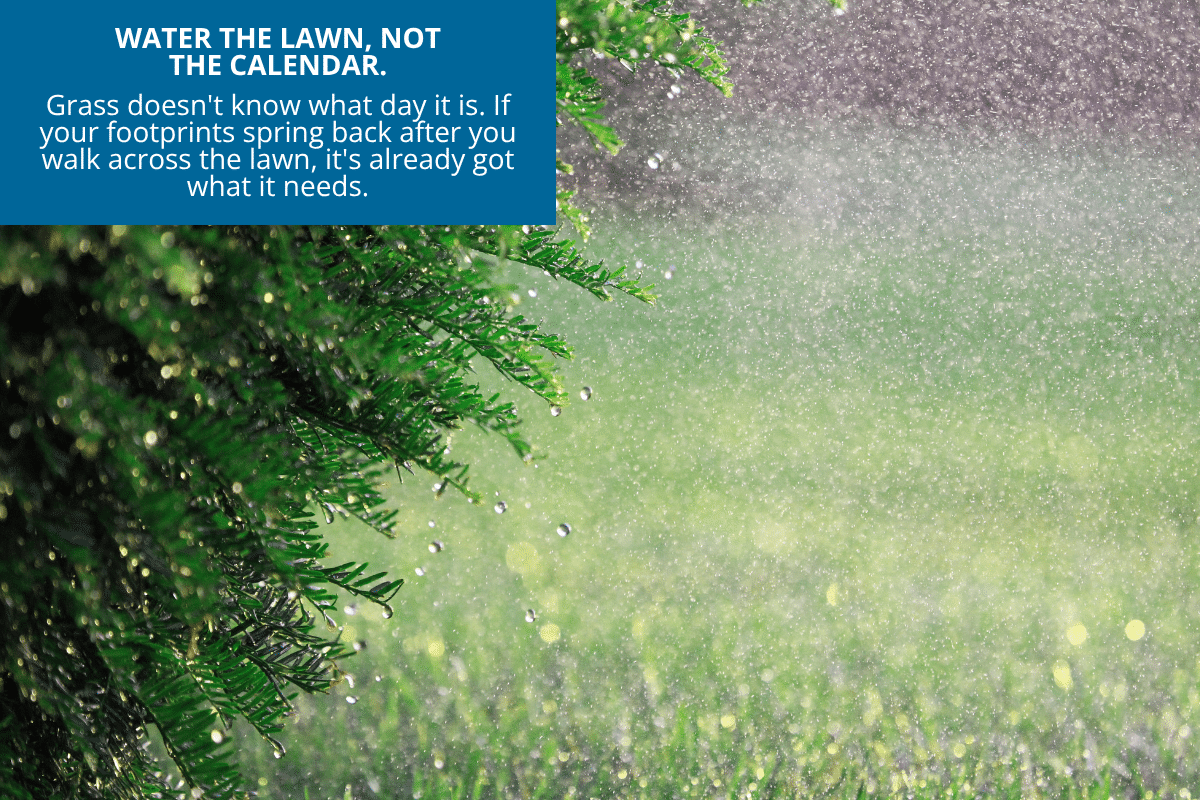
If your area gets a good soaking rain, resist turning the sprinkler on anyway just because the calendar says it’s watering day. Grass doesn’t own a calendar. It only needs water when the soil actually starts drying out.
Two quick checks tell you what you need to know. Walk across the lawn. If your footprints spring back up right away, the grass has enough moisture and doesn’t need you. If the footprints stay flattened, or the grass has gone a dull, grayish-green instead of its usual color, it’s asking for a drink. Otherwise, let Mother Nature pick up the tab. That’s free water you already paid for through your property taxes, or at least it feels that way.
Walk your sprinkler line before you walk away
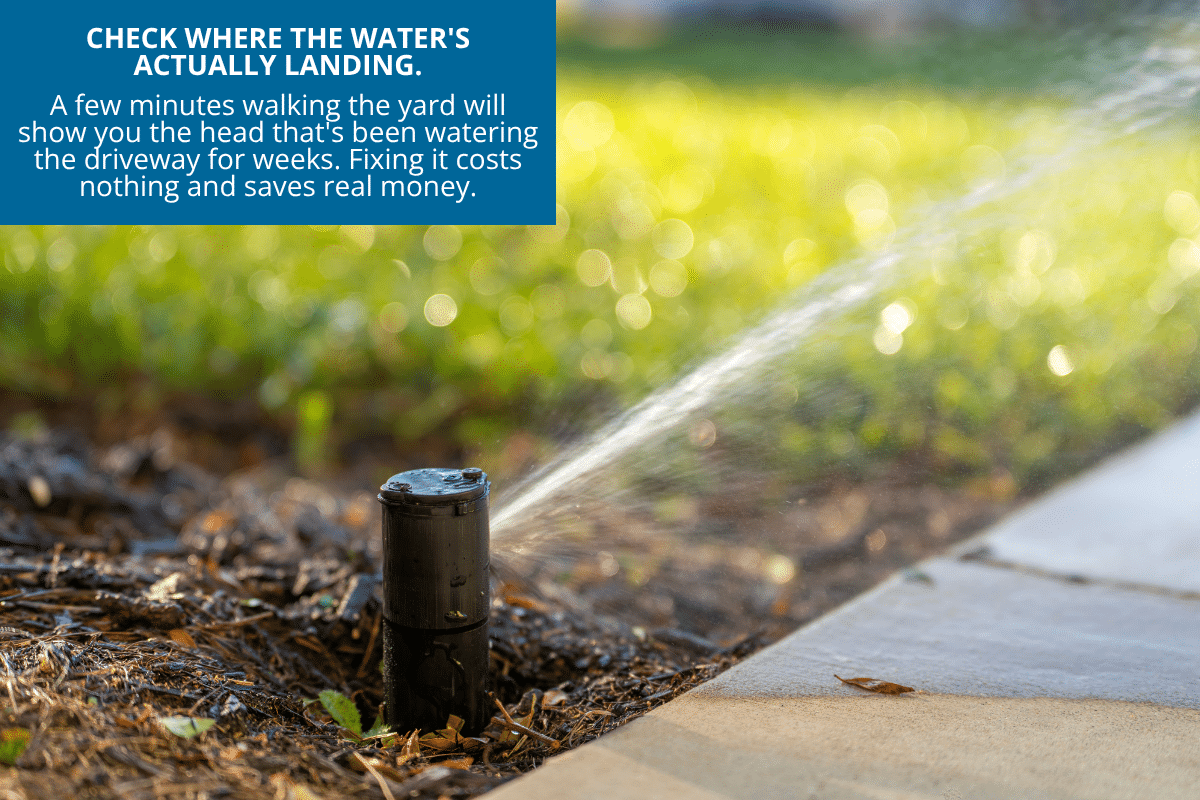
While you’re already thinking about water, take a slow lap around your sprinkler system and actually watch where it’s going.
You’ll probably find at least one head watering the driveway, the street, the neighbor’s fence, or a shrub that gave up hope years ago. Sprinkler heads shift, tilt, and clog over time without you noticing, and every minute one of them spends watering concrete is money down the drain, literally. A quick walk-around every few weeks is enough to catch it, and it costs you nothing but a few minutes.
Put that rain barrel to work
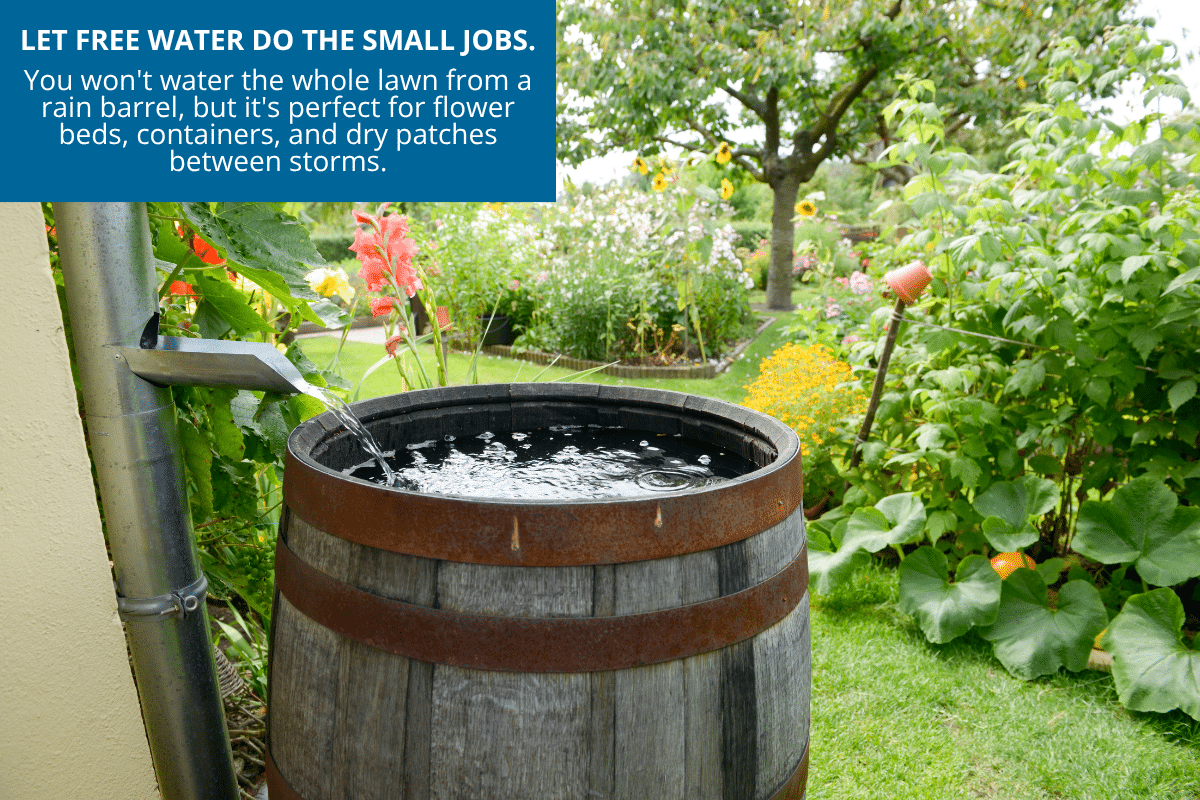
If you’ve got a rain barrel sitting under a downspout, don’t let it just sit there looking practical. You won’t water your whole lawn with it, but it’s perfect for dry patches, flower beds, containers, and anything newly planted that needs extra attention between storms.
A roof you wouldn’t think twice about can collect hundreds of gallons from a single inch of rain, which makes that barrel a lot more useful than most people give it credit for. It’s essentially free water sitting there waiting for a job.
Brown grass isn’t always an emergency
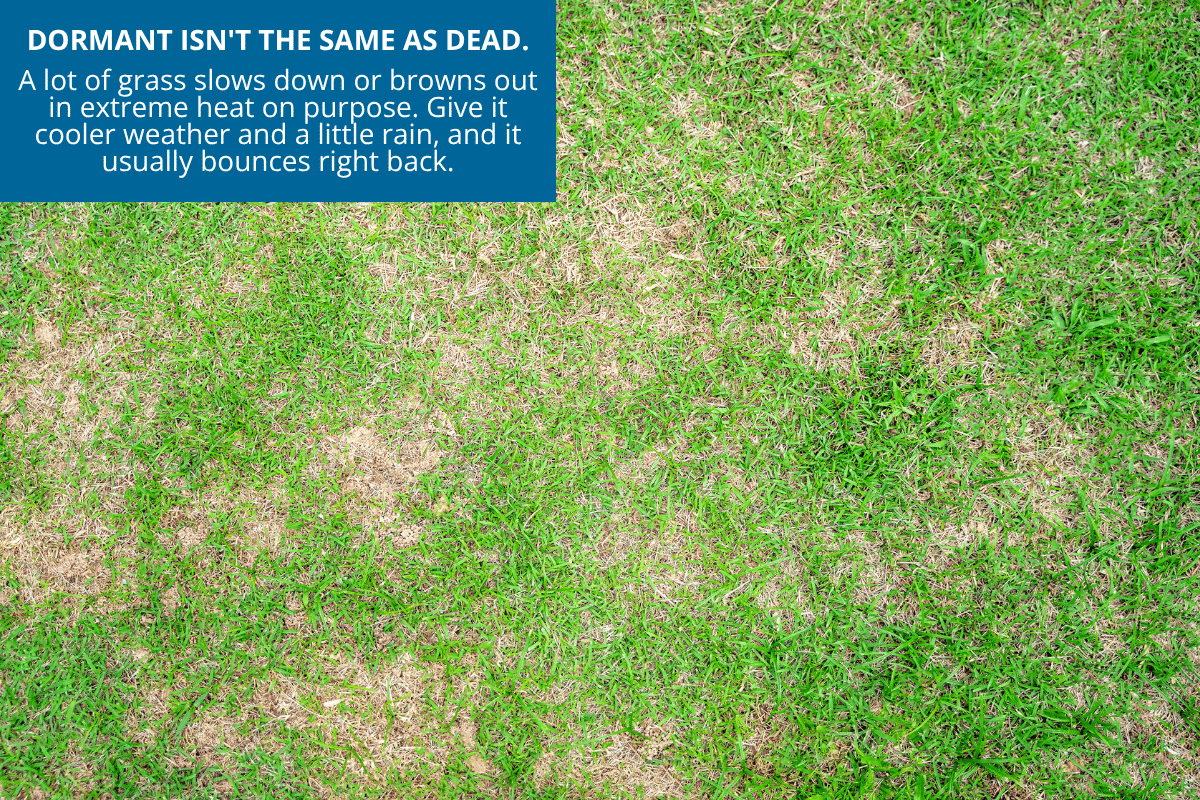
Not every brown patch means your lawn is dying. Plenty of grass types naturally slow down or go dormant during a long stretch of heat, and that’s a survival strategy, not a failure on your part. When the weather cools off and the rain comes back, healthy grass usually greens right back up on its own.
If you’re rethinking your lawn entirely, drought-tolerant grasses like Bermuda, Zoysia, or buffalo grass are worth a look, especially if you live somewhere that runs hot and dry most summers. That’s a bigger project than most of us are tackling this week, but it’s worth filing away for next time you’re reseeding or starting from scratch.
The greenest lawn on the block
Sometimes the greenest lawn on the block doesn’t belong to the person who uses the most water. It belongs to the one who knows when to put the hose away.
A little attention to timing, depth, and mowing height will save you money and give you better grass than dragging that sprinkler out every single evening ever did. Your water bill will thank you. So, eventually, will your lawn.
Question: Are you a “water it every day” person or a “let it beg for it” person? Be honest.
EverydayCheapskate™ is reader-supported. We participate in the Amazon Services LLC Associates Program and other affiliate advertising programs, designed to provide a means for us to earn from qualifying purchases, at no cost to you.

More from Everyday Cheapskate
 https://www.everydaycheapskate.com/wp-content/uploads/20261011-Woman-Adjusting-Smart-Home-Device-on-the-Wall-how-to-lower-your-electric-bill.png
800
1200
Mary Hunt
https://www.everydaycheapskate.com/wp-content/uploads/EC-Logo-by-Mary-Hunt-Tagline-Trimmed.png
Mary Hunt2026-10-11 23:01:562026-10-11 23:01:56Stop Chasing Pennies on Your Electric Bill. Do This
https://www.everydaycheapskate.com/wp-content/uploads/20261011-Woman-Adjusting-Smart-Home-Device-on-the-Wall-how-to-lower-your-electric-bill.png
800
1200
Mary Hunt
https://www.everydaycheapskate.com/wp-content/uploads/EC-Logo-by-Mary-Hunt-Tagline-Trimmed.png
Mary Hunt2026-10-11 23:01:562026-10-11 23:01:56Stop Chasing Pennies on Your Electric Bill. Do This https://www.everydaycheapskate.com/wp-content/uploads/20261007-red-present-sitting-in-autumn-leaves-Amazon-Prime-Big-Deal-Days-gifts.png
800
1200
Mary Hunt
https://www.everydaycheapskate.com/wp-content/uploads/EC-Logo-by-Mary-Hunt-Tagline-Trimmed.png
Mary Hunt2026-10-06 23:09:432026-10-06 23:09:43Christmas Shopping in October? These Prime Day Gifts Make Sense
https://www.everydaycheapskate.com/wp-content/uploads/20261007-red-present-sitting-in-autumn-leaves-Amazon-Prime-Big-Deal-Days-gifts.png
800
1200
Mary Hunt
https://www.everydaycheapskate.com/wp-content/uploads/EC-Logo-by-Mary-Hunt-Tagline-Trimmed.png
Mary Hunt2026-10-06 23:09:432026-10-06 23:09:43Christmas Shopping in October? These Prime Day Gifts Make Sense https://www.everydaycheapskate.com/wp-content/uploads/20261006-prime-big-deal-days-have-landed.png
800
1200
Mary Hunt
https://www.everydaycheapskate.com/wp-content/uploads/EC-Logo-by-Mary-Hunt-Tagline-Trimmed.png
Mary Hunt2026-10-05 11:01:432026-10-07 09:02:53EC’s Top Picks from Amazon Prime Big Deal Days 2026
https://www.everydaycheapskate.com/wp-content/uploads/20261006-prime-big-deal-days-have-landed.png
800
1200
Mary Hunt
https://www.everydaycheapskate.com/wp-content/uploads/EC-Logo-by-Mary-Hunt-Tagline-Trimmed.png
Mary Hunt2026-10-05 11:01:432026-10-07 09:02:53EC’s Top Picks from Amazon Prime Big Deal Days 2026 https://www.everydaycheapskate.com/wp-content/uploads/20261004-reduce-healthcare-costs-with-three-habits-healthy-couple-walking-in-autumn-leaves.png
800
1200
Mary Hunt
https://www.everydaycheapskate.com/wp-content/uploads/EC-Logo-by-Mary-Hunt-Tagline-Trimmed.png
Mary Hunt2026-10-04 23:08:572026-10-04 23:09:47How to Reduce Healthcare Costs With 3 Free Daily Habits
https://www.everydaycheapskate.com/wp-content/uploads/20261004-reduce-healthcare-costs-with-three-habits-healthy-couple-walking-in-autumn-leaves.png
800
1200
Mary Hunt
https://www.everydaycheapskate.com/wp-content/uploads/EC-Logo-by-Mary-Hunt-Tagline-Trimmed.png
Mary Hunt2026-10-04 23:08:572026-10-04 23:09:47How to Reduce Healthcare Costs With 3 Free Daily Habits https://www.everydaycheapskate.com/wp-content/uploads/20261004-woman-dreaming-about-her-financial-and-life-goals.png
800
1200
Mary Hunt
https://www.everydaycheapskate.com/wp-content/uploads/EC-Logo-by-Mary-Hunt-Tagline-Trimmed.png
Mary Hunt2026-10-04 12:50:422026-10-04 12:50:42She Lived in a Basement for $100 a Month. Here’s Why.
https://www.everydaycheapskate.com/wp-content/uploads/20261004-woman-dreaming-about-her-financial-and-life-goals.png
800
1200
Mary Hunt
https://www.everydaycheapskate.com/wp-content/uploads/EC-Logo-by-Mary-Hunt-Tagline-Trimmed.png
Mary Hunt2026-10-04 12:50:422026-10-04 12:50:42She Lived in a Basement for $100 a Month. Here’s Why. https://www.everydaycheapskate.com/wp-content/uploads/20241004-news-you-can-use-october-everyday-cheapskate-top-news-articles.png
800
1200
Mary Hunt
https://www.everydaycheapskate.com/wp-content/uploads/EC-Logo-by-Mary-Hunt-Tagline-Trimmed.png
Mary Hunt2026-10-04 01:04:052026-10-11 14:34:17News You Can Use • October 2026
https://www.everydaycheapskate.com/wp-content/uploads/20241004-news-you-can-use-october-everyday-cheapskate-top-news-articles.png
800
1200
Mary Hunt
https://www.everydaycheapskate.com/wp-content/uploads/EC-Logo-by-Mary-Hunt-Tagline-Trimmed.png
Mary Hunt2026-10-04 01:04:052026-10-11 14:34:17News You Can Use • October 2026 https://www.everydaycheapskate.com/wp-content/uploads/20261003-woman-hugging-elderly-mother-sandwich-generation-caring-for-aging-parents.png
800
1200
Mary Hunt
https://www.everydaycheapskate.com/wp-content/uploads/EC-Logo-by-Mary-Hunt-Tagline-Trimmed.png
Mary Hunt2026-10-03 10:47:222026-10-03 10:47:25Sandwiched Between Aging Parents and Adult Children
https://www.everydaycheapskate.com/wp-content/uploads/20261003-woman-hugging-elderly-mother-sandwich-generation-caring-for-aging-parents.png
800
1200
Mary Hunt
https://www.everydaycheapskate.com/wp-content/uploads/EC-Logo-by-Mary-Hunt-Tagline-Trimmed.png
Mary Hunt2026-10-03 10:47:222026-10-03 10:47:25Sandwiched Between Aging Parents and Adult Children https://www.everydaycheapskate.com/wp-content/uploads/20260927-impossible-lasagna-pie-recipe-with-wooden-serving-spoon-in-white-casserole-dish.png
800
1200
Mary Hunt
https://www.everydaycheapskate.com/wp-content/uploads/EC-Logo-by-Mary-Hunt-Tagline-Trimmed.png
Mary Hunt2026-09-28 09:38:592026-09-28 22:48:34Impossible Lasagna Pie: All the Flavor, None of the Noodles
https://www.everydaycheapskate.com/wp-content/uploads/20260927-impossible-lasagna-pie-recipe-with-wooden-serving-spoon-in-white-casserole-dish.png
800
1200
Mary Hunt
https://www.everydaycheapskate.com/wp-content/uploads/EC-Logo-by-Mary-Hunt-Tagline-Trimmed.png
Mary Hunt2026-09-28 09:38:592026-09-28 22:48:34Impossible Lasagna Pie: All the Flavor, None of the Noodles https://www.everydaycheapskate.com/wp-content/uploads/20260925-best-inexpensive-coffee-grinders-burr-manual-and-electric.png
800
1200
Mary Hunt
https://www.everydaycheapskate.com/wp-content/uploads/EC-Logo-by-Mary-Hunt-Tagline-Trimmed.png
Mary Hunt2026-09-25 11:06:342026-10-10 15:49:09The Best Coffee Grinder Upgrade That’s Actually Worth It
https://www.everydaycheapskate.com/wp-content/uploads/20260925-best-inexpensive-coffee-grinders-burr-manual-and-electric.png
800
1200
Mary Hunt
https://www.everydaycheapskate.com/wp-content/uploads/EC-Logo-by-Mary-Hunt-Tagline-Trimmed.png
Mary Hunt2026-09-25 11:06:342026-10-10 15:49:09The Best Coffee Grinder Upgrade That’s Actually Worth It

Leave a Reply
Want to join the discussion?Feel free to contribute!