

How to Get Rid of Ants in Your Yard: Effective DIY and Natural Solutions


Are ants ruining your yard? Don’t worry, we’ve got you covered with natural and effective methods on how to get rid of ants in your yard. From black ants to the tiniest of sugar ants, discover how to eliminate these pests without resorting to harsh chemicals. Whether you’re curious if dish soap can kill ants or looking for eco-friendly solutions, we’ve compiled the best DIY tips to help you learn how to get rid of ants in your yard and keep it ant-free.
When summer heat brings ants marching into your home and yard, don’t panic! You might not need toxic pest control products or professional services to tackle these pesky invaders. In fact, you probably already have everything you need to handle it yourself. And if you’re looking for eco-friendly, fast-acting commercial solutions, I’ve got you covered too!
Fun Facts About Ants: Nature’s Little Marvels

While it’s crucial to know how to get rid of ants in yard and home, it’s also fascinating to learn about these tiny creatures. Did you know some ants can support up to 50 times their own weight while upside down on glass? And those ants you see scurrying around? Most are female workers that can’t reproduce. It’s the queen ants, who can live up to 30 years, that give birth to millions of baby ants. Male ants? Their only job is to mate with the queen—sounds like a cushy gig, right?
Ants are practically everywhere on Earth. The largest ant colony ever discovered spanned over 3,750 miles. Talk about a giant family reunion!
The Importance of Ant Control and Management
Despite their amazing traits, knowing how to get rid of ants in your yard is crucial to maintaining a safe and comfortable outdoor space. If these persistent invaders make their way into your home and DIY solutions aren’t enough, it may be time to call in a pest control professional. They can provide expert assistance and ensure your home is safe and ant-free, using the least toxic methods available.
10 Natural Ways to Get Rid of Ants in Your Yard
When summer rolls around, those tiny invaders—like sugar ants*—often make their unwelcome entrance into our homes and yards. Knowing how to get rid of ants in your yard is key to maintaining a comfortable outdoor space. Most ant problems are generally annoying but can be solved quickly with ordinary items you have around the house and garage. Think of what follows as a DIY buffet to get rid of ants in your yard and home, where you can pick the solutions that best suit your needs and the items you have on hand.
*Sugar ant is a common name that many people use to describe any small ant that is attracted to sweets.
1. Does Dish Soap Kill Ants? The Surprising Truth

A simple 50/50 mix of Blue Dawn dish soap and water in a spray bottle can work wonders. When you see ants, give them a good spritz. The soap breaks down their exoskeletons, causing them to die almost instantly. It’s a cheap, easy, and surprisingly effective way to manage those pesky critters.
2. Keep Your Home Clean: Mop, Vacuum, and Declutter

Start by mopping your floors daily to erase the pheromone trails that ants follow. Vacuuming helps, too, by removing crumbs and food particles that attract ants. Don’t forget to wash dirty dishes right away and empty the trash regularly—keeping your home clean is key to keeping ants at bay.
3. Spice It Up: Black Pepper and Cinnamon

Sprinkle ground black pepper around your home’s entry points to deter ants. For a fragrant and effective solution, place cinnamon sticks and whole cloves near doors and windows. The strong smell acts as a natural repellent, and you can even mix cinnamon powder with essential oil for added potency.
4. The Power of Borax: A Natural Ant Killer

Borax, commonly found in the laundry aisle, is a natural mineral that ants can’t resist but can’t survive. Mix equal parts Borax and sugar with a bit of water to create a crumbly bait. Place this mixture in hidden areas where ants are active. They’ll take the bait back to their colony, helping to eliminate the entire nest.
5. WD-40: More Than Just a Lubricant

Spray WD-40 on areas where ants are active or entering your home. The spray not only kills ants but also acts as a barrier they won’t cross. For added protection, spray WD-40 around the exterior of your home. It’s also great for deterring other pests like rabbits!
- MORE: For Every Problem, WD-40
6. Chalk It Up: A Simple Barrier

Draw lines with ordinary blackboard or sidewalk chalk around entry points to your home. Ants are repelled by the calcium carbonate in the chalk and won’t cross the line.
7. White Vinegar: An Ant Repellent

Ants cannot stand the smell of white vinegar. Mix equal parts water and white vinegar with a few drops of essential oil in a spray bottle. Use this solution around windowsills, doorways, and other common ant entry points. While vinegar won’t kill ants, it will certainly deter them.
8. Boiling Water: A Quick Solution for Fire Ants

If fire ants are a problem in your yard, try this simple trick. Place a flowerpot upside down over the ant nest, then pour boiling water through the drain hole. This method effectively eliminates the ants and their nest.
9. Citrus Peels: A Zesty Solution

Citrus fruits like oranges and lemons contain d-limonene, which is toxic to ants. Instead of tossing those peels, use them to your advantage! Place the peels or squeeze some juice in areas frequented by ants to keep them at bay.
10. Coffee Grounds: A Natural Deterrent

Used coffee grounds can be a great ant deterrent. Sprinkle them around your garden and the perimeter of your home. The strong scent repels ants and, as a bonus, enriches your soil.
All-Natural Outdoor Bug Control Spray: DIY Recipe
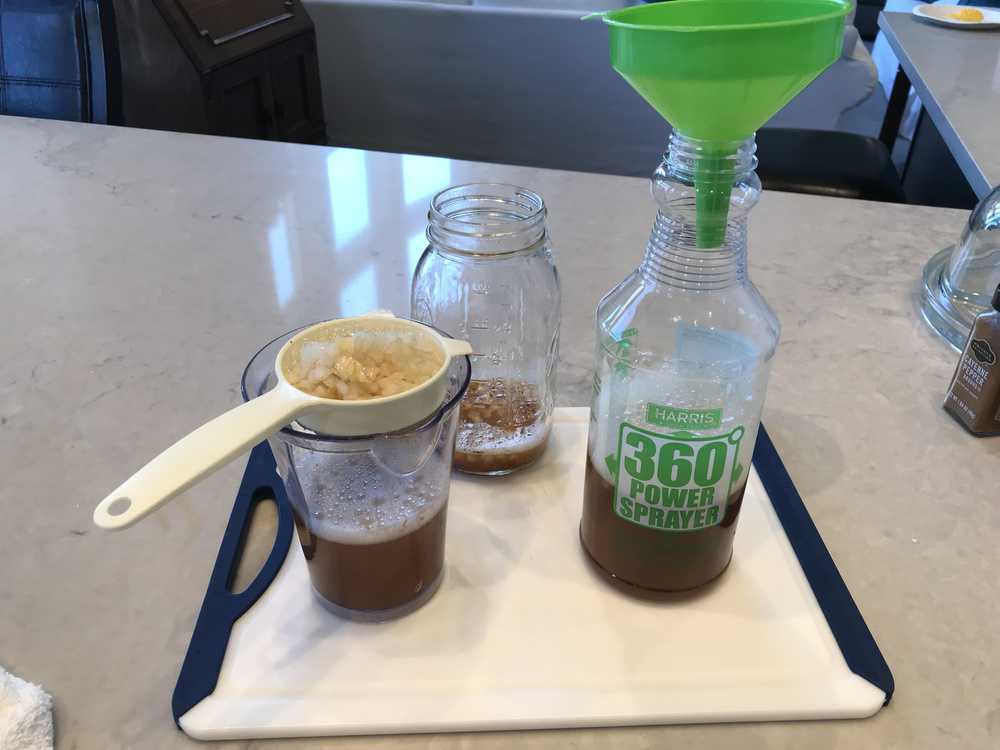
Tired of pesky bugs ruining your outdoor fun? This easy, all-natural outdoor bug spray is just what you need. If you’re looking for ways how to get rid of ants in your yard effectively and safely, this DIY solution is perfect. Made with simple ingredients, it’s effective and eco-friendly, ensuring your garden stays pest-free without harmful chemicals.
Ingredients
- 1 quart water
- 1 garlic clove, chopped
- 1 small onion, chopped
- 1 tablespoon cayenne powder
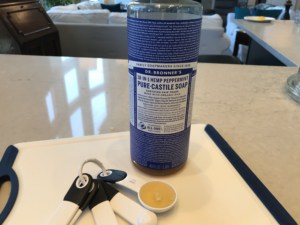
- 1 tablespoon Dr. Bronner’s Pure Castile soap (or any other liquid soap)
Instructions
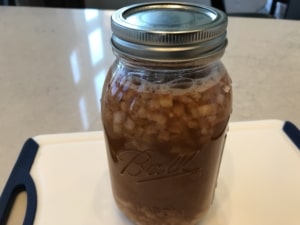
- Prepare the Base: Start by pouring water into a 1-quart jar. Add the chopped garlic and onion, then let the mixture steep for about 1 hour. This step allows the natural oils and scents to infuse the water, creating a potent bug-repellent base.
- Add the Soap: After steeping, mix in the liquid soap. The soap helps the spray stick to plants and insects, making it more effective.
- Strain the Mixture: Use a sieve to strain the mixture, removing the solid pieces. This ensures your spray bottle won’t clog and allows for a smooth application.
- Bottle It Up: Pour the strained liquid into a spray bottle, and your all-natural bug spray is ready to use!
Usage Tips
- Shelf Life: This spray is most effective within one week of preparation, so be sure to use it up quickly for the best results.
- Application: Spray generously on plants and areas where you notice insect activity. It’s a great way to protect your garden without resorting to harsh chemicals.
Scroll down to find a Printable Recipe Card for this spray.
Best Inexpensive Commercial Ant Killer Spray

Harris Ant Killer Spray, 20 oz
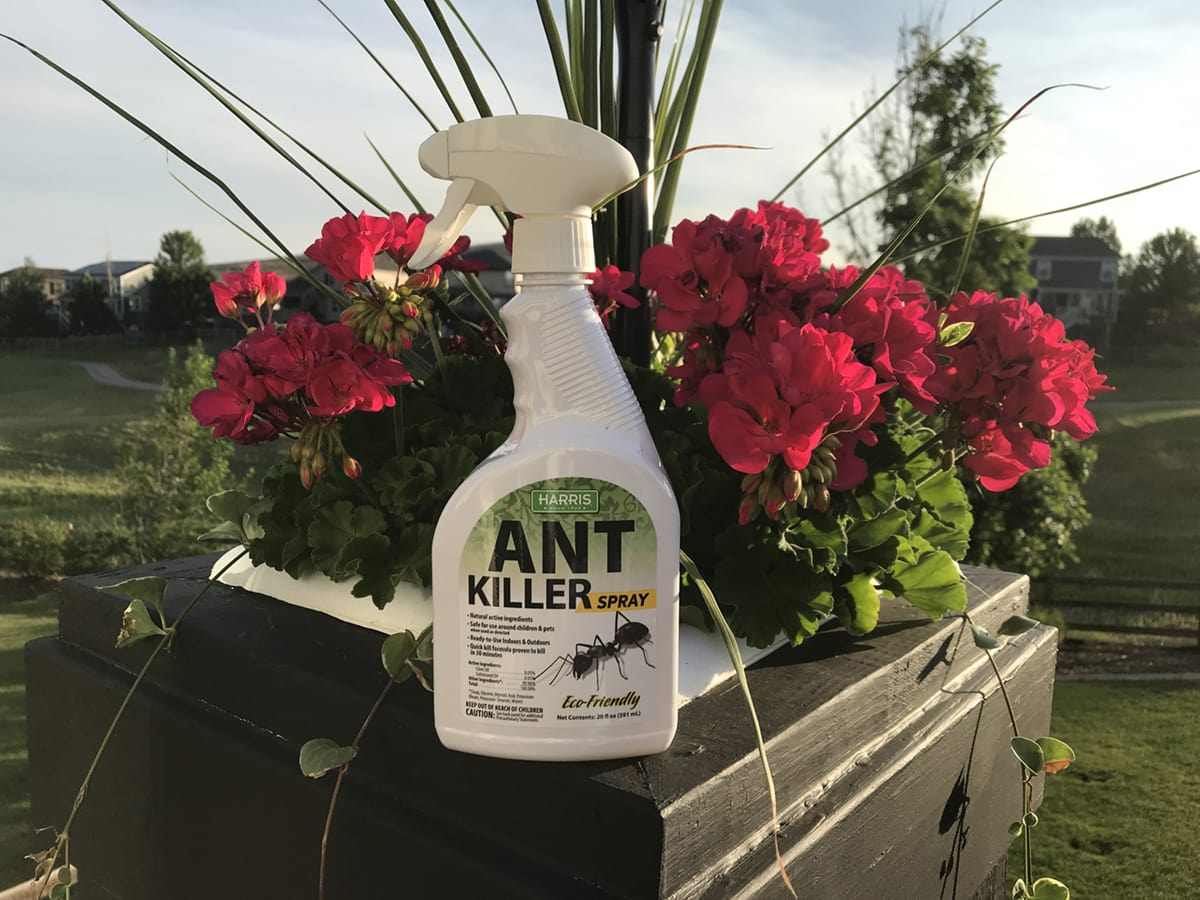
When dealing with stubborn ant invasions, sometimes natural remedies aren’t enough. That’s when I turn to a reliable commercial product like Harris Ant Killer Spray. It’s my go-to solution because it’s effective, eco-friendly, and safe around kids and pets. I use this quite often without any worries because it is:
- Eco-Friendly Ingredients: Harris Ant Killer Spray uses natural plant oils, specifically clove and cottonseed, as active ingredients. This makes it safe to use around children and pets without the harsh chemicals found in other insecticides.
- Fast Acting: Need those ants gone in a hurry? This spray is proven to kill ants in 30 minutes or less. It’s perfect for those urgent moments when you need quick results.
- Non-Staining Formula: No need to worry about damage to your surfaces. When used according to label directions, this formula won’t stain, making it ideal for both indoor and outdoor use.
- Versatile Usage: Whether you’re treating an outdoor perimeter or an indoor space, Harris Ant Killer Spray is versatile enough for both environments. It’s an all-purpose solution that can handle ants wherever they appear.
- Pleasant Scent: Unlike many bug sprays, Harris Ant Killer has a light, pleasant scent thanks to the essential oils. There’s no need to worry about lingering chemical smells; just a fresh, subtle fragrance that doesn’t overpower.
Just this morning, I had a small ant invasion to deal with—right in the middle of tending to my beloved geraniums. Armed with my trusty bottle of Harris Ant Killer Spray, I tackled the problem quickly. The ants were gone in no time, and my flowers stayed as vibrant as ever, soaking up the glorious Colorado sunshine.
If you’re facing a similar issue, I highly recommend keeping a bottle of this on hand. It’s a fast, safe, and eco-friendly way to keep your home and garden ant-free.

Diatomaceous Earth: A Natural Ant Killer

HARRIS Diatomaceous Earth Food Grade
When it comes to non-toxic ant control, diatomaceous earth (DE) is a top contender. This natural powder is safe, effective, and easy to use. But remember, only use food-grade diatomaceous earth—not the type used for swimming pools, as that version has been chemically altered and is not safe for use around the home.
How to Use Diatomaceous Earth for Ant Control
- Application Tips: Sprinkle food-grade diatomaceous earth around the perimeter of your home to create a barrier that ants and other crawling insects can’t cross. You can also use it inside your home in areas where you’ve noticed ant activity. Just make sure the DE is food-grade, ensuring it’s safe for you and your pets.
- Use a Powder Duster: For precise application, especially in hard-to-reach areas, a powder duster can be very handy. It allows you to distribute the DE exactly where you need it, maximizing its effectiveness.
- How Diatomaceous Earth Works: DE works by physically damaging the exoskeletons of ants and other crawling insects. As they crawl through the powder, it sticks to them and eventually causes dehydration, leading to their demise. It’s a silent but deadly solution that’s safe for your family and pets.
- Reapply as Needed: Diatomaceous earth loses its effectiveness when it gets wet. If the area where you’ve applied DE becomes damp or wet, let it dry out, sweep up the old DE, and reapply a fresh layer. This ensures continuous protection against ants and other pests.
Using diatomaceous earth is an eco-friendly and safe method to keep ants at bay. It’s a perfect addition to your natural pest control arsenal, providing peace of mind that you’re not introducing harmful chemicals into your home.

Bait Traps: A Targeted Solution for Ant Control

Terro PreFilled Liquid Ant Killer
If you’re not keen on sprays, bait traps are an excellent alternative for getting rid of ants. These traps are designed to attract ants with a tempting bait. Once the ants consume the bait, they carry it back to their nest, spreading it throughout the colony and effectively eliminating the infestation.
How Bait Traps Work
- Active Ingredients: Bait traps often contain substances like boric acid or borax, which are generally safe but should still be handled with care. However, some traps may include more potent chemicals like hydramethylnon, which is highly effective but not suitable for use around children, pets, or certain plants.
- The Process: The ants are attracted to the bait, consume it, and then return to their nest. The toxic bait is shared with the colony, which helps to kill off the ant population over time. This method targets the source of the problem—the nest—rather than just the ants you see.
Choosing the Right Bait Traps
- Where to Buy: You can find bait traps at most hardware stores, garden centers, and online retailers. They come in various forms, including pre-filled traps and gels.
- Check the Ingredients: If you’re concerned about using harsh chemicals, always check the ingredients list before purchasing. Opt for traps that use safer, more natural ingredients if you have children, pets, or sensitive plants.
- Placement Tips: Place bait traps near ant entry points, along ant trails, and in areas where you’ve seen the most activity. This will ensure the ants find the traps quickly and start carrying the bait back to their nest.
Using bait traps can be a highly effective way to tackle an ant problem, especially when you want a less intrusive and more targeted approach. Just be mindful of the ingredients and use them safely around your home.
No products found.
When to Call the Pros: Professional Extermination
While natural solutions often do the trick, knowing how to get rid of ants in your yard can sometimes require a bit more effort, especially if the problem becomes too persistent or severe. In these cases, calling in a professional exterminator might be the best option. But don’t just settle for any service—choose one that aligns with your values, especially when it comes to health and environmental safety.
Choosing the Right Exterminator
When selecting an exterminator, look for those who prioritize using low-toxicity or non-toxic products. This is especially important if you have children, pets, or anyone with respiratory issues in your household. Many exterminators label themselves as “green,” “organic,” or “eco-friendly,” indicating they use more environmentally conscious methods. However, these terms can vary in meaning, so it’s crucial to ask specific questions about the products and techniques they use.
What to Ask Before Hiring
- Product Safety: Ask what specific products they use and request details on their safety profiles.
- Methods Used: Inquire about the methods employed—are they focused on prevention and control, or just elimination?
- Experience with Natural Solutions: Check if they have experience with natural or less toxic solutions and how effective these have been in past cases.
- Reputation and Reviews: Look up reviews or ask for references to gauge the effectiveness and reliability of their services.
Doing your due diligence ensures you find an exterminator who not only solves the problem but also respects your home and health. Taking these steps can help you tackle even the toughest ant infestations with peace of mind.

All-Natural Outdoor Bug Control Spray
Materials
- 3 cups water
- 1 small onion, chopped
- 1 clove garlic, chopped
- 1 tablespoon cayenne pepper
- 1 tablespoon Dr. Bronner's Pure Castile Soap
Instructions
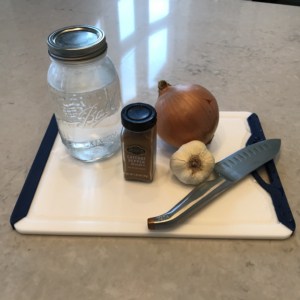
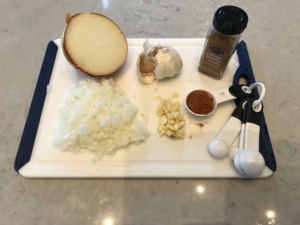
- Start by gathering your ingredients: water, chopped onion, chopped garlic, cayenne pepper, and Dr. Bronner's Pure Castile Soap. You’ll also need a 1-quart jar, a sieve, and a spray bottle.

- In your jar, combine the water, chopped onion, chopped garlic, and cayenne pepper.

- Secure the lid and let the mixture steep for one hour. This allows the ingredients to infuse and become more potent.
- After an hour, add the liquid soap to the jar. Apply the lid again and shake well to mix everything together.
- Pour the mixture through a sieve to remove any solids. Transfer the strained liquid into a spray bottle for easy application.

Notes
Question: Have you ever tried DIY methods to get rid of ants in your yard? Share your most effective tip with us.
EverydayCheapskate™ is reader-supported. We participate in the Amazon Services LLC Associates Program and other affiliate advertising programs, designed to provide a means for us to earn from qualifying purchases, at no cost to you.

More from Everyday Cheapskate
 https://www.everydaycheapskate.com/wp-content/uploads/20261006-prime-big-deal-days-have-landed.png
800
1200
Mary Hunt
https://www.everydaycheapskate.com/wp-content/uploads/EC-Logo-by-Mary-Hunt-Tagline-Trimmed.png
Mary Hunt2026-10-05 11:01:432026-10-07 09:02:53EC’s Top Picks from Amazon Prime Big Deal Days 2026
https://www.everydaycheapskate.com/wp-content/uploads/20261006-prime-big-deal-days-have-landed.png
800
1200
Mary Hunt
https://www.everydaycheapskate.com/wp-content/uploads/EC-Logo-by-Mary-Hunt-Tagline-Trimmed.png
Mary Hunt2026-10-05 11:01:432026-10-07 09:02:53EC’s Top Picks from Amazon Prime Big Deal Days 2026 https://www.everydaycheapskate.com/wp-content/uploads/20261004-reduce-healthcare-costs-with-three-habits-healthy-couple-walking-in-autumn-leaves.png
800
1200
Mary Hunt
https://www.everydaycheapskate.com/wp-content/uploads/EC-Logo-by-Mary-Hunt-Tagline-Trimmed.png
Mary Hunt2026-10-04 23:08:572026-10-04 23:09:47How to Reduce Healthcare Costs With 3 Free Daily Habits
https://www.everydaycheapskate.com/wp-content/uploads/20261004-reduce-healthcare-costs-with-three-habits-healthy-couple-walking-in-autumn-leaves.png
800
1200
Mary Hunt
https://www.everydaycheapskate.com/wp-content/uploads/EC-Logo-by-Mary-Hunt-Tagline-Trimmed.png
Mary Hunt2026-10-04 23:08:572026-10-04 23:09:47How to Reduce Healthcare Costs With 3 Free Daily Habits https://www.everydaycheapskate.com/wp-content/uploads/20241004-news-you-can-use-october-everyday-cheapskate-top-news-articles.png
800
1200
Mary Hunt
https://www.everydaycheapskate.com/wp-content/uploads/EC-Logo-by-Mary-Hunt-Tagline-Trimmed.png
Mary Hunt2026-10-04 01:04:052026-10-11 14:34:17News You Can Use • October 2026
https://www.everydaycheapskate.com/wp-content/uploads/20241004-news-you-can-use-october-everyday-cheapskate-top-news-articles.png
800
1200
Mary Hunt
https://www.everydaycheapskate.com/wp-content/uploads/EC-Logo-by-Mary-Hunt-Tagline-Trimmed.png
Mary Hunt2026-10-04 01:04:052026-10-11 14:34:17News You Can Use • October 2026 https://www.everydaycheapskate.com/wp-content/uploads/20261003-woman-hugging-elderly-mother-sandwich-generation-caring-for-aging-parents.png
800
1200
Mary Hunt
https://www.everydaycheapskate.com/wp-content/uploads/EC-Logo-by-Mary-Hunt-Tagline-Trimmed.png
Mary Hunt2026-10-03 10:47:222026-10-03 10:47:25Sandwiched Between Aging Parents and Adult Children
https://www.everydaycheapskate.com/wp-content/uploads/20261003-woman-hugging-elderly-mother-sandwich-generation-caring-for-aging-parents.png
800
1200
Mary Hunt
https://www.everydaycheapskate.com/wp-content/uploads/EC-Logo-by-Mary-Hunt-Tagline-Trimmed.png
Mary Hunt2026-10-03 10:47:222026-10-03 10:47:25Sandwiched Between Aging Parents and Adult Children https://www.everydaycheapskate.com/wp-content/uploads/20260927-impossible-lasagna-pie-recipe-with-wooden-serving-spoon-in-white-casserole-dish.png
800
1200
Mary Hunt
https://www.everydaycheapskate.com/wp-content/uploads/EC-Logo-by-Mary-Hunt-Tagline-Trimmed.png
Mary Hunt2026-09-28 09:38:592026-09-28 22:48:34Impossible Lasagna Pie: All the Flavor, None of the Noodles
https://www.everydaycheapskate.com/wp-content/uploads/20260927-impossible-lasagna-pie-recipe-with-wooden-serving-spoon-in-white-casserole-dish.png
800
1200
Mary Hunt
https://www.everydaycheapskate.com/wp-content/uploads/EC-Logo-by-Mary-Hunt-Tagline-Trimmed.png
Mary Hunt2026-09-28 09:38:592026-09-28 22:48:34Impossible Lasagna Pie: All the Flavor, None of the Noodles https://www.everydaycheapskate.com/wp-content/uploads/20260925-best-inexpensive-coffee-grinders-burr-manual-and-electric.png
800
1200
Mary Hunt
https://www.everydaycheapskate.com/wp-content/uploads/EC-Logo-by-Mary-Hunt-Tagline-Trimmed.png
Mary Hunt2026-09-25 11:06:342026-10-10 15:49:09The Best Coffee Grinder Upgrade That’s Actually Worth It
https://www.everydaycheapskate.com/wp-content/uploads/20260925-best-inexpensive-coffee-grinders-burr-manual-and-electric.png
800
1200
Mary Hunt
https://www.everydaycheapskate.com/wp-content/uploads/EC-Logo-by-Mary-Hunt-Tagline-Trimmed.png
Mary Hunt2026-09-25 11:06:342026-10-10 15:49:09The Best Coffee Grinder Upgrade That’s Actually Worth It https://www.everydaycheapskate.com/wp-content/uploads/20260918-man-and-woman-signing-an-extended-warranty-in-a-car-dealership.png
800
1200
Mary Hunt
https://www.everydaycheapskate.com/wp-content/uploads/EC-Logo-by-Mary-Hunt-Tagline-Trimmed.png
Mary Hunt2026-09-18 15:23:432026-09-18 15:25:43Is an Extended Warranty Ever Worth It? The Truth for 2026
https://www.everydaycheapskate.com/wp-content/uploads/20260918-man-and-woman-signing-an-extended-warranty-in-a-car-dealership.png
800
1200
Mary Hunt
https://www.everydaycheapskate.com/wp-content/uploads/EC-Logo-by-Mary-Hunt-Tagline-Trimmed.png
Mary Hunt2026-09-18 15:23:432026-09-18 15:25:43Is an Extended Warranty Ever Worth It? The Truth for 2026 https://www.everydaycheapskate.com/wp-content/uploads/20260917-fall-cleaning-checklist.png
800
1200
Mary Hunt
https://www.everydaycheapskate.com/wp-content/uploads/EC-Logo-by-Mary-Hunt-Tagline-Trimmed.png
Mary Hunt2026-09-17 17:11:012026-09-28 22:48:45Fall Cleaning Checklist: 15 Overlooked Spots to Clean
https://www.everydaycheapskate.com/wp-content/uploads/20260917-fall-cleaning-checklist.png
800
1200
Mary Hunt
https://www.everydaycheapskate.com/wp-content/uploads/EC-Logo-by-Mary-Hunt-Tagline-Trimmed.png
Mary Hunt2026-09-17 17:11:012026-09-28 22:48:45Fall Cleaning Checklist: 15 Overlooked Spots to Clean https://www.everydaycheapskate.com/wp-content/uploads/20260913-how-to-winterize-your-home-snowy-driveway-suburban-home.png
800
1200
Mary Hunt
https://www.everydaycheapskate.com/wp-content/uploads/EC-Logo-by-Mary-Hunt-Tagline-Trimmed.png
Mary Hunt2026-09-13 15:32:142026-09-28 22:48:55The Complete Guide to Winterizing Your Home This Fall
https://www.everydaycheapskate.com/wp-content/uploads/20260913-how-to-winterize-your-home-snowy-driveway-suburban-home.png
800
1200
Mary Hunt
https://www.everydaycheapskate.com/wp-content/uploads/EC-Logo-by-Mary-Hunt-Tagline-Trimmed.png
Mary Hunt2026-09-13 15:32:142026-09-28 22:48:55The Complete Guide to Winterizing Your Home This FallPlease keep your comments positive, encouraging, helpful, brief,
and on-topic in keeping with EC Commenting Guidelines
Last update on 2026-10-11 / Affiliate links / Images from Amazon Product Advertising API


I live in a part of the country where we have toads and northern flickers (a bird that is an anteater). They do a marvelous job of taking care of the ant problem. I wouldn’t want to poison them! Ants are only a problem if they come inside my house, where they don’t belong.
Ants in my yard and garden are just fine.
I only “get ’em” when they’re indoors, with a solution of sugar, water and powdered borax-soaked cotton balls left in little dishes.
If you have to resort to paying an exterminator as I did, DO NOT discard ant baits provided by the exterminator. I saved the exterminator’s ant baits from 2020 in a sealed plastic bag. I used them again in 2022 for an ant invasion and the problem was eliminated overnight. Apparently the poison has a very long life.
Great Blog! I was just gonna suggest to hire a pest control company.
Ammonia and water mixed 50/50 in a spray bottle works beautifully for getting rid of ants . It also destroys their trail. It is also good for cockroaches. It takes a bit of time, but if you spray everywhere at night, by morning, there’s LOTS of dead ones.
I currently have an ant problem, that has turned into a flying ant problem. I have found a way to repel the crawling ants (I wipe a few drops of tea tree essential oil around the point of entry), but have not figured out the solution to the flying ones (apparently, they are mating in this stage). My issue is, I hate killing them! The thought of giving them something to take back to kill the queen, which destroys the colony, horrifies me! This is probably weird, but I would rather just keep them away, and live our separate lives.
Two other things that I’ve found that works well is sprinkling used coffee grounds around your house, in particular where they are coming in. In the house I sprinkle cornmeal wherever I see them. Ants are gone!
Any advice on flies outside the back door? We have a fly tornado that swirls outside the back door every summer. There’s no food there at all. I’ve been told they like it as there is no wind there. The problem is too many of them get inside the house. Some silly internet trick of hanging plastic see through bags of water with pennies inside did not deter them. Neither do fly strips (they catch some but not enough). HELP!
The one problem I see with these solutions is that they only kill or repel ants that can be seen. You really need to get the products back to the nest to kill the queen and larvae. Borax with honey had word well for me. The borax trashed their digestive system and kills them. They also take it back to the nest and it kills the ones in there and the ones that will hatch later. Need to keep the borax and honey available for a couple months.
How many parts borax to cornmeal? How much honey and how did you serve it up?
Do any of these methods work for carpenter ants?
I think they are working, the sugar/borax combo and I also have seen them take the cornmeal mentioned. They were actually coming in frozen outside so I placed the bait in various places near where I found them coming in. I hope you have success!
what about stink bugs and moles
What about SPIDERS????
Get food-grade diatomaceous earth (see above). Applying diatomaceous earth for spiders is quite simple. It’s just a matter of applying an even coating wherever spiders may lurk or travel. The area where you are using Diatomaceous earth should be as dry as possible.
Mary ever since you wrote about DE – it is wonderful it works around the bottom of my humming bird feeders so ants won’t go up the shepherd’s hook that they hang from. And…My little enclosed sun room on the step that is the entrance from the outside! The only thing I have to do is refresh it after it gets wet and is dry enough to reapply. Again – thank you Mary!!
Hi Mary,
I recently had a very bad infestation of the big, red ants outside the perimeter of my house and some of them would find themselves inside the house at night. I was freaked out since my son is allergic. I tried several of your suggestions including diatomaceous earth and Dawn to no avail. I was ready to call the exterminator but someone suggested Amdro. I bought Amdro Ant Block and after about 2 weeks, they’re all gone! Even the little sugar ants that would sometimes come around in the kitchen have disappeared. Great stuff!
Thanks for all you do!
Happy you found a solution, Maria. However … I’m wondering if you used the DE and or Blue Dawn as instructed. Both are highly effective against insects of all kinds.
Maria, I am also allergic to ants, but I found that immediately after I get bitten if I apply Peroxide to the ant bites there is no itching and very little swelling
Thank you for that suggestion, Mary. I will tell my son who’s allergic!
Mary we have an ant problem every spring. I have two cats so nothing harmful. When I see ants I put down a tablespoon of corn meal. In a week or so it kills the whole colony. They take back to the nest where it kills the queen most sprays do not kill the queen. So ants come back. Safe for pets and people. Most of the time we only need to do this once a season