
Hurricane Prep on a Budget: What You Actually Need Before June 1

Hurricane season starts June 1. That gives us roughly one week. One week to do the things we keep meaning to do every spring. One week before the grocery stores get wild, the water disappears, and we discover, again, that every flashlight in the house has dead batteries. Here’s the thing about putting together a hurricane preparedness kit on a budget: most of what you actually need is cheap, and almost all of it is worth having even if no storm ever comes. This is not a bunker-building, doomsday-prepping guide. This is a “your power goes out for three days and you’d rather not lose your mind” guide.
Good news on the forecast… but don’t get too cozy.
NOAA just released its 2026 Atlantic hurricane season outlook, and it’s actually encouraging. Forecasters are calling for a below-normal season, somewhere between 8 and 14 named storms, with 3 to 6 becoming actual hurricanes. That’s fewer than an average year. El Niño is expected to develop and work in our favor, suppressing activity.
So… we’re off the hook? Not quite. NOAA’s own director said it plainly: “It only takes one storm to make for a very bad season.” The forecast doesn’t tell us where any storm will go. That part’s up to the weather gods.
The people who handle storms well are the ones who got ready in May, not the ones running around hardware stores in late August paying double for D batteries. That’s the consistent lesson from anyone who’s lived through a few big ones.
The good news: a solid home hurricane kit can be assembled for under $100, stretched across a few regular grocery runs. Almost everything in it has a shelf life measured in years. You’re not throwing money away. You’re investing in a few quiet shelves of “we’re fine.”
Here’s how to do it without panic and without overspending.
Water: The Single Most Important Thing
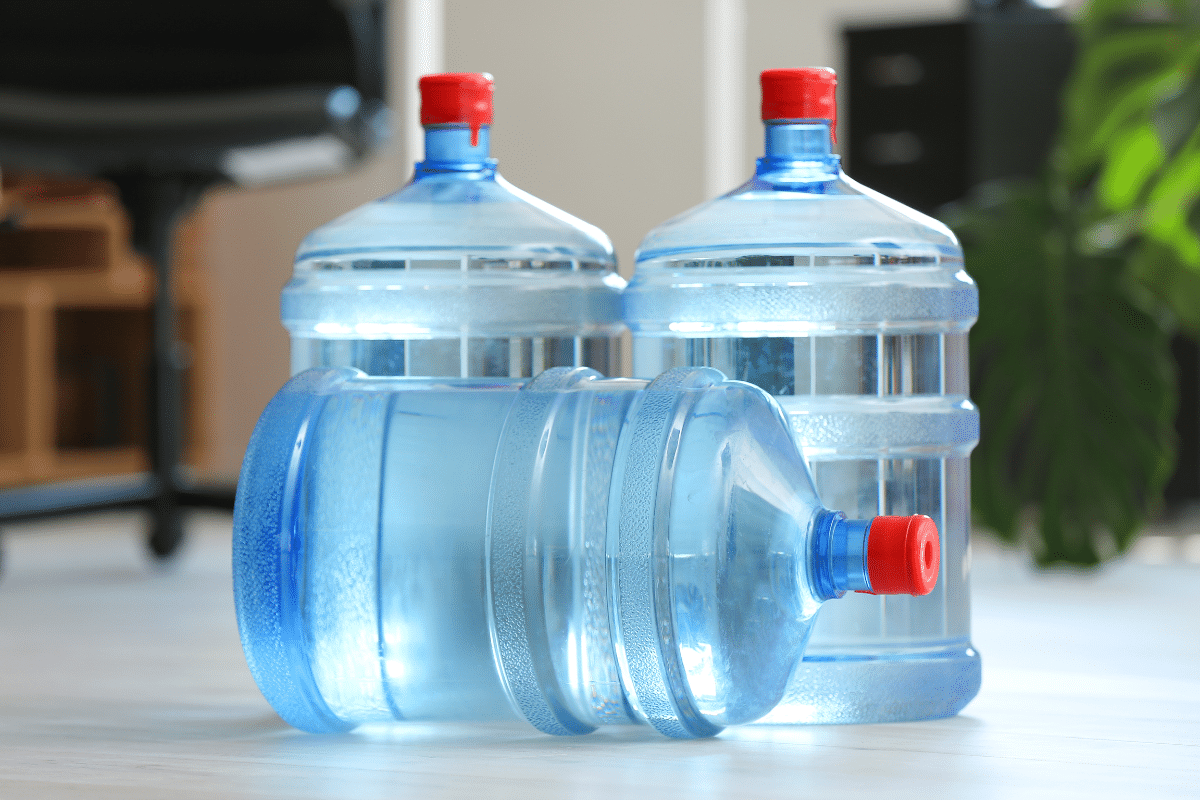
The standard recommendation is one gallon of water per person per day, for at least three days. For a family of four, that’s twelve gallons. Plus a few extra for pets and basic hygiene.
You’ve got two cheap ways to get there:
- Reuse what you have. Washed two-liter soda bottles work beautifully. Fill from the municipal tap. City water is already treated, no bleach required. On a well? Add 8 drops of plain unscented bleach per gallon, wait 30 minutes, then seal. Label with the date and store somewhere cool and dark. Done.
- Buy gallon jugs when they’re on sale. Store-brand gallons often run under a dollar. Toss two extras in your cart every shopping trip this month, and you’ll be stocked before you know it, without feeling the cost.
Either way, rotate your supply every six months to keep it fresh. Write the date on every single one so you actually will.
Food: Three Days of Things You’ll Actually Eat
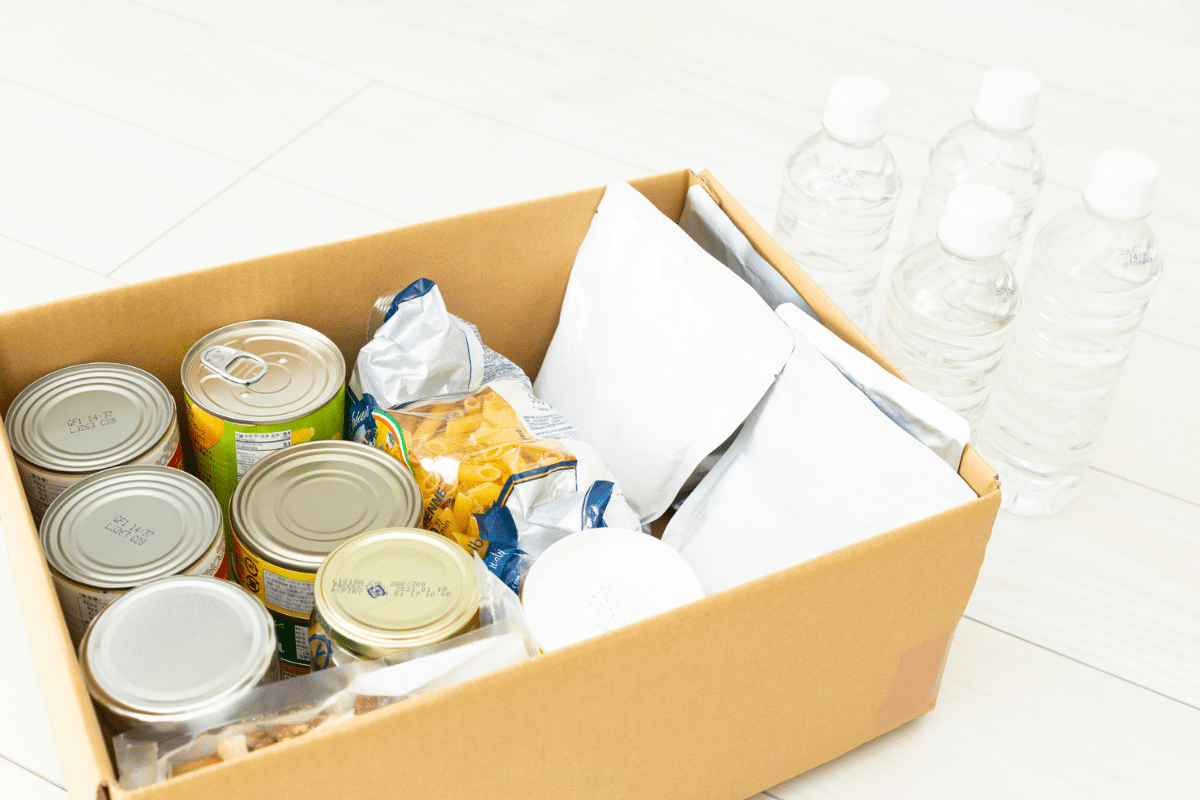
The classic mistake here is buying “emergency food” that nobody will touch. Cans of stew. Twelve-pound bags of dried beans. Anything labeled “survival.” Skip it.
Instead, build your three-day food stockpile from things your family already eats and that don’t need refrigeration or much cooking:
- Peanut butter (the unsung hero of emergency pantries everywhere)
- Crackers, granola bars, dried fruit, trail mix
- Canned tuna, chicken, beans (the kind you’d put on a salad on a normal day)
- Shelf-stable milk in cartons (lasts months, perfect for cereal or that critical morning coffee)
- Instant oatmeal, dry cereal, instant rice
- A jar of pasta sauce and a box of pasta (if you have a camp stove)
Total cost if you build it gradually: maybe $40 for a family of four. Most of it lasts a year. Some of it lasts longer.
A bag of chocolate chips or a few candy bars in there isn’t silly. After day two of no power in July, morale starts to matter.
The Light Situation
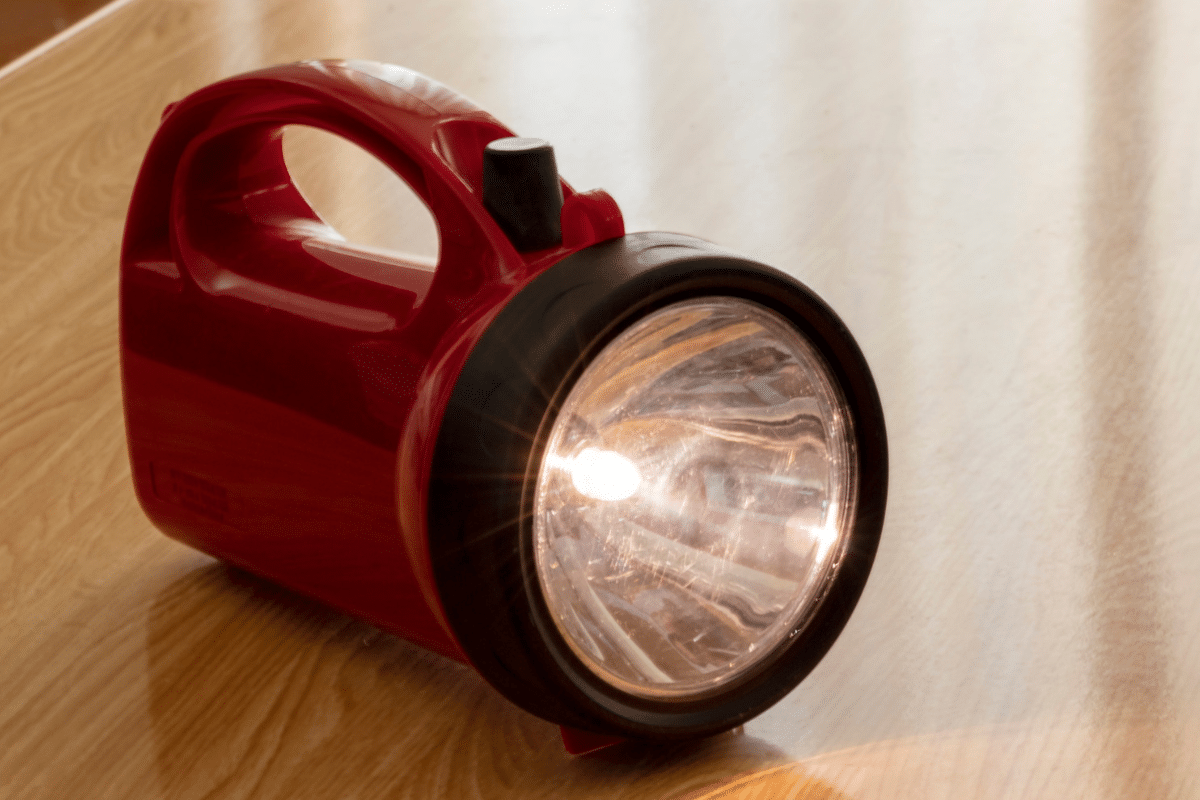
The first hour of a power outage feels manageable. The third hour, after the sun goes down, is when most people realize they have no plan.
You need three things, and all three are cheap:
- Flashlights with fresh batteries. One per person, plus a spare. Check the batteries now, not when you’re watching the weather radar with a knot in your stomach.
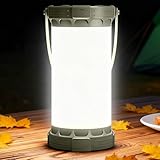
- A camping lantern or two. The lantern I keep in my own kit is the Glocusent. It’s rechargeable, throws light across an entire room, and has a built-in phone charging port for when you really need it. Runs up to 200 hours on low, which means one charge gets you through almost any outage without thinking twice. Around $20, and worth every penny once the sun goes down.
- Candles only as a last resort. Open flames plus scared kids plus pets plus tired adults equals a bad time. If you use them, use them carefully.
A solar-charged or hand-crank flashlight is a smart backup. So is a small headlamp, which frees up both hands when you’re rummaging around at midnight. Highly recommend.
(Disclosure: This post includes an Amazon Creator Connections product. I may earn a small commission if you purchase through the link, at no additional cost to you.)
Documents and Money You Can Actually Get To
This is the section people skip, until they really, really wish they hadn’t. Put copies of your important documents in a zip-top freezer bag and stash them with your emergency kit:
- Insurance policies (home, car, flood)
- Copies of driver’s licenses and passports
- A recent utility bill (sometimes required for claims or disaster relief)
- A written list of important phone numbers, because your phone will eventually die
- Bank account numbers and any prescription information
And put some cash in there too. Two hundred dollars in small bills is plenty. When the power’s out, card readers go dark and ATMs become decorative. The corner gas station running on a generator? Cash only, friend.
The Phone Plan
Your phone is your lifeline. Right up until the battery hits zero. A few cheap moves go a long way:
- One or two power banks, kept charged at all times. A 10,000mAh one runs about $20 and will fully recharge a phone two or three times. Get two if you can swing it.
- A car charger. You’d be amazed how many people don’t have one. Your car is a generator in a pinch. Just don’t run the engine in a closed garage. I cannot stress that enough.
- Top everything off the night before a storm. Phones, tablets, power banks, all of it. Every last percent.
The Other Stuff You’ll Be Glad You Have
A few miscellaneous items that round out a solid kit and cost almost nothing:
- Manual can opener (You only forget this once. Ask me how I know.)
- A small first aid kit, plus a few days of any prescription medications
- A multi-tool or a basic toolkit
- Extra trash bags, paper plates, plastic utensils
- A battery-powered or hand-crank radio
- Pet food and water for a few days
- One or two changes of clothes per person in a sealed bag, in case you need to leave fast
None of this costs much. All of it matters.
Where to Put All of It
Here’s the single best move you can make: put everything in one place. A plastic tub in the hall closet. A corner of the garage. The bottom of the linen closet. Doesn’t matter where. What matters is that when something’s coming, you know exactly where your kit is and you’re not tearing the house apart in the dark trying to remember where you stashed the flashlights.
Take fifteen minutes this weekend. Check the batteries. Add what’s missing. Refill water if last year’s bottles are old. That’s it. You’ll feel better the moment you close the closet door. I promise.
And then? Hope you never need it. Because the irony of good emergency prep is that it tends to make the emergencies smaller. The storm rolls through, the power flickers, the kids decide the lantern is the coolest thing ever, and by Tuesday you’re back to normal life. That’s the whole goal.
Question: What’s the one thing in your emergency kit you’d absolutely never go without? Drop it in the comments. Your answer might be exactly what someone else needs to hear.

More from Everyday Cheapskate
 https://www.everydaycheapskate.com/wp-content/uploads/20261012-Woman-using-smartphone-while-checking-monthly-cellular-data-usage-on-laptop.png
800
1200
Mary Hunt
https://www.everydaycheapskate.com/wp-content/uploads/EC-Logo-by-Mary-Hunt-Tagline-Trimmed.png
Mary Hunt2026-10-12 10:51:112026-10-12 10:51:11Do You Really Need Unlimited Data? Check Before You Pay
https://www.everydaycheapskate.com/wp-content/uploads/20261012-Woman-using-smartphone-while-checking-monthly-cellular-data-usage-on-laptop.png
800
1200
Mary Hunt
https://www.everydaycheapskate.com/wp-content/uploads/EC-Logo-by-Mary-Hunt-Tagline-Trimmed.png
Mary Hunt2026-10-12 10:51:112026-10-12 10:51:11Do You Really Need Unlimited Data? Check Before You Pay https://www.everydaycheapskate.com/wp-content/uploads/20261011-Woman-Adjusting-Smart-Home-Device-on-the-Wall-how-to-lower-your-electric-bill.png
800
1200
Mary Hunt
https://www.everydaycheapskate.com/wp-content/uploads/EC-Logo-by-Mary-Hunt-Tagline-Trimmed.png
Mary Hunt2026-10-11 23:01:562026-10-11 23:01:56Stop Chasing Pennies on Your Electric Bill. Do This
https://www.everydaycheapskate.com/wp-content/uploads/20261011-Woman-Adjusting-Smart-Home-Device-on-the-Wall-how-to-lower-your-electric-bill.png
800
1200
Mary Hunt
https://www.everydaycheapskate.com/wp-content/uploads/EC-Logo-by-Mary-Hunt-Tagline-Trimmed.png
Mary Hunt2026-10-11 23:01:562026-10-11 23:01:56Stop Chasing Pennies on Your Electric Bill. Do This https://www.everydaycheapskate.com/wp-content/uploads/20261007-red-present-sitting-in-autumn-leaves-Amazon-Prime-Big-Deal-Days-gifts.png
800
1200
Mary Hunt
https://www.everydaycheapskate.com/wp-content/uploads/EC-Logo-by-Mary-Hunt-Tagline-Trimmed.png
Mary Hunt2026-10-06 23:09:432026-10-06 23:09:43Christmas Shopping in October? These Prime Day Gifts Make Sense
https://www.everydaycheapskate.com/wp-content/uploads/20261007-red-present-sitting-in-autumn-leaves-Amazon-Prime-Big-Deal-Days-gifts.png
800
1200
Mary Hunt
https://www.everydaycheapskate.com/wp-content/uploads/EC-Logo-by-Mary-Hunt-Tagline-Trimmed.png
Mary Hunt2026-10-06 23:09:432026-10-06 23:09:43Christmas Shopping in October? These Prime Day Gifts Make Sense https://www.everydaycheapskate.com/wp-content/uploads/20261006-prime-big-deal-days-have-landed.png
800
1200
Mary Hunt
https://www.everydaycheapskate.com/wp-content/uploads/EC-Logo-by-Mary-Hunt-Tagline-Trimmed.png
Mary Hunt2026-10-05 11:01:432026-10-07 09:02:53EC’s Top Picks from Amazon Prime Big Deal Days 2026
https://www.everydaycheapskate.com/wp-content/uploads/20261006-prime-big-deal-days-have-landed.png
800
1200
Mary Hunt
https://www.everydaycheapskate.com/wp-content/uploads/EC-Logo-by-Mary-Hunt-Tagline-Trimmed.png
Mary Hunt2026-10-05 11:01:432026-10-07 09:02:53EC’s Top Picks from Amazon Prime Big Deal Days 2026 https://www.everydaycheapskate.com/wp-content/uploads/20261004-reduce-healthcare-costs-with-three-habits-healthy-couple-walking-in-autumn-leaves.png
800
1200
Mary Hunt
https://www.everydaycheapskate.com/wp-content/uploads/EC-Logo-by-Mary-Hunt-Tagline-Trimmed.png
Mary Hunt2026-10-04 23:08:572026-10-04 23:09:47How to Reduce Healthcare Costs With 3 Free Daily Habits
https://www.everydaycheapskate.com/wp-content/uploads/20261004-reduce-healthcare-costs-with-three-habits-healthy-couple-walking-in-autumn-leaves.png
800
1200
Mary Hunt
https://www.everydaycheapskate.com/wp-content/uploads/EC-Logo-by-Mary-Hunt-Tagline-Trimmed.png
Mary Hunt2026-10-04 23:08:572026-10-04 23:09:47How to Reduce Healthcare Costs With 3 Free Daily Habits https://www.everydaycheapskate.com/wp-content/uploads/20241004-news-you-can-use-october-everyday-cheapskate-top-news-articles.png
800
1200
Mary Hunt
https://www.everydaycheapskate.com/wp-content/uploads/EC-Logo-by-Mary-Hunt-Tagline-Trimmed.png
Mary Hunt2026-10-04 01:04:052026-10-16 16:24:53News You Can Use • October 2026
https://www.everydaycheapskate.com/wp-content/uploads/20241004-news-you-can-use-october-everyday-cheapskate-top-news-articles.png
800
1200
Mary Hunt
https://www.everydaycheapskate.com/wp-content/uploads/EC-Logo-by-Mary-Hunt-Tagline-Trimmed.png
Mary Hunt2026-10-04 01:04:052026-10-16 16:24:53News You Can Use • October 2026 https://www.everydaycheapskate.com/wp-content/uploads/20261003-woman-hugging-elderly-mother-sandwich-generation-caring-for-aging-parents.png
800
1200
Mary Hunt
https://www.everydaycheapskate.com/wp-content/uploads/EC-Logo-by-Mary-Hunt-Tagline-Trimmed.png
Mary Hunt2026-10-03 10:47:222026-10-03 10:47:25Sandwiched Between Aging Parents and Adult Children
https://www.everydaycheapskate.com/wp-content/uploads/20261003-woman-hugging-elderly-mother-sandwich-generation-caring-for-aging-parents.png
800
1200
Mary Hunt
https://www.everydaycheapskate.com/wp-content/uploads/EC-Logo-by-Mary-Hunt-Tagline-Trimmed.png
Mary Hunt2026-10-03 10:47:222026-10-03 10:47:25Sandwiched Between Aging Parents and Adult Children https://www.everydaycheapskate.com/wp-content/uploads/20260927-impossible-lasagna-pie-recipe-with-wooden-serving-spoon-in-white-casserole-dish.png
800
1200
Mary Hunt
https://www.everydaycheapskate.com/wp-content/uploads/EC-Logo-by-Mary-Hunt-Tagline-Trimmed.png
Mary Hunt2026-09-28 09:38:592026-09-28 22:48:34Impossible Lasagna Pie: All the Flavor, None of the Noodles
https://www.everydaycheapskate.com/wp-content/uploads/20260927-impossible-lasagna-pie-recipe-with-wooden-serving-spoon-in-white-casserole-dish.png
800
1200
Mary Hunt
https://www.everydaycheapskate.com/wp-content/uploads/EC-Logo-by-Mary-Hunt-Tagline-Trimmed.png
Mary Hunt2026-09-28 09:38:592026-09-28 22:48:34Impossible Lasagna Pie: All the Flavor, None of the Noodles https://www.everydaycheapskate.com/wp-content/uploads/20260926-pov-from-an-aisle-seat-on-an-airplane.png
800
1200
Mary Hunt
https://www.everydaycheapskate.com/wp-content/uploads/EC-Logo-by-Mary-Hunt-Tagline-Trimmed.png
Mary Hunt2026-09-27 19:14:552026-09-27 19:16:27Confessions of a Woman Who Preflights Her Own Escape
https://www.everydaycheapskate.com/wp-content/uploads/20260926-pov-from-an-aisle-seat-on-an-airplane.png
800
1200
Mary Hunt
https://www.everydaycheapskate.com/wp-content/uploads/EC-Logo-by-Mary-Hunt-Tagline-Trimmed.png
Mary Hunt2026-09-27 19:14:552026-09-27 19:16:27Confessions of a Woman Who Preflights Her Own EscapePlease keep your comments positive, encouraging, helpful, brief,
and on-topic in keeping with EC Commenting Guidelines
Last update on 2026-10-19 / Affiliate links / Images from Amazon Product Advertising API


I have liquid candles that are good for something like 4 days, but my first “go to” for light would be one of the solar camping lights I have that I keep charged. They take up almost no space (one is inflatable) and throw out a lot of light.
I also have dehydrated meals. Might also consider filling your bathtub or a large water container so you can use a bucket to flush your toilet(s). For those who don’t know how, you just pour the water into your toilet and it will send the waste away. No need to pour it into the tank, although that works too.
I find that the ramen seasoning packet is too salty for my taste, so I only usually add 1/2 to my noodles and clip shut the remainder to reserve for the next ramen craving. This quickly leaves me with extra seasoning packets, which are perfect to use when camping or to throw into the emergency food kit along with the previously-suggested box of pasta. Boil part of the box of pasta in water seasoned with the ramen packet and you have multiple servings of soup.
Toliet paper, handwipes, solar charger
kitty treats. it’s the fastest way to get my two cats in their carriers. sometimes time is of the essence. i keep a tub in my shed with clothing, some yarn and knitting needles. i have seven day pill minders for my medications, but the bottles are all in a baggie that i can grab and go. matches. i’ve given up on large heavy lanterns that require batteries. batteries die and those large ones are expensive. i have a camping lantern and i keep an additional small tank of propane . we have a crank radio. one thing i especially love about my stove–it’s a gas stove [propane] with pilot lights, even in the oven. it doesn’t have any electrical wiring. it’s old and has seen better days, but nothing will persuade me to trade it in. i always hope emergencies come in winter. i have many ways to keep warm. in the summer, i’m miserable without air conditioning.
Change your voicemail message to let others know you’re OK. Even if they can’t get thru, they’ll get that message. We have a storm shelter that is stocked up!
Never forget in your emergency kit; purely or other no soap/water skin cleaner.
Condoms..unless you are looking for a tax deduction to go with the FEMA aid.
Full tank of gas if there is a chance you’ll need to evacuate. Don’t forget the keyfob.
Contact info of an emergency person outside the storm area. Everyone checks in with “Aunt Sadie” to let the others know their status.