
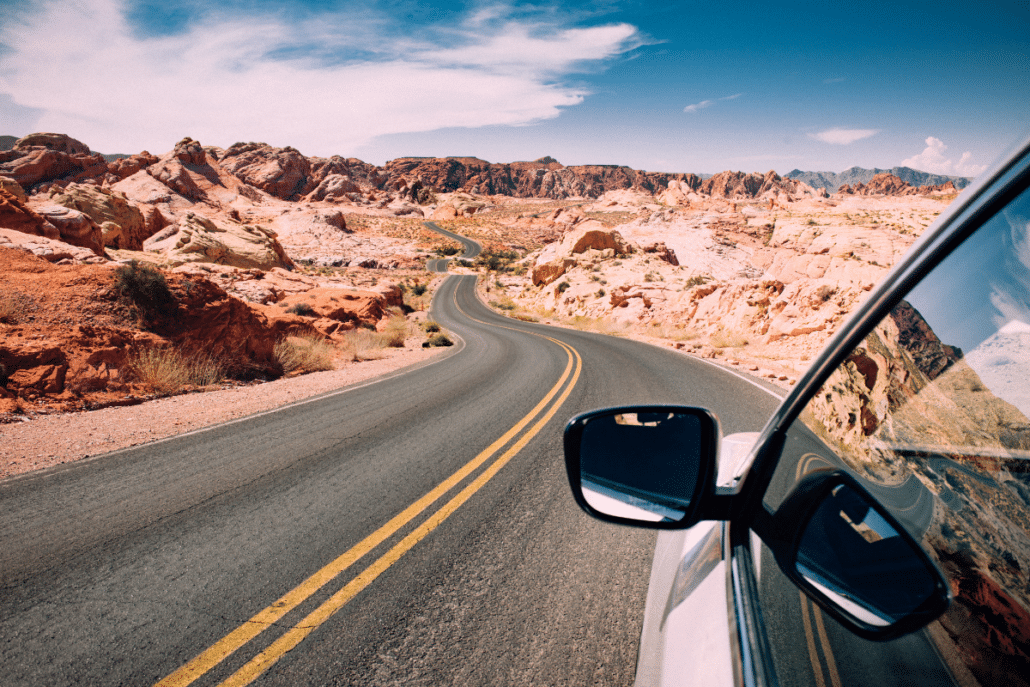
10-Point Car Check Before Your Summer Road Trip (Skip the Dealership)

You know that feeling when you pull out of the driveway and you’re not quite sure if you’re ready or just hopeful? Hopeful the tires hold. Hopeful the AC doesn’t quit somewhere in the middle of nowhere. Hopeful that dashboard light is, you know, probably nothing. Here’s the thing: twenty minutes of attention before you leave can be the difference between a great trip and a really expensive lesson. And no, you do not need to take it to the dealer for a $300 “pre-trip inspection.” Most of what matters, you can do yourself in the driveway… which is why I put together this road trip car checklist.
I’m not a mechanic. I want to say that up front. But I’ve taken enough long drives to know that the troubles that ruin road trips tend to be embarrassingly preventable. A neglected tire. A wiper blade you forgot about. A coolant level you haven’t peeked at since last summer. Not complicated problems. Just the kind of fifteen-minute thing most of us mean to do and then… don’t.
Here’s the checklist worth running through before any drive over two hours. All you need is your car parked in the driveway, a paper towel, and your owner’s manual within arm’s reach.
1. Tires: Pressure, Tread, and (Please) the Spare
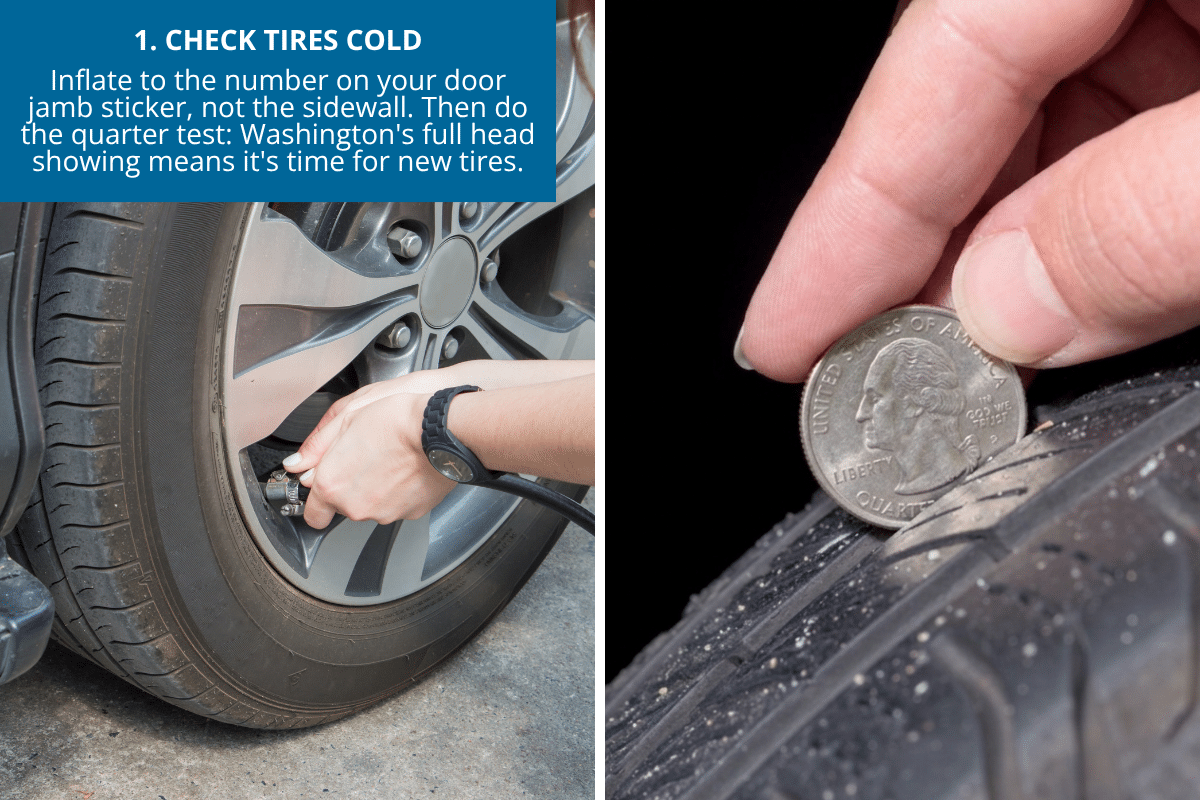
Tires first. Always. Underinflated tires are the number-one cause of blowouts, and summer heat makes an already-low tire even worse. Check pressure when the tires are cold (sitting overnight), and inflate to the number on the door jamb sticker, not the number on the tire’s sidewall. Those are different. Door jamb sticker.
For tread, try the quarter test: push a quarter upside-down into the tread groove. If you can see all of Washington’s head? You need new tires before this trip. Not after. Before.
And the spare. Oh, the spare. People forget it exists until they’re standing on the shoulder of I-70 in 94-degree heat. Pump it to spec. Make sure your jack and tire iron are actually in the car. And if you have no idea how your jack works, look it up on YouTube right now. Takes about a minute. Worth every second.
2. All the Fluids in About Six Minutes
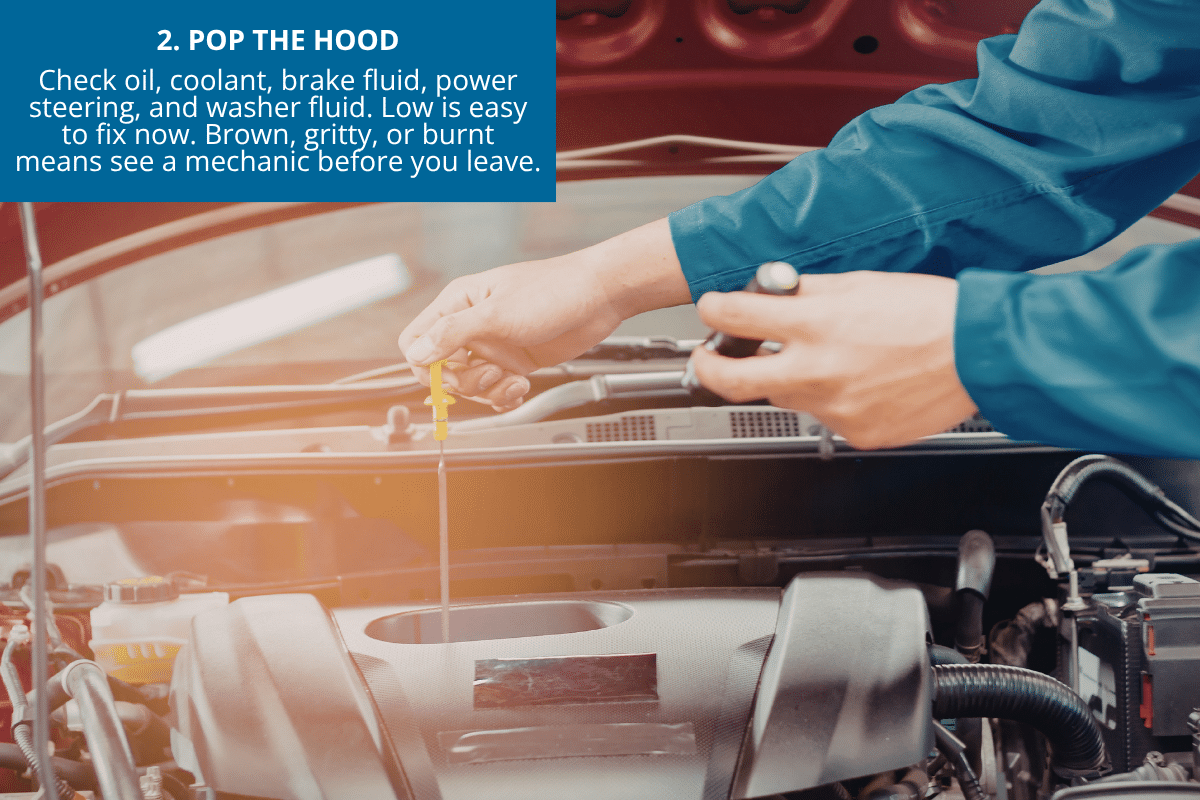
Pop the hood. Find these five things. Look at each one.
- Engine oil: Pull the dipstick, wipe it clean, reinsert it, pull it again. Oil should sit between the two marks. Black and gritty? Change it before you leave.
- Coolant: Check the reservoir level. Never open a hot radiator cap. The plastic tank on the side has a line that tells you everything you need to know.
- Brake fluid: Top of the fluid should be near the “max” line.
- Power steering: Same deal. Look at the reservoir.
- Windshield washer fluid: The most ignored fluid in the car. You will regret not topping this off approximately forty miles down the road when a bug the size of a small bird hits your windshield.
If anything looks low, top it up. If anything smells burnt or looks brown and muddy, that’s worth a quick stop at a mechanic before you go.
3. Wipers and Washers
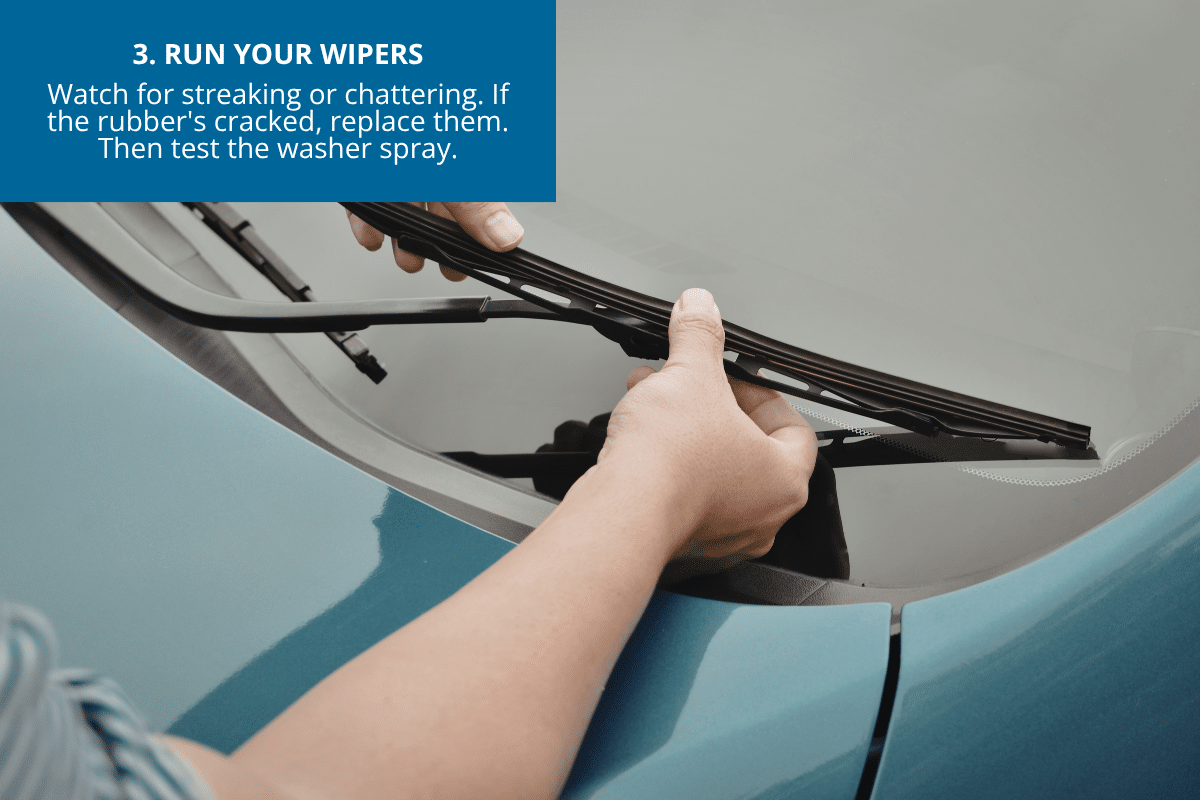
Wiper blades wear out whether you use them or not. Run yours and watch for streaking, skipping, or chattering. See any cracks in the rubber? Replace them. New blades run $15 to $30 at any auto parts store, and most stores will put them on in the parking lot for free. Free! I love free.
Top off the washer fluid. Then actually test the spray. There’s a special kind of frustration to discovering at 70 miles an hour that one of your washer nozzles is clogged.
4. Lights, All of Them
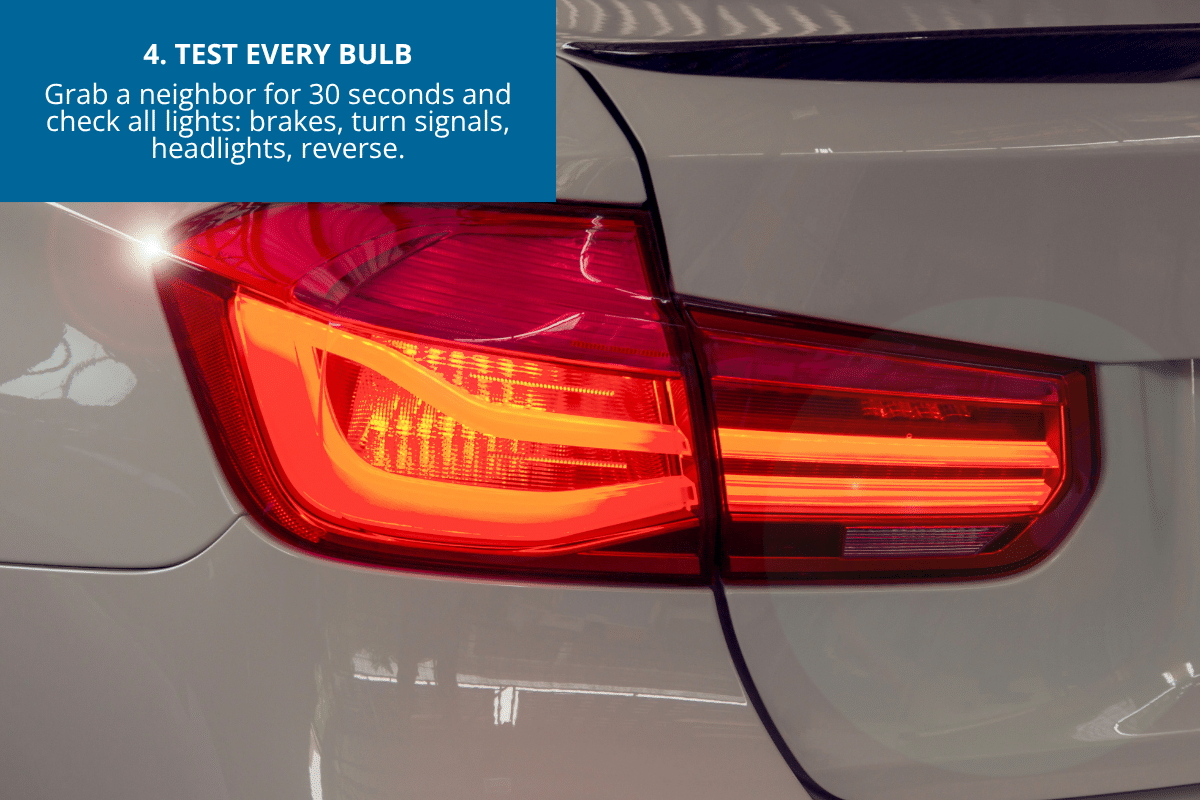
Grab a neighbor for thirty seconds. Have them stand behind the car while you test: brake lights, headlights, high beams, turn signals front and back, and reverse lights. Then do the front: blinkers, headlights, fog lights if you’ve got them.
A burned-out bulb is a five-dollar fix. It’s also a $150 ticket waiting to happen
5. The AC, Tested for Real
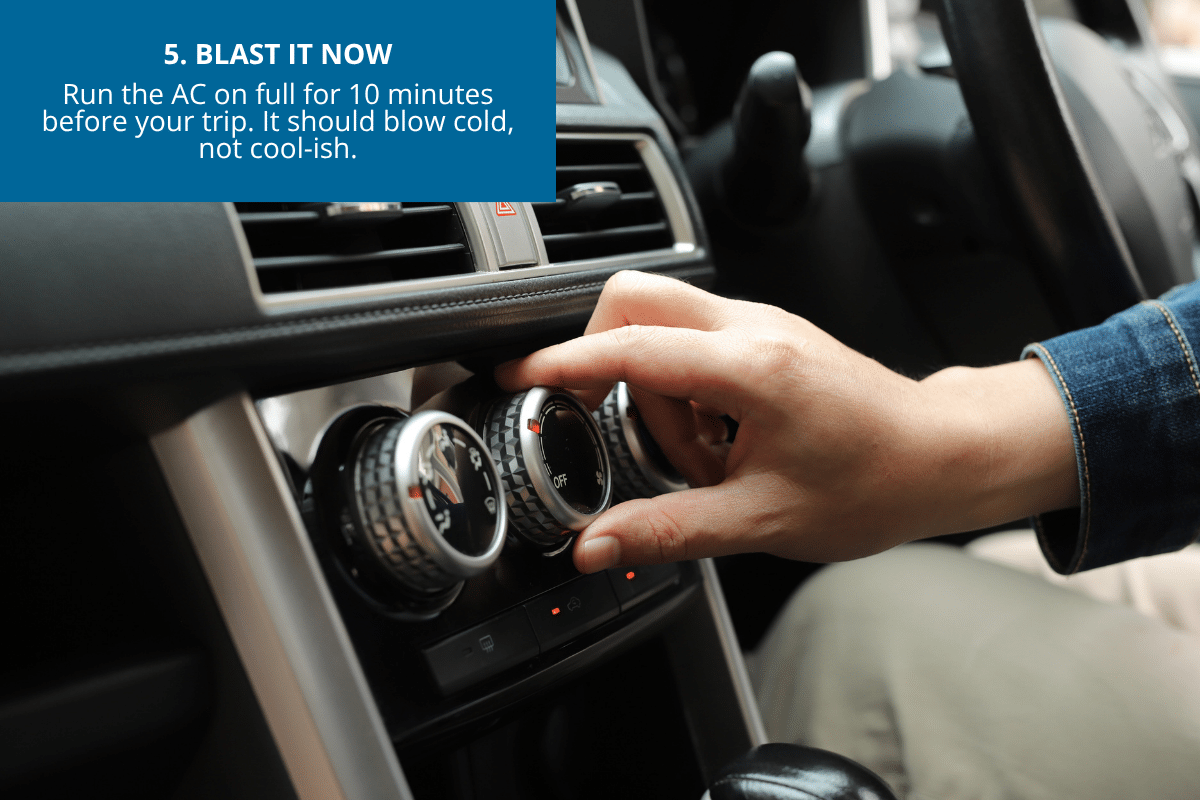
You probably tested the AC sometime this spring and it was fine. But “fine in April” isn’t “fine in August.” Run it on full blast for ten full minutes. The air coming out of those vents should be genuinely cold. Not cool-ish. Cold.
If it’s blowing warm or weak, take it in. AC in a road-trip car isn’t a luxury; it’s a safety system for the people inside.
6. A Quick Belt Glance
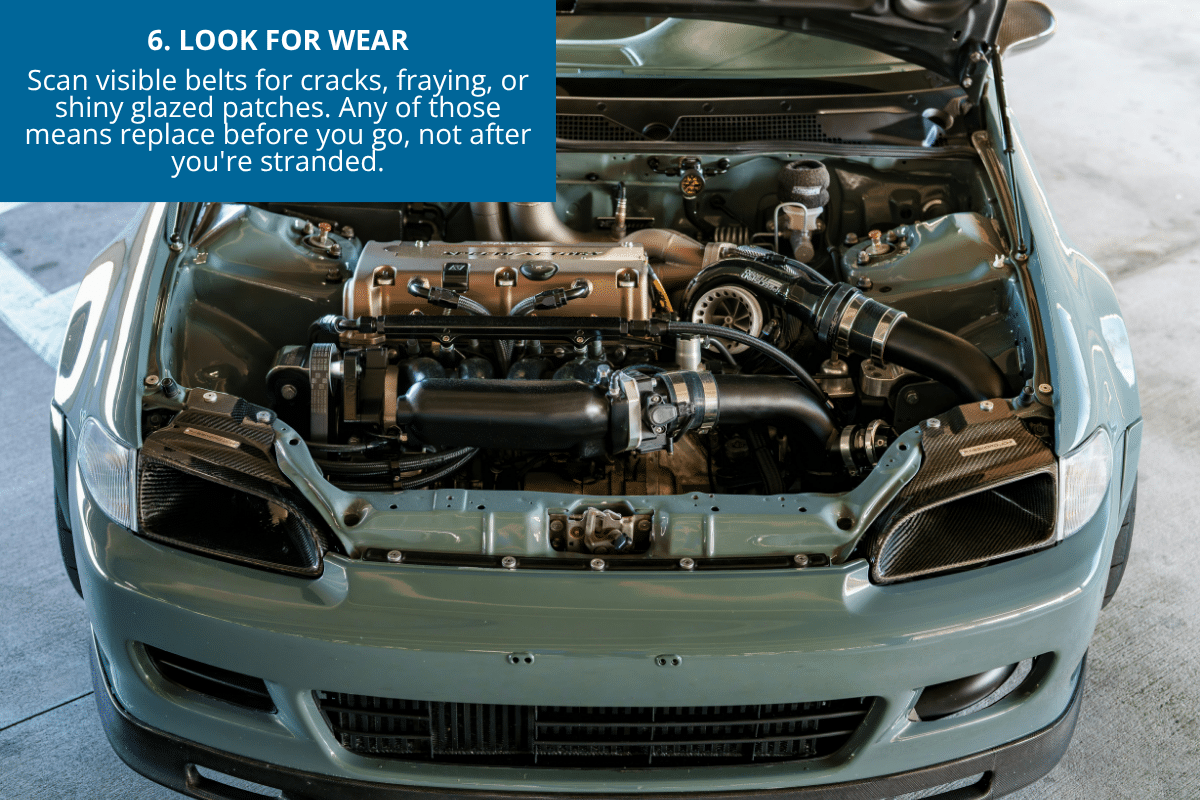
You don’t have to know anything about cars to spot a belt that’s getting ready to fail. Look for cracks, frayed edges, shiny glazed patches, or anything that just looks rough and worn. Any of that means it’s on borrowed time.
Belts are cheap. Roadside breakdowns are not.
7. Listen When You Back Out
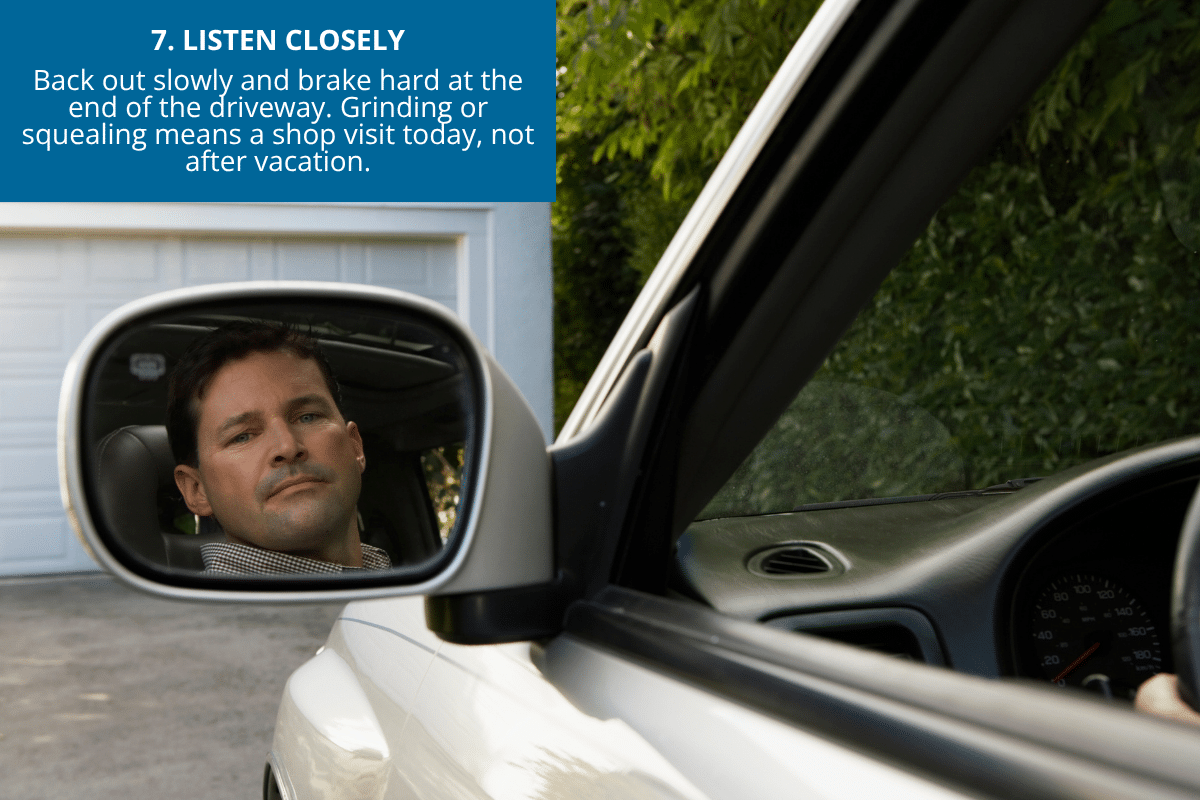
When you back out of the driveway and brake at the end, listen. Grinding? Squealing that doesn’t stop after the first few stops? That’s a “before-the-trip” appointment, not an “after-the-trip” one.
Also: your brake pedal should feel firm. If it’s sinking more than usual, get it checked. Brakes are not the place to roll the dice.
8. The Trunk Audit
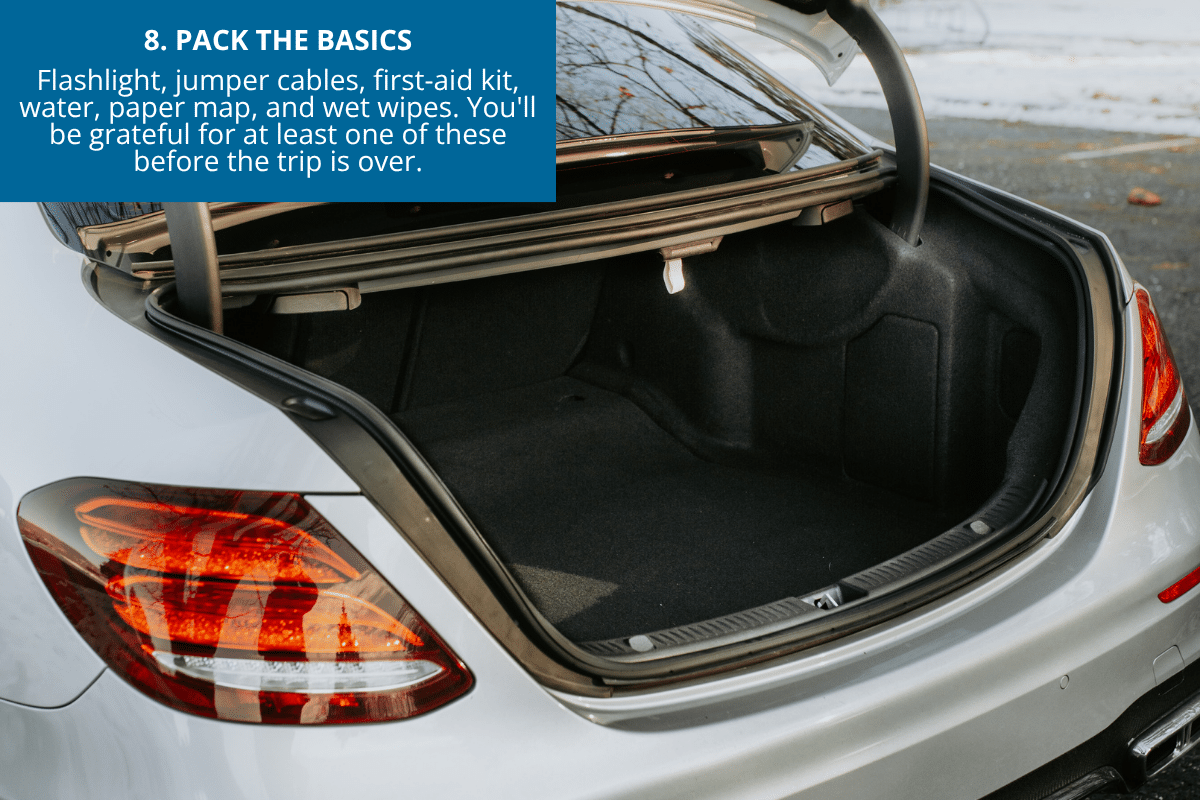
This is the cheapest insurance policy you’ll ever put together. Open the trunk and confirm:
- A working flashlight (check the batteries!)
- Jumper cables or a portable jump pack
- A small first-aid kit
- One blanket
- A liter or two of water (for you and the radiator)
- A road map (yes, paper, for the moment your phone dies)
- A roll of paper towels and a few wet wipes
Trust me. You will be unreasonably grateful for one of those items on every road trip. Promise.
9. The Wallet Stuff
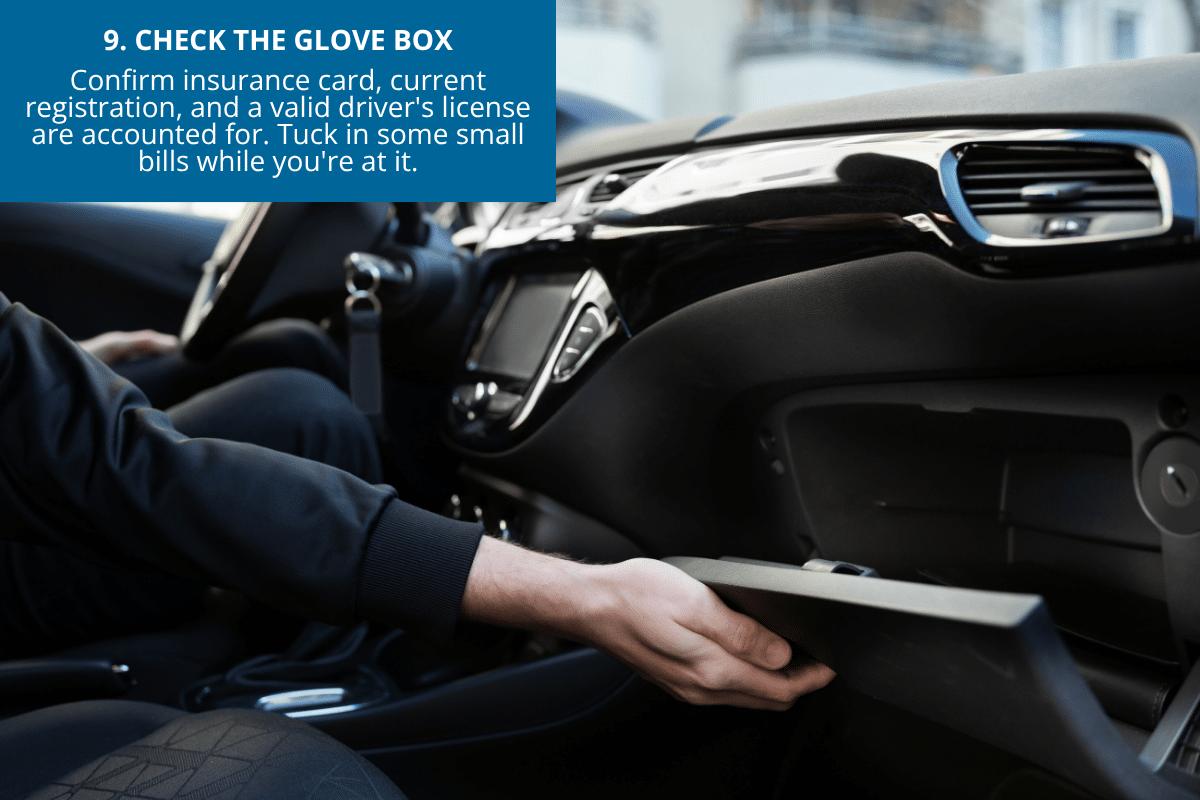
Is your insurance card in the glove box or does the digital version actually load on your phone? Is your registration current? Has your driver’s license expired since you last checked? (It happens. Ask me how I know.)
Also: bring cash. Small bills. Because there will be a cash-only diner or a surprise tollbooth, and you will be very happy you planned for it.
10. A Five-Minute Test Drive
Do this the day before you leave, not the morning of. Take the car out for five miles. Get up to highway speed, make a few turns, do a couple of firm stops. If something feels off, you still have time to do something about it. If everything feels solid? You’ll leave the next morning with actual confidence instead of just hope.
What Does This Actually Cost?
If everything checks out: zero dollars.
If something needs attention: maybe a quart of oil, a set of wipers, a bulb. Thirty dollars, often less.
Compare that to one dealership “pre-trip inspection” ($150 to $300), one tow off the interstate ($200 to $500), or one emergency repair in an unfamiliar town (whatever they feel like charging). Twenty minutes in your driveway saves all of that, plus you actually know your car a little better.
Pack the wet wipes. Top off the coolant. Take the twenty minutes.
Then go have a wonderful trip.
Question: What’s the funniest (or most expensive) surprise your car has ever sprung on you mid-trip? Tell us in the comments… and what you do now to avoid a repeat.
EverydayCheapskate™ is reader-supported. We participate in the Amazon Services LLC Associates Program and other affiliate advertising programs, designed to provide a means for us to earn from qualifying purchases, at no cost to you.

More from Everyday Cheapskate
 https://www.everydaycheapskate.com/wp-content/uploads/20260913-how-to-winterize-your-home-snowy-driveway-suburban-home.png
800
1200
Mary Hunt
https://www.everydaycheapskate.com/wp-content/uploads/EC-Logo-by-Mary-Hunt-Tagline-Trimmed.png
Mary Hunt2026-09-13 15:32:142026-09-28 22:48:55The Complete Guide to Winterizing Your Home This Fall
https://www.everydaycheapskate.com/wp-content/uploads/20260913-how-to-winterize-your-home-snowy-driveway-suburban-home.png
800
1200
Mary Hunt
https://www.everydaycheapskate.com/wp-content/uploads/EC-Logo-by-Mary-Hunt-Tagline-Trimmed.png
Mary Hunt2026-09-13 15:32:142026-09-28 22:48:55The Complete Guide to Winterizing Your Home This Fall https://www.everydaycheapskate.com/wp-content/uploads/20260829-fall-yard-projects-to-tackle-before-the-first-frost-foilage-front-yard-home.png
800
1200
Mary Hunt
https://www.everydaycheapskate.com/wp-content/uploads/EC-Logo-by-Mary-Hunt-Tagline-Trimmed.png
Mary Hunt2026-08-29 17:25:422026-09-28 22:49:2010 Fall Yard Tasks to Complete Before First Frost Hits
https://www.everydaycheapskate.com/wp-content/uploads/20260829-fall-yard-projects-to-tackle-before-the-first-frost-foilage-front-yard-home.png
800
1200
Mary Hunt
https://www.everydaycheapskate.com/wp-content/uploads/EC-Logo-by-Mary-Hunt-Tagline-Trimmed.png
Mary Hunt2026-08-29 17:25:422026-09-28 22:49:2010 Fall Yard Tasks to Complete Before First Frost Hits https://www.everydaycheapskate.com/wp-content/uploads/20260827-how-to-fly-cheaper-airplane-in-the-bright-blue-sky-above-the-clouds.png
800
1200
Mary Hunt
https://www.everydaycheapskate.com/wp-content/uploads/EC-Logo-by-Mary-Hunt-Tagline-Trimmed.png
Mary Hunt2026-08-27 11:35:132026-09-28 22:49:24How to Fly Cheaper: 8 Booking Tricks Airlines Won’t Teach You
https://www.everydaycheapskate.com/wp-content/uploads/20260827-how-to-fly-cheaper-airplane-in-the-bright-blue-sky-above-the-clouds.png
800
1200
Mary Hunt
https://www.everydaycheapskate.com/wp-content/uploads/EC-Logo-by-Mary-Hunt-Tagline-Trimmed.png
Mary Hunt2026-08-27 11:35:132026-09-28 22:49:24How to Fly Cheaper: 8 Booking Tricks Airlines Won’t Teach You https://www.everydaycheapskate.com/wp-content/uploads/20260822-central-AC-maintenance-air-condenser-outdoors.png
800
1200
Mary Hunt
https://www.everydaycheapskate.com/wp-content/uploads/EC-Logo-by-Mary-Hunt-Tagline-Trimmed.png
Mary Hunt2026-08-22 14:19:562026-09-28 22:49:43How to Extend the Life of Your Central AC (5 Late-Summer Tune-Up Tips)
https://www.everydaycheapskate.com/wp-content/uploads/20260822-central-AC-maintenance-air-condenser-outdoors.png
800
1200
Mary Hunt
https://www.everydaycheapskate.com/wp-content/uploads/EC-Logo-by-Mary-Hunt-Tagline-Trimmed.png
Mary Hunt2026-08-22 14:19:562026-09-28 22:49:43How to Extend the Life of Your Central AC (5 Late-Summer Tune-Up Tips) https://www.everydaycheapskate.com/wp-content/uploads/20260820-how-to-keep-ants-away-after-youve-killed-the-ant-hill.png
800
1200
Mary Hunt
https://www.everydaycheapskate.com/wp-content/uploads/EC-Logo-by-Mary-Hunt-Tagline-Trimmed.png
Mary Hunt2026-08-20 14:17:552026-09-28 22:49:46How to Keep Ants Away After You Treat the Ant Hill
https://www.everydaycheapskate.com/wp-content/uploads/20260820-how-to-keep-ants-away-after-youve-killed-the-ant-hill.png
800
1200
Mary Hunt
https://www.everydaycheapskate.com/wp-content/uploads/EC-Logo-by-Mary-Hunt-Tagline-Trimmed.png
Mary Hunt2026-08-20 14:17:552026-09-28 22:49:46How to Keep Ants Away After You Treat the Ant Hill https://www.everydaycheapskate.com/wp-content/uploads/20260722-easy-home-repairs-slow-sink-drain-squeaky-hinges-sticky-drawer.png
800
1200
Mary Hunt
https://www.everydaycheapskate.com/wp-content/uploads/EC-Logo-by-Mary-Hunt-Tagline-Trimmed.png
Mary Hunt2026-07-22 13:04:022026-09-28 22:50:4910 Small Home Annoyances You Can Fix in Under 15 Minutes Each
https://www.everydaycheapskate.com/wp-content/uploads/20260722-easy-home-repairs-slow-sink-drain-squeaky-hinges-sticky-drawer.png
800
1200
Mary Hunt
https://www.everydaycheapskate.com/wp-content/uploads/EC-Logo-by-Mary-Hunt-Tagline-Trimmed.png
Mary Hunt2026-07-22 13:04:022026-09-28 22:50:4910 Small Home Annoyances You Can Fix in Under 15 Minutes Each https://www.everydaycheapskate.com/wp-content/uploads/20260717-how-to-read-your-water-bill-sprinklers-on-a-residential-lawn.png
800
1200
Mary Hunt
https://www.everydaycheapskate.com/wp-content/uploads/EC-Logo-by-Mary-Hunt-Tagline-Trimmed.png
Mary Hunt2026-07-18 10:46:312026-09-28 22:50:57How to Read Your Water Bill and Lower Your Monthly Costs Now
https://www.everydaycheapskate.com/wp-content/uploads/20260717-how-to-read-your-water-bill-sprinklers-on-a-residential-lawn.png
800
1200
Mary Hunt
https://www.everydaycheapskate.com/wp-content/uploads/EC-Logo-by-Mary-Hunt-Tagline-Trimmed.png
Mary Hunt2026-07-18 10:46:312026-09-28 22:50:57How to Read Your Water Bill and Lower Your Monthly Costs Now https://www.everydaycheapskate.com/wp-content/uploads/20260716-woman-on-phone-with-flat-tire-spare-roadside-car-emergency-kit.png
800
1200
Mary Hunt
https://www.everydaycheapskate.com/wp-content/uploads/EC-Logo-by-Mary-Hunt-Tagline-Trimmed.png
Mary Hunt2026-07-16 21:10:152026-09-28 22:50:59The 7-Item Emergency Car Kit Every Driver Needs (Cheaper Than One Tow)
https://www.everydaycheapskate.com/wp-content/uploads/20260716-woman-on-phone-with-flat-tire-spare-roadside-car-emergency-kit.png
800
1200
Mary Hunt
https://www.everydaycheapskate.com/wp-content/uploads/EC-Logo-by-Mary-Hunt-Tagline-Trimmed.png
Mary Hunt2026-07-16 21:10:152026-09-28 22:50:59The 7-Item Emergency Car Kit Every Driver Needs (Cheaper Than One Tow) https://www.everydaycheapskate.com/wp-content/uploads/20260714-car-dashboard-diy-car-interior-cleaning-wipes.png
800
1200
Mary Hunt
https://www.everydaycheapskate.com/wp-content/uploads/EC-Logo-by-Mary-Hunt-Tagline-Trimmed.png
Mary Hunt2026-07-14 13:45:172026-09-28 22:51:05DIY Car Interior Cleaning Wipes That Actually Work Well
https://www.everydaycheapskate.com/wp-content/uploads/20260714-car-dashboard-diy-car-interior-cleaning-wipes.png
800
1200
Mary Hunt
https://www.everydaycheapskate.com/wp-content/uploads/EC-Logo-by-Mary-Hunt-Tagline-Trimmed.png
Mary Hunt2026-07-14 13:45:172026-09-28 22:51:05DIY Car Interior Cleaning Wipes That Actually Work Well

Also, toilet paper! One roll can save you in those over-used public bathrooms.
When my 2015 Kia Soul was new I stopped for gas in a nearby town. After pumping and paying I could not get in the car. It locked itself. My car has a mind of its own. I have learned to ALWAYS take my keys with me, even if I just step out to admire the view.