
What Temperature Should a Refrigerator and Freezer Be?

Some things in my kitchen I manage quite well by guesswork. How much cinnamon goes in the apple pie? A little extra never hurt anybody. How much cheese goes in a casserole? More. Obviously. Refrigerator temperature is not one of those things. A few degrees can be the difference between safely chilled groceries and food hanging out in bacteria-friendly territory. And at today’s grocery prices, I’d rather not find out the hard way.
Here’s the number to remember: 37°F in the refrigerator and 0°F in the freezer.
The USDA says 40°F or below is the food-safety line. So why am I telling you 37? Glad you asked.
What temperature should a refrigerator be?
Aim for 37°F. Keep it at 40°F or below.
The USDA and FDA both put the food-safety limit at 40°F, because bacteria that make people sick multiply faster once food gets warmer than that. That’s the upper limit you don’t want to cross, not necessarily the temperature I’d aim for day after day.
Consumer Reports recommends 37°F based on its refrigerator testing. That gives you a few degrees of breathing room for real life, because refrigerator temperatures don’t sit perfectly still. We open the door. We put away groceries. Someone stands there staring inside as though dinner might announce itself.
So I wouldn’t set mine at 40°F on purpose. Why live right on the edge when 37°F is just as easy to set?
Don’t get carried away watching the thermometer, though. Refrigerators cycle on and off, so the number wobbles a little. That’s normal.
| Appliance | Temperature to Aim For |
|---|---|
| Refrigerator | 37°F |
| Freezer | 0°F |
Think 37, 40, 0.
What temperature should a freezer be?
This one’s easier: 0°F. At that temperature, food stays safely frozen, although quality will gradually decline the longer it’s stored.
And no, colder isn’t necessarily better. If your freezer is already holding 0°F, there’s no need to turn it into Antarctica.
Can a refrigerator be too cold?
Yes. Cold is good. Frozen lettuce is not.
Once refrigerator temperatures start getting close to 32°F, foods in colder areas may begin to freeze. Produce can be especially unhappy about this. That’s another reason I like 37°F. It sits comfortably under the 40°F limit without flirting with freezing.
If you’re finding ice crystals on the lettuce or milk that’s gone slushy, don’t give the refrigerator a gold star for enthusiasm. Check the actual temperature and adjust.
Why you can’t trust the dial
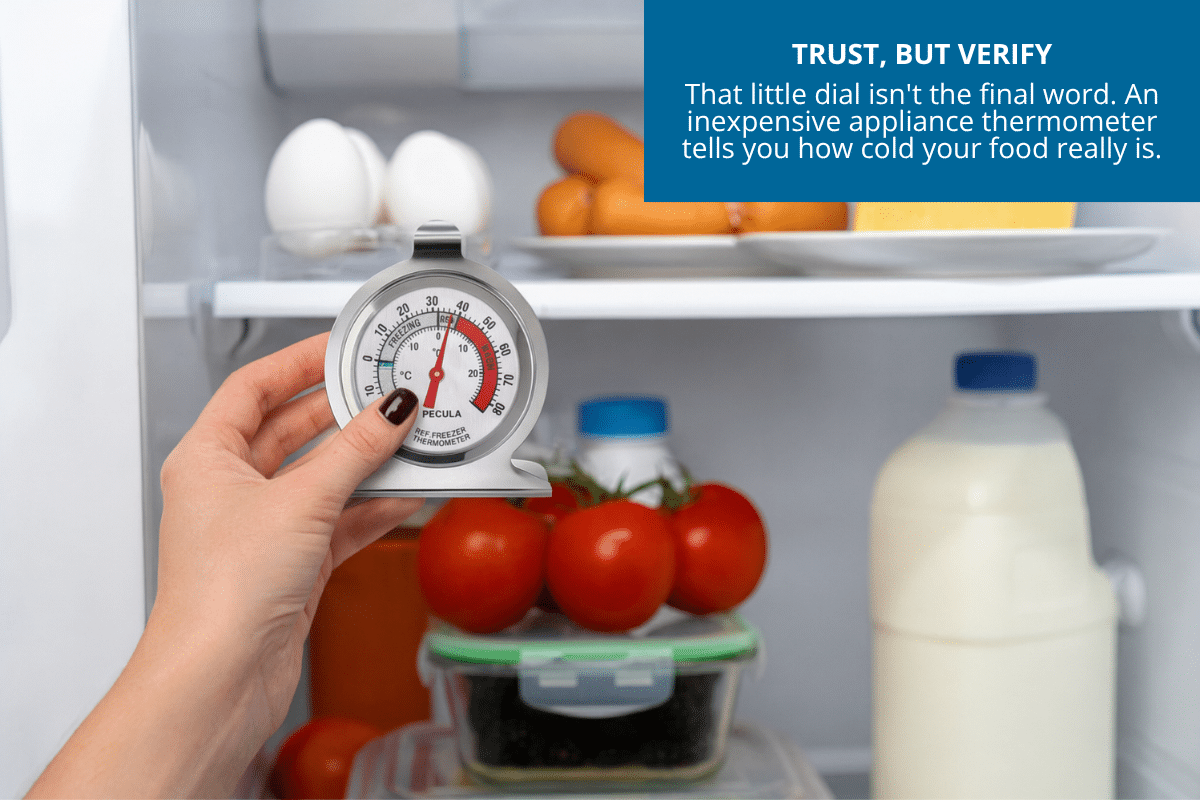
Some refrigerators have a numbered dial. Others say “cold,” “colder” and “coldest.” Newer ones may show an actual digital temperature. That doesn’t mean the food inside is necessarily sitting at that temperature.
Consumer Reports has found refrigerators in its testing that were off by as much as 5°F from the indicated setting. When 40°F is the line you’re trying to stay under, that’s a big miss.
So I like a wonderfully low-tech fix: an appliance thermometer.
The USDA recommends keeping one in both your refrigerator and freezer so you know the temperature the food is actually experiencing. For a few dollars, that’s cheap insurance for a refrigerator full of groceries.

How to check your refrigerator temperature
Put one appliance thermometer in the refrigerator and another in the freezer where you can easily read them. Then leave everything alone for a while before adjusting the controls.
If the refrigerator reads above 40°F, nudge the setting a little colder and give it time to settle before you check again. Your owner’s manual can tell you how long your particular model needs after a temperature adjustment.
If one spot seems suspiciously warm or cold, move the thermometer around. Temperatures aren’t the same top to bottom or front to back.
Once you’re consistently at or below 40°F, ideally hovering around 37°F, congratulations. You may now return to more interesting pursuits. Like finding out who put the empty milk carton back.
What if your refrigerator is too warm?
Don’t panic. One warm reading doesn’t mean the appliance is headed for the graveyard.
Start with the obvious.
- Adjust the temperature setting. Nudge it colder, wait, and check again.
- Check the vents. Cold air needs room to circulate. If containers and packages are jammed against the vents, rearrange things.
- Look at how full the refrigerator is. Full is fine. Packed tighter than a suitcase five minutes before leaving for the airport is another matter.
- Check the door seal. Is it closing all the way? Is the gasket dirty or damaged?
And yes, think about how often that door is being opened. Standing there contemplating your life choices may be a time-honored tradition, but it isn’t helping the temperature.
If you’ve adjusted the controls, cleared the vents and checked the door and the refrigerator still can’t maintain 40°F or below, that’s when I’d start looking at the owner’s manual or call a qualified appliance technician.
Is a full refrigerator okay?
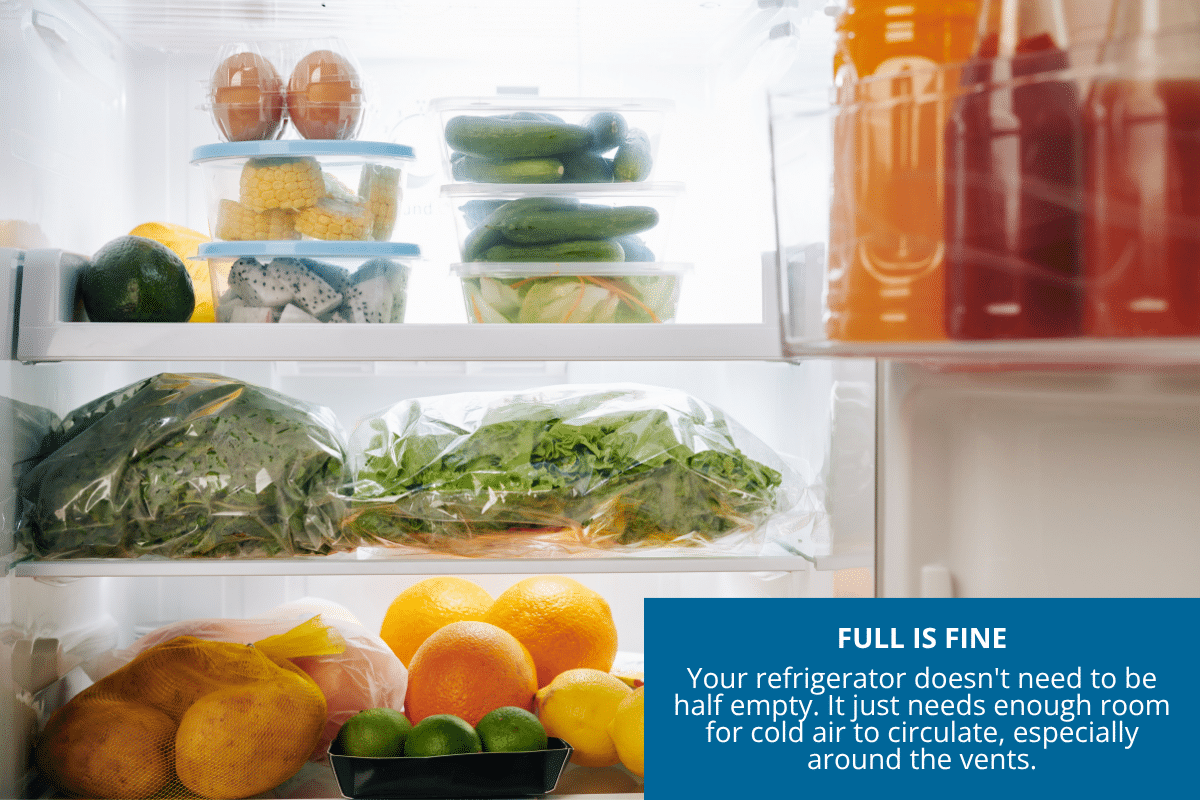
The FDA specifically advises against packing a refrigerator or freezer so tightly that air can’t circulate. So go ahead and stock up when there’s a good sale.
Full is fine. Packed is the problem. Cold air has to move around the food, so don’t wedge everything in like you’re competing for the last overhead bin on an airplane.
Keep the vents clear and leave a little room around containers.
And if you’re wondering whether the milk belongs on the door, where to put raw meat or what those crisper drawers are actually supposed to accomplish, that’s a different conversation.
Does it matter how fast food goes in the refrigerator?
It does. The USDA says perishable foods and leftovers should generally be refrigerated within two hours. If the air temperature is above 90°F, that drops to one hour.
So the giant pot of chili shouldn’t spend the evening cooling on the counter. Divide large amounts of food into shallow containers so they’ll cool more quickly, then get them refrigerated promptly.
And please don’t rely on the sniff test. Harmful bacteria don’t always have the courtesy to smell terrible.
What about a power outage?
If the power goes out, keep the doors closed.
An unopened refrigerator will generally keep food cold for about four hours. A full freezer can maintain an adequate temperature for about 48 hours, while a half-full freezer is closer to 24 hours, provided you leave the door closed.
Every peek lets the cold out, so resist the urge to check. When the power comes back, use your thermometers and current USDA guidance to decide what stays.
Keep an eye on it
Once you’ve got the temperature right, keeping it there takes very little.
Check the thermometer after a big grocery haul and whenever you clean out the refrigerator.
37, 40, 0. Three numbers. That’s it. A cheap thermometer and a quick glance now and then buy you safer food and fewer wasted groceries.
Now, if only the refrigerator could tell me what’s for dinner, wash the dishes and explain what happened to the leftovers I was saving for tomorrow.
One can dream.
Quick temperature check: Do you know what your refrigerator is actually running at right now? Share in the comments below.
EverydayCheapskate™ is reader-supported. We participate in the Amazon Services LLC Associates Program and other affiliate advertising programs, designed to provide a means for us to earn from qualifying purchases, at no cost to you.

More from Everyday Cheapskate
 https://www.everydaycheapskate.com/wp-content/uploads/20261016-Crispy-potato-cakes-made-with-leftover-mashed-potatoes.png
800
1200
Mary Hunt
https://www.everydaycheapskate.com/wp-content/uploads/EC-Logo-by-Mary-Hunt-Tagline-Trimmed.png
Mary Hunt2026-10-16 15:54:382026-10-16 15:54:38Got Leftover Mashed Potatoes? Try These 5 Smart Ideas
https://www.everydaycheapskate.com/wp-content/uploads/20261016-Crispy-potato-cakes-made-with-leftover-mashed-potatoes.png
800
1200
Mary Hunt
https://www.everydaycheapskate.com/wp-content/uploads/EC-Logo-by-Mary-Hunt-Tagline-Trimmed.png
Mary Hunt2026-10-16 15:54:382026-10-16 15:54:38Got Leftover Mashed Potatoes? Try These 5 Smart Ideas https://www.everydaycheapskate.com/wp-content/uploads/20261015-Sweet-pepper-and-onion-relish-in-a-white-bowl-with-crackers-and-fresh-red-bell-peppers.png
800
1200
Mary Hunt
https://www.everydaycheapskate.com/wp-content/uploads/EC-Logo-by-Mary-Hunt-Tagline-Trimmed.png
Mary Hunt2026-10-15 13:14:022026-10-15 13:14:02Sweet Pepper Onion Relish (Perfect Over Cream Cheese)
https://www.everydaycheapskate.com/wp-content/uploads/20261015-Sweet-pepper-and-onion-relish-in-a-white-bowl-with-crackers-and-fresh-red-bell-peppers.png
800
1200
Mary Hunt
https://www.everydaycheapskate.com/wp-content/uploads/EC-Logo-by-Mary-Hunt-Tagline-Trimmed.png
Mary Hunt2026-10-15 13:14:022026-10-15 13:14:02Sweet Pepper Onion Relish (Perfect Over Cream Cheese) https://www.everydaycheapskate.com/wp-content/uploads/20261012-Woman-using-smartphone-while-checking-monthly-cellular-data-usage-on-laptop.png
800
1200
Mary Hunt
https://www.everydaycheapskate.com/wp-content/uploads/EC-Logo-by-Mary-Hunt-Tagline-Trimmed.png
Mary Hunt2026-10-12 10:51:112026-10-12 10:51:11Do You Really Need Unlimited Data? Check Before You Pay
https://www.everydaycheapskate.com/wp-content/uploads/20261012-Woman-using-smartphone-while-checking-monthly-cellular-data-usage-on-laptop.png
800
1200
Mary Hunt
https://www.everydaycheapskate.com/wp-content/uploads/EC-Logo-by-Mary-Hunt-Tagline-Trimmed.png
Mary Hunt2026-10-12 10:51:112026-10-12 10:51:11Do You Really Need Unlimited Data? Check Before You Pay https://www.everydaycheapskate.com/wp-content/uploads/20261011-Woman-Adjusting-Smart-Home-Device-on-the-Wall-how-to-lower-your-electric-bill.png
800
1200
Mary Hunt
https://www.everydaycheapskate.com/wp-content/uploads/EC-Logo-by-Mary-Hunt-Tagline-Trimmed.png
Mary Hunt2026-10-11 23:01:562026-10-11 23:01:56Stop Chasing Pennies on Your Electric Bill. Do This
https://www.everydaycheapskate.com/wp-content/uploads/20261011-Woman-Adjusting-Smart-Home-Device-on-the-Wall-how-to-lower-your-electric-bill.png
800
1200
Mary Hunt
https://www.everydaycheapskate.com/wp-content/uploads/EC-Logo-by-Mary-Hunt-Tagline-Trimmed.png
Mary Hunt2026-10-11 23:01:562026-10-11 23:01:56Stop Chasing Pennies on Your Electric Bill. Do This https://www.everydaycheapskate.com/wp-content/uploads/20261007-red-present-sitting-in-autumn-leaves-Amazon-Prime-Big-Deal-Days-gifts.png
800
1200
Mary Hunt
https://www.everydaycheapskate.com/wp-content/uploads/EC-Logo-by-Mary-Hunt-Tagline-Trimmed.png
Mary Hunt2026-10-06 23:09:432026-10-06 23:09:43Christmas Shopping in October? These Prime Day Gifts Make Sense
https://www.everydaycheapskate.com/wp-content/uploads/20261007-red-present-sitting-in-autumn-leaves-Amazon-Prime-Big-Deal-Days-gifts.png
800
1200
Mary Hunt
https://www.everydaycheapskate.com/wp-content/uploads/EC-Logo-by-Mary-Hunt-Tagline-Trimmed.png
Mary Hunt2026-10-06 23:09:432026-10-06 23:09:43Christmas Shopping in October? These Prime Day Gifts Make Sense https://www.everydaycheapskate.com/wp-content/uploads/20261006-prime-big-deal-days-have-landed.png
800
1200
Mary Hunt
https://www.everydaycheapskate.com/wp-content/uploads/EC-Logo-by-Mary-Hunt-Tagline-Trimmed.png
Mary Hunt2026-10-05 11:01:432026-10-07 09:02:53EC’s Top Picks from Amazon Prime Big Deal Days 2026
https://www.everydaycheapskate.com/wp-content/uploads/20261006-prime-big-deal-days-have-landed.png
800
1200
Mary Hunt
https://www.everydaycheapskate.com/wp-content/uploads/EC-Logo-by-Mary-Hunt-Tagline-Trimmed.png
Mary Hunt2026-10-05 11:01:432026-10-07 09:02:53EC’s Top Picks from Amazon Prime Big Deal Days 2026 https://www.everydaycheapskate.com/wp-content/uploads/20261004-reduce-healthcare-costs-with-three-habits-healthy-couple-walking-in-autumn-leaves.png
800
1200
Mary Hunt
https://www.everydaycheapskate.com/wp-content/uploads/EC-Logo-by-Mary-Hunt-Tagline-Trimmed.png
Mary Hunt2026-10-04 23:08:572026-10-04 23:09:47How to Reduce Healthcare Costs With 3 Free Daily Habits
https://www.everydaycheapskate.com/wp-content/uploads/20261004-reduce-healthcare-costs-with-three-habits-healthy-couple-walking-in-autumn-leaves.png
800
1200
Mary Hunt
https://www.everydaycheapskate.com/wp-content/uploads/EC-Logo-by-Mary-Hunt-Tagline-Trimmed.png
Mary Hunt2026-10-04 23:08:572026-10-04 23:09:47How to Reduce Healthcare Costs With 3 Free Daily Habits https://www.everydaycheapskate.com/wp-content/uploads/20241004-news-you-can-use-october-everyday-cheapskate-top-news-articles.png
800
1200
Mary Hunt
https://www.everydaycheapskate.com/wp-content/uploads/EC-Logo-by-Mary-Hunt-Tagline-Trimmed.png
Mary Hunt2026-10-04 01:04:052026-10-16 16:24:53News You Can Use • October 2026
https://www.everydaycheapskate.com/wp-content/uploads/20241004-news-you-can-use-october-everyday-cheapskate-top-news-articles.png
800
1200
Mary Hunt
https://www.everydaycheapskate.com/wp-content/uploads/EC-Logo-by-Mary-Hunt-Tagline-Trimmed.png
Mary Hunt2026-10-04 01:04:052026-10-16 16:24:53News You Can Use • October 2026 https://www.everydaycheapskate.com/wp-content/uploads/20261003-woman-hugging-elderly-mother-sandwich-generation-caring-for-aging-parents.png
800
1200
Mary Hunt
https://www.everydaycheapskate.com/wp-content/uploads/EC-Logo-by-Mary-Hunt-Tagline-Trimmed.png
Mary Hunt2026-10-03 10:47:222026-10-03 10:47:25Sandwiched Between Aging Parents and Adult Children
https://www.everydaycheapskate.com/wp-content/uploads/20261003-woman-hugging-elderly-mother-sandwich-generation-caring-for-aging-parents.png
800
1200
Mary Hunt
https://www.everydaycheapskate.com/wp-content/uploads/EC-Logo-by-Mary-Hunt-Tagline-Trimmed.png
Mary Hunt2026-10-03 10:47:222026-10-03 10:47:25Sandwiched Between Aging Parents and Adult ChildrenPlease keep your comments positive, encouraging, helpful, brief,
and on-topic in keeping with EC Commenting Guidelines
Last update on 2026-10-17 / Affiliate links / Images from Amazon Product Advertising API

Leave a Reply
Want to join the discussion?Feel free to contribute!