The worst of winter is finally behind us, and spring has a way of shining a spotlight on everything that got ignored especially outside. You step up to your front door, ready for a fresh start… and there they are: stubborn greenish-brown stains from last fall’s leaves, clinging like they never got the memo. Quick hosing or scrubbing won’t budge them, but the good news? You don’t need fancy tools or a full weekend to remove leaf stains from concrete. With a simple, step-by-step approach, your entryway can look fresh again in no time.
Let’s get right to the question that started it all.
Dear Mary: Five years ago we replaced our entryway steps and now the concrete has developed green/brown stains from dead, wet leaves. How can we remove these stains?
– Mark
Dear Mark: Those marks aren’t just dirt and if you’ve been scrubbing like they are, no wonder they’re not budging. What you’re seeing are tannin stains, the same natural compounds that show up in tea and red wine. (So yes, in a way, your front steps have been “marinating” all winter.)
When wet leaves sit on concrete, they slowly release those tannins, and because concrete is porous, it soaks them right in. That’s why a quick rinse doesn’t do much. They’ve already settled below the surface.
Here’s the helpful part to remember:
New stains are much more cooperative. Sometimes a little sunshine alone will fade them away.
Older stains are more set in their ways and will need a bit of effort and the right cleaner to lift them out.
Once you know what you’re dealing with, it’s a whole lot easier to choose the right approach.
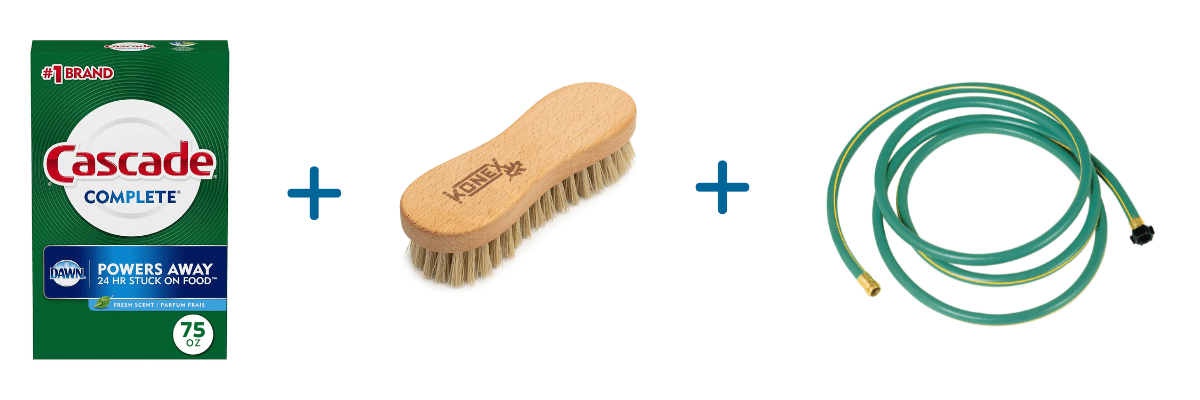
Before you go pulling out the heavy-duty stuff, start here. This is one of those “use what you already have” fixes that works surprisingly well and saves you from turning a small job into an all-day project.
Clear the area. Sweep away leaves, dirt, and anything else hanging around.
Wet the concrete. A quick rinse helps the cleaner spread and soak in evenly.
Apply detergent. Sprinkle it right onto the damp stain.
Let it sit. Give it 5–10 minutes to work its magic. This is a great time to sip your coffee and admire your ambition.
Scrub. Grab your brush and put a little muscle into it.
Rinse thoroughly. A pressure washer makes quick work of this, but a strong stream from the hose will get the job done too.
If the stain fades but doesn’t completely disappear, don’t overthink it. Just repeat the process once or twice. Most of the time, that’s all it takes to go from “what happened here?” to “that’s more like it.”
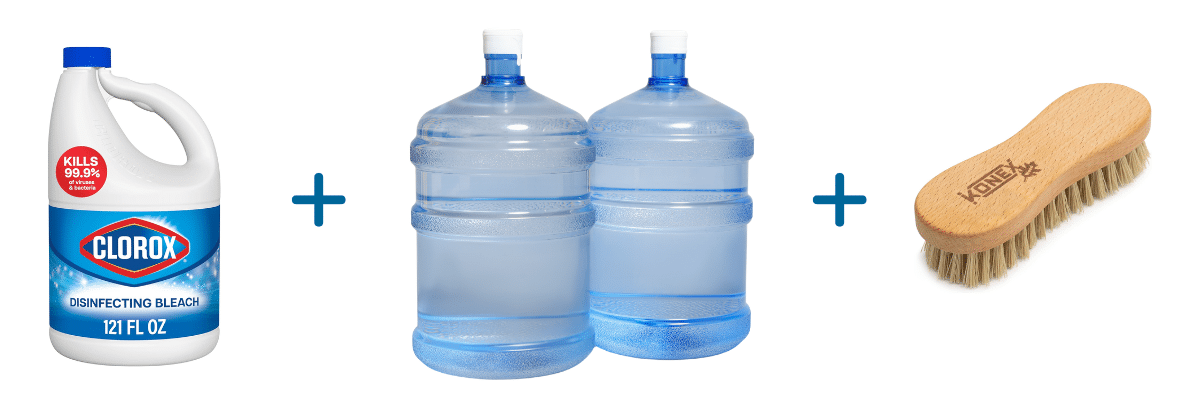
Some stains have clearly settled in, unpacked their bags, and made themselves comfortable. That’s when it’s time to step things up a notch. Bleach can be effective here when used the right way.
Wet the concrete first. This helps the solution spread evenly instead of soaking in too fast.
Apply the mixture. Pour or spray it over the stained area.
Keep it wet for about 5 minutes. Don’t let it dry. This is where it does its best work.
Scrub thoroughly. A little effort here goes a long way.
Rinse completely. Take your time with this step so nothing is left behind.
Bleach breaks down organic stains (like those tannins) and can even brighten dingy concrete. It’s also budget-friendly and easy to find. It can weaken or dull a concrete sealer if you don’t rinse well, and it’s not something you want lingering on plants or grass.
Pro Tip: Clean the entire area (not just the stain) or you may end up with a noticeably lighter “spot” that stands out just as much as the original stain.
Safety note: Never mix bleach with anything other than water. Cover nearby plants, and if you have it, wear gloves and old clothes you don’t mind splashing.
For Really Stubborn, Set-In Stains
If you’re still seeing faint “ghosts” of those stains after all that effort, don’t worry. You’re not doing anything wrong. Some stains just settle in deeper and need a different approach.
This is where a cleaner made specifically for organic (tannin) stains earns its keep.
Let it sit 24–48 hours (yes, it’s a waiting game… follow the label)
Rinse thoroughly
Unlike bleach, which works fast on the surface, these cleaners use an oxygen-based formula that slowly lifts the stain from within the concrete. This “slow soak” method often pulls out stains that scrubbing alone can’t reach.
A Few Smart Shortcuts
Once you’ve got those steps looking respectable again, let’s keep it that way without turning this into a repeat performance next season.
Work in the morning or evening. Cleaners work better when they’re not drying too fast, and you won’t feel like you’re in a race against the sun.
Test a small area first. It takes two minutes and saves you from any “well, that wasn’t supposed to happen” moments.
Stay ahead of it.A quick sweep after wet, leafy days keeps stains from getting comfortable in the first place.
Seal the concrete. Once it’s clean, a good sealer makes future cleanup faster and a whole lot easier.
A clean entry doesn’t require a full weekend project or a cart full of supplies. Start simple, step it up only if needed, and you’ll get there. And once you’ve done it once, you’ll know exactly how to keep those stains from making themselves at home again.
FAQ: Removing Leaf Stains from Concrete
How long do leaf stains last on concrete?
Longer than you’d think. If left alone, they can stick around for months or even years, because concrete is porous and holds onto those tannins. The upside? Newer stains often fade with sunlight if you catch them early.
Will a pressure washer alone remove leaf stains?
Sometimes, if the stains are fresh and haven’t had time to settle in. But once they’ve soaked below the surface, water alone usually isn’t enough. You’ll get better results pairing it with a cleaner.
Is bleach safe for concrete?
Yes, when it’s diluted properly and used with a little care. It’s effective and budget-friendly, but be sure to rinse thoroughly and avoid getting it on plants or nearby surfaces you want to keep intact.
What’s the best budget-friendly cleaner to try first?
A powdered dishwasher detergent with a bleaching agent is hard to beat. It’s inexpensive, easy to find, and does a surprisingly good job on organic stains like leaves.
Do I really need a specialty cleaner?
Not always. Start simple first. But if you’re still seeing those stubborn “ghost stains,” an oxygen-based cleaner made for organic stains can save you a lot of extra scrubbing.
Can I prevent leaf stains in the future?
Absolutely and this is where a little effort goes a long way. Keep leaves from sitting too long (especially when wet), rinse the area now and then, and consider sealing your concrete once it’s clean. It makes future cleanups much easier.
Question: What’s the one outdoor mess that always seems to win? Leaf stains, mildew, or something else? Share in the comments below.
EverydayCheapskate™ is reader-supported. We participate in the Amazon Services LLC Associates Program and other affiliate advertising programs, designed to provide a means for us to earn from qualifying purchases, at no cost to you.
https://www.everydaycheapskate.com/wp-content/uploads/20260913-how-to-winterize-your-home-snowy-driveway-suburban-home.png8001200Mary Hunthttps://www.everydaycheapskate.com/wp-content/uploads/EC-Logo-by-Mary-Hunt-Tagline-Trimmed.pngMary Hunt2026-09-13 15:32:142026-09-28 22:48:55The Complete Guide to Winterizing Your Home This Fall
https://www.everydaycheapskate.com/wp-content/uploads/20260829-fall-yard-projects-to-tackle-before-the-first-frost-foilage-front-yard-home.png8001200Mary Hunthttps://www.everydaycheapskate.com/wp-content/uploads/EC-Logo-by-Mary-Hunt-Tagline-Trimmed.pngMary Hunt2026-08-29 17:25:422026-09-28 22:49:2010 Fall Yard Tasks to Complete Before First Frost Hits
https://www.everydaycheapskate.com/wp-content/uploads/20260822-central-AC-maintenance-air-condenser-outdoors.png8001200Mary Hunthttps://www.everydaycheapskate.com/wp-content/uploads/EC-Logo-by-Mary-Hunt-Tagline-Trimmed.pngMary Hunt2026-08-22 14:19:562026-09-28 22:49:43How to Extend the Life of Your Central AC (5 Late-Summer Tune-Up Tips)
https://www.everydaycheapskate.com/wp-content/uploads/20260820-how-to-keep-ants-away-after-youve-killed-the-ant-hill.png8001200Mary Hunthttps://www.everydaycheapskate.com/wp-content/uploads/EC-Logo-by-Mary-Hunt-Tagline-Trimmed.pngMary Hunt2026-08-20 14:17:552026-09-28 22:49:46How to Keep Ants Away After You Treat the Ant Hill
https://www.everydaycheapskate.com/wp-content/uploads/20260815-how-to-water-your-lawn-without-wasting-money.png8001200Mary Hunthttps://www.everydaycheapskate.com/wp-content/uploads/EC-Logo-by-Mary-Hunt-Tagline-Trimmed.pngMary Hunt2026-08-15 12:45:022026-09-28 22:49:51How to Water Your Lawn Without Wasting Money This Summer
https://www.everydaycheapskate.com/wp-content/uploads/20260812-zucchini-overload-what-to-do-with-a-bunch-of-zucchini.png8001200Mary Hunthttps://www.everydaycheapskate.com/wp-content/uploads/EC-Logo-by-Mary-Hunt-Tagline-Trimmed.pngMary Hunt2026-08-12 17:48:312026-09-28 22:49:57Zucchini Overload? 10 Ways to Use Up Your Garden Surplus
https://www.everydaycheapskate.com/wp-content/uploads/20260809-how-to-get-the-smell-out-of-towels-stack-of-towels-sitting-with-candle-in-bright-natural-light.png8001200Mary Hunthttps://www.everydaycheapskate.com/wp-content/uploads/EC-Logo-by-Mary-Hunt-Tagline-Trimmed.pngMary Hunt2026-08-08 16:48:552026-08-08 16:50:57How to Get Smell Out of Towels: The 2-Wash Fix That Works
Please keep your comments positive, encouraging, helpful, brief, and on-topic in keeping with EC Commenting Guidelines
Caught yourself reading all the way 'til the end? Why not share with a friend.
https://www.everydaycheapskate.com/wp-content/uploads/20260405-top-view-of-pavers-with-leaf-tannins-how-to-remove-leaf-stains-from-concrete-2.png8001200Mary Hunthttps://www.everydaycheapskate.com/wp-content/uploads/EC-Logo-by-Mary-Hunt-Tagline-Trimmed.pngMary Hunt2026-04-05 14:56:592026-09-28 22:56:54How to Remove Stubborn Leaf Stains from Concrete
1reply
Miriam Ben Yishai says:
why do you call it “the worst of winter” some people prefer winter to summer (like me) I am sad to see the heat coming along when I feel like a rag doll
This website uses cookies to improve your experience while you navigate through the website. Out of these cookies, the cookies that are categorized as necessary are stored on your browser as they are essential for the working of basic functionalities of the website. We also use third-party cookies that help us analyze and understand how you use this website. These cookies will be stored in your browser only with your consent. You also have the option to opt-out of these cookies. But opting out of some of these cookies may have an effect on your browsing experience.
Necessary cookies are absolutely essential for the website to function properly. This category only includes cookies that ensures basic functionalities and security features of the website. These cookies do not store any personal information.
Any cookies that may not be particularly necessary for the website to function and is used specifically to collect user personal data via analytics, ads, other embedded contents are termed as non-necessary cookies. It is mandatory to procure user consent prior to running these cookies on your website.





 https://www.everydaycheapskate.com/wp-content/uploads/20260917-fall-cleaning-checklist.png
800
1200
Mary Hunt
https://www.everydaycheapskate.com/wp-content/uploads/EC-Logo-by-Mary-Hunt-Tagline-Trimmed.png
Mary Hunt2026-09-17 17:11:012026-09-28 22:48:45Fall Cleaning Checklist: 15 Overlooked Spots to Clean
https://www.everydaycheapskate.com/wp-content/uploads/20260917-fall-cleaning-checklist.png
800
1200
Mary Hunt
https://www.everydaycheapskate.com/wp-content/uploads/EC-Logo-by-Mary-Hunt-Tagline-Trimmed.png
Mary Hunt2026-09-17 17:11:012026-09-28 22:48:45Fall Cleaning Checklist: 15 Overlooked Spots to Clean https://www.everydaycheapskate.com/wp-content/uploads/20260913-how-to-winterize-your-home-snowy-driveway-suburban-home.png
800
1200
Mary Hunt
https://www.everydaycheapskate.com/wp-content/uploads/EC-Logo-by-Mary-Hunt-Tagline-Trimmed.png
Mary Hunt2026-09-13 15:32:142026-09-28 22:48:55The Complete Guide to Winterizing Your Home This Fall
https://www.everydaycheapskate.com/wp-content/uploads/20260913-how-to-winterize-your-home-snowy-driveway-suburban-home.png
800
1200
Mary Hunt
https://www.everydaycheapskate.com/wp-content/uploads/EC-Logo-by-Mary-Hunt-Tagline-Trimmed.png
Mary Hunt2026-09-13 15:32:142026-09-28 22:48:55The Complete Guide to Winterizing Your Home This Fall https://www.everydaycheapskate.com/wp-content/uploads/20260829-fall-yard-projects-to-tackle-before-the-first-frost-foilage-front-yard-home.png
800
1200
Mary Hunt
https://www.everydaycheapskate.com/wp-content/uploads/EC-Logo-by-Mary-Hunt-Tagline-Trimmed.png
Mary Hunt2026-08-29 17:25:422026-09-28 22:49:2010 Fall Yard Tasks to Complete Before First Frost Hits
https://www.everydaycheapskate.com/wp-content/uploads/20260829-fall-yard-projects-to-tackle-before-the-first-frost-foilage-front-yard-home.png
800
1200
Mary Hunt
https://www.everydaycheapskate.com/wp-content/uploads/EC-Logo-by-Mary-Hunt-Tagline-Trimmed.png
Mary Hunt2026-08-29 17:25:422026-09-28 22:49:2010 Fall Yard Tasks to Complete Before First Frost Hits https://www.everydaycheapskate.com/wp-content/uploads/20260826-DIY-cat-litter-deodorizer-kitten-looking-up-at-camera-from-box.png
800
1200
Mary Hunt
https://www.everydaycheapskate.com/wp-content/uploads/EC-Logo-by-Mary-Hunt-Tagline-Trimmed.png
Mary Hunt2026-08-25 21:17:362026-09-28 22:49:26The One-Ingredient Litter Box Trick That Costs Pennies
https://www.everydaycheapskate.com/wp-content/uploads/20260826-DIY-cat-litter-deodorizer-kitten-looking-up-at-camera-from-box.png
800
1200
Mary Hunt
https://www.everydaycheapskate.com/wp-content/uploads/EC-Logo-by-Mary-Hunt-Tagline-Trimmed.png
Mary Hunt2026-08-25 21:17:362026-09-28 22:49:26The One-Ingredient Litter Box Trick That Costs Pennies https://www.everydaycheapskate.com/wp-content/uploads/20260822-central-AC-maintenance-air-condenser-outdoors.png
800
1200
Mary Hunt
https://www.everydaycheapskate.com/wp-content/uploads/EC-Logo-by-Mary-Hunt-Tagline-Trimmed.png
Mary Hunt2026-08-22 14:19:562026-09-28 22:49:43How to Extend the Life of Your Central AC (5 Late-Summer Tune-Up Tips)
https://www.everydaycheapskate.com/wp-content/uploads/20260822-central-AC-maintenance-air-condenser-outdoors.png
800
1200
Mary Hunt
https://www.everydaycheapskate.com/wp-content/uploads/EC-Logo-by-Mary-Hunt-Tagline-Trimmed.png
Mary Hunt2026-08-22 14:19:562026-09-28 22:49:43How to Extend the Life of Your Central AC (5 Late-Summer Tune-Up Tips) https://www.everydaycheapskate.com/wp-content/uploads/20260820-how-to-keep-ants-away-after-youve-killed-the-ant-hill.png
800
1200
Mary Hunt
https://www.everydaycheapskate.com/wp-content/uploads/EC-Logo-by-Mary-Hunt-Tagline-Trimmed.png
Mary Hunt2026-08-20 14:17:552026-09-28 22:49:46How to Keep Ants Away After You Treat the Ant Hill
https://www.everydaycheapskate.com/wp-content/uploads/20260820-how-to-keep-ants-away-after-youve-killed-the-ant-hill.png
800
1200
Mary Hunt
https://www.everydaycheapskate.com/wp-content/uploads/EC-Logo-by-Mary-Hunt-Tagline-Trimmed.png
Mary Hunt2026-08-20 14:17:552026-09-28 22:49:46How to Keep Ants Away After You Treat the Ant Hill https://www.everydaycheapskate.com/wp-content/uploads/20260815-how-to-water-your-lawn-without-wasting-money.png
800
1200
Mary Hunt
https://www.everydaycheapskate.com/wp-content/uploads/EC-Logo-by-Mary-Hunt-Tagline-Trimmed.png
Mary Hunt2026-08-15 12:45:022026-09-28 22:49:51How to Water Your Lawn Without Wasting Money This Summer
https://www.everydaycheapskate.com/wp-content/uploads/20260815-how-to-water-your-lawn-without-wasting-money.png
800
1200
Mary Hunt
https://www.everydaycheapskate.com/wp-content/uploads/EC-Logo-by-Mary-Hunt-Tagline-Trimmed.png
Mary Hunt2026-08-15 12:45:022026-09-28 22:49:51How to Water Your Lawn Without Wasting Money This Summer https://www.everydaycheapskate.com/wp-content/uploads/20260812-zucchini-overload-what-to-do-with-a-bunch-of-zucchini.png
800
1200
Mary Hunt
https://www.everydaycheapskate.com/wp-content/uploads/EC-Logo-by-Mary-Hunt-Tagline-Trimmed.png
Mary Hunt2026-08-12 17:48:312026-09-28 22:49:57Zucchini Overload? 10 Ways to Use Up Your Garden Surplus
https://www.everydaycheapskate.com/wp-content/uploads/20260812-zucchini-overload-what-to-do-with-a-bunch-of-zucchini.png
800
1200
Mary Hunt
https://www.everydaycheapskate.com/wp-content/uploads/EC-Logo-by-Mary-Hunt-Tagline-Trimmed.png
Mary Hunt2026-08-12 17:48:312026-09-28 22:49:57Zucchini Overload? 10 Ways to Use Up Your Garden Surplus https://www.everydaycheapskate.com/wp-content/uploads/20260809-how-to-get-the-smell-out-of-towels-stack-of-towels-sitting-with-candle-in-bright-natural-light.png
800
1200
Mary Hunt
https://www.everydaycheapskate.com/wp-content/uploads/EC-Logo-by-Mary-Hunt-Tagline-Trimmed.png
Mary Hunt2026-08-08 16:48:552026-08-08 16:50:57How to Get Smell Out of Towels: The 2-Wash Fix That Works
https://www.everydaycheapskate.com/wp-content/uploads/20260809-how-to-get-the-smell-out-of-towels-stack-of-towels-sitting-with-candle-in-bright-natural-light.png
800
1200
Mary Hunt
https://www.everydaycheapskate.com/wp-content/uploads/EC-Logo-by-Mary-Hunt-Tagline-Trimmed.png
Mary Hunt2026-08-08 16:48:552026-08-08 16:50:57How to Get Smell Out of Towels: The 2-Wash Fix That Works

why do you call it “the worst of winter” some people prefer winter to summer (like me) I am sad to see the heat coming along when I feel like a rag doll