

The Ultimate Guide to Using a Pressure Washer Plus Best Inexpensive Pressure Washer Picks

Pressure washers, both gas-powered and electric models, are fantastic tools for tackling a variety of cleaning tasks around a house. Seeing dirt, grime, and even mold magically disappear from driveways, walkways, patios, vehicles, and perhaps even the entire outside of the house is not only enjoyable but also quite satisfying. But there’s a lot more to it than that. In this post, I will break down the pros and cons of owning, using, maintaining, and renting a pressure washer; then, we’lI will wrap up with my top picks should you be in the market for a power washer.
Pressure washers work by generating a high-pressure water spray, and their power is measured in pounds per square inch (PSI). This tells you how much pressure the water is putting on the walls of the container. You can find pressure washers in both gas and electric models. Gas models pack a bigger punch and are great for tougher jobs and sturdier materials. Plus, since they don’t need to be plugged in, gas pressure washers are more mobile, making them perfect for those hard-to-reach spots.
Pros and Cons of Owning a Pressure Washer
Over the years, I have owned and tested more than a few pressure washers. I tell you from experience that while it’s not all fun and games, a pressure washer can be a very useful, valuable, and even enjoyable possession.
On the other hand, a pressure washer can be a real pain in the neck! Trust me, there’s a lot of junk out there. I have sent several pressure washers to be recycled that were basically useless, and I have even donated a couple that worked well but were too weak to perform up to my expectations.
Pros
1. Efficient Cleaning
Pressure washers can be incredibly effective at removing dirt, grime, mold, and mildew from various surfaces. They can clean large areas quickly and with less physical effort than traditional methods.
2. Versatile Uses
A pressure washer can be used on a wide range of surfaces, including driveways, decks, patios, siding, vehicles, and even outdoor furniture. A pressure washer is great for washing windows, cars, RVs, and trailers. Some models have different nozzles and settings to adjust the pressure for different tasks.
3. Saves Time
Because of its power and efficiency, a pressure washer can significantly cut down the time spent on cleaning tasks. What might take hours with a garden hose and scrub brush can often be accomplished in minutes with a pressure washer.
4. Environmentally Friendly
Pressure washers use less water compared to garden hoses for the same tasks. The high pressure allows for effective cleaning with a smaller volume of water.
5. Improved Aesthetic and Maintenance
Regular use of a pressure washer can help maintain the appearance and condition of your property, which can prevent long-term damage, enhance its value, and save money on repairs.
Cons
1. Initial Cost
Pressure washers, especially high-quality models, can be relatively expensive. Additionally, you might need to buy accessories like nozzles, brushes, and detergents.
2. Storage Space
Pressure washers, especially gas-powered models, can take up significant storage space. They need to be stored in a dry place to prevent damage from moisture and cold temperatures.
3. Maintenance Requirements
Pressure washers require regular maintenance to keep them running efficiently. This can include checking hoses and nozzles for clogs, changing oil (for gas models), and winterizing the unit if you live in a cold climate.
4. Risk of Damage
Using a pressure washer improperly can damage surfaces. Too much pressure can strip paint, etch wood, and even break windows. It’s important to use the correct nozzle and pressure setting for each task.
5. Safety Concerns
Pressure washers can be dangerous if not used correctly. The high-pressure spray can cause serious injuries. It’s crucial to follow safety instructions, wear protective gear, and keep the spray away from people, pets, and delicate items.
Pressure Washer vs. Power Washer
The terms “pressure washer” and “power washer” are often used interchangeably, but they are distinctly different:
Pressure Washer
- Cold Water: A pressure washer uses cold water to clean surfaces, making it suitable for general cleaning tasks such as washing cars and decks, patios, driveways, and siding.
- Versatility: Pressure washers come in a range of pressure levels (measured in PSI) and can be either electric or gas-powered. Depending on the pressure level and attachments used, they can handle a variety of cleaning tasks.
Power Washer
- Hot Water: A power washer uses hot water. The heat helps to break down and remove tougher stains, grease, oil, and grime.
- Heavy-Duty Cleaning: Because of the hot water, power washers are often used for more challenging tasks, such as removing grease from driveways and sidewalks and cleaning heavily soiled siding, fences, walls, and other tough grime.
- Higher Cost and Maintenance: Power washers are more expensive than pressure washers due to the additional heating element. They also require regular maintenance.
Essential Ownership Tips for Pressure Washers

Choose the Right Model
Consider your needs. Electric models are great for light to medium tasks and are easier to maintain, while gas models are more powerful and suitable for heavy-duty jobs.
Learn Proper Usage
Take the time to understand how to use your pressure washer correctly. Remember that professional house painters use pressure washers to prep houses to remove old paint! Without wanting to, you could ruin an otherwise good paint job or even permanently etch concrete if you aren’t careful. The pressure can be that great! Start with lower pressure and work your way up if needed. Practice on a small, inconspicuous area before tackling larger surfaces.
Regular Maintenance
Follow the manufacturer’s maintenance schedule. Regularly inspect hoses, nozzles, and other components. For gas models, keep up with oil changes fuel stabilization, and winterization as appropriate for your exact model.
Safety First
Always wear protective gear, such as goggles and gloves. Keep the washer pointed away from people and pets, and never direct the spray at yourself.
Owning a pressure washer can be a great investment if you regularly clean your outdoor spaces. The right model and proper care can make your cleaning routine much more efficient and effective.
Consider Renting: Pros and Cons of Using a Power Washer on Loan

It’s hard to beat the convenience that comes with owning your own pressure washer. But there is another alternative you might want to consider before making that investment, and that’s renting. Most home improvement centers, like Home Depot and Loew’s, for example, rent tools and power equipment. Most offer power washers in their lineups. But again, there are pros and cons to consider before deciding to rent rather than own.
Pros
1. High quality
Rental power washers, whether electric or gas-powered, are typically name-brand, bigger, and more powerful than the typical made-for-residential models.
2. Reliable
You won’t have to worry about that rental leaking or failing to build pressure. You’ll have what you need to get your job done!
3. No storage required
This is a biggie for most people. You won’t need to find a spot in the garage or build a shed to store a power washer!
Cons
1. Logistics
A rental power washer is not likely to fit in the trunk of your car, so you’ll need a truck or larger vehicle to pick it up. Pressure washers can be pretty bulky and heavy—some models weigh over 100 pounds. You might need a helper and a truck to get the pressure washer home.
2. Learning curve
Before you can start your job, you’ll likely need to watch a video or read a manual to get up to speed, which will consume some of the rental time.
3. Cost
While buying a power washer is no small matter, renting runs around $50 a day. Five rental fees could be more than paying for a power washer you have at home, ready to go for any size job, anytime you need it.
Best Inexpensive Pressure Washers for Home Use
- Best Electric: Greenworks 2000 Max PSI Electric Pressure Washer
- Best Electric Upgrade: Greenworks 3000 PSI TruBrushless Electric Pressure Washer
- Best Gas-Powered: SIMPSON Clean Machine 3400 PSI Gas Pressure Washer
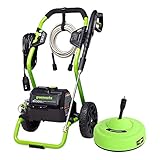


Best Electric

Greenworks 2000 Max PSI Electric Pressure Washer
This Greenworks 2000 stands out among other inexpensive pressure washers for its 11-inch surface cleaner, making short work of stubborn stains on wide, flat surfaces like driveways, patios, and fences. With the attachment, you can blast away all kinds of dirt and grime from driveways, house siding, and wooden fences. Comes with a cleaning wand, a soap nozzle (both work great to clean a grimy vehicle!) a 25-degree nozzle, and a 40-degree nozzle.
Best Electric Upgrade

Greenworks 3000 PSI TruBrushless Electric Pressure Washer
I love this model’s 35-foot power cord and 25-foot water hose for easy maneuvering. This pressure washer comes with five nozzles—soap, 15-degree, 25-degree, 40-degree, and turbo. The turbo nozzle is great for removing grunge and stains from driveways and sidewalks.
The onboard soap tank is perfect for washing cars or boats. With up to 3,000 psi and 2.0 gpm flow, it handles tough cleaning jobs. The two wheels make it easy to move, and it stores vertically to save space.
Best Gas

SIMPSON Clean Machine 3400 PSI Gas Pressure Washer
Powerful residential performance: Fully assembled and easy to start, the Clean Machine power washer is great for cleaning decks, patios, outdoor furniture, house siding, and prepping home exteriors for painting. Keep in mind that gas-powered pressure washers aren’t available in every state. If that’s you, this high-pressure electric model may be a suitable alternative as it packs a punch with 4500PSI!
Question: Have you ever used a pressure washer for cleaning tasks around your home? What tips do you have for someone considering buying or renting one for the first time? Let us know in the comments down below.
EverydayCheapskate™ is reader-supported. We participate in the Amazon Services LLC Associates Program and other affiliate advertising programs, designed to provide a means for us to earn from qualifying purchases, at no cost to you.

More from Everyday Cheapskate
 https://www.everydaycheapskate.com/wp-content/uploads/20261012-Woman-using-smartphone-while-checking-monthly-cellular-data-usage-on-laptop.png
800
1200
Mary Hunt
https://www.everydaycheapskate.com/wp-content/uploads/EC-Logo-by-Mary-Hunt-Tagline-Trimmed.png
Mary Hunt2026-10-12 10:51:112026-10-12 10:51:11Do You Really Need Unlimited Data? Check Before You Pay
https://www.everydaycheapskate.com/wp-content/uploads/20261012-Woman-using-smartphone-while-checking-monthly-cellular-data-usage-on-laptop.png
800
1200
Mary Hunt
https://www.everydaycheapskate.com/wp-content/uploads/EC-Logo-by-Mary-Hunt-Tagline-Trimmed.png
Mary Hunt2026-10-12 10:51:112026-10-12 10:51:11Do You Really Need Unlimited Data? Check Before You Pay https://www.everydaycheapskate.com/wp-content/uploads/20261011-Woman-Adjusting-Smart-Home-Device-on-the-Wall-how-to-lower-your-electric-bill.png
800
1200
Mary Hunt
https://www.everydaycheapskate.com/wp-content/uploads/EC-Logo-by-Mary-Hunt-Tagline-Trimmed.png
Mary Hunt2026-10-11 23:01:562026-10-11 23:01:56Stop Chasing Pennies on Your Electric Bill. Do This
https://www.everydaycheapskate.com/wp-content/uploads/20261011-Woman-Adjusting-Smart-Home-Device-on-the-Wall-how-to-lower-your-electric-bill.png
800
1200
Mary Hunt
https://www.everydaycheapskate.com/wp-content/uploads/EC-Logo-by-Mary-Hunt-Tagline-Trimmed.png
Mary Hunt2026-10-11 23:01:562026-10-11 23:01:56Stop Chasing Pennies on Your Electric Bill. Do This https://www.everydaycheapskate.com/wp-content/uploads/20261007-red-present-sitting-in-autumn-leaves-Amazon-Prime-Big-Deal-Days-gifts.png
800
1200
Mary Hunt
https://www.everydaycheapskate.com/wp-content/uploads/EC-Logo-by-Mary-Hunt-Tagline-Trimmed.png
Mary Hunt2026-10-06 23:09:432026-10-06 23:09:43Christmas Shopping in October? These Prime Day Gifts Make Sense
https://www.everydaycheapskate.com/wp-content/uploads/20261007-red-present-sitting-in-autumn-leaves-Amazon-Prime-Big-Deal-Days-gifts.png
800
1200
Mary Hunt
https://www.everydaycheapskate.com/wp-content/uploads/EC-Logo-by-Mary-Hunt-Tagline-Trimmed.png
Mary Hunt2026-10-06 23:09:432026-10-06 23:09:43Christmas Shopping in October? These Prime Day Gifts Make Sense https://www.everydaycheapskate.com/wp-content/uploads/20261006-prime-big-deal-days-have-landed.png
800
1200
Mary Hunt
https://www.everydaycheapskate.com/wp-content/uploads/EC-Logo-by-Mary-Hunt-Tagline-Trimmed.png
Mary Hunt2026-10-05 11:01:432026-10-07 09:02:53EC’s Top Picks from Amazon Prime Big Deal Days 2026
https://www.everydaycheapskate.com/wp-content/uploads/20261006-prime-big-deal-days-have-landed.png
800
1200
Mary Hunt
https://www.everydaycheapskate.com/wp-content/uploads/EC-Logo-by-Mary-Hunt-Tagline-Trimmed.png
Mary Hunt2026-10-05 11:01:432026-10-07 09:02:53EC’s Top Picks from Amazon Prime Big Deal Days 2026 https://www.everydaycheapskate.com/wp-content/uploads/20261004-reduce-healthcare-costs-with-three-habits-healthy-couple-walking-in-autumn-leaves.png
800
1200
Mary Hunt
https://www.everydaycheapskate.com/wp-content/uploads/EC-Logo-by-Mary-Hunt-Tagline-Trimmed.png
Mary Hunt2026-10-04 23:08:572026-10-04 23:09:47How to Reduce Healthcare Costs With 3 Free Daily Habits
https://www.everydaycheapskate.com/wp-content/uploads/20261004-reduce-healthcare-costs-with-three-habits-healthy-couple-walking-in-autumn-leaves.png
800
1200
Mary Hunt
https://www.everydaycheapskate.com/wp-content/uploads/EC-Logo-by-Mary-Hunt-Tagline-Trimmed.png
Mary Hunt2026-10-04 23:08:572026-10-04 23:09:47How to Reduce Healthcare Costs With 3 Free Daily Habits https://www.everydaycheapskate.com/wp-content/uploads/20241004-news-you-can-use-october-everyday-cheapskate-top-news-articles.png
800
1200
Mary Hunt
https://www.everydaycheapskate.com/wp-content/uploads/EC-Logo-by-Mary-Hunt-Tagline-Trimmed.png
Mary Hunt2026-10-04 01:04:052026-10-16 16:24:53News You Can Use • October 2026
https://www.everydaycheapskate.com/wp-content/uploads/20241004-news-you-can-use-october-everyday-cheapskate-top-news-articles.png
800
1200
Mary Hunt
https://www.everydaycheapskate.com/wp-content/uploads/EC-Logo-by-Mary-Hunt-Tagline-Trimmed.png
Mary Hunt2026-10-04 01:04:052026-10-16 16:24:53News You Can Use • October 2026 https://www.everydaycheapskate.com/wp-content/uploads/20261003-woman-hugging-elderly-mother-sandwich-generation-caring-for-aging-parents.png
800
1200
Mary Hunt
https://www.everydaycheapskate.com/wp-content/uploads/EC-Logo-by-Mary-Hunt-Tagline-Trimmed.png
Mary Hunt2026-10-03 10:47:222026-10-03 10:47:25Sandwiched Between Aging Parents and Adult Children
https://www.everydaycheapskate.com/wp-content/uploads/20261003-woman-hugging-elderly-mother-sandwich-generation-caring-for-aging-parents.png
800
1200
Mary Hunt
https://www.everydaycheapskate.com/wp-content/uploads/EC-Logo-by-Mary-Hunt-Tagline-Trimmed.png
Mary Hunt2026-10-03 10:47:222026-10-03 10:47:25Sandwiched Between Aging Parents and Adult Children https://www.everydaycheapskate.com/wp-content/uploads/20260927-impossible-lasagna-pie-recipe-with-wooden-serving-spoon-in-white-casserole-dish.png
800
1200
Mary Hunt
https://www.everydaycheapskate.com/wp-content/uploads/EC-Logo-by-Mary-Hunt-Tagline-Trimmed.png
Mary Hunt2026-09-28 09:38:592026-09-28 22:48:34Impossible Lasagna Pie: All the Flavor, None of the Noodles
https://www.everydaycheapskate.com/wp-content/uploads/20260927-impossible-lasagna-pie-recipe-with-wooden-serving-spoon-in-white-casserole-dish.png
800
1200
Mary Hunt
https://www.everydaycheapskate.com/wp-content/uploads/EC-Logo-by-Mary-Hunt-Tagline-Trimmed.png
Mary Hunt2026-09-28 09:38:592026-09-28 22:48:34Impossible Lasagna Pie: All the Flavor, None of the Noodles https://www.everydaycheapskate.com/wp-content/uploads/20260925-best-inexpensive-coffee-grinders-burr-manual-and-electric.png
800
1200
Mary Hunt
https://www.everydaycheapskate.com/wp-content/uploads/EC-Logo-by-Mary-Hunt-Tagline-Trimmed.png
Mary Hunt2026-09-25 11:06:342026-10-10 15:49:09The Best Coffee Grinder Upgrade That’s Actually Worth It
https://www.everydaycheapskate.com/wp-content/uploads/20260925-best-inexpensive-coffee-grinders-burr-manual-and-electric.png
800
1200
Mary Hunt
https://www.everydaycheapskate.com/wp-content/uploads/EC-Logo-by-Mary-Hunt-Tagline-Trimmed.png
Mary Hunt2026-09-25 11:06:342026-10-10 15:49:09The Best Coffee Grinder Upgrade That’s Actually Worth ItPlease keep your comments positive, encouraging, helpful, brief,
and on-topic in keeping with EC Commenting Guidelines
Last update on 2026-10-19 / Affiliate links / Images from Amazon Product Advertising API


I’ve been overwhelmed at the differences in pressure washers! to the point I’ve never bought one. I need one to clean the vinyl siding and stone work on our home.
thank you, once again, for the research and info!
Using a power washer while barefoot, as pictured, is not a good idea. You could injure your foot if you accidentally spray it.