
How to Wash Painted Walls Without Streaks or Wrecked Paint

You don’t notice the walls until the afternoon sun hits just right. Then… oh wow. Fingerprints. Kitchen splatter. That smudge by the light switch that nobody in your household will claim. A soft dusty haze along the baseboards that’s apparently been there since your youngest was in diapers. Once you see it, you can’t unsee it. Here’s the good news: this isn’t a project. It’s a Saturday morning reset. The right cleaner, a couple of smart rules, and you’re done before lunch.
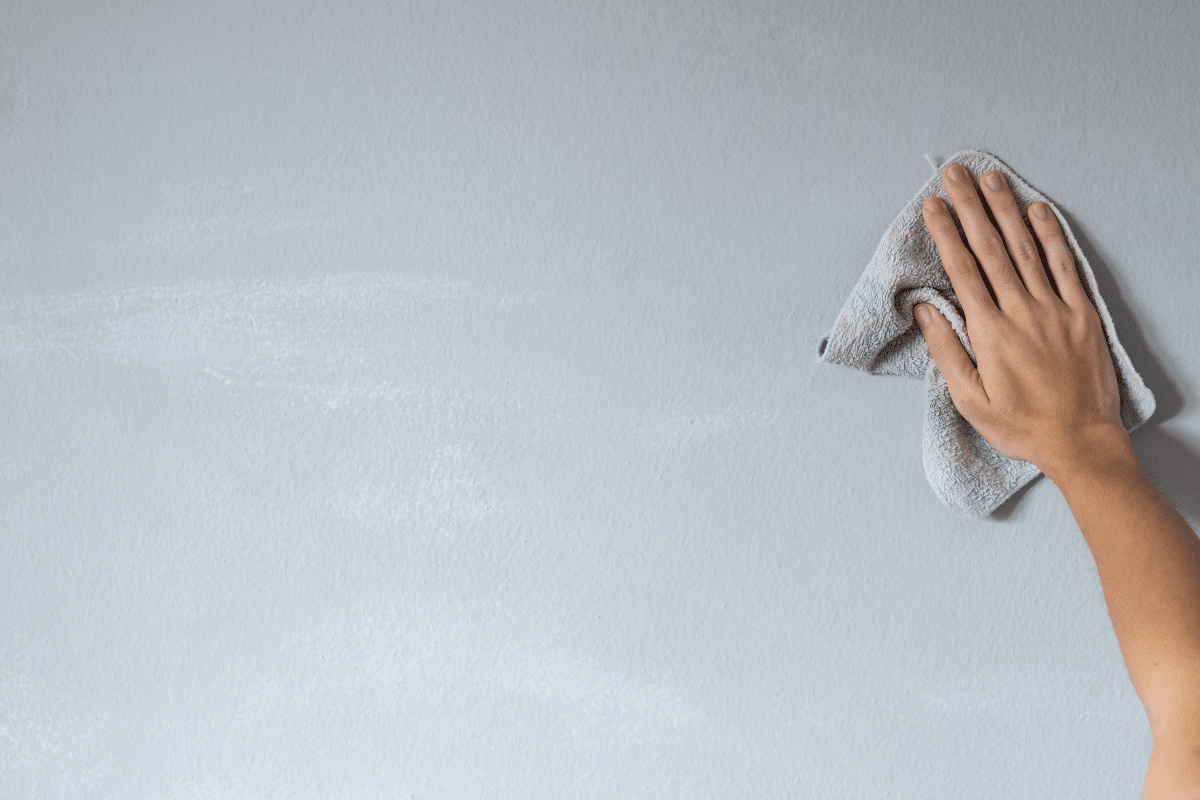
Most folks avoid washing walls because they’re afraid of making things worse. And honestly? Fair. Use the wrong cleaner or scrub too hard and you’ll pull color right off the wall, or leave a streak in a glossy finish that’s more noticeable than the original grime. I’ve been there.
But skip it entirely and you get that flat, dingy look no amount of new throw pillows can fix.
There’s a middle path. And it’s easier than you think.
Before Anything Else: Know What’s on Your Walls
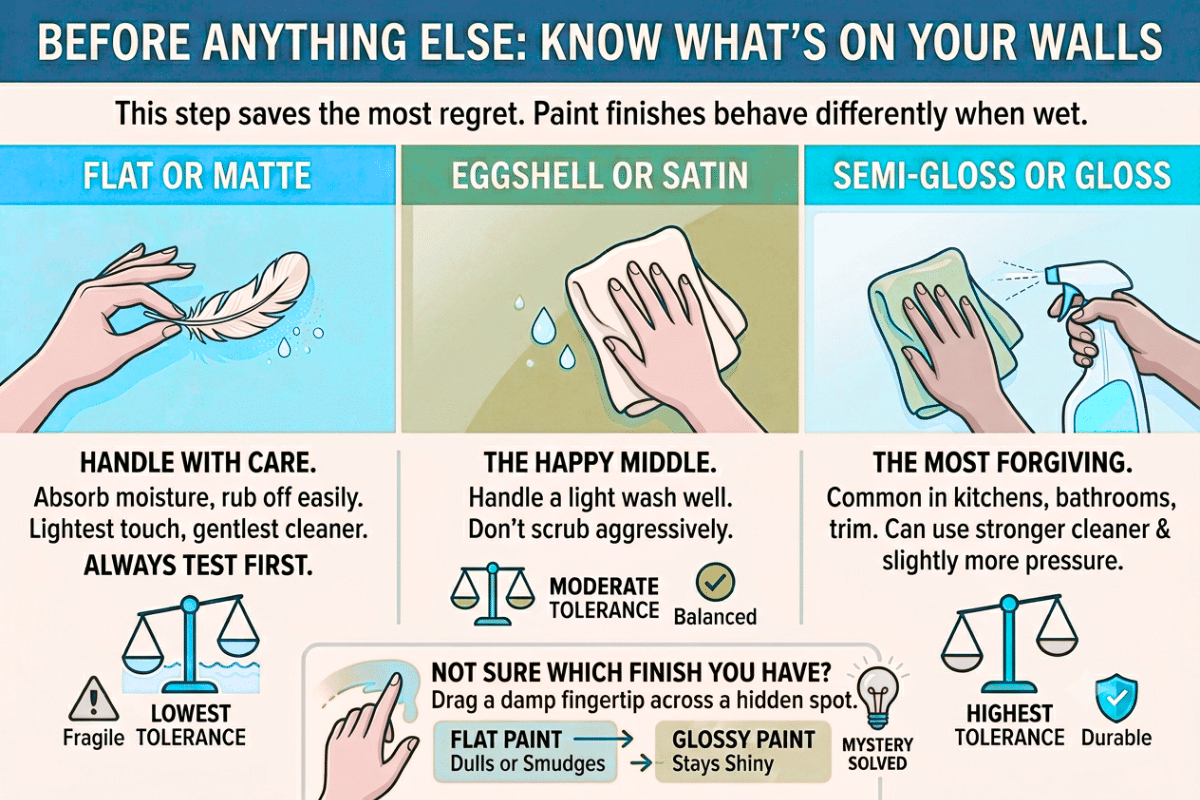
This is the step that saves the most regret. Paint finishes behave very differently when wet, and what’s perfectly safe on a kitchen wall can dull a bedroom wall fast.
- Flat or matte: Handle with care. These absorb moisture and rub off more easily than you’d expect. Lightest touch, gentlest cleaner. Always test first.
- Eggshell or satin: The happy middle. These handle a light wash well as long as you don’t scrub aggressively.
- Semi-gloss or gloss: The most forgiving. Common in kitchens, bathrooms, and trim. You can get away with a slightly stronger cleaner and a little more pressure.
Not sure which finish you have? Drag a damp fingertip across a hidden spot. Flat paint will dull or smudge. Glossy paint stays shiny. Mystery solved.
What You’ll Need to Make a Gentle DIY Wall Cleaner
This is one of those recipes where less really is more. You want to lift the dirt without leaving residue or soaking the wall. Three ingredients. That’s it.
Mix in a clean bucket:
- 1 gallon warm water
- 1 teaspoon Dawn dish soap
- ¼ cup white vinegar (only if your walls are eggshell finish or higher)
Each one earns its spot. Warm water loosens dust and softens grime. Dawn cuts grease. Think: fingerprints, kitchen splatter, that oily film around door frames. Vinegar handles smoke residue, cooking haze, and the dull buildup in older homes. Skip it on flat or chalky paint, though. It’s too strong.
And please… no magic erasers on painted walls. I know they feel like a miracle. They work by being mildly abrasive, which means they can leave a dull patch right where you used them. Save them for semi-gloss trim and baseboards only.


How to Wash Painted Walls (Without Making New Problems)
Step 1: Dust first. Always.
Run a dry microfiber cloth or extendable duster over the walls from top to bottom. Skip this and you’ll turn dust into mud the second water touches it. Don’t ask me how I know.
Step 2: Work top to bottom, one small section at a time.
Drips run downward. If you clean the bottom first, you’ll be redoing it. Work in roughly 3×3-foot sections so nothing dries before you can buff it.
Step 3: Wring out the cloth until it’s barely damp.
This is the secret. Soaking the wall is what causes streaks, drips, and damage. If water is running down the wall, your cloth is too wet. A barely-damp microfiber is genuinely all you need.
Step 4: Wipe in long strokes, then buff dry.
No scrubbing in circles. Long, overlapping strokes. Then immediately go back over the section with a dry microfiber to buff. That’s what prevents the cloudy, streaky look people blame on washing walls when really it’s just skipping the buff.
Step 5: Change your water when it goes cloudy.
Murky water means you’re smearing grime around, not removing it. A fresh bucket takes thirty seconds. The difference in your results is not subtle.
A Few More Things Worth Knowing
Don’t get creative with the cleaner. No bleach. No ammonia. No “I’ll just add a little of this.” Simple and gentle is the entire strategy here.
Test before you commit. A hidden spot behind a door or low in a corner is perfect. Wait a few minutes after wiping to see if anything dulls or transfers to the cloth.
Thirty seconds of patience saves a lot of regret.
Spot-clean between deep cleans. A fresh fingerprint wiped with a damp microfiber is a five-second job. That same fingerprint six months from now? That’s a whole afternoon.
How Often Should You Wash Your Walls?
For most homes, once a year is plenty for a full wash. Kitchens and bathrooms benefit from a light spot-clean every couple of months, especially around the stove, the sink, and anywhere hands touch walls repeatedly.
If you’ve got smokers, pets that lean on walls, or small children at prime smudge height, spot-clean more often. It’s so much easier to spend fifteen minutes on one wall than to tackle a year of buildup all at once.
And here’s the part I love: once you’ve done the full reset, every round after that is faster. Clean walls stay cleaner longer. The maintenance becomes a quick refresh instead of a full afternoon.
Question: Which room collects the most wall grime in your house? Mine is the kitchen, right around the stove… no contest. Drop yours in the comments. I’m genuinely curious whether I’m alone in this.
EverydayCheapskate™ is reader-supported. We participate in the Amazon Services LLC Associates Program and other affiliate advertising programs, designed to provide a means for us to earn from qualifying purchases, at no cost to you.

More from Everyday Cheapskate
 https://www.everydaycheapskate.com/wp-content/uploads/20261006-prime-big-deal-days-have-landed.png
800
1200
Mary Hunt
https://www.everydaycheapskate.com/wp-content/uploads/EC-Logo-by-Mary-Hunt-Tagline-Trimmed.png
Mary Hunt2026-10-05 11:01:432026-10-07 09:02:53EC’s Top Picks from Amazon Prime Big Deal Days 2026
https://www.everydaycheapskate.com/wp-content/uploads/20261006-prime-big-deal-days-have-landed.png
800
1200
Mary Hunt
https://www.everydaycheapskate.com/wp-content/uploads/EC-Logo-by-Mary-Hunt-Tagline-Trimmed.png
Mary Hunt2026-10-05 11:01:432026-10-07 09:02:53EC’s Top Picks from Amazon Prime Big Deal Days 2026 https://www.everydaycheapskate.com/wp-content/uploads/20261004-reduce-healthcare-costs-with-three-habits-healthy-couple-walking-in-autumn-leaves.png
800
1200
Mary Hunt
https://www.everydaycheapskate.com/wp-content/uploads/EC-Logo-by-Mary-Hunt-Tagline-Trimmed.png
Mary Hunt2026-10-04 23:08:572026-10-04 23:09:47How to Reduce Healthcare Costs With 3 Free Daily Habits
https://www.everydaycheapskate.com/wp-content/uploads/20261004-reduce-healthcare-costs-with-three-habits-healthy-couple-walking-in-autumn-leaves.png
800
1200
Mary Hunt
https://www.everydaycheapskate.com/wp-content/uploads/EC-Logo-by-Mary-Hunt-Tagline-Trimmed.png
Mary Hunt2026-10-04 23:08:572026-10-04 23:09:47How to Reduce Healthcare Costs With 3 Free Daily Habits https://www.everydaycheapskate.com/wp-content/uploads/20241004-news-you-can-use-october-everyday-cheapskate-top-news-articles.png
800
1200
Mary Hunt
https://www.everydaycheapskate.com/wp-content/uploads/EC-Logo-by-Mary-Hunt-Tagline-Trimmed.png
Mary Hunt2026-10-04 01:04:052026-10-11 14:34:17News You Can Use • October 2026
https://www.everydaycheapskate.com/wp-content/uploads/20241004-news-you-can-use-october-everyday-cheapskate-top-news-articles.png
800
1200
Mary Hunt
https://www.everydaycheapskate.com/wp-content/uploads/EC-Logo-by-Mary-Hunt-Tagline-Trimmed.png
Mary Hunt2026-10-04 01:04:052026-10-11 14:34:17News You Can Use • October 2026 https://www.everydaycheapskate.com/wp-content/uploads/20261003-woman-hugging-elderly-mother-sandwich-generation-caring-for-aging-parents.png
800
1200
Mary Hunt
https://www.everydaycheapskate.com/wp-content/uploads/EC-Logo-by-Mary-Hunt-Tagline-Trimmed.png
Mary Hunt2026-10-03 10:47:222026-10-03 10:47:25Sandwiched Between Aging Parents and Adult Children
https://www.everydaycheapskate.com/wp-content/uploads/20261003-woman-hugging-elderly-mother-sandwich-generation-caring-for-aging-parents.png
800
1200
Mary Hunt
https://www.everydaycheapskate.com/wp-content/uploads/EC-Logo-by-Mary-Hunt-Tagline-Trimmed.png
Mary Hunt2026-10-03 10:47:222026-10-03 10:47:25Sandwiched Between Aging Parents and Adult Children https://www.everydaycheapskate.com/wp-content/uploads/20260927-impossible-lasagna-pie-recipe-with-wooden-serving-spoon-in-white-casserole-dish.png
800
1200
Mary Hunt
https://www.everydaycheapskate.com/wp-content/uploads/EC-Logo-by-Mary-Hunt-Tagline-Trimmed.png
Mary Hunt2026-09-28 09:38:592026-09-28 22:48:34Impossible Lasagna Pie: All the Flavor, None of the Noodles
https://www.everydaycheapskate.com/wp-content/uploads/20260927-impossible-lasagna-pie-recipe-with-wooden-serving-spoon-in-white-casserole-dish.png
800
1200
Mary Hunt
https://www.everydaycheapskate.com/wp-content/uploads/EC-Logo-by-Mary-Hunt-Tagline-Trimmed.png
Mary Hunt2026-09-28 09:38:592026-09-28 22:48:34Impossible Lasagna Pie: All the Flavor, None of the Noodles https://www.everydaycheapskate.com/wp-content/uploads/20260925-best-inexpensive-coffee-grinders-burr-manual-and-electric.png
800
1200
Mary Hunt
https://www.everydaycheapskate.com/wp-content/uploads/EC-Logo-by-Mary-Hunt-Tagline-Trimmed.png
Mary Hunt2026-09-25 11:06:342026-10-10 15:49:09The Best Coffee Grinder Upgrade That’s Actually Worth It
https://www.everydaycheapskate.com/wp-content/uploads/20260925-best-inexpensive-coffee-grinders-burr-manual-and-electric.png
800
1200
Mary Hunt
https://www.everydaycheapskate.com/wp-content/uploads/EC-Logo-by-Mary-Hunt-Tagline-Trimmed.png
Mary Hunt2026-09-25 11:06:342026-10-10 15:49:09The Best Coffee Grinder Upgrade That’s Actually Worth It https://www.everydaycheapskate.com/wp-content/uploads/20260918-man-and-woman-signing-an-extended-warranty-in-a-car-dealership.png
800
1200
Mary Hunt
https://www.everydaycheapskate.com/wp-content/uploads/EC-Logo-by-Mary-Hunt-Tagline-Trimmed.png
Mary Hunt2026-09-18 15:23:432026-09-18 15:25:43Is an Extended Warranty Ever Worth It? The Truth for 2026
https://www.everydaycheapskate.com/wp-content/uploads/20260918-man-and-woman-signing-an-extended-warranty-in-a-car-dealership.png
800
1200
Mary Hunt
https://www.everydaycheapskate.com/wp-content/uploads/EC-Logo-by-Mary-Hunt-Tagline-Trimmed.png
Mary Hunt2026-09-18 15:23:432026-09-18 15:25:43Is an Extended Warranty Ever Worth It? The Truth for 2026 https://www.everydaycheapskate.com/wp-content/uploads/20260917-fall-cleaning-checklist.png
800
1200
Mary Hunt
https://www.everydaycheapskate.com/wp-content/uploads/EC-Logo-by-Mary-Hunt-Tagline-Trimmed.png
Mary Hunt2026-09-17 17:11:012026-09-28 22:48:45Fall Cleaning Checklist: 15 Overlooked Spots to Clean
https://www.everydaycheapskate.com/wp-content/uploads/20260917-fall-cleaning-checklist.png
800
1200
Mary Hunt
https://www.everydaycheapskate.com/wp-content/uploads/EC-Logo-by-Mary-Hunt-Tagline-Trimmed.png
Mary Hunt2026-09-17 17:11:012026-09-28 22:48:45Fall Cleaning Checklist: 15 Overlooked Spots to Clean https://www.everydaycheapskate.com/wp-content/uploads/20260913-how-to-winterize-your-home-snowy-driveway-suburban-home.png
800
1200
Mary Hunt
https://www.everydaycheapskate.com/wp-content/uploads/EC-Logo-by-Mary-Hunt-Tagline-Trimmed.png
Mary Hunt2026-09-13 15:32:142026-09-28 22:48:55The Complete Guide to Winterizing Your Home This Fall
https://www.everydaycheapskate.com/wp-content/uploads/20260913-how-to-winterize-your-home-snowy-driveway-suburban-home.png
800
1200
Mary Hunt
https://www.everydaycheapskate.com/wp-content/uploads/EC-Logo-by-Mary-Hunt-Tagline-Trimmed.png
Mary Hunt2026-09-13 15:32:142026-09-28 22:48:55The Complete Guide to Winterizing Your Home This FallPlease keep your comments positive, encouraging, helpful, brief,
and on-topic in keeping with EC Commenting Guidelines
Last update on 2026-10-11 / Affiliate links / Images from Amazon Product Advertising API


thank you for your ideas. i used to wash walls for a cleaning company. on flat paint and even suspended ceilings we would use what we call ..dry sponges. they worked great and they could be cleaned and reused again when the dried. murphys used to sell these and i found some later called magic sponges.
How would you clean white wall-papered walls?
Wall paper can be tricky. I would treat it like matte/flat paint and follow those directions. Most importantly, test a small area first to make sure you get the results you are after.
Dear Mary,
I live in SW Fl., where we’ve a big drought. That drought has caused my water well-supplied irrigation system to go from sulphuric- to iron-infused water. My light aqua-colored house is now sporting orange rust water stains wherever the sprinklers hit. Once the water source improves and I have the sprinkler heads adjusted, I need to get the rust off my house.
Would the formula in today’s EC post for interior wall washing be a good choice for my exterior walls?
Thx,
C
Give it a try! My guess is that you might need something a bit more specific for your situation. As always, try a small area first and see how it goes.