

The “Open It or Close It” Rule That Lowers Your Power Bill


You know what your thermostat is not? A slot machine. And yet. Down two degrees. Still warm. Up one. Now it’s freezing in the bedroom and tropical in the kitchen. Meanwhile, your power bill is in the back room, sharpening its pencil. Here’s the thing nobody tells you: sometimes the thermostat isn’t even the problem. It’s knowing when to open and close windows to keep your house cool… and most of us are getting the timing exactly backwards.

A few summers ago, during one of those stretches where you question all your life choices, including the one where you didn’t move somewhere with a sea breeze, I noticed something. The days my house felt most comfortable weren’t the days the AC worked hardest. They were the days I managed the timing better.
That’s when the “Open It or Close It” rule was born.
It’s simple. It costs nothing. And once it clicks, you’ll wonder how you ever summer-ed without it.
Why Timing Beats Temperature Every Time
Most of us make window and curtain decisions based on how we feel right now. House feels warm? Open the windows. There’s a breeze? Throw everything open like it’s a parade.
The problem is that summer heat has a delay. By the time your house feels hot, the sun has already spent hours quietly heating your floors, furniture, walls, and sofa cushions. And those surfaces? They keep radiating that warmth back into the room long after the sun moves on.
Think of it like a baked potato. Turning off the oven doesn’t instantly cool it down. Your house works the same way.
That’s why getting ahead of the heat matters so much more than reacting after the fact.
The Rule, In Plain English
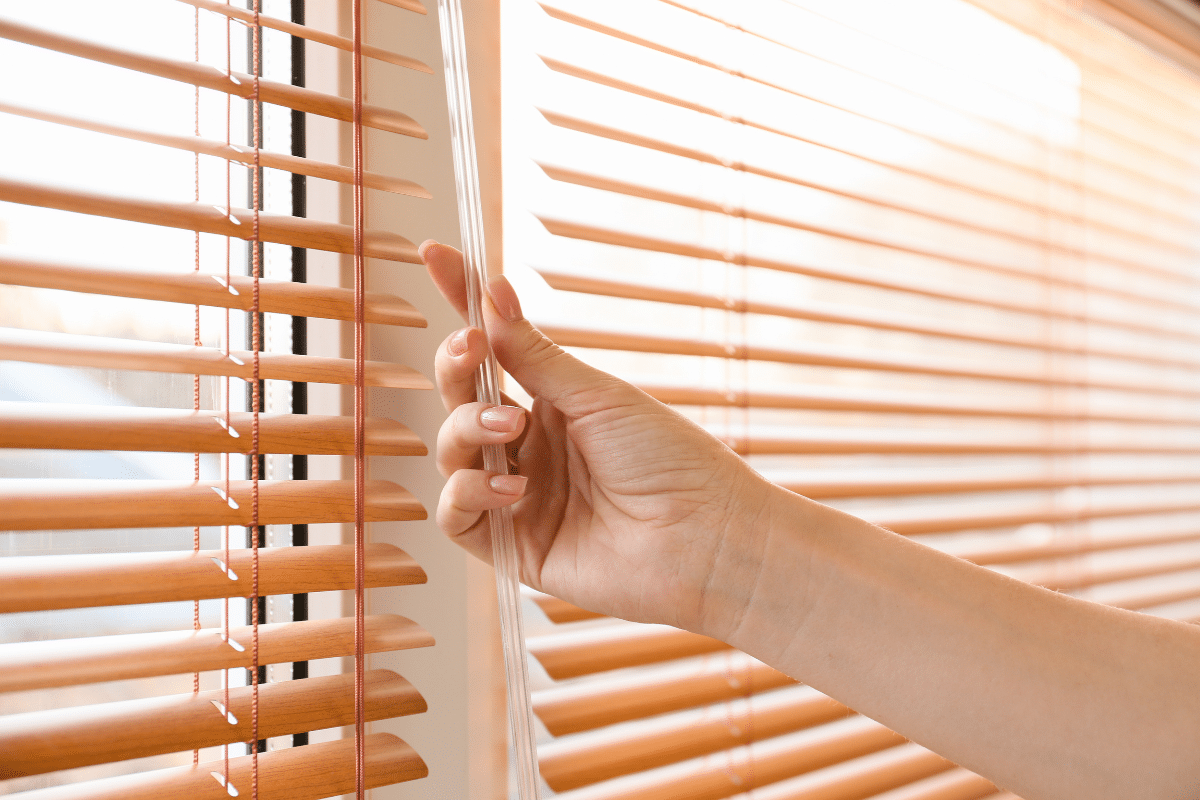
Open things when outdoor air is working for you.
Close things when outdoor heat is working against you.
That’s it. You’re working with the day instead of fighting it from behind. You’re not trying to live in darkness like a Victorian widow guarding the family silver. You’re just being a little strategic.
How to Break It Down By Time of Day
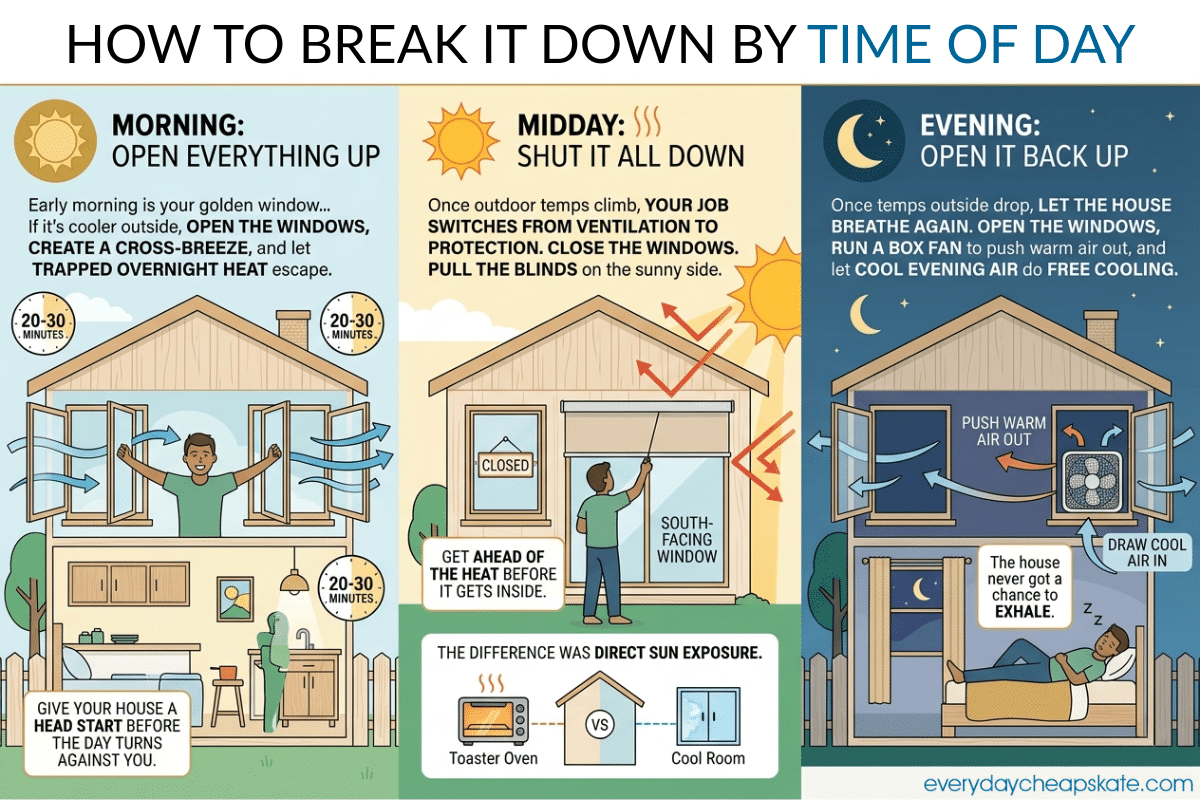
Morning: Open Everything Up
Early morning is your golden window… pun fully intended. If it’s cooler outside than inside (and in summer, mornings usually are), open the windows, create a cross-breeze, and let that trapped overnight heat escape. Even 20–30 minutes makes a difference. Think of it as giving your house a head start before the day turns against you.
Midday: Shut It All Down
This is where most people quietly lose the battle. Once outdoor temps start climbing, your job switches from ventilation to protection. Close the windows. Pull the blinds on the sunny side of the house. Get ahead of the heat before it gets inside.
South- and west-facing windows are usually the biggest offenders. I know this because one side of my house used to feel like a toaster oven every afternoon while the other side was perfectly fine. Same house. Same AC. The difference was direct sun exposure.
Now I close those blinds before the room gets hot. That one habit alone changed everything.
Evening: Open It Back Up
Once temps outside start dropping, let the house breathe again. Open the windows, run a box fan to push warm air out, and let the cool evening air do some free cooling for you. If you’ve ever gone to bed in a room that felt stuffy even though it wasn’t technically that hot, this is why. The house never got a chance to exhale.
A Few Words About Blinds
Blinds aren’t just for privacy. In summer, they’re heat-management tools pretending to be décor.
You don’t need blackout curtains in every room. You just need to stop direct sunlight before it turns your living room into a greenhouse. Close sun-facing blinds before the hottest part of the day. Angle them upward to block direct rays while still letting in some light. And here’s the one that surprised me most: closing blinds in rooms I wasn’t even using helped the whole house feel cooler, because those rooms stopped collecting and radiating heat into the rest of the house.
Small hinges, big doors.
The Mistakes Most of Us Are Making
These aren’t crimes. They’re just habits worth rethinking.
- Opening windows during peak heat. If it’s hotter outside than inside, you’re not ventilating, you’re inviting.
- Waiting too long to close the blinds. Once sunlight heats up your furniture and floors, the room keeps warming even after you close them. Timing is everything.
- Running the oven, dryer, or dishwasher during the hottest part of the day. Every one of those adds heat indoors. Save them for morning or evening.
- Cooling rooms nobody’s using. Close the door. Let your system focus where it counts.
- Forgetting about humidity. A humid house feels warmer even when the temperature is lower. It’s not just you.
None of these mistakes will ruin you individually. But stack them up day after day, week after week, and they’ll quietly run up your bill.
What This Does To Your Power Bill

No single window adjustment is going to cut your electric bill in half. I won’t promise you that. But small daily decisions add up the same way small leaks do. When your house absorbs less heat, the AC runs less often, rooms cool down faster, and the whole system works less aggressively. The result isn’t just a lower bill. It’s a house that simply feels better to live in.
And sometimes that’s the real goal, isn’t it? Not a house that’s freezing cold, but a house that feels manageable without you touching the thermostat every twenty minutes.
Treat your home a little more like a living system and a little less like a box you expect the AC to rescue single-handedly. A few smart moves at the right time go surprisingly far. And unlike your power bill, this habit doesn’t ask much from you in return.
Question: What’s your go-to move when the house just won’t cool down no matter what you try? I’d love to hear what’s actually worked for you.
EverydayCheapskate™ is reader-supported. We participate in the Amazon Services LLC Associates Program and other affiliate advertising programs, designed to provide a means for us to earn from qualifying purchases, at no cost to you.

More from Everyday Cheapskate
 https://www.everydaycheapskate.com/wp-content/uploads/20261012-Woman-using-smartphone-while-checking-monthly-cellular-data-usage-on-laptop.png
800
1200
Mary Hunt
https://www.everydaycheapskate.com/wp-content/uploads/EC-Logo-by-Mary-Hunt-Tagline-Trimmed.png
Mary Hunt2026-10-12 10:51:112026-10-12 10:51:11Do You Really Need Unlimited Data? Check Before You Pay
https://www.everydaycheapskate.com/wp-content/uploads/20261012-Woman-using-smartphone-while-checking-monthly-cellular-data-usage-on-laptop.png
800
1200
Mary Hunt
https://www.everydaycheapskate.com/wp-content/uploads/EC-Logo-by-Mary-Hunt-Tagline-Trimmed.png
Mary Hunt2026-10-12 10:51:112026-10-12 10:51:11Do You Really Need Unlimited Data? Check Before You Pay https://www.everydaycheapskate.com/wp-content/uploads/20261011-Woman-Adjusting-Smart-Home-Device-on-the-Wall-how-to-lower-your-electric-bill.png
800
1200
Mary Hunt
https://www.everydaycheapskate.com/wp-content/uploads/EC-Logo-by-Mary-Hunt-Tagline-Trimmed.png
Mary Hunt2026-10-11 23:01:562026-10-11 23:01:56Stop Chasing Pennies on Your Electric Bill. Do This
https://www.everydaycheapskate.com/wp-content/uploads/20261011-Woman-Adjusting-Smart-Home-Device-on-the-Wall-how-to-lower-your-electric-bill.png
800
1200
Mary Hunt
https://www.everydaycheapskate.com/wp-content/uploads/EC-Logo-by-Mary-Hunt-Tagline-Trimmed.png
Mary Hunt2026-10-11 23:01:562026-10-11 23:01:56Stop Chasing Pennies on Your Electric Bill. Do This https://www.everydaycheapskate.com/wp-content/uploads/20261007-red-present-sitting-in-autumn-leaves-Amazon-Prime-Big-Deal-Days-gifts.png
800
1200
Mary Hunt
https://www.everydaycheapskate.com/wp-content/uploads/EC-Logo-by-Mary-Hunt-Tagline-Trimmed.png
Mary Hunt2026-10-06 23:09:432026-10-06 23:09:43Christmas Shopping in October? These Prime Day Gifts Make Sense
https://www.everydaycheapskate.com/wp-content/uploads/20261007-red-present-sitting-in-autumn-leaves-Amazon-Prime-Big-Deal-Days-gifts.png
800
1200
Mary Hunt
https://www.everydaycheapskate.com/wp-content/uploads/EC-Logo-by-Mary-Hunt-Tagline-Trimmed.png
Mary Hunt2026-10-06 23:09:432026-10-06 23:09:43Christmas Shopping in October? These Prime Day Gifts Make Sense https://www.everydaycheapskate.com/wp-content/uploads/20261006-prime-big-deal-days-have-landed.png
800
1200
Mary Hunt
https://www.everydaycheapskate.com/wp-content/uploads/EC-Logo-by-Mary-Hunt-Tagline-Trimmed.png
Mary Hunt2026-10-05 11:01:432026-10-07 09:02:53EC’s Top Picks from Amazon Prime Big Deal Days 2026
https://www.everydaycheapskate.com/wp-content/uploads/20261006-prime-big-deal-days-have-landed.png
800
1200
Mary Hunt
https://www.everydaycheapskate.com/wp-content/uploads/EC-Logo-by-Mary-Hunt-Tagline-Trimmed.png
Mary Hunt2026-10-05 11:01:432026-10-07 09:02:53EC’s Top Picks from Amazon Prime Big Deal Days 2026 https://www.everydaycheapskate.com/wp-content/uploads/20261004-reduce-healthcare-costs-with-three-habits-healthy-couple-walking-in-autumn-leaves.png
800
1200
Mary Hunt
https://www.everydaycheapskate.com/wp-content/uploads/EC-Logo-by-Mary-Hunt-Tagline-Trimmed.png
Mary Hunt2026-10-04 23:08:572026-10-04 23:09:47How to Reduce Healthcare Costs With 3 Free Daily Habits
https://www.everydaycheapskate.com/wp-content/uploads/20261004-reduce-healthcare-costs-with-three-habits-healthy-couple-walking-in-autumn-leaves.png
800
1200
Mary Hunt
https://www.everydaycheapskate.com/wp-content/uploads/EC-Logo-by-Mary-Hunt-Tagline-Trimmed.png
Mary Hunt2026-10-04 23:08:572026-10-04 23:09:47How to Reduce Healthcare Costs With 3 Free Daily Habits https://www.everydaycheapskate.com/wp-content/uploads/20261004-woman-dreaming-about-her-financial-and-life-goals.png
800
1200
Mary Hunt
https://www.everydaycheapskate.com/wp-content/uploads/EC-Logo-by-Mary-Hunt-Tagline-Trimmed.png
Mary Hunt2026-10-04 12:50:422026-10-04 12:50:42She Lived in a Basement for $100 a Month. Here’s Why.
https://www.everydaycheapskate.com/wp-content/uploads/20261004-woman-dreaming-about-her-financial-and-life-goals.png
800
1200
Mary Hunt
https://www.everydaycheapskate.com/wp-content/uploads/EC-Logo-by-Mary-Hunt-Tagline-Trimmed.png
Mary Hunt2026-10-04 12:50:422026-10-04 12:50:42She Lived in a Basement for $100 a Month. Here’s Why. https://www.everydaycheapskate.com/wp-content/uploads/20241004-news-you-can-use-october-everyday-cheapskate-top-news-articles.png
800
1200
Mary Hunt
https://www.everydaycheapskate.com/wp-content/uploads/EC-Logo-by-Mary-Hunt-Tagline-Trimmed.png
Mary Hunt2026-10-04 01:04:052026-10-19 09:46:10News You Can Use • October 2026
https://www.everydaycheapskate.com/wp-content/uploads/20241004-news-you-can-use-october-everyday-cheapskate-top-news-articles.png
800
1200
Mary Hunt
https://www.everydaycheapskate.com/wp-content/uploads/EC-Logo-by-Mary-Hunt-Tagline-Trimmed.png
Mary Hunt2026-10-04 01:04:052026-10-19 09:46:10News You Can Use • October 2026 https://www.everydaycheapskate.com/wp-content/uploads/20261003-woman-hugging-elderly-mother-sandwich-generation-caring-for-aging-parents.png
800
1200
Mary Hunt
https://www.everydaycheapskate.com/wp-content/uploads/EC-Logo-by-Mary-Hunt-Tagline-Trimmed.png
Mary Hunt2026-10-03 10:47:222026-10-03 10:47:25Sandwiched Between Aging Parents and Adult Children
https://www.everydaycheapskate.com/wp-content/uploads/20261003-woman-hugging-elderly-mother-sandwich-generation-caring-for-aging-parents.png
800
1200
Mary Hunt
https://www.everydaycheapskate.com/wp-content/uploads/EC-Logo-by-Mary-Hunt-Tagline-Trimmed.png
Mary Hunt2026-10-03 10:47:222026-10-03 10:47:25Sandwiched Between Aging Parents and Adult Children https://www.everydaycheapskate.com/wp-content/uploads/20260927-impossible-lasagna-pie-recipe-with-wooden-serving-spoon-in-white-casserole-dish.png
800
1200
Mary Hunt
https://www.everydaycheapskate.com/wp-content/uploads/EC-Logo-by-Mary-Hunt-Tagline-Trimmed.png
Mary Hunt2026-09-28 09:38:592026-09-28 22:48:34Impossible Lasagna Pie: All the Flavor, None of the Noodles
https://www.everydaycheapskate.com/wp-content/uploads/20260927-impossible-lasagna-pie-recipe-with-wooden-serving-spoon-in-white-casserole-dish.png
800
1200
Mary Hunt
https://www.everydaycheapskate.com/wp-content/uploads/EC-Logo-by-Mary-Hunt-Tagline-Trimmed.png
Mary Hunt2026-09-28 09:38:592026-09-28 22:48:34Impossible Lasagna Pie: All the Flavor, None of the Noodles

Last year we bought stylish blackout curtains for our upstairs rooms and 2 of our downstairs rooms. It has made such a difference in overall temperature to around 10 degrees , +/-…winter and summer.
Thank you for the good ideas!
I live in OK where the humidity is our nemis, keeping it out is often our challenge!
My parents didn’t have central air. My mother had an indoor/outdoor thermometer in the kitchen window. After leaving the windows open during the night she would watch the outdoor temperature during the morning hours. When the outdoor temperature rose to be the same as the indoor temperature, she would close all of the windows and drapes/blinds. The outdoor temperature would continue upwards, but the indoor temperature stayed cooler until late in the afternoon. Depending on the nighttime temperature and the humidity, I still follow that same method. There are many days when the air conditioner doesn’t even run until afternoon. My electric company tells me that I use less electricity than my most efficient neighbors!
We live in a suburb of Los Angeles and summers are hot hot hot. We have an exhaust fan in the attic. When it gets cooler in the evening, the AC goes off and the fan pulls in cool air all night long, so the house stays cool until midafternoon, when we turn on the AC for only a few hours. Works for us.
Mary, I still treasure your Italian sausage soup recipe, as well as your column in general. You are the best source of ideas I get about life in general. Many thanks.
I agree, a whole-house fan is a great tool for those times where it’s a little warm in the house but really nice outside. It’s also great if you have a really hot house to clear out the hot air before starting the AC. And thanks for your kind words!
If you get blasted by the sun consider UV window film. It’s made a huge difference for us
My house get no direct sunlight, there is never any actual sunshine pattern on the floor, etc. Would closing blinds be of a help to my A/C and elec. bill, or would it just create a darker environment?
Yes, closing blinds can help even at times without direct sunlight. They can act as a thermal barie and slow heat transfer. Give it a try!