
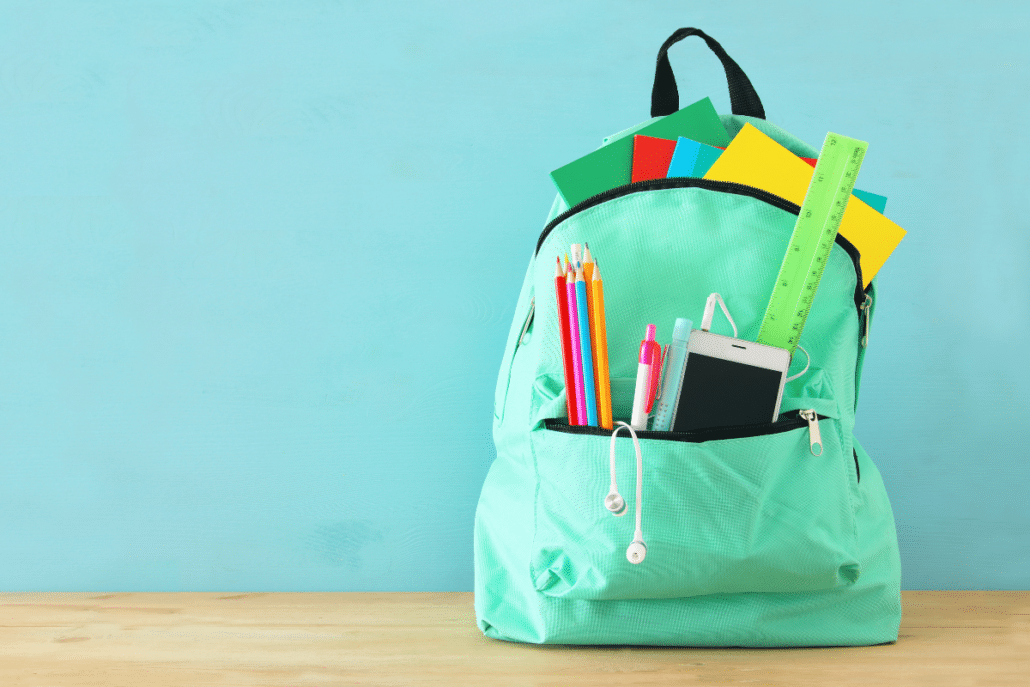
How to Save Money on School Supplies (Beyond Just the List)


The list looks so innocent. A few notebooks, some pencils, a pack of crayons. Nothing costs much on its own, and yet you still walk out of Target $87 poorer with the wrong marbled notebook in the bag. Here’s what actually moves the needle on school supplies this year: clearance timing, free-supply channels nobody talks about, and a short list of things you can flat-out skip.
Everybody’s proud of shopping early this year. The National Retail Federation says 62% of families had already started their back-to-school shopping by early July, and 54% used June sales events like Prime Day to knock things off the list. Good for them. Terrible advice if what you’re buying is school supplies.
Here’s the thing nobody’s saying out loud: getting ahead of the crowd works great for electronics and clothes. It’s close to the worst possible timing for notebooks and crayons. And since the average family this year is spending $146.45 on supplies alone, out of $863.86 in total back-to-school spending, that’s real money going out the door at the wrong moment.
The early-shopping trap
June sales events discount the big stuff. TVs, laptops, backpacks with the right logo on them. What they don’t discount is the pack of glue sticks sitting on an end cap next to the register. Retailers don’t need to move supply inventory in June. They need to move it in September, after school’s already started and the shelf space needs to go to Halloween candy. That’s when the real discount shows up: 70 to 90 percent off, not “sale.”
So if you bought your supplies in that June rush because it felt responsible, you probably paid full price for the one category that actually goes on real clearance a couple months later. The families who look organized in July aren’t necessarily the ones saving the most. They’re just the ones who moved first.
The smarter number in the data
Buried in the same NRF report is a more useful stat: 47% of families now say they’re only buying the essentials up front and replenishing supplies as needed through the year. That’s not indecision. That’s the right instinct, even if most of those families haven’t connected it to a system yet.
Here’s what “replenish as needed” should actually look like: buy light in August, then buy heavy in September when the clearance hits, and stock a full year at once. Keep it in a bin. When your kid loses a pencil in November, you’re not making an $18 store run, you’re reaching into a closet. The 47% are already halfway to this. They just haven’t figured out where the real savings sit in the calendar.
If you want to put a number on it, treat it like a Freedom Account line item instead of a scramble: a small amount set aside starting in September for next year’s supplies, funded by what the clearance rack gives you, so August stops being a surprise expense at all.
Where the free supplies are, if you’d rather spend nothing
Before you buy anything, check whether you actually have to:
- Your school district’s supply drive: Many districts partner with local businesses to hand out free supply packs, no income check required. Check the district site in July.
- Kids in Need Foundation: A nonprofit built to get supplies to students who need them, distributed through schools.
- Buy Nothing groups: Parents constantly offload barely-used supplies their kids outgrew.
- Your employer: Some companies have a back-to-school stipend or discount partnership that almost nobody asks about.
- Your teacher’s Amazon wish list: Posted to lighten the load on families, and sometimes an item you needed gets bought for the whole classroom instead of by you alone.
Generic vs. brand name
Not everything on the list deserves the store brand. A few items are actually worth paying up for, because the cheap version fails.
Always go generic:
- Notebook paper and composition books
- Paper folders (they’re all identical, promise)
- Index cards
- Highlighters
- Glue bottles
- Rulers and protractors
Worth the name brand:
- Crayons: Crayola actually colors better and holds up without snapping in half. Ask any kid who’s used both.
- Markers: Crayola’s washable ones survive laundry. The knockoffs do not, and you will find out the hard way.
- Pencils: Ticonderogas sharpen properly and don’t crumble. Small thing. Kids notice it anyway.
- Scissors: A pair of kid scissors that won’t actually cut is worse than no scissors at all.
- Colored pencils: Crayola or Prismacolor, if art class is asking for them specifically.
Anything paper-based, buy the cheap version without a second thought. Anything your kid uses with their hands every day, don’t cheap out. That’s the whole rule.
What to skip entirely
Supply lists get padded. Send one glue stick, not four. One box of tissues, not the case. Skip the “specific color” folder requirement; it gets forgotten by week two. And a themed backpack doesn’t hold one extra sandwich over a plain one.
What this actually costs, by the numbers
Run the two paths against each other using this year’s own figures. Shop in the June rush like 54% of families did, and you’re likely paying close to full price on the $146.45 average supply spend, plus whatever mid-year runs come up because nothing was stocked ahead. Wait for the September clearance instead, stock a full year, and that same category can drop to a third of that number, with the mid-year runs mostly gone.
The families who feel behind in July aren’t behind. They might actually end up ahead in September.
Question: Did you shop early this year, or are you waiting for the after-school-starts clearance? I want to know which camp you’re in.
EverydayCheapskate™ is reader-supported. We participate in the Amazon Services LLC Associates Program and other affiliate advertising programs, designed to provide a means for us to earn from qualifying purchases, at no cost to you.

More from Everyday Cheapskate
 https://www.everydaycheapskate.com/wp-content/uploads/20261004-woman-dreaming-about-her-financial-and-life-goals.png
800
1200
Mary Hunt
https://www.everydaycheapskate.com/wp-content/uploads/EC-Logo-by-Mary-Hunt-Tagline-Trimmed.png
Mary Hunt2026-10-04 12:50:422026-10-04 12:50:42She Lived in a Basement for $100 a Month. Here’s Why.
https://www.everydaycheapskate.com/wp-content/uploads/20261004-woman-dreaming-about-her-financial-and-life-goals.png
800
1200
Mary Hunt
https://www.everydaycheapskate.com/wp-content/uploads/EC-Logo-by-Mary-Hunt-Tagline-Trimmed.png
Mary Hunt2026-10-04 12:50:422026-10-04 12:50:42She Lived in a Basement for $100 a Month. Here’s Why. https://www.everydaycheapskate.com/wp-content/uploads/20260930-cheap-Halloween-party-snacks-for-kids-punch-bowl-mummy-dogs-ghost-bananas.png
800
1200
Mary Hunt
https://www.everydaycheapskate.com/wp-content/uploads/EC-Logo-by-Mary-Hunt-Tagline-Trimmed.png
Mary Hunt2026-10-01 11:08:582026-10-01 11:08:59These Cheap Halloween Snacks Are Almost Too Easy to Make
https://www.everydaycheapskate.com/wp-content/uploads/20260930-cheap-Halloween-party-snacks-for-kids-punch-bowl-mummy-dogs-ghost-bananas.png
800
1200
Mary Hunt
https://www.everydaycheapskate.com/wp-content/uploads/EC-Logo-by-Mary-Hunt-Tagline-Trimmed.png
Mary Hunt2026-10-01 11:08:582026-10-01 11:08:59These Cheap Halloween Snacks Are Almost Too Easy to Make https://www.everydaycheapskate.com/wp-content/uploads/20261001-prime-big-deal-days-are-coming.png
800
1200
Mary Hunt
https://www.everydaycheapskate.com/wp-content/uploads/EC-Logo-by-Mary-Hunt-Tagline-Trimmed.png
Mary Hunt2026-10-01 09:25:072026-10-01 11:45:25Prime Big Deal Days 2026: Your Cheapskate Game Plan
https://www.everydaycheapskate.com/wp-content/uploads/20261001-prime-big-deal-days-are-coming.png
800
1200
Mary Hunt
https://www.everydaycheapskate.com/wp-content/uploads/EC-Logo-by-Mary-Hunt-Tagline-Trimmed.png
Mary Hunt2026-10-01 09:25:072026-10-01 11:45:25Prime Big Deal Days 2026: Your Cheapskate Game Plan https://www.everydaycheapskate.com/wp-content/uploads/20260925-best-inexpensive-coffee-grinders-burr-manual-and-electric.png
800
1200
Mary Hunt
https://www.everydaycheapskate.com/wp-content/uploads/EC-Logo-by-Mary-Hunt-Tagline-Trimmed.png
Mary Hunt2026-09-25 11:06:342026-09-28 22:48:36The Coffee Grinder Upgrade That’s Actually Worth It
https://www.everydaycheapskate.com/wp-content/uploads/20260925-best-inexpensive-coffee-grinders-burr-manual-and-electric.png
800
1200
Mary Hunt
https://www.everydaycheapskate.com/wp-content/uploads/EC-Logo-by-Mary-Hunt-Tagline-Trimmed.png
Mary Hunt2026-09-25 11:06:342026-09-28 22:48:36The Coffee Grinder Upgrade That’s Actually Worth It https://www.everydaycheapskate.com/wp-content/uploads/20260920-small-money-mistakes-woman-sitting-at-her-laptop-reviewing-bills.png
800
1200
Mary Hunt
https://www.everydaycheapskate.com/wp-content/uploads/EC-Logo-by-Mary-Hunt-Tagline-Trimmed.png
Mary Hunt2026-09-20 11:34:162026-09-28 22:48:40Small Money Mistakes: How to Fix Them Before They Grow
https://www.everydaycheapskate.com/wp-content/uploads/20260920-small-money-mistakes-woman-sitting-at-her-laptop-reviewing-bills.png
800
1200
Mary Hunt
https://www.everydaycheapskate.com/wp-content/uploads/EC-Logo-by-Mary-Hunt-Tagline-Trimmed.png
Mary Hunt2026-09-20 11:34:162026-09-28 22:48:40Small Money Mistakes: How to Fix Them Before They Grow https://www.everydaycheapskate.com/wp-content/uploads/20260918-man-and-woman-signing-an-extended-warranty-in-a-car-dealership.png
800
1200
Mary Hunt
https://www.everydaycheapskate.com/wp-content/uploads/EC-Logo-by-Mary-Hunt-Tagline-Trimmed.png
Mary Hunt2026-09-18 15:23:432026-09-18 15:25:43Is an Extended Warranty Ever Worth It? The Truth for 2026
https://www.everydaycheapskate.com/wp-content/uploads/20260918-man-and-woman-signing-an-extended-warranty-in-a-car-dealership.png
800
1200
Mary Hunt
https://www.everydaycheapskate.com/wp-content/uploads/EC-Logo-by-Mary-Hunt-Tagline-Trimmed.png
Mary Hunt2026-09-18 15:23:432026-09-18 15:25:43Is an Extended Warranty Ever Worth It? The Truth for 2026 https://www.everydaycheapskate.com/wp-content/uploads/20260915-overspending-habits-man-opening-empty-wallet.png
800
1200
Mary Hunt
https://www.everydaycheapskate.com/wp-content/uploads/EC-Logo-by-Mary-Hunt-Tagline-Trimmed.png
Mary Hunt2026-09-15 20:24:412026-09-28 22:48:50How to Stop Overspending Habits for Good, Starting Today
https://www.everydaycheapskate.com/wp-content/uploads/20260915-overspending-habits-man-opening-empty-wallet.png
800
1200
Mary Hunt
https://www.everydaycheapskate.com/wp-content/uploads/EC-Logo-by-Mary-Hunt-Tagline-Trimmed.png
Mary Hunt2026-09-15 20:24:412026-09-28 22:48:50How to Stop Overspending Habits for Good, Starting Today https://www.everydaycheapskate.com/wp-content/uploads/20260914-101010-rule-gold-numbers-on-teal-background.png
800
1200
Mary Hunt
https://www.everydaycheapskate.com/wp-content/uploads/EC-Logo-by-Mary-Hunt-Tagline-Trimmed.png
Mary Hunt2026-09-14 11:31:532026-09-28 22:48:53The 10/10/10 Rule Every Overthinker Needs to Try Today
https://www.everydaycheapskate.com/wp-content/uploads/20260914-101010-rule-gold-numbers-on-teal-background.png
800
1200
Mary Hunt
https://www.everydaycheapskate.com/wp-content/uploads/EC-Logo-by-Mary-Hunt-Tagline-Trimmed.png
Mary Hunt2026-09-14 11:31:532026-09-28 22:48:53The 10/10/10 Rule Every Overthinker Needs to Try Today https://www.everydaycheapskate.com/wp-content/uploads/20260909-annualize-your-spending.png
800
1200
Mary Hunt
https://www.everydaycheapskate.com/wp-content/uploads/EC-Logo-by-Mary-Hunt-Tagline-Trimmed.png
Mary Hunt2026-09-08 20:17:552026-09-28 22:49:02Annualize Your Spending: See What It Really Costs You
https://www.everydaycheapskate.com/wp-content/uploads/20260909-annualize-your-spending.png
800
1200
Mary Hunt
https://www.everydaycheapskate.com/wp-content/uploads/EC-Logo-by-Mary-Hunt-Tagline-Trimmed.png
Mary Hunt2026-09-08 20:17:552026-09-28 22:49:02Annualize Your Spending: See What It Really Costs You

School and office supplies that I buy generic, or at the dollar store:
Notebooks
Pens
Folders
Notebook paper
Binders
Tabs. I use the tabs from the dollar store. They really hold up, and you get a lot for not a whole lot. I’m a medical coder, and I tab my books to make my job easier when I need to look up a code in one of my books. The dollar store ones just stay put.
Dividers. You’ll be amazed. Many are actually name brand disguised as a dollar store brand.
Adult and kid coloring books. Because sometimes you just need a break at the office for a few minutes.
Puzzle books for adults. Great way to keep your mind sharp, especially in the office.
Travel tumblers.
Baggies.
Reusable lunch bags.
Reusable water bottles.
Hand sanitizers. Dollar Tree has their B Pure brand of sprayable hand sanitizers that are dupes of Touchland. Except you’re not paying $20 for a sprayable bottle.
Supplies that I will spend a bit more on:
Mechanical pencils (many schools and offices prefer these over ones that require a sharpener). I like the Papermate ones the best. I love how the Papermate mechanical pencils hold up.
If you like Bic pens, Bic pens. I prefer generic, over the fact that the generic brands write better for me, and always write smoothly.
Crayons
Colored pencils
Sticky notes. I used the dollar store brand, They worked for five seconds. When I switched back to my beloved Post-It brand, I was glad I spent the extra money.
Highlighters. I like the Bic ones. They don’t bleed.
What a useful list! I was both a mom & a teacher; your list correlates with my experience. Loved that you gave reasons for buying branded items; cheapest isn’t always best. Spending a little more often saves a lot of frustration. (As Mary stated, especially with scissors!)
Why do parents have to buy all the supplies? The schools should be suppling the necessary supplies for education. I have never understood that. I was a teacher and was given the bare minimum of supplies for what was required to be taught in my classroom. I ended up spending my own money because it was such a hassle to get anything and took too long for approval just for dry erase markers.
Good advice. I wish parents would buy a few boxes of the good pencils and get them out whenever their kids need them.
Also – if the teacher asks for a green folder, get the green folder. It keeps directions consistent in the classroom and it helps the teacher know which class or section the folder belongs in. Please.
Thanks, Hope. I agree. Match that green folder with a green notebook & it makes it much easier for your middle schooler to pull it out of an even an organized locker. When kids are changing rooms every period, and have only 3 minutes to do it, it saves a lot of frustration. And assume that a teacher has a good reason for asking; they know the importance of organization.