

Why This DIY Dawn Powerwash Recipe Works So Well at Home

If you’ve spent any time at the kitchen sink lately, you’ve probably met Dawn Platinum Powerwash Spray. It promises quicker cleanup, less scrubbing, and fewer dishes waiting their turn. It works, but the price can sting if you cook at home and reach for it often. Below, I’ll walk you through a DIY copycat Dawn Powerwash recipe that delivers the same grease-cutting power for a whole lot less.

It was February 2020 when Procter & Gamble rolled out Dawn Platinum Powerwash Spray and promised something close to kitchen sorcery. Dishes that “almost clean themselves”? I rolled my eyes… hard.
Then the reviews poured in. The videos. The comments. The real-world results. Turns out, the hype had legs.
But so did the price. And if you cook at home, that bottle empties fast. That’s when my inbox filled up with one very reasonable request: Is there a way to make this stuff ourselves without sacrificing performance?
Challenge accepted.
Copycat Dawn Platinum Powerwash Dish Spray
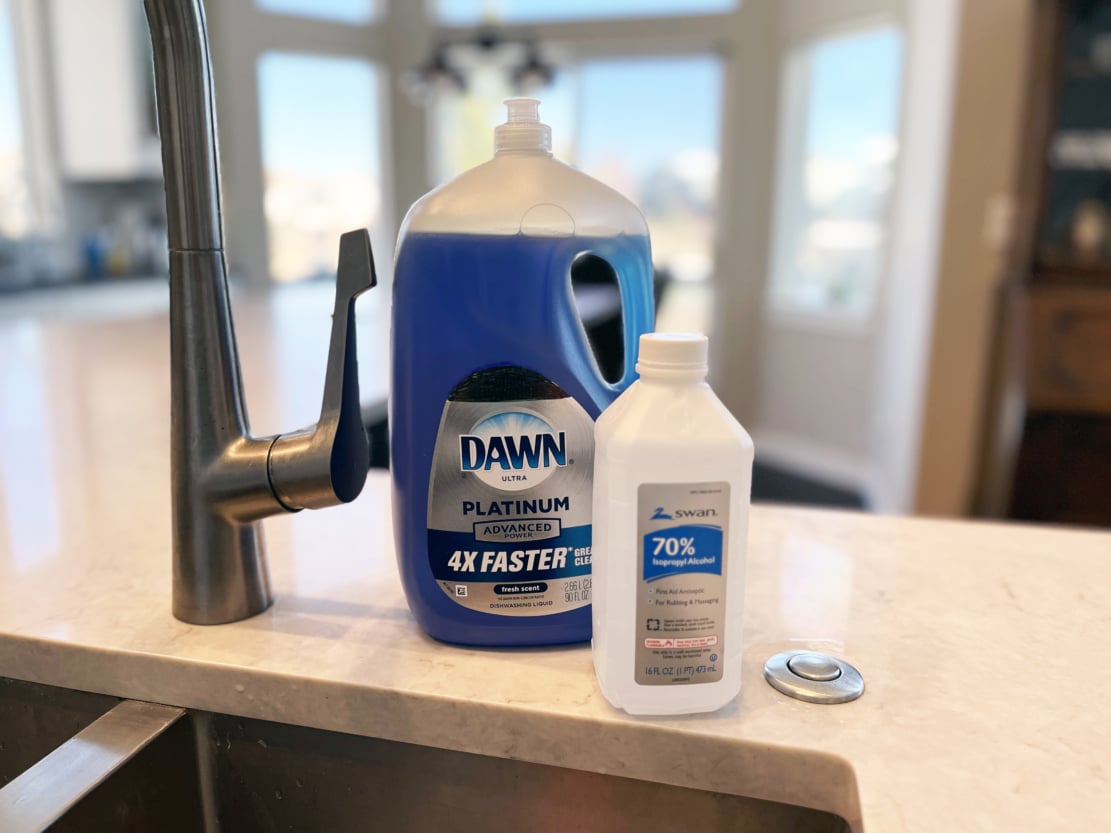
After a good deal of testing, sniffing, researching, questioning, and yes, some good old-fashioned snooping, I landed on a copycat Dawn Powerwash recipe that actually works.
Not “kind of.” Not “almost.” Actually works.
Below is the DIY Dawn Platinum Powerwash Spray recipe, followed by several variations so you can tweak it based on what you have, what you like, and how much cleaning muscle you want.
What You’ll Need
- Blue Dawn Platinum Dishwashing Liquid
- 70% isopropyl (rubbing) alcohol
- Distilled water
- A clean, empty Dawn Powerwash spray bottle (or any spray bottle 16 oz. or larger)
- Measuring spoon
Instructions:
- Pour 1¾ cups distilled water into the spray bottle.
- Add 4 tablespoons (¼ cup) Dawn Platinum Dishwashing Liquid.
- Add 1½ tablespoons 70% isopropyl alcohol.
- Attach the spray top.
- Shake gently to combine.
- Let it sit for a few hours so everything melds.
That’s it.

How to Adjust It For How You Actually Clean

Not everyone uses Powerwash the same way. Some of us tackle stuck-on pans. Some of us spray, walk away, and come back later. Some of us just want it to smell less… aggressive.
That’s where the variations come in.
Variation #1: Alternative Scent
Substitute Blue Dawn Ultra Original for Blue Dawn Platinum.
Dawn Platinum comes in multiple scents: Refreshing Rain and Fresh Scent being the most common. Personally? I find both overpowering.
Blue Dawn Original has a cleaner, more neutral smell, and in real-life testing, the performance difference in this recipe is negligible. Despite the “4X faster” claims, the copycat outcome is nearly identical.
Variation #2: More Power
Substitute 91% isopropyl alcohol for 70%.
Here’s the simple math:
- 70% alcohol = 30% water
- 91% alcohol = 9% water
More alcohol means slightly more cleaning punch and faster evaporation.
This variation is especially handy if 91% is what you already have under the sink. No need to buy something special just for this.
Variation #3: Most Powerful (Read This First)
Substitute 4 tablespoons denatured alcohol for isopropyl alcohol.
This version seriously boosts cleaning strength, but it’s not casual. Denatured alcohol is a strong solvent typically found in garages or workshops. It requires careful handling, good ventilation, and absolutely needs to be kept away from kids and pets.
Wear gloves. Read the label. Respect the product.
When diluted correctly, it’s effective as both a cleaner and sanitizer, but this option is strictly for those who are comfortable handling stronger materials.
Why This DIY Version Works
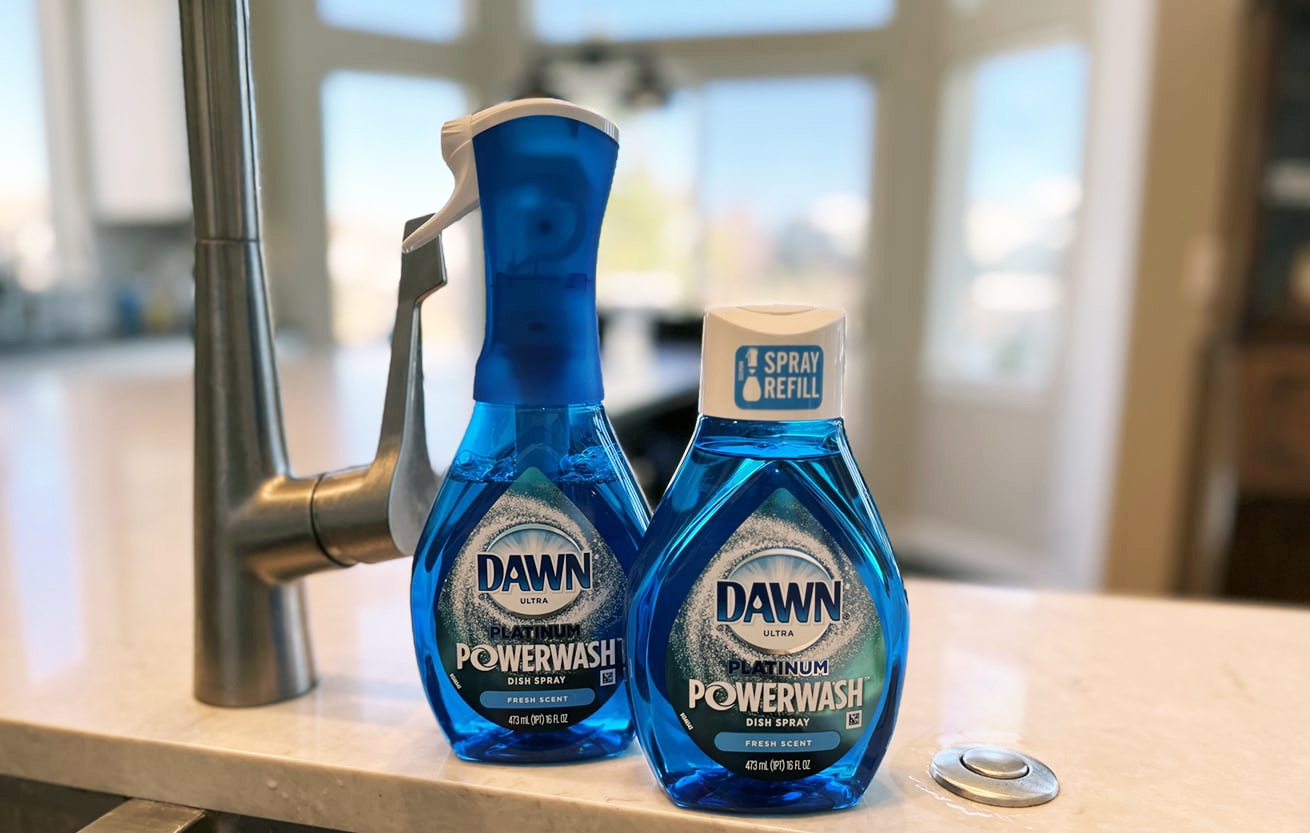
Let’s clear something up. This isn’t regular dish soap in a spray bottle pretending to be fancy.
The cleaning power behind this copycat Dawn Powerwash recipe comes from three things working together:
- Surfactants in Dawn that break down grease
- Alcohol, which speeds evaporation and cuts grime
- Water, properly balanced, to carry everything where it needs to go
That combo mimics what makes the commercial version so effective without the premium price or the constant repurchasing. Same logic. Less marketing. More control.
What Not to Substitute
One quick but important note. A similar-looking product does not work in this recipe: Dawn Ultra Platinum FOAM. It may look like Powerwash’s cousin, but it’s formulated differently and won’t deliver the same results here.
Save yourself the trouble and the mess. We’ll tackle that one another day.
Cost Check (Why This Still Makes Sense in 2026)
Even with modest price increases over the years, the math still works in your favor. Using the same Dawn Platinum dish liquid, alcohol, and distilled water, this DIY version comes out to about a dollar per 16 oz. bottle.
Compare that to about $4-$5 for the spray bottle and refills. That’s roughly 80% savings, with performance that holds up in everyday use. If you cook often, those savings add up quietly and quickly.
You may feel a little dizzy once you start comparing Dawn options… Ultra, Platinum, 3X, 4X, Professional, multiple scents, multiple colors.
Take a breath.
This isn’t an exact science. There’s very little you can do to mess this Dawn Powerwash recipe up, and plenty of room to adjust it to suit how you clean.
FAQs
Can I skip the distilled water and use tap water instead?
You can, but there’s a reason I recommend distilled water. Distilled water has had minerals removed, which means you’re not adding hard-water residue to your DIY Powerwash. If your tap water is high in minerals, it can affect performance over time. For best results, distilled water is inexpensive and easy to find at any grocery or drug store.
Can I make a bigger batch... like a gallon at a time?
Yes, this recipe multiplies just fine. Simply keep the same ratios and scale up. If you do make a larger batch, store it in a tightly sealed container and give it a gentle shake before refilling your spray bottle.
How does the DIY version compare in cost to the store-bought spray?
The DIY version is significantly cheaper. Using Dawn Platinum dishwashing liquid, rubbing alcohol, and distilled water, the cost comes out to about $1 per 16-ounce bottle, depending on current prices. Compare that to $5–6 for the spray bottle or $4–5 for refills, and the savings are hard to ignore, especially if you use it regularly.
Is it safe to use alcohol in a dish cleaner?
Yes, when used as directed. Isopropyl alcohol (or denatured alcohol, if you choose that variation) is safe in this diluted recipe as long as dishes are rinsed with water after cleaning just as you would with any dish soap. If you’re uncomfortable using stronger alcohols, stick with the standard 70% isopropyl alcohol version.
Do I need to rinse dishes after using this?
Yes. This is a spray-on dish cleaner, not a no-rinse product. After cleaning, rinse dishes thoroughly with water before using or drying.
Can I use vinegar in this recipe?
No and it’s best not to experiment here. Vinegar doesn’t play well with dish soaps like Dawn and can reduce cleaning effectiveness. This formula works because the ingredients are balanced to work together. Adding vinegar won’t improve it and may actually make it worse.
Can I use other Dawn varieties besides the blue ones?
You can experiment, but results may vary. Dawn Platinum and Dawn Ultra Original work best in this recipe. Free & Clear versions can also work if you prefer no dyes or fragrance. Avoid foam-based products, which are formulated differently and won’t give the same results.
Copycat Dawn Platinum Powerwash Spray
Materials
- 4 tablespoons Blue Dawn Platinum Dishwashing Liquid (1/4 cup)
- 1½ tablespoons 70% isopropyl rubbing alcohol
- 1¾ cups distilled water
Instructions
- Pour 1¾ cups distilled water into a clean, empty spray bottle.
- Add 4 tablespoons (¼ cup) Blue Dawn Platinum Dishwashing Liquid.
- Add 1½ tablespoons 70% isopropyl alcohol.
- Attach the spray top securely.
- Shake gently to combine.
- Let the mixture sit for a few hours before using so the ingredients can fully meld.
Notes
Variation #1: Alternative Scent
Substitute Blue Dawn Ultra Original for Blue Dawn Platinum. Blue Dawn Platinum comes in several scents, including Refreshing Rain and Fresh Scent. Personally, I find both a bit much. Blue Dawn Original has a cleaner, more neutral scent, and in testing, the performance difference in this DIY recipe is negligible—despite P&G’s claims that Platinum cleans faster.Variation #2: More Powerful
Substitute 91% isopropyl alcohol for 70%. The difference is simple: 91% alcohol contains less water than 70%. That higher alcohol ratio can slightly boost cleaning power and speed evaporation. This is a good option if 91% alcohol is what you already have on hand.Variation #3: Most Powerful (Use With Care)
Substitute 4 tablespoons denatured alcohol for the isopropyl alcohol. This variation seriously boosts cleaning strength, but it’s not for casual use. Denatured alcohol is a strong solvent typically found in garages or workshops and must be handled with care. Keep it out of reach of children, wear gloves, and always follow label instructions. When properly diluted, denatured alcohol works as both a cleaner and sanitizer, but this option is best reserved for those comfortable handling stronger materials.Question: Have you tried making your own Dawn Powerwash or are you still on the fence? I’d love to hear what worked for you (or what you changed).
EverydayCheapskate™ is reader-supported. We participate in the Amazon Services LLC Associates Program and other affiliate advertising programs, designed to provide a means for us to earn from qualifying purchases, at no cost to you.

More from Everyday Cheapskate
 https://www.everydaycheapskate.com/wp-content/uploads/20261017-Woman-opening-refrigerator-stocked-with-fresh-food-and-condiments.png
800
1200
Mary Hunt
https://www.everydaycheapskate.com/wp-content/uploads/EC-Logo-by-Mary-Hunt-Tagline-Trimmed.png
Mary Hunt2026-10-17 12:16:242026-10-17 12:16:24What Temperature Should a Refrigerator and Freezer Be?
https://www.everydaycheapskate.com/wp-content/uploads/20261017-Woman-opening-refrigerator-stocked-with-fresh-food-and-condiments.png
800
1200
Mary Hunt
https://www.everydaycheapskate.com/wp-content/uploads/EC-Logo-by-Mary-Hunt-Tagline-Trimmed.png
Mary Hunt2026-10-17 12:16:242026-10-17 12:16:24What Temperature Should a Refrigerator and Freezer Be? https://www.everydaycheapskate.com/wp-content/uploads/20261015-Sweet-pepper-and-onion-relish-in-a-white-bowl-with-crackers-and-fresh-red-bell-peppers.png
800
1200
Mary Hunt
https://www.everydaycheapskate.com/wp-content/uploads/EC-Logo-by-Mary-Hunt-Tagline-Trimmed.png
Mary Hunt2026-10-15 13:14:022026-10-15 13:14:02Sweet Pepper Onion Relish (Perfect Over Cream Cheese)
https://www.everydaycheapskate.com/wp-content/uploads/20261015-Sweet-pepper-and-onion-relish-in-a-white-bowl-with-crackers-and-fresh-red-bell-peppers.png
800
1200
Mary Hunt
https://www.everydaycheapskate.com/wp-content/uploads/EC-Logo-by-Mary-Hunt-Tagline-Trimmed.png
Mary Hunt2026-10-15 13:14:022026-10-15 13:14:02Sweet Pepper Onion Relish (Perfect Over Cream Cheese) https://www.everydaycheapskate.com/wp-content/uploads/20261012-Woman-using-smartphone-while-checking-monthly-cellular-data-usage-on-laptop.png
800
1200
Mary Hunt
https://www.everydaycheapskate.com/wp-content/uploads/EC-Logo-by-Mary-Hunt-Tagline-Trimmed.png
Mary Hunt2026-10-12 10:51:112026-10-12 10:51:11Do You Really Need Unlimited Data? Check Before You Pay
https://www.everydaycheapskate.com/wp-content/uploads/20261012-Woman-using-smartphone-while-checking-monthly-cellular-data-usage-on-laptop.png
800
1200
Mary Hunt
https://www.everydaycheapskate.com/wp-content/uploads/EC-Logo-by-Mary-Hunt-Tagline-Trimmed.png
Mary Hunt2026-10-12 10:51:112026-10-12 10:51:11Do You Really Need Unlimited Data? Check Before You Pay https://www.everydaycheapskate.com/wp-content/uploads/20261011-Woman-Adjusting-Smart-Home-Device-on-the-Wall-how-to-lower-your-electric-bill.png
800
1200
Mary Hunt
https://www.everydaycheapskate.com/wp-content/uploads/EC-Logo-by-Mary-Hunt-Tagline-Trimmed.png
Mary Hunt2026-10-11 23:01:562026-10-11 23:01:56Stop Chasing Pennies on Your Electric Bill. Do This
https://www.everydaycheapskate.com/wp-content/uploads/20261011-Woman-Adjusting-Smart-Home-Device-on-the-Wall-how-to-lower-your-electric-bill.png
800
1200
Mary Hunt
https://www.everydaycheapskate.com/wp-content/uploads/EC-Logo-by-Mary-Hunt-Tagline-Trimmed.png
Mary Hunt2026-10-11 23:01:562026-10-11 23:01:56Stop Chasing Pennies on Your Electric Bill. Do This https://www.everydaycheapskate.com/wp-content/uploads/20261007-red-present-sitting-in-autumn-leaves-Amazon-Prime-Big-Deal-Days-gifts.png
800
1200
Mary Hunt
https://www.everydaycheapskate.com/wp-content/uploads/EC-Logo-by-Mary-Hunt-Tagline-Trimmed.png
Mary Hunt2026-10-06 23:09:432026-10-06 23:09:43Christmas Shopping in October? These Prime Day Gifts Make Sense
https://www.everydaycheapskate.com/wp-content/uploads/20261007-red-present-sitting-in-autumn-leaves-Amazon-Prime-Big-Deal-Days-gifts.png
800
1200
Mary Hunt
https://www.everydaycheapskate.com/wp-content/uploads/EC-Logo-by-Mary-Hunt-Tagline-Trimmed.png
Mary Hunt2026-10-06 23:09:432026-10-06 23:09:43Christmas Shopping in October? These Prime Day Gifts Make Sense https://www.everydaycheapskate.com/wp-content/uploads/20261006-prime-big-deal-days-have-landed.png
800
1200
Mary Hunt
https://www.everydaycheapskate.com/wp-content/uploads/EC-Logo-by-Mary-Hunt-Tagline-Trimmed.png
Mary Hunt2026-10-05 11:01:432026-10-07 09:02:53EC’s Top Picks from Amazon Prime Big Deal Days 2026
https://www.everydaycheapskate.com/wp-content/uploads/20261006-prime-big-deal-days-have-landed.png
800
1200
Mary Hunt
https://www.everydaycheapskate.com/wp-content/uploads/EC-Logo-by-Mary-Hunt-Tagline-Trimmed.png
Mary Hunt2026-10-05 11:01:432026-10-07 09:02:53EC’s Top Picks from Amazon Prime Big Deal Days 2026 https://www.everydaycheapskate.com/wp-content/uploads/20261004-reduce-healthcare-costs-with-three-habits-healthy-couple-walking-in-autumn-leaves.png
800
1200
Mary Hunt
https://www.everydaycheapskate.com/wp-content/uploads/EC-Logo-by-Mary-Hunt-Tagline-Trimmed.png
Mary Hunt2026-10-04 23:08:572026-10-04 23:09:47How to Reduce Healthcare Costs With 3 Free Daily Habits
https://www.everydaycheapskate.com/wp-content/uploads/20261004-reduce-healthcare-costs-with-three-habits-healthy-couple-walking-in-autumn-leaves.png
800
1200
Mary Hunt
https://www.everydaycheapskate.com/wp-content/uploads/EC-Logo-by-Mary-Hunt-Tagline-Trimmed.png
Mary Hunt2026-10-04 23:08:572026-10-04 23:09:47How to Reduce Healthcare Costs With 3 Free Daily Habits https://www.everydaycheapskate.com/wp-content/uploads/20241004-news-you-can-use-october-everyday-cheapskate-top-news-articles.png
800
1200
Mary Hunt
https://www.everydaycheapskate.com/wp-content/uploads/EC-Logo-by-Mary-Hunt-Tagline-Trimmed.png
Mary Hunt2026-10-04 01:04:052026-10-19 09:46:10News You Can Use • October 2026
https://www.everydaycheapskate.com/wp-content/uploads/20241004-news-you-can-use-october-everyday-cheapskate-top-news-articles.png
800
1200
Mary Hunt
https://www.everydaycheapskate.com/wp-content/uploads/EC-Logo-by-Mary-Hunt-Tagline-Trimmed.png
Mary Hunt2026-10-04 01:04:052026-10-19 09:46:10News You Can Use • October 2026 https://www.everydaycheapskate.com/wp-content/uploads/20261003-woman-hugging-elderly-mother-sandwich-generation-caring-for-aging-parents.png
800
1200
Mary Hunt
https://www.everydaycheapskate.com/wp-content/uploads/EC-Logo-by-Mary-Hunt-Tagline-Trimmed.png
Mary Hunt2026-10-03 10:47:222026-10-03 10:47:25Sandwiched Between Aging Parents and Adult Children
https://www.everydaycheapskate.com/wp-content/uploads/20261003-woman-hugging-elderly-mother-sandwich-generation-caring-for-aging-parents.png
800
1200
Mary Hunt
https://www.everydaycheapskate.com/wp-content/uploads/EC-Logo-by-Mary-Hunt-Tagline-Trimmed.png
Mary Hunt2026-10-03 10:47:222026-10-03 10:47:25Sandwiched Between Aging Parents and Adult Children

Works great and so inexpensive! Even tho’ my local store has the spray on sale for $2.99 quite often, it’s still 67% cheaper to make my own. Considering I always have the ingredients on hand, why bother buying the commercial version?
I did the math since 1 gallon is 128 oz, (128/13) which would divide in at 9.84615384615x, so almost 10x the amount of water, so we can just round up to 10 for the other items since we’re cleaning anyway. Plus, you’ll likely not get all the soap out of the measuring cup unless you rinse it with the distilled water. 🙂
1 gallon of distilled water (128 oz)
2-1/2 cups of Dawn Platinum dish soap (40 oz)
1-1/4 cups of isopropyl alcohol (20 oz)
Thanks!
One question: Why 4 T denatured alcohol instead of 1.5 T isopropyl alcohol? Why isn’t it the same amount, especially if denatured alcohol is stronger than isopropyl alcohol?
Because that version of the recipe is stronger, even more powerful
Great recipe. Thank you!
Still waiting for the Dawn Ultra Platinum Foam recipe!
I understand that Isopropyl should not be used for cleaning dishes. Ethanol (also called ethyl alcohol, grain alcohol, drinking alcohol) is best to use. Denatured alcohol is just the same with a nasty taste added to it.
Hope this helps.
Isoproyl alchohol is safe to use but, like any cleaning product, should be thoroughly rinsed before use. Denatured alchohol often contains methanol as an additive to “denature” which is also highly toxic. Other additives often include isopropyl alchohol. Denatured alchohol will work as a substitution for isopropyl but either way, the cleaner should be rinsed before use. Thanks!
Here’s some more information on the differences: What’s the Difference Between Isopropyl and Denatured Alcohol?
How do you rinse the cleaner before use?
Use water to rinse like you would any dish cleaner.
Thank you Mary!
I have the ingrediants to make it so when I’m done with the bottle, I will refill it with your recipe!!!!!
It works Great and your recipe saves us some money!
Is there a benefit to adding cleaning vinegar to this recipe?
No need for the 91% alcohol. Just increase the ratio of 70% alcohol to water (use less water, more alcohol).
I’m happier than a in !! I knew we could count on you to crack the code on this one!
And I have about six gallons of the 91% alcohol from a customer that left me high and dry. Another thing I acquired is about one quart of Dawn Advanced Power Overnight Baking Powder, do you think that will work too?
I have never heard of “Dawn Advanced Power Overnight Baking Powder” … !
It’s dated 2012 and says you can soak in 3 minutes instead of overnight. I’m giving it a shot; I have nothing to lose. = )
I had to try the Powerwash like eveyone else, and I was NOT impressed. There was nothing remarkable about it. Can someone explain the hype?
I was much more impressed with the foam, which seems super concentrated.
Great post! However, I don’t use any Dawn products. I use Dr. Bronner’s Sal Suds for dishes and my laundry. I buy it by the gallon (usually once per year – its that concentrated). 2 tblsps for the washing machine. 1 tsp in a large sink of water for dishes. I keep a quart bottle with 1 tblsp of SS for all purpose cleaning and it really is all purpose – sinks, tubs, toilets. Sal Suds can also pre-treat laundry stains. It has a slight pine scent to it from essential oils. I’ve not done any cost analysis but I do not think anything currently on the market can beat it from a cost perspective. The only other cleaners in my house are Dr. B’s Castile Soap. Lisa Bronner just published a book called Soap & Soul packed with good ‘recipes’ for how to use all their products.
Thank you so much for this. I bought some and was sure that the power wash was just a gimmick to get us to spend more for a diluted Dawn solution.
Watch for my review coming soon 😉