

The Grocery Math Most Shoppers Still Get Wrong

The grocery store is full of traps disguised as “deals,” and price per pound is one of the sneakiest. What looks cheaper on the shelf can quietly cost more once bones, waste, and portions are factored in. Thinking in cost per serving, not sticker price, helps you feed more people, waste less food, and feel smarter every time you check out. This is grocery math that actually works in real life.

Which is the better buy: a bone-in pork tenderloin at $4.99 per pound or boneless pork chops at $6.49 per pound, both featured in this week’s grocery ad?
If you instinctively chose the tenderloin, you’re in good company… and we’d be wrong.
Here’s why… and it has nothing to do with being bad at math.
How Bones, Fat, and Waste Change the Math
Price per pound sounds straightforward, but it leaves out one important detail: how much of that pound actually ends up on the plate. Not all meat and poultry deliver the same number of servings, and that’s where well-intentioned shoppers get tripped up.
Take bone-in versus boneless cuts.
With boneless pork chops, you’ll typically get about four servings per pound. A bone-in pork sirloin roast, on the other hand, delivers closer to two servings per pound once bones and trimming are out of the picture. Even though the bone-in cut looks cheaper at first glance, you’re paying for weight you can’t eat.
What matters most is the cost of the edible portion, not the price printed on the tag. If it helps, think in terms of how many plates that package will realistically serve at your table.
The same logic applies to poultry.
A whole chicken usually yields 2 to 2½ servings per pound, depending on size and how it’s cooked. Boneless, skinless chicken breasts stretch further, averaging 3½ to 4 servings per pound. That difference adds up quickly, especially if you’re cooking for more than one or planning leftovers.
The Dollar-Per-Person Meal Strategy
Reader Jacquelyn L. took the cost-per-serving idea one step further and in a way that feels refreshingly realistic:
“I tried clipping coupons and carefully planning meals, but when time runs short, those systems fall apart.”
What she needed wasn’t another binder or app. It was a simpler rule she could use on the fly. Her solution? A dollar-per-person-per-meal target. Not as a rigid rule, but as a practical benchmark.
Here’s how that looks in real life:
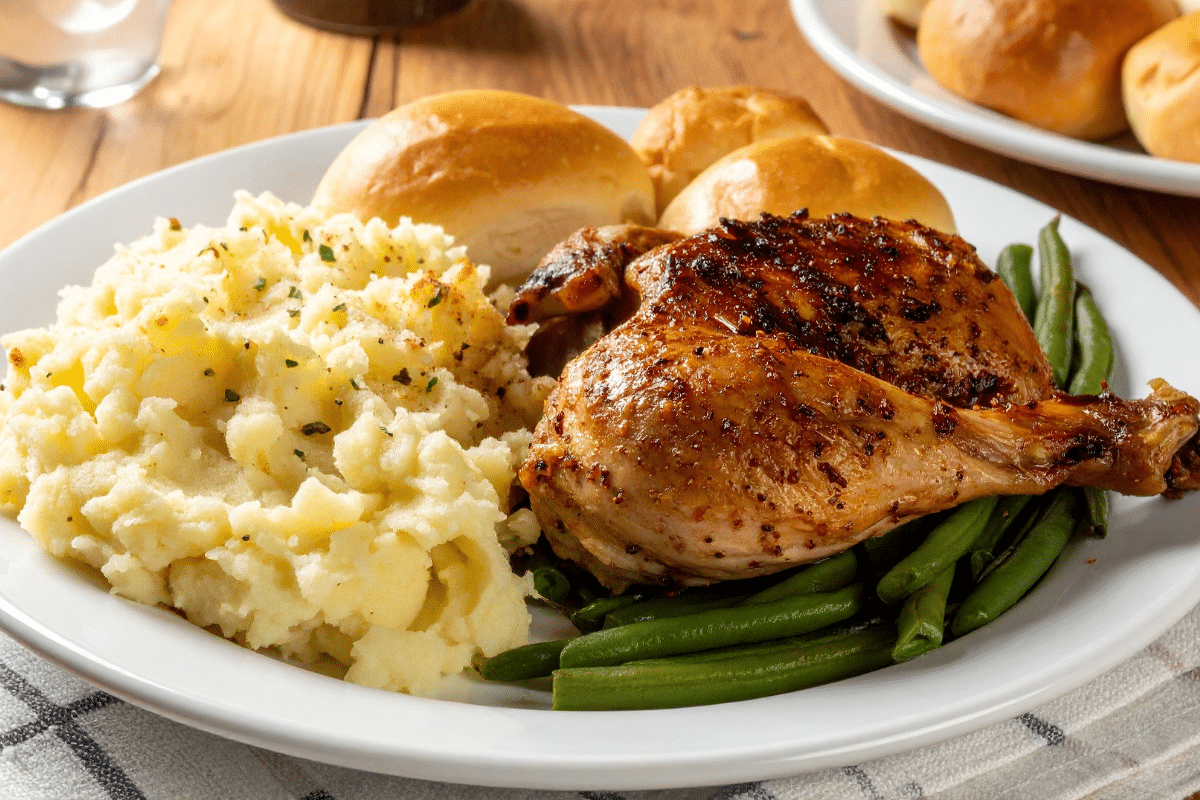
A family pack of chicken leg quarters on sale for about $9 for ten pieces, roughly 90 cents each at today’s prices, can anchor a solid meal. Serve one leg-thigh quarter per person with a filling, low-cost side like rice, potatoes, or macaroni and cheese. Add a bag of frozen vegetables or a can of beans, and you’re still hovering right around that dollar-per-person mark.
Jacquelyn goes on:
“I don’t deny my family an occasional steak. I simply make sure I go well below a dollar per person for other meals that week. We don’t want to feel deprived, so I make up for indulgences.”
Meat Stretching Tricks That Save Serious Money
One of the easiest ways to keep meals under a dollar per person is to stop thinking of meat as the star of the plate and start treating it like an ingredient. You don’t need to give it up. Just use it more strategically.
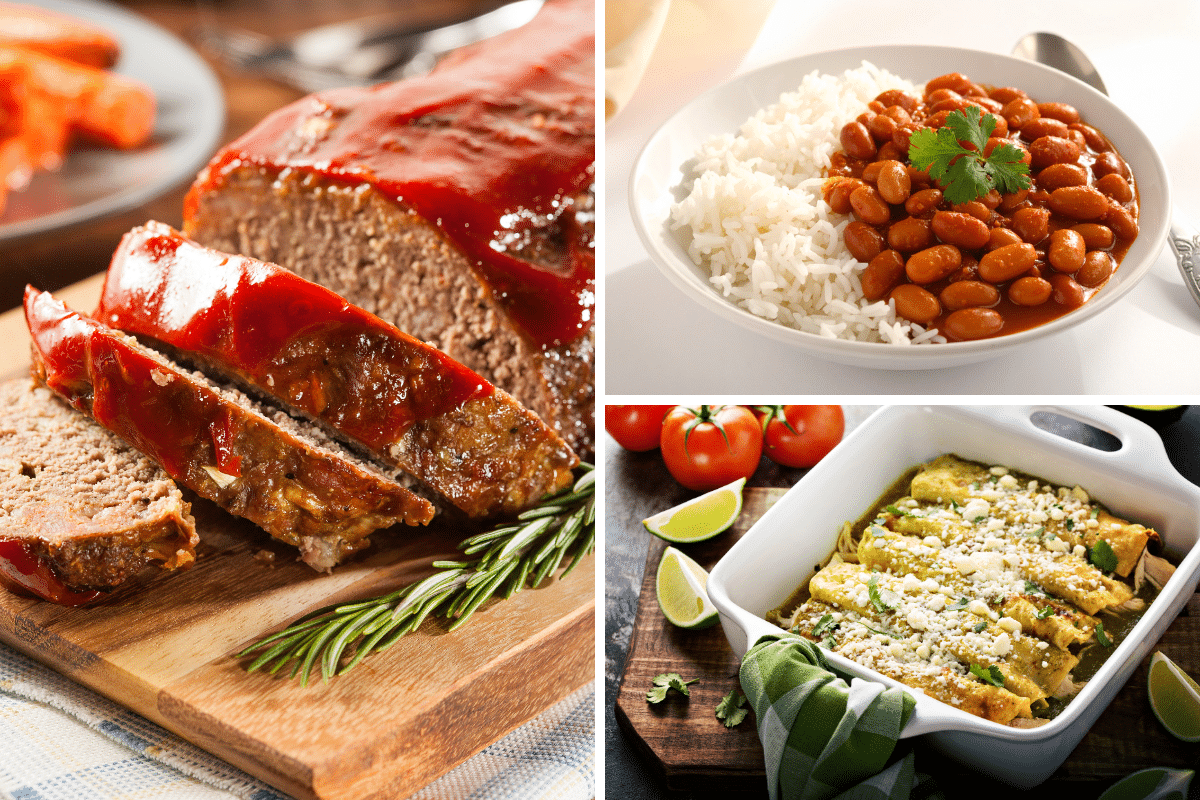
Meatless meals are the simplest place to start. Dishes like red beans and rice, potato soup, or pasta with a hearty sauce cost pennies per serving and give your budget room to breathe later in the week. No one feels deprived when the meal is filling and familiar.
When you do cook with meat, stretch it. A handful of breadcrumbs or crushed crackers mixed into ground beef instantly lowers the cost per serving without changing the flavor. A small amount of chopped ham can turn a pot of beans or soup into a satisfying main dish. And chicken, especially cooked chicken, goes much further when it’s diced or shredded and folded into casseroles, pasta, soups, or skillet meals instead of served whole.
The common thread? You’re spreading the protein across the entire dish instead of concentrating it on one plate. That single shift makes it far easier to hit Jacquelyn’s dollar-per-person benchmark while still serving meals that feel generous and complete.
Why This Method Matters More in 2026
There’s no doubt that feeding a family for around a dollar per person is harder than it used to be. Inflation has made sure of that. But harder doesn’t mean impossible.
The biggest shift isn’t finding rock-bottom prices anymore. It’s learning how to work with the grocery store instead of reacting to it. That means watching for loss leaders, those items priced low on purpose to get you in the door. It means leaning into lower-cost grocery stores or warehouse clubs when they make sense. And yes, it means weighing, portioning, and thinking ahead just a little more than we used to.
Some meals will come in well under a dollar per person, others will land above it. The goal isn’t perfection. It’s the average. Estimate. Adjust as you go. And don’t stress over the cost of seasonings, oil, or a splash of milk. Those pennies don’t make or break the plan.
Using Jacquelyn’s buck-a-meal approach, you don’t have to chase the absolute best price every time. You only have to ask one practical question: Can this meal reasonably feed everyone for about a dollar per person? If the answer is yes, you’re doing just fine.
Simple Tools to Make Cost Per Serving Easier

University of Nebraska’s Meat Charts
If you like having numbers to lean on, the University of Nebraska Lincoln Cooperative Extension’s Buying Meat by the Serving chart breaks down how many servings you can expect from common cuts of meat and what those servings actually cost. The document dates back to 1989, but the math hasn’t changed. Bones still weigh what they weigh, fat still trims away, and servings are still servings. It remains one of the clearest explanations of why price per pound can mislead even careful shoppers.
You can print the charts and tuck them into your bag or glove compartment, or just skim them once so the logic sticks.
Quick Online Calculator
If you prefer something quicker, there’s also a free online calculator based on the same data. Plug in the price per pound and the number of people you’re feeding, and it gives you a reasonable cost-per-serving estimate.
Everyday Tools to Make It Easier
Beyond that, a few everyday tools can quietly support this approach at home:
- A digital kitchen scale helps you portion meat evenly and break down bulk purchases without guesswork.
- Freezer-safe containers or bags make it easier to store meat in meal-sized portions, so nothing gets lost or overused.
- A vacuum sealer, if you have one, extends freezer life and reduces waste.
- A dry-erase board on the fridge keeps track of what’s already cooked, portioned, or planned, which prevents duplicate spending.
None of this is required. These are just tools.
When you stop relying on sticker price alone and start thinking in servings, you make decisions that hold up long after the receipt fades. And that’s grocery math that keeps working, no matter what prices do next.
Question: What grocery “deal” fooled you before you started paying attention to servings instead of price?
EverydayCheapskate™ is reader-supported. We participate in the Amazon Services LLC Associates Program and other affiliate advertising programs, designed to provide a means for us to earn from qualifying purchases, at no cost to you.

More from Everyday Cheapskate
 https://www.everydaycheapskate.com/wp-content/uploads/20261006-prime-big-deal-days-have-landed.png
800
1200
Mary Hunt
https://www.everydaycheapskate.com/wp-content/uploads/EC-Logo-by-Mary-Hunt-Tagline-Trimmed.png
Mary Hunt2026-10-05 11:01:432026-10-07 09:02:53EC’s Top Picks from Amazon Prime Big Deal Days 2026
https://www.everydaycheapskate.com/wp-content/uploads/20261006-prime-big-deal-days-have-landed.png
800
1200
Mary Hunt
https://www.everydaycheapskate.com/wp-content/uploads/EC-Logo-by-Mary-Hunt-Tagline-Trimmed.png
Mary Hunt2026-10-05 11:01:432026-10-07 09:02:53EC’s Top Picks from Amazon Prime Big Deal Days 2026 https://www.everydaycheapskate.com/wp-content/uploads/20261004-reduce-healthcare-costs-with-three-habits-healthy-couple-walking-in-autumn-leaves.png
800
1200
Mary Hunt
https://www.everydaycheapskate.com/wp-content/uploads/EC-Logo-by-Mary-Hunt-Tagline-Trimmed.png
Mary Hunt2026-10-04 23:08:572026-10-04 23:09:47How to Reduce Healthcare Costs With 3 Free Daily Habits
https://www.everydaycheapskate.com/wp-content/uploads/20261004-reduce-healthcare-costs-with-three-habits-healthy-couple-walking-in-autumn-leaves.png
800
1200
Mary Hunt
https://www.everydaycheapskate.com/wp-content/uploads/EC-Logo-by-Mary-Hunt-Tagline-Trimmed.png
Mary Hunt2026-10-04 23:08:572026-10-04 23:09:47How to Reduce Healthcare Costs With 3 Free Daily Habits https://www.everydaycheapskate.com/wp-content/uploads/20261004-woman-dreaming-about-her-financial-and-life-goals.png
800
1200
Mary Hunt
https://www.everydaycheapskate.com/wp-content/uploads/EC-Logo-by-Mary-Hunt-Tagline-Trimmed.png
Mary Hunt2026-10-04 12:50:422026-10-04 12:50:42She Lived in a Basement for $100 a Month. Here’s Why.
https://www.everydaycheapskate.com/wp-content/uploads/20261004-woman-dreaming-about-her-financial-and-life-goals.png
800
1200
Mary Hunt
https://www.everydaycheapskate.com/wp-content/uploads/EC-Logo-by-Mary-Hunt-Tagline-Trimmed.png
Mary Hunt2026-10-04 12:50:422026-10-04 12:50:42She Lived in a Basement for $100 a Month. Here’s Why. https://www.everydaycheapskate.com/wp-content/uploads/20261002-cake-mix-chocolate-chip-cookies.png
800
1200
Mary Hunt
https://www.everydaycheapskate.com/wp-content/uploads/EC-Logo-by-Mary-Hunt-Tagline-Trimmed.png
Mary Hunt2026-10-02 19:44:302026-10-02 19:44:30Cake Mix Chocolate Chip Cookies That Taste Homemade
https://www.everydaycheapskate.com/wp-content/uploads/20261002-cake-mix-chocolate-chip-cookies.png
800
1200
Mary Hunt
https://www.everydaycheapskate.com/wp-content/uploads/EC-Logo-by-Mary-Hunt-Tagline-Trimmed.png
Mary Hunt2026-10-02 19:44:302026-10-02 19:44:30Cake Mix Chocolate Chip Cookies That Taste Homemade https://www.everydaycheapskate.com/wp-content/uploads/20260930-cheap-Halloween-party-snacks-for-kids-punch-bowl-mummy-dogs-ghost-bananas.png
800
1200
Mary Hunt
https://www.everydaycheapskate.com/wp-content/uploads/EC-Logo-by-Mary-Hunt-Tagline-Trimmed.png
Mary Hunt2026-10-01 11:08:582026-10-01 11:08:59These Cheap Halloween Snacks Are Almost Too Easy to Make
https://www.everydaycheapskate.com/wp-content/uploads/20260930-cheap-Halloween-party-snacks-for-kids-punch-bowl-mummy-dogs-ghost-bananas.png
800
1200
Mary Hunt
https://www.everydaycheapskate.com/wp-content/uploads/EC-Logo-by-Mary-Hunt-Tagline-Trimmed.png
Mary Hunt2026-10-01 11:08:582026-10-01 11:08:59These Cheap Halloween Snacks Are Almost Too Easy to Make https://www.everydaycheapskate.com/wp-content/uploads/20261001-prime-big-deal-days-are-coming.png
800
1200
Mary Hunt
https://www.everydaycheapskate.com/wp-content/uploads/EC-Logo-by-Mary-Hunt-Tagline-Trimmed.png
Mary Hunt2026-10-01 09:25:072026-10-01 11:45:25Prime Big Deal Days 2026: Your Cheapskate Game Plan
https://www.everydaycheapskate.com/wp-content/uploads/20261001-prime-big-deal-days-are-coming.png
800
1200
Mary Hunt
https://www.everydaycheapskate.com/wp-content/uploads/EC-Logo-by-Mary-Hunt-Tagline-Trimmed.png
Mary Hunt2026-10-01 09:25:072026-10-01 11:45:25Prime Big Deal Days 2026: Your Cheapskate Game Plan https://www.everydaycheapskate.com/wp-content/uploads/20260927-impossible-lasagna-pie-recipe-with-wooden-serving-spoon-in-white-casserole-dish.png
800
1200
Mary Hunt
https://www.everydaycheapskate.com/wp-content/uploads/EC-Logo-by-Mary-Hunt-Tagline-Trimmed.png
Mary Hunt2026-09-28 09:38:592026-09-28 22:48:34Impossible Lasagna Pie: All the Flavor, None of the Noodles
https://www.everydaycheapskate.com/wp-content/uploads/20260927-impossible-lasagna-pie-recipe-with-wooden-serving-spoon-in-white-casserole-dish.png
800
1200
Mary Hunt
https://www.everydaycheapskate.com/wp-content/uploads/EC-Logo-by-Mary-Hunt-Tagline-Trimmed.png
Mary Hunt2026-09-28 09:38:592026-09-28 22:48:34Impossible Lasagna Pie: All the Flavor, None of the Noodles https://www.everydaycheapskate.com/wp-content/uploads/20260925-best-inexpensive-coffee-grinders-burr-manual-and-electric.png
800
1200
Mary Hunt
https://www.everydaycheapskate.com/wp-content/uploads/EC-Logo-by-Mary-Hunt-Tagline-Trimmed.png
Mary Hunt2026-09-25 11:06:342026-10-10 15:49:09The Best Coffee Grinder Upgrade That’s Actually Worth It
https://www.everydaycheapskate.com/wp-content/uploads/20260925-best-inexpensive-coffee-grinders-burr-manual-and-electric.png
800
1200
Mary Hunt
https://www.everydaycheapskate.com/wp-content/uploads/EC-Logo-by-Mary-Hunt-Tagline-Trimmed.png
Mary Hunt2026-09-25 11:06:342026-10-10 15:49:09The Best Coffee Grinder Upgrade That’s Actually Worth It https://www.everydaycheapskate.com/wp-content/uploads/20260922-chinese-chicken-in-slow-cooker-with-white-rice-recipe-with-sesame-seeds-and-scallions.png
800
1200
Mary Hunt
https://www.everydaycheapskate.com/wp-content/uploads/EC-Logo-by-Mary-Hunt-Tagline-Trimmed.png
Mary Hunt2026-09-22 10:13:562026-09-28 22:48:39Slow Cooker Chinese Chicken That Beats Takeout
https://www.everydaycheapskate.com/wp-content/uploads/20260922-chinese-chicken-in-slow-cooker-with-white-rice-recipe-with-sesame-seeds-and-scallions.png
800
1200
Mary Hunt
https://www.everydaycheapskate.com/wp-content/uploads/EC-Logo-by-Mary-Hunt-Tagline-Trimmed.png
Mary Hunt2026-09-22 10:13:562026-09-28 22:48:39Slow Cooker Chinese Chicken That Beats Takeout

When our children were young and I was always battling the cost of food I used to always stretch the meat portions like slicing up hot dogs and mixing them into mac&cheese, using ground meat and stretching it with eggs and old bread or crackers made into crumbs, vegetables blended into a puree or even better cooked cracked wheat. If you cook the wheat in beef broth it tastes just like ground meat and even looks like it in dishes, casseroles, you name it and it is a good protein source. Chili made with this secret ingredient tastes really good too and no one ever knew I was skimping on the meat ingredient! It helps to be raised by depression era parents! Sneaky but cost saving!
Thanks for this Mary. I am sharing with my granddaughter and her husband. They have a 2 year old and another on the way. Years ago I had a recipe book that has now fallen apart after LOTS of use. It was How I feed my family on $16 a week by Jo Ann York. It is out of print now but libraries still have it or can get it for anyone. The recipes are really good and her savings are much like you have stated here. Especially not thinking of meat as the “star” of the meal.
Again, thanks for this column .
Loy Leslie
I learned from my mother to stretch a food dollar. Our local Weis market had buy 1 get 2 on Perdue chicken items. I bought 3 4 packs of thighs and vacuum sealed them in packs of two. I paid $8.50 for 12 large thighs which will translate into 8-10 meals for the hubby and me. I save the bones and skin to make stock.
I cannot figure out how to print your charts. I don’t have social media sites and when I try to send to my email address it tries to get me to purchase some new Yahoo mail system. Are there any pdf charts I can print off? I’m not “IT” literate. Thanks
I have a better option, folks!
Go directly to: University of Nebraska-Lincoln Cooperative Extension site for this subject of buying meat by the serving:
Or try hese:
https://www.everydaycheapskate.com/wp-content/uploads/Meat-Servings-Table-copy-scaled.jpg
https://www.everydaycheapskate.com/wp-content/uploads/Meat-Servings-Table-2-copy-scaled.jpg
I have been buying pork tenderloin for years, I put it in my freeze for about 40 min. then slice into bone less pork chop and one roast. The trick to getting tender chops is to cut them at a slant, it works. Sometimes they are on sale for $1.98 a lb. that bone less chops for $1.98 a lb.
In your first paragraph, a pork tenderloin is the better deal since it is boneless , like the pork chops. In a later paragraph, you compare the chops to a bone in pork roast. That’s different than a tenderloin, I believe.
It is bone-in tenderloin.
I was just in my local Kroger’s last night, and noticed that they now have a limit of 5 Per Person of meat purchases that are on sale. I didn’t think to inquire if it is 5 of each item of meat on sale, or if it is just 5 total sale items of meat. I just thought it was odd, but a sign of the times…..they scream there is a shortage of something and then everyone goes nuts trying to hoard it. If you read Mary’s site though, she has been suggesting buying a couple of extras that you can afford each time to build your own little stockpile without depriving others. I remember the article about canned goods that last a long time, and hiding the extras under the bed, also about cutting up the whole chicken, and then making stock outta the bones, so nothing wasted. Thanks again Mary, while everyone else is running around like a chicken w/ their head cut off, we who follow you are a little calmer!!! :0>