

Best Inexpensive Sewing Machines That Actually Last

I learned to sew on a real machine when I was seven, and I’ve been grateful for that skill ever since. A good sewing machine doesn’t just stitch fabric. It saves money, builds confidence, and earns its keep year after year. If you’re shopping in 2026, you don’t need the cheapest machine or the fanciest one. What you need is a dependable workhorse that does its job without frustration. I’ve updated this post with two sewing machines I trust, so you can choose what fits your life right now. Solid picks. No fluff.

Turning seven is a big deal all on its own, but for me it came with an extra milestone: I was finally old enough to join 4-H. At the time, I didn’t care much about the organization’s impressive reach or mission. I just knew it meant I’d get to learn something real… something useful, and I couldn’t wait.
Unlike many 4-H clubs today, mine offered just one program: sewing. That suited me perfectly. I was thrilled at the thought of sitting down at a full-size, electric sewing machine and being trusted to use it. No toys. No shortcuts. The real thing.
My first project was a big square dish towel. The assignment was simple enough… turn and hem all four sides, but it felt enormous. I remember concentrating hard, guiding the fabric slowly, determined not to let a single stitch slip off the edge. It took forever, or so it seemed, but I finished it. Every inch of that hem still brings back a rush of pride. Next came an apron. I made that too. Somewhere along the way, sewing stopped being an assignment and became a skill I knew I could rely on.
These days, my sewing has settled down to an occasional quilt, a few decorator projects for the house, but the satisfaction is the same. I still love it. And yes, I’ve learned the proper term is “sewist,” which sounds far more dignified than the old alternative that always made me wince a little.
Why a Good Sewing Machine Is Still a Money-Saving Skill
Learning to sew isn’t about turning yourself into a fashion designer or spending every weekend buried in fabric. It’s about having options. A sewing machine gives you the ability to fix, adjust, reinforce, and reuse… skills that quietly save money year after year.
Think about it: hemming a pair of pants, fixing a zipper, reinforcing a seam, or taking in a thrift-store find that’s almost perfect. Those small jobs add up fast when you’re paying someone else to do them. With clothing prices climbing and quality slipping, being able to extend the life of what you already own matters more than it used to.
Mechanical vs. Computerized: Which Makes Sense for You?
Mechanical machines are straightforward and familiar. They’ve earned their reputation for durability, and for some people, especially those who want absolute simplicity, they’re still a solid choice.
Today’s modern computerized machines are designed to make sewing easier, more consistent, and less frustrating, especially for everyday projects. Features like precise stitch control, automatic buttonholes, and smoother speed management can actually shorten the learning curve and reduce mistakes.
Our Top Picks for Sewing Machines
After a lot of hands-on experience and careful comparison, these are the two sewing machines I recommend most: one solid budget starter and one thoughtful upgrade when you’re ready for more.
- Best Inexpensive: Janome Mod 100Q Sewing and Quilting Machine
- Best Budget: Janome MOD-15 Mechanical Sewing Machine

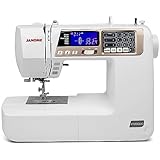

Best Inexpensive Computerized Sewing Machine
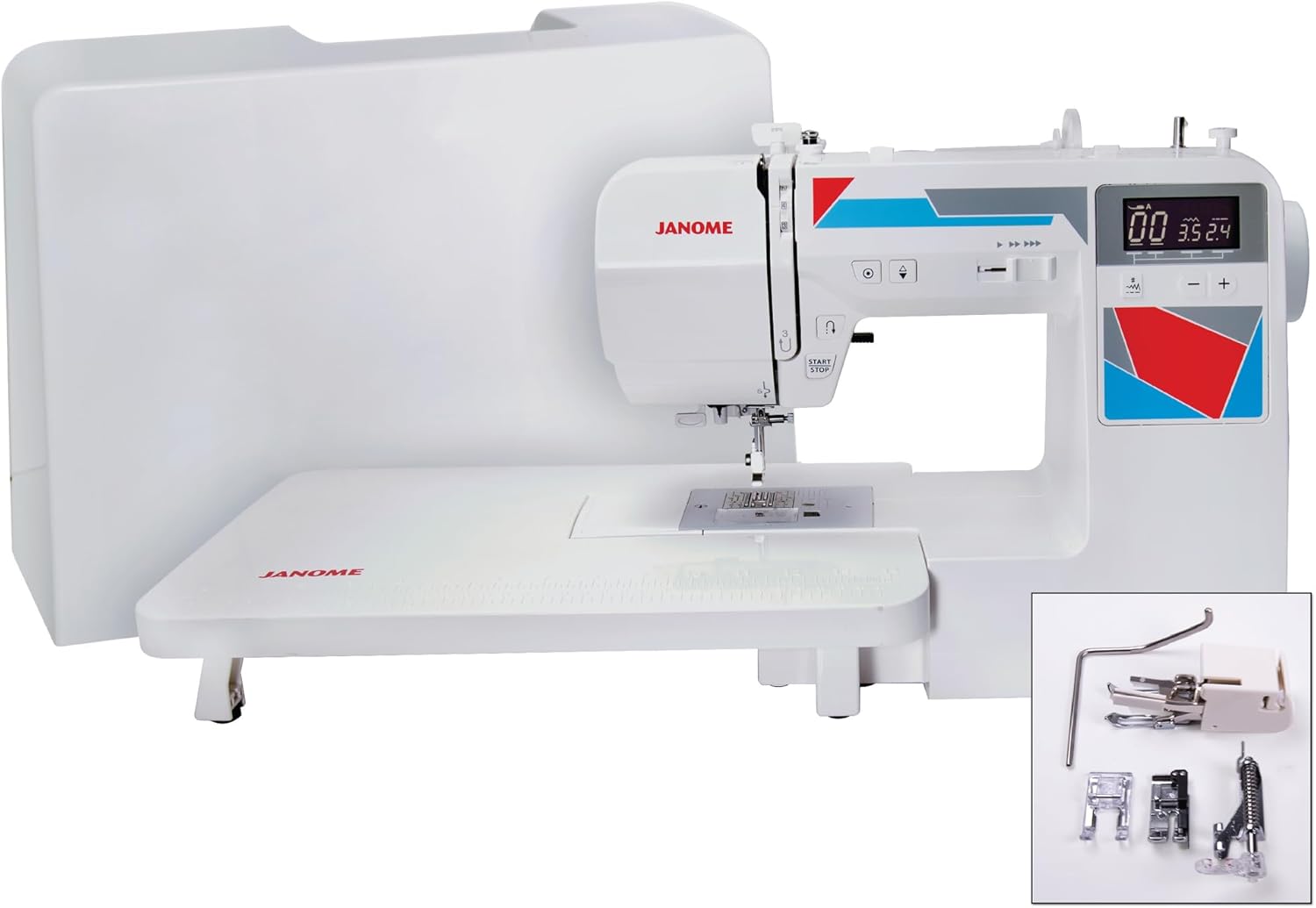
Janome Mod 100Q Sewing and Quilting Machine
The Janome MOD-100Q delivers the features most sewists actually use: clean stitch quality, reliable power, and easy controls at a price that still makes sense.
The MOD-100Q is the closest 2026 equivalent to the original MOD-100 I loved, and then some. It keeps the 100 built-in stitches and generous 7mm stitch width, but adds a thoughtfully bundled quilting package that expands what you can do without needing immediate upgrades. This is the kind of machine that feels capable right out of the box and continues to feel that way as your projects grow.
The backlit LCD screen and clearly marked buttons make stitch selection simple. Convenience features like the start/stop button, needle up/down control, speed slider, and drop-in bobbin remove a lot of the small frustrations that can slow you down, especially if you sew in short, stolen moments.
Whether you’re sewing garments, home décor, or dipping your toe into quilting, this machine gives you room to grow without pushing you into a higher price bracket.
Best Budget Mechanical Sewing Machine
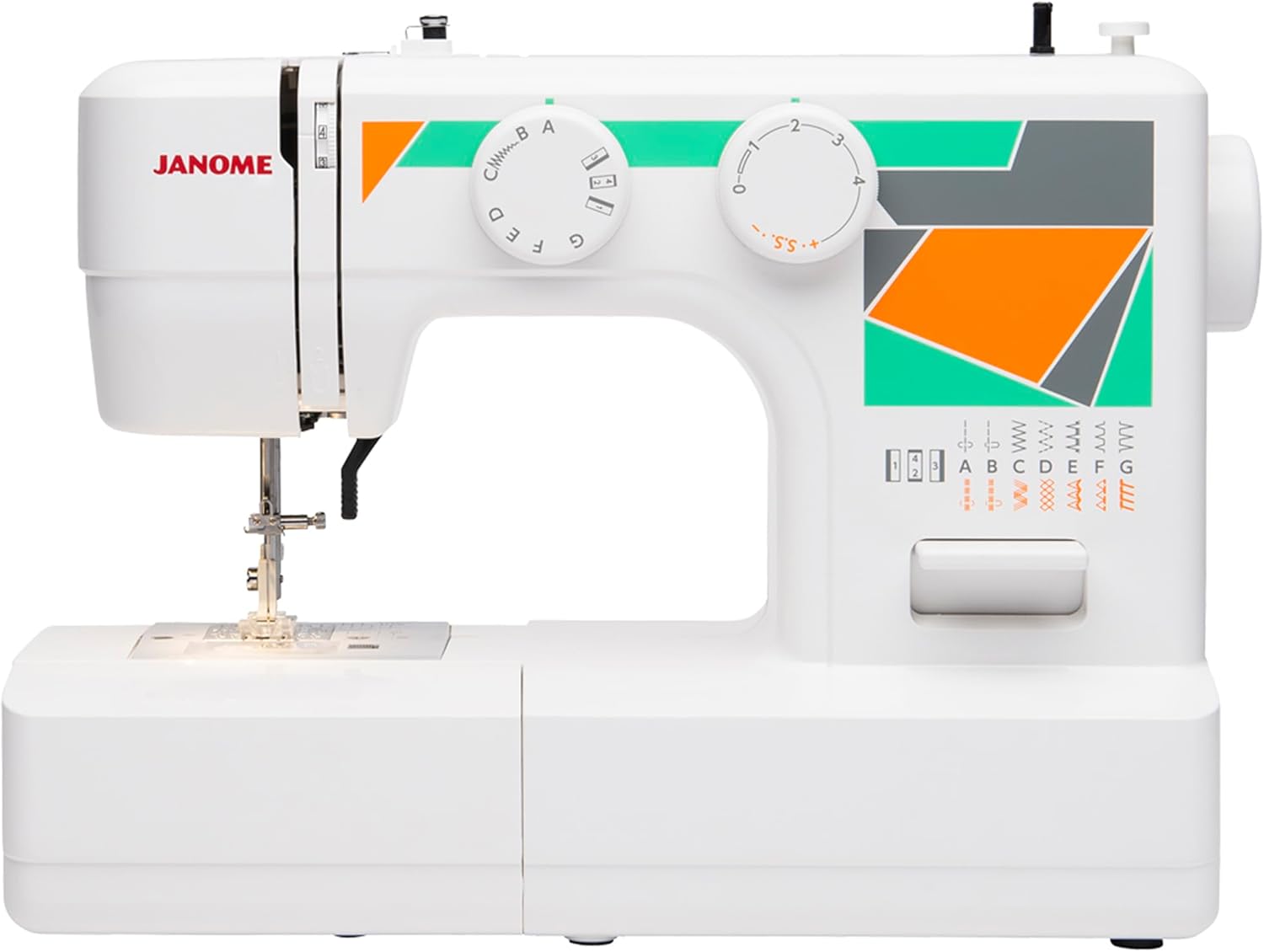
Janome MOD-15 Mechanical Sewing Machine
The Janome MOD-15 is one of those rare “budget” machines that earns its reputation the old-fashioned way… by just working. Think of it as the first car of sewing machines: not flashy, but dependable, forgiving, and easy to learn on.
This mechanical machine sticks to the basics with 15 essential stitches, a four-step buttonhole, and simple controls that won’t overwhelm a beginner. It has automatic tension, a top-loading bobbin with a clear cover (so you can actually see what’s going on), a free arm for cuffs and hems, and enough presser feet to handle everyday projects without fuss.
I’ve recommended this model for years because it rarely disappoints. If you want solid, no-nonsense reliability at a price that still feels like a win, the MOD-15 is hard to beat, especially with Janome’s 25-year warranty backing it up.
Choosing the right sewing machine comes down to being honest about how you sew today and picking a machine that won’t slow you down or outgrow you too fast. A solid budget machine will teach you the ropes. A thoughtful upgrade will save time and frustration. Start where you are, buy for real life, not someday, and let the machine support the skill you’re building, not complicate it.
Question: What’s the first thing you ever sewed or the project you keep meaning to finish? Share in the comments below.
EverydayCheapskate™ is reader-supported. We participate in the Amazon Services LLC Associates Program and other affiliate advertising programs, designed to provide a means for us to earn from qualifying purchases, at no cost to you.

More from Everyday Cheapskate
 https://www.everydaycheapskate.com/wp-content/uploads/20261006-prime-big-deal-days-have-landed.png
800
1200
Mary Hunt
https://www.everydaycheapskate.com/wp-content/uploads/EC-Logo-by-Mary-Hunt-Tagline-Trimmed.png
Mary Hunt2026-10-05 11:01:432026-10-07 09:02:53EC’s Top Picks from Amazon Prime Big Deal Days 2026
https://www.everydaycheapskate.com/wp-content/uploads/20261006-prime-big-deal-days-have-landed.png
800
1200
Mary Hunt
https://www.everydaycheapskate.com/wp-content/uploads/EC-Logo-by-Mary-Hunt-Tagline-Trimmed.png
Mary Hunt2026-10-05 11:01:432026-10-07 09:02:53EC’s Top Picks from Amazon Prime Big Deal Days 2026 https://www.everydaycheapskate.com/wp-content/uploads/20261004-reduce-healthcare-costs-with-three-habits-healthy-couple-walking-in-autumn-leaves.png
800
1200
Mary Hunt
https://www.everydaycheapskate.com/wp-content/uploads/EC-Logo-by-Mary-Hunt-Tagline-Trimmed.png
Mary Hunt2026-10-04 23:08:572026-10-04 23:09:47How to Reduce Healthcare Costs With 3 Free Daily Habits
https://www.everydaycheapskate.com/wp-content/uploads/20261004-reduce-healthcare-costs-with-three-habits-healthy-couple-walking-in-autumn-leaves.png
800
1200
Mary Hunt
https://www.everydaycheapskate.com/wp-content/uploads/EC-Logo-by-Mary-Hunt-Tagline-Trimmed.png
Mary Hunt2026-10-04 23:08:572026-10-04 23:09:47How to Reduce Healthcare Costs With 3 Free Daily Habits https://www.everydaycheapskate.com/wp-content/uploads/20241004-news-you-can-use-october-everyday-cheapskate-top-news-articles.png
800
1200
Mary Hunt
https://www.everydaycheapskate.com/wp-content/uploads/EC-Logo-by-Mary-Hunt-Tagline-Trimmed.png
Mary Hunt2026-10-04 01:04:052026-10-11 14:34:17News You Can Use • October 2026
https://www.everydaycheapskate.com/wp-content/uploads/20241004-news-you-can-use-october-everyday-cheapskate-top-news-articles.png
800
1200
Mary Hunt
https://www.everydaycheapskate.com/wp-content/uploads/EC-Logo-by-Mary-Hunt-Tagline-Trimmed.png
Mary Hunt2026-10-04 01:04:052026-10-11 14:34:17News You Can Use • October 2026 https://www.everydaycheapskate.com/wp-content/uploads/20261003-woman-hugging-elderly-mother-sandwich-generation-caring-for-aging-parents.png
800
1200
Mary Hunt
https://www.everydaycheapskate.com/wp-content/uploads/EC-Logo-by-Mary-Hunt-Tagline-Trimmed.png
Mary Hunt2026-10-03 10:47:222026-10-03 10:47:25Sandwiched Between Aging Parents and Adult Children
https://www.everydaycheapskate.com/wp-content/uploads/20261003-woman-hugging-elderly-mother-sandwich-generation-caring-for-aging-parents.png
800
1200
Mary Hunt
https://www.everydaycheapskate.com/wp-content/uploads/EC-Logo-by-Mary-Hunt-Tagline-Trimmed.png
Mary Hunt2026-10-03 10:47:222026-10-03 10:47:25Sandwiched Between Aging Parents and Adult Children https://www.everydaycheapskate.com/wp-content/uploads/20260927-impossible-lasagna-pie-recipe-with-wooden-serving-spoon-in-white-casserole-dish.png
800
1200
Mary Hunt
https://www.everydaycheapskate.com/wp-content/uploads/EC-Logo-by-Mary-Hunt-Tagline-Trimmed.png
Mary Hunt2026-09-28 09:38:592026-09-28 22:48:34Impossible Lasagna Pie: All the Flavor, None of the Noodles
https://www.everydaycheapskate.com/wp-content/uploads/20260927-impossible-lasagna-pie-recipe-with-wooden-serving-spoon-in-white-casserole-dish.png
800
1200
Mary Hunt
https://www.everydaycheapskate.com/wp-content/uploads/EC-Logo-by-Mary-Hunt-Tagline-Trimmed.png
Mary Hunt2026-09-28 09:38:592026-09-28 22:48:34Impossible Lasagna Pie: All the Flavor, None of the Noodles https://www.everydaycheapskate.com/wp-content/uploads/20260925-best-inexpensive-coffee-grinders-burr-manual-and-electric.png
800
1200
Mary Hunt
https://www.everydaycheapskate.com/wp-content/uploads/EC-Logo-by-Mary-Hunt-Tagline-Trimmed.png
Mary Hunt2026-09-25 11:06:342026-10-10 15:49:09The Best Coffee Grinder Upgrade That’s Actually Worth It
https://www.everydaycheapskate.com/wp-content/uploads/20260925-best-inexpensive-coffee-grinders-burr-manual-and-electric.png
800
1200
Mary Hunt
https://www.everydaycheapskate.com/wp-content/uploads/EC-Logo-by-Mary-Hunt-Tagline-Trimmed.png
Mary Hunt2026-09-25 11:06:342026-10-10 15:49:09The Best Coffee Grinder Upgrade That’s Actually Worth It https://www.everydaycheapskate.com/wp-content/uploads/20260919-air-purifier-in-living-room-1.png
800
1200
Mary Hunt
https://www.everydaycheapskate.com/wp-content/uploads/EC-Logo-by-Mary-Hunt-Tagline-Trimmed.png
Mary Hunt2026-09-19 11:36:552026-09-28 22:48:42The Best Inexpensive Air Purifiers for Small Homes
https://www.everydaycheapskate.com/wp-content/uploads/20260919-air-purifier-in-living-room-1.png
800
1200
Mary Hunt
https://www.everydaycheapskate.com/wp-content/uploads/EC-Logo-by-Mary-Hunt-Tagline-Trimmed.png
Mary Hunt2026-09-19 11:36:552026-09-28 22:48:42The Best Inexpensive Air Purifiers for Small Homes https://www.everydaycheapskate.com/wp-content/uploads/20260918-man-and-woman-signing-an-extended-warranty-in-a-car-dealership.png
800
1200
Mary Hunt
https://www.everydaycheapskate.com/wp-content/uploads/EC-Logo-by-Mary-Hunt-Tagline-Trimmed.png
Mary Hunt2026-09-18 15:23:432026-09-18 15:25:43Is an Extended Warranty Ever Worth It? The Truth for 2026
https://www.everydaycheapskate.com/wp-content/uploads/20260918-man-and-woman-signing-an-extended-warranty-in-a-car-dealership.png
800
1200
Mary Hunt
https://www.everydaycheapskate.com/wp-content/uploads/EC-Logo-by-Mary-Hunt-Tagline-Trimmed.png
Mary Hunt2026-09-18 15:23:432026-09-18 15:25:43Is an Extended Warranty Ever Worth It? The Truth for 2026 https://www.everydaycheapskate.com/wp-content/uploads/20260917-fall-cleaning-checklist.png
800
1200
Mary Hunt
https://www.everydaycheapskate.com/wp-content/uploads/EC-Logo-by-Mary-Hunt-Tagline-Trimmed.png
Mary Hunt2026-09-17 17:11:012026-09-28 22:48:45Fall Cleaning Checklist: 15 Overlooked Spots to Clean
https://www.everydaycheapskate.com/wp-content/uploads/20260917-fall-cleaning-checklist.png
800
1200
Mary Hunt
https://www.everydaycheapskate.com/wp-content/uploads/EC-Logo-by-Mary-Hunt-Tagline-Trimmed.png
Mary Hunt2026-09-17 17:11:012026-09-28 22:48:45Fall Cleaning Checklist: 15 Overlooked Spots to CleanPlease keep your comments positive, encouraging, helpful, brief,
and on-topic in keeping with EC Commenting Guidelines
Last update on 2026-10-11 / Affiliate links / Images from Amazon Product Advertising API


I began sewing when I was about 7 years old, after my grand parents gave me a small SINGER crank sewing machine, which I still have. First projects were glasses cases and other small items. Later I learned how to alter my sister’s hand-me-downs, make outfits for school functions and make gifts for friends. I have made a wide variety of items, from clothes to tents. It is an invaluable skill to have. My grandmother was a couture tailor who passed on her skills to my mom and then to me. My parents’ friends were weavers who made beautiful fabrics for my mom to sew with. I donated some of her Vogue suits to local theaters, since they did not fit me. I wish that high schools made sewing a required skill. When my new grand daughter is a few years older, I plan to teach her to sew. The sewing machines I have owned are White, Baby Lock and Janome. I bought my Janome because they have a strong motor and work better with light-weight leathers. It is my favorite everyday machine.
Like many of the ladies who have commented already, I started sewing early in 4-H and later in my high school Home Ec class. Since then I have sewn clothes for my two children, prom dresses, bridesmade dresses and now baby accessories for my great-grandchildren. I purchased a reconditioned White sewing machine in 1967 and still use it regularly. In addition, I recently purchased a 1947 Featherweight Singer!!! I have long admired the Featherweights for their basic design and durability. Can you imagine she’s nearly 80 years old and still going strong!!!
like many readers here, my first project was an apron in 7th grade. for years i was a costumer for local amateur theater groups. i enjoyed making costumes. the more exotic the better. by now, i’m burnt out. i don’t have the room for a sewing machine [i’d rather have books] . the last ‘project’ i did was hemming a pair of pants…with duct tape.
This article brought memories of my 8th grade Home Ec Class in 1957. My mom was not a sewer so I was not familiar with a sewing machine really at all. Our first project was sewing an apron. Cutting out the pattern was a breeze, but adding bias tape to the edges of the apron became a real pain for me. I remember taking the tape off at least 3 times to get it on the edge of the apron properly as our patient teacher was going to grade us on. I have to say I never sewed again until I was a wife in 1970. The sewing machine I have is a Singer that I bought in 1973. I cannot convey the great enjoyment I have had from using that machine over the years. Today my biggest sewing endeavor, not a big one, is making flannel burp cloth for 2 non profits in our City. I have been delivering 40 burp cloths 4X a year to each charity over the past 5 years. Aside from my home my sewing machine is my happy place.
My mother was a professional sewist. People came to her to get clothes made, altered and mended. I can’t remember what I made first as I hung out with my mom in her shop and learned to sew really young. I think, maybe felt hand puppets. The first big project I can remember was a dress. It was lime green with orange rick-rack accents. It was the late 1960’s can you tell! I was so proud of that dress. I wore it every chance I got.
My first “real” sewing project was when I was in a nine weeks 7th grade home economics class. My teacher had confidence in me, so while the other girls made shorts, I made a lined blue blazer. After that, I never looked back. I have enjoyed sewing for 55 years.
Wow! A lined blazer in the 7th grade. You put me and my simple tote to shame. 🙁
I love sewing too! I took a summer school class in Home Ec the summer before my freshman year. Half the time was cooking (I can make a kicking bechamel sauce) and half was sewing. My twin sister and I both took the class and we were hooked. We could make our own clothes and we didn’t have to match anymore! I bought a Sears Kenmore sewing machine when I got married in 1976 and its still the only machine I’ve ever used! Its not fancy like the new machines, but then neither am I and we get along just fine! I made maternity clothes, christening gowns for my kids, flower girl dresses, first communion dresses, and lots of clothes and toys for kids, nieces, and nephews. It is a skill that never grows old and just like crochet – I think of it not as a hobby but as a survival skill. Its worth learning and serves you your entire life.
My first project was done in the 7th grade in 1968. I was 11 and we all made tote bags in which to bring home our dirty gym clothes every week for cleaning. I remember picking out an orange and white striped cotton that got softer with every weekly washing. I don’t know what happened to that tote, but wish I still had it. I took a few more sewing classes, into high school, and sewed many, many dresses for my daughter and lots of garments for myself. Now I just basically mend and cross stitch, but would like to try quilting. Life is too short!
I treated myself to a no-frills Janome Travel machine last year and I love it – I just finished my first quilt – a flannel rag time quilt! Love my new Janome!
Without promoting or demoting a particular brand of sewing machine my first suggestion is to determine what you are planning to sew: repair clothing, make quilts or clothes, embroidery, etc. Then research brands of machines – the cheapest nor the most expensive is the best, especially if you are starting to sew. Next
talk to sewist friends who will let you try their machines. Sew on a variety of fabrics, make button holes, and any other tests. Ask your friends why they purchased their machine and if they are still pleased with it. Probably one on the most important criteria is the repair person. Are they factory trained for your brand of machine? Ask them how easy the machine is to repair and why. Go to a dealer after you have educated yourself and talk to the dealers about their machines. Go home think about what you have learned and make an unpressered decison. Also you MUST read the owner’s guide and keep up general maintenance. Always take your machine in for cleaning and listen to the suggestions he has for you. I have owned many machines and have a few now. You will enjoy sewing if you find a good machine and take care of it. Old and new machines can be great choices.
Sewing is one of my pleasures, too, especially since I’m too short to wear anything off the rack. I make or buy and shorten everything I wear. My Singer is now 49.5 years old, a graduation present, and it still works just fine. I also have my Mother’s Singer, which is about 70 years old and works fine, too. If you start out with a good one, just take care of it. Keep it cleaned and oiled, and it should last as long as you need it to.