

Creamy Lemon Garlic Chicken Made in One Skillet

This lemon garlic chicken has been in my recipe box for years and for good reason. It’s made in one skillet, uses simple ingredients, and somehow tastes like you tried harder than you did. The sauce is creamy but balanced, the chicken stays tender, and leftovers (if there are any) reheat beautifully. It’s the kind of meal you make once and then quietly rely on when life is busy but dinner still matters. Bonus: it works just as well for a casual family night as it does for guests. Reliable recipes like this are worth holding onto.

I went a little overboard on our last trip to California. Not with souvenirs… those I can resist, but with lemons. Our son has a Meyer lemon tree in his backyard that produces like it has something to prove. No special care. No pampering. It doesn’t get pruned, fertilized, or fussed over. It just… thrives.
Every time we visit, that tree is loaded. Branches heavy. Fruit everywhere. It’s the kind of abundance that makes you rethink how complicated we tend to make things.
I haven’t figured out how to box up fresh lemons and send them home with you, but this recipe is the next best thing. It’s bright, familiar, and unfussy, exactly the kind of dinner that comes from cooking with what you have and trusting it to be enough.
What You’ll Need
You’ll find the full measurements in the recipe card below.
Boneless, skinless chicken breasts
Lean, easy, and quick-cooking. Pound them to an even thickness so they cook evenly and stay tender. If you prefer darker meat, boneless chicken thighs work just as well and are harder to overcook.
Chicken broth
This forms the backbone of the sauce. Use low-sodium if you have it so you can control the seasoning. In a pinch, water plus a little extra salt works, but broth adds depth you’ll miss if it’s gone.
Heavy cream
This is what smooths everything out. It balances the lemon and turns the pan juices into a real sauce. Half-and-half will work, but expect a slightly thinner finish. For dairy-free, full-fat coconut milk is a solid substitute. It won’t taste coconutty once the garlic and lemon are in play.
Red onion, finely chopped
Softer and a little sweeter than yellow onion, it melts nicely into the sauce. Yellow or shallots are fine substitutes. Just chop small so nothing overwhelms the chicken.
Garlic, minced
Fresh is worth it here. Jarred garlic can taste flat once heated. Three cloves sounds like a lot, but it mellows quickly and gives the dish its backbone.
Lemon juice
Fresh lemon juice makes a difference. Bottled works in a bind, but fresh keeps the sauce bright instead of sharp. If you have extra lemon, a little zest added at the end doesn’t hurt.
Unsalted butter
Used sparingly, this adds richness and helps round out the acidity. If you only have salted butter, just go lighter on the salt later.
Fresh basil, finely chopped
Added at the end for color and freshness. If basil isn’t handy, parsley works. Dried herbs won’t give the same lift, so skip them rather than force it.
Olive oil
For browning the chicken. Use a decent everyday olive oil. No need for anything fancy.
Red pepper flakes (optional)
Just enough to add warmth, not heat. Leave them out if you’re not a fan, or add more if you are.
Kosher salt and freshly ground pepper
Season as you go. This dish rewards small adjustments along the way.
Lemon slices, for garnish
Optional, but they make the whole thing look finished and give a little extra brightness at the table.
How to Build Big Flavor in One Skillet
1. Start by evening things out.
Pounding the chicken to an even thickness isn’t about perfection. It’s about control. Chicken that’s the same thickness cooks at the same speed, which means juicy meat instead of dry edges and undercooked centers. Season it well. This is where the flavor starts, not at the end.
2. Brown first. Don’t rush it.
Heat the olive oil in an oven-safe skillet and give the chicken a quick sear on both sides. You’re not cooking it through yet… just building color and flavor. When it releases easily from the pan, it’s ready to flip. Set it aside for now.
3. Let the onions do the work.
Add the red onion to the skillet and cook it in those leftover pan juices. This is where patience pays off. As the onions soften, they pick up all the browned bits from the chicken and turn them into flavor you don’t have to work for.
4. Garlic and butter goes in last and briefly.
Stir in the garlic and butter. Cook just until fragrant and melted. Thirty seconds too long and it turns bitter, so keep things moving.
5. Deglaze and simmer.
Pour in the broth, lemon juice, and red pepper flakes. Scrape the bottom of the pan and don’t skip this step. Those browned bits are the backbone of the sauce. Let it simmer until slightly reduced and more concentrated. It should smell bright and savory, not sharp.
6. Finish the sauce gently.
Take the skillet off the heat before adding the cream. This keeps it smooth instead of grainy. Once it’s whisked in, return the pan to low heat just long enough to bring everything together.
7. Back to the oven to finish.
Nestle the chicken back into the sauce, spooning some over the top, then slide the whole skillet into the oven. This short finish cooks the chicken through without drying it out and gives you time to clear the counter or pour a glass of something.
8. Finish simply.
A sprinkle of fresh basil and a few lemon slices are all it needs. Serve it hot, straight from the skillet, while the sauce is still silky.
The Secret to Juicy Chicken Every Time
Dry chicken isn’t a bad-luck problem. It’s a timing and thickness problem. The fix is simpler than most recipes make it sound.
- Start with an even thickness. Chicken breasts cook unevenly because they’re uneven to begin with. A quick pound to about ½ inch makes the difference between juicy meat and dry edges.
- Use heat confidently, not cautiously. Chicken does better with decisive heat. A quick sear in a hot skillet builds flavor fast, then a short finish in the oven cooks it through without drying it out. Low-and-slow sounds gentle, but with chicken it usually just means overcooked.
- Pull it early and let it rest. This is where most people lose the plot. Chicken doesn’t need to hit 165°F in the pan. Pull it around 160°F and let it rest for 5–10 minutes. The temperature will rise on its own, and the juices stay where they belong. A simple meat thermometer takes the guesswork out and once you use one, it’s hard to go back.
Once you get these three things right, juicy chicken stops being a mystery and starts being the default.
What to Serve With Lemon Garlic Chicken
This chicken is bright, creamy, and flavorful enough to stand on its own, but pairing it thoughtfully can turn a simple weeknight dinner into something that feels intentionally good. Start with a starch that will soak up the sauce: buttered noodles, roasted baby potatoes, or a quick rice pilaf all work beautifully.
Add a vegetable that complements the lemon-garlic brightness. Think steamed green beans, roasted asparagus, or even a simple sauté of spinach and garlic. If you like a little crunch, a crisp salad with a light vinaigrette balances the richness of the sauce.
And don’t overthink it. The beauty of this meal is flexibility. You can keep it casual with what’s in your fridge, or dress it up for company with minimal effort. Leftovers? They’re just as good the next day. Make extra, and you’ll thank yourself later.
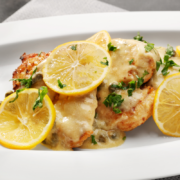
Creamy Lemon Garlic Chicken
Ingredients
- 4 boneless skinless chicken breasts
- 1 cup chicken broth
- 1/3 cup heavy cream
- 1/4 cup finely chopped red onion
- 3 cloves garlic minced
- 3 tablespoons fresh lemon juice
- 2 tablespoons unsalted butter
- 2 tablespoons finely chopped fresh basil
- 2 tablespoons olive oil
- 1/2 teaspoon red pepper flakes optional
- Kosher salt and freshly ground black pepper to taste
- Lemon slices for garnish
Instructions
- Preheat the oven to 375°F. Pound chicken breasts to an even ½-inch thickness. Season generously with salt and pepper on both sides.
- Heat olive oil in a large ovenproof skillet over medium-high heat. Sear chicken for 2–3 minutes per side until golden brown. Remove and set aside.
- In the same skillet, sauté red onion in the pan juices for 6–8 minutes until softened. Season lightly with salt and pepper.
- Stir in the garlic and butter and sauté for about 1 minute, until fragrant and melted. Pour in the chicken broth, lemon juice, and red pepper flakes, scraping up any browned bits from the bottom of the skillet.
- Reduce heat to medium and cook, stirring occasionally, for 8–10 minutes until sauce slightly thickens.
- Remove skillet from heat and whisk in heavy cream. Return to low heat for 30 seconds to combine.
- Nestle chicken back into the sauce, spooning some over the top.
- Place skillet in the oven and bake 5–7 minutes, or until chicken reaches 160°F internally (it will rise to 165°F while resting).
- Remove skillet from oven, sprinkle with fresh basil, and garnish with lemon slices. Let rest 5–10 minutes before serving.
Notes
Nutrition
Question: What’s one dinner recipe you keep coming back to because it never lets you down? Share your secret in the comments below.
EverydayCheapskate™ is reader-supported. We participate in the Amazon Services LLC Associates Program and other affiliate advertising programs, designed to provide a means for us to earn from qualifying purchases, at no cost to you.

More from Everyday Cheapskate
 https://www.everydaycheapskate.com/wp-content/uploads/20261006-prime-big-deal-days-have-landed.png
800
1200
Mary Hunt
https://www.everydaycheapskate.com/wp-content/uploads/EC-Logo-by-Mary-Hunt-Tagline-Trimmed.png
Mary Hunt2026-10-05 11:01:432026-10-07 09:02:53EC’s Top Picks from Amazon Prime Big Deal Days 2026
https://www.everydaycheapskate.com/wp-content/uploads/20261006-prime-big-deal-days-have-landed.png
800
1200
Mary Hunt
https://www.everydaycheapskate.com/wp-content/uploads/EC-Logo-by-Mary-Hunt-Tagline-Trimmed.png
Mary Hunt2026-10-05 11:01:432026-10-07 09:02:53EC’s Top Picks from Amazon Prime Big Deal Days 2026 https://www.everydaycheapskate.com/wp-content/uploads/20261004-reduce-healthcare-costs-with-three-habits-healthy-couple-walking-in-autumn-leaves.png
800
1200
Mary Hunt
https://www.everydaycheapskate.com/wp-content/uploads/EC-Logo-by-Mary-Hunt-Tagline-Trimmed.png
Mary Hunt2026-10-04 23:08:572026-10-04 23:09:47How to Reduce Healthcare Costs With 3 Free Daily Habits
https://www.everydaycheapskate.com/wp-content/uploads/20261004-reduce-healthcare-costs-with-three-habits-healthy-couple-walking-in-autumn-leaves.png
800
1200
Mary Hunt
https://www.everydaycheapskate.com/wp-content/uploads/EC-Logo-by-Mary-Hunt-Tagline-Trimmed.png
Mary Hunt2026-10-04 23:08:572026-10-04 23:09:47How to Reduce Healthcare Costs With 3 Free Daily Habits https://www.everydaycheapskate.com/wp-content/uploads/20241004-news-you-can-use-october-everyday-cheapskate-top-news-articles.png
800
1200
Mary Hunt
https://www.everydaycheapskate.com/wp-content/uploads/EC-Logo-by-Mary-Hunt-Tagline-Trimmed.png
Mary Hunt2026-10-04 01:04:052026-10-11 14:34:17News You Can Use • October 2026
https://www.everydaycheapskate.com/wp-content/uploads/20241004-news-you-can-use-october-everyday-cheapskate-top-news-articles.png
800
1200
Mary Hunt
https://www.everydaycheapskate.com/wp-content/uploads/EC-Logo-by-Mary-Hunt-Tagline-Trimmed.png
Mary Hunt2026-10-04 01:04:052026-10-11 14:34:17News You Can Use • October 2026 https://www.everydaycheapskate.com/wp-content/uploads/20261003-woman-hugging-elderly-mother-sandwich-generation-caring-for-aging-parents.png
800
1200
Mary Hunt
https://www.everydaycheapskate.com/wp-content/uploads/EC-Logo-by-Mary-Hunt-Tagline-Trimmed.png
Mary Hunt2026-10-03 10:47:222026-10-03 10:47:25Sandwiched Between Aging Parents and Adult Children
https://www.everydaycheapskate.com/wp-content/uploads/20261003-woman-hugging-elderly-mother-sandwich-generation-caring-for-aging-parents.png
800
1200
Mary Hunt
https://www.everydaycheapskate.com/wp-content/uploads/EC-Logo-by-Mary-Hunt-Tagline-Trimmed.png
Mary Hunt2026-10-03 10:47:222026-10-03 10:47:25Sandwiched Between Aging Parents and Adult Children https://www.everydaycheapskate.com/wp-content/uploads/20261002-cake-mix-chocolate-chip-cookies.png
800
1200
Mary Hunt
https://www.everydaycheapskate.com/wp-content/uploads/EC-Logo-by-Mary-Hunt-Tagline-Trimmed.png
Mary Hunt2026-10-02 19:44:302026-10-02 19:44:30Cake Mix Chocolate Chip Cookies That Taste Homemade
https://www.everydaycheapskate.com/wp-content/uploads/20261002-cake-mix-chocolate-chip-cookies.png
800
1200
Mary Hunt
https://www.everydaycheapskate.com/wp-content/uploads/EC-Logo-by-Mary-Hunt-Tagline-Trimmed.png
Mary Hunt2026-10-02 19:44:302026-10-02 19:44:30Cake Mix Chocolate Chip Cookies That Taste Homemade https://www.everydaycheapskate.com/wp-content/uploads/20260930-cheap-Halloween-party-snacks-for-kids-punch-bowl-mummy-dogs-ghost-bananas.png
800
1200
Mary Hunt
https://www.everydaycheapskate.com/wp-content/uploads/EC-Logo-by-Mary-Hunt-Tagline-Trimmed.png
Mary Hunt2026-10-01 11:08:582026-10-01 11:08:59These Cheap Halloween Snacks Are Almost Too Easy to Make
https://www.everydaycheapskate.com/wp-content/uploads/20260930-cheap-Halloween-party-snacks-for-kids-punch-bowl-mummy-dogs-ghost-bananas.png
800
1200
Mary Hunt
https://www.everydaycheapskate.com/wp-content/uploads/EC-Logo-by-Mary-Hunt-Tagline-Trimmed.png
Mary Hunt2026-10-01 11:08:582026-10-01 11:08:59These Cheap Halloween Snacks Are Almost Too Easy to Make https://www.everydaycheapskate.com/wp-content/uploads/20260927-impossible-lasagna-pie-recipe-with-wooden-serving-spoon-in-white-casserole-dish.png
800
1200
Mary Hunt
https://www.everydaycheapskate.com/wp-content/uploads/EC-Logo-by-Mary-Hunt-Tagline-Trimmed.png
Mary Hunt2026-09-28 09:38:592026-09-28 22:48:34Impossible Lasagna Pie: All the Flavor, None of the Noodles
https://www.everydaycheapskate.com/wp-content/uploads/20260927-impossible-lasagna-pie-recipe-with-wooden-serving-spoon-in-white-casserole-dish.png
800
1200
Mary Hunt
https://www.everydaycheapskate.com/wp-content/uploads/EC-Logo-by-Mary-Hunt-Tagline-Trimmed.png
Mary Hunt2026-09-28 09:38:592026-09-28 22:48:34Impossible Lasagna Pie: All the Flavor, None of the Noodles https://www.everydaycheapskate.com/wp-content/uploads/20260925-best-inexpensive-coffee-grinders-burr-manual-and-electric.png
800
1200
Mary Hunt
https://www.everydaycheapskate.com/wp-content/uploads/EC-Logo-by-Mary-Hunt-Tagline-Trimmed.png
Mary Hunt2026-09-25 11:06:342026-10-10 15:49:09The Best Coffee Grinder Upgrade That’s Actually Worth It
https://www.everydaycheapskate.com/wp-content/uploads/20260925-best-inexpensive-coffee-grinders-burr-manual-and-electric.png
800
1200
Mary Hunt
https://www.everydaycheapskate.com/wp-content/uploads/EC-Logo-by-Mary-Hunt-Tagline-Trimmed.png
Mary Hunt2026-09-25 11:06:342026-10-10 15:49:09The Best Coffee Grinder Upgrade That’s Actually Worth It https://www.everydaycheapskate.com/wp-content/uploads/20260922-chinese-chicken-in-slow-cooker-with-white-rice-recipe-with-sesame-seeds-and-scallions.png
800
1200
Mary Hunt
https://www.everydaycheapskate.com/wp-content/uploads/EC-Logo-by-Mary-Hunt-Tagline-Trimmed.png
Mary Hunt2026-09-22 10:13:562026-09-28 22:48:39Slow Cooker Chinese Chicken That Beats Takeout
https://www.everydaycheapskate.com/wp-content/uploads/20260922-chinese-chicken-in-slow-cooker-with-white-rice-recipe-with-sesame-seeds-and-scallions.png
800
1200
Mary Hunt
https://www.everydaycheapskate.com/wp-content/uploads/EC-Logo-by-Mary-Hunt-Tagline-Trimmed.png
Mary Hunt2026-09-22 10:13:562026-09-28 22:48:39Slow Cooker Chinese Chicken That Beats Takeout

This sounds so good. I’ve read the recipe over and over, and it doesn’t say when to use the butter? Would I put it in with the olive oil or with the onions, or as a finish to silkify the sauce? Thanks!
Good catch! Add the butter at the same time as the garlic… before the liquids go in.