
4 Kitchen Gadgets That Save Money (If You Use Them)

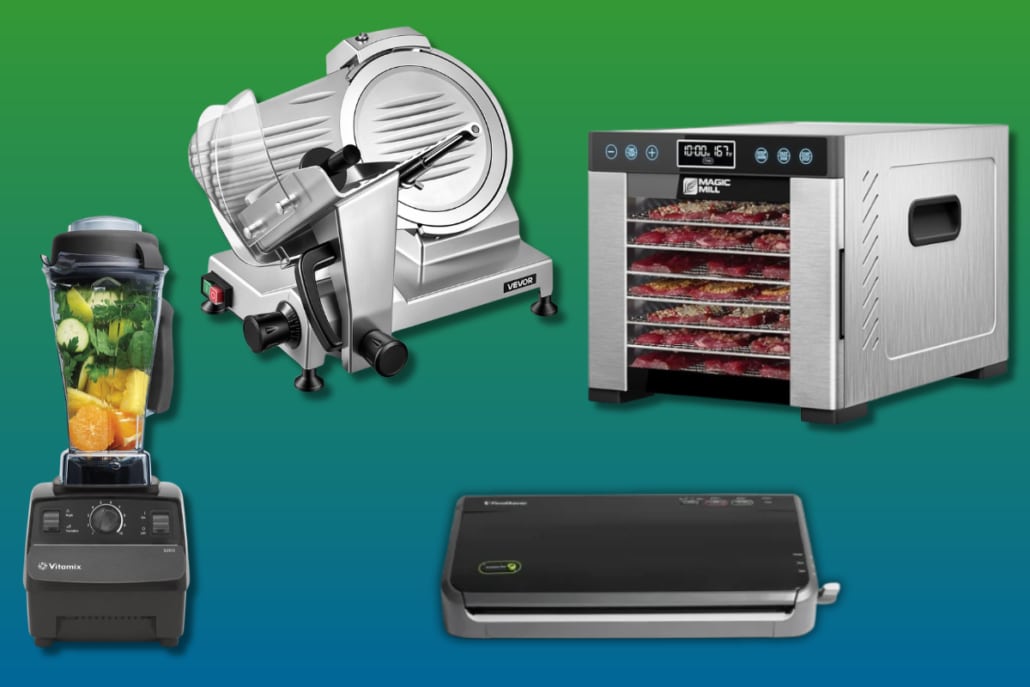
I’ve wasted money on kitchen gadgets I never used, and probably passed up a few that could’ve saved me a bundle. Funny how that works. The trick is knowing which appliances are worth their price tags. From keeping bulk purchases freezer-ready to slicing your own sandwich fixings, these four have real potential. But before you buy, let’s see if the math adds up.

I’m a sucker for a good gadget. Hand me a Swiss Army knife with 27 attachments and I’m happy as a clam, even if I can’t figure out what half of them are for.
Of course, I’ve also spent good money on gadgets that looked absolutely brilliant until I got them home. Some were too complicated. Others were such a nuisance to clean that I eventually stopped using them. I have a particular talent for turning promising kitchen appliances into expensive dust collectors.
But every now and then, I find something that earns its place in my kitchen. And when it actually saves money? Oh, that’s when things get interesting.
These four kitchen gadgets have the potential to pay for themselves by reducing food waste, replacing pricey store-bought foods, and helping you make the most of grocery bargains. The catch? You have to use them. And the savings have to justify what you paid.
Here are four that I think deserve a closer look.
1. Vacuum sealer: Stop throwing away good food
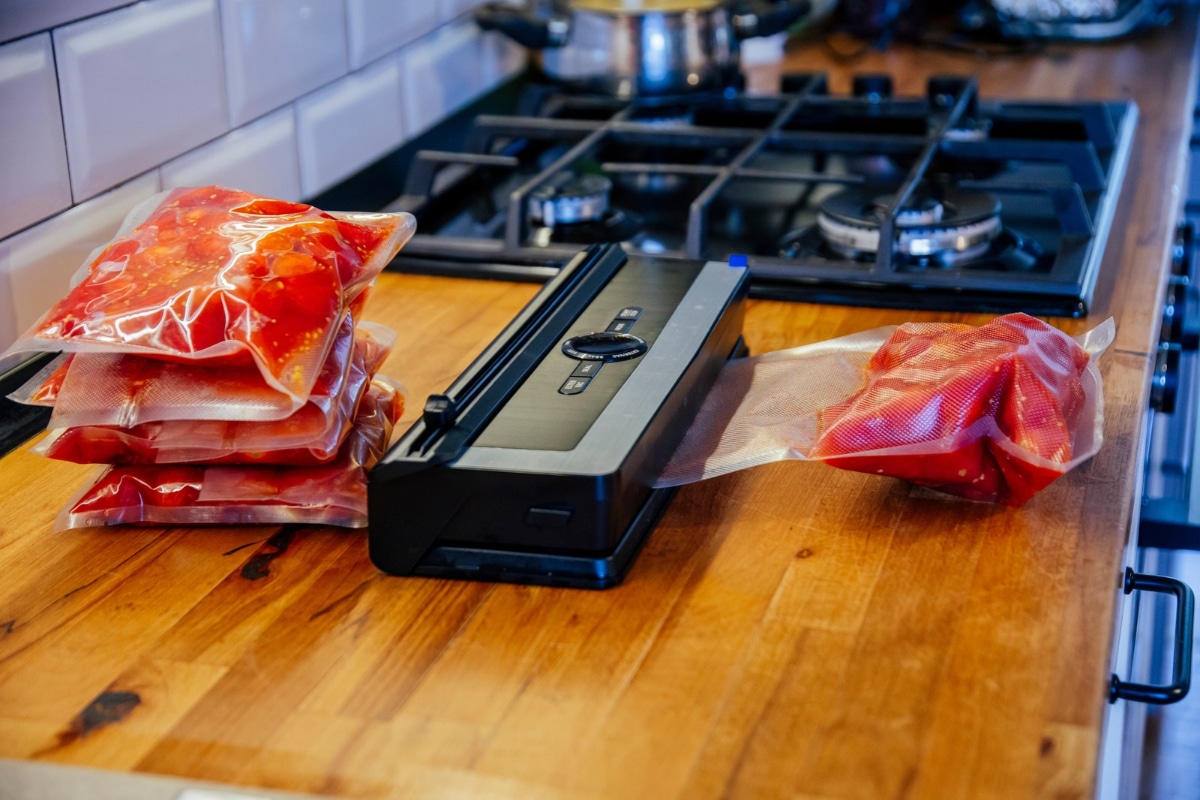
I’ve depended on a vacuum sealer for so many years that I can hardly imagine my kitchen without one.
If you buy meat in bulk, stock up during grocery sales, or regularly freeze leftovers, a vacuum sealer can make a tremendous difference.
It removes air from specially designed bags before sealing them, helping protect frozen food from freezer burn and the loss of quality that comes with long storage.
You know that mystery package you find at the bottom of the freezer? The one covered in ice crystals, with a label you can no longer read? A vacuum sealer can’t fix your labeling habits, but it can certainly help with the rest.
Here’s where the savings come in. Let’s say better food storage keeps you from wasting just $10 worth of groceries every month. That’s $120 a year you get to keep instead of throwing away, before subtracting the cost of bags.
And if you regularly buy meat at deeply discounted prices, the savings can be even more useful.
A vacuum sealer won’t make everything last forever, and it doesn’t make perishable food safe to store at room temperature. Refrigeration and freezing rules still apply. Think of it as a way to preserve quality and reduce waste, not a substitute for proper food storage.
A model worth considering: FoodSaver FM2100 Vacuum Sealing System
This model has built-in roll storage and a cutter for making bags to fit what you’re sealing. It also includes an accessory hose for compatible containers and other attachments. I especially like the idea of making bags only as large as necessary. Why waste expensive bag material?

Before you buy: Start with ordinary freezer bags if you’re only freezing small amounts for short periods. But if bulk buying and freezer storage are part of your regular routine, a vacuum sealer may be worth the investment.
2. High-powered blender: Make your own smoothies and more
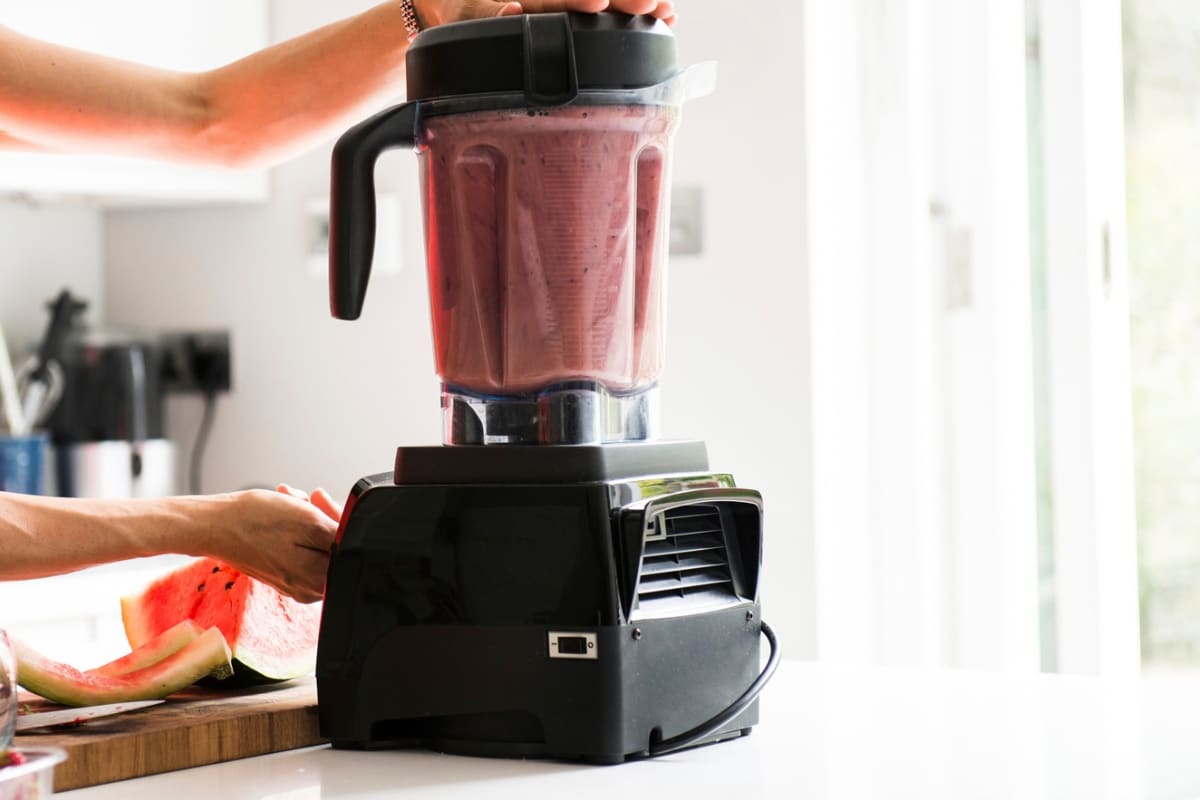
Years ago, I decided we needed a powerful juicer so we could start making healthy smoothies every morning. There was just one little problem. Juicers don’t make smoothies.
I bought a highly rated machine, used it exactly twice, and discovered that cleaning it was more work than the smoothie was worth. Eventually, I donated it to someone who could actually use it. Lesson learned. What I needed was a good blender.
A high-powered blender can handle frozen fruit, ice, thick smoothie mixtures, soups, sauces, and plenty of other things I’d otherwise be tempted to buy ready-made.
But let’s talk about smoothies, because that’s where the savings are especially easy to see.
Suppose you normally buy a $7 smoothie twice a week. Make a comparable smoothie at home for $2, and you’re saving $5 each time. That’s $10 a week, or $520 over 52 weeks.
Of course, those are illustrative numbers. Your savings depend on what you normally buy and what you put in your homemade version. Still, if you’re buying smoothies regularly, those little savings can add up to the cost of a very nice blender.
A model worth considering: Vitamix 5200
The Vitamix 5200 has a powerful motor, a 64-ounce container, variable-speed controls, and a tamper for thick mixtures. It also has a particularly appealing feature: Add warm water and a drop of dish soap, run the machine, and the container cleans itself in about a minute. Now THAT is a feature I appreciate.
It also comes with a seven-year limited warranty.
Before you buy: If the blender you already own handles your smoothies just fine, keep it. There’s no savings in replacing a perfectly good appliance. A premium blender makes more sense for someone who will use its extra power and versatility regularly.
3. Food dehydrator: Save the food you can’t eat fast enough

No one was more surprised than I was to discover how useful a food dehydrator could be. The idea is simple: Remove moisture from foods so you can store and use them later.
Think of those apples that are getting a little soft. The extra tomatoes from the garden. That enormous bunch of parsley you bought for one recipe and now have absolutely no idea what to do with. Instead of watching perfectly good food go to waste, you can dry it while it’s still fresh and use it later.
A dehydrator can make dried fruit, vegetables, herbs, fruit leather, and homemade snacks. And if you routinely buy those products, making them yourself may cost less.
But here’s where I want you to be careful. Buying expensive fresh fruit just so you can turn it into dried fruit doesn’t automatically save money. Food loses a lot of weight as it dries, and you still have to account for electricity and the cost of the appliance.
The real savings come when you’re preserving food you already have, using inexpensive seasonal produce, or replacing dried foods you’d otherwise purchase.
My favorite example is fresh herbs. Buy a bunch for a recipe, use what you need, then dry the rest before it spoils. Those little jars of herbs at the grocery store aren’t exactly free!
A model worth considering: Magic Mill Pro Food Dehydrator
This seven-tray dehydrator uses a rear-mounted fan to circulate warm air across the trays. It has adjustable temperature and timer controls, stainless steel trays, and automatic shutoff.
That makes it an option for anyone who wants to dry larger batches without having to constantly rearrange trays.

Before you buy: Try drying small amounts of herbs without a machine, using a food-safe air-drying method appropriate for the herb and your climate. If you garden, buy produce by the case, or regularly purchase dried snacks, a dehydrator becomes a much more interesting investment.
One safety reminder: Making jerky requires proper temperature controls and a tested method. The USDA recommends heating beef to 160°F and poultry to 165°F before dehydrating.
4. Electric food slicer: Buy the whole thing and slice it yourself
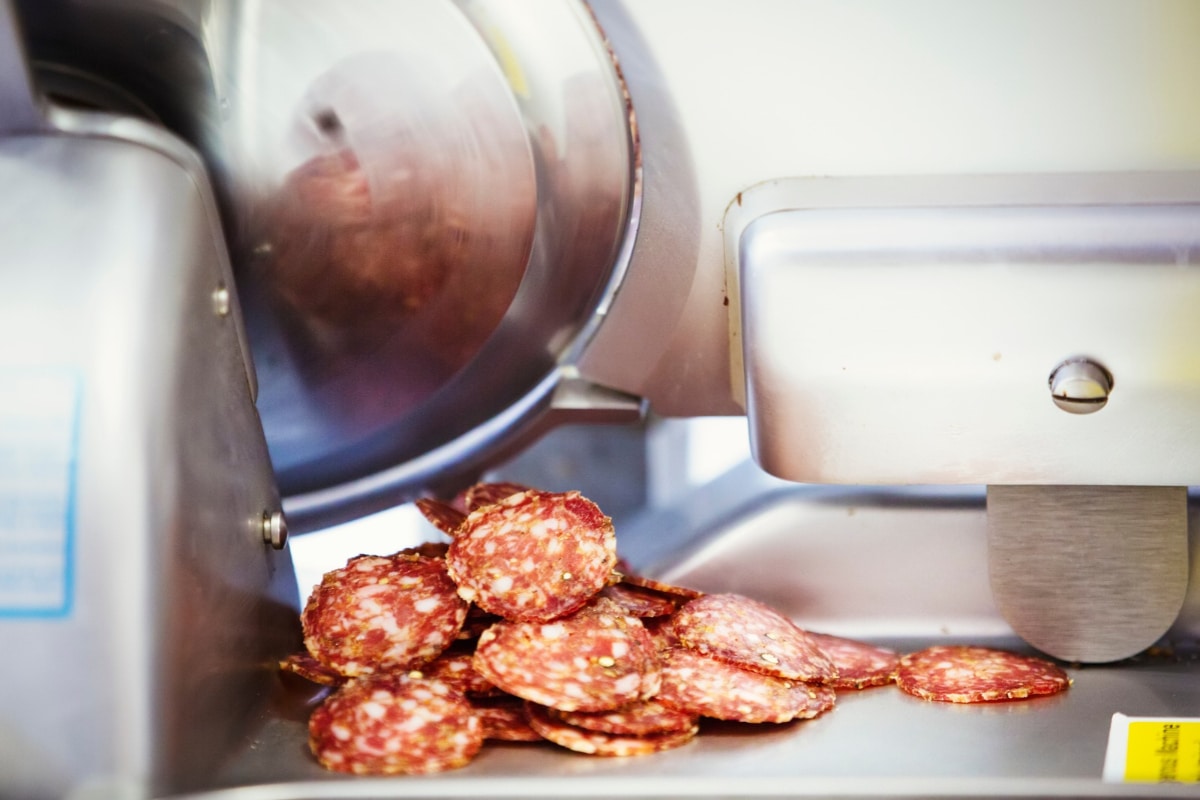
Now we’re getting to one of my favorites. An electric food slicer might seem like an extravagant purchase until you start comparing the price of whole cooked meats with their sliced counterparts. That’s what got my attention.
We eat a lot of deli-style turkey at our house, and I discovered that buying a whole cooked turkey breast and slicing it myself could save a surprising amount of money.
Here’s an example using round numbers, not current store prices. Suppose a whole cooked turkey breast costs $6 per pound, while comparable sliced turkey costs $10 per pound. That’s a difference of $4 per pound.
On a four-pound turkey breast, you’re looking at $16 in potential savings. Do that regularly, and the price of a slicer starts to make more sense. Of course, you need to compare equivalent products and make sure you’ll actually use or freeze the larger amount.
And can we talk about the taste for a minute? Freshly sliced turkey is wonderful. I especially appreciate being able to cut it to exactly the thickness I want, without that slippery, straight-from-the-package feeling that some deli meats have.
But meat is only the beginning. I use a slicer for cheese, leftover roasts, and homemade bread. It gives me beautiful, even slices, whether I’m making sandwiches or toast.
If you haven’t tried my easy homemade artisan bread or English muffin bread, I highly recommend both. Slicer or no slicer.
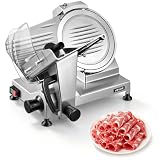
A model worth considering: VEVOR 10-Inch Electric Meat Slicer
This commercial-style slicer has a 10-inch blade, adjustable slicing thickness, a food pusher, and removable components for cleaning. It’s designed for frequent slicing and larger quantities of food.
Before you buy: This is a substantial machine, not a little gadget you tuck into a drawer. Make sure you have room to store it, can handle and clean it safely, and will use it often enough to justify the expense.
And if all you need are a few slices of turkey once a week? A good sharp knife is probably all the equipment you need.
Will these kitchen gadgets really pay for themselves?
Here’s the question I ask before making this kind of purchase:
What will this appliance let me stop buying, stop wasting, or make for less?
Then I do a little math. Take the cost of the appliance and divide it by the amount you realistically expect to save each time you use it. That’s approximately how many uses it will take to recover the purchase price, before accounting for supplies and operating costs.
For instance, if a slicer costs $250 and saves you $15 each time you buy and slice a whole turkey breast, you’ll need roughly 17 of those purchases to cover the machine. If that sounds reasonable for your household, wonderful. If you’ll use it twice and then shove it behind the waffle maker, perhaps not.
And don’t forget the hidden costs: storage space, replacement bags, electricity, cleanup, and your time.
I love a good kitchen gadget. Always have. But I love keeping money in my pocket even more.
The best kitchen money-saver isn’t necessarily the fanciest machine or the one with the most impressive features. It’s the one you’ll actually use.
Question: What’s one kitchen gadget that has actually saved you money, and one you wish you’d never bought? Tell us in the comments below.
EverydayCheapskate™ is reader-supported. We participate in the Amazon Services LLC Associates Program and other affiliate advertising programs, designed to provide a means for us to earn from qualifying purchases, at no cost to you.

More from Everyday Cheapskate
 https://www.everydaycheapskate.com/wp-content/uploads/20261116-Assortment-of-homemade-Christmas-cookies-arranged-on-a-table-for-a-holiday-cookie-exchange-party.jpg
800
1200
Mary Hunt
https://www.everydaycheapskate.com/wp-content/uploads/EC-Logo-by-Mary-Hunt-Tagline-Trimmed.png
Mary Hunt2026-11-17 10:32:042026-11-17 10:32:04How to Host a Cookie Exchange Party Without the Fuss
 https://www.everydaycheapskate.com/wp-content/uploads/20261112-everyday-cheapskate-holiday-gift-guide-2026-for-homechefs-foodies-cooks-food-lovers.jpg
800
1200
Mary Hunt
https://www.everydaycheapskate.com/wp-content/uploads/EC-Logo-by-Mary-Hunt-Tagline-Trimmed.png
Mary Hunt2026-11-12 15:31:372026-11-12 15:37:52Best Christmas Gifts for Foodies & Home Cooks in 2026
 https://www.everydaycheapskate.com/wp-content/uploads/20261105-Christmas-shopping-list-and-closed-wallet-beside-a-laptop-on-a-kitchen-table.jpg
800
1200
Mary Hunt
https://www.everydaycheapskate.com/wp-content/uploads/EC-Logo-by-Mary-Hunt-Tagline-Trimmed.png
Mary Hunt2026-11-05 16:57:582026-11-05 16:57:58How to Win the Battle Over Holiday Shopping Temptation
 https://www.everydaycheapskate.com/wp-content/uploads/20261103-Close-up-of-vacuum-roller-with-hair-wrapped-around-brush.jpg
800
1200
Mary Hunt
https://www.everydaycheapskate.com/wp-content/uploads/EC-Logo-by-Mary-Hunt-Tagline-Trimmed.png
Mary Hunt2026-11-03 10:39:102026-11-03 10:39:10The Cheapest Thing in Your House Is the Thing You Already Own
 https://www.everydaycheapskate.com/wp-content/uploads/20261031-master-muffin-mix-50-muffin-variations.png
800
1200
Mary Hunt
https://www.everydaycheapskate.com/wp-content/uploads/EC-Logo-by-Mary-Hunt-Tagline-Trimmed.png
Mary Hunt2026-10-31 11:49:252026-10-31 14:16:48The Master Muffin Mix That Makes Holiday Mornings Easy
 https://www.everydaycheapskate.com/wp-content/uploads/20261030-Woven-basket-container-hidden-on-low-entry-shelf.png
800
1200
Mary Hunt
https://www.everydaycheapskate.com/wp-content/uploads/EC-Logo-by-Mary-Hunt-Tagline-Trimmed.png
Mary Hunt2026-10-30 19:04:092026-10-30 19:13:58Secret Storage Spots in Your Home You May Be Overlooking
 https://www.everydaycheapskate.com/wp-content/uploads/when-to-file-an-insurance-claim.png
800
1200
Mary Hunt
https://www.everydaycheapskate.com/wp-content/uploads/EC-Logo-by-Mary-Hunt-Tagline-Trimmed.png
Mary Hunt2026-10-29 12:47:092026-10-29 12:49:44Small Insurance Claim? 5 Questions to Ask Before You File
 https://www.everydaycheapskate.com/wp-content/uploads/20261027-personalized-pricing-digital-shelf-label-shopping.png
800
1200
Mary Hunt
https://www.everydaycheapskate.com/wp-content/uploads/EC-Logo-by-Mary-Hunt-Tagline-Trimmed.png
Mary Hunt2026-10-27 11:25:242026-10-27 11:25:24Could You Be Paying More Than the Next Shopper?
 https://www.everydaycheapskate.com/wp-content/uploads/20261026-Creamy-homemade-avocado-dressing-with-fresh-avocado-lemon-and-dill.png
800
1200
Mary Hunt
https://www.everydaycheapskate.com/wp-content/uploads/EC-Logo-by-Mary-Hunt-Tagline-Trimmed.png
Mary Hunt2026-10-26 11:49:442026-10-26 13:17:42Creamy Avocado Dressing and Dip Ready in 15 Minutes
Please keep your comments positive, encouraging, helpful, brief,
and on-topic in keeping with EC Commenting Guidelines
Last update on 2026-11-21 / Affiliate links / Images from Amazon Product Advertising API


I took the plunge probably 3 or 4 years ago and bought a Foodsaver—the top of the line, I think. I put it on my counter, bought bunches of bags of various sizes, as well as rolls , to make my own bags. I used it maybe twice. When I tried to make my own bags, I lost inches and inches, trying to gauge how much extra I’d need for sealing. I envisioned freezing bread, meats, cooked and uncooked. So I tried raw meat (a large package of chicken breasts), and it sucked that nasty raw chicken juice up to where it seals, and into the tray. I didn’t know how to easily clean/sanitize it, though I did my best, and finally I went back to ziplocs (which I understand). All those years of taking up counter space, all that time and trouble, and now it’s almost brand new, sitting in the garage. Suggestions?
What you are describing is just an example of not fully knowing how to use the device. Like many things, there is a learning curve. The more you use it the more you will get a feel for how large to make the bags, how much extra to give so you can open and re-seal etc. As for the “juices” there will be a setting for “moist” items that prevent what you described. Since you already have it, I would strongly encourage you give it another shot.
I have used a food saver for years. I keep it as handy as I can in my kitchen and would keep it on the kitchen counter, if I had the space, to keep it accessible at all times. I buy chicken breasts at the store for approx $10.00 for 5 large breasts. I split them in two lengthwise and freeze 2 in a package. So my main dish chicken is costing me $1.00 per serving. I freeze them and it is so cost effective and easy. I also always package my leftover cheese in an oversized bag so when I open it and use it I have room to reseal it in the same bag. I tell my husband each time I use the food saver that it is one of the best purchases I ever made.
I couldn’t recommend the food saver enough. It has been a life saver saving me so much money and frustration as well. I remember b4 I got it I would buy some meat and a little longer I would go in fhe freezer and if would be freezer burned and I would have to throw it out. What a waste!! Never again….now I use my food saver and I can go back to it in a few months and it is ok….it takes out all the air and allows it to be preserved till I’m ready to get to it….it has been a real life saver….
I don’t have that food saver, but I have one and it has paid for itself many times over. I now buy them for wedding gifts.
That’s a great gift!
I’m curious as to the clean up needed after you use the food slicer. I don’t want to spend a lot of time cleaning it, given it’s just for my wife and I. Like with our Cuisinart food processor, sometimes it’s faster to just use a knife to cut, then to use the food processor, then clean it.
What do you find sufficient to clean your slicer after slicing something, and how long does it take?
Thanks for your insight Mrs. Hunt!
I use a clean pastry brush to sweep away crumbs. I only clean the blade after slicing protein (cheese, meat). So easy. A big twisty knob releases the blade. I’m with you on this: If an appliance or gadget is a chore to use, I probably won’t use it! I chose this slicer for its easy clean up and storage. Again, if I am slicing bread or the like, I don’t remove the blade—just brush it down.
Because it’s so great for slicing bread, grabbing my slicer is a better option than a bread knife. I can slice a load, have it all cleaned up in and put away in the time it would take me to unsheath my bread knife and try to make clean even slices.
Maybe the best thing about my meat slicer—that spark of joy and satisfaction when I look at the results.
Hope that helps
I am really drawn to buying a Foodsaver in the model you suggest. But when I read the reviews, there are many who say they did not work properly immediately out of the box, or that they broke quickly, or that they needed extensive cooling off between sealing. What can you tell me to ease my concerns, Mary?
I can give you my review … I’ve used mine for many years, almost every day and have never had a problem. What we need to remember about Amazon reviews is that there’s a big world out there with millions of people having access to Amazon. Reviews are not always created with the best intentions. There are fake reviews, often times by disgruntled employees, malicious competitors and so on. While referring to reviews is a good way to get an overall feel, depending on them 100% is really not very smart. Look for quality return policies and warranties. My opinion is that FoodSaver is the best vacuum sealer out there … for the long haul.
Amen! I have had 2 food saver vacuum sealers and Never have had any problems with them. It saves you money. Air is a bad thing if you want to save any foods. Although I don’t suggest vacuum seal any breads.
The food saver takes all the air out which saves your food longer. Either in the pantry or freezer. No more freezer burns!
I love mine
Hint: Freeze the bread pastry items first then vac seal. All that moisture remains. Thawed, just like fresh
Mary,
I’m wondering why you didn’t recommend the Stainless Steel version of the Food Slicer? It’s $99 on Amazon instead of the $172 but it’s the same model.
Lesley
Look closely. The Stainless Steel is not the same slicer, it is Model 609A and has been discontinued, while remaining available. It is mostly cast-aluminum. The blade is not removable, which makes it very difficult to clean, and 609A has a pretty high fail rate. I cannot recommend the 609A.
Where do you find the unsliced deli meat? Is it still in the deli section? I am probably missing the obvious but I cannot think of where to find this. Thank you!
I get whole roasted turkey breast at Costco. I’m sure I’ve seen it at Kingsoopers supermarket as well. I’d inquire with the butcher.
I’ve seen the unsliced cooked turkey and sometimes ham or roast beef where they have cheeses too at Sams club. Near the salad refrigerator.
When talking about any kind of slicer I always like to remind people to use safety gloves!
these all look like great possibilities — where do you keep them? I like to keep daily-use larger appliances like these out on the counter, but this seems like a lot of things to have on the counter. Wondering what you do. thanks
Only Foodsaver sits on my counter. And I’ve learned that if it is out of sight or anything blocks it visually, I don’t use it. The others are in cabinets with pull-out drawers.
Be sure to check thrift shops for dehydrators. I usually see at least one each time I visit. Much cheaper, and really worth it.