
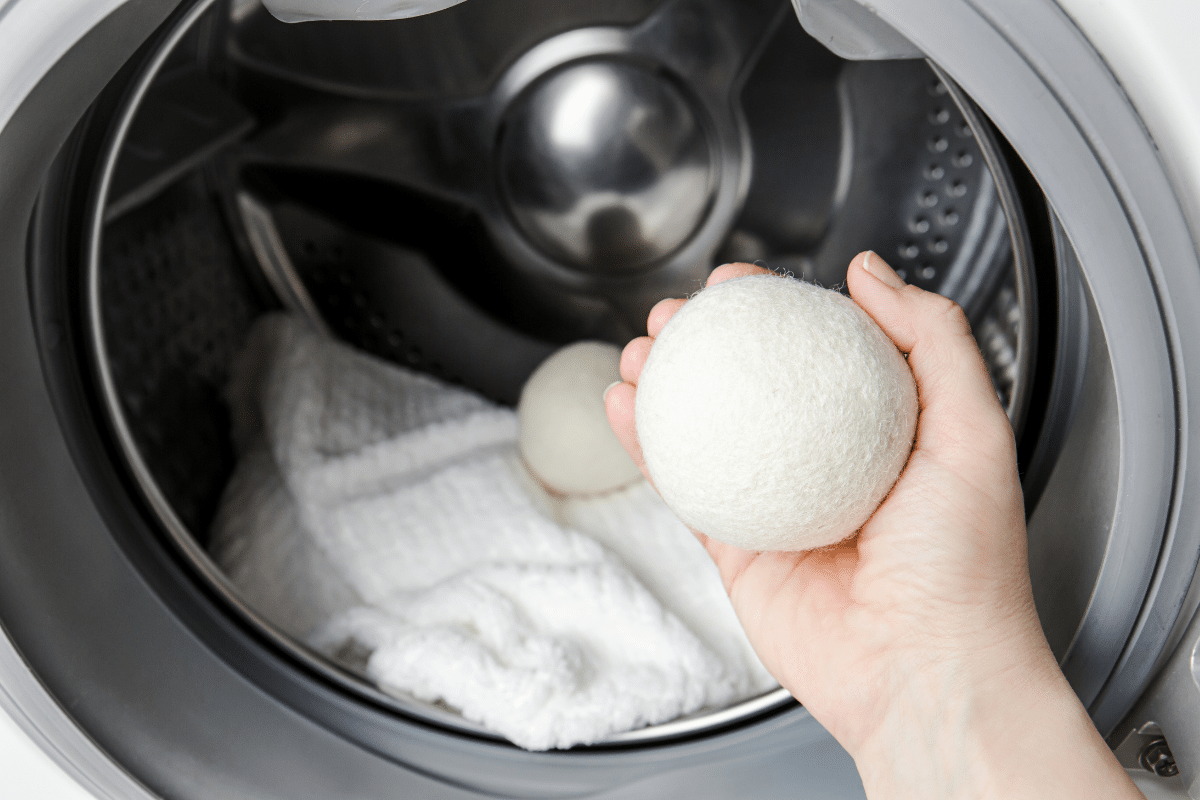
How Wool Dryer Balls Really Work to Save Money and Protect Family Health


You know, commercial fabric softeners can be sneaky troublemakers, causing more harm than good. But here’s the good news: wool dryer balls work wonders, softening clothes, slashing drying time, and kicking those harmful chemicals to the curb. Trust me, once you switch, you’ll wonder why you didn’t do it sooner.
A previous post on why laundry softening products are a real problem continues to resonate with thousands of readers. I know because of your many relating your experiences and testimonials about switching from problematic laundry softeners to wool dryer balls.
Dear Mary: My husband and both of my children have chronic skin problems. One doctor diagnosed them with eczema, but curiously nothing, including prescription medications, have brought lasting relief. We have spent a small fortune going from one dermatologist to another not to mention all of lotions, potions and other medications prescribed. Not once did any of these professionals suggest they might be allergic to laundry softeners. When I read Commercial Fabric Softeners are the Problem (Here is the Solution), a lightbulb went on.
I’m a serial softener user. For years, I’ve used liquid softener and dryer sheets just to make sure. How could I have not thought about this? It made a lot of sense that they could be allergic to this stuff. I wasted no time getting the wool dryer balls you recommend. I gave up softener products cold turkey and began using the dryer balls instead. I was like a crazy woman washing and re-washing clothes and bedding. I got three gallons of white vinegar to make sure I had enough to add to every rinse cycle.
Within two weeks we began to see a change. The rashes, itching and horrible skin issues began to calm down. Within three weeks the change was amazing. As I write, I would say my kids and husband are finally free of this awful situation. As embarrassed as I am that I never considered this might be the problem, I am more grateful and happier than you can imagine. Thank you so much for all you do to improve our lives. That column changed our lives and we are forever grateful. Gina
The trouble with commercial fabric softeners
The National Center for Biotechnology Information reports that the perfumes and additives in laundry products may cause skin problems. Fabric softeners are allergenic and can cause eczema, which appears as dry, itchy skin.
Dryer sheets contain fragrance and volatile organic compounds like acetaldehyde and butane, which can cause respiratory irritation. Fabric softener chemicals known as quaternary ammonium compounds have been linked to asthma. Acetone, also used in dryer sheets, can cause nervous system effects like headaches or dizziness.
Fabric softeners are also known to reduce and finally eliminate the effectiveness of water-resistant materials and reduce the absorbency of terry cloth and microfiber towels.
If you find your towels aren’t drying as well after a few cycles with fabric softener—liquid softener in the washer and/or dryer sheets in the dryer—it’s time to find a better alternative that will give excellent results, cost less, and all without doing harm.
Why use wool balls in the clothes dryer?
Wool dryer balls reduce wrinkles, speed up drying times, and soften clothes. They are the best alternative to commercial fabric softening products, such as liquid fabric softener added to the last rinse cycle in the washing machine and dryer sheets in the clothes dryer.
These things look like overgrown tennis balls. They’re made of 100% wool yarn, which over time becomes “felted*,” making them incredibly durable and not at all prone to unraveling.
One set of quality wool dryer balls will last what seems like forever, softening hundreds of loads of laundry—no batteries, refills, repairs, or reconditioning required. It’s one (purchase) and done!
*Felting is a process that causes a natural fiber felting yarn, like wool, to fray slightly and fuse to the other fibers around it, creating a more solid fabric-like appearance.
How do wool dryer balls work?
Imagine a big load of wet bath towels going into the dryer. You hit “start,” and that massive wad of wet fabric will flop around and stick together for quite a while until the layers become dry enough to separate and allow warm air to circulate. That slows the drying time, wasting time and energy.
Now imagine six wool dryer balls bouncing around (I use my entire set of six in every load), working their way between the layers of fabric, separating them so the warm air can circulate efficiently right from the very start of the cycle.
I’ve tested drying times with and without wool dryer balls, and the results are quite impressive. Wool dryer balls cut at least 25% off the time it takes my clothes dryer to dry a load of laundry, saving time and energy.
I often find these balls stuck tightly in the long sleeves of a tee shirt and the pocket of a pair of jeans. They work their way into tight spaces, and that’s what makes them so awesome.
Because dryer balls also agitate against the fibers in clothes and linens, everything feels softer coming out of the dryer. When used correctly (coming up), they also remove static cling.
How to use dryer balls
Because they need room to bounce and play with wet clothes and linens, dryer balls do their best and fastest work when the dryer is not crammed full. Two medium-sized loads will dry faster and more efficiently than one gigantic load. Dryer balls need room to work. And the more balls you add to a dryer load, the faster they get the job done.
Adding fragrance to a dryer load
Some of you have written saying you really miss the lovely fragrance you had when using dryer sheets. If this is important to you, here are much healthier and better alternatives than dryer sheets.
Solutions
Essential oil. Add a few drops of essential oil to each of the dryer balls. Give them time to absorb the oil deep into the fibers—a few hours is advisable. The more the oils are absorbed into the dryer balls before using them, the more slowly the fragrance will be dispersed in the dryer. You’ll begin to notice a subtle, non-toxic fragrance in your clean, soft laundry. When attempting the essential oil solution, set the dryer to Warm.
Downy Unstopables. Maybe you’ve seen Downy Unstopables (teeny tiny little scent beads) in the laundry aisle. The label directs you to add something like 1/4 cup (!!) to the washer along with your detergent. Oh, NO! That’s way overkill if you are at all sensitive to fragrance.
I’ve experimented with only two (2) of those tiny little beads in the wash load (not the dryer). When added to the dryer along with wool dryer balls, that load of wet clothes comes out with just the slightest, lightest, fresh scent.
Static cling
The biggest complaint I have received from readers is that while dryer sheets would eliminate static cling, the wool dryer balls do not. In fact, reported several (thousand) people, static cling makes these folks want to throw the balls out and go back to the old dryer sheets. Don’t do that! There is an explanation and a simple solution.
Much of the reason static occurs is due to over-drying clothes. You will definitely notice static if the dryer is allowed to run too long, with or without wool dryer balls!
Overdrying wastes gas or electricity and prematurely wears out clothes, as evidenced by all that lint. As you are learning, it also causes static cling—especially on low-humidity, dry winter days.
Another cause of static is synthetic materials like polyester, nylon, rayon, and acrylic. Try to separate synthetics to keep the rest of your laundry static-free. Then either dry the synthetics by hanging them on a line or in the dryer, making sure you end the drying cycle before they are totally dry.
Solution
Here’s what I do because I do not have the time to stand in the laundry room watching and waiting for things not to become over-dried: I spray my wool dryer balls with water (dunking them in a container of water also works), to get them super quite wet. Now the laundry dries faster than the wool dryer balls because they are so dense, elevating the humidity level in the dryer. Works like a charm and does not harm the dryer balls in any way. This method does not seem to increase the drying time, either.
White lint transfer
One thing I noticed early on in my transition from dryer sheets to wool dryer balls was lint. Small bits of white lint showed up on dark-colored clothes even though there were no white items in that dryer load. It didn’t take long to realize that the dryer balls were harboring those bits and transferring them to the dark load.
Solution
I have two sets of dryer balls—one set is white, the other black. It’s easy to see which ones I need to throw into the dryer. Now, any white lint stays with the white dryer balls, and dark lint links with the dark set. Problem solved.
As I update this post, my white set of dryer balls is going on eight years old. I haven’t counted how many loads of laundry they have fluffed and softened, but it’s many.
Manufacturers say one set of quality wool dryer balls is good for at least 1,000 drying loads. That means mine should have plenty of life left in them. It just might be the best money I’ve ever spent!
Resources
Wool dryer balls are readily available in stores like Walmart, Target, and Amazon. Here are links to the two sets of quality wool dryer balls I purchased online and have been using for years (during which time I have NOT spent hundreds of dollars on gallons of liquid softeners and cases of dryer sheets!).

(Disclosure: This post includes an Amazon Creator Connections product. I may earn a small commission if you purchase through the link, at no additional cost to you.)
Are you crafty?
You can make your own wool dryer balls. Find a tutorial here.
You might also enjoy …
- 5 Ways to Make Safe, Problem-Free Fabric Softener
- How to Make Wool Dryer Balls
- How to Make the Best Homemade Laundry Detergent
EverydayCheapskate™ is reader-supported. We participate in the Amazon Services LLC Associates Program and other affiliate advertising programs, designed to provide a means for us to earn from qualifying purchases, at no cost to you.

More from Everyday Cheapskate
 https://www.everydaycheapskate.com/wp-content/uploads/20261004-reduce-healthcare-costs-with-three-habits-healthy-couple-walking-in-autumn-leaves.png
800
1200
Mary Hunt
https://www.everydaycheapskate.com/wp-content/uploads/EC-Logo-by-Mary-Hunt-Tagline-Trimmed.png
Mary Hunt2026-10-04 23:08:572026-10-04 23:09:47How to Reduce Healthcare Costs With 3 Free Daily Habits
https://www.everydaycheapskate.com/wp-content/uploads/20261004-reduce-healthcare-costs-with-three-habits-healthy-couple-walking-in-autumn-leaves.png
800
1200
Mary Hunt
https://www.everydaycheapskate.com/wp-content/uploads/EC-Logo-by-Mary-Hunt-Tagline-Trimmed.png
Mary Hunt2026-10-04 23:08:572026-10-04 23:09:47How to Reduce Healthcare Costs With 3 Free Daily Habits https://www.everydaycheapskate.com/wp-content/uploads/20260919-air-purifier-in-living-room-1.png
800
1200
Mary Hunt
https://www.everydaycheapskate.com/wp-content/uploads/EC-Logo-by-Mary-Hunt-Tagline-Trimmed.png
Mary Hunt2026-09-19 11:36:552026-09-28 22:48:42The Best Inexpensive Air Purifiers for Small Homes
https://www.everydaycheapskate.com/wp-content/uploads/20260919-air-purifier-in-living-room-1.png
800
1200
Mary Hunt
https://www.everydaycheapskate.com/wp-content/uploads/EC-Logo-by-Mary-Hunt-Tagline-Trimmed.png
Mary Hunt2026-09-19 11:36:552026-09-28 22:48:42The Best Inexpensive Air Purifiers for Small Homes https://www.everydaycheapskate.com/wp-content/uploads/20260830-best-sound-machine-for-better-sleep-woman-hiding-under-comforter.png
800
1200
Mary Hunt
https://www.everydaycheapskate.com/wp-content/uploads/EC-Logo-by-Mary-Hunt-Tagline-Trimmed.png
Mary Hunt2026-09-10 09:51:452026-09-28 22:48:58Best Sound Machine for Better Sleep: 3 Honest Picks
https://www.everydaycheapskate.com/wp-content/uploads/20260830-best-sound-machine-for-better-sleep-woman-hiding-under-comforter.png
800
1200
Mary Hunt
https://www.everydaycheapskate.com/wp-content/uploads/EC-Logo-by-Mary-Hunt-Tagline-Trimmed.png
Mary Hunt2026-09-10 09:51:452026-09-28 22:48:58Best Sound Machine for Better Sleep: 3 Honest Picks https://www.everydaycheapskate.com/wp-content/uploads/20260819-dry-clean-only.png
800
1200
Mary Hunt
https://www.everydaycheapskate.com/wp-content/uploads/EC-Logo-by-Mary-Hunt-Tagline-Trimmed.png
Mary Hunt2026-08-19 23:38:122026-09-28 22:49:48The Truth About “Dry Clean Only” (And When I Actually Listen to It)
https://www.everydaycheapskate.com/wp-content/uploads/20260819-dry-clean-only.png
800
1200
Mary Hunt
https://www.everydaycheapskate.com/wp-content/uploads/EC-Logo-by-Mary-Hunt-Tagline-Trimmed.png
Mary Hunt2026-08-19 23:38:122026-09-28 22:49:48The Truth About “Dry Clean Only” (And When I Actually Listen to It) https://www.everydaycheapskate.com/wp-content/uploads/20260809-how-to-get-the-smell-out-of-towels-stack-of-towels-sitting-with-candle-in-bright-natural-light.png
800
1200
Mary Hunt
https://www.everydaycheapskate.com/wp-content/uploads/EC-Logo-by-Mary-Hunt-Tagline-Trimmed.png
Mary Hunt2026-08-08 16:48:552026-08-08 16:50:57How to Get Smell Out of Towels: The 2-Wash Fix That Works
https://www.everydaycheapskate.com/wp-content/uploads/20260809-how-to-get-the-smell-out-of-towels-stack-of-towels-sitting-with-candle-in-bright-natural-light.png
800
1200
Mary Hunt
https://www.everydaycheapskate.com/wp-content/uploads/EC-Logo-by-Mary-Hunt-Tagline-Trimmed.png
Mary Hunt2026-08-08 16:48:552026-08-08 16:50:57How to Get Smell Out of Towels: The 2-Wash Fix That Works https://www.everydaycheapskate.com/wp-content/uploads/20260729-the-problem-with-fabric-softener-sitting-on-a-washer.png
800
1200
Mary Hunt
https://www.everydaycheapskate.com/wp-content/uploads/EC-Logo-by-Mary-Hunt-Tagline-Trimmed.png
Mary Hunt2026-07-29 13:45:412026-07-29 13:47:50Fabric Softener Is Wrecking Your Laundry. Here’s What Actually Works.
https://www.everydaycheapskate.com/wp-content/uploads/20260729-the-problem-with-fabric-softener-sitting-on-a-washer.png
800
1200
Mary Hunt
https://www.everydaycheapskate.com/wp-content/uploads/EC-Logo-by-Mary-Hunt-Tagline-Trimmed.png
Mary Hunt2026-07-29 13:45:412026-07-29 13:47:50Fabric Softener Is Wrecking Your Laundry. Here’s What Actually Works. https://www.everydaycheapskate.com/wp-content/uploads/20260706-negotiate-medical-bills-female-nurse-with-calculator-and-ipad-negotiating-a-bill.png
800
1200
Mary Hunt
https://www.everydaycheapskate.com/wp-content/uploads/EC-Logo-by-Mary-Hunt-Tagline-Trimmed.png
Mary Hunt2026-07-06 21:19:252026-09-28 22:51:26How to Negotiate Medical Bills and Cut Costs 30-50%
https://www.everydaycheapskate.com/wp-content/uploads/20260706-negotiate-medical-bills-female-nurse-with-calculator-and-ipad-negotiating-a-bill.png
800
1200
Mary Hunt
https://www.everydaycheapskate.com/wp-content/uploads/EC-Logo-by-Mary-Hunt-Tagline-Trimmed.png
Mary Hunt2026-07-06 21:19:252026-09-28 22:51:26How to Negotiate Medical Bills and Cut Costs 30-50% https://www.everydaycheapskate.com/wp-content/uploads/20260703-home-decor.png
800
1200
Mary Hunt
https://www.everydaycheapskate.com/wp-content/uploads/EC-Logo-by-Mary-Hunt-Tagline-Trimmed.png
Mary Hunt2026-07-03 20:46:552026-09-28 22:51:4110 Everyday Items You Never Think to Wash (But Should)
https://www.everydaycheapskate.com/wp-content/uploads/20260703-home-decor.png
800
1200
Mary Hunt
https://www.everydaycheapskate.com/wp-content/uploads/EC-Logo-by-Mary-Hunt-Tagline-Trimmed.png
Mary Hunt2026-07-03 20:46:552026-09-28 22:51:4110 Everyday Items You Never Think to Wash (But Should) https://www.everydaycheapskate.com/wp-content/uploads/20260628-close-up-photo-a-woman-wearing-a-swimsuit-with-a-mild-sunburn.png
800
1200
Mary Hunt
https://www.everydaycheapskate.com/wp-content/uploads/EC-Logo-by-Mary-Hunt-Tagline-Trimmed.png
Mary Hunt2026-06-28 21:40:042026-09-28 22:52:08DIY After-Sun Spray That Cools and Soothes Skin
https://www.everydaycheapskate.com/wp-content/uploads/20260628-close-up-photo-a-woman-wearing-a-swimsuit-with-a-mild-sunburn.png
800
1200
Mary Hunt
https://www.everydaycheapskate.com/wp-content/uploads/EC-Logo-by-Mary-Hunt-Tagline-Trimmed.png
Mary Hunt2026-06-28 21:40:042026-09-28 22:52:08DIY After-Sun Spray That Cools and Soothes SkinPlease keep your comments positive, encouraging, helpful, brief,
and on-topic in keeping with EC Commenting Guidelines
Last update on 2026-10-13 / Affiliate links / Images from Amazon Product Advertising API


How many of the wool dryer balls do I put in a load? I bought a pack of three… Should I put all three of them in the dryer at once? Thank you.
A set of 6 is excellent, and I use them in every load—small or large. That’s a good protocol!
My friend gave m her set of 4 woolen dryer balls. I have been using them now for 2 months for ALL my clothes, white and dark. Haven’t had any problems.
I enjoyed using wool dryer balls for about 3 years. When my dryer quit working, a repairman recommended I quit using them. He said my dryer would last a lot longer without them as they damage the dryer. Has anyone else heard this?
Dryer balls won’t damage the dryer if you use the right number of dryer balls—six is ideal. Some users may find the damaged dryer due to the plastic dryer balls. So, you can avoid the plastic dryer balls and use the wool-made dryer balls to enjoy your drying safely. You may also use artificial dryer balls. Dryer balls are not dangerous for the dryer’s health.
I leave mine in the dryer and no chance of the pets getting them.
I use some of my dad’s old white t-shirts in the dryer sandwiched between the laundry. I can add more or less depending on the load. Even though most of my laundry is 100% cotton or a mix of natural fibres, I dry on the polyester/cotton setting (everything dries with fewer if any wrinkles), & use the all cotton setting for bath towels. When his t-shirts wear out I’ll look into dryer balls. I just haven’t found any that I like & with a house full of cats I would probably find them stuff along with cat toys in my shoes & boots! Love the laundry tips! Elise
Where do you buy the dark-colored set of wool balls? You only link to the white set.
Hi Glenn … Whoops! I failed to include that source; I have just added an Amazon link to the post for these black wool dryer balls.
Well, whoops! I have added a resource to the post for black wool dryer balls—this is my second set.
I have been using dryer balls for some time now and my biggest problem is that my German Short Haired Pointers love to get them and chew them! Have to watch them closely.
Mary, thanks for all your advice and tips. I’m using wool dryer balls, and scented them with lavender oil, but now I notice ‘smudges’ on my dryer balls after many uses. Any way to clean them> Thanks!
That is an unintended consequence of adding the oil to light-colored wool dryer balls. I don’t know of a way to remove those oil spots short of treating them with stainer remover then actually laundering the balls, which I do not recommend. My best advice is if you wish to put drops of essential oil on them to create a scent in your dryer laundry, switch to black wool dryer balls, in order to hide the spots. Sorry I don’t have a better option for you … !
Hi Mary, Thanks, I love my wool dryer balls which I’ve had for years! But how do I know when they need to be replaced?
Thanks
When they fall apart! They will eventually break down and get frayed and soft. You can expect 1000 trips thru the dryer from a good set of wool dryer balls. So unless you’re running a commercial laundry service (I know, sometimes if feels like that, doesn’t it?) a set should last for eyars.
I’ve been using wool dryer balls for several months. I’ve had very little static cling & I’ve been very pleased with their performance. I leave the balls in the dryer and take them out only as I come across them when pulling out dry clothes. The only down side is if one wool ball gets caught in a sleeve or pocket and I don’t know it, that ball can end up rolling under things; so now I am more careful checking for a wool ball as I pull out each piece out of the dryer. I’ll never go back to dryer sheets!
Do you have any idea why they would stop being useful after 1000 loads? After all, they will still bounce around in the dryer and do the same job? Is it something about lanolin? Any help appreciated.
Thanks Mary. ‘I am a Tightwad Gazette devotee. Sadly, it’s gone. And my Hints from Heloise is now a vintage book. I just bought a set of 4 New Zealand wool balls at Trader Joe’s for $5.49. (Aprii, 2021) Thanks for great info !!
And … Everyday Cheapskate (founded in 1992 as Cheapskate Monthly) is still alive and well!
I bought a set of 4 wool dryer balls at Trader Joe’s for under $5. Love them!
I love my dryer balls but hate the static cling. To get rid of it, take a sheet of aluminum foil about 5 or 6 feet and wad it into a ball. Toss it in the dryer with your wet clothes and dryer balls. With each load the ball of aluminum foil will become smaller and more compressed. When it gets down to an inch in diameter, toss it in your recycling bin and make another one. It works like magic! No more static cling.
Mary, i have been using these dryer balls for years. have not had to replace them yet. no longer use clothes softener. i believe i originally got the tip from u. thanx, Mary
I have been using dryer balls since I think you first mentioned them. Got mine on Amazon. I also add essential oils to the balls when I start the wash. Love the light scent, sometimes unnoticeable. I usually use around 2TBSP of Unstoppables in the wash. I appreciate you mentioning only 5!!! Not sure I can do that, but will try. Thanks for the money saving tip.
I have been using wool dryer balls for several years now and while I believe they do help to dry the clothes a bit faster I don’t think that the clothes are at all softened so I still like to add liquid softener to my loads.
I have been using wool dryer balls for over a year and love them. Our daughter and son in law are expecting our first Grandchild in June and both of them have very sensitive skin so we are anticipating the baby will as well. So I bought them a set and they are hooked.
Residue from dryer sheets tends to coat the ductwork leading from the dryer. Then lint often sticks to the coating. The result: fire danger. This warning from a worker who cleaned all of our ductwork years ago. Warning was echoed by my son, a firefighter!
I purchased white dryer balls a few years back when I first read your article. I am still using my 1st set. I need to purchase the dark dryer ball set next. I do have static cling, but after reading the “how to” to eliminate static cling I will put the info into use! Thank you Mary!
Rayon is not synthetic – it is a man-made fiber that is cellulosic, like cotton and linen. Therefore it will not cause static cling the way true synthetics will, such as polyester, nylon, acetate, acrylic, etc. Like other cellulosic fibers, rayon is hydrophilic and therefore absorbs water the way cotton and linen do, whereas synthetic fibers are hydrophobic and tend to repel water.
Handy article! Though, essential oils aren’t supposed to be used in the dryer as they’re an oil and thus a fire risk.
It takes a while, but you just get used to your clothes not smelling like anything, and honestly, it’s way better after your nose adjusts!
I’ve been using dryer balls for 2 years and I’m glad of them. I have used dryer balls from all popular brands, such as Smart Sheep, Woolzie and Twenty Stars. All of them are very useful and I will never use dryer sheets anymore. Nice rating of newest brands for 2019 and 2020: https://goodscomparing.com/wool-dryer-balls – maybe it will be helpful for someone.
By the way, using 8-10 balls is more efficient than only 4-6…
I need to clean my wool dryer balls. How do I go about doing this?
Thanks!
Hi Brenda—Are they dirty or covered with lint? I’m not sure why you need to clean them! If they’re simply covered with lint, rub them with a pumice stone. Or a lint-remover roller. If they’re dirty like they fell in the mud or ? (not sure how dryer balls could get dirty), go ahead wash them in the washing machine with laundry. They’re already felted which means the wool yarn used to make them went through aggressive agitation in hot water for a long cycle, so you don’t have to worry about the shrinking. The only possible downside I see is that they might just give up and fall apart—which is going to happen eventually anyway because after a 1000 dryer loads or so that’s what dryer balls do! Good luck and let us know how this works out! xo m
I’ve been using wool dryer balls for a few years now, and they have recently become quite fuzzy and have started leaving fibers on everything. Anybody else experience this and do you have recommendations? Would shaving them with an electric trimmer help? I find the thought of shearing them like sheep amusing, but I’m willing to try!
Wondering which dryer balls you purchased. You may have some inferior yarn or perhaps even a blend that is not 100% wool. I wouldn’t hesitate to trim them, however. Good luck and let us know!
I’ve read that wrapping the dryer balls in nylons (cut the feet off, wrap around ball, tie end closed) works well for that.
Thanks for the tips – both from Mary and the comments! I was wondering if maybe the static-diffusing capability of my wool balls was failing, but I think over-drying is far more likely (I know they haven’t been through a thousand loads yet!). I’ll definitely try the aluminum ball. Likewise, I hadn’t realized I should let the essential oil soak into the wool ball for a while before tossing them in! No one ever explained that bit to me, so I’d been putting the oil on and then almost immediately putting the balls into the dryer. I’ll let them soak for a bit first from now on.
Hi Nicole! The best way to reduce static is to not over dry the load. In fact, slightly underdry will reduce wrinkle and static too!
I put safety pins on my dryer balls and it reduces the static cling
Same here – I have been putting drops of lavender essential oil on the wool balls right before I put them in the dryer but haven’t noticed any scent. Now I know to let it soak in! Also – apparently I have a setting on my dryer to “reduce static” which I didn’t know about. I have a little place to fill with water, and I guess it spritzes it in occasionally. Hopefully that will assist with the static issue.
If wool dryer balls work for you, knock yourself out. But ALUMINUM FOIL BALLS are cheaper and do the same thing. Use a sheet of foil about 12 – 18 inches long and wad it up into a ball. I use 3 or 4 per load. Will last for months, won’t hurt clothes, and stops static cling. When they wear out, i just throw them out and make a new set.
Trader Joe’s sells dryer balls, 4 dryer balls for around $5. They last for years. I can’t see how using tin foil would be cheaper, if you have to replace it every few weeks. Plus, you are throwing out alot of tinfoil and also the packaging it comes in. Using tinfoil alone as much as you say seems more wasteful.
I have been using wlol dryer balls for several years, and I love them! I keep them in the dryer all the time. With wool dryer balls plus Mary’s homemade laundry detergent, plus about 1/4 to 1/2 cup of vinegar in the rinse dispenser depending on the load size, I get wonderfully clean and clean-smelling laundry every time. And it saves me a whole lot of money over time.
Love this feedback, Susan!
Wool dryer balls did nothing for my laundry. I don’t use scented products, most of my items are natural fibers, and I don’t overload the washer or dryer. Drying time was not reduced, clothes were not softer, and the only difference I noticed was the NOISE the balls made as they bounced around the dryer. Not for me.
Thank you so much for this fabulous money-saving tip Mary! I live in South Australia and we pay the HIGHEST Electricity Rates in the World, so your tip is wonderful.. I purchased my Dryer Balls after reading your article and cut down my drying time by 20 minutes – as well as dampening the balls first – NO static cling whatsoever! And my two cats, Syko and Angel both love Washing Day as they play with the balls when I have finished washing for the day! Thanks again for such a great Newsletter 😉
So great to hear from you Natalie. Testimonials like yours are so appreciated!
I love the dryer balls and will try wetting them! BUT I learned the hard way that WHITE WOOL DRYER balls leave lint all over black jeans or black anything. I will search for some dark ones.
Is THAT the culprit??
Yep! There’s a link in the post to dark colored dryer balls. Mine are black but they come in charcoal gray as well.
How do you know when it’s time to replace the dryer balls? The description says they can last for 1000 loads. Then what?
Trouble is, there is no essential oil that smells like orginal Bounce!! That is the best fragrance for fresh clothing!
I love the suggestion of adding some pure essential oils into the dryer for that fresh scent – really helpful!
I never use fabric softener in the wash or the dryer. I have only had static cling once in 10 years. Not sure why. I hang my clothes on the line outside and only use the dryer when I have to. I do put the towels in the dryer for 5 minutes to soften them up though.
you mention load size in the dryer… i just ordered some wool balls… I’ve been using 2 of the plastic ones for several years and like them. I’m not sure what you are saying about load size… I have an extra capacity washer and extra capacity dryer. I put just one load in the dryer at a time. Are you saying to split the load and dry half at a time? It would have to dry the clothes in 15 minutes to make it less time (right now I can dry a load in 40-45 minutes)… plus that’s extra trips up and down the stairs. I can’t really see washing a smaller load.. then I’d be running the machine the same length of time more often with more water ( less clothes per load means more loads). Maybe you mean just not over load your machines? Can you clarify? Thanks!
Yes do not overcrowd the dryer. The clothes and dryer balls need to tumble freely. And don’t overdry 🙂
Perhaps I’m doing something wrong. Using 3 large wool balls in every load has only resulted in more static and not softer clothing. Is there something I’m missing?
Sounds like your loads are just too large that means soo many clothes and items in there to allow things to tumble and drop freely. And I’m afraid you are overdrying! Cut down the number of items and the amount of time you allow them to tumble and see if that doesn’t makenall the difference…for good!
Great, just ordered a few.
I love mine! I also throw in a small ball of crumpled up tin foil – no more static cling!
I just bought a set and they work wonderful. My cat thinks they are toys and one has disappeared with the socks. But other than that, they work great and I would highly recommend them.
I recently purchased and started using the dryer balls and am so glad to be rid of the dryer sheets. I am doing my best at moving to more “natural” ways of life and eating so I was all in when I read about the balls. Thank you for the information!!
Mary I love my dryer balls. I did notice static when drying polyester and had read an article that said to add a ball of aluminum foil waded up to the dryer with the wool balls and that solved the problem too. I usually do around 7 loads a week so I stick a new aluminum ball in about every 2 weeks.
Love the cat story. It would happen in my house too. My cat loves socks for some reason and they are all over the house. When I lived alone she would have the dirty laundry from the front door all the way to the laundry room for some reason. Now that my house is never empty so she is never alone not so much but still a sock or two goes missing.
I don’t use the dryer much (still have dryer sheets I bought several years ago (free after coupon) lying around. Not sure if they still work. I usually hang the clothes outside on the line unless it is raining or cold outside. It was between 70 and 60 last weekend so we are still hanging them outside right now. I’ll look into the dryer balls after I finish my dryer sheets.
I would suggest adding one more ball to the dryer, this one made of aluminum foil. Simply wad up a sheet of heavy duty foil into a nice round ball and toss it in the dryer. I haven’t tried the wool dryer balls, but I haven’t had a problem with static.
I would have thought the Lanolin in the wool would eliminate static?
I learned to separate synthetic fabrics, and air dry them, when i switched to home-made detergent and did away with all fabric softeners. I didn’t need it with the home-made detergent, except static in synthetics. I also plan on trying the diluted-hair-conditioner-sprayed-in-the-dryer-suggestion.
Funny story-I love my dryer balls but took them out when I put some throw rugs in to air fluff. Left them on top of dryer, with 2 cats in the house – they decided the balls were good toys- have found 2, still looking for #3!
@conniepyburnlancaster:disqus that is too funny! Luckily my Laundry room has a door on it, though the kitties do try to break in all the time!
Mary, since I am allergic to wool I am hesitant to try the wool dryer balls. Years ago I started using the hard blue dryer balls and they work well. They are noisy however so I am thinking about trying the wool ones. Should I stick with what I have due to my allergy?
Yes, if you have a wool allergy I would say don’t switch. As the wool dryer balls rub against the clothes they can leave fibers behind.
Thanks Brenda! A confirmation is what I needed. Merry Christmas!
Another option you could try is to find out if alpaca fibre bothers you. Alpacas don’t produce lanolin and often it’s the lanolin that people are reacting to when they’re allergic to sheep’s wool. That way you could look for alpaca dryer balls. 🙂
I have been using them a couple of months and love them. My clothing has far less wrinkles is the biggest thing I noticed. Sometimes if I dry something known for static I go ahead and add a dryer sheet as well. I use my dryer sheets several times. For the most part it did speed up the drying time for clothing but didn’t seem to help dry towels any faster so I will be also putting in a dry towel to help them dry faster.
I’ve had my wool dryer balls for quite a while…..I use lavender oil, but thank you for the advise…..applying the oil a while before using. A good time would be when I toss the clothes in the washer. Have been annoyed with the static, but now you’ve told us how to take care of that problem.