

Feeling Overwhelmed? Try This 30-Day Reset

Ever notice how quickly your mood can shift after scrolling headlines for ten minutes? I realized I’d been absorbing stress like a sponge that forgot how to wring itself out. So I’m doing a 30-day reset. Less background news. Fewer financial rabbit holes. More sleep. Daily quiet time. Guarding my thoughts… because they matter. This isn’t about ignoring reality. It’s about strengthening your response to it. If life feels heavy lately, maybe a reset is worth trying. Who’s ready to unplug just a little?

To say that I’m impressionable would be putting it kindly. If there’s tension in the air, I breathe it in. If there’s uncertainty on the screen, I carry it around like it’s mine. Years ago, I watched Castaway and spent the next week dreaming I was drowning. Apparently my brain doesn’t just watch a story… it moves in and redecorates.
That realization was a wake-up call. I may not control world events, markets, or other people’s decisions, but I do control what I repeatedly expose myself to. Repeated exposure shapes perspective. It influences sleep, patience, focus, even how kindly we respond to the people sitting across the dinner table.
This reset isn’t dramatic. It’s practical stewardship. If we can manage our homes, budgets, and calendars, we can manage our inputs. Over the next 30 days, I’m committing to five steady habits to help me think clearly, sleep better, and respond wisely instead of reacting emotionally.
Step 1: Turn Off the TV (and the Constant Feed)

Step 2: Leave Wall Street (Alone)

For the next 30 days, I am not checking the market. Not the daily swings. Not the breathless forecasts. Not even my own account balance. Because when I do, I don’t just observe the numbers. I absorb them.
If the market dips, I feel it in my shoulders. If someone predicts disaster, my brain starts rehearsing it like it’s already happened. I can turn a “what if” into a full emotional experience before breakfast.
Nearly half of investors check their portfolios at least once a day. With apps on our phones, it takes about six seconds to know exactly how things are performing. That sounds responsible. Disciplined. Informed.
But behavioral finance experts call it “high-frequency monitoring.” The more often we look, the more likely we are to see a loss, even a small one, and the more intensely we feel it. There’s even a term for it: myopic loss aversion. In plain English? When we check too often, we become more sensitive to losses than to gains.
Surveys show the majority of adults identify money as a major source of stress. It shows up as irritability, fatigue, sleeplessness, tension headaches. It creeps into marriages, parenting, leadership decisions, and our overall sense of security.
If you’ve already built a long-term strategy (i.e., diversified investments, appropriate risk level, maybe even automatic contributions), the daily fluctuation is noise. Necessary noise, perhaps. But noise nonetheless.
So here’s what “leaving Wall Street” looks like for me:
- No daily portfolio checks.
- No late-night economic forecasts.
- No doom-scrolling financial commentary.
If you use automated investing tools, let them do their job. That’s what they’re built for. If you manage your own investments, consider a set schedule (i.e., once a month, once a quarter) and stick to it. Put it on the calendar. Treat it like any other responsible review.
Step 3: Create Daily Quiet Time for Reflection

Rarely am I truly alone and still. I’m usually doing two things at once, sometimes three. For the next 30 days, I’m carving out intentional quiet time. No multitasking allowed. Just stillness.
For some, that may look like prayer. For others, journaling a single page. Slow breathing. Reading something grounding. Sitting on the porch before the house wakes up. A walk without earbuds. The method matters less than the margin.
We live in a time when constant input is normal. Our minds rarely power down. And when the brain never rests, it can’t sort, prioritize, or process very well.
Even five to fifteen minutes of quiet has measurable benefits. Studies consistently show that brief daily mindfulness or reflective practices can lower cortisol (the stress hormone), improve focus, and increase emotional regulation. In practical terms? Fewer reactive moments. Clearer thinking. Better sleep.
If you prefer structure, try:
- A guided meditation app (set it and close it when finished).
- A printed devotional or short essay.
- A gratitude list: three specific things, not generic ones.
- Box breathing (inhale four, hold four, exhale four, hold four).
If you prefer analog life, even better:
- Sit outside with coffee before screens.
- Take a slow lap around the block.
- Light a candle and read a page of something substantial.
If you’re wired to be productive every second, this may feel uncomfortable at first. That’s usually the signal that your nervous system has been running on high for too long.
Quiet builds steadiness. Steadiness builds better decisions. And better decisions compound at home, at work, in relationships, and even in finances. Five intentional minutes can shift the tone of an entire day. And right now, that feels like a very good trade.
Step 4: Go to Bed at a Set Time
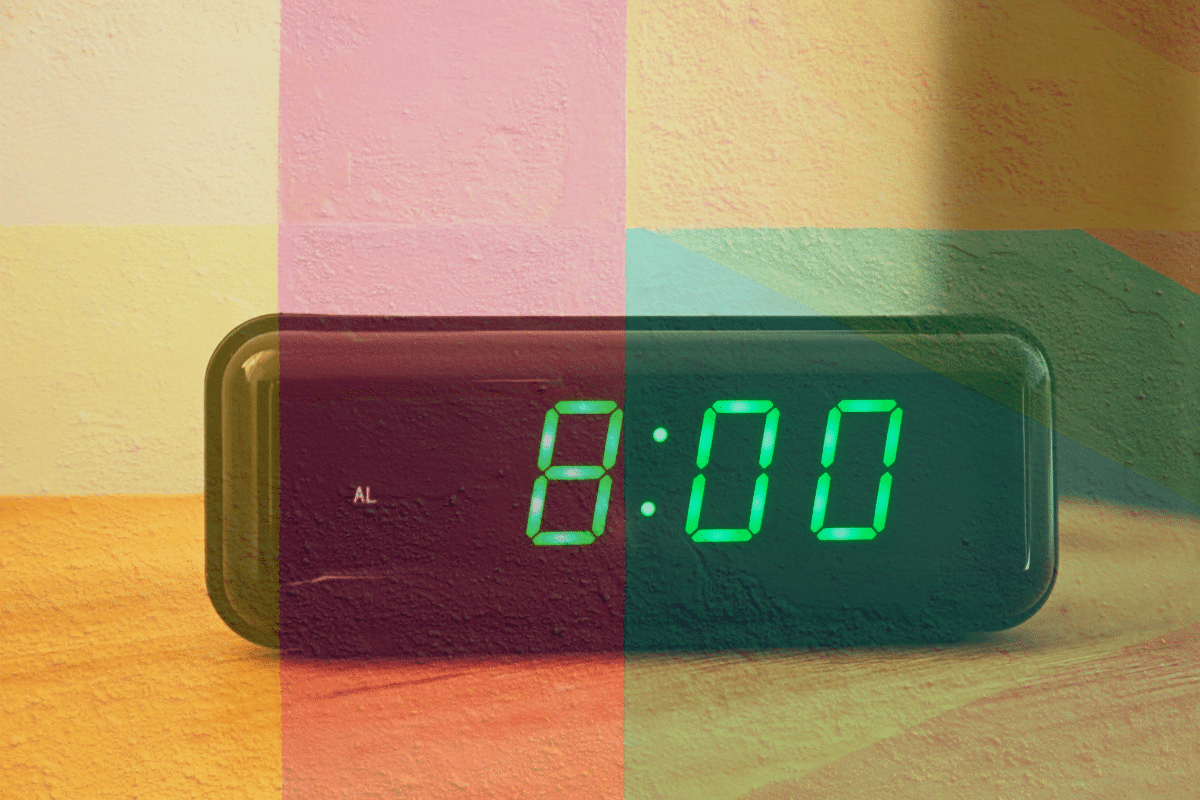
I almost don’t want to write this one because it exposes me. I have treated nighttime like bonus hours. The house is quiet. The phone slows down. No one needs anything. It feels productive and peaceful… until it isn’t. I’ve crawled into bed at 2:30 or 3:00 a.m., only to have the alarm ring at 6:00 like it’s personally offended. And then I wonder why I’m foggy. Why small problems feel big. Why my patience runs thin.
For the next 30 days, I’m going to bed at 11:30 p.m. No exceptions.
Most adults need at least seven hours of sleep a night. And quality matters just as much as quantity. Interrupted, restless sleep doesn’t restore much of anything.
When we consistently shortchange sleep, it shows up everywhere: slower thinking and weaker decision-making, higher stress levels, increased irritability, greater risk of heart disease, high blood pressure, and type 2 diabetes, stronger cravings for sugar and caffeine, and more emotional reactivity. In other words, exhaustion makes everything heavier.
And here’s what I’ve had to admit: staying up late doesn’t actually create more life. It just steals from tomorrow.
If you’re wired to push through, to finish one more task, to answer one more email, this may hit close to home. Especially if you work remotely, run a business, manage a household, or juggle multiple roles. The lines between work and rest blur easily when your laptop is five feet away. But clear boundaries protect energy.
Here’s what I’m doing to make this realistic instead of aspirational:
- Set a nightly alarm at 11:00 p.m… not to wake up, but to start winding down.
- Screens off 30 minutes before bed. (Yes, even the “quick scroll.”)
- Cooler, darker room.
- No caffeine after mid-afternoon.
- Same wake-up time, even on weekends.
If 11:30 feels unrealistic for you, choose a time that allows for at least seven hours before your alarm. Put it on the calendar like you would an early meeting.
If sleep has been difficult for a while (i.e., frequent waking, trouble falling asleep, constant fatigue), it’s worth talking with a healthcare provider. Sometimes there’s more going on, and guessing your way through it just prolongs the frustration.
But for most of us, the first step is simpler: stop negotiating with bedtime. This reset isn’t about squeezing more out of the day. It’s about showing up to it clear-headed and steady. And that starts the night before.
Step 5: Guard Your Mind From Mental Clutter

Even with better boundaries, more sleep, and less market noise, I still have… this mind. You know the one. It can generate worries without any outside help. Replay old conversations. Predict worst-case scenarios that haven’t happened and may never happen. Draft speeches I’ll never give.
Here’s what I’m reminding myself this month: I don’t control every thought that pops in. But I absolutely control what gets to stay. There’s a big difference.
Trying to “win” against every negative thought is exhausting. The more you wrestle with them, the stronger they seem to get. A better approach and one backed by solid mindfulness research is simpler: notice the thought, name it, and let it pass without engaging.
Instead of:
“Why do I always mess this up?”
Try:
“That’s a self-doubt thought.”
And then return to what you were doing.
It sounds almost too basic. But it works because it shifts you from being inside the thought to observing it.
When we constantly replay worries, our bodies respond as if the threat is real. Heart rate increases. Muscles tighten. Sleep suffers. Over time, that mental clutter turns into physical stress.
Guarding your mind isn’t about pretending everything is fine. It’s about being selective with your attention. And here’s something worth remembering: your thoughts are influenced by fatigue, hunger, stress, hormones, and old experiences. They are not always reliable narrators.
You can acknowledge regret without living there. You can feel fear without obeying it. You can notice doubt without adopting it.
A Practical 30-Day Reset Plan You Can Start Today
Some seasons feel heavier than others. The headlines are louder, the worries stack higher, and before long you’re carrying stress that isn’t even yours. When life feels saturated, it may be time to reboot your spirit… not by ignoring reality, but by strengthening your response to it.
For the next 30 days:
- Cut the news and media noise. Stay informed, then step away.
- Pause financial scrolling. Check your plan, then close the app.
- Carve out quiet reflection. Ten minutes. No input. Just space.
- Prioritize your sleep. Set a bedtime. Honor it.
- Declutter your mind. Notice the spiral. Take one practical step forward.
That’s it. Five steady practices. Simple? Yes. Easy? Not always. Effective? Absolutely.
And most importantly… you start to feel in charge again.
Question: If you had to unplug from one stress trigger for 30 days (news, social media, late nights, or checking your investments) which one would you choose? Share in the comments below.
EverydayCheapskate™ is reader-supported. We participate in the Amazon Services LLC Associates Program and other affiliate advertising programs, designed to provide a means for us to earn from qualifying purchases, at no cost to you.

More from Everyday Cheapskate
 https://www.everydaycheapskate.com/wp-content/uploads/20261004-reduce-healthcare-costs-with-three-habits-healthy-couple-walking-in-autumn-leaves.png
800
1200
Mary Hunt
https://www.everydaycheapskate.com/wp-content/uploads/EC-Logo-by-Mary-Hunt-Tagline-Trimmed.png
Mary Hunt2026-10-04 23:08:572026-10-04 23:09:47How to Reduce Healthcare Costs With 3 Free Daily Habits
https://www.everydaycheapskate.com/wp-content/uploads/20261004-reduce-healthcare-costs-with-three-habits-healthy-couple-walking-in-autumn-leaves.png
800
1200
Mary Hunt
https://www.everydaycheapskate.com/wp-content/uploads/EC-Logo-by-Mary-Hunt-Tagline-Trimmed.png
Mary Hunt2026-10-04 23:08:572026-10-04 23:09:47How to Reduce Healthcare Costs With 3 Free Daily Habits https://www.everydaycheapskate.com/wp-content/uploads/20261004-woman-dreaming-about-her-financial-and-life-goals.png
800
1200
Mary Hunt
https://www.everydaycheapskate.com/wp-content/uploads/EC-Logo-by-Mary-Hunt-Tagline-Trimmed.png
Mary Hunt2026-10-04 12:50:422026-10-04 12:50:42She Lived in a Basement for $100 a Month. Here’s Why.
https://www.everydaycheapskate.com/wp-content/uploads/20261004-woman-dreaming-about-her-financial-and-life-goals.png
800
1200
Mary Hunt
https://www.everydaycheapskate.com/wp-content/uploads/EC-Logo-by-Mary-Hunt-Tagline-Trimmed.png
Mary Hunt2026-10-04 12:50:422026-10-04 12:50:42She Lived in a Basement for $100 a Month. Here’s Why. https://www.everydaycheapskate.com/wp-content/uploads/20261003-woman-hugging-elderly-mother-sandwich-generation-caring-for-aging-parents.png
800
1200
Mary Hunt
https://www.everydaycheapskate.com/wp-content/uploads/EC-Logo-by-Mary-Hunt-Tagline-Trimmed.png
Mary Hunt2026-10-03 10:47:222026-10-03 10:47:25Sandwiched Between Aging Parents and Adult Children
https://www.everydaycheapskate.com/wp-content/uploads/20261003-woman-hugging-elderly-mother-sandwich-generation-caring-for-aging-parents.png
800
1200
Mary Hunt
https://www.everydaycheapskate.com/wp-content/uploads/EC-Logo-by-Mary-Hunt-Tagline-Trimmed.png
Mary Hunt2026-10-03 10:47:222026-10-03 10:47:25Sandwiched Between Aging Parents and Adult Children https://www.everydaycheapskate.com/wp-content/uploads/20260926-pov-from-an-aisle-seat-on-an-airplane.png
800
1200
Mary Hunt
https://www.everydaycheapskate.com/wp-content/uploads/EC-Logo-by-Mary-Hunt-Tagline-Trimmed.png
Mary Hunt2026-09-27 19:14:552026-09-27 19:16:27Confessions of a Woman Who Preflights Her Own Escape
https://www.everydaycheapskate.com/wp-content/uploads/20260926-pov-from-an-aisle-seat-on-an-airplane.png
800
1200
Mary Hunt
https://www.everydaycheapskate.com/wp-content/uploads/EC-Logo-by-Mary-Hunt-Tagline-Trimmed.png
Mary Hunt2026-09-27 19:14:552026-09-27 19:16:27Confessions of a Woman Who Preflights Her Own Escape https://www.everydaycheapskate.com/wp-content/uploads/20260920-small-money-mistakes-woman-sitting-at-her-laptop-reviewing-bills.png
800
1200
Mary Hunt
https://www.everydaycheapskate.com/wp-content/uploads/EC-Logo-by-Mary-Hunt-Tagline-Trimmed.png
Mary Hunt2026-09-20 11:34:162026-09-28 22:48:40Small Money Mistakes: How to Fix Them Before They Grow
https://www.everydaycheapskate.com/wp-content/uploads/20260920-small-money-mistakes-woman-sitting-at-her-laptop-reviewing-bills.png
800
1200
Mary Hunt
https://www.everydaycheapskate.com/wp-content/uploads/EC-Logo-by-Mary-Hunt-Tagline-Trimmed.png
Mary Hunt2026-09-20 11:34:162026-09-28 22:48:40Small Money Mistakes: How to Fix Them Before They Grow https://www.everydaycheapskate.com/wp-content/uploads/20260919-air-purifier-in-living-room-1.png
800
1200
Mary Hunt
https://www.everydaycheapskate.com/wp-content/uploads/EC-Logo-by-Mary-Hunt-Tagline-Trimmed.png
Mary Hunt2026-09-19 11:36:552026-09-28 22:48:42The Best Inexpensive Air Purifiers for Small Homes
https://www.everydaycheapskate.com/wp-content/uploads/20260919-air-purifier-in-living-room-1.png
800
1200
Mary Hunt
https://www.everydaycheapskate.com/wp-content/uploads/EC-Logo-by-Mary-Hunt-Tagline-Trimmed.png
Mary Hunt2026-09-19 11:36:552026-09-28 22:48:42The Best Inexpensive Air Purifiers for Small Homes https://www.everydaycheapskate.com/wp-content/uploads/20260915-overspending-habits-man-opening-empty-wallet.png
800
1200
Mary Hunt
https://www.everydaycheapskate.com/wp-content/uploads/EC-Logo-by-Mary-Hunt-Tagline-Trimmed.png
Mary Hunt2026-09-15 20:24:412026-09-28 22:48:50How to Stop Overspending Habits for Good, Starting Today
https://www.everydaycheapskate.com/wp-content/uploads/20260915-overspending-habits-man-opening-empty-wallet.png
800
1200
Mary Hunt
https://www.everydaycheapskate.com/wp-content/uploads/EC-Logo-by-Mary-Hunt-Tagline-Trimmed.png
Mary Hunt2026-09-15 20:24:412026-09-28 22:48:50How to Stop Overspending Habits for Good, Starting Today https://www.everydaycheapskate.com/wp-content/uploads/20260914-101010-rule-gold-numbers-on-teal-background.png
800
1200
Mary Hunt
https://www.everydaycheapskate.com/wp-content/uploads/EC-Logo-by-Mary-Hunt-Tagline-Trimmed.png
Mary Hunt2026-09-14 11:31:532026-09-28 22:48:53The 10/10/10 Rule Every Overthinker Needs to Try Today
https://www.everydaycheapskate.com/wp-content/uploads/20260914-101010-rule-gold-numbers-on-teal-background.png
800
1200
Mary Hunt
https://www.everydaycheapskate.com/wp-content/uploads/EC-Logo-by-Mary-Hunt-Tagline-Trimmed.png
Mary Hunt2026-09-14 11:31:532026-09-28 22:48:53The 10/10/10 Rule Every Overthinker Needs to Try Today https://www.everydaycheapskate.com/wp-content/uploads/20260830-best-sound-machine-for-better-sleep-woman-hiding-under-comforter.png
800
1200
Mary Hunt
https://www.everydaycheapskate.com/wp-content/uploads/EC-Logo-by-Mary-Hunt-Tagline-Trimmed.png
Mary Hunt2026-09-10 09:51:452026-09-28 22:48:58Best Sound Machine for Better Sleep: 3 Honest Picks
https://www.everydaycheapskate.com/wp-content/uploads/20260830-best-sound-machine-for-better-sleep-woman-hiding-under-comforter.png
800
1200
Mary Hunt
https://www.everydaycheapskate.com/wp-content/uploads/EC-Logo-by-Mary-Hunt-Tagline-Trimmed.png
Mary Hunt2026-09-10 09:51:452026-09-28 22:48:58Best Sound Machine for Better Sleep: 3 Honest Picks

Dear Mary,
I’ve been following you columns, reading your books (can I get an autograph?) and subscribing off and on for years! All your columns inspire me, but this one knocks the ball out of the park!
When I read that you’re a night owl like me, I admitted to myself that I really MUST get back to a regular bedtime routine. At 66 it’s becoming more essential than ever!
Thanks again for another great reminder!
Love you bunches, Joni
How nice to hear from you, Joni. Thanks for your encouragement. ❣️ Stay tuned. You might be able to earn an autographed book. Making plans … 🙂
Dear Mary,
I am with you! I have been practicing most everything you listed (need to stick closer to regular bedtime).
I don’t really watch TV. In fact, we only have wifi, no cable, no broadcast tv, but on Friday nights my husband loves to stream a movie. They usually involve some dystopian future plagued by killer robots, giant, killer space rocks, unfriendly aliens or pestilence of some kind and lots of chasing. It’s not my idea of fun. Like you, I internalize this stuff so I usually go in another room.
I just wanted to say something positive: You/your emails have been life-changing for me. Your posts either give me a new idea or affirm what I had been thinking up already(I’m no spring chicken!). On top of that, we are finally debt free(insert happy dance here)!!!!!!!!
I have tried many of your recipes and cooking methods with great success, switched to microfiber cleaning cloths, make my own detergent from your recipe, make many of your cleaning and cleaning refill recipes and thoughtfully bought a few products you’ve suggested.
Best of all, I love your upbeat, kind, godly, can-do spirit.
Mary Hunt, you’re a national treasurer! Thank you!
guarding my mind – this may sound silly but when negative or stressful thoughts start to creep into my mind, i think about and visualize a big chocolate cake covered with delicious gooey chocolate frosting and focus on that for a moment until the bad thoughts go away. works every time, and, i also find watching the zoo programs on animal planet and other places relaxing and stress relieving. the total love that the keepers have for their animals is what shines thru.
TV is such a bad distraction. I stopped watching most TV in the 80s when I realized that there was nothing positive on the news. To this day, I do not watch any news on TV. The last time I tuned in was during the 9/11 terrorist attacks. I do watch some specific shows, but I have TiVo and I watch them at my convenience, not when they air.
I saw this in my inbox but could not get to it until today. You nailed it with this piece. I do/feel everything you mentioned here and I had been thinking seriously about taking time away from media in the morning while getting ready for work. Music, whatever I might choose, seems like a better idea. Also instead of listening to other people tell me what they think, how about finding out what God has to say about all that is going on. In my devotion for the morning, it was of the same topic and as soon as I saw it, I was amazed at how hungry I was to read it.
Good on you!
Sage advice, Mary. And so timely. Thanks.
I finally learned how to quiet my mind form something Eckhart Tolle advised: First completely relax all your muscles, even those in your face and shoulders and inside your stomach (those are the hardest for me). Then take a few deep breaths. Then continue breathing deeply and concentrate only on your breathing. When you realize your mind has wandered to some problem, smile to yourself, take another deep breath, and go back to concentrating on your breathing. Sometimes this isn’t easy, but it gets easier with practice.
Mary, I have been exactly the same way the last week or 2. I don’t intentionally watch much news but it is so invasive that it finds you unless you stay away from any media altogether. I am going to try like you to avoid listening or reading the global news because it is all bad and focusing on God in my thoughts for peace and comfort and count on Him to take my troubles away. Thanks,
I’m in the same boat as you! Controlling my thoughts is the hardest. I recently heard Dr. Caroline Leaf speak at a women’s meeting at our church. All about how the mind builds “pathways” of thoughts but we can change that. Her book Switch On Your Brain is wonderful at explaining it scientifically and giving steps to accomplish it. She also has free videos on You Tube. It’s worth checking out.
Mary I feel like you read my mind. I’ve always said I “feel things” so deeply that it can interfere with living my life well. The news locally and globally has hurt my heart and kept my head spinning as of late. I’ve never been a good sleeper so these things running around in my head do not help that situation. I’m going to follow your lead. Thank you once more…
It’s nice to know others are struggling with the same things! God will reward your faithfulness, those who earnestly seek Him will find! Bless you.
If you have a broadband connection and a smart TV, why not log onto YouTube through it? I have created different playlists on YouTube (Christian/Inspirational, Feel Good Songs, Workout Music, etc.) … when I am at home and want “noise” while I work, I put on YouTube and go. Technically, this could work with #3, Spending Time with God. There are some great Christian motivational speakers as well as uplifting sermons, etc. that can help you learn more about God and feel closer to him. I am not one to write in a journal but when I put on inspirational music or listen to an uplifting sermon, it helps me feel closer to God and my spirit refreshed.
I think you need to add “reading for pleasure”……it’s always a good thing for the mind and spirit! Good luck! My alarm goes off at 5am, so staying up to 11:30pm is way past my bed time of 9-9:30. LOL
Dear Mary, you are a Christian, and you should be asking God to guard your mind. We can’t always control our thoughts, but God can! Give your thoughts and worries to God, instead of trying to control them yourself! Love and hugs from Ruth
Spot on! I love your website and have been a faithful follower since you started. This has to be one of my favorites. We must have healthy balances in our lives. Nothing is more important than spending time with our Creator!
Oh I want to give you a hug. I have the same sort of problem – I call it having a boundary issue – where out there stops vs in here. For that reason I really don’t ever watch the news – if something is big enough if filters through in other ways and I can go look at THAT for myself. And I haven’t voluntarily watched television [I have three kids who like to share a movie with mom sometimes] in years when there wasn’t laundry to be folded – even then I watch a movie.
I hope this all gives you some peace! It also helps me to meditate each day, and sometimes I listen to visualizations from trusted places as I fall asleep – prevents the chatter in my brain from affecting any visualization *I* might come up with!
Excellent ideas! The enemy is always trying to fill out time with busyness, so we have no time left for God and what He may want to say to us. In this current age of technology, it seems most are unable to put down their phones, tablets, etc for even a minute and listen for His promptings or just bask in His presence.
These thoughts come to me at a good time. Our church Bible study is suspended for the summer, but still so important to spend time with God ALWAYS. And a great reminder that we are all bombarded with the sad, distressing state of the world’s news these days, so a ‘fast’ from TV and other negative news is really OK. We don’t have to be up on the latest events. Just wish we could establish a ‘good news center’ that would share the many good deeds and ‘pay it forward acts’ that are done each day. Because it does happen – just rarely makes the TV, newspaper reports.
Regarding your last point about guarding your mind – I do the same thing. I will lay in bed and conjure up all kinds of scenarios and keep myself from falling asleep. I have taken to telling myself to think of one specific thing only and that usually clears my mind and helps me to relax and fall asleep. Usually I will think about something coming up that I am really looking forward to, like a trip, or a special day with family. It really does work!
These are all wonderful ideas. I think I’ll try some of them myself. I hope you will follow up after the 30 days and let us know how it worked for you.