

How to Clean a Glass Cooktop Without Scratching It


If your glass stove top has you tiptoeing around like you’re cooking on a pane of museum glass, you’re not alone. These sleek beauties are the darlings of modern kitchens—but they sure can be divas when it comes to care and cleaning. The good news? Learning how to clean glass cooktop surfaces the right way—with a few smart habits and the right tools—can keep yours looking showroom-new.

When it comes to kitchen style, nothing says modern and sleek like a beautiful new smooth ceramic or glass cooktop. And nothing says “Oh, no!” louder than a burnt-on mess or ugly scratch. Whether it’s a scorched-on spaghetti sauce or a scratch from sliding your favorite cast iron skillet—these surfaces don’t exactly hide their battle wounds.
Why Glass Stovetops Need Special Care
Unlike traditional coil burners or gas ranges that hide their wear and tear under grates and drip pans, glass and ceramic cooktops put it all on display. Every spill, streak, or scratch is out in the open. And while they may look tough, these smooth surfaces are surprisingly delicate.
The material—usually a mix of glass and ceramic—can crack, scratch, or become permanently stained if you’re not careful. Using the wrong cleaner or dragging heavy cookware across the surface can leave lasting damage. Even sugary spills, if not wiped up quickly, can actually etch into the glass when the stove is hot.
But once you know what to avoid and which tools to keep on hand, cleaning a glass cooktop doesn’t have to be nerve-wracking.
What Not to Do on a Glass Cooktop
Think of your glass cooktop like your favorite pair of sunglasses: beautiful, functional, but oh-so-easy to scratch. When it comes to caring for it, the secret is this—it’s 90% prevention, 10% cleaning. Handle it right from the start, and you’ll save yourself hours of frustration down the line.
Cast Iron Cookware
Cast iron is wonderful—just not on your glass cooktop. These skillets are heavy and often rough on the bottom. That’s a risky combo for a surface that doesn’t tolerate abuse.
And if you’re in the habit of sliding pans across the burners while you cook, consider this your sign to break that habit. Sliding anything with grit or weight can scratch your stovetop in a heartbeat. Instead, keep your pans in place and stir with enthusiasm.
Heavy Pots
Big, heavy stockpots and dutch ovens? Yes, you can use them—but always lift, never drag. Even a tiny bit of grit trapped underneath can cause micro-scratches that dull the finish over time. Be mindful when shifting pots from one burner to another.
Abrasive Cleaners
Skip anything that sounds rough: steel wool, green Scotch-Brite sponges, or powdery scouring cleansers. These may work wonders on cast iron or your sink, but on your glass cooktop? They’ll leave behind scratches and cloudy streaks.
Stick with soft microfiber cloths, a non-scratch sponge (the blue Scotch-Brite ones are your friend), and a gentle cream cleanser designed specifically for smooth tops.
Spills and Boil-Overs
Don’t let spills sit. Especially not sugary ones. Sugar spills, when combined with high heat, can actually bond to the surface, leaving behind permanent discoloration—especially noticeable on lighter-colored cooktops. Keep a damp cloth or sponge nearby and wipe up messes as soon as it’s safe to do so.
Using the Cooktop as a Step Stool
Tempted to stand on your stove to reach the top shelf? Don’t. Glass cooktops are not weight-bearing surfaces and can crack under too much pressure. Most are only tested to hold around 50 pounds max—and that’s for cookware, not full-grown adults or pantry bins.
Utensils Left on the Surface
Resting a spoon or spatula directly on the cooktop might seem harmless, but food residue can burn onto the surface, causing stubborn marks or even damage. Use a spoon rest or a small plate nearby instead.
Hot Bakeware
Avoid placing hot casserole dishes or cookie sheets fresh out of the oven directly onto your cooktop to cool. That sudden change in temperature could stress the glass or cause staining. Let those hot items rest on a heatproof surface or cooling rack.
The Glass Cooktop Rule
If you wouldn’t use it to clean your eyeglasses, don’t use it on your smooth glass cooktop. Stick to microfiber cloths, blue Scotch-Brite Non-Scratch sponges, soft cloths, and a cream cleaning solution made for the job.
The Best Commercial Glass Range Top Cleaners
Your glass cooktop is more than just a pretty surface—it’s an investment. And like anything worth keeping beautiful, it deserves the right kind of care. I’ve tested quite a few glass range top cleaners, and these are my top picks that won’t disappoint when it comes to tackling tough messes or keeping your glass cooktop shiny.
Note: Always make sure your cooktop is completely cool before you start cleaning.

Bar Keepers Friend Cooktop Cleaner
If you’re a fan of Bar Keepers Friend (aren’t we all?), you’ll love their version made specifically for cooktops. It’s a creamy, non-scratch formula that gently removes greasy splatters and burnt-on messes without leaving streaks or dulling your cooktop’s shine. And the best part? You don’t need a special scraper for light cleaning—just a damp cloth or sponge will do.


RetraGuard Safety Razor Scraper
Now, let’s talk about those really stubborn spots—the caramelized sugar spill you forgot about or that pasta sauce that bubbled over and baked into a crusty mess. For these, you’ll want a scraper. But not just any scraper. The Werxrite RetraGuard is designed for glass and ceramic stovetops, with a safe retractable blade and ergonomic grip.
Always read the instructions and use gentle pressure. The right scraper used incorrectly can still damage your cooktop, so be sure to go slow and hold the blade at the right angle.


Affresh Cooktop Cleaning Kit
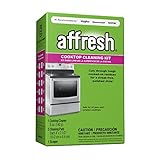
For a full refresh or a deep-clean session, I recommend investing in the Affresh Cooktop Cleaning Kit. It includes everything you need: a scraper, scrub pads, and their non-abrasive cleaner. If you’ve got burnt-on residue that’s driving you nuts, this kit is like a mini spa day for your stovetop.
DIY Glass Range Top Cleaner Recipes That Work

These two DIY methods are tried, true, and safe for your glass cooktop. And yes—they really do work. Use the first recipe for regular cleanups and the second when you need some extra muscle.
Option #1: For Everyday Shine
This one’s great for regular maintenance and light messes. It’s gentle, effective, and leaves your cooktop shiny without the risk of scratches.
What you’ll need:
- 1 part baking soda
- 1 part Blue Dawn dish soap
How to use it:
- Mix the baking soda and dish soap into a smooth, creamy paste.
- Apply the paste using a non-abrasive soft sponge. Work in gentle circles across the cooktop surface.
- Rinse with a wet towel to remove any residue.
- Follow up with a microfiber cloth to polish everything to a shine.
Why it works: The baking soda lifts grime without scratching, while the Dawn cuts through grease.
Option #2: For Tough Spots and Burned-On Gunk
When something boiled over and left behind a scorched mess, this fizzing combo does the heavy lifting.
What you’ll need:
- 1 cup water
- 1 cup white vinegar
- 10 drops lemon essential oil (optional)
- Baking soda
- Spray bottle
- Soft cloth or blue Scotch-Brite Non-Scratch sponge
How to use it:
- Combine the vinegar, water, and lemon essential oil in a spray bottle. Shake well.
- Once your cooktop has cooled completely, sprinkle baking soda directly onto the burned or greasy spots.
- Spray the vinegar mixture generously over the baking soda. Let the fizzy magic happen—it should bubble for about 30 seconds.
- Gently wipe with a soft cloth or blue non-scratch sponge, using the powdery texture to help lift the grime.
- Repeat as needed until the surface is spotless.
Why it works: The fizzy reaction helps break down stuck-on food, while the vinegar cuts grease and the lemon oil leaves a fresh scent behind.
How to Remove Burnt-On Messes and Stains
The natural oils and acids in food can leave behind light or dark discoloration on your glass or ceramic stovetop—and no, a quick wipe won’t cut it.
Wait for the cooktop to cool completely. Apply a cream-style glass or ceramic cooktop cleaner. Refer to the products mentioned above—Bar Keepers Friend or Affresh are both solid choices here.
Gently scrub using a soft, non-scratch cleaning pad. The Affresh Cooktop Cleaning Kit includes five reusable pads made specifically for this purpose. These are slightly abrasive but safe for glass—perfect for lifting discoloration without causing damage.
Rub in small circles, focusing on the stained area. Let the cleaner and pad do the work. Resist the urge to press too hard—you want to clean, not scratch.
Wipe away residue with a damp microfiber cloth or paper towel. Check your progress and repeat if needed. Some stains may take a couple of passes.
For extra-tough spots, let the cleaner sit on the stain for 5–10 minutes before scrubbing. The dwell time helps break down burnt-on residue.
Still seeing a shadow of that stain? You might want to bring in a razor scraper (like the Werxrite RetraGuard mentioned above)—just be sure to follow the safety directions closely.
How to Remove Scratches from a Glass Cooktop
Ideally, we’d never let our glass cooktops get scratched in the first place—but real life (and metal pans, dropped utensils, and the occasional over-zealous scrub) has other plans. If you’re dealing with visible scratches that bug you every time the light hits just right, it might be time to call in some reinforcements.

Meguiar’s Ultimate Compound
An automotive scratch remover (you won’t find anything better than Meguiar’s Ultimate Compound) is designed to remove scratches and leave a clear-coat, glasslike finish. Here’s how to do it safely and effectively:
Start with a clean, cool cooktop. You don’t want to trap any debris under the compound—that could make things worse. Apply a small amount of automotive scratch remover to a soft, clean cloth. Think: microfiber or an old cotton t-shirt. Avoid anything rough or textured.
Buff the scratch gently, using small circular motions. A light touch is key here. You’re not trying to sand it down—just smooth out the appearance. Let the compound dry, then wipe it off with a clean, dry cloth. You should notice an immediate improvement, especially with fine surface scratches.
Repeat as needed, but don’t overdo it. If the scratch is deep enough to catch your fingernail, you may not be able to remove it completely—but you can definitely minimize how noticeable it is.
This method works best on minor surface-level scratches. For deep gouges, it’s best to treat them as “character marks” or consider calling in a pro for a more advanced fix.

Final Words of Stove-Top Wisdom
Before you go full steam ahead with any product or cleaning method, test it in a small, inconspicuous spot first. Always. Every time.
Even the gentlest product can behave differently depending on the age and finish of your cooktop—and a quick test patch can save you a lot of regret later. Better safe than sorry, right?
Question: What’s the worst mess you’ve ever had to clean off your glass stove top—and did it come off? Let’s hear those kitchen battle stories in the comments below.
EverydayCheapskate™ is reader-supported. We participate in the Amazon Services LLC Associates Program and other affiliate advertising programs, designed to provide a means for us to earn from qualifying purchases, at no cost to you.

More from Everyday Cheapskate
 https://www.everydaycheapskate.com/wp-content/uploads/20261012-Woman-using-smartphone-while-checking-monthly-cellular-data-usage-on-laptop.png
800
1200
Mary Hunt
https://www.everydaycheapskate.com/wp-content/uploads/EC-Logo-by-Mary-Hunt-Tagline-Trimmed.png
Mary Hunt2026-10-12 10:51:112026-10-12 10:51:11Do You Really Need Unlimited Data? Check Before You Pay
https://www.everydaycheapskate.com/wp-content/uploads/20261012-Woman-using-smartphone-while-checking-monthly-cellular-data-usage-on-laptop.png
800
1200
Mary Hunt
https://www.everydaycheapskate.com/wp-content/uploads/EC-Logo-by-Mary-Hunt-Tagline-Trimmed.png
Mary Hunt2026-10-12 10:51:112026-10-12 10:51:11Do You Really Need Unlimited Data? Check Before You Pay https://www.everydaycheapskate.com/wp-content/uploads/20261011-Woman-Adjusting-Smart-Home-Device-on-the-Wall-how-to-lower-your-electric-bill.png
800
1200
Mary Hunt
https://www.everydaycheapskate.com/wp-content/uploads/EC-Logo-by-Mary-Hunt-Tagline-Trimmed.png
Mary Hunt2026-10-11 23:01:562026-10-11 23:01:56Stop Chasing Pennies on Your Electric Bill. Do This
https://www.everydaycheapskate.com/wp-content/uploads/20261011-Woman-Adjusting-Smart-Home-Device-on-the-Wall-how-to-lower-your-electric-bill.png
800
1200
Mary Hunt
https://www.everydaycheapskate.com/wp-content/uploads/EC-Logo-by-Mary-Hunt-Tagline-Trimmed.png
Mary Hunt2026-10-11 23:01:562026-10-11 23:01:56Stop Chasing Pennies on Your Electric Bill. Do This https://www.everydaycheapskate.com/wp-content/uploads/20261007-red-present-sitting-in-autumn-leaves-Amazon-Prime-Big-Deal-Days-gifts.png
800
1200
Mary Hunt
https://www.everydaycheapskate.com/wp-content/uploads/EC-Logo-by-Mary-Hunt-Tagline-Trimmed.png
Mary Hunt2026-10-06 23:09:432026-10-06 23:09:43Christmas Shopping in October? These Prime Day Gifts Make Sense
https://www.everydaycheapskate.com/wp-content/uploads/20261007-red-present-sitting-in-autumn-leaves-Amazon-Prime-Big-Deal-Days-gifts.png
800
1200
Mary Hunt
https://www.everydaycheapskate.com/wp-content/uploads/EC-Logo-by-Mary-Hunt-Tagline-Trimmed.png
Mary Hunt2026-10-06 23:09:432026-10-06 23:09:43Christmas Shopping in October? These Prime Day Gifts Make Sense https://www.everydaycheapskate.com/wp-content/uploads/20261006-prime-big-deal-days-have-landed.png
800
1200
Mary Hunt
https://www.everydaycheapskate.com/wp-content/uploads/EC-Logo-by-Mary-Hunt-Tagline-Trimmed.png
Mary Hunt2026-10-05 11:01:432026-10-07 09:02:53EC’s Top Picks from Amazon Prime Big Deal Days 2026
https://www.everydaycheapskate.com/wp-content/uploads/20261006-prime-big-deal-days-have-landed.png
800
1200
Mary Hunt
https://www.everydaycheapskate.com/wp-content/uploads/EC-Logo-by-Mary-Hunt-Tagline-Trimmed.png
Mary Hunt2026-10-05 11:01:432026-10-07 09:02:53EC’s Top Picks from Amazon Prime Big Deal Days 2026 https://www.everydaycheapskate.com/wp-content/uploads/20261004-reduce-healthcare-costs-with-three-habits-healthy-couple-walking-in-autumn-leaves.png
800
1200
Mary Hunt
https://www.everydaycheapskate.com/wp-content/uploads/EC-Logo-by-Mary-Hunt-Tagline-Trimmed.png
Mary Hunt2026-10-04 23:08:572026-10-04 23:09:47How to Reduce Healthcare Costs With 3 Free Daily Habits
https://www.everydaycheapskate.com/wp-content/uploads/20261004-reduce-healthcare-costs-with-three-habits-healthy-couple-walking-in-autumn-leaves.png
800
1200
Mary Hunt
https://www.everydaycheapskate.com/wp-content/uploads/EC-Logo-by-Mary-Hunt-Tagline-Trimmed.png
Mary Hunt2026-10-04 23:08:572026-10-04 23:09:47How to Reduce Healthcare Costs With 3 Free Daily Habits https://www.everydaycheapskate.com/wp-content/uploads/20241004-news-you-can-use-october-everyday-cheapskate-top-news-articles.png
800
1200
Mary Hunt
https://www.everydaycheapskate.com/wp-content/uploads/EC-Logo-by-Mary-Hunt-Tagline-Trimmed.png
Mary Hunt2026-10-04 01:04:052026-10-19 09:46:10News You Can Use • October 2026
https://www.everydaycheapskate.com/wp-content/uploads/20241004-news-you-can-use-october-everyday-cheapskate-top-news-articles.png
800
1200
Mary Hunt
https://www.everydaycheapskate.com/wp-content/uploads/EC-Logo-by-Mary-Hunt-Tagline-Trimmed.png
Mary Hunt2026-10-04 01:04:052026-10-19 09:46:10News You Can Use • October 2026 https://www.everydaycheapskate.com/wp-content/uploads/20261003-woman-hugging-elderly-mother-sandwich-generation-caring-for-aging-parents.png
800
1200
Mary Hunt
https://www.everydaycheapskate.com/wp-content/uploads/EC-Logo-by-Mary-Hunt-Tagline-Trimmed.png
Mary Hunt2026-10-03 10:47:222026-10-03 10:47:25Sandwiched Between Aging Parents and Adult Children
https://www.everydaycheapskate.com/wp-content/uploads/20261003-woman-hugging-elderly-mother-sandwich-generation-caring-for-aging-parents.png
800
1200
Mary Hunt
https://www.everydaycheapskate.com/wp-content/uploads/EC-Logo-by-Mary-Hunt-Tagline-Trimmed.png
Mary Hunt2026-10-03 10:47:222026-10-03 10:47:25Sandwiched Between Aging Parents and Adult Children https://www.everydaycheapskate.com/wp-content/uploads/20260927-impossible-lasagna-pie-recipe-with-wooden-serving-spoon-in-white-casserole-dish.png
800
1200
Mary Hunt
https://www.everydaycheapskate.com/wp-content/uploads/EC-Logo-by-Mary-Hunt-Tagline-Trimmed.png
Mary Hunt2026-09-28 09:38:592026-09-28 22:48:34Impossible Lasagna Pie: All the Flavor, None of the Noodles
https://www.everydaycheapskate.com/wp-content/uploads/20260927-impossible-lasagna-pie-recipe-with-wooden-serving-spoon-in-white-casserole-dish.png
800
1200
Mary Hunt
https://www.everydaycheapskate.com/wp-content/uploads/EC-Logo-by-Mary-Hunt-Tagline-Trimmed.png
Mary Hunt2026-09-28 09:38:592026-09-28 22:48:34Impossible Lasagna Pie: All the Flavor, None of the Noodles https://www.everydaycheapskate.com/wp-content/uploads/20260925-best-inexpensive-coffee-grinders-burr-manual-and-electric.png
800
1200
Mary Hunt
https://www.everydaycheapskate.com/wp-content/uploads/EC-Logo-by-Mary-Hunt-Tagline-Trimmed.png
Mary Hunt2026-09-25 11:06:342026-10-10 15:49:09The Best Coffee Grinder Upgrade That’s Actually Worth It
https://www.everydaycheapskate.com/wp-content/uploads/20260925-best-inexpensive-coffee-grinders-burr-manual-and-electric.png
800
1200
Mary Hunt
https://www.everydaycheapskate.com/wp-content/uploads/EC-Logo-by-Mary-Hunt-Tagline-Trimmed.png
Mary Hunt2026-09-25 11:06:342026-10-10 15:49:09The Best Coffee Grinder Upgrade That’s Actually Worth ItPlease keep your comments positive, encouraging, helpful, brief,
and on-topic in keeping with EC Commenting Guidelines
Last update on 2026-10-20 / Affiliate links / Images from Amazon Product Advertising API


Mary, I keep a spray bottle of undiluted white vinegar handy to clean my Formica counters & smooth-top stove, along with a mini-razor for stubborn spots. Been successfully doing so for 40 years.
Thank you for the tips. I’m doing fine usually, but sometimes I need more help.
I left a ceramic teapot on my cooktop, stove and forgot it was on. The teapot stuck to the glass top and I got most of it off. Is there anyway to get the leftover ceramic off of the glass top without cracking it? And is it OK to use that burner with other pots.? Of course I had to throw the teapot out and now I have a water boiler plug-in so it doesn’t happen again. Thank you.
my GE glass top is over 25 years old. i use the cast iron frying pan almost daily on, and in summer run several batches of canning in the blue enamel 8 qt. hot water bath canner.
Make a fairly thick slurry of baking soda & peroxide. Spread over the cook top,
leave several hours or overnight. Remove & enjoy your sparkling cooktop!
Only cleaner I have ever used on my white glass top stove is baking soda with a soft sponge or microfiber cloth. I have had my stove top for about 20 years now and it still looks like new. I use the light above my stove when cooking and I never turn it off until the stove top is clean and ready for the next meal.
Thanks for the tips. I moved into a house that has glass top stove, after using gas for years, it takes some getting used to. The tips will come in handy.
Want something heat proof to set on the counter beside my stove, to put hot pans, dishes on. Prefer something that I can leave there. Would love a nice piece of stainless steel about 18″ x 22″, but cannot find one. Wondered if a silicone mat would work? Have never used one. Any advice out there?
Using the flat side of a pot scraper and Barkeepers Friend will clean the stove top from spills and burnt on food. This will also work to clean burnt grease spots on stainless steel pots and pans.
What about a cover?
I’v seen some on Amazon.
I had a spill over while boiling potatoes I wiped up all the liquid around the pot. I continued cooking the potatoes. After the stove top cooled down, I cleaned it with Wieman Stove Top Cleaner unfortunately after I wiped it off there was a cloudy stain which I have not been able to remove. What do you suggest ? Thank you
I can’t advise you on whether this can be removed or if the cloudy appearance is permanent damage because I don’t have enough information. But I’m quite confident that if it can be removed and restored, Cerama Bryte Cooktop Cleaner (link in the post) will do the job. Hope that helps!
There are marks and stains and shadows can’t get off my glasstop, even with a razor. Is there anything I can do to resurrect my stove top glass?
The best thing I have found for stubborn stains on my glass top stove is dryer sheets like Bounce. Any dryer sheet will do though. I know it sounds crazy but this works and your stove will be shiny like it’s brand new. You take the dryer sheets and lay them on the stove to cover the glass top, pour a bit of water on top of the sheets. It can be warm water, just go away for 15 to 20 minutes and let it sit like that. When you come back just move the dryer sheets around, sop up the moisture from the stove and shine it with a dry cloth like a microfiber cloth. It will look like brand new. Please try it. This works wonders.
I have to wonder why anybody would think it’d be a good idea to stand on a cooktop. It’s quite disgusting whether it be a cooktop or countertop.
It happens more than you’d think. A young man I know just bought a new glass top stove and moved it into his new house that he just bought. He was putting things away in the cupboard above the stove and stepped right on the glass. You can’t imagine how much it cost to replace those glass.top!
Another trick for cleaning baked on mess on a glass top is to apply a liberal amount of your cooktop cleaning cream to the affected area and place a piece of cling film over the cream. The cling film will prevent the cream from drying out and hardening and will allow the cream to soften the burned on material. Leave the cling film on for about 10 minutes then remove and cleaning should be much easier.
Great tip, Dorothy!
I’ve been really happy with these cooktops for over a decade and actually find them very easy to keep up with. However, with my newest one, it always seems to have a greasiness to it that I can’t seem to clear away. Any suggestions?
Blue dawn. It’s the best degreaser! I keep a spray bottle of about 90% water, 10% Blue Dawn handy. I spray my glass induction cooktop, use a BLUE Scotchbrite sponge circular motion to scrub it down, leave it sit for a few minutes. Then wipe it clean with a microfiber cloth. No rinsing required. Sparkles like a diamond in bright sunshine 🙂
Hi Susan … The styles of smooth cooktops being manufactured differ in ways that may influence suitability for canning. It would be a very good idea to read Burning Issue: Canning on Smooth Cooktops from the National Center for Home Food Preservation before trying that, and also checking your owner manual to see what the manufacturer has to say.