

How to Create a Home Office on a Budget: Creative Tips Practical Ideas

Crafting a home office that ignites productivity and creativity without draining your bank account? Absolutely achievable, and I’m here to show you just how straightforward it can be. Let’s make your home office dreams a budget-friendly reality together.
So, let’s talk about the new normal: working from home. As aggressive as employers’ push for their employees to get back to the workplace has become, most experts say the five-day commute is dead. In fact, Forbes Advisor is now reporting that by 2025, 32.6 million Americans will work remotely from home—be that a house, apartment, RV, dorm room, or perhaps even a corner in Dad’s garage!
The best way to successful working from home is to create a workspace that is not only functional but also sparks inspiration in a way that makes you look forward to getting up and going to the office. But here’s the thing—it doesn’t have to drain your bank account to create this kind of home workspace. In this post, I’m dishing out simple tips and down-to-earth ideas to create a welcoming, functional home office on a budget.
Working Remotely
The concept of remote work isn’t novel. However, the surge in companies embracing hybrid or fully remote work setups brought on by the pandemic has greatly expanded opportunities for working remotely. For many, this means working from home. And that means creating a new workspace or upgrading a current home office for optimal productivity. Immediately, that brings up factors like comfort, privacy, noise control, and lighting. Get all of them right, and you’ve set yourself up for success. And don’t worry. This need not cost a fortune. It really is possible to create an inviting, comfortable home office on a budget.
By selecting the right location, equipment, and atmosphere, you can create an engaging home office environment conducive to peak performance—all on a budget.
You Have a Budget
The idea of working from home has no doubt immediately conjured up all the money you won’t be spending now that you’ll be staying home—gasoline, morning drive-thru coffee, lunches, parking fees, subway credits, and work clothes, to name a few. And for now stop thinking of that as a tax-free bonus you’ll be able to pocket once you’ve relocated to your home. That is the money you have to set up, furnish, and maintain your home office.
The good news is that most of the expenses will be one-time on the front end. Then, as you become established, chances are very good you will benefit financially from this new remote work arrangement.
Location
The location of your work-from-home office is of the utmost importance. You need a dedicated space—designated for and respected as your office—with typical utilities of heat, ventilation, a restroom nearby, adequate electrical outlets, and excellent lighting.
Maintaining focus on your work can be challenging in a chaotic environment. Even minor movements from family members or roommates can disrupt your concentration while working from home. If you share your living space with others, it’s crucial to set up your home office in an area with minimal distractions.
Of course, the ideal space is an entire spare room with a door and window that you set aside exclusively as your home office. However, when that is not possible, opt for the most secluded and quiet spot you can figure out within the living space where you can maintain a clear distinction between work and personal life.
Dedicated space
The first step in creating a dedicated space within a living area is to visually and physically separate your office from the rest of the room. You want your office space to be as distraction-free as humanely possible.
A couple of inexpensive free-standing room dividers can be appealing and very useful without breaking the bank or making permanent room modifications. You have many choices, which you will see when you check out this simple search for “room dividers.” Below would be my choice, given its classic appearance, generous size, affordable price, and excellent reviews.

Vertical Space
In homes where space is limited, overcrowding a room or corner with home office equipment and supplies can be less than ideal. Rather than spreading out horizontally, consider utilizing vertical space.
Maximize the vertical area in your designated workspace by selecting a desk with built-in shelves or adding wall-mounted shelves above or beside your desk. A pegboard can serve as a versatile storage solution for office supplies, unused equipment, and decorative items.
For additional storage, consider investing in a tall filing cabinet or vertical shelving units with bins or containers. These options can provide ample space for organizing sensitive documents, office essentials, and more.
Embrace your creativity and explore upward storage solutions to use your home office space effectively.


Natural light
Ideally, your workspace will have a window or two, giving access to natural light. Studies suggest that natural light, whether in the morning or evening, can alleviate depression and enhance energy levels, alertness, mood, and productivity.
Utilize natural light whenever you can and supplement it with a variety of other light sources, such as task, overhead, and accent lights. Bright/daylight white lighting, such as a converted closet, can adequately light a windowless space.
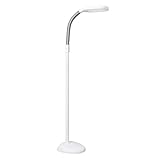
Full-spectrum LED light delivers better brilliance and truer color for reading and performing detailed tasks. Mimicking natural daylight, the floor lamp below is flicker-free and equipped with an Optix lens to control glare while helping to reduce eye strain and fatigue—an excellent choice for office work.
Furnishings
As you begin your search, consider what you already have that can be repurposed and given new life in your new home office. Ask around. Your friends and neighbors just might be looking to get rid of office furnishings like desks, chairs, shelving, etc. Local thrift and furniture consignment stores, Facebook Marketplace, and Craigslist are also good places to find bargains on desks and other home office furnishings.
Desk
Your home office desk should be large enough to accommodate a laptop or desktop computer, monitor, and your specific creature comforts, such as a lamp, auxiliary speaker, and so forth. If your office quarters are super challenged for size, you may want to consider a wall-mounted fold-down table. While this means you’ll need to clear and fold away your desk every day at quitting time, that’s not a bad habit to acquire!
A roll-around cart makes for a neat and handy method for small office organization—a place to store your desk top items. I use this one, and think of it as my “desk drawers.” It is very sturdy and stable.


Chair
Some wise person once said, “Never buy the cheapest version of anything that separates you from the ground: tires, shoes, beds, and chairs.” Thankfully, individuals working from home now have access to a range of practical chair choices that offer excellent support when creating a home office on a budget.
For a tight budget, check out this Computer Desk Chair, which typically costs around $50. The chair’s overall design is ergonomic, with a backrest and lumbar support designed to fit the natural curve of your lower back. It provides comfortable support, which helps you maintain a relaxed posture during long hours of work. This chair has great reviews and comes in three colors, including black.
Another option in the $200 range is this Ergonomic DFLIVE chair, which includes breathable mesh, adjustable lumbar support and seat depth, and retractable footrest—great features for those who want to customize their sitting experience. The beautiful chair can also be used as a rocker.
Reading the reviews, you’ll discover that people with back pain and those who sit down for extended periods of time rave about this desk chair’s excellent features. It certainly deserves your consideration if you’re in the market for a good desk chair.
No products found.
Document storage
It’s crucial to keep sensitive professional documents separate from personal paperwork to avoid errors, unintentional destruction of vital documents, or inadvertent disclosure of confidential information.
Establish a dedicated area for work-related documents, including receipts, customer files, invoices, and other essential records. Whether you opt for an accordion file or filing cabinet, maintaining this separation is equally critical in your home office as it would be in a traditional workplace.


- MORE: The $150 Starter Kitchen
Additional Essentials
Beyond your home office essentials, such as furniture and computer gear, consider these other items and services that can enhance your remote working experience.
High-Speed Internet
In remote work-from-home scenarios, high-speed internet isn’t just a convenience; it’s a fundamental requirement. Unreliable internet connections can significantly hamper productivity, affecting your ability to participate in virtual meetings, handle calls, transfer files, and fulfill your job duties promptly. If you are not available when your management needs you, you may not have this wonderful work-from-home opportunity for long.
Fortunately, most areas have access to at least one internet service provider (ISP) offering high-speed internet packages. Aim for a minimum speed of 50Mbps, considering even faster options if multiple household members use the internet concurrently.
Blue light glasses
Given that your work likely involves prolonged screen time on computers and mobile devices, consider incorporating blue light glasses or contact lenses into your routine. Exposure to blue light from screens can lead to headaches, eye strain, dry eyes, and potential long-term vision issues like cataracts and age-related macular degeneration (AMD). Blue light-filtering eyewear is specifically designed to reduce the amount of blue light entering your eyes from electronic devices.

Wifi Hotspot
If high-speed internet or Wifi access isn’t available in your home, you can still work remotely by utilizing your mobile device’s Wifi hotspot. Before relying on this option, it’s wise to check with your phone service provider regarding data caps, usage limitations, and potential upgrade options.
Headphones
Noise-canceling headphones can significantly enhance your ability to concentrate and minimize distractions while working from home. Investing in a quality pair of noise-canceling headphones can help improve focus and productivity in your home office environment.

Stationery
Standard office supplies such as paper, pens, scissors, paper clips, and stationery are essential for your remote work setup. Make sure your home office is equipped with these necessary items to make work easier—mirroring the convenience of a well-stocked office supply cabinet.
Get Started Creating an Inspiring Workspace
By selecting the right location, securing the right equipment, and creating the most enjoyable atmosphere, you really can create an engaging home office environment that encourages peak performance—all on a budget.
Remember, the key is to prioritize functionality, comfort, and inspiration while staying within your budget. With a little creativity and resourcefulness, you can transform any corner of your home into a productive and inviting workspace.
Question: Working from home presents unique challenges in maintaining motivation and productivity. How do you stay motivated and productive while working from home? Share your tips and tricks down below.
EverydayCheapskate™ is reader-supported. We participate in the Amazon Services LLC Associates Program and other affiliate advertising programs, designed to provide a means for us to earn from qualifying purchases, at no cost to you.

More from Everyday Cheapskate
 https://www.everydaycheapskate.com/wp-content/uploads/20261006-prime-big-deal-days-have-landed.png
800
1200
Mary Hunt
https://www.everydaycheapskate.com/wp-content/uploads/EC-Logo-by-Mary-Hunt-Tagline-Trimmed.png
Mary Hunt2026-10-05 11:01:432026-10-07 09:02:53EC’s Top Picks from Amazon Prime Big Deal Days 2026
https://www.everydaycheapskate.com/wp-content/uploads/20261006-prime-big-deal-days-have-landed.png
800
1200
Mary Hunt
https://www.everydaycheapskate.com/wp-content/uploads/EC-Logo-by-Mary-Hunt-Tagline-Trimmed.png
Mary Hunt2026-10-05 11:01:432026-10-07 09:02:53EC’s Top Picks from Amazon Prime Big Deal Days 2026 https://www.everydaycheapskate.com/wp-content/uploads/20261004-reduce-healthcare-costs-with-three-habits-healthy-couple-walking-in-autumn-leaves.png
800
1200
Mary Hunt
https://www.everydaycheapskate.com/wp-content/uploads/EC-Logo-by-Mary-Hunt-Tagline-Trimmed.png
Mary Hunt2026-10-04 23:08:572026-10-04 23:09:47How to Reduce Healthcare Costs With 3 Free Daily Habits
https://www.everydaycheapskate.com/wp-content/uploads/20261004-reduce-healthcare-costs-with-three-habits-healthy-couple-walking-in-autumn-leaves.png
800
1200
Mary Hunt
https://www.everydaycheapskate.com/wp-content/uploads/EC-Logo-by-Mary-Hunt-Tagline-Trimmed.png
Mary Hunt2026-10-04 23:08:572026-10-04 23:09:47How to Reduce Healthcare Costs With 3 Free Daily Habits https://www.everydaycheapskate.com/wp-content/uploads/20241004-news-you-can-use-october-everyday-cheapskate-top-news-articles.png
800
1200
Mary Hunt
https://www.everydaycheapskate.com/wp-content/uploads/EC-Logo-by-Mary-Hunt-Tagline-Trimmed.png
Mary Hunt2026-10-04 01:04:052026-10-11 14:34:17News You Can Use • October 2026
https://www.everydaycheapskate.com/wp-content/uploads/20241004-news-you-can-use-october-everyday-cheapskate-top-news-articles.png
800
1200
Mary Hunt
https://www.everydaycheapskate.com/wp-content/uploads/EC-Logo-by-Mary-Hunt-Tagline-Trimmed.png
Mary Hunt2026-10-04 01:04:052026-10-11 14:34:17News You Can Use • October 2026 https://www.everydaycheapskate.com/wp-content/uploads/20261003-woman-hugging-elderly-mother-sandwich-generation-caring-for-aging-parents.png
800
1200
Mary Hunt
https://www.everydaycheapskate.com/wp-content/uploads/EC-Logo-by-Mary-Hunt-Tagline-Trimmed.png
Mary Hunt2026-10-03 10:47:222026-10-03 10:47:25Sandwiched Between Aging Parents and Adult Children
https://www.everydaycheapskate.com/wp-content/uploads/20261003-woman-hugging-elderly-mother-sandwich-generation-caring-for-aging-parents.png
800
1200
Mary Hunt
https://www.everydaycheapskate.com/wp-content/uploads/EC-Logo-by-Mary-Hunt-Tagline-Trimmed.png
Mary Hunt2026-10-03 10:47:222026-10-03 10:47:25Sandwiched Between Aging Parents and Adult Children https://www.everydaycheapskate.com/wp-content/uploads/20260927-impossible-lasagna-pie-recipe-with-wooden-serving-spoon-in-white-casserole-dish.png
800
1200
Mary Hunt
https://www.everydaycheapskate.com/wp-content/uploads/EC-Logo-by-Mary-Hunt-Tagline-Trimmed.png
Mary Hunt2026-09-28 09:38:592026-09-28 22:48:34Impossible Lasagna Pie: All the Flavor, None of the Noodles
https://www.everydaycheapskate.com/wp-content/uploads/20260927-impossible-lasagna-pie-recipe-with-wooden-serving-spoon-in-white-casserole-dish.png
800
1200
Mary Hunt
https://www.everydaycheapskate.com/wp-content/uploads/EC-Logo-by-Mary-Hunt-Tagline-Trimmed.png
Mary Hunt2026-09-28 09:38:592026-09-28 22:48:34Impossible Lasagna Pie: All the Flavor, None of the Noodles https://www.everydaycheapskate.com/wp-content/uploads/20260925-best-inexpensive-coffee-grinders-burr-manual-and-electric.png
800
1200
Mary Hunt
https://www.everydaycheapskate.com/wp-content/uploads/EC-Logo-by-Mary-Hunt-Tagline-Trimmed.png
Mary Hunt2026-09-25 11:06:342026-10-10 15:49:09The Best Coffee Grinder Upgrade That’s Actually Worth It
https://www.everydaycheapskate.com/wp-content/uploads/20260925-best-inexpensive-coffee-grinders-burr-manual-and-electric.png
800
1200
Mary Hunt
https://www.everydaycheapskate.com/wp-content/uploads/EC-Logo-by-Mary-Hunt-Tagline-Trimmed.png
Mary Hunt2026-09-25 11:06:342026-10-10 15:49:09The Best Coffee Grinder Upgrade That’s Actually Worth It https://www.everydaycheapskate.com/wp-content/uploads/20260918-man-and-woman-signing-an-extended-warranty-in-a-car-dealership.png
800
1200
Mary Hunt
https://www.everydaycheapskate.com/wp-content/uploads/EC-Logo-by-Mary-Hunt-Tagline-Trimmed.png
Mary Hunt2026-09-18 15:23:432026-09-18 15:25:43Is an Extended Warranty Ever Worth It? The Truth for 2026
https://www.everydaycheapskate.com/wp-content/uploads/20260918-man-and-woman-signing-an-extended-warranty-in-a-car-dealership.png
800
1200
Mary Hunt
https://www.everydaycheapskate.com/wp-content/uploads/EC-Logo-by-Mary-Hunt-Tagline-Trimmed.png
Mary Hunt2026-09-18 15:23:432026-09-18 15:25:43Is an Extended Warranty Ever Worth It? The Truth for 2026 https://www.everydaycheapskate.com/wp-content/uploads/20260917-fall-cleaning-checklist.png
800
1200
Mary Hunt
https://www.everydaycheapskate.com/wp-content/uploads/EC-Logo-by-Mary-Hunt-Tagline-Trimmed.png
Mary Hunt2026-09-17 17:11:012026-09-28 22:48:45Fall Cleaning Checklist: 15 Overlooked Spots to Clean
https://www.everydaycheapskate.com/wp-content/uploads/20260917-fall-cleaning-checklist.png
800
1200
Mary Hunt
https://www.everydaycheapskate.com/wp-content/uploads/EC-Logo-by-Mary-Hunt-Tagline-Trimmed.png
Mary Hunt2026-09-17 17:11:012026-09-28 22:48:45Fall Cleaning Checklist: 15 Overlooked Spots to Clean https://www.everydaycheapskate.com/wp-content/uploads/20260913-how-to-winterize-your-home-snowy-driveway-suburban-home.png
800
1200
Mary Hunt
https://www.everydaycheapskate.com/wp-content/uploads/EC-Logo-by-Mary-Hunt-Tagline-Trimmed.png
Mary Hunt2026-09-13 15:32:142026-09-28 22:48:55The Complete Guide to Winterizing Your Home This Fall
https://www.everydaycheapskate.com/wp-content/uploads/20260913-how-to-winterize-your-home-snowy-driveway-suburban-home.png
800
1200
Mary Hunt
https://www.everydaycheapskate.com/wp-content/uploads/EC-Logo-by-Mary-Hunt-Tagline-Trimmed.png
Mary Hunt2026-09-13 15:32:142026-09-28 22:48:55The Complete Guide to Winterizing Your Home This FallPlease keep your comments positive, encouraging, helpful, brief,
and on-topic in keeping with EC Commenting Guidelines
Last update on 2026-10-11 / Affiliate links / Images from Amazon Product Advertising API


The advice on prioritizing essentials for a home office is spot on. Functionality and affordability are key, and these tips make both achievable.
You can find inexpensive office furniture from re-salers–They buy from businesses that are downsizing or going out of business. They are cheaper than furniture you buy at retail that you have to put together yourself.