
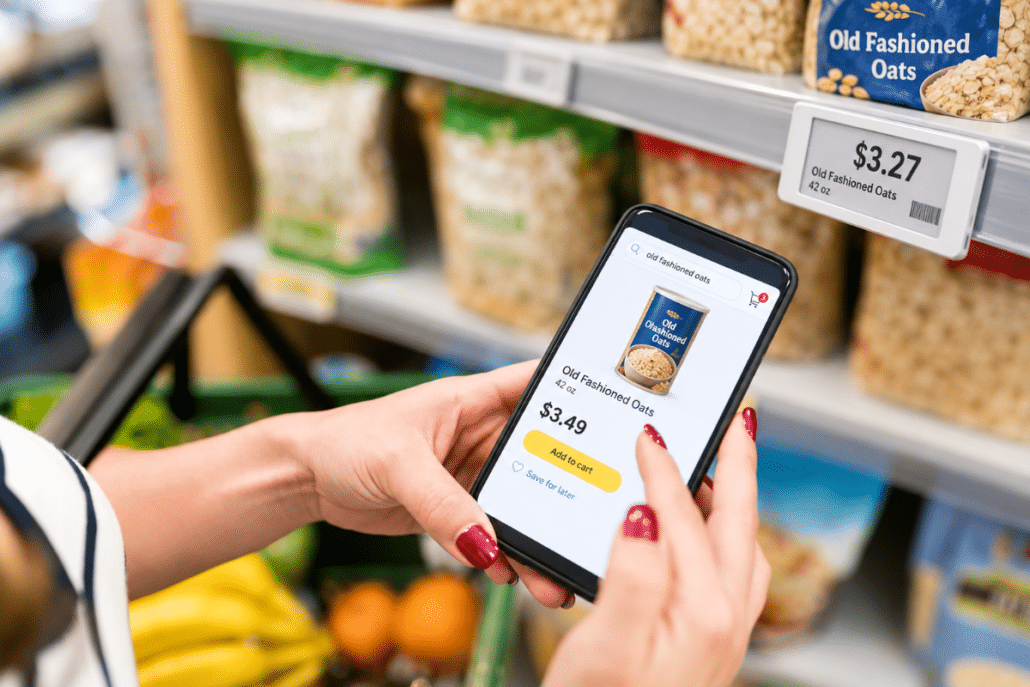
Could You Be Paying More Than the Next Shopper?

A price tag used to feel wonderfully straightforward. Not anymore. Between store apps, loyalty offers, digital shelf labels and prices that can change from one shopper or screen to another, knowing whether you’re getting a good deal takes a little more attention. Before holiday shopping kicks into high gear, here’s what personalized pricing really means and the simple habits that can keep you from paying more than necessary.
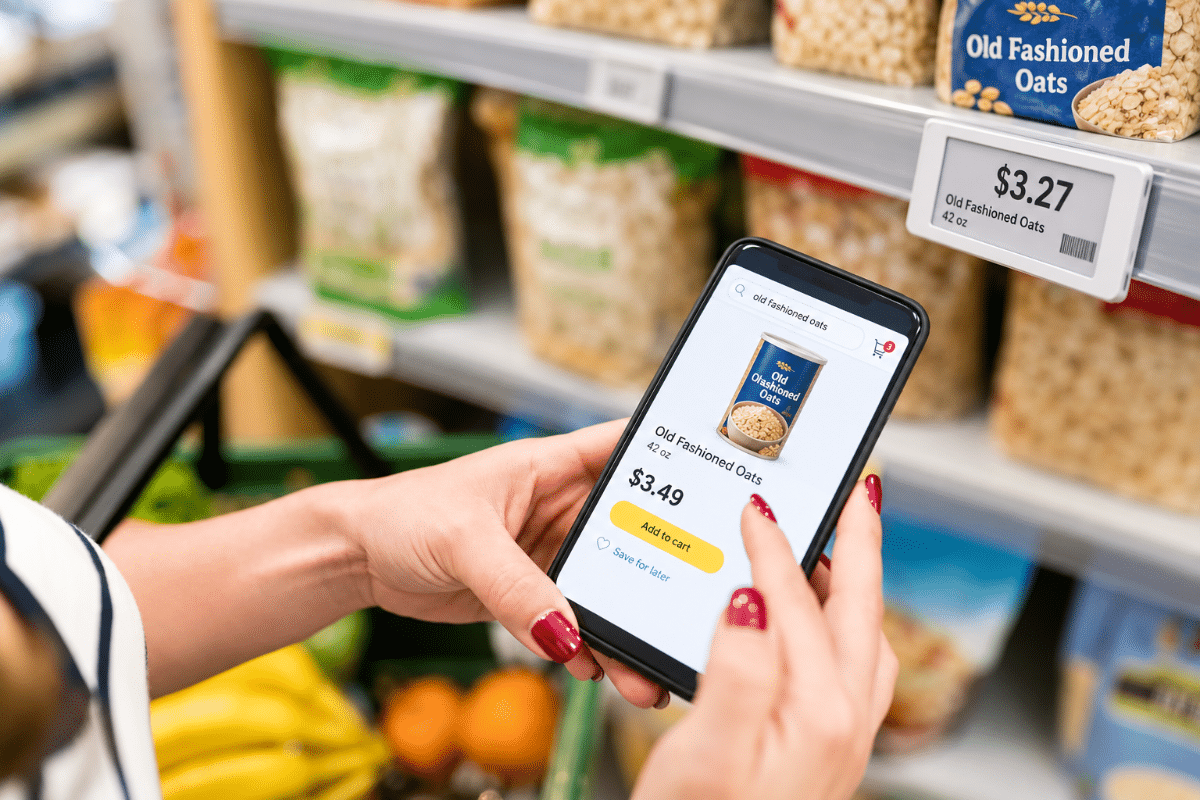
Remember when a price tag was just a price tag?
You picked up the box, looked at the little sticker on the shelf and decided whether $4.79 was reasonable or an insult to humanity. Simple.
Those days aren’t entirely gone. But shopping sure has gotten more complicated.
Stores are swapping paper shelf tags with digital ones. Online prices can change. Apps have their own offers. Loyalty programs unlock another set of prices. And retailers now have access to technology capable of analyzing enormous amounts of consumer data.
Which raises an uncomfortable question: Could you be paying more than someone else for the exact same thing?
The answer is complicated. Not exactly what you wanted to hear, I know. But once you understand what’s changing, protecting yourself turns out to be pretty simple.
First, that digital price tag isn’t spying on you
Let’s clear this up right away because some of the headlines have gotten a little breathless.
Those little electronic price displays appearing on store shelves are called digital shelf labels. Instead of an employee walking down the aisle replacing paper tags whenever a price changes, the store can update the electronic display remotely.
That’s it. At least, that’s what the technology itself does.
Walmart, which has been installing digital shelf labels in thousands of U.S. stores, says its labels don’t contain cameras or microphones, don’t collect information about customers and don’t decide what an item should cost. The company says prices are still set centrally and approved before being sent to the shelf labels.
There’s also some reassuring research here. A study that examined more than 180 million product-level observations at a large U.S. grocery retailer found no evidence that the introduction of electronic shelf labels led to supermarket surge pricing.
So if you walk into a store and spot a tiny digital screen where a paper price tag used to be, you do not need to clutch your purse and back slowly toward the exit.
The tag is a display. The real question is how prices are being determined before they ever reach that display.
Three kinds of pricing that are easy to mix up
There’s a lot of new terminology flying around, so let’s put it into plain English.
Digital pricing
A store uses an electronic label instead of paper. Nothing particularly sinister there.
Dynamic pricing
The price changes based on conditions such as supply, demand, inventory, location or time. You’ve lived with this for years. Airlines do it. Hotels do it. Ride-share apps and gas stations do it. Even a restaurant happy hour is a low-tech version. The Federal Trade Commission says dynamic pricing itself is legal as long as the pricing information isn’t deceptive.
Personalized pricing
Now we’re getting somewhere. Personalized pricing means the price or offer you receive can be influenced by information about you. That might include your location, shopping history, browsing behavior, demographics or other data that helps a company estimate what you’re likely to buy or how much you may be willing to pay.
Some folks call it surveillance pricing. And no, I didn’t make that up after a suspicious stroll through the cereal aisle. The FTC uses the term too.
An FTC study found that pricing technology companies can use remarkably detailed information, including location, browsing history, shopping behavior and even interactions on a webpage, to help businesses tailor prices, offers or the products consumers are shown. But that study was about what the technology can do. It doesn’t mean every retailer is quietly charging every shopper a different price.
That distinction matters. A lot.
So are stores really charging different people different prices?
Sometimes shoppers do see different prices or offers. That doesn’t mean an algorithm has sized you up and decided you can stand another $3 for laundry detergent.
There are plenty of ordinary explanations. One shopper may have a loyalty discount. Another may qualify for an app-only promotion. Prices can vary by region. A sale may apply online but not in the store. One person may have clipped a digital coupon that another person hasn’t. And sometimes the website and the shelf simply haven’t caught up with one another yet.
The danger is jumping from these prices are different to this store used my personal information to charge me more. Those are not the same thing.
That said, regulators aren’t imagining the technology. The FTC has proposed guidance warning that businesses could get into trouble for secretly using personal information to set individual prices where shoppers reasonably expect everyone to see the same one.
States are paying attention, too. Maryland’s new Protection From Predatory Pricing Act, which took effect October 1, 2026, restricts dynamic pricing and the use of consumer personal data to set prices by food retailers and certain delivery services. New Jersey has restricted individualized pricing for groceries and other necessities and temporarily halted new electronic shelf-label installations while the state studies the technology.
When regulators start writing rules about something, I figure it’s worth understanding.
Why this matters right now
Holiday sales. Early Black Friday sales. Black Friday. Cyber Monday. Friends-and-family discounts. App exclusives. Member prices. Limited-time offers. And whatever shopping event someone invents between now and Christmas because apparently Tuesday was still available.
Consumers are paying attention to price this year.
The National Retail Federation’s October 2026 holiday survey found that 56% of holiday shoppers say economic conditions will affect their spending. Of those, 43% plan to look for sales more often, 31% expect to comparison shop online more and 29% will use coupons more.
Good. Comparison shopping is about to matter even more. But the way we do it needs a tune-up.
7 shopping habits worth starting now
You don’t need fancy software or three monitors glowing in a dark room. You just need to quit treating the first price you see as the final word.
1. Compare the website, the app and the shelf
Before making a meaningful purchase, check the retailer’s website. Then check its app if you use it. And if you’re standing in the store, look at the shelf price too.
Don’t assume all three will always match. If the difference is significant, ask which price the store will honor.
For a $4 purchase, I wouldn’t spend 20 minutes doing this. For a $400 purchase? Absolutely.
2. Check whether you’re signed in
If a price feels off online, look at the item while signed out of your account. A private browsing window works too. The FTC itself has noted that consumers concerned about personalized pricing may choose private browsing or other steps that limit what information is available during a shopping session.
Will that always produce a different price? No. And if it does, it still doesn’t prove personalized pricing is responsible. Membership discounts, location, promotions and other factors can create perfectly legitimate differences.
We’re gathering information here, not building a conspiracy board with red string.
3. Compare the exact item
This sounds painfully obvious. It isn’t.
Manufacturers and retailers have gotten good at producing products that look nearly identical while differing just enough to ruin a price comparison. Check the model number, the size, the quantity and what’s included. A $279 appliance and a $249 appliance are not a $30 price difference if the less expensive one is a different model.
Same goes for groceries. An 18-ounce package is not cheaper than a 24-ounce package just because the number on the tag is smaller. Unit price is your friend. And for meat, poultry or anything with waste, cost per serving tells you even more than price per pound.
4. Screenshot a genuinely good price
Spot an unusually good online price on something you’re seriously considering? Take a screenshot. Add the date if your phone doesn’t do that automatically.
Prices and promotions can change, and having a record makes it much easier to ask a retailer about a discrepancy later. It also saves you from that maddening moment when you go back to buy and think, I know this was cheaper yesterday.
Maybe it was. Now you can prove it.
5. Watch the register
This habit predates AI, digital shelf labels and probably me. If an item rings up differently from the shelf price, say something. Mistakes happen.
That’s one advantage electronic shelf labels may actually offer: retailers say they can reduce the lag between an approved price change and the price displayed on the shelf. Walmart, for example, says one goal of its system is to help keep shelf and checkout prices consistent.
Still, your job remains the same. Watch the screen.
6. Know the normal price before the sale
This may be the most important habit of all.
A giant 40% OFF! sign tells you exactly one thing: there’s a sign. It doesn’t tell you whether today’s price is any good.
Groceries are the perfect example. Once you learn to read a grocery store sale cycle, you can tell a decent sale from the price worth waiting for.
Planning a big purchase? Watch the item before you need it. Jot the price in a note on your phone or, for my fellow paper people, on an actual piece of paper. Old-fashioned? Maybe. Effective? You bet.
The shopper who knows the vacuum normally runs $249 isn’t impressed by “$299 marked down to $259.”
7. Give big purchases a little time
Pricing technology gets smarter every year. Fortunately, one of the best defenses costs nothing and needs no technology at all: don’t be in a hurry.
That pause between wanting something and buying it is one of the simplest habits behind frugal living that actually works.
Retailers know urgency sells. Only 2 left. Sale ends tonight. 12 people have this in their carts. Maybe that’s useful information. Maybe it’s marketing. Either way, you’re allowed to close the browser.
For anything expensive enough to matter, compare prices and sleep on it unless you truly can’t. A cooling-off period has saved me from more “bargains” than I care to admit.
What I wouldn’t do
Now, could you spend the rest of your natural life clearing cookies, changing browsers, checking IP addresses and testing every package of toilet paper from four different devices? Sure.
Please don’t.
Frugality is supposed to make your life better. Saving 37 cents after an investigation worthy of a federal task force is not a win.
I wouldn’t obsess over tiny price differences. I wouldn’t assume every price difference is surveillance pricing. I wouldn’t drive 12 miles to save $2. And I wouldn’t download six new shopping apps unless one solves a problem I actually have.
Save the effort for where it pays: groceries you buy over and over, appliances, electronics, furniture, holiday gifts. Anything expensive enough that getting the price wrong would still bug you tomorrow.
The real advantage hasn’t changed
Technology is changing how stores show prices, how fast they can change them and what tools retailers have for deciding what you see. That’s worth paying attention to.
But I’m not ready to declare war on the digital price tag. Electronic labels may make prices more accurate and markdowns faster. And so far, the evidence we have does not show that the labels themselves automatically lead to supermarket surge pricing.
What has changed is that shoppers can no longer assume every price they encounter is universal, permanent or even available through every shopping channel. So our habits need to change a little too.
Compare. Check the details. Know what something normally costs. Watch the register.
And when enough money is on the line, don’t let a flashing sale price rush you into buying before you’ve answered the only question that really counts: Is this a good price for me, for something I actually need?
Turns out the smartest shopping technology is still the one between our ears.
Question: Have you ever spotted a different price online, in an app or at the store for the exact same item? Tell us in the comments below.

More from Everyday Cheapskate
 https://www.everydaycheapskate.com/wp-content/uploads/20261024-A-cup-of-coffee-notebook-and-pen-on-a-table.png
800
1200
Mary Hunt
https://www.everydaycheapskate.com/wp-content/uploads/EC-Logo-by-Mary-Hunt-Tagline-Trimmed.png
Mary Hunt2026-10-24 13:13:592026-10-24 13:13:59What Is Frugal Living? It’s Probably Not What You Think
 https://www.everydaycheapskate.com/wp-content/uploads/20261023-Paper-calendar-and-digital-calendar-on-a-smartphone-side-by-side.png
800
1200
Mary Hunt
https://www.everydaycheapskate.com/wp-content/uploads/EC-Logo-by-Mary-Hunt-Tagline-Trimmed.png
Mary Hunt2026-10-23 11:55:302026-10-23 11:55:30Paper or Digital Calendar? Turns Out, You May Need Both
 https://www.everydaycheapskate.com/wp-content/uploads/20261012-Woman-using-smartphone-while-checking-monthly-cellular-data-usage-on-laptop.png
800
1200
Mary Hunt
https://www.everydaycheapskate.com/wp-content/uploads/EC-Logo-by-Mary-Hunt-Tagline-Trimmed.png
Mary Hunt2026-10-12 10:51:112026-10-12 10:51:11Do You Really Need Unlimited Data? Check Before You Pay
 https://www.everydaycheapskate.com/wp-content/uploads/20261011-Woman-Adjusting-Smart-Home-Device-on-the-Wall-how-to-lower-your-electric-bill.png
800
1200
Mary Hunt
https://www.everydaycheapskate.com/wp-content/uploads/EC-Logo-by-Mary-Hunt-Tagline-Trimmed.png
Mary Hunt2026-10-11 23:01:562026-10-11 23:01:56Stop Chasing Pennies on Your Electric Bill. Do This
 https://www.everydaycheapskate.com/wp-content/uploads/20261004-reduce-healthcare-costs-with-three-habits-healthy-couple-walking-in-autumn-leaves.png
800
1200
Mary Hunt
https://www.everydaycheapskate.com/wp-content/uploads/EC-Logo-by-Mary-Hunt-Tagline-Trimmed.png
Mary Hunt2026-10-04 23:08:572026-10-04 23:09:47How to Reduce Healthcare Costs With 3 Free Daily Habits
 https://www.everydaycheapskate.com/wp-content/uploads/20261004-woman-dreaming-about-her-financial-and-life-goals.png
800
1200
Mary Hunt
https://www.everydaycheapskate.com/wp-content/uploads/EC-Logo-by-Mary-Hunt-Tagline-Trimmed.png
Mary Hunt2026-10-04 12:50:422026-10-04 12:50:42She Lived in a Basement for $100 a Month. Here’s Why.
 https://www.everydaycheapskate.com/wp-content/uploads/20260920-small-money-mistakes-woman-sitting-at-her-laptop-reviewing-bills.png
800
1200
Mary Hunt
https://www.everydaycheapskate.com/wp-content/uploads/EC-Logo-by-Mary-Hunt-Tagline-Trimmed.png
Mary Hunt2026-09-20 11:34:162026-09-28 22:48:40Small Money Mistakes: How to Fix Them Before They Grow
 https://www.everydaycheapskate.com/wp-content/uploads/20260918-man-and-woman-signing-an-extended-warranty-in-a-car-dealership.png
800
1200
Mary Hunt
https://www.everydaycheapskate.com/wp-content/uploads/EC-Logo-by-Mary-Hunt-Tagline-Trimmed.png
Mary Hunt2026-09-18 15:23:432026-09-18 15:25:43Is an Extended Warranty Ever Worth It? The Truth for 2026
 https://www.everydaycheapskate.com/wp-content/uploads/20260915-overspending-habits-man-opening-empty-wallet.png
800
1200
Mary Hunt
https://www.everydaycheapskate.com/wp-content/uploads/EC-Logo-by-Mary-Hunt-Tagline-Trimmed.png
Mary Hunt2026-09-15 20:24:412026-09-28 22:48:50How to Stop Overspending Habits for Good, Starting Today

Leave a Reply
Want to join the discussion?Feel free to contribute!