
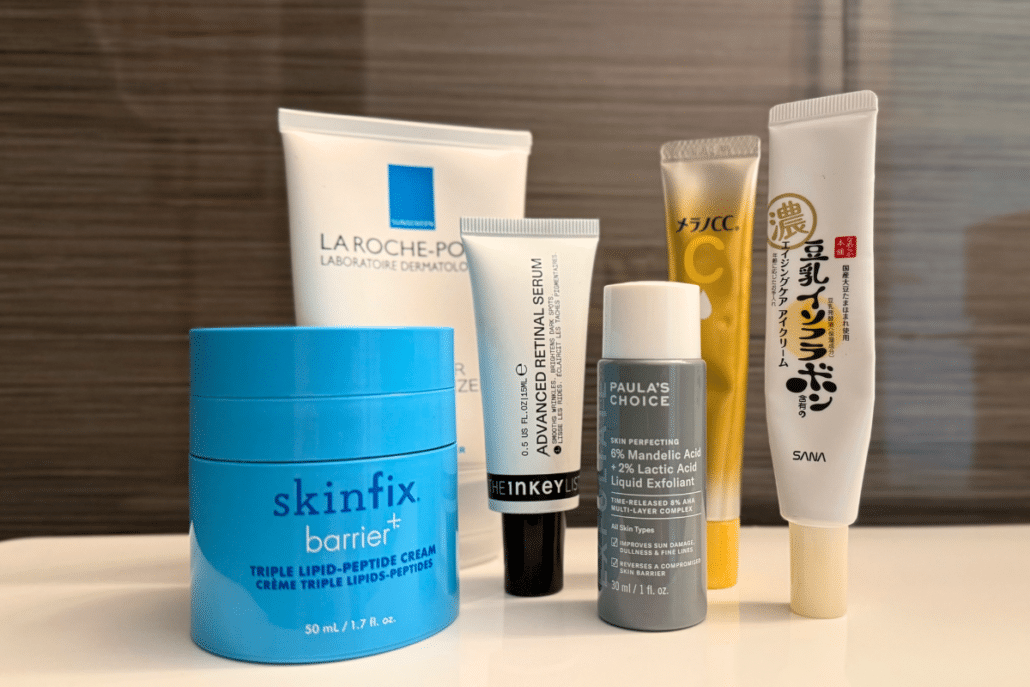
A Simple Anti-Aging Skincare Routine That Makes Sense

A simple anti-aging skincare routine doesn’t require a bathroom counter full of expensive bottles. After sorting through the claims, ingredients and actual evidence, I’ve settled on a routine that gives every product a job. Here’s what I use morning and night, where I think it’s worth spending a little more and, perhaps most important, what I’m perfectly happy to skip.
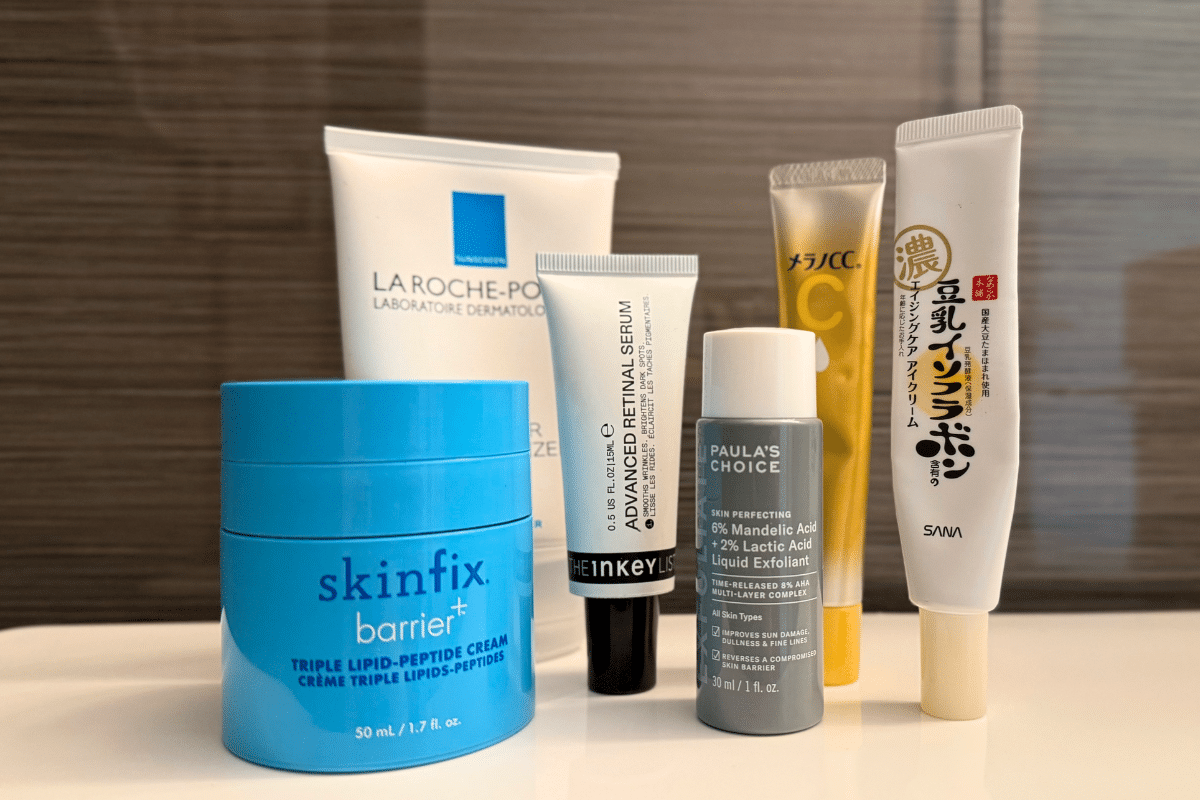
Have you looked at the skincare aisle lately? Apparently my face now requires its own procurement department.
Serums for wrinkles. Serums for spots. Creams for eyes. Creams for necks. Acids, peptides, essences, masks and tiny bottles that cost more per ounce than a very nice steak dinner.
I’m all for taking good care of my skin. What I’m considerably less enthusiastic about is paying for six products that are all auditioning for the same job.
So I started looking at skincare differently. Instead of asking, “What else should I add?” I wanted to know which products actually deserve a spot on my bathroom counter.
Turns out, you don’t need 12 steps. Whew!
A good anti-aging skincare routine can be built around a few basics with solid evidence behind them: sunscreen, moisturizer and, if your skin can tolerate it, a retinoid. Vitamin C can be a useful addition. So can an exfoliating acid.
Everything else? It has to earn its keep.
What does “anti-aging” really mean?
I use the term because that’s what we’re all searching for, but let’s be real. No cream is going to turn back the clock.
What good skincare can do is help protect your skin from more sun damage, keep it hydrated and help with fine lines, uneven pigmentation and rough texture.
And there’s one rather unglamorous product that deserves top billing.
Sunscreen.
The American Academy of Dermatology recommends starting an anti-aging routine with sunscreen and moisturizer, calling them two of the most effective anti-aging products you can buy.
There’s good clinical evidence behind that advice, too. In a randomized trial of 903 adults, those assigned to daily sunscreen use showed 24% less skin aging over 4½ years than those who used sunscreen whenever they felt like it.
Not nearly as exciting as a $175 serum in a tiny gold bottle, I know. But there it is.
My simple morning skincare routine
My morning routine has one big job, which is protecting my skin from the sun. Antioxidants and moisture come along for the ride.
Step 1: Cleanse gently
Cleanser isn’t where I’d spend the big bucks. Its job is simple: wash away oil, sweat and whatever else accumulated overnight without leaving your skin tight, dry or stripped.
I use La Roche-Posay Toleriane Hydrating Gentle Facial Cleanser with Niacinamide. It’s about $20, which isn’t the cheapest on the shelf, but the bottle is big and a little goes a long way. It’s creamy, fragrance-free and gentle, and my skin feels clean and comfortable afterward, not like I scrubbed it with dish detergent.
Already have a gentle cleanser your skin likes? Keep it. This is not an invitation to replace something that’s working.
If you’re looking for less expensive options, I’ve also rounded up some of my favorite drugstore skincare products.

Step 2: Vitamin C
Vitamin C is one of those ingredients that has acquired almost mythical status in the beauty world, so I went looking for what the research actually says.
Topical vitamin C, especially L-ascorbic acid, has evidence behind it for helping with sun damage and uneven pigmentation. It also gives your skin some antioxidant protection against everyday environmental stressors.
What I’m using is Melano CC Intensive Spot Prevention Premium Beauty Essence from Rohto Pharmaceutical. My daughter-in-law brought it home from Japan and got me hooked. Good news: you don’t need a plane ticket to replace the tube. It’s sold here, including on Amazon.
I love how easy it is. The formula has ascorbic acid plus three vitamin C derivatives, and Rohto says four or five drops once a day does it. That little tube lasts a surprisingly long time, which makes the price even easier to like.
I apply it in the morning after cleansing and before moisturizer and sunscreen. Vitamin C doesn’t replace sunscreen, but the two make a good team. Vitamin C adds antioxidant support while sunscreen does the far more important job of protecting your skin from UV damage.
One caution. Rohto has warned about counterfeit Melano CC products sold online. If you buy on Amazon, check the seller and look for a product sold and shipped by Amazon.

Step 3: Eye cream, if you want one
Do you actually need a separate eye cream? Probably not. There. I may have just saved you some money.
A good moisturizer can often give the eye area all the hydration it needs. I refuse to call eye cream essential just because cosmetic companies gave that half-inch of skin its own product category.
That said, I really like Hoshisu Sana Nameraka Honpo Soy Milk Eye Plump Cream. It’s a lightweight, fragrance-free moisturizer made for the eye area, with fermented soy ingredients, vitamin E derivatives and other moisturizing ingredients. It feels nice around my eyes, the price is reasonable and it’s easy to find online. So I use it.
Would I tell you that your anti-aging routine will collapse without it? Absolutely not. If you enjoy a separate eye moisturizer, this is one I can recommend from personal experience. If your regular moisturizer works beautifully around your eyes, keep your money.

Step 4: Moisturizer plus sunscreen
This is where I like making one product do two jobs.
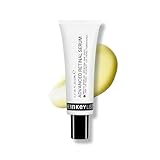
La Roche-Posay Toleriane Double Repair Facial Moisturizer with SPF 30 combines moisturizer with broad-spectrum SPF 30 protection in one step. It also contains ceramide, niacinamide and glycerin, and it’s fragrance-free.
For ordinary days, I love the simplicity.
But there’s an important exception. If I’ll be outside for a long stretch, sweating, swimming or otherwise giving the sun a sporting chance at me, I switch to a dedicated broad-spectrum, water-resistant SPF 30 or higher and reapply as directed. That’s in line with American Academy of Dermatology recommendations, too.
And don’t stop at your jawline. Sunscreen belongs on exposed neck and upper chest, too. More on that in a minute.
My simple nighttime skincare routine
Nighttime is where the routine gets a little more interesting, but I’m still not piling on six active ingredients and hoping they all get along. Most nights land in one of three categories: retinal night, exfoliation night or recovery night. That’s it.
Retinal night: the treatment step
Retinoids have earned their reputation. They’re vitamin A derivatives used for fine lines, uneven pigmentation and skin texture. The AAD notes that retinoids can improve skin tone and fine lines, though they can also cause irritation and aren’t right for everyone.
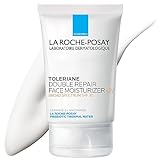
I’m using The INKEY List Advanced 0.2% Retinal Serum. Retinal, also called retinaldehyde, belongs to the retinoid family. Clinical research on retinaldehyde formulations has found improvements in signs of photoaged skin.
But here’s where enthusiasm can get expensive and uncomfortable. More is not better.
The INKEY List itself positions this serum for experienced retinoid users. If you’re new to retinoids, don’t start with the strongest thing you can find. And nightly use is not a skincare merit badge. The brand suggests two or three nights a week to begin with, and I’d listen.
Increase only as your skin tolerates it. Dryness, peeling, burning and persistent redness don’t mean your skincare is “working harder.” They mean back off.
On a retinal night, my routine looks like this:
Cleanse → retinal → moisturizer.
Retinoids generally should be avoided during pregnancy; if you’re pregnant, trying to become pregnant, breastfeeding, have a skin condition or aren’t sure whether a retinoid is appropriate for you, check with your physician or dermatologist.
The moisturizer I splurge on
My nighttime moisturizer is Skinfix Triple Lipid-Peptide Cream. This is one of the pricier products in my routine, so it gets extra scrutiny. At the time I’m writing this, the regular 1.7-ounce size is $54 directly from Skinfix.
Fifty-four dollars for face cream. Not exactly bargain-bin territory. I still buy it.
Why? I like it, my skin likes it, and I want my skin well moisturized while I’m using retinal. The formula contains ceramides, sterols, fatty acids and humectants including glycerin and hyaluronic acid.
This is where being a cheapskate and being cheap part company. I don’t believe the goal is to always buy the least expensive thing on the shelf. The goal is to know why you’re spending the money.
Skinfix is worth the splurge to me. Is it required? Nope.
A good fragrance-free moisturizer appropriate for your skin type can do the basic job for less. If your budget has room for only one splurge, I wouldn’t sacrifice sunscreen to afford fancy moisturizer.

Exfoliation night: useful, but optional
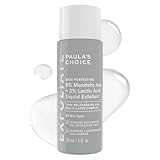
About once a week, I may swap retinal for Paula’s Choice Mandelic + Lactic Acid Exfoliant. Mandelic and lactic acids are alpha hydroxy acids, or AHAs. They loosen up the surface of the skin and can help with roughness and uneven texture.
But this is firmly in my nice-to-have category. You don’t need an exfoliating acid simply because the skincare internet told you Tuesday is Acid Night. And there’s a reason I’m cautious with it.
The FDA warns that AHAs can make your skin more sensitive to UV rays and raise your risk of sunburn while you’re using them and for up to a week afterward. Sunscreen matters even more.
I never combine my AHA exfoliant with retinal on the same night. Exfoliation night looks like this:
Cleanse → AHA exfoliant → moisturizer.
If my skin feels dry or irritated, I skip it.
Recovery night: do less
Yes, “nothing” is allowed. Some nights I wash my face, put on moisturizer and call it done.
Cleanse → moisturizer.
This is particularly helpful when introducing an active ingredient or anytime my skin feels dry, tight or irritated.
Your neck is not your face
We’ve all heard the advice: “Whatever you put on your face, take it all the way down your neck and chest.” Not so fast.
Sunscreen on exposed neck and upper chest? Yes. Moisturizer? Generally, yes, provided your skin tolerates it. Retinoids and exfoliating acids call for more caution.
The skin on the neck has fewer oil glands and can be more prone to dryness and irritation. Cleveland Clinic dermatologist Dr. Shilpi Khetarpal recommends using a lower-strength retinoid on the neck and introducing it gradually.
So I don’t assume that because my face tolerates an active ingredient, my neck automatically will.
So what does the whole routine look like?
Still with me? Good. Here’s the whole routine at a glance.
MORNING
- Cleanse gently
- Melano CC Vitamin C Essence
- Sana Eye Plump Cream (optional)
- La Roche-Posay Toleriane Double Repair SPF 30
RETINAL NIGHT
- Cleanse
- The INKEY List Advanced Retinal
- Skinfix Triple Lipid-Peptide Cream
EXFOLIATION NIGHT
- Cleanse
- Paula’s Choice Mandelic + Lactic Acid Exfoliant
- Skinfix Triple Lipid-Peptide Cream
RECOVERY NIGHT
- Cleanse
- Skinfix Triple Lipid-Peptide Cream
I wouldn’t introduce every one of these products on Monday and expect your skin to send a thank-you note by Friday. Add one new active at a time. See how your skin responds. Give it time.
What I’m not buying
Here’s where this routine gets pleasantly short. I don’t believe you automatically need:
- toner
- facial mist
- a separate neck cream
- multiple retinoids
- three different exfoliating acids
- an expensive cleanser
- sheet masks
- a 10-step routine
- another serum because someone on the internet has exceptionally good lighting
Some of those products can be perfectly lovely. You may even have one you adore. That’s different from needing it.
The AAD specifically cautions that piling on multiple anti-aging products in a short time can irritate your skin. Its advice is to start with sunscreen and moisturizer, then go after the one skin concern that bugs you most.
Where I’d spend first
If you’re starting from scratch and don’t want to buy this entire routine, don’t. Start here:
- Sunscreen. Broad-spectrum SPF 30 or higher, every day.
- Moisturizer. One that suits your skin, used consistently.
- A retinoid, if it’s right for you. Go slow and give your skin time to adjust.
Then add vitamin C if pigmentation, brightness or antioxidant support matters to you. An AHA exfoliant comes later, and only if your skin actually needs it. Eye cream? Entirely optional.
And if retinal isn’t for you, I’ve also reviewed Cetaphil’s retinol-free Healthy Renew anti-aging line.
The best skincare routine is the one you’ll keep using
Skincare companies are very good at making you feel like whatever you’re doing isn’t quite enough. There’s always one more serum. One more ingredient. One more problem you hadn’t noticed until someone kindly pointed it out.
I’m trying to go the other direction. Protect my skin from the sun. Keep it moisturized. Use a well-chosen retinoid carefully. Add a couple of products that have a specific job and that I genuinely like.
Then stop shopping. A routine only works if you keep doing it, so mine fits my skin, fits my budget and is simple enough that I’ll still be at it six months from now. Yours can be, too.
And if a product can’t tell me exactly what job it’s doing? It doesn’t get bathroom-counter real estate.
Question: What’s one skincare product that’s earned a permanent spot on your bathroom counter? Tell us in the comments below.
EverydayCheapskate™ is reader-supported. We participate in the Amazon Services LLC Associates Program and other affiliate advertising programs, designed to provide a means for us to earn from qualifying purchases, at no cost to you.

More from Everyday Cheapskate
 https://www.everydaycheapskate.com/wp-content/uploads/20261024-A-cup-of-coffee-notebook-and-pen-on-a-table.png
800
1200
Mary Hunt
https://www.everydaycheapskate.com/wp-content/uploads/EC-Logo-by-Mary-Hunt-Tagline-Trimmed.png
Mary Hunt2026-10-24 13:13:592026-10-24 13:13:59What Is Frugal Living? It’s Probably Not What You Think
 https://www.everydaycheapskate.com/wp-content/uploads/20261023-Paper-calendar-and-digital-calendar-on-a-smartphone-side-by-side.png
800
1200
Mary Hunt
https://www.everydaycheapskate.com/wp-content/uploads/EC-Logo-by-Mary-Hunt-Tagline-Trimmed.png
Mary Hunt2026-10-23 11:55:302026-10-23 11:55:30Paper or Digital Calendar? Turns Out, You May Need Both
 https://www.everydaycheapskate.com/wp-content/uploads/20261017-Woman-opening-refrigerator-stocked-with-fresh-food-and-condiments.png
800
1200
Mary Hunt
https://www.everydaycheapskate.com/wp-content/uploads/EC-Logo-by-Mary-Hunt-Tagline-Trimmed.png
Mary Hunt2026-10-17 12:16:242026-10-17 12:16:24What Temperature Should a Refrigerator and Freezer Be?
 https://www.everydaycheapskate.com/wp-content/uploads/20261012-Woman-using-smartphone-while-checking-monthly-cellular-data-usage-on-laptop.png
800
1200
Mary Hunt
https://www.everydaycheapskate.com/wp-content/uploads/EC-Logo-by-Mary-Hunt-Tagline-Trimmed.png
Mary Hunt2026-10-12 10:51:112026-10-12 10:51:11Do You Really Need Unlimited Data? Check Before You Pay
 https://www.everydaycheapskate.com/wp-content/uploads/20261011-Woman-Adjusting-Smart-Home-Device-on-the-Wall-how-to-lower-your-electric-bill.png
800
1200
Mary Hunt
https://www.everydaycheapskate.com/wp-content/uploads/EC-Logo-by-Mary-Hunt-Tagline-Trimmed.png
Mary Hunt2026-10-11 23:01:562026-10-11 23:01:56Stop Chasing Pennies on Your Electric Bill. Do This
 https://www.everydaycheapskate.com/wp-content/uploads/20261007-red-present-sitting-in-autumn-leaves-Amazon-Prime-Big-Deal-Days-gifts.png
800
1200
Mary Hunt
https://www.everydaycheapskate.com/wp-content/uploads/EC-Logo-by-Mary-Hunt-Tagline-Trimmed.png
Mary Hunt2026-10-06 23:09:432026-10-06 23:09:43Christmas Shopping in October? These Prime Day Gifts Make Sense
 https://www.everydaycheapskate.com/wp-content/uploads/20261006-prime-big-deal-days-have-landed.png
800
1200
Mary Hunt
https://www.everydaycheapskate.com/wp-content/uploads/EC-Logo-by-Mary-Hunt-Tagline-Trimmed.png
Mary Hunt2026-10-05 11:01:432026-10-07 09:02:53EC’s Top Picks from Amazon Prime Big Deal Days 2026
 https://www.everydaycheapskate.com/wp-content/uploads/20261004-reduce-healthcare-costs-with-three-habits-healthy-couple-walking-in-autumn-leaves.png
800
1200
Mary Hunt
https://www.everydaycheapskate.com/wp-content/uploads/EC-Logo-by-Mary-Hunt-Tagline-Trimmed.png
Mary Hunt2026-10-04 23:08:572026-10-04 23:09:47How to Reduce Healthcare Costs With 3 Free Daily Habits
 https://www.everydaycheapskate.com/wp-content/uploads/20241004-news-you-can-use-october-everyday-cheapskate-top-news-articles.png
800
1200
Mary Hunt
https://www.everydaycheapskate.com/wp-content/uploads/EC-Logo-by-Mary-Hunt-Tagline-Trimmed.png
Mary Hunt2026-10-04 01:04:052026-10-23 09:46:06News You Can Use • October 2026
Please keep your comments positive, encouraging, helpful, brief,
and on-topic in keeping with EC Commenting Guidelines
Last update on 2026-10-26 / Affiliate links / Images from Amazon Product Advertising API

Leave a Reply
Want to join the discussion?Feel free to contribute!