

Emergency Preparedness 101: 7 Steps for Disaster Readiness (Don’t Forget Your Go Bag!)


It’s not a matter of if a disaster will strike, but when. But don’t worry! You’ve got this. In just a few simple steps, you can create a solid disaster readiness plan that keeps your family safe. From water storage to building a go-bag, this guide will walk you through seven essential tips to ensure you’re ready for whatever comes your way. Don’t wait until it’s too late—start preparing today.

The idea of emergency preparedness is great in theory, but having an idea is not good enough. Every person—every family—needs a plan in the event of a disaster that could disrupt the ordinary course of life. But where to start? That’s where most of us get stuck for lack of useful, specific direction. These quick tips will get you unstuck and on your way to becoming disaster-ready. Let’s dive into why emergency preparedness should be a priority.
Emergency Preparedness: Why It Matters More Than Ever
In today’s world, we are more interconnected than ever, yet that very connectivity makes us vulnerable to unexpected disasters. Whether it’s a natural disaster like a hurricane or flood, or man-made disruptions like cyberattacks or power outages, the consequences can be severe. Emergency preparedness is about protecting what matters most: your family, your home, and your community.
- Rising Threats: Climate change is contributing to more extreme weather events, and the frequency of disasters has increased significantly. From wildfires on the West Coast to hurricanes in the Southeast, no region is truly safe from the potential for a large-scale emergency. Being unprepared for these events can leave you scrambling when disaster strikes.
- Long-Term Impacts: Disasters can disrupt your life for days, weeks, or even months. Many people focus only on the immediate aftermath, but true preparedness considers long-term impacts as well—like water shortages, power outages, or food supply disruptions. Thinking ahead gives you the advantage of having the tools and resources needed to weather these crises.
- Financial and Emotional Costs: Beyond the physical dangers, disasters can have significant financial and emotional costs. Losing your home, possessions, or access to basic needs like clean water and electricity can be overwhelming. Having a preparedness plan not only protects you physically but also reduces the stress and emotional toll of a disaster. Simply knowing you’re prepared can bring peace of mind.
Being prepared is not just about surviving; it’s about maintaining your quality of life when the unexpected happens. Now, let’s dive into the actionable steps to help you prepare and ensure your family’s safety.
1. Water Storage: Your First Step in Disaster Readiness
You don’t have to live in hurricane territory or near a busy freight train route to start preparing for an emergency. Disasters can happen anywhere, and one of the first essentials that could be in short supply is water. Ensuring you have enough water stored for your family is one of the simplest and most critical steps you can take toward disaster readiness.
Quick Start Tip: Emergency Water Supply
Experts recommend storing at least three days’ worth of emergency water for each person in your household. A simple way to calculate this:
- A case of 24 (16.7 oz) bottles of water = 3 gallons
Purchase one case per person to meet the minimum three-day requirement during a disaster that disrupts your water supply. - Better option: A case of 40 (16.7 oz) bottles = 5 gallons per person, offering an extra cushion of safety.
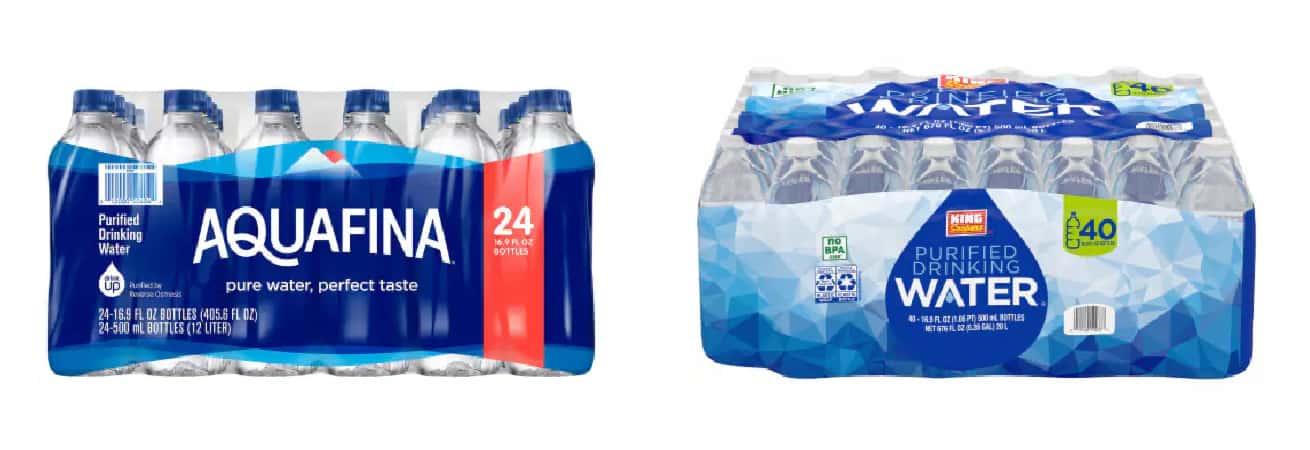
For extended water shortages, such as after hurricanes, power outages, or natural disasters that last longer than a few days, you’ll need additional water for non-drinking purposes like flushing toilets and basic hygiene. One practical solution is to use 30 to 45-gallon trash cans lined with heavy-duty contractor-grade plastic bags (available at home improvement stores). Fill the lined cans with water, secure with tight-fitting lids, and you’ll have an emergency backup for essential household needs.
Don’t Forget: If a disaster causes a long-term power outage, your water utility may stop pumping if they don’t have a backup generator. This could mean no water for weeks—so preparing ahead is vital to keeping your home running smoothly.
2. Plan Your Family’s Emergency Communication Strategy
When disaster strikes, staying connected with your family is crucial. One of the simplest and most effective ways to ensure this is by designating a “disaster point person”—someone outside your immediate area, ideally in another state, who can serve as the central contact for your family. Make sure their phone number and contact information are saved in every family member’s phone. In the event you get separated, everyone will know to call this point person to check in and report their location and safety.
Pro Tip: Don’t just save the number in your phone; make sure it’s written down somewhere accessible in case phones die or technology fails during the crisis.
For added protection, establish a family passcode. This is a simple code word that each family member knows. If someone contacts you claiming to be a loved one, asking them for the passcode ensures you’re talking to the right person and not someone attempting a scam or impersonation. A simple question like, “What’s the code?” can offer an extra layer of security during uncertain times.
3. Safeguarding Important Documents Before Disaster Strikes
When it comes to emergency preparedness, securing your family’s essential documents is key. Think ahead and ensure you’re ready if disaster hits by digitizing all of your critical paperwork. This includes birth certificates, passports, Social Security cards, insurance policies, property deeds, car titles, immunization records, pet medical histories, school transcripts, business licenses, education degrees, and tax returns.
Rather than burning files onto DVDs (a bit outdated for 2024), consider using encrypted USB drives or cloud storage for extra convenience and security. Services like Google Drive, Dropbox, or Microsoft OneDrive allow you to access these documents from anywhere, as long as you have an internet connection. Just be sure to enable two-factor authentication (2FA) to keep your information secure.
Once you’ve backed up these documents digitally, store one encrypted USB drive at home in a fireproof safe, and give a second copy to a trusted relative or your designated point person in another state. This way, you have multiple options to retrieve your critical records no matter what happens.
Pro Tip: Take photos of physical documents on your smartphone as an additional backup, and make sure those images are uploaded to your cloud storage. In case your phone is lost or damaged, the cloud has your back.
4. Why Emergency Cash is Essential for Disaster Readiness
When preparing for disasters, having some of your emergency fund in cash is vital. While digital payments and credit cards are convenient, they rely on electricity and working networks, which can quickly become unavailable in the aftermath of a disaster.
Aim to set aside at least $1,000 in small denominations—think $20s, $10s, and $5s. Store this cash in a secure location, such as a fireproof home safe, or another protected space that only you and one other trusted person know about.
During a disaster, banks and ATMs may be out of service, especially if power and internet connections are disrupted. Having cash on hand ensures you can buy necessities like food, water, fuel, or supplies when electronic payment systems are down.
Pro Tip: Avoid storing all your cash in one place. Instead, divide it between a few secure locations around your home or on your person to avoid losing it all in case of theft or fire.
5. How to Build a Go Bag: Your 72-Hour Survival Kit
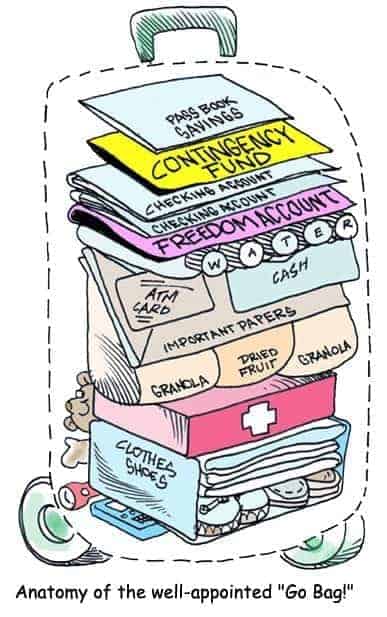
Every household needs a Go Bag—a 72-hour survival kit packed with essential items to keep you and your family safe and self-sufficient in case disaster strikes and you’re forced to evacuate. Whether it’s a wildfire, flood, or power outage, having this bag ready ensures you can leave at a moment’s notice without scrambling for supplies.
Your Go Bag should be stored in an easy-to-carry container, like a sturdy backpack or suitcase on wheels, and kept in a readily accessible spot. Each family member should also have their own backpack with enough basic supplies to last 72 hours.
Pro Tip: Keep a solar-powered phone charger or power bank with charging cables and adapters in your Go Bag. This way, you’ll always be prepared to charge your devices when traditional power sources are down.
Make sure your Go Bag also includes a comprehensive first-aid kit. If you or a family member takes prescription medication, speak to your doctor about obtaining an emergency supply for the bag. Regularly rotate your meds to ensure they don’t expire.
Go Bag Checklist
Here’s a quick checklist to help you pack a fully equipped 72-hour Go Bag:
- Water Solutions: Portable water filters or purification tablets
- Food: Non-perishable food (protein bars, dried fruits, canned goods with a manual opener)
- Clothing: Extra clothing, sturdy shoes, rain gear, hats, and gloves
- First-Aid Kit: Include bandages, antiseptic, pain relievers, and any prescription medications
- Solar Power Bank: Fully charged with charging cables and adapters
- Personal Documents: Copies of IDs, insurance policies, and important medical info
- Multi-tool: Swiss Army knife or multi-tool for various emergency tasks
- Flashlight & Extra Batteries: Or a solar/hand-crank flashlight
- Emergency Whistle: To signal for help
- Cash: Small bills for emergencies when digital payments won’t work
- Emergency Blanket: Compact and weather-resistant
- Personal Hygiene Items: Wet wipes, hand sanitizer, toothpaste, and toothbrush
- Face Masks & Hand Sanitizer: For protection in crowded or smoky conditions
- Duct Tape & Plastic Sheeting: For temporary shelter or sealing windows/doors; or compact survival tent
- Local Maps: Paper maps in case GPS or cell service is down
Having a well-packed Go Bag gives you peace of mind, knowing you’re prepared to face an emergency head-on.







6. Don’t Get Caught Empty: Keep Your Fuel Tank Full and Your EV Charged in Emergencies
One of the simplest ways to prepare for an emergency is by keeping your car’s fuel tank more full than empty—or, for electric vehicle (EV) owners, ensuring your battery is fully charged. It might not seem like a big deal in everyday life, but when disaster strikes and you need to evacuate, you won’t be the only one hitting the road. Gas stations could quickly run dry or close entirely, leaving gas-powered vehicles stuck in line, while EV charging stations may also be overwhelmed or out of service.
For true emergency preparedness, make it a rule that your vehicle’s fuel gauge never dips below half-full if you drive a gas-powered vehicle. For electric vehicle owners, aim to keep your battery charge above 75%. This proactive approach gives you the freedom to leave town at a moment’s notice without the added stress of finding fuel or a charging station in a pinch. Plus, it provides peace of mind, knowing you’re always ready for the unexpected.
Pro Tip: If you have an EV, consider investing in a home charging station and a portable charger to keep your vehicle powered up. Also, familiarize yourself with local charging stations so you can plan your routes accordingly in case of emergencies.
7. Ready Your Trunk: Essential Emergency Gear for Your Car
Being disaster-ready extends beyond just having a plan; it also means preparing your vehicle for unexpected situations. Start by storing a sweatsuit, sneakers, and old socks in your car’s trunk next to the spare tire. If you ever find yourself with a flat, you can easily throw on the sweats to protect your good clothes. And if your car breaks down, the sneakers will make walking to the nearest service station much more comfortable. Being prepared means you can change that tire without worrying about getting dirty.
In addition to your clothing prep, ensure your trunk is equipped with these essential emergency items:
- First Aid Kit: Always be prepared for minor injuries.
- Blanket: A warm blanket can make all the difference in cold weather.
- Portable Solar Power Bank: Keep a charged solar power bank along with cables and adapters for your phone(s) to stay connected when it matters most.
- Unscented Pillar Candle and Lighter: A lit candle can help keep your car’s interior warm enough to survive in emergencies; just make sure to crack a window or door slightly for ventilation.
- Energy Bars: Non-perishable snacks can provide a quick energy boost when you need it.
- Bottles of Water: Stay hydrated, especially if you’re stranded for an extended period.
- Gloves: Keep a pair handy for changing tires or handling other tasks in potentially hazardous conditions.
By keeping your trunk stocked with these items, you’ll enhance your emergency preparedness and ensure that you’re ready for whatever comes your way while on the road.


Additional Resources
For even more valuable information and fantastic resources on emergency preparedness, be sure to visit Ready.gov. By taking these steps toward disaster readiness, you’re not just preparing for survival; you’re maintaining your quality of life when the unexpected happens.
Stock Up Smart: Emergency Food That Lasts
If you’re looking to take your emergency preparedness to the next level, check out our guide on 31 Non-Perishable Foods to Stockpile Now and Where to Store Them. It’s packed with easy, affordable ideas for building a solid emergency food supply using items you can find right at your local grocery store. For a more hassle-free option, consider the emergency survival food kits from My Patriot Supply, which offer up to 25 years of shelf life. Whether you’re starting small or planning for long-term preparedness, these kits make it simple and stress-free to be ready for anything.
Not a very good Scrabble approach, but an excellent philosophy for life!
Question: What’s one item you’d never leave out of your Go Bag? Share your must-have disaster readiness supplies with us.
EverydayCheapskate™ is reader-supported. We participate in the Amazon Services LLC Associates Program and other affiliate advertising programs, designed to provide a means for us to earn from qualifying purchases, at no cost to you.

More from Everyday Cheapskate
 https://www.everydaycheapskate.com/wp-content/uploads/20261004-reduce-healthcare-costs-with-three-habits-healthy-couple-walking-in-autumn-leaves.png
800
1200
Mary Hunt
https://www.everydaycheapskate.com/wp-content/uploads/EC-Logo-by-Mary-Hunt-Tagline-Trimmed.png
Mary Hunt2026-10-04 23:08:572026-10-04 23:09:47How to Reduce Healthcare Costs With 3 Free Daily Habits
https://www.everydaycheapskate.com/wp-content/uploads/20261004-reduce-healthcare-costs-with-three-habits-healthy-couple-walking-in-autumn-leaves.png
800
1200
Mary Hunt
https://www.everydaycheapskate.com/wp-content/uploads/EC-Logo-by-Mary-Hunt-Tagline-Trimmed.png
Mary Hunt2026-10-04 23:08:572026-10-04 23:09:47How to Reduce Healthcare Costs With 3 Free Daily Habits https://www.everydaycheapskate.com/wp-content/uploads/20241004-news-you-can-use-october-everyday-cheapskate-top-news-articles.png
800
1200
Mary Hunt
https://www.everydaycheapskate.com/wp-content/uploads/EC-Logo-by-Mary-Hunt-Tagline-Trimmed.png
Mary Hunt2026-10-04 01:04:052026-10-04 22:10:11News You Can Use • October 2026
https://www.everydaycheapskate.com/wp-content/uploads/20241004-news-you-can-use-october-everyday-cheapskate-top-news-articles.png
800
1200
Mary Hunt
https://www.everydaycheapskate.com/wp-content/uploads/EC-Logo-by-Mary-Hunt-Tagline-Trimmed.png
Mary Hunt2026-10-04 01:04:052026-10-04 22:10:11News You Can Use • October 2026 https://www.everydaycheapskate.com/wp-content/uploads/20261003-woman-hugging-elderly-mother-sandwich-generation-caring-for-aging-parents.png
800
1200
Mary Hunt
https://www.everydaycheapskate.com/wp-content/uploads/EC-Logo-by-Mary-Hunt-Tagline-Trimmed.png
Mary Hunt2026-10-03 10:47:222026-10-03 10:47:25Sandwiched Between Aging Parents and Adult Children
https://www.everydaycheapskate.com/wp-content/uploads/20261003-woman-hugging-elderly-mother-sandwich-generation-caring-for-aging-parents.png
800
1200
Mary Hunt
https://www.everydaycheapskate.com/wp-content/uploads/EC-Logo-by-Mary-Hunt-Tagline-Trimmed.png
Mary Hunt2026-10-03 10:47:222026-10-03 10:47:25Sandwiched Between Aging Parents and Adult Children https://www.everydaycheapskate.com/wp-content/uploads/20260927-impossible-lasagna-pie-recipe-with-wooden-serving-spoon-in-white-casserole-dish.png
800
1200
Mary Hunt
https://www.everydaycheapskate.com/wp-content/uploads/EC-Logo-by-Mary-Hunt-Tagline-Trimmed.png
Mary Hunt2026-09-28 09:38:592026-09-28 22:48:34Impossible Lasagna Pie: All the Flavor, None of the Noodles
https://www.everydaycheapskate.com/wp-content/uploads/20260927-impossible-lasagna-pie-recipe-with-wooden-serving-spoon-in-white-casserole-dish.png
800
1200
Mary Hunt
https://www.everydaycheapskate.com/wp-content/uploads/EC-Logo-by-Mary-Hunt-Tagline-Trimmed.png
Mary Hunt2026-09-28 09:38:592026-09-28 22:48:34Impossible Lasagna Pie: All the Flavor, None of the Noodles https://www.everydaycheapskate.com/wp-content/uploads/20260926-pov-from-an-aisle-seat-on-an-airplane.png
800
1200
Mary Hunt
https://www.everydaycheapskate.com/wp-content/uploads/EC-Logo-by-Mary-Hunt-Tagline-Trimmed.png
Mary Hunt2026-09-27 19:14:552026-09-27 19:16:27Confessions of a Woman Who Preflights Her Own Escape
https://www.everydaycheapskate.com/wp-content/uploads/20260926-pov-from-an-aisle-seat-on-an-airplane.png
800
1200
Mary Hunt
https://www.everydaycheapskate.com/wp-content/uploads/EC-Logo-by-Mary-Hunt-Tagline-Trimmed.png
Mary Hunt2026-09-27 19:14:552026-09-27 19:16:27Confessions of a Woman Who Preflights Her Own Escape https://www.everydaycheapskate.com/wp-content/uploads/20260925-best-inexpensive-coffee-grinders-burr-manual-and-electric.png
800
1200
Mary Hunt
https://www.everydaycheapskate.com/wp-content/uploads/EC-Logo-by-Mary-Hunt-Tagline-Trimmed.png
Mary Hunt2026-09-25 11:06:342026-09-28 22:48:36The Coffee Grinder Upgrade That’s Actually Worth It
https://www.everydaycheapskate.com/wp-content/uploads/20260925-best-inexpensive-coffee-grinders-burr-manual-and-electric.png
800
1200
Mary Hunt
https://www.everydaycheapskate.com/wp-content/uploads/EC-Logo-by-Mary-Hunt-Tagline-Trimmed.png
Mary Hunt2026-09-25 11:06:342026-09-28 22:48:36The Coffee Grinder Upgrade That’s Actually Worth It https://www.everydaycheapskate.com/wp-content/uploads/20260918-man-and-woman-signing-an-extended-warranty-in-a-car-dealership.png
800
1200
Mary Hunt
https://www.everydaycheapskate.com/wp-content/uploads/EC-Logo-by-Mary-Hunt-Tagline-Trimmed.png
Mary Hunt2026-09-18 15:23:432026-09-18 15:25:43Is an Extended Warranty Ever Worth It? The Truth for 2026
https://www.everydaycheapskate.com/wp-content/uploads/20260918-man-and-woman-signing-an-extended-warranty-in-a-car-dealership.png
800
1200
Mary Hunt
https://www.everydaycheapskate.com/wp-content/uploads/EC-Logo-by-Mary-Hunt-Tagline-Trimmed.png
Mary Hunt2026-09-18 15:23:432026-09-18 15:25:43Is an Extended Warranty Ever Worth It? The Truth for 2026 https://www.everydaycheapskate.com/wp-content/uploads/20260917-fall-cleaning-checklist.png
800
1200
Mary Hunt
https://www.everydaycheapskate.com/wp-content/uploads/EC-Logo-by-Mary-Hunt-Tagline-Trimmed.png
Mary Hunt2026-09-17 17:11:012026-09-28 22:48:45Fall Cleaning Checklist: 15 Overlooked Spots to Clean
https://www.everydaycheapskate.com/wp-content/uploads/20260917-fall-cleaning-checklist.png
800
1200
Mary Hunt
https://www.everydaycheapskate.com/wp-content/uploads/EC-Logo-by-Mary-Hunt-Tagline-Trimmed.png
Mary Hunt2026-09-17 17:11:012026-09-28 22:48:45Fall Cleaning Checklist: 15 Overlooked Spots to Clean https://www.everydaycheapskate.com/wp-content/uploads/20260913-how-to-winterize-your-home-snowy-driveway-suburban-home.png
800
1200
Mary Hunt
https://www.everydaycheapskate.com/wp-content/uploads/EC-Logo-by-Mary-Hunt-Tagline-Trimmed.png
Mary Hunt2026-09-13 15:32:142026-09-28 22:48:55The Complete Guide to Winterizing Your Home This Fall
https://www.everydaycheapskate.com/wp-content/uploads/20260913-how-to-winterize-your-home-snowy-driveway-suburban-home.png
800
1200
Mary Hunt
https://www.everydaycheapskate.com/wp-content/uploads/EC-Logo-by-Mary-Hunt-Tagline-Trimmed.png
Mary Hunt2026-09-13 15:32:142026-09-28 22:48:55The Complete Guide to Winterizing Your Home This FallPlease keep your comments positive, encouraging, helpful, brief,
and on-topic in keeping with EC Commenting Guidelines
Last update on 2026-10-06 / Affiliate links / Images from Amazon Product Advertising API


A great container for extra water needed for toilets is a rain barrel. I have 2 which would provide up to 100 gallons of water. I use these all the time for my garden but would be a resource instantly available for emergencies. It doesn’t take much rain to keep them full either.
Is there a way to print out your list?
How to Use the EC Print Function
All great points here. As those who’ve lived through earthquakes, hurricanes, tornadoes and the pandemic know, being prepared should become a part of daily life. And it doesn’t need to cost a lot of money. I’m a retired US Coast Guard Rescue Swimmer and being prepared: Always Ready is our motto. Over the years I’ve taught my household and other relations and friends, even those seniors in my life to add an extra can or two of whatever they normally buy to their cupboards for emergencies. Cans of fish, meats, vegetables, fruit, whatever you normally eat can go a long way toward having something to eat when a disaster hits your area and the power is out. For those in apartments, there is always a bit of space in the back of your clothes closet, under the bed, under the sink for a few cans of extra food. Be creative. I’ve shown elderly friends and family members in studio apartments space they can make for water and food cans. It doesn’t have to be a big space either. One spry lady of 81 we know keeps a shoe box with flashlight, batteries, a candle, lighter, matches, and a few cans of tuna and corn under her sofa bed next to a case of water. There was just enough space. Look for the space or combine things. One elderly man we know who also lives in a studio apt. took a couple of cases of water and a case of sardines and stacked them on top of each other, covered it with a towel and put it next to his bed as a night stand. Whatever works for you, do it. the time to get prepared is now. And don’t forget about prepping for your pets, too. Stay safe. Semper Paratus!
I would add personal items like a toothbrush and toothpaste as well as deodorant to your go bag. Possibly even sample size hair products and a small comb or hairbrush.
I’m retired(because I can’t work anymore) and I’m living at poverty level. I can’t afford to buy all the things recommended here. I have my papers but that’s it. Now what?
Acquire one item at a time as you are able. Everyone has some discretionary income. It’s a matter of setting priorities then a willingness to sacrifice in one are to have the funds to appropriate in another.
totally agree………..
Good luck finding a car, now, with a spare tire! We will have to order a car to get it with the spare and compartment to stow it, and then it’s only good for 50 miles because isn’t isn’t a full size tire.
For apartment dwellers, gallon water jugs work well for toilets, we reuse distilled water jugs because we have lots of them although not all have screw tops . There are a lot of canned foods that can be eaten without heating and don’t need water added, but you’ll need a manual can opener, which Mary has mentioned several times.
Get yourself a tire/wheel part for a spare. I have a car mechanic that watches over me really well. Because I commute 30 miles (most of it in a rural isolated area), he got me a real, full sized tire for a spare. He went to a junkyard and got a hub that fits my car. Since I was replacing my tires anyway, he used the best one that was being replaced, but which still would be good for many miles, on that wheel. He put it in the trunk; it took up more space than the “donut” spare tire that came with the car. But, unlike the “donut”, it could be driven quite a few miles at regular speed until I found help.
With the craziness going on in the world, this is so timely and helpful. One thing I’d suggest is to wrap a solar charger and a phone or tablet in several layers of aluminum foil before you put them in your bugout bag. If there is an EMP or solar flare that knocks out the electricity, then anything with computer/electronic parts could be disabled. I’ve read that several layers of aluminum foil will protect an electronic device from the EMP and give a person a way to communicate. Most of us wouldn’t be able to “bug out” in that situation though because modern cars have computers and electronics. It is something worth learning more about.
Wow Mary! I’ve been trying to be prepared and thought I was doing a lot better than I evidently am. Thank you thank you thank you! I’m on it.
Love the saving water in trash cans idea
Agreed! The best item to have in an emergency (or any other time).
I’m a former FEMA instructor trainer. Very good checklist. Technology is allowing us to replace some bulk. Instead of DVD’s many people are downloading important papers onto a thumb drive. I have copies of all my passwords, bank accounts, brokerages, passports, life and property insurance, drivers license, military DD214 all digitally stored on an encrypted thumb drive. My kids know where it is stored, if something were to happen to us, it is stored with a financial plan that I update at least yearly, sometimes twice if there are significant changes.
I’d recommend having a paperwhite Kindle or e-reader (charge lasts for weeks) with some survival books and entertainment on it. Also, spare chargers for any electronics you are taking. You can get a solar rechargable battery back up that will charge your cell phone, tablet, or e-reader half a dozen times for $20 or less. I personally have about 15 small battery back ups I can throw in a backpack, a means to charge them (solar panel) and one large battery back up that will power my computers and home phone for a day or two.
Like one of the people commenting, the Berkey filter system is great for water. I have one in my personal disaster kit along with a couple of life straw water filters.
For the lady in the apartment, it is a tough nut to crack, but here is some advice: Get some inflatable solar lamps/lantterns. They are inexpensive and safer than candles. Luminaid, MPowerd, Lucid are some of the brands. Readily available on Amazon, not expensive (even cheaper on sale occasionally). They really will light up a room for hours.
Also, don’t forget many homes still have bathtubs and spare shower stalls. If you have a little warning, you can use trash bags (I’d recommend 3 mil if you can find them, or just double bag) and fill a reasonable amount. Remember your floor is probably only stressed to handle 300-400# in a small area so that is 50 gallons or so. However, if you’ve got garage space, you can store water there. I have several large mylar bags set up to fill should I need them…one would weigh as much as a large car/SUV if full (1000 gal), so it would only go on a concrete garage floor on ground level.
Also you can store food in bulk fairly inexpensively…pasta is cheap, as is rice. I personally have freeze dried meat put away. It is expensive, but I know I’m set should a prolonged disaster happen. For those with canning skills, you can pressure can various meats and store them for 2-3 years. Lots of books available on how to do that.
I would also add, prepare your children if you work any distance from home. When we lived in SoCal and my children were young, we explained to them that if there was a big earthquake they may not see us for several days and they should stay with their teacher unless someone on the pick-up list or someone with the “secret word” arrived to pick them up. And that doesn’t mean something bad has happened to us because lots of roads and bridges could damaged and might not be passable.
Don’t forget to have at least a few days worth of doses of your prescription and over-the-counter daily medications. Make sure your prescriptions are up to date and have a refill available in case you’ve had to leave your home and have to get a refill at a different pharmacy. Also, pet owners should have a stash of pet food and their pet’s medications.
All good points. Everyone’s needs will be slightly different of course and those needs can change with time. Get your basics covered and move on from there.
When we bought gallon jugs of water I refilled them with tap water to store. I also fill empty bleach and vinegar bottle with water. Since I buy a lot of vinegar that comes 2 gallon jugs in a box, I out the bottles f water back in those boxes and they can be stacked. I can use that for flushing or drinking. I have a well, so every time the power goes out their is no tap water as the pump is electric.
Thank you for broaching this subject, Mary. It is a very important timely topic. I just started to change out my water jugs in the basement, replacing the water that is about a year old. I wash used gallon milk jugs out very well with soap and water and peroxide. Once they are totally clean I refill them with my fresh tap water and a couple of drops of peroxide the keep the water fresh. I have about 50 milk and water jugs that I am getting ready to go. I have taken plastic kitty litter large containers to put my toilet flushing water in. I also have Life Straws, Seychelle water containers and a Sawyer Water filter that can filter quite a bit of water. We had to learn from being in a hurricane area but blizzard prone areas can be quite challenging as well.
A plastic tablecloth is nice to have in trunk in case you need to change a tire in wet weather.
A good source of water when the electricity is off is the water heater. You need a hose to hook to bottom of water heater.
If you decide to draw water from the drain on your electric water heater make sure you turn the breakers off first. If you draw the water down below the elements and the power comes back on, you’ll likely be replacing your elements.
Water is heavy, and if you must bug out it can be very hard to carry enough to get you to your next destination. That’s why, in addition to bottled water, everyone in the family should also carry a personal water filter such as LifeStraw.
I invested in a Berkey water filter, is safe to collect water from streams, river or lake, is portable stainless steel and made in USA
Thanks Mary, I have been reading about preparing for disaster and am putting together a go-bag and extra pantry items, etc. My problem is I live in an apartment in the Seattle area. There are 50 apartments all electric and no generator. I have mentioned to my Manager more than once about storing water, etc in case of an emergency (we have underground parking and space) she just shrugs it off. For myself I have a fondue pot with sterno for heating water or soup. Any advice for us apt dwellers? We do not have any individual storage space. I’m 84 and everyone here is 62+. Thank you. Shirley
Great question! Count me in on it: I’m 67 and live in a New York City apartment.
Shirley, I’m not an apartment dweller, so I don’t have any experience to offer. But if you have 50 apartments & everyone is over 62, you’re all facing the same concerns AND you have a wealth of experience to draw on. I’d suggest getting a group of residents together to discuss & brainstorm, as well as how to get ALL of your residents involved. Your building manager may be able to shrug off one person’s concerns; not so easy to dismiss a building full of concerned people. Think about contacting a local newspaper, TV station, senior group to highlight your issue. See if other apartment residents have similar problems- maybe have even found answers.
What a great idea! I’m always excited about action rather than complaints. Great advice for many issues!!!