
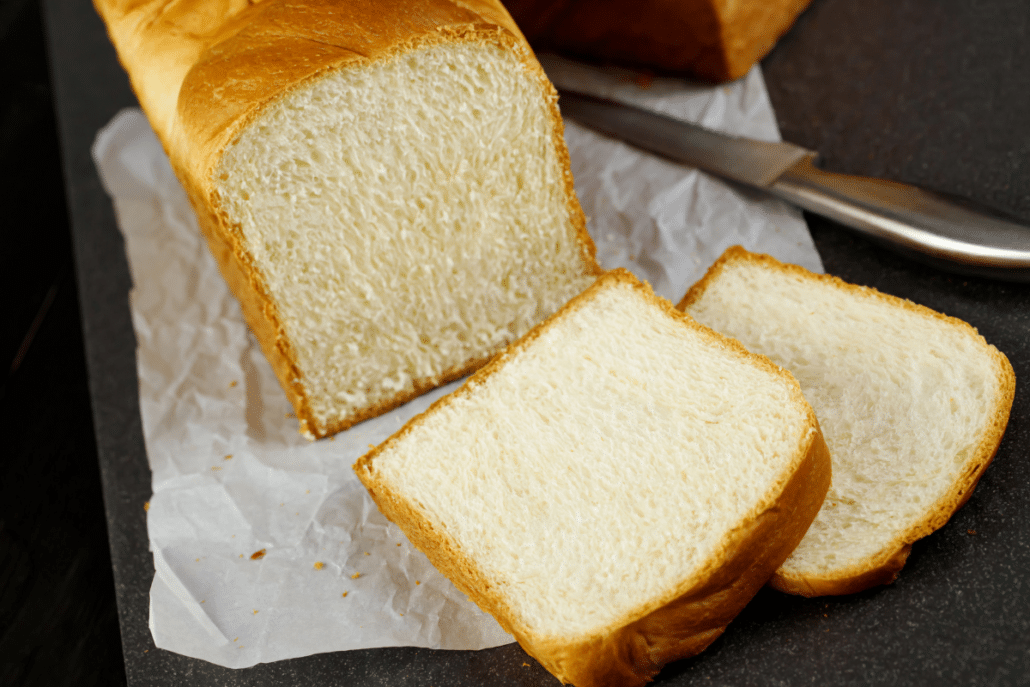
Gluten-Free Sandwich Bread Recipe That Actually Rises

If you’ve ever pulled a gluten-free loaf out of the oven only to watch it deflate like a sad little balloon, you already know the frustration. I’ve been there more times than I’ll admit. But it turns out the fix isn’t a fancier flour or a pricier gadget. It’s one ingredient most bakers get wrong, and once you fix that, everything changes.
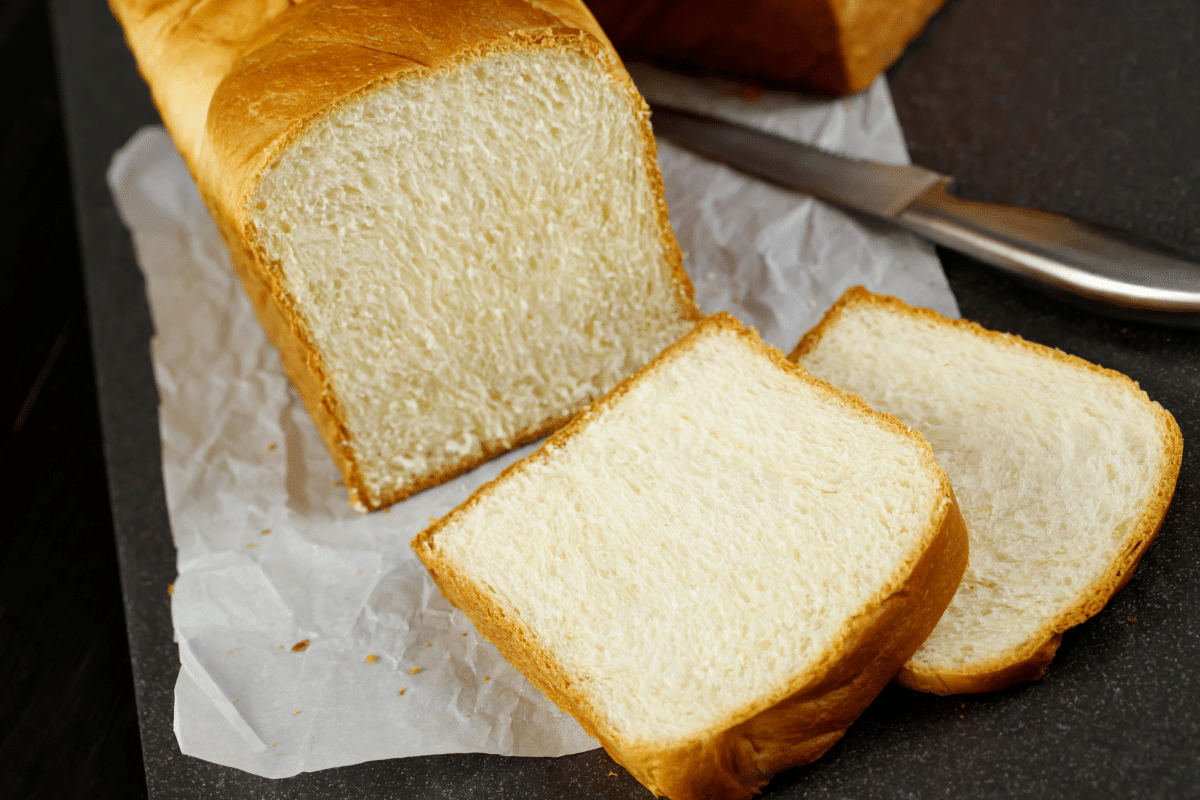
Dear Mary: Do you have a good gluten-free bread recipe I can make in my bread machine? I’ve tried a few, including the recipe that came with the machine. Not good. I really want to use a simple cup-for-cup gluten-free flour to make bread at home. Any ideas?
— Debbie M., Georgia
Dear Debbie: Oh, I feel your pain. I only bake gluten-free bread occasionally, but I’ve racked up enough flat, gummy, sad little loaves to know exactly where things go wrong. And exactly how to fix it.
Here’s the good news: you don’t need a bread machine or a science degree. You need one ingredient most gluten-free bakers skip, and a couple of habits that make all the difference.
Why gluten-free bread fights back
Gluten is the stretchy stuff that lets bread dough trap air and puff up. Take it away, and you take away the stretch. That’s why a straight cup-for-cup flour swap so often leaves you with something closer to a brick than a loaf.
The fix isn’t a fancier flour. It’s giving the dough something else to hold onto.
The one ingredient that changes everything

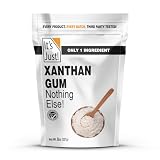
It’s Just! Xanthan Gum, 8oz
Xanthan gum. I know, it sounds like something from a chemistry set, not a kitchen. But it’s the stand-in for gluten. It gives gluten-free dough the structure to rise and hold its shape instead of collapsing the second it hits the oven.
Here’s my one strong opinion on this: skip the gluten-free flour blends that already have xanthan gum mixed in. You can’t control how much is in there, and that amount is exactly what makes or breaks your loaf. I buy plain gluten-free flour without it and add my own. Five extra minutes, saved me a dozen bad loaves.
You’ll find xanthan gum at King Arthur, on Amazon, or tucked into the specialty baking aisle of most grocery stores these days. Gluten-free baking has gone mainstream enough that it’s not the hunt it used to be.
What you actually need
I’ve made a lot of gluten-free bread. Some of it inedible, all of it educational. Here’s what earns a spot in my kitchen for this one.
The flour
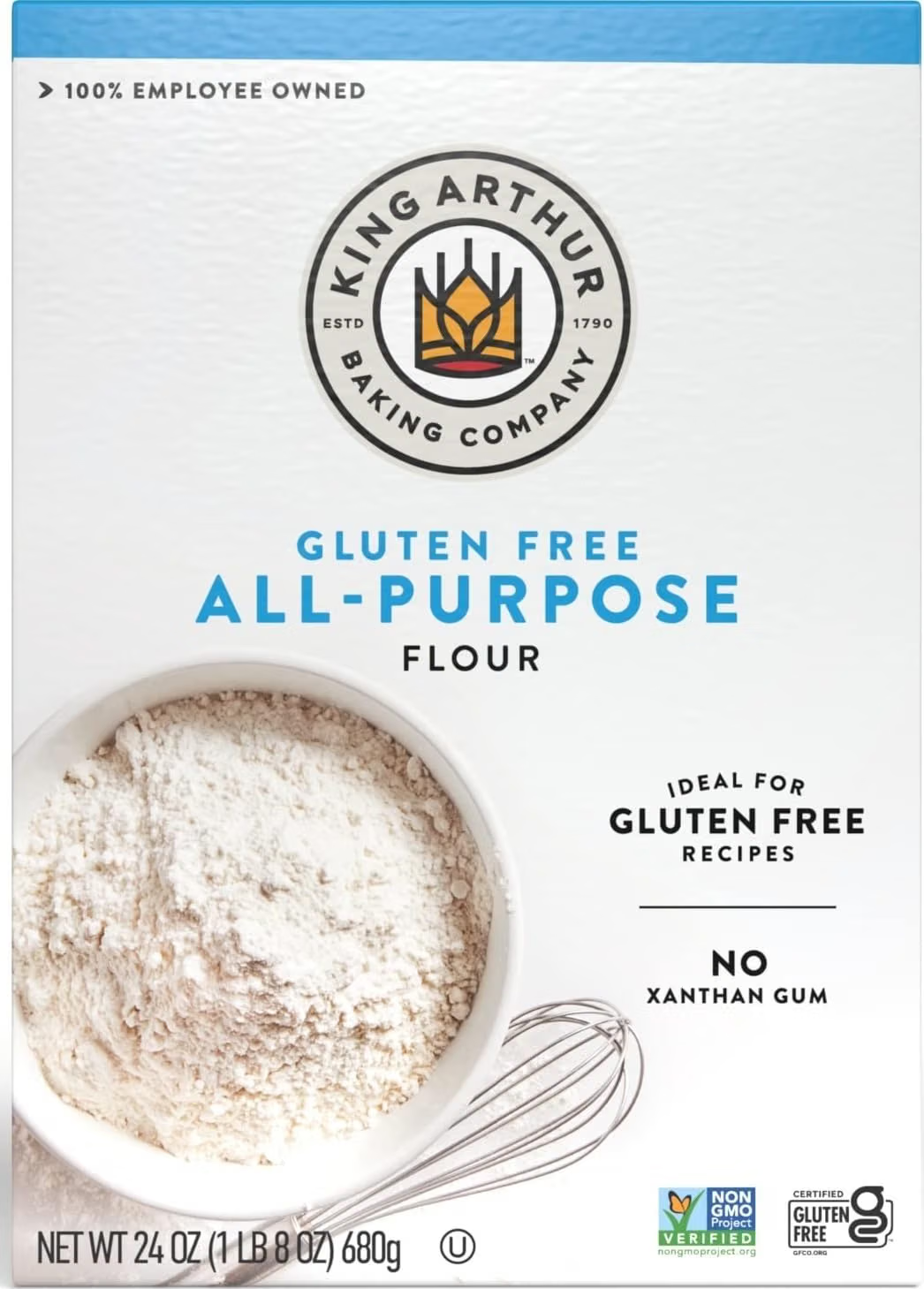
King Arthur Gluten-Free All-Purpose Flour, 24 oz
I use King Arthur Gluten-Free All-Purpose Flour every time. It’s stabilized brown rice flour, potato starch, and tapioca starch, with no xanthan gum added, which is exactly what I want since I’m adding my own. Pick it up at most grocery stores, or order it straight from King Arthur. Full disclosure: I’m not connected to them in any way. I’m just a customer who toured their Norwich, Vermont campus once and came home a fan for life. They’re employee-owned, and it shows in how much they care about getting this right.

A stand mixer with the flat beater
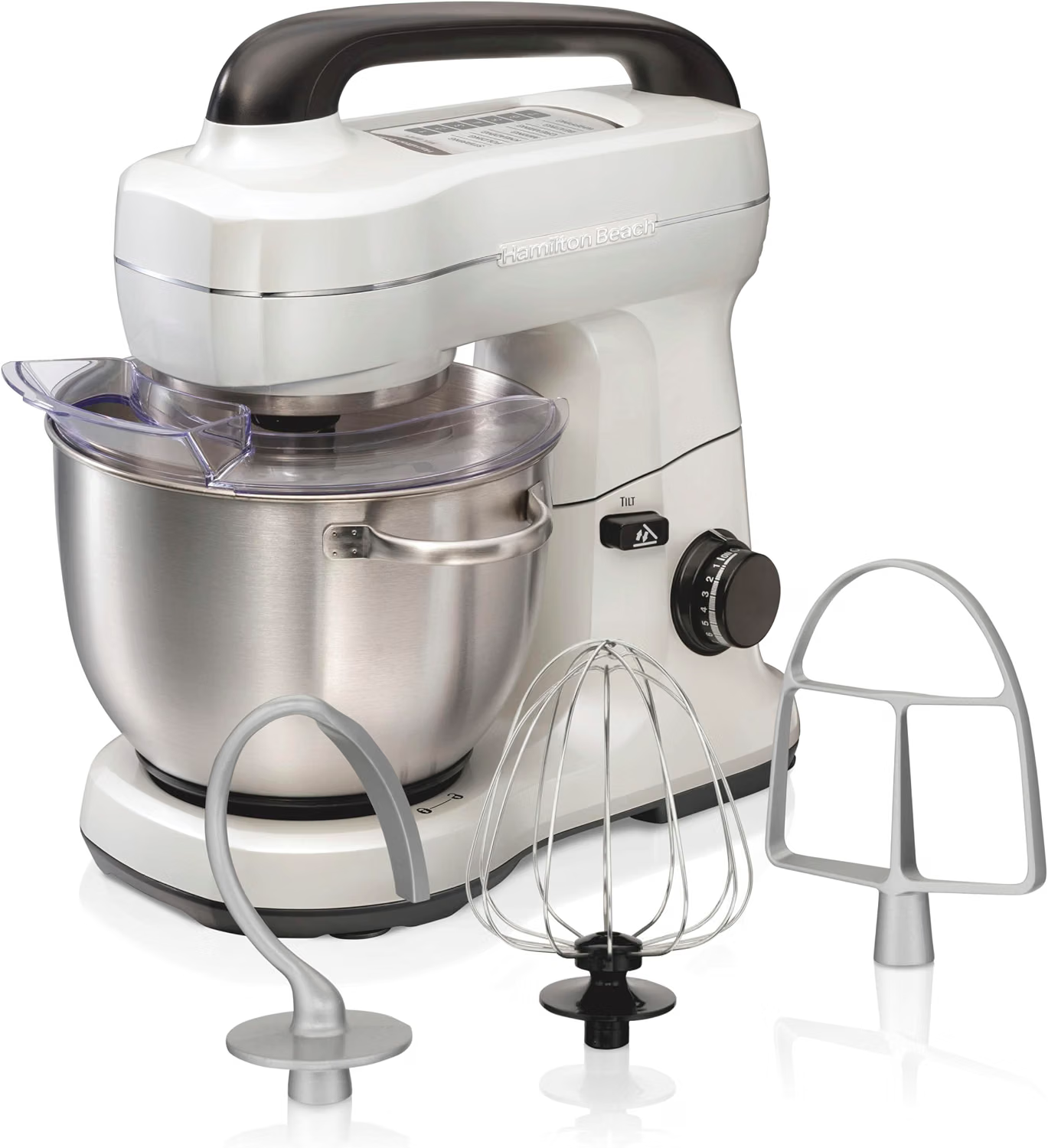
Hamilton Beach 4 Qt Electric Stand Mixer With 7 Speeds
Not the dough hook… the flat beater, the one you’d use for cookies. Gluten-free dough behaves more like thick batter than bread dough, and mixing it by hand won’t get you the same rise. I learned this one the hard way, more than once. A hand mixer works in a pinch, but if you bake gluten-free often, put a stand mixer on your list. You’ll use it.

A loaf pan

Pullman Loaf Pan with Lid
My favorite is a Pullman pan, the kind with a sliding lid, originally built for railway car kitchens. Bakers have been solving space problems longer than you’d think. It gives you a flat top and perfect square slices for sandwiches. But honestly, any 8 ½ x 4 ½ loaf pan will do. Just don’t fill it past two-thirds full, or you’ll be scraping batter off your oven floor. Ask me how I know.

The recipe
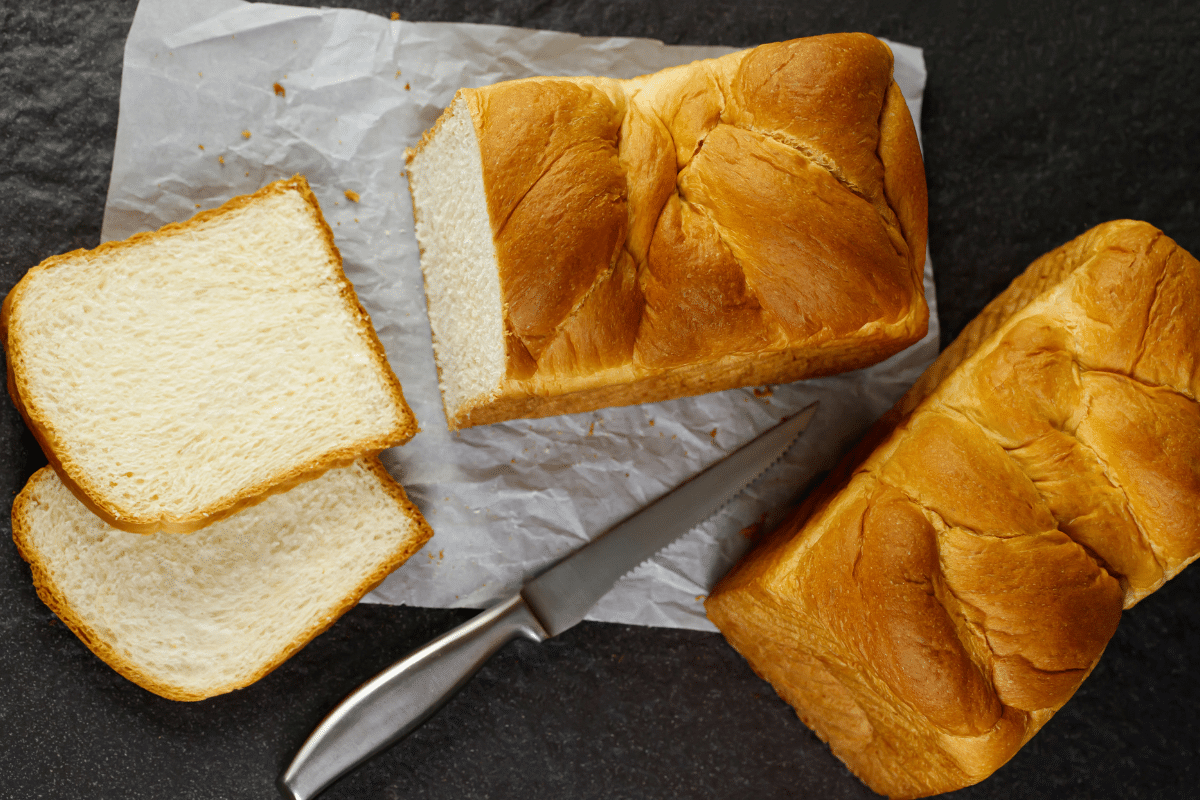
Full ingredient list, exact measurements, and printable instructions are in the recipe card below. But a few things won’t mean much until you’re standing at the mixer, so let me save you the trial and error:
- Weigh your flour if you own a gram scale. Gluten-free baking punishes guesswork more than regular baking ever did.
- Don’t shortcut the 3 minutes on HIGH. That’s not me being fussy. That’s the step doing gluten’s job. Skip it, and you’ll know why.
- The dough won’t double when it rises. It’ll get puffy. That’s normal, not a failure, so don’t go adding more yeast to compensate.
- Fill your pan two-thirds full. No more. Ask me how I know.
- Let it cool all the way before you slice it. I know that’s the hard part. Do it anyway.
Perfect Gluten-Free Sandwich Bread: High-Rising & Soft
Ingredients
- 3 cups King Arthur Gluten-Free All-Purpose Flour 468 g
- 3 tbsp white granulated sugar 35 g
- 2 tsp instant yeast
- 1 ¼ tsp salt 8 g
- 1 ¼ tsp xanthan gum
- 1 cup warm milk 227 g
- 4 tbsp butter softened
- 3 large eggs
Instructions
- Stir the flour, sugar, yeast, salt, and xanthan gum together in your mixer bowl.
- With the flat beater running on low, stream in the warm milk. It'll look ragged and wrong for a minute. Keep going.
- Beat in the butter until it vanishes into the mix.
- Add the eggs one at a time, letting each disappear before the next goes in.
- Bump the mixer to HIGH and run it a full 3 minutes. This is the step doing gluten's job — don't shortcut it. You'll end up with something closer to frosting than dough. That's right.
- Cover and set somewhere warm for about an hour. It'll get puffy, not doubled. That's correct.
- Deflate gently, then scrape into a greased 8 ½ x 4 ½ loaf pan.
- Cover loosely, let rise until it just crowns the rim (about 30 more minutes). Heat your oven to 350°F as it finishes.
- Bake 38 to 42 minutes, until deep gold on top and about 205°F inside.
- Turn out onto a rack. Rub the warm top with a stick of butter if you want that soft, glossy crust.
- Cool completely before you slice. Non-negotiable.
Notes
Nutrition
Questions I get about this bread
Can I use a hand mixer instead of a stand mixer?
You can. Your bread just won't be quite as light. A hand mixer can't beat in air the same way a stand mixer does, so expect a slightly denser loaf. Still tasty. Just not quite as tall.
Can I make this in a bread machine?
Yes, with a couple of tweaks. Add 3 extra tablespoons of flour and one more egg, for four total. Use your machine's gluten-free setting if it has one. I'll say this, though: I like what an oven does for the crust. A bread machine is convenient, but it won't give you that same golden top.
Why isn't my gluten-free bread rising like regular bread?
My bread turned out crumbly. What happened?
Usually it's the ratio of liquid to binder. Too little xanthan gum, or dough that's a bit too dry, and the loaf falls apart on you. Weigh your ingredients if you can. If it's still crumbly next time, nudge the xanthan gum up slightly.
How do I store it?
Gluten-free bread dries out faster than regular bread, so don't leave it out past a couple of days. Keep it airtight at room temperature, or slice and freeze what you won't eat right away. Straight from the freezer to the toaster works just fine.
Question: So… what’s tripping you up with gluten-free bread? The flour, the rise, something else entirely? Tell me in the comments. I read every one.
EverydayCheapskate™ is reader-supported. We participate in the Amazon Services LLC Associates Program and other affiliate advertising programs, designed to provide a means for us to earn from qualifying purchases, at no cost to you.

More from Everyday Cheapskate
 https://www.everydaycheapskate.com/wp-content/uploads/20261004-reduce-healthcare-costs-with-three-habits-healthy-couple-walking-in-autumn-leaves.png
800
1200
Mary Hunt
https://www.everydaycheapskate.com/wp-content/uploads/EC-Logo-by-Mary-Hunt-Tagline-Trimmed.png
Mary Hunt2026-10-04 23:08:572026-10-04 23:09:47How to Reduce Healthcare Costs With 3 Free Daily Habits
https://www.everydaycheapskate.com/wp-content/uploads/20261004-reduce-healthcare-costs-with-three-habits-healthy-couple-walking-in-autumn-leaves.png
800
1200
Mary Hunt
https://www.everydaycheapskate.com/wp-content/uploads/EC-Logo-by-Mary-Hunt-Tagline-Trimmed.png
Mary Hunt2026-10-04 23:08:572026-10-04 23:09:47How to Reduce Healthcare Costs With 3 Free Daily Habits https://www.everydaycheapskate.com/wp-content/uploads/20261002-cake-mix-chocolate-chip-cookies.png
800
1200
Mary Hunt
https://www.everydaycheapskate.com/wp-content/uploads/EC-Logo-by-Mary-Hunt-Tagline-Trimmed.png
Mary Hunt2026-10-02 19:44:302026-10-02 19:44:30Cake Mix Chocolate Chip Cookies That Taste Homemade
https://www.everydaycheapskate.com/wp-content/uploads/20261002-cake-mix-chocolate-chip-cookies.png
800
1200
Mary Hunt
https://www.everydaycheapskate.com/wp-content/uploads/EC-Logo-by-Mary-Hunt-Tagline-Trimmed.png
Mary Hunt2026-10-02 19:44:302026-10-02 19:44:30Cake Mix Chocolate Chip Cookies That Taste Homemade https://www.everydaycheapskate.com/wp-content/uploads/20260930-cheap-Halloween-party-snacks-for-kids-punch-bowl-mummy-dogs-ghost-bananas.png
800
1200
Mary Hunt
https://www.everydaycheapskate.com/wp-content/uploads/EC-Logo-by-Mary-Hunt-Tagline-Trimmed.png
Mary Hunt2026-10-01 11:08:582026-10-01 11:08:59These Cheap Halloween Snacks Are Almost Too Easy to Make
https://www.everydaycheapskate.com/wp-content/uploads/20260930-cheap-Halloween-party-snacks-for-kids-punch-bowl-mummy-dogs-ghost-bananas.png
800
1200
Mary Hunt
https://www.everydaycheapskate.com/wp-content/uploads/EC-Logo-by-Mary-Hunt-Tagline-Trimmed.png
Mary Hunt2026-10-01 11:08:582026-10-01 11:08:59These Cheap Halloween Snacks Are Almost Too Easy to Make https://www.everydaycheapskate.com/wp-content/uploads/20260927-impossible-lasagna-pie-recipe-with-wooden-serving-spoon-in-white-casserole-dish.png
800
1200
Mary Hunt
https://www.everydaycheapskate.com/wp-content/uploads/EC-Logo-by-Mary-Hunt-Tagline-Trimmed.png
Mary Hunt2026-09-28 09:38:592026-09-28 22:48:34Impossible Lasagna Pie: All the Flavor, None of the Noodles
https://www.everydaycheapskate.com/wp-content/uploads/20260927-impossible-lasagna-pie-recipe-with-wooden-serving-spoon-in-white-casserole-dish.png
800
1200
Mary Hunt
https://www.everydaycheapskate.com/wp-content/uploads/EC-Logo-by-Mary-Hunt-Tagline-Trimmed.png
Mary Hunt2026-09-28 09:38:592026-09-28 22:48:34Impossible Lasagna Pie: All the Flavor, None of the Noodles https://www.everydaycheapskate.com/wp-content/uploads/20260922-chinese-chicken-in-slow-cooker-with-white-rice-recipe-with-sesame-seeds-and-scallions.png
800
1200
Mary Hunt
https://www.everydaycheapskate.com/wp-content/uploads/EC-Logo-by-Mary-Hunt-Tagline-Trimmed.png
Mary Hunt2026-09-22 10:13:562026-09-28 22:48:39Slow Cooker Chinese Chicken That Beats Takeout
https://www.everydaycheapskate.com/wp-content/uploads/20260922-chinese-chicken-in-slow-cooker-with-white-rice-recipe-with-sesame-seeds-and-scallions.png
800
1200
Mary Hunt
https://www.everydaycheapskate.com/wp-content/uploads/EC-Logo-by-Mary-Hunt-Tagline-Trimmed.png
Mary Hunt2026-09-22 10:13:562026-09-28 22:48:39Slow Cooker Chinese Chicken That Beats Takeout https://www.everydaycheapskate.com/wp-content/uploads/20260919-air-purifier-in-living-room-1.png
800
1200
Mary Hunt
https://www.everydaycheapskate.com/wp-content/uploads/EC-Logo-by-Mary-Hunt-Tagline-Trimmed.png
Mary Hunt2026-09-19 11:36:552026-09-28 22:48:42The Best Inexpensive Air Purifiers for Small Homes
https://www.everydaycheapskate.com/wp-content/uploads/20260919-air-purifier-in-living-room-1.png
800
1200
Mary Hunt
https://www.everydaycheapskate.com/wp-content/uploads/EC-Logo-by-Mary-Hunt-Tagline-Trimmed.png
Mary Hunt2026-09-19 11:36:552026-09-28 22:48:42The Best Inexpensive Air Purifiers for Small Homes https://www.everydaycheapskate.com/wp-content/uploads/20260916-oktoberfest-bratwurst-sausage-and-sauerkraut-cabbage-pie.png
800
1200
Mary Hunt
https://www.everydaycheapskate.com/wp-content/uploads/EC-Logo-by-Mary-Hunt-Tagline-Trimmed.png
Mary Hunt2026-09-16 21:28:232026-09-28 22:48:47Impossible Oktoberfest Pie: All the Beer Hall Flavor, None of the Fuss
https://www.everydaycheapskate.com/wp-content/uploads/20260916-oktoberfest-bratwurst-sausage-and-sauerkraut-cabbage-pie.png
800
1200
Mary Hunt
https://www.everydaycheapskate.com/wp-content/uploads/EC-Logo-by-Mary-Hunt-Tagline-Trimmed.png
Mary Hunt2026-09-16 21:28:232026-09-28 22:48:47Impossible Oktoberfest Pie: All the Beer Hall Flavor, None of the Fuss https://www.everydaycheapskate.com/wp-content/uploads/20260830-best-sound-machine-for-better-sleep-woman-hiding-under-comforter.png
800
1200
Mary Hunt
https://www.everydaycheapskate.com/wp-content/uploads/EC-Logo-by-Mary-Hunt-Tagline-Trimmed.png
Mary Hunt2026-09-10 09:51:452026-09-28 22:48:58Best Sound Machine for Better Sleep: 3 Honest Picks
https://www.everydaycheapskate.com/wp-content/uploads/20260830-best-sound-machine-for-better-sleep-woman-hiding-under-comforter.png
800
1200
Mary Hunt
https://www.everydaycheapskate.com/wp-content/uploads/EC-Logo-by-Mary-Hunt-Tagline-Trimmed.png
Mary Hunt2026-09-10 09:51:452026-09-28 22:48:58Best Sound Machine for Better Sleep: 3 Honest Picks https://www.everydaycheapskate.com/wp-content/uploads/20260910-cooking-mistakes-and-how-to-avoid-them-woman-at-stovetop-with-steam-coming-from-pot.png
800
1200
Mary Hunt
https://www.everydaycheapskate.com/wp-content/uploads/EC-Logo-by-Mary-Hunt-Tagline-Trimmed.png
Mary Hunt2026-09-09 12:12:532026-09-28 22:49:005 Cooking Mistakes That Are Quietly Wrecking Your Dinner
https://www.everydaycheapskate.com/wp-content/uploads/20260910-cooking-mistakes-and-how-to-avoid-them-woman-at-stovetop-with-steam-coming-from-pot.png
800
1200
Mary Hunt
https://www.everydaycheapskate.com/wp-content/uploads/EC-Logo-by-Mary-Hunt-Tagline-Trimmed.png
Mary Hunt2026-09-09 12:12:532026-09-28 22:49:005 Cooking Mistakes That Are Quietly Wrecking Your DinnerPlease keep your comments positive, encouraging, helpful, brief,
and on-topic in keeping with EC Commenting Guidelines
Last update on 2026-10-11 / Affiliate links / Images from Amazon Product Advertising API


This is my favorite recipe as well. Over the 2 years I’ve been using it I’ve learned to always weigh the dry ingredients. And I let all of the ingredients except the milk come to room temperature before mixing (I store my flour in the freezer and my yeast in the refrigerator). Starting out with cold ingredients slows down the rise. Another thing I’ve found helpful is a warming pad to help keep the dough at an even, constant temperature while rising. And I bake it for precisely 42 minutes, which is the temperature stipulated in the recipe. I never store it at room temperature. I wrap it in parchment paper and store it in the refrigerator.
I created an account just to tell you that I have been using this recipe, and only this recipe for over 20 months. My husband was diagnosed with Celiac Disease and we HATED the bread options in stores. So, I learned how to make gluten free bread. I bought a bread machine, tasted tens of recipes when I finally found yours. I tried this recipe with 8 different flour blends (adjusting the gram weight based on the serving size weight) and settled on Bob’s Red Mill 1 to 1. We chose it for taste. I have no problems with rise, either.
I just want to say thank you. Thank you for giving me the ability to help my husband enjoy bread again. Thank you for helping us save thousands of dollars, as well. God bless you!
Wow! It makes me so happy to hear this. Thanks for sharing your story!
I am greatly concerned about the flour measurement. Typically when I measure out flour I fluff it first and then I use a spoon or something to fill the measuring cup with. I did three cups wait it on the scale and it was nowhere near 468 g. I dumped all the flower back into the container and just measured it out and it still was not near 468 Grams. My question and hopefully you will answer so I can make this recipe in the future, should I just weigh out 468 Grams because for me that is more like three and a half to three and three quarters cup of flour.
Going by weight is always advisable. “Cup” volume can vary greatly from one country to another.
I made this using the measurements ( couldn’t reach the scale) . Followed the recipe exactly as written. It was so good, especially toasted. Was nervous about it because I was making it for my daughter in law and I wanted the best! Did not disappoint. Easy recipe and very tasty.
This is absolutely the BEST, biggest, easiest, great tasting, gluten free bread recipe I’ve ever found. I made it with my bread machine and it came out beautifully. I cannot thank you enough for this recipe. God bless you for saving me thousands of dollars and for gifting me a wonderful recipe. Thank you! Thank you! Thank you! Your recipe earned me extra wife points!
Woo-hoo! Thanks for the great feedback, Michelle
I’ve used this recipe, and it is tasty. However, the stock image that was chosen to go along with it is not representative of this recipe. It shows fluffy white bread with a lovely crust…guessing it’s a gluten filled loaf. My hopes were up until I baked it.
Dear Mary,
I have failed before at making a gluten free bread using the America’s Test Kitchen (How Can It Be Gluten Free) recipe (using their gluten free all-purpose flour blend recipe). I do not have a stand mixer and would like to know if you could recommend if I would be able to use a food processor with a dough blade and use your recipe and have it come out ok? I really am hesitant to go ahead and put all the effort and ingredients into my attempt just to have another failed experiment.
Thank you
The stand mixer with the flat beater is the best chance for success but obviously if you dont have that, you could give your processor a shot. Let us know how it turns out!
So much good information, thank you! You mentioned using “xanthan gum or psyllium husk to mimic” gluten. I’m allergic to gums, so psyllium husks sounded like a good alternative for me. Googling it gave me more info about using it along with some recipes, so thank you so much for mentioning that. I had no idea there was a way for me to have freshly baked bread!!
Got any recipes for gluten free, yeast free bread (vegan)? My pastor has a lot of allergies and I haven’t found a good recipe yet.
Best Ever NO-YEAST Homemade Bread
I’ve made this for my grandson, he is bemoaning going gluten free. He said it’s the best bread. I had to add an extra 1/4C of milk to get the right consistency. It rose to the top of the bowl.
Hi
Clicked on frugal wedding tips but keeps taking me to the bread tips
14 Readers Share Their Best Frugal Wedding Tips for How to Say “I Do” on a Dime
Mary,
Loved this recipe! Nice rise and taste. I’ve failed in other recipes but this one was the winner! Even my husband liked it and he usually doesn’t eat gf anything.
Thank you
Sandy
Hi Mary,
I made this today and it’s great. My usual boxed gluten-free bread mix changed the recipe for the worse. This is a welcome alternative. For those who are wondering, I used the KAF Measure for Measure and omitted the xantham gum. It turned out perfect!
Thanks for that feedback, Allie!
Can you use almond milk instead of regular milk?
Be sure to let us know how that turns out for you, Jen!
Got a recipe for gluten free, vegan bread?
I don’t but maybe someone here does! (Please share if that someone is you.)
I wanted to note that although not inexpensive, KAF sells a GF bread mix that works beautifully. Once in a while I find boxes on sale or marked down, and we thoroughly enjoy them. No other brand of GF bread mix works half as well or tastes as good.
I also totally trust KAF products. They test their recipes and products extensively, and it shows!
Hi Mary,
Just read the recipe for the gluten-free sandwich bread. The number of eggs required isn’t in the ingredient list. However, when I looked at the bread machine version, noted one more egg needed for total of 4, so I’m assuming that 3 is needed for base recipe. Pls confirm. Thanks
Thanks for the heads up! You are right. In the text of the post the 3 eggs are included. Somehow they fell out of the recipe card! That has been fixed. Thanks for letting me know!
Thanks for catching that. The 3 eggs are noted and included in the text of the post, but you are right they fell out of the recipe card ingredients. I have fixed this now and I will add an alert into tomorrow’e e-newsletter!