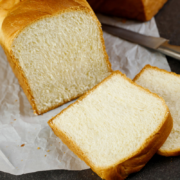
Perfect Gluten-Free Sandwich Bread: High-Rising & Soft
Bake high-rising, light, and tender bread... without the gluten! Method adapted from King Arthur Baking's gluten-free technique.
Servings: 16
Calories: 135kcal
Cost: Varies
Ingredients
- 3 cups King Arthur Gluten-Free All-Purpose Flour 468 g
- 3 tbsp white granulated sugar 35 g
- 2 tsp instant yeast
- 1 ¼ tsp salt 8 g
- 1 ¼ tsp xanthan gum
- 1 cup warm milk 227 g
- 4 tbsp butter softened
- 3 large eggs
Instructions
- Stir the flour, sugar, yeast, salt, and xanthan gum together in your mixer bowl.
- With the flat beater running on low, stream in the warm milk. It'll look ragged and wrong for a minute. Keep going.
- Beat in the butter until it vanishes into the mix.
- Add the eggs one at a time, letting each disappear before the next goes in.
- Bump the mixer to HIGH and run it a full 3 minutes. This is the step doing gluten's job — don't shortcut it. You'll end up with something closer to frosting than dough. That's right.
- Cover and set somewhere warm for about an hour. It'll get puffy, not doubled. That's correct.
- Deflate gently, then scrape into a greased 8 ½ x 4 ½ loaf pan.
- Cover loosely, let rise until it just crowns the rim (about 30 more minutes). Heat your oven to 350°F as it finishes.
- Bake 38 to 42 minutes, until deep gold on top and about 205°F inside.
- Turn out onto a rack. Rub the warm top with a stick of butter if you want that soft, glossy crust.
- Cool completely before you slice. Non-negotiable.
Notes
Bread machine version: Add 3 extra tablespoons of flour and one more egg (4 total). Use the gluten-free setting if your machine has one.
Tips: Weigh your flour if you can. Keep the milk warm, not hot. Hot kills yeast. Watch the last few minutes of bake time so the top doesn't over-brown.
Nutrition
Calories: 135kcal | Carbohydrates: 20g | Protein: 4g | Fat: 5g | Saturated Fat: 2g | Polyunsaturated Fat: 0.4g | Monounsaturated Fat: 1g | Trans Fat: 0.1g | Cholesterol: 40mg | Sodium: 229mg | Potassium: 50mg | Fiber: 3g | Sugar: 4g | Vitamin A: 157IU | Vitamin C: 0.004mg | Calcium: 40mg | Iron: 1mg
