

Warm Hands, Warm Heart, and a $2 DIY Rice Pack

There’s a special kind of winter cold that seems to settle right into your bones… the kind that makes you want to wrap up in a blanket burrito and never move again. For years, I’d reach for the heating pad, only to find the cord wrapped tighter than a toddler’s shoelaces or the plug just out of reach. That’s when I discovered something better, cheaper, and far cozier: a simple DIY rice heating pack.

There’s cold weather, and then there’s Colorado January cold, where your fingers stay frozen even after the car heater hits full blast. If you’ve ever wished you could wrap warmth around your hands (or your shoulders) without dealing with cords, batteries, or overpriced gadgets, this one’s for you. It’s not fancy. It doesn’t plug in, hum, or require batteries. But it warms your hands, loosens tight shoulders, and brings instant comfort. All for about two bucks.
Bonus: it makes a thoughtful gift that says, “I care… and I sew… sometimes.”
Why Rice?
Rice may seem humble sitting in the pantry beside the pasta and the three half-open bags of flour we keep meaning to consolidate… but it has a hidden talent: it stores heat remarkably well.
Each tiny grain acts like a miniature heat battery absorbing warmth quickly in the microwave, then releasing it slowly and evenly. Because the grains are small and uniform, you don’t get that “scalding corner followed by an icy patch” problem common with gel packs or chunky fillers.
A minute or two in the microwave gives you steady, gentle heat that lasts around 25–30 minutes. Long enough to soothe a stiff neck, warm cold hands, or take the edge off evening aches.
And the uses add up fast. Slide one under the covers before bed for cold feet. Warm it before winter commutes and keep it on your lap for the drive. Keep one by the couch for tight shoulders or lower-back stiffness.
Best of all, it’s endlessly practical. A rice pack can be reheated hundreds of times and doesn’t require charging, cords, batteries, or an instruction manual. Plus, it works whether you’re tech-loving, tech-weary, or somewhere in between.
You can leave it unscented or add a drop of essential oil. It’s endlessly adjustable to your preferences, routines, and comfort.
What You Need to Make a Rice Pack at Home
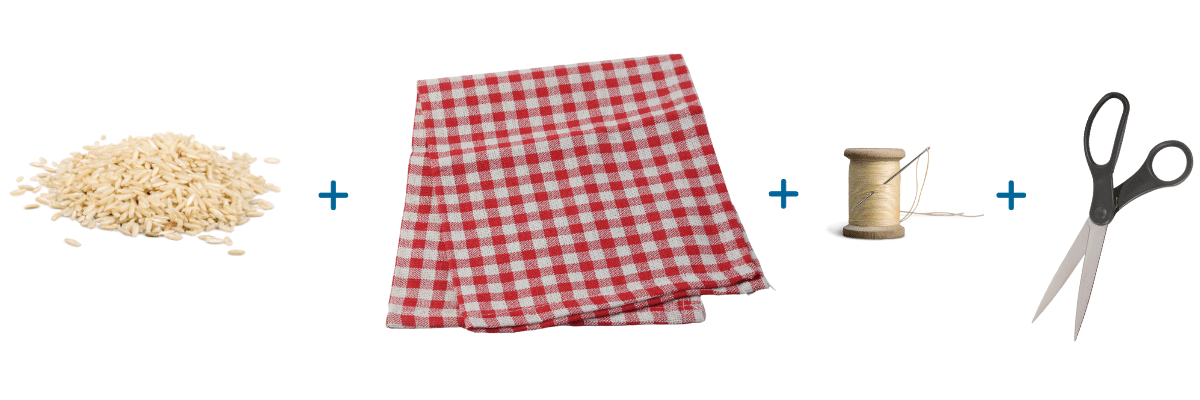
This little project doesn’t require a craft room, a shopping trip, or the emotional energy of learning yet another gadget. If you have a sewing kit, a drawer of “someday I’ll fix that” fabric, or a shirt that’s one stain away from retirement, you’re already halfway there.
Here’s the small but mighty supply list:
- 1 Cup of Uncooked Rice: White long-grain, jasmine, or whatever you have (or can grab for cheap). Avoid instant rice. It tends to break down faster and won’t hold heat as well over time.
- 100% Cotton Fabric: Think old pillowcase, flannel shirt, quilting cotton, or dish towel. Natural fibers are key. They tolerate heat and won’t melt, scorch, or give off mystery fumes. If you plan to microwave it often, pre-wash the fabric (it helps remove any finishes and gives you better flexibility).
- Needle and Thread (or a sewing machine if that’s your happy place).
- Scissors
Optional: Essential oil like lavender (relaxation), eucalyptus (sinus relief), or peppermint (a little “wake up” energy). One or two drops mixed into the rice is plenty. Your goal is “pleasant,” not “spa in a small elevator.”
A 5-pound bag of rice runs about $3, and each pack uses only about half a pound, roughly 30 cents worth of filler. The fabric? Likely free if you raid the linen closet. The thread and needle are already in the junk drawer next to the expired coupons and the spare key ring of “What did these ever unlock?”
Even if you buy everything new, you’ll land around $1–$2 per finished pack, far less than the $15–$25 versions sold in stores.
Simple. Affordable. Useful. No special tools. No specialized filling. No trip to the craft store required.
Step-by-Step: The Five-Minute Rice Pack
Step 1: Cut your fabric
Decide on the size based on how you’ll use it.
- A 6″×10″ rectangle works well for hands, wrists, and the back of the neck.
- If you want something that wraps around shoulders or sits across the lower back, 6″×18–20″ gives a nice, flexible length.
Step 2: Sew three sides
Fold the fabric in half with the pretty sides together (the part meant to show facing inward). Sew along the two long edges and one short edge, leaving one end open. When you flip it right-side out, you’ll have a simple tube or pocket.
A loose seam here makes the rice leak later, so stitch firmly, but no need for perfection.
Step 3: Fill it up
Add rice until the bag is about ¾ full. This gives it enough structure to hold warmth while still being soft and flexible. Too tight and it won’t mold around your hands; too loose and it’ll flop like a deflated balloon.
If you’re adding a drop of essential oil, mix it into the rice first so it disperses evenly instead of creating one overly fragrant corner that smells like a candle aisle explosion.
Step 4: Close it up
Fold the open end inward about ½ inch, then stitch it securely.
If sewing isn’t your hobby (or your eyesight and hands have strong opinions about threading needles), you can temporarily secure it with iron-on hem tape. Just know that a stitched closure truly lasts longer and feels smoother.
Step 5: Heat and enjoy
Microwave for 1–2 minutes, depending on size and microwave strength. Start on the shorter side. You can always add time. Give it a gentle shake before using to distribute heat evenly.
Before applying it to skin, test the temperature, especially for kids, elderly skin, or pets. It should feel warm and cozy, not scorching.
A Word About Safety
Start with 60 seconds in the microwave, then check before adding time in short bursts. Every appliance is different, and too much heat can scorch fabric or, yes, toast the rice. If you ever smell something suspiciously close to burnt popcorn, that pack has lived a full life and can retire with honor.
Adding essential oils? Mix them into the rice first, then let everything dry overnight before heating. Too much concentrated oil can create hotspots.
Kids and Elderly Friendly
Rice packs are a safe, cozy way to bring comfort to kids who wake up chilled or seniors with stiff joints.
- For kids: A small 3”×5” mini pack is the perfect “comfort in a pocket.” Slip it in mittens on a cold morning or use it as a gentle bedtime warmer.
- For seniors: Longer wrap-style versions offer more coverage. If mobility is a concern, sew simple handles at each end. They make repositioning easier, especially for sore joints or limited grip strength.
Store It Wisely
Between uses, keep your rice pack in a sealed bag, especially if your home has the occasional curious moth, dog, toddler, or grandchild who lives by the motto: If it exists, it must be squeezed, tasted, or launched.
If you’ve made more than one (and you will), consider labeling them (i.e., lavender, unscented, cold pack, etc.) You’ll feel like you run your own spa… on a rice-and-thread budget.
Smart Ways to Customize Your Rice Pack
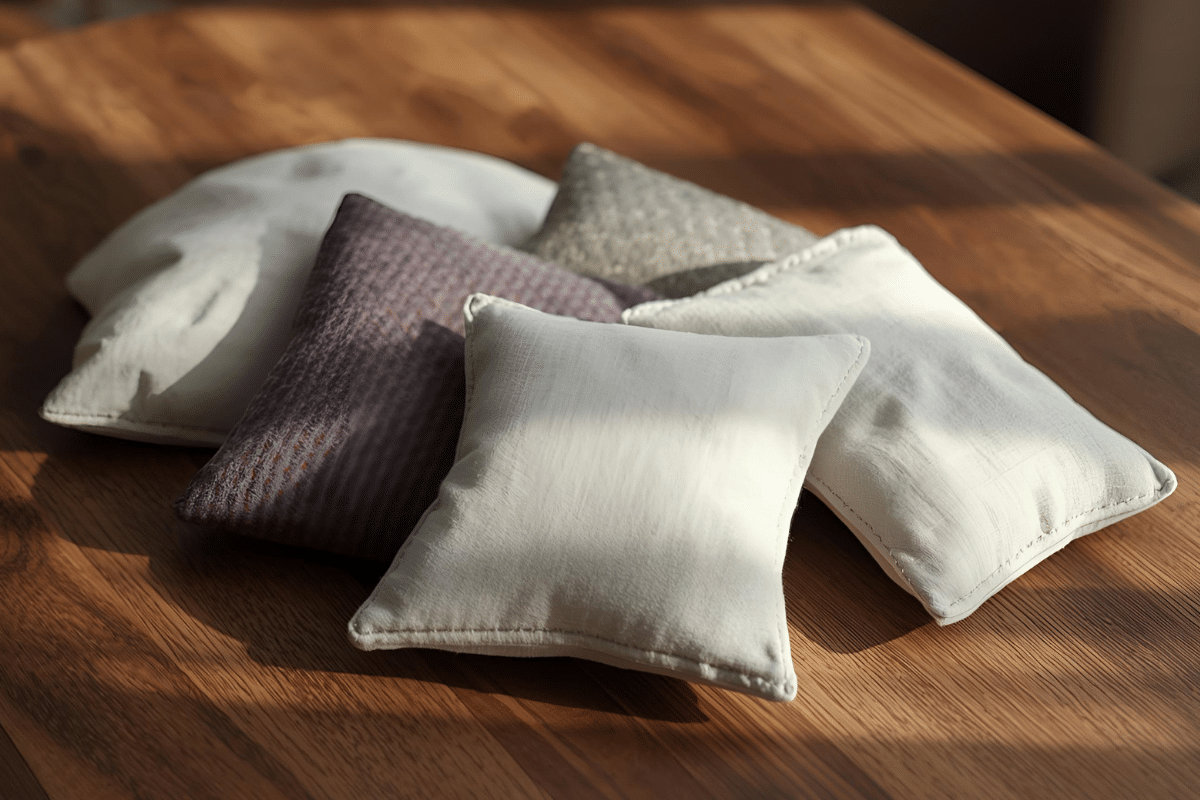
Make it yours, make it useful, make it last:
Add a Removable Cover
Sew a second, slightly larger sleeve for your rice pack and treat it like a pillowcase… on, off, into the wash. This is especially handy for gifts, kids, pets, and that one person who always manages to spill coffee at the exact wrong moment. Use flannel for cozy winter packs or cotton for year-round use. Bonus: it doubles the life of your rice insert.
Pocket Hand Warmers
Make a few mini versions using 4″ fabric squares and about ¼ cup of rice each. Tuck them into coat pockets before dog walks, early-morning commutes, or snow-shoveling duty. They stay warm 30–45 minutes, long enough to take the edge off without overheating. These are also great for kids’ backpacks on cold school mornings.
Add a Gentle Scent
Mix dried lavender, rosemary, or a cinnamon stick broken into pieces right into the rice. Keep it subtle. A teaspoon of dried herbs per cup of rice is plenty. The scent releases only when heated, which keeps it from overwhelming sensitive noses. For gifting, tuck a note inside with the scent blend so recipients know what they’re enjoying.
Make a Cold Pack Too
Slip one finished pack into a freezer bag and store it in the freezer. You’ll have an instant cold compress ready for headaches, bumps, sprains, or summer heat relief. Because rice stays flexible when frozen, it contours better than a stiff gel pack and doesn’t drip as it warms.
The No-Sew Sock Hack
If sewing isn’t your thing or the thread gods are not cooperating, grab a clean cotton sock. Fill it with rice, tie a tight knot at the end, and you’re done. It’s not fancy, but it works beautifully.
The “Why Not Just Buy It?” Question
Yes, you can buy a microwaveable heat pack online that is pretty, printed, maybe scented with something that sounds like “Rainforest Tranquility.” But you’ll pay a premium for a fabric sleeve and a marketing label.
Making your own puts you back in the driver’s seat. You control the materials, the size, the scent, and the cost. Plus, you get that little spark of satisfaction when you realize you’ve outsmarted consumerism again.
Once you make one, a switch flips in your brain. That shirt with the hole in the elbow? Future rice pack. The curtain hem you trimmed off? Also a rice pack. I’ve had readers use flannel pajamas, quilting scraps, and even worn denim. The creative supply is as wide as your laundry pile.
But beyond the savings and the clever reuse, there’s something deeper at work here. There’s a steady, grounding satisfaction that comes from making your own comfort with your own two hands, not because you had to, but because you could. It’s independence, resourcefulness, and practicality all stitched into one warm little bundle.
And on a cold night, when the wind rattles the windows and your hands ache just a bit, you’ll reach for that simple, homemade pack and remember: warmth doesn’t always come from money, batteries, or a delivery truck. Sometimes it comes from a cup of rice, a few stitches, and the quiet pride of doing it yourself.
Question: What would you use a DIY rice heating pack for first: cold hands, stiff neck, or bedtime toes? Share in the comments below.
EverydayCheapskate™ is reader-supported. We participate in the Amazon Services LLC Associates Program and other affiliate advertising programs, designed to provide a means for us to earn from qualifying purchases, at no cost to you.

More from Everyday Cheapskate
 https://www.everydaycheapskate.com/wp-content/uploads/20261011-Woman-Adjusting-Smart-Home-Device-on-the-Wall-how-to-lower-your-electric-bill.png
800
1200
Mary Hunt
https://www.everydaycheapskate.com/wp-content/uploads/EC-Logo-by-Mary-Hunt-Tagline-Trimmed.png
Mary Hunt2026-10-11 23:01:562026-10-11 23:01:56Stop Chasing Pennies on Your Electric Bill. Do This
https://www.everydaycheapskate.com/wp-content/uploads/20261011-Woman-Adjusting-Smart-Home-Device-on-the-Wall-how-to-lower-your-electric-bill.png
800
1200
Mary Hunt
https://www.everydaycheapskate.com/wp-content/uploads/EC-Logo-by-Mary-Hunt-Tagline-Trimmed.png
Mary Hunt2026-10-11 23:01:562026-10-11 23:01:56Stop Chasing Pennies on Your Electric Bill. Do This https://www.everydaycheapskate.com/wp-content/uploads/20261007-red-present-sitting-in-autumn-leaves-Amazon-Prime-Big-Deal-Days-gifts.png
800
1200
Mary Hunt
https://www.everydaycheapskate.com/wp-content/uploads/EC-Logo-by-Mary-Hunt-Tagline-Trimmed.png
Mary Hunt2026-10-06 23:09:432026-10-06 23:09:43Christmas Shopping in October? These Prime Day Gifts Make Sense
https://www.everydaycheapskate.com/wp-content/uploads/20261007-red-present-sitting-in-autumn-leaves-Amazon-Prime-Big-Deal-Days-gifts.png
800
1200
Mary Hunt
https://www.everydaycheapskate.com/wp-content/uploads/EC-Logo-by-Mary-Hunt-Tagline-Trimmed.png
Mary Hunt2026-10-06 23:09:432026-10-06 23:09:43Christmas Shopping in October? These Prime Day Gifts Make Sense https://www.everydaycheapskate.com/wp-content/uploads/20261006-prime-big-deal-days-have-landed.png
800
1200
Mary Hunt
https://www.everydaycheapskate.com/wp-content/uploads/EC-Logo-by-Mary-Hunt-Tagline-Trimmed.png
Mary Hunt2026-10-05 11:01:432026-10-07 09:02:53EC’s Top Picks from Amazon Prime Big Deal Days 2026
https://www.everydaycheapskate.com/wp-content/uploads/20261006-prime-big-deal-days-have-landed.png
800
1200
Mary Hunt
https://www.everydaycheapskate.com/wp-content/uploads/EC-Logo-by-Mary-Hunt-Tagline-Trimmed.png
Mary Hunt2026-10-05 11:01:432026-10-07 09:02:53EC’s Top Picks from Amazon Prime Big Deal Days 2026 https://www.everydaycheapskate.com/wp-content/uploads/20261004-reduce-healthcare-costs-with-three-habits-healthy-couple-walking-in-autumn-leaves.png
800
1200
Mary Hunt
https://www.everydaycheapskate.com/wp-content/uploads/EC-Logo-by-Mary-Hunt-Tagline-Trimmed.png
Mary Hunt2026-10-04 23:08:572026-10-04 23:09:47How to Reduce Healthcare Costs With 3 Free Daily Habits
https://www.everydaycheapskate.com/wp-content/uploads/20261004-reduce-healthcare-costs-with-three-habits-healthy-couple-walking-in-autumn-leaves.png
800
1200
Mary Hunt
https://www.everydaycheapskate.com/wp-content/uploads/EC-Logo-by-Mary-Hunt-Tagline-Trimmed.png
Mary Hunt2026-10-04 23:08:572026-10-04 23:09:47How to Reduce Healthcare Costs With 3 Free Daily Habits https://www.everydaycheapskate.com/wp-content/uploads/20241004-news-you-can-use-october-everyday-cheapskate-top-news-articles.png
800
1200
Mary Hunt
https://www.everydaycheapskate.com/wp-content/uploads/EC-Logo-by-Mary-Hunt-Tagline-Trimmed.png
Mary Hunt2026-10-04 01:04:052026-10-11 14:34:17News You Can Use • October 2026
https://www.everydaycheapskate.com/wp-content/uploads/20241004-news-you-can-use-october-everyday-cheapskate-top-news-articles.png
800
1200
Mary Hunt
https://www.everydaycheapskate.com/wp-content/uploads/EC-Logo-by-Mary-Hunt-Tagline-Trimmed.png
Mary Hunt2026-10-04 01:04:052026-10-11 14:34:17News You Can Use • October 2026 https://www.everydaycheapskate.com/wp-content/uploads/20261003-woman-hugging-elderly-mother-sandwich-generation-caring-for-aging-parents.png
800
1200
Mary Hunt
https://www.everydaycheapskate.com/wp-content/uploads/EC-Logo-by-Mary-Hunt-Tagline-Trimmed.png
Mary Hunt2026-10-03 10:47:222026-10-03 10:47:25Sandwiched Between Aging Parents and Adult Children
https://www.everydaycheapskate.com/wp-content/uploads/20261003-woman-hugging-elderly-mother-sandwich-generation-caring-for-aging-parents.png
800
1200
Mary Hunt
https://www.everydaycheapskate.com/wp-content/uploads/EC-Logo-by-Mary-Hunt-Tagline-Trimmed.png
Mary Hunt2026-10-03 10:47:222026-10-03 10:47:25Sandwiched Between Aging Parents and Adult Children https://www.everydaycheapskate.com/wp-content/uploads/20260927-impossible-lasagna-pie-recipe-with-wooden-serving-spoon-in-white-casserole-dish.png
800
1200
Mary Hunt
https://www.everydaycheapskate.com/wp-content/uploads/EC-Logo-by-Mary-Hunt-Tagline-Trimmed.png
Mary Hunt2026-09-28 09:38:592026-09-28 22:48:34Impossible Lasagna Pie: All the Flavor, None of the Noodles
https://www.everydaycheapskate.com/wp-content/uploads/20260927-impossible-lasagna-pie-recipe-with-wooden-serving-spoon-in-white-casserole-dish.png
800
1200
Mary Hunt
https://www.everydaycheapskate.com/wp-content/uploads/EC-Logo-by-Mary-Hunt-Tagline-Trimmed.png
Mary Hunt2026-09-28 09:38:592026-09-28 22:48:34Impossible Lasagna Pie: All the Flavor, None of the Noodles https://www.everydaycheapskate.com/wp-content/uploads/20260925-best-inexpensive-coffee-grinders-burr-manual-and-electric.png
800
1200
Mary Hunt
https://www.everydaycheapskate.com/wp-content/uploads/EC-Logo-by-Mary-Hunt-Tagline-Trimmed.png
Mary Hunt2026-09-25 11:06:342026-10-10 15:49:09The Best Coffee Grinder Upgrade That’s Actually Worth It
https://www.everydaycheapskate.com/wp-content/uploads/20260925-best-inexpensive-coffee-grinders-burr-manual-and-electric.png
800
1200
Mary Hunt
https://www.everydaycheapskate.com/wp-content/uploads/EC-Logo-by-Mary-Hunt-Tagline-Trimmed.png
Mary Hunt2026-09-25 11:06:342026-10-10 15:49:09The Best Coffee Grinder Upgrade That’s Actually Worth It https://www.everydaycheapskate.com/wp-content/uploads/20260919-air-purifier-in-living-room-1.png
800
1200
Mary Hunt
https://www.everydaycheapskate.com/wp-content/uploads/EC-Logo-by-Mary-Hunt-Tagline-Trimmed.png
Mary Hunt2026-09-19 11:36:552026-09-28 22:48:42The Best Inexpensive Air Purifiers for Small Homes
https://www.everydaycheapskate.com/wp-content/uploads/20260919-air-purifier-in-living-room-1.png
800
1200
Mary Hunt
https://www.everydaycheapskate.com/wp-content/uploads/EC-Logo-by-Mary-Hunt-Tagline-Trimmed.png
Mary Hunt2026-09-19 11:36:552026-09-28 22:48:42The Best Inexpensive Air Purifiers for Small Homes

I bought one of these at a county fair many years ago. It had rice and buckwheat in it. Loved the concept but I didn’t like the smell. However It looked so simple that I started making them with just rice and giving them away. If I’m out and someone gets a sprain or bump i just put some rice in a sock for immediate relief.
I use the very largest tube sock and a one pound bag of rice (not the plastic bag it’s wrapped in) to make this. no sewing required. when not in use, i store it in a large zipper-top plastic bag. the one i have on hand is at least 5 years old. it nukes nicely and retains heat well for my arthritic hands. it will also freeze nicely and retain that icy feeling for a long time too.
I too suffer from Raynaud’s, and as I sit on my couch with an electric heating pad with an awkward cord/control mechanism, I decided I am going to make quite a few of these. I am a sewist, have loads of fabric and love to make simple projects just to relax. I did not know that instant rice should not be used and I have plenty of essential oils to make each one a different experience. I think a pillowcase-like cover is an excellent idea! I do want to mention though, since these are going to be used in the microwave, to please be sure not to use polyester fabrics or thread. Stick with 100% cotton to be safe.
I loved reading your post about the hand warmers!!
I reach for mine every single day in fact several times during the day to warm my cold hands, And then throw it under the covers while getting ready for bed. I love using cotton material, and have made a few in my time!
Lovely idea, I’m going to try it. However, I don’t sew (my husband does, not pretty but strong repairs), so please explain what the “cover” pocket, removable for washing is sewn? Not a zipper for microwave – buttons? Hmmm.
Think of it like a little pillow case. A closure is not needed. If you wanted to use a zipper just make sure to remove the case before microwaving because, as you mentioned, metal is a no-no in a microwave.
My son took Home Economics in junior high and made one of these pack’s for a Christmas gift for me. It has lived in my freezer now for a couple of decades as an instant cold pack, but I have used the microwave to turn it into a warming pack as well when needed. It is probably the most helpful gift I’ve ever received and well worth the minimal cost. He made me the long variety which can wrap 3/4 of the way around my neck. I’m not sure if it is filled with rice or with some other heat/cold retaining beads or beans.
I’ve seen them for sale in first aid supply aisles and baby shops, but the homemade one from a loved one is the very best. It carries many memories.
My brother suffers from Raynaud’s Syndrome. Winters are pure agony as he is a farmer and is always outdoors. When he gets these rice packs tomorrow, he will think Christmas moved up 3 weeks this year. Joy to the world!
As a labor and delivery nurse, I would tell my moms to make a rice “sock”. It’s just a tube sock bag filled with rice and knotted on the end…no sewing required and it conforms to necks, shoulders and other body parts
Does rice becomes rancid after a number of times being warmed or after a certain period of time?
My grandmother would warm bricks by the fireplace, wrap in a towel and put at our feet in the bed. A fireplace and a propane cookstove were the only heat she had in her house. This was in the 1950’s in east Texas.
White rice has very little moisture or oils so will last for years, but these definitely have a life. At the first sign (or smell) that things are “off” it’s time to retire and make a new one!.
I love my rice paks and have made many with removeable covers over the years as gifts. Best thing ever!
thank you for reminding me that deep in my closet i have buckwheat filled packs that serve the same purpose. i think i will look for them and put at least one of them on my feet tonight.