

DIY Dishwasher Cleaner That Removes Hidden Buildup

Most of us assume the dishwasher is self-cleaning. After all, it washes dishes all day. But if yours smells a little “off” or leaves a cloudy film behind, there’s buildup hiding where you can’t see it. The good news? You don’t need a specialty cleaner to fix it. A simple DIY dishwasher cleaner can clear out mineral deposits and restore that fresh, just-installed feeling.

I knew something was up the day my clean glasses came out looking… tired. Not dirty. Just cloudy. And when I opened the dishwasher? There was that faint, damp smell that says, “We need to talk.”
Here’s the thing. Dishwashers don’t actually clean themselves. They rinse. They drain. They repeat. But tiny bits of food sneak into the filter, the spray arms, and the rubber gasket around the door. Over time, those leftovers hang around. Add heat and moisture, and you’ve created a cozy little hangout spot for odor.
And if you have hard water, you’ve got mineral buildup joining the party. That chalky film on your glasses isn’t your imagination. It’s scale slowly coating the inside of the machine. Modern dishwashers use less water than older models which is great for your utility bill, but that efficiency means residue doesn’t always flush away on its own.
The good news? This isn’t an appliance crisis. It’s simple maintenance. And taking care of what you already own is one of the smartest financial habits you can build.
DIY Dishwasher Cleaner With White Vinegar
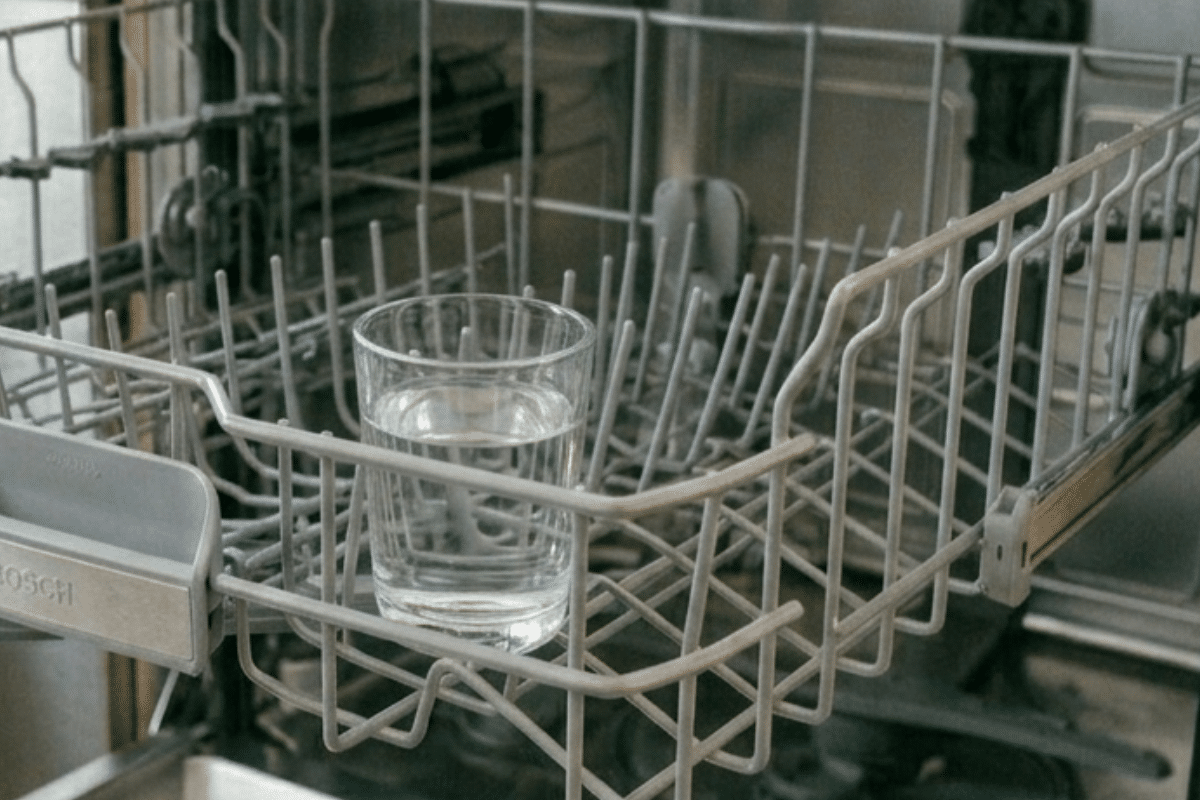
If you’ve got a jug of white vinegar in your pantry, you already own a dishwasher cleaner. Here’s how I do it.
Step 1: Check the Filter
First, pull out the bottom rack and check the filter. If you’ve never looked at it, this is your moment. Twist it out (most lift or unscrew easily), rinse it under hot water, and use an old toothbrush to knock loose any stuck-on bits. This step matters. Vinegar can dissolve mineral buildup, but it won’t magically remove a chunk of last Tuesday’s casserole.
Step 2: Set Up the Vinegar Cycle
Now place a sturdy cup or small bowl filled with plain white vinegar on the top rack. Not dumped in the bottom. Not in the detergent cup. On the top rack where it can gradually spill out and circulate as the cycle runs.
Step 3: Run the Dishwasher
Close the door and run the hottest, longest cycle available. Let the machine do its thing. The vinegar will move through the spray arms and internal parts, helping break down mineral deposits and wash away lingering residue.
Step 4: Let It Air Out
When it’s finished, open the door and let it air out for a bit. That’s it.
Frequency Tip: If you have hard water, you may want to do this once a month. If your water is softer and your dishwasher gets regular use, every couple of months is usually enough.
Safety Note: Stick with standard 5% white vinegar unless you really know what you’re doing. High-concentration cleaning vinegar (like 30%) is powerful stuff and can irritate skin and lungs.
This simple DIY dishwasher deep clean with white vinegar removes mineral deposits and lingering residue.
How to Use Citric Acid for Deep Descaling
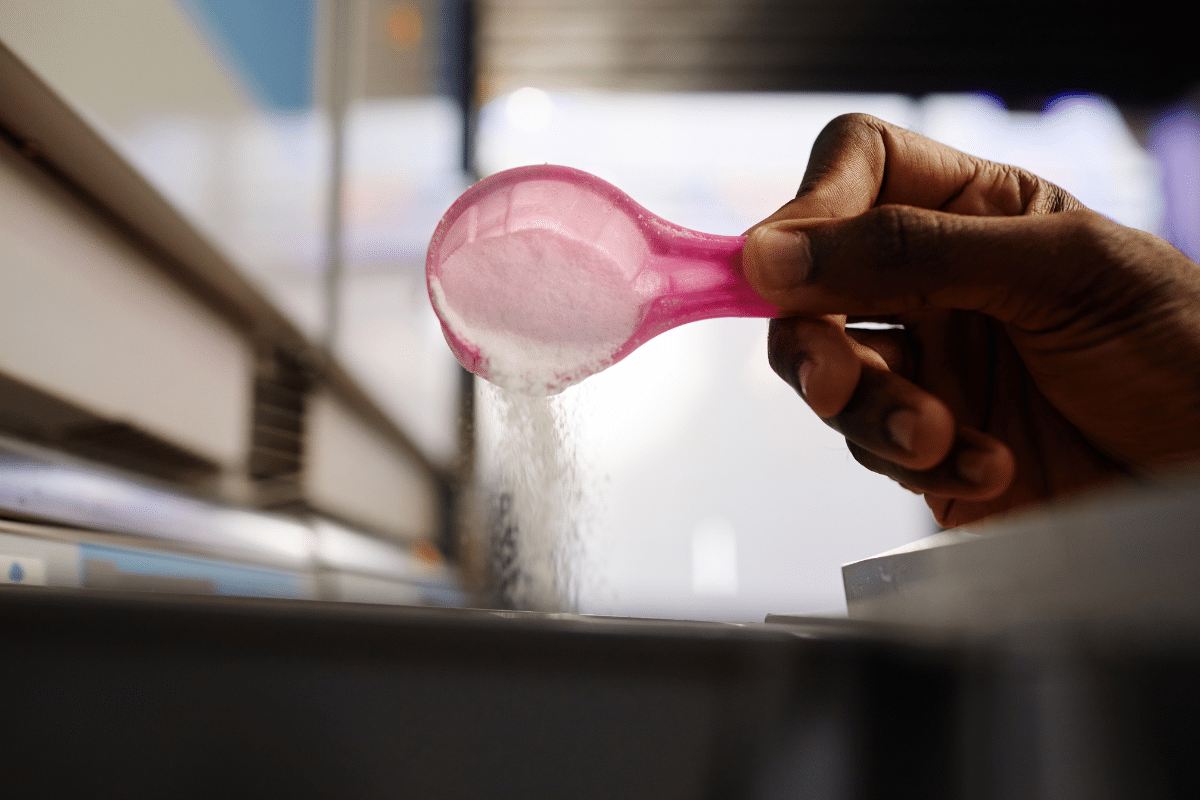
This is what I reach for when glasses are cloudy, the heating element looks dull, or we’ve been dealing with hard water that leaves its mark on everything. Citric acid is a natural descaler. It’s the main ingredient in many commercial dishwasher cleaners, just without the extra packaging and markup. Here’s how to use it.
Step 1: Prep the Dishwasher
Start the same way: check and rinse the filter.
Step 2: Add Citric Acid
Next, measure about ½ cup of food-grade citric acid crystals and pour it directly into the detergent cup. Close it as if you were running a normal load.
Step 3: Run an Empty Cycle
Run the dishwasher empty on the hottest, longest cycle available. That’s it.
As the cycle runs, the citric acid dissolves mineral deposits inside the spray arms, along the interior walls, and around the heating element. It tackles limescale far more aggressively than vinegar, which makes it especially helpful in areas with hard water.
You may notice the inside of your dishwasher looks brighter afterward. That’s not your imagination. It’s scale lifting away.
Safety Note: Citric acid is safe, but it’s still an acid. If you’re handling loose crystals, avoid breathing the dust and wash your hands after measuring. Gloves are a smart idea if you have sensitive skin.
Alternative Hack: If you prefer an even simpler option, an unsweetened lemon-lime drink mix works because it contains citric acid. It’s not fancy, but it gets the job done.
Frequency Tip: For most households, using citric acid three to four times a year is enough. If your water is especially hard, you may want to do it more often.
Citric acid is a powerful way to descale your dishwasher and remove hard water buildup.
Vinegar vs. Citric Acid: Which Works Best?
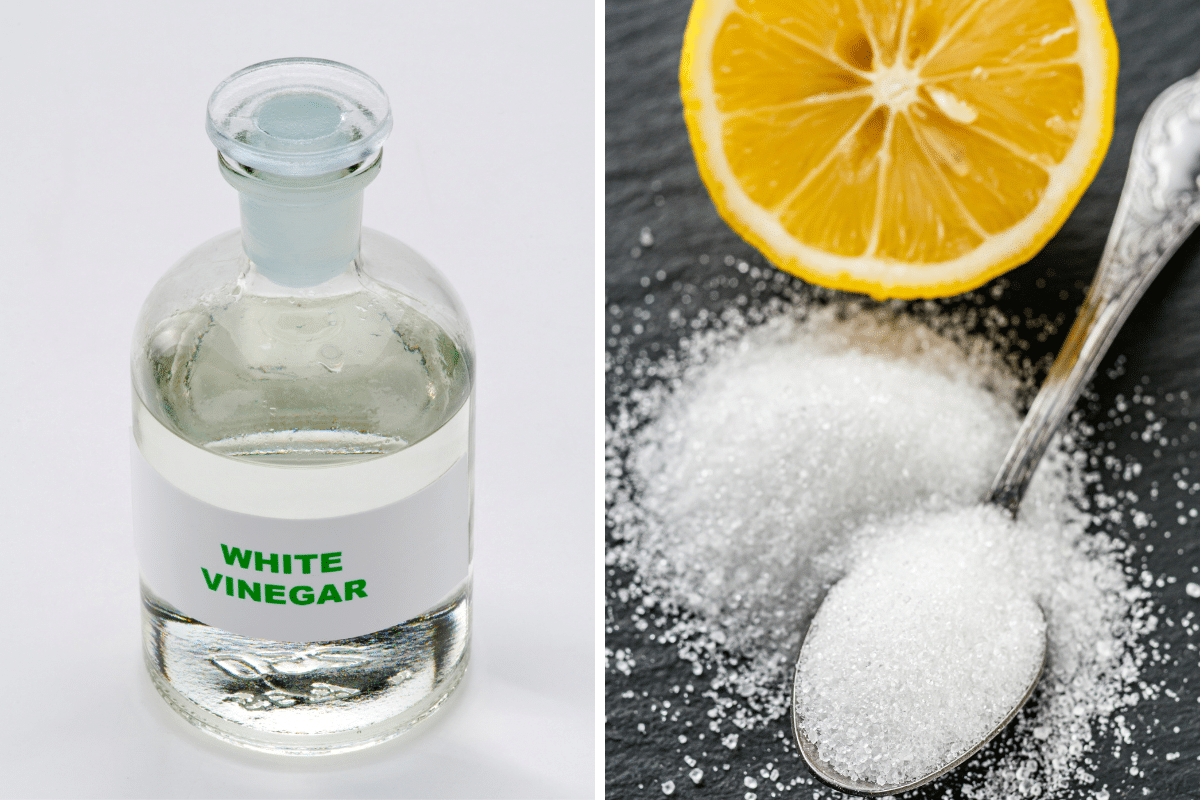
Here’s the straight answer: they’re both acids, but they behave differently and that difference matters depending on what you’re trying to do.
How Vinegar Works
At its core, vinegar is mostly water with 4–18% acetic acid. It’s made through a two-step fermentation process: sugars turn into alcohol, then alcohol turns into acetic acid. That sharp smell? That’s the acetic acid doing its thing.
Acetic acid lowers pH and breaks down mineral buildup, soap scum, and some bacteria.
How Citric Acid Works
Citric acid is what gives lemons and limes their sour bite. Chemically, it’s structured in a way that makes it especially good at grabbing onto minerals like calcium and magnesium. This process is called chelation, and it’s why citric acid is so effective against hard water buildup.
Hard water leaves behind calcium deposits. Citric acid grabs onto those minerals and dissolves them more aggressively than vinegar can.
Choosing Between Vinegar and Citric Acid
- Vinegar: Great for routine maintenance, light mineral buildup, and deodorizing. Easy, cheap, and readily available.
- Citric acid: Best for heavy limescale, cloudy glassware, or hard water areas. A stronger descale without harsh chemicals.
Pro Tip: Many households use a combination: vinegar for regular upkeep and citric acid for deep cleaning a few times a year.


How Often You Should Clean Your Dishwasher
If you run your dishwasher daily (or close to it), aim for every 3–4 weeks. If you only use it a couple times a week, you can stretch it to every other month.
Think of it like changing the oil in your car. You can wait until something smells weird or stops working well… but it’s a whole lot easier (and cheaper) to stay ahead of the buildup.
Dishwashers quietly collect grease, soap residue, and mineral deposits. Over time, that buildup affects performance. Dishes don’t sparkle the same. Glassware starts looking cloudy. And eventually? You get that faint smell when you open the door.
A quick monthly clean keeps things running efficiently, extends the life of the appliance, and prevents the need for harsher interventions later. It’s one small habit that saves money, time, and frustration.
Question: Be honest… when’s the last time you cleaned your dishwasher? This month? This year? Or are you adding it to your list right now?
EverydayCheapskate™ is reader-supported. We participate in the Amazon Services LLC Associates Program and other affiliate advertising programs, designed to provide a means for us to earn from qualifying purchases, at no cost to you.

More from Everyday Cheapskate
 https://www.everydaycheapskate.com/wp-content/uploads/20261006-prime-big-deal-days-have-landed.png
800
1200
Mary Hunt
https://www.everydaycheapskate.com/wp-content/uploads/EC-Logo-by-Mary-Hunt-Tagline-Trimmed.png
Mary Hunt2026-10-05 11:01:432026-10-07 09:02:53EC’s Top Picks from Amazon Prime Big Deal Days 2026
https://www.everydaycheapskate.com/wp-content/uploads/20261006-prime-big-deal-days-have-landed.png
800
1200
Mary Hunt
https://www.everydaycheapskate.com/wp-content/uploads/EC-Logo-by-Mary-Hunt-Tagline-Trimmed.png
Mary Hunt2026-10-05 11:01:432026-10-07 09:02:53EC’s Top Picks from Amazon Prime Big Deal Days 2026 https://www.everydaycheapskate.com/wp-content/uploads/20261004-reduce-healthcare-costs-with-three-habits-healthy-couple-walking-in-autumn-leaves.png
800
1200
Mary Hunt
https://www.everydaycheapskate.com/wp-content/uploads/EC-Logo-by-Mary-Hunt-Tagline-Trimmed.png
Mary Hunt2026-10-04 23:08:572026-10-04 23:09:47How to Reduce Healthcare Costs With 3 Free Daily Habits
https://www.everydaycheapskate.com/wp-content/uploads/20261004-reduce-healthcare-costs-with-three-habits-healthy-couple-walking-in-autumn-leaves.png
800
1200
Mary Hunt
https://www.everydaycheapskate.com/wp-content/uploads/EC-Logo-by-Mary-Hunt-Tagline-Trimmed.png
Mary Hunt2026-10-04 23:08:572026-10-04 23:09:47How to Reduce Healthcare Costs With 3 Free Daily Habits https://www.everydaycheapskate.com/wp-content/uploads/20241004-news-you-can-use-october-everyday-cheapskate-top-news-articles.png
800
1200
Mary Hunt
https://www.everydaycheapskate.com/wp-content/uploads/EC-Logo-by-Mary-Hunt-Tagline-Trimmed.png
Mary Hunt2026-10-04 01:04:052026-10-11 14:34:17News You Can Use • October 2026
https://www.everydaycheapskate.com/wp-content/uploads/20241004-news-you-can-use-october-everyday-cheapskate-top-news-articles.png
800
1200
Mary Hunt
https://www.everydaycheapskate.com/wp-content/uploads/EC-Logo-by-Mary-Hunt-Tagline-Trimmed.png
Mary Hunt2026-10-04 01:04:052026-10-11 14:34:17News You Can Use • October 2026 https://www.everydaycheapskate.com/wp-content/uploads/20261003-woman-hugging-elderly-mother-sandwich-generation-caring-for-aging-parents.png
800
1200
Mary Hunt
https://www.everydaycheapskate.com/wp-content/uploads/EC-Logo-by-Mary-Hunt-Tagline-Trimmed.png
Mary Hunt2026-10-03 10:47:222026-10-03 10:47:25Sandwiched Between Aging Parents and Adult Children
https://www.everydaycheapskate.com/wp-content/uploads/20261003-woman-hugging-elderly-mother-sandwich-generation-caring-for-aging-parents.png
800
1200
Mary Hunt
https://www.everydaycheapskate.com/wp-content/uploads/EC-Logo-by-Mary-Hunt-Tagline-Trimmed.png
Mary Hunt2026-10-03 10:47:222026-10-03 10:47:25Sandwiched Between Aging Parents and Adult Children https://www.everydaycheapskate.com/wp-content/uploads/20260927-impossible-lasagna-pie-recipe-with-wooden-serving-spoon-in-white-casserole-dish.png
800
1200
Mary Hunt
https://www.everydaycheapskate.com/wp-content/uploads/EC-Logo-by-Mary-Hunt-Tagline-Trimmed.png
Mary Hunt2026-09-28 09:38:592026-09-28 22:48:34Impossible Lasagna Pie: All the Flavor, None of the Noodles
https://www.everydaycheapskate.com/wp-content/uploads/20260927-impossible-lasagna-pie-recipe-with-wooden-serving-spoon-in-white-casserole-dish.png
800
1200
Mary Hunt
https://www.everydaycheapskate.com/wp-content/uploads/EC-Logo-by-Mary-Hunt-Tagline-Trimmed.png
Mary Hunt2026-09-28 09:38:592026-09-28 22:48:34Impossible Lasagna Pie: All the Flavor, None of the Noodles https://www.everydaycheapskate.com/wp-content/uploads/20260925-best-inexpensive-coffee-grinders-burr-manual-and-electric.png
800
1200
Mary Hunt
https://www.everydaycheapskate.com/wp-content/uploads/EC-Logo-by-Mary-Hunt-Tagline-Trimmed.png
Mary Hunt2026-09-25 11:06:342026-10-10 15:49:09The Best Coffee Grinder Upgrade That’s Actually Worth It
https://www.everydaycheapskate.com/wp-content/uploads/20260925-best-inexpensive-coffee-grinders-burr-manual-and-electric.png
800
1200
Mary Hunt
https://www.everydaycheapskate.com/wp-content/uploads/EC-Logo-by-Mary-Hunt-Tagline-Trimmed.png
Mary Hunt2026-09-25 11:06:342026-10-10 15:49:09The Best Coffee Grinder Upgrade That’s Actually Worth It https://www.everydaycheapskate.com/wp-content/uploads/20260918-man-and-woman-signing-an-extended-warranty-in-a-car-dealership.png
800
1200
Mary Hunt
https://www.everydaycheapskate.com/wp-content/uploads/EC-Logo-by-Mary-Hunt-Tagline-Trimmed.png
Mary Hunt2026-09-18 15:23:432026-09-18 15:25:43Is an Extended Warranty Ever Worth It? The Truth for 2026
https://www.everydaycheapskate.com/wp-content/uploads/20260918-man-and-woman-signing-an-extended-warranty-in-a-car-dealership.png
800
1200
Mary Hunt
https://www.everydaycheapskate.com/wp-content/uploads/EC-Logo-by-Mary-Hunt-Tagline-Trimmed.png
Mary Hunt2026-09-18 15:23:432026-09-18 15:25:43Is an Extended Warranty Ever Worth It? The Truth for 2026 https://www.everydaycheapskate.com/wp-content/uploads/20260917-fall-cleaning-checklist.png
800
1200
Mary Hunt
https://www.everydaycheapskate.com/wp-content/uploads/EC-Logo-by-Mary-Hunt-Tagline-Trimmed.png
Mary Hunt2026-09-17 17:11:012026-09-28 22:48:45Fall Cleaning Checklist: 15 Overlooked Spots to Clean
https://www.everydaycheapskate.com/wp-content/uploads/20260917-fall-cleaning-checklist.png
800
1200
Mary Hunt
https://www.everydaycheapskate.com/wp-content/uploads/EC-Logo-by-Mary-Hunt-Tagline-Trimmed.png
Mary Hunt2026-09-17 17:11:012026-09-28 22:48:45Fall Cleaning Checklist: 15 Overlooked Spots to Clean https://www.everydaycheapskate.com/wp-content/uploads/20260913-how-to-winterize-your-home-snowy-driveway-suburban-home.png
800
1200
Mary Hunt
https://www.everydaycheapskate.com/wp-content/uploads/EC-Logo-by-Mary-Hunt-Tagline-Trimmed.png
Mary Hunt2026-09-13 15:32:142026-09-28 22:48:55The Complete Guide to Winterizing Your Home This Fall
https://www.everydaycheapskate.com/wp-content/uploads/20260913-how-to-winterize-your-home-snowy-driveway-suburban-home.png
800
1200
Mary Hunt
https://www.everydaycheapskate.com/wp-content/uploads/EC-Logo-by-Mary-Hunt-Tagline-Trimmed.png
Mary Hunt2026-09-13 15:32:142026-09-28 22:48:55The Complete Guide to Winterizing Your Home This FallPlease keep your comments positive, encouraging, helpful, brief,
and on-topic in keeping with EC Commenting Guidelines
Last update on 2026-10-11 / Affiliate links / Images from Amazon Product Advertising API


The detergent cup in my dishwasher is way too small to hold half a cup. Can I put a little in there and then put the remainder in another cup on the top shelf of the dishwasher?
Thank you so much for all your wonderful tips. I have been saving money with them for years.
I assume you’re referring to citric acid. Just put the remainder in the tub of your dishwasher. Easy!
never. of course it was just installed wednesday and i haven’t run it yet…
if i can’t order citric acid on amazon [there is no place to insert a check on my computer] where would i find it? hardware store? health food store? my local grocery store does not carry it, nor to they carry unsweetened coolaid.
Look for citric acid at your grocery store with the canning and preserving items. Its usually there. It’s also sometimes in the baking section and if your grocery store has a kosher section, it’s sometimes there labeled as “sour salt”
many thanks. i was looking in all the wrong places! i’ll check when i go shopping tomorrow.