

5 No-Brush Ways to Clean Your Grill (Using Stuff You Already Have)

Let me guess. Your wire grill brush is looking a little rough around the edges. Or worse, it’s shedding bristles like a nervous golden retriever. Those things wear out fast, they’re not cheap to replace, and there’s something unsettling about finding a metal bristle in your burger. Here’s the thing: you don’t need one. There are at least five ways to get your grill grates sparkling clean using things already sitting in your kitchen. Cheaper. Safer. And honestly, more satisfying.

Here’s something most people don’t realize: a hot, well-seasoned grill grate is mostly self-cleaning. The intense heat carbonizes whatever’s stuck on, and your job is mostly to knock that residue loose. You don’t need stiff wire bristles to do that. Almost anything with a bit of texture and a little leverage will get the job done.
These five methods all work. Pick the one that fits what you already have. They’re listed roughly from easiest (do this every time) to deepest cleaning (when the grates need real attention).
Method 1: The Half-Onion Trick
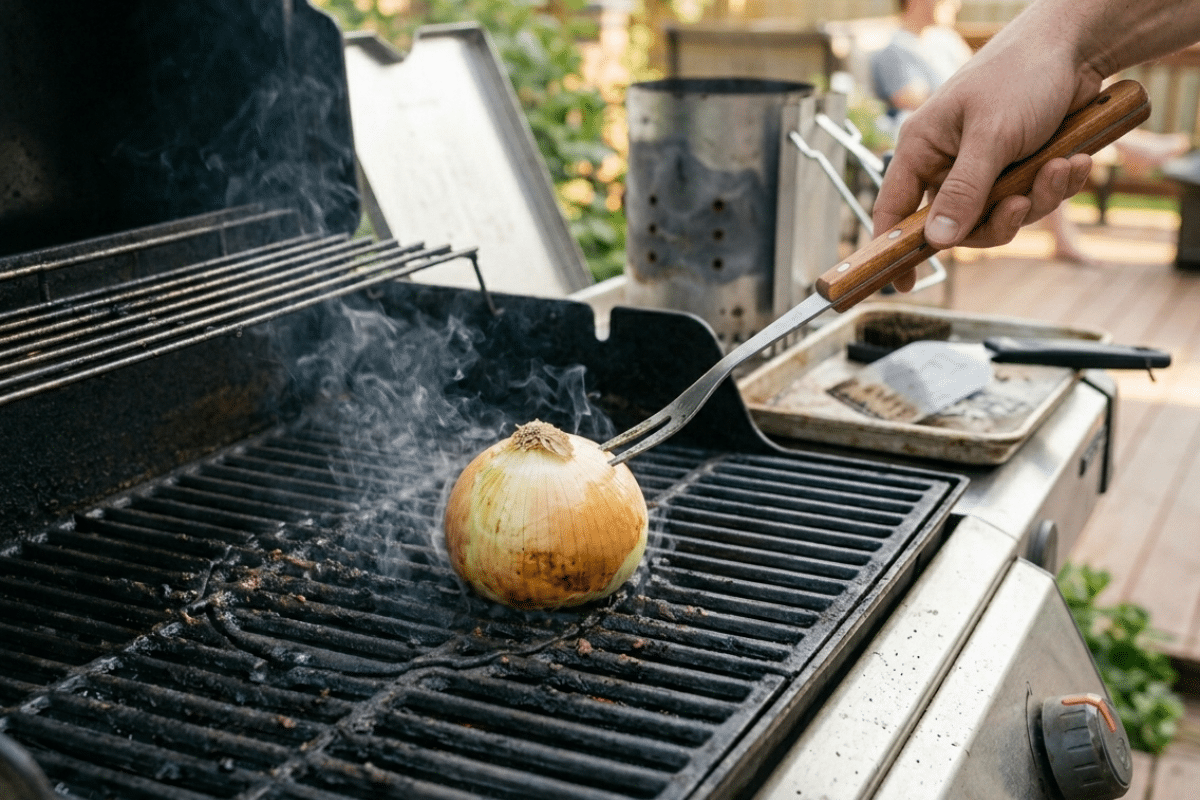
I know. It sounds like something your uncle made up. It isn’t. Cut a yellow or white onion in half. Skewer the cut side with a long-handled fork, and rub it firmly across the hot grates.
The natural acids and sugars in the onion soften stuck-on residue and lift it free. Even better, it leaves the grates lightly seasoned and almost grease-free. Southern pitmasters have been doing this for generations, and they know a thing or two about grills.
Best for: Quick cleaning right after grilling, while the grill is still hot.
Method 2: The Foil Ball Scrubber
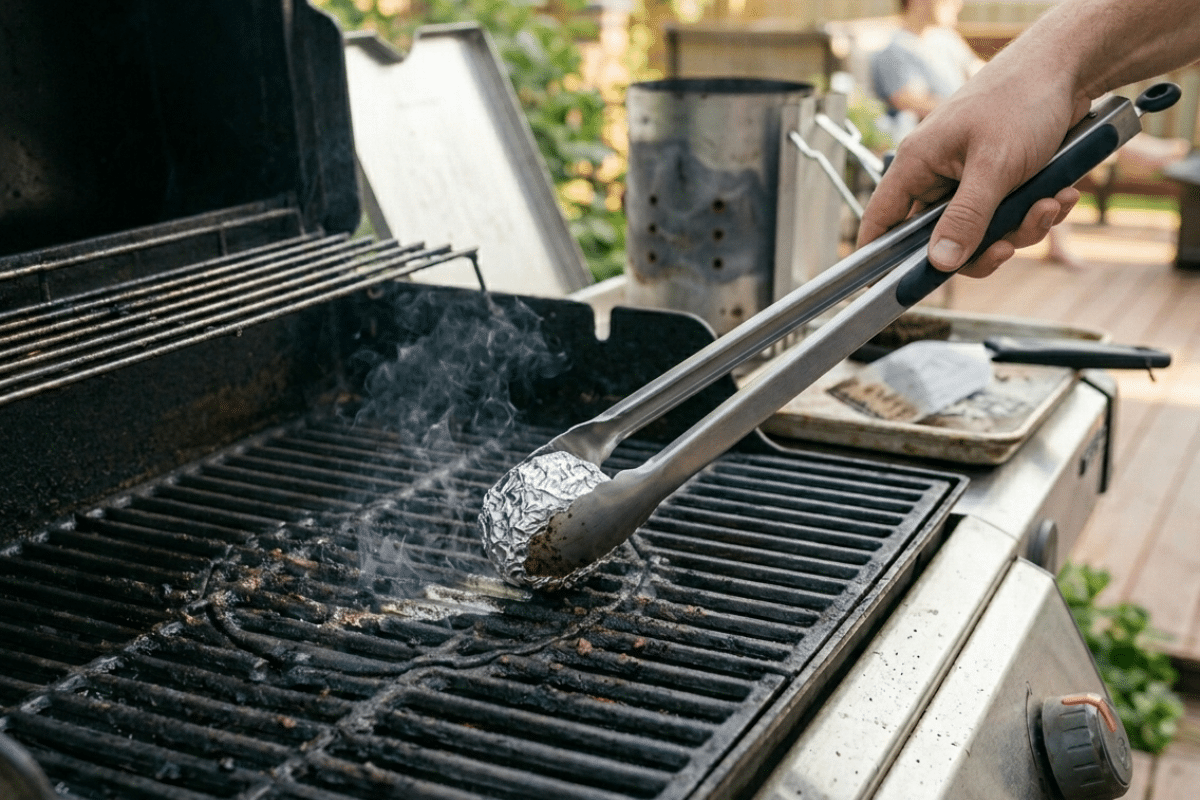
Tear off a square of heavy-duty aluminum foil (about 12 inches), crumple it into a tight ball, and grip it with long tongs. Scrub the hot grates the same way you would with a brush. That’s it. That’s the whole method.
The foil is rigid enough to scrape off built-up residue but soft enough not to damage the grate. When it gets too dirty, you toss it. No bristles to lose, no brush to store, no replacement to buy. Use a fresh ball every time and it’s effectively free.
Best for: Replacing your wire brush for everyday use. Most barbecue safety advocates now actively recommend this over wire brushes.
Method 3: The Steam Method
This is the one for when your grates are really bad. The kind where stuff is fused on and nothing else is touching it.
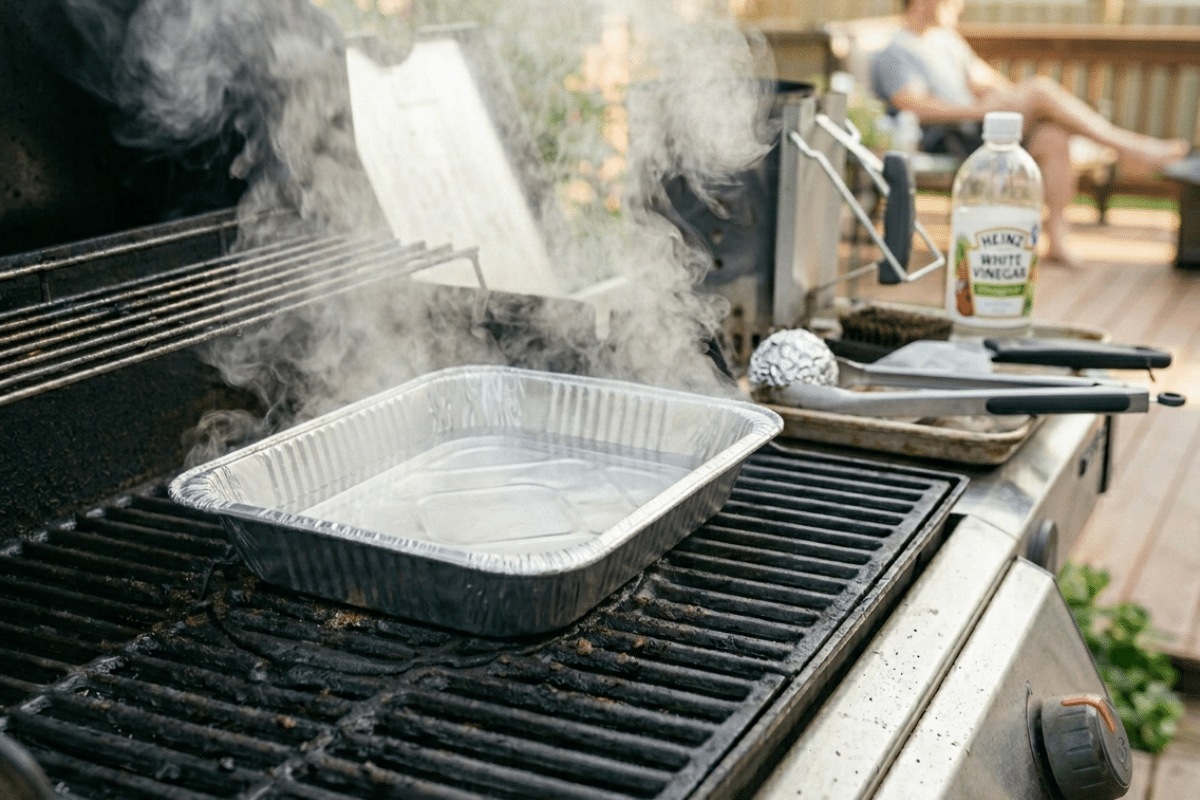
Fill an aluminum pan with about an inch of water, and place it directly on the hot grates. Close the lid for 10 to 15 minutes. The steam loosens even the most stubborn baked-on grease and food.
Once the steam has done its work, the residue wipes off easily with the foil ball or a damp cloth. You can add a splash of white vinegar to the water for extra grease-cutting power.
Best for: Deep cleaning a grill that’s been neglected, or after grilling something especially messy.
Method 4: Baking Soda Paste (Cold Grill)
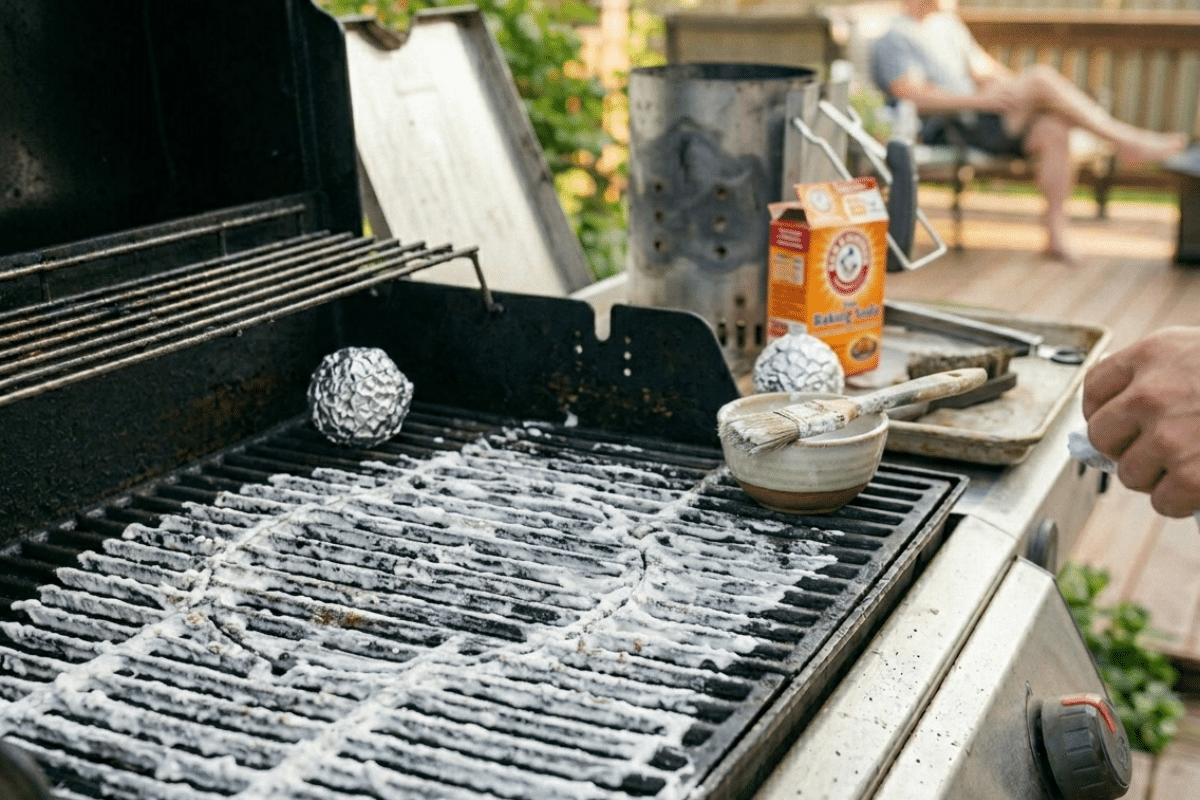
This is the method for cold-grill deep cleaning, usually at the start or end of grilling season.
Make a paste of about a cup of baking soda and a quarter cup of water. Spread it thickly over the cold grates and let it sit for 20 to 30 minutes. The mild abrasion plus the alkalinity breaks down baked-on grease.
Scrub with a damp cloth or the foil ball, rinse well with the hose, and dry completely before storing or firing up.
Best for: Seasonal deep cleans, or restoring grates that look like they’re past saving.
Method 5: Coffee Grounds and Dish Soap
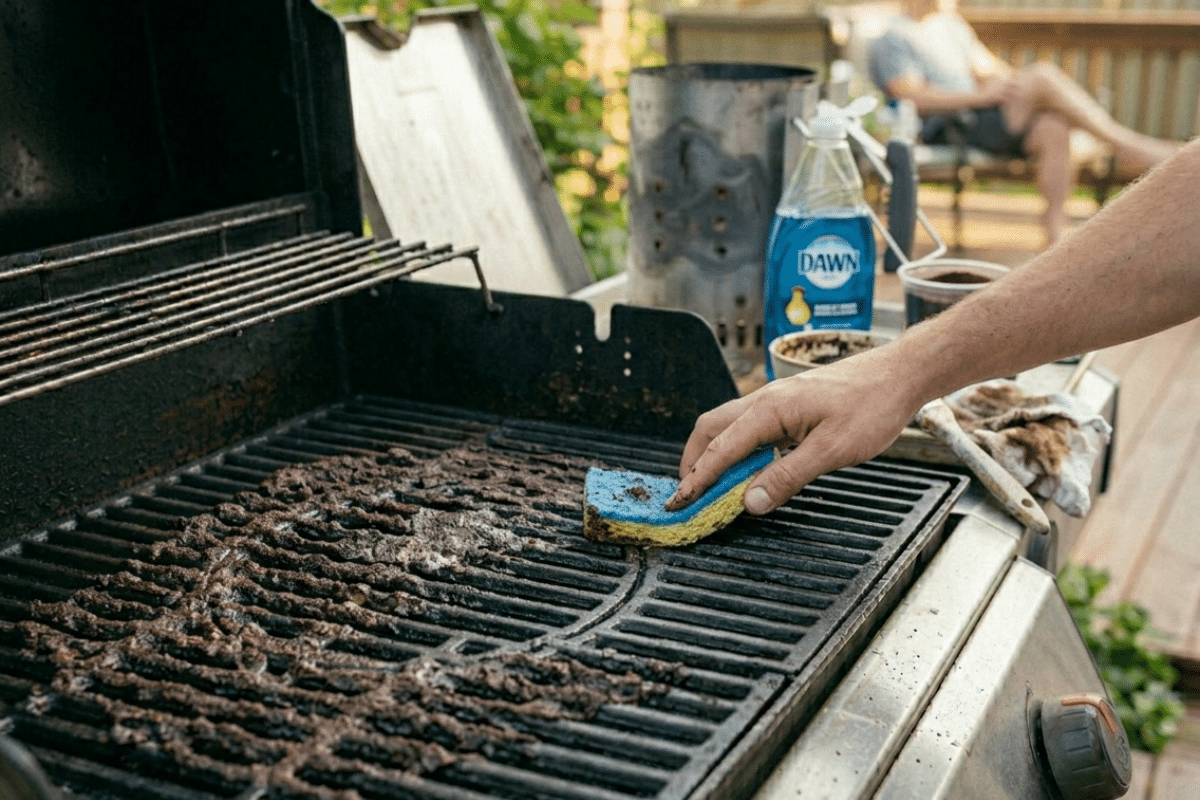
This sounds like an internet hoax until you try it. Used coffee grounds are mildly abrasive and naturally degreasing. Mix a half cup of grounds with a teaspoon of Dawn dish soap and a splash of warm water until it forms a thick paste.
Spread it on cold grates with a sponge and scrub. Rinse thoroughly. The grease and grime come off, and the grates come out looking surprisingly clean.
Bonus: it gives you something useful to do with the morning’s coffee grounds before they hit the trash.
Best for: Cold-grill cleaning when you don’t have baking soda on hand, or as a chemical-free alternative for anyone sensitive to commercial cleaners.
A Few Tips That Make Any Method Work Better
- Preheat, then post-heat. Let the grill run about 10 minutes after you’re done cooking. Heat carbonizes the residue and makes cleaning dramatically easier.
- Oil the grates before you cook. Dip a folded paper towel in vegetable oil, hold it with tongs, and run it across hot grates before adding food. One simple step prevents most of the mess in the first place.
- Clean warm, not scorching hot or stone cold. Warm grates clean fastest. Hot can warp delicate metal; cold means everything’s locked in place.
- Cover your grill. Most grill damage comes from weather, not cooking. A good cover can double the life of your grates.
What About Wire Brushes? Are They Really That Bad?
The concern is real but often overblown. Loose wire bristles from worn-out brushes can stick to food and cause injury if swallowed. The fix is simple: if you do use a wire brush, replace it the moment any bristles look loose, run a damp cloth over the grates after brushing to catch any stragglers, and inspect food visually before serving.
But honestly, once you’ve tried the foil ball method, the wire brush starts feeling like a tool from a different era. It works just as well, costs nothing, and there’s no shedding bristle to worry about.
Question: Which of these have you tried? And what’s your go-to grill cleaning trick that I missed? Share in the comments below.
EverydayCheapskate™ is reader-supported. We participate in the Amazon Services LLC Associates Program and other affiliate advertising programs, designed to provide a means for us to earn from qualifying purchases, at no cost to you.

More from Everyday Cheapskate
 https://www.everydaycheapskate.com/wp-content/uploads/20260917-fall-cleaning-checklist.png
800
1200
Mary Hunt
https://www.everydaycheapskate.com/wp-content/uploads/EC-Logo-by-Mary-Hunt-Tagline-Trimmed.png
Mary Hunt2026-09-17 17:11:012026-09-28 22:48:45Fall Cleaning Checklist: 15 Overlooked Spots to Clean
https://www.everydaycheapskate.com/wp-content/uploads/20260917-fall-cleaning-checklist.png
800
1200
Mary Hunt
https://www.everydaycheapskate.com/wp-content/uploads/EC-Logo-by-Mary-Hunt-Tagline-Trimmed.png
Mary Hunt2026-09-17 17:11:012026-09-28 22:48:45Fall Cleaning Checklist: 15 Overlooked Spots to Clean https://www.everydaycheapskate.com/wp-content/uploads/20260902-pumpkin-spice-latte-recipe-homemade-diy.png
800
1200
Mary Hunt
https://www.everydaycheapskate.com/wp-content/uploads/EC-Logo-by-Mary-Hunt-Tagline-Trimmed.png
Mary Hunt2026-09-02 16:16:022026-09-02 16:18:35Homemade Pumpkin Spice Latte Recipe (Cheaper, Better, Faster)
https://www.everydaycheapskate.com/wp-content/uploads/20260902-pumpkin-spice-latte-recipe-homemade-diy.png
800
1200
Mary Hunt
https://www.everydaycheapskate.com/wp-content/uploads/EC-Logo-by-Mary-Hunt-Tagline-Trimmed.png
Mary Hunt2026-09-02 16:16:022026-09-02 16:18:35Homemade Pumpkin Spice Latte Recipe (Cheaper, Better, Faster) https://www.everydaycheapskate.com/wp-content/uploads/20260831-Portrait-of-a-Pitbull-on-a-yellow-background-homemade-dog-treat-recipes.png
800
1200
Mary Hunt
https://www.everydaycheapskate.com/wp-content/uploads/EC-Logo-by-Mary-Hunt-Tagline-Trimmed.png
Mary Hunt2026-08-31 13:06:072026-09-28 22:49:173 Homemade Dog Treats Recipes Your Dog Will Love Most
https://www.everydaycheapskate.com/wp-content/uploads/20260831-Portrait-of-a-Pitbull-on-a-yellow-background-homemade-dog-treat-recipes.png
800
1200
Mary Hunt
https://www.everydaycheapskate.com/wp-content/uploads/EC-Logo-by-Mary-Hunt-Tagline-Trimmed.png
Mary Hunt2026-08-31 13:06:072026-09-28 22:49:173 Homemade Dog Treats Recipes Your Dog Will Love Most https://www.everydaycheapskate.com/wp-content/uploads/20260829-fall-yard-projects-to-tackle-before-the-first-frost-foilage-front-yard-home.png
800
1200
Mary Hunt
https://www.everydaycheapskate.com/wp-content/uploads/EC-Logo-by-Mary-Hunt-Tagline-Trimmed.png
Mary Hunt2026-08-29 17:25:422026-09-28 22:49:2010 Fall Yard Tasks to Complete Before First Frost Hits
https://www.everydaycheapskate.com/wp-content/uploads/20260829-fall-yard-projects-to-tackle-before-the-first-frost-foilage-front-yard-home.png
800
1200
Mary Hunt
https://www.everydaycheapskate.com/wp-content/uploads/EC-Logo-by-Mary-Hunt-Tagline-Trimmed.png
Mary Hunt2026-08-29 17:25:422026-09-28 22:49:2010 Fall Yard Tasks to Complete Before First Frost Hits https://www.everydaycheapskate.com/wp-content/uploads/20260826-DIY-cat-litter-deodorizer-kitten-looking-up-at-camera-from-box.png
800
1200
Mary Hunt
https://www.everydaycheapskate.com/wp-content/uploads/EC-Logo-by-Mary-Hunt-Tagline-Trimmed.png
Mary Hunt2026-08-25 21:17:362026-09-28 22:49:26The One-Ingredient Litter Box Trick That Costs Pennies
https://www.everydaycheapskate.com/wp-content/uploads/20260826-DIY-cat-litter-deodorizer-kitten-looking-up-at-camera-from-box.png
800
1200
Mary Hunt
https://www.everydaycheapskate.com/wp-content/uploads/EC-Logo-by-Mary-Hunt-Tagline-Trimmed.png
Mary Hunt2026-08-25 21:17:362026-09-28 22:49:26The One-Ingredient Litter Box Trick That Costs Pennies https://www.everydaycheapskate.com/wp-content/uploads/20260822-central-AC-maintenance-air-condenser-outdoors.png
800
1200
Mary Hunt
https://www.everydaycheapskate.com/wp-content/uploads/EC-Logo-by-Mary-Hunt-Tagline-Trimmed.png
Mary Hunt2026-08-22 14:19:562026-09-28 22:49:43How to Extend the Life of Your Central AC (5 Late-Summer Tune-Up Tips)
https://www.everydaycheapskate.com/wp-content/uploads/20260822-central-AC-maintenance-air-condenser-outdoors.png
800
1200
Mary Hunt
https://www.everydaycheapskate.com/wp-content/uploads/EC-Logo-by-Mary-Hunt-Tagline-Trimmed.png
Mary Hunt2026-08-22 14:19:562026-09-28 22:49:43How to Extend the Life of Your Central AC (5 Late-Summer Tune-Up Tips) https://www.everydaycheapskate.com/wp-content/uploads/20260820-how-to-keep-ants-away-after-youve-killed-the-ant-hill.png
800
1200
Mary Hunt
https://www.everydaycheapskate.com/wp-content/uploads/EC-Logo-by-Mary-Hunt-Tagline-Trimmed.png
Mary Hunt2026-08-20 14:17:552026-09-28 22:49:46How to Keep Ants Away After You Treat the Ant Hill
https://www.everydaycheapskate.com/wp-content/uploads/20260820-how-to-keep-ants-away-after-youve-killed-the-ant-hill.png
800
1200
Mary Hunt
https://www.everydaycheapskate.com/wp-content/uploads/EC-Logo-by-Mary-Hunt-Tagline-Trimmed.png
Mary Hunt2026-08-20 14:17:552026-09-28 22:49:46How to Keep Ants Away After You Treat the Ant Hill https://www.everydaycheapskate.com/wp-content/uploads/20260815-how-to-water-your-lawn-without-wasting-money.png
800
1200
Mary Hunt
https://www.everydaycheapskate.com/wp-content/uploads/EC-Logo-by-Mary-Hunt-Tagline-Trimmed.png
Mary Hunt2026-08-15 12:45:022026-09-28 22:49:51How to Water Your Lawn Without Wasting Money This Summer
https://www.everydaycheapskate.com/wp-content/uploads/20260815-how-to-water-your-lawn-without-wasting-money.png
800
1200
Mary Hunt
https://www.everydaycheapskate.com/wp-content/uploads/EC-Logo-by-Mary-Hunt-Tagline-Trimmed.png
Mary Hunt2026-08-15 12:45:022026-09-28 22:49:51How to Water Your Lawn Without Wasting Money This Summer https://www.everydaycheapskate.com/wp-content/uploads/20260812-zucchini-overload-what-to-do-with-a-bunch-of-zucchini.png
800
1200
Mary Hunt
https://www.everydaycheapskate.com/wp-content/uploads/EC-Logo-by-Mary-Hunt-Tagline-Trimmed.png
Mary Hunt2026-08-12 17:48:312026-09-28 22:49:57Zucchini Overload? 10 Ways to Use Up Your Garden Surplus
https://www.everydaycheapskate.com/wp-content/uploads/20260812-zucchini-overload-what-to-do-with-a-bunch-of-zucchini.png
800
1200
Mary Hunt
https://www.everydaycheapskate.com/wp-content/uploads/EC-Logo-by-Mary-Hunt-Tagline-Trimmed.png
Mary Hunt2026-08-12 17:48:312026-09-28 22:49:57Zucchini Overload? 10 Ways to Use Up Your Garden Surplus

I have a gas grill that had not been used in about 3 years. First while the grill was off, I wiped and swept as much loose debris as possible, including spider webs and charred stink bugs! Next I used the water-filled pan trick and turned the grill on. It loosened the gunk on the grates enough that I could use foil balls to scrub the gunk away. I’m happy with the results and plan to cook a steak tonight!
Thanks, Mary!!!
Thanks for this post. I have a dirty grill and have been afraid to use it. But I was also afraid to clean it with a metal bristle brush. I will give the baking soda method a try first.
Thanks,
Susan