
The 7-Item Emergency Car Kit Every Driver Needs (Cheaper Than One Tow)


You know the moment. It’s 9 p.m., your phone’s at 4%, and you’re standing on the shoulder of the highway looking at a flat tire like it owes you money. Sound familiar? It’s happened to me. It’ll probably happen to you. The only question is whether you’re ready for it.
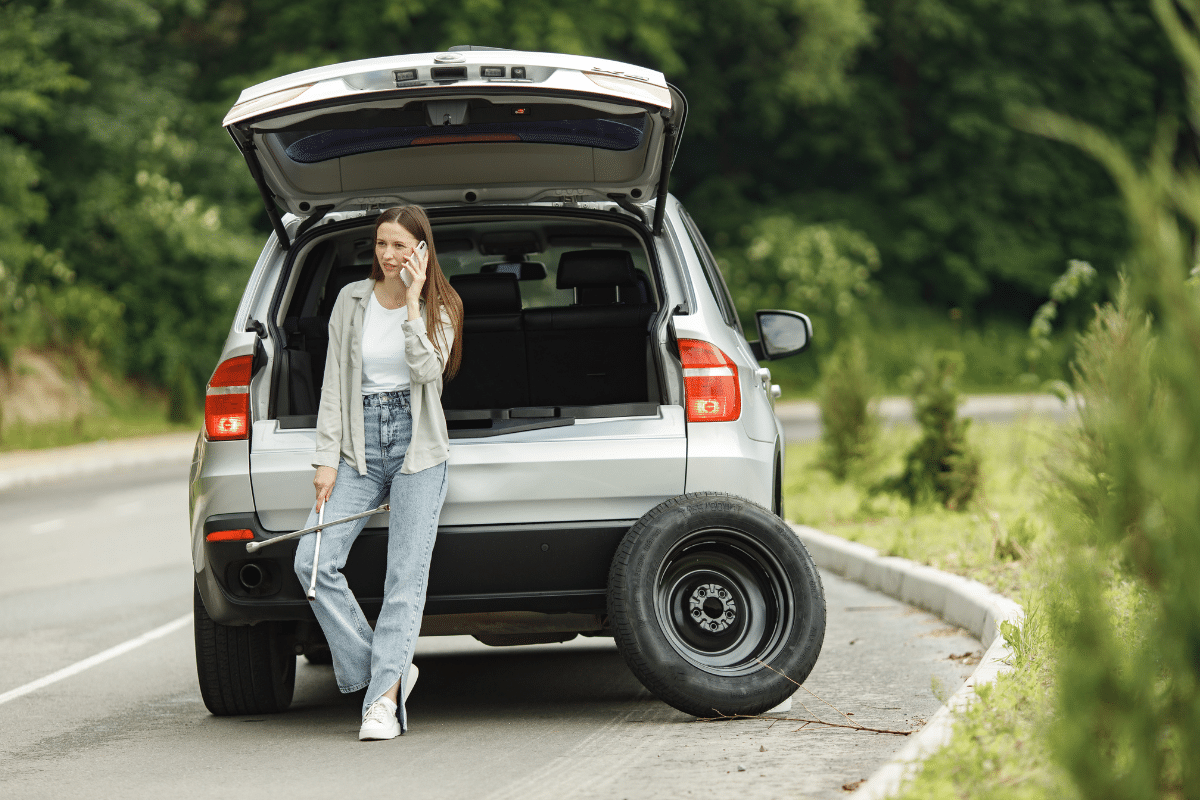
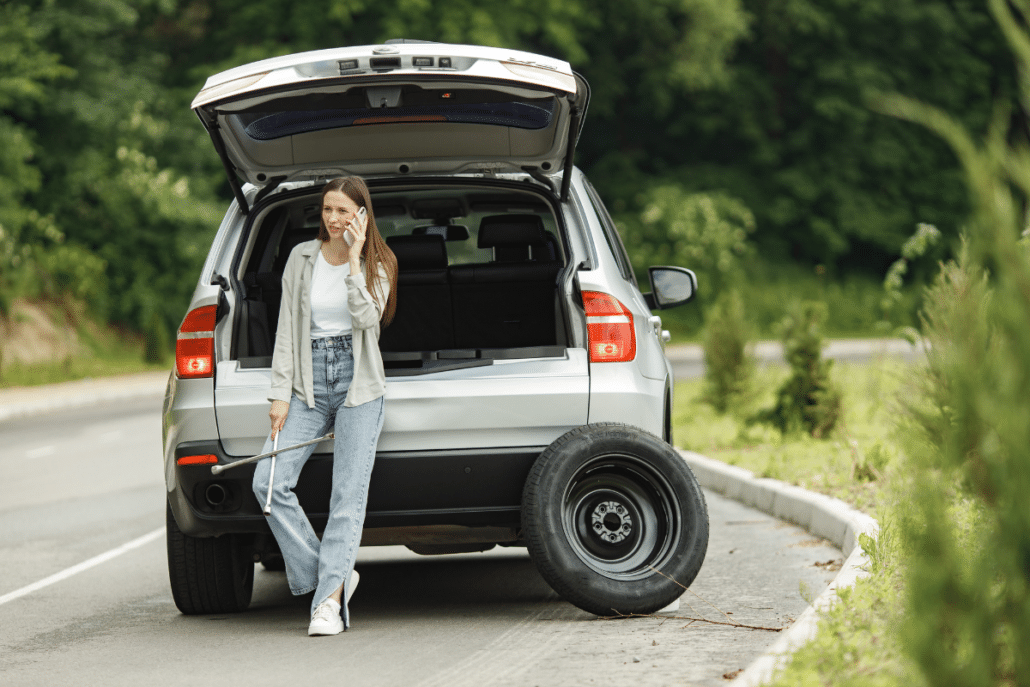
Here’s the thing nobody tells you: most roadside emergencies aren’t emergencies at all. They’re minor annoyances that turn into 2 a.m. tow truck calls because nobody had the right two or three items within reach. A good kit fixes that. It costs less than you’d think, takes up less trunk space than your gym bag, and takes about an hour to put together.
I’ve built and rebuilt this kit more times than I care to admit, usually right after learning the hard way what I was missing. So let’s skip the trial and error. Here are the seven things worth having, and just as important, what to skip.
Skip the Pre-Made Kits
Those roadside emergency kits at the auto parts store? The ones in the shrink-wrapped box for $40 to $100? Mostly filler. They’re built to look impressive on the shelf, not to actually get you out of a ditch.
Build your own instead. Same money, way better gear, and you’ll actually know what’s in it.
The Seven Things That Matter
The seven items below cover about 95 percent of the real-world situations that leave people stuck. Everything else is optional. Assemble these, store them in a small bag or bin in the trunk, and forget about them until the day you need them.
1. Jumper Cables or a Portable Jump Starter
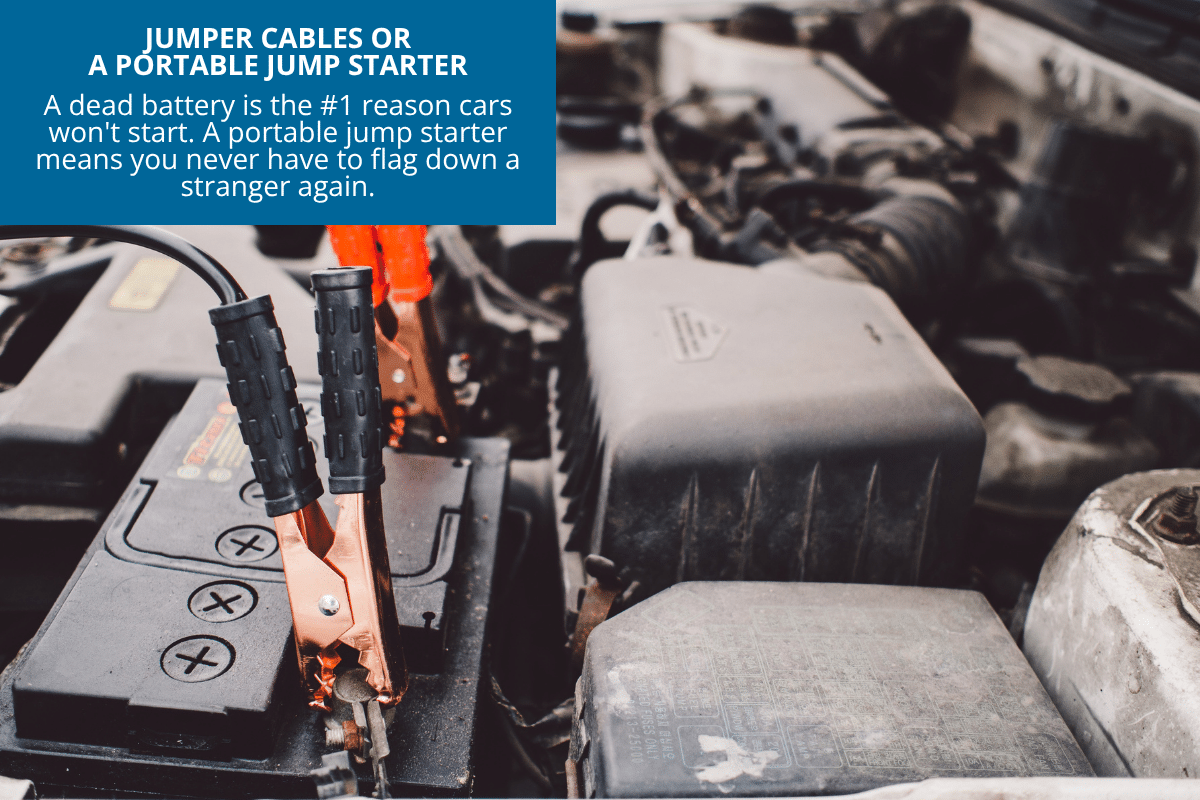
A dead battery is the number one reason cars won’t start, full stop. Jumper cables still work and run $15 to $25. Problem is, you need another car and a stranger kind enough to stop.
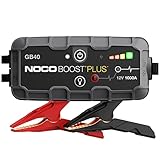
That’s why I’ve switched to a portable lithium jump starter. Mine’s about the size of a paperback, holds a charge for months without being touched, and jumps my car without needing another driver at all. It’ll charge your phone in a pinch, too. Expect to pay $60 to $100 for a good one.
What to Buy:
A NOCO Boost Plus GB40 or something similar. If you’re sticking with cables, get 10-gauge, 12 feet long. The flimsy ones aren’t worth the trunk space.

(Disclosure: This post includes an Amazon Creator Connections product. I may earn a small commission if you purchase through the link, at no additional cost to you.)
2. A Real Flashlight (Not Your Phone)
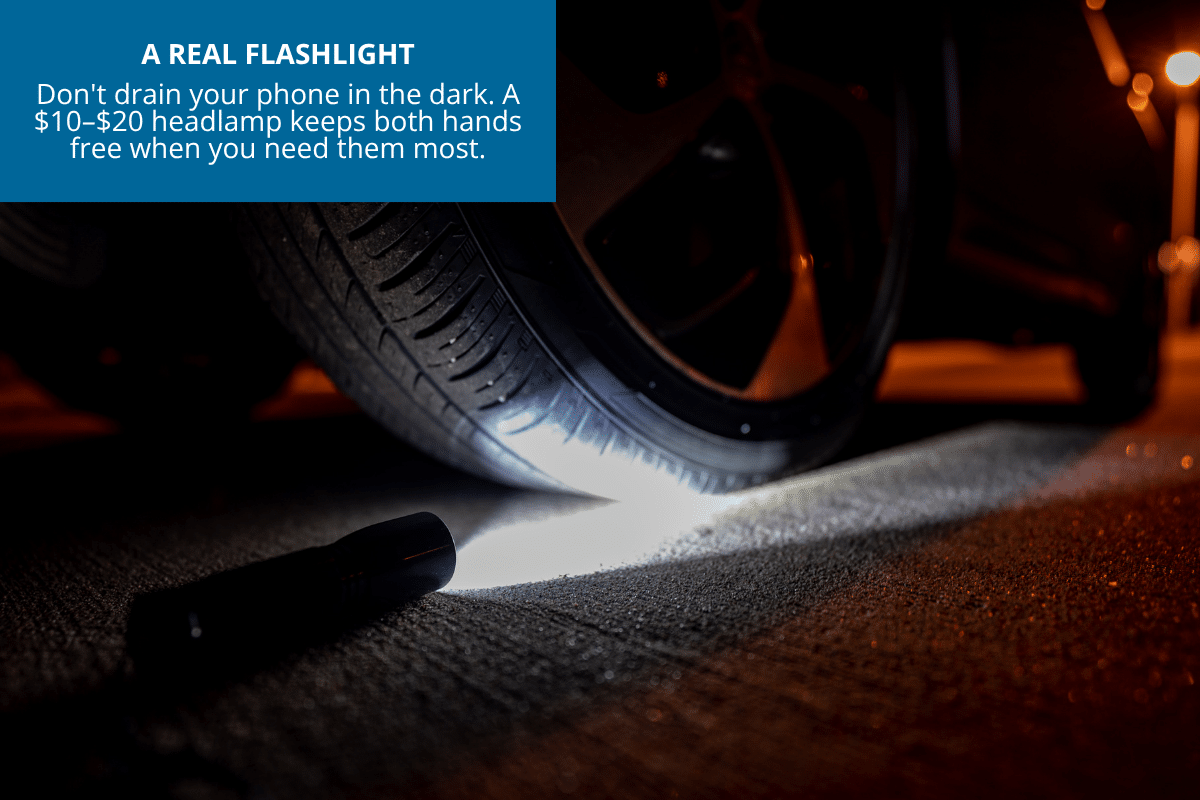
Your phone’s flashlight drains the battery you need for the tow app. A cheap dedicated flashlight runs $10 to $20 and lasts for hours on batteries you’re already carrying as spares.
A headlamp beats a handheld every time. Try changing a tire while holding a flashlight in your teeth and tell me I’m wrong.
What to Buy:
A basic LED headlamp with fresh AAA batteries. Keep spare batteries in a small container in the kit.


3. A Multi-Tool and a Tire Pressure Gauge
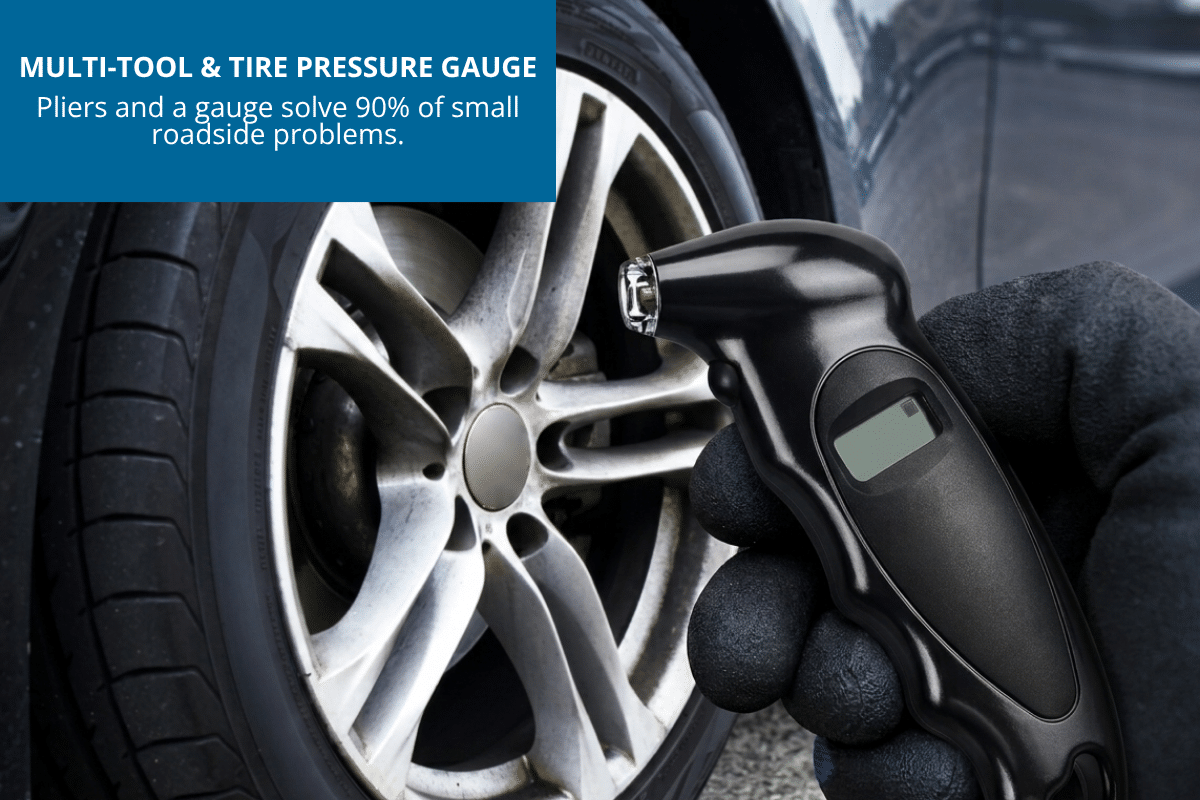
Ninety percent of small roadside fixes come down to one of two things: pliers or a pressure reading. A decent multi-tool handles loose battery terminals, a stuck hood latch, even cutting a seatbelt if it ever comes to that. A tire gauge tells you the difference between “looks a little low” and “24 PSI when it should be 32,” which matters more than you’d think.
What to Buy:
A Leatherman or Gerber multi-tool ($40 to $60) and a digital tire pressure gauge ($8 to $15).


(Disclosure: This post includes an Amazon Creator Connections product. I may earn a small commission if you purchase through the link, at no additional cost to you.)
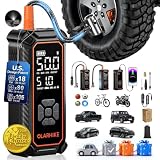
4. Portable Tire Inflator
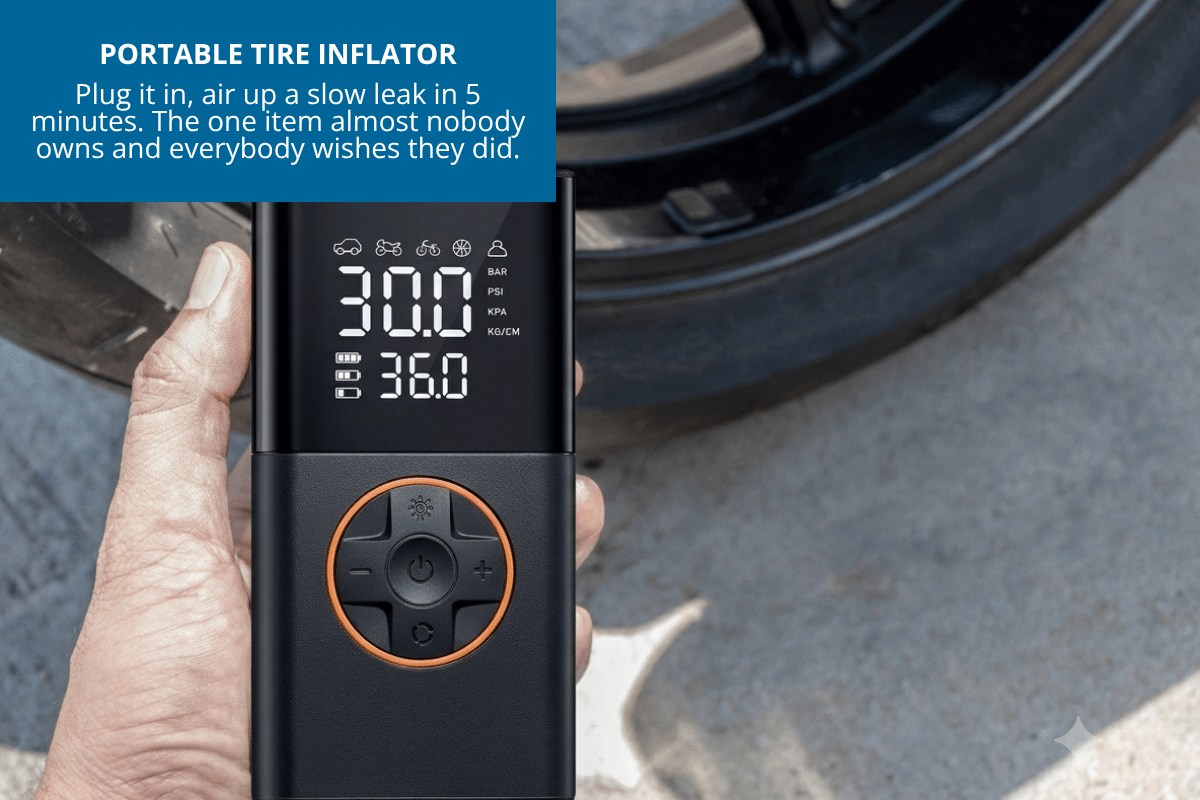
This is the one item almost nobody owns and everybody wishes they did. Plug it into your car’s outlet and it’ll re-inflate a slow leak in about five minutes flat.
Pair it with a plug kit (see below), a small leak that would have stranded you becomes a 15-minute inconvenience.
What to Buy:
AstroAI or OlarHike portable inflators run $25 to $40. Look for one with a built-in digital gauge and auto-shutoff.

5. A Tire Plug Kit
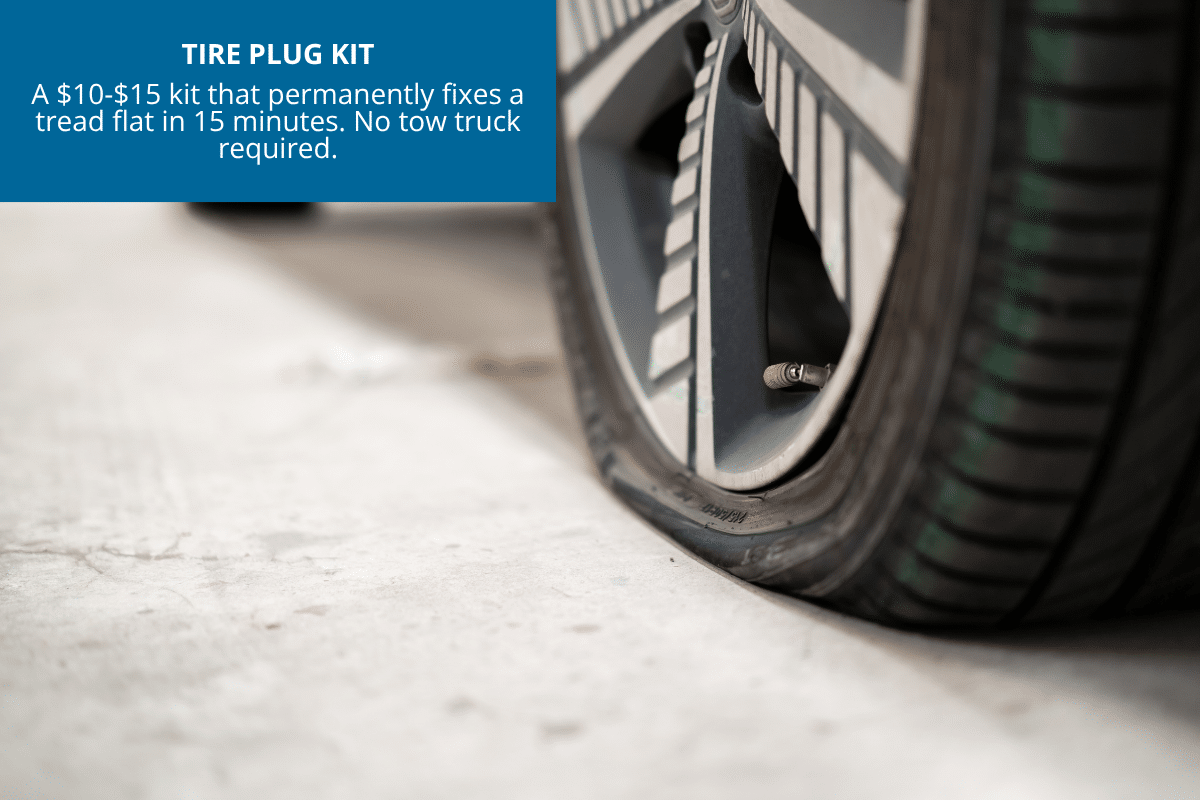
Fifteen dollars. Weighs nothing. Can permanently fix a nail-in-the-tread flat in under fifteen minutes, and yes, it’s a real fix, not a Band-Aid, as long as the puncture’s in the tread and not the sidewall.
Between this and the inflator, most flats never need a tow truck or a spare at all.
What to Buy:
A basic plug kit with plugs, reamer, and insertion tool. Watch one YouTube video before you need it. It looks harder than it is.

6. An Actual First Aid Kit
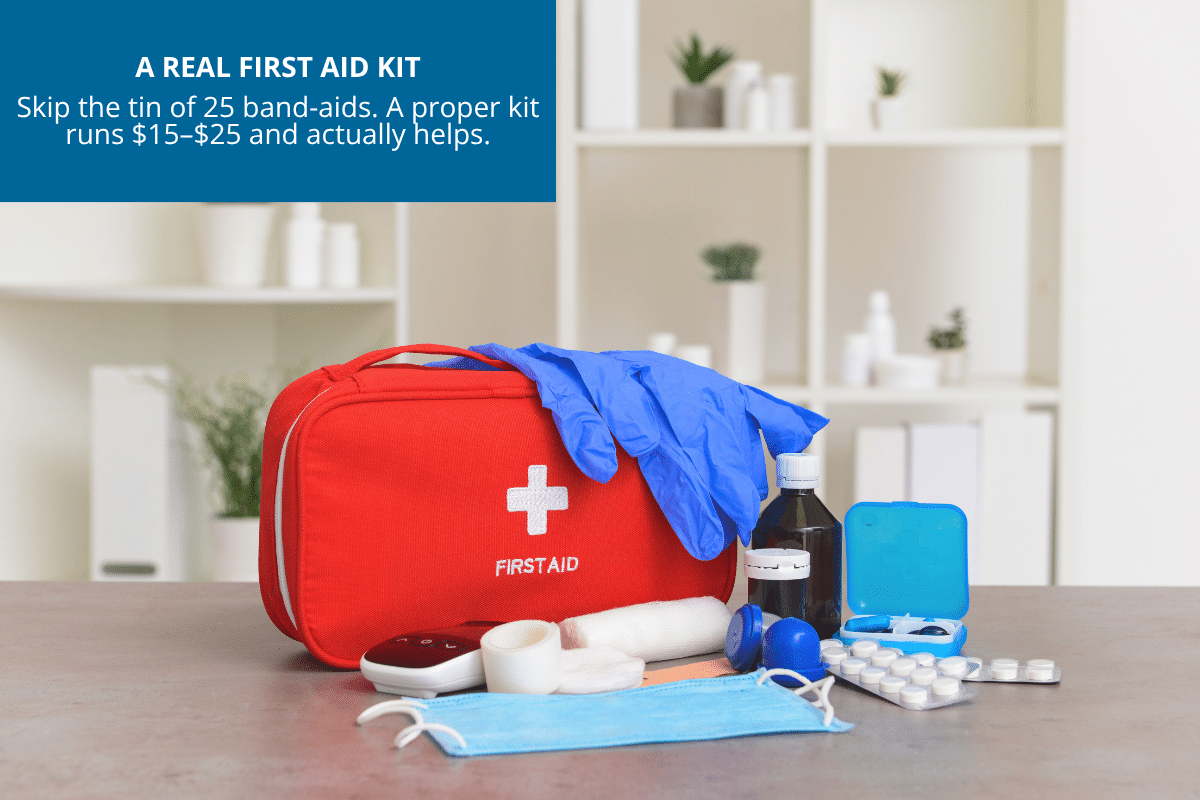
Most roadside trouble is mechanical. But when it’s medical, it tends to matter fast. Skip those sad little tins with 25 band-aids and nothing else useful. Get a real kit with gauze, tape, antiseptic wipes, tweezers, gloves, and pain relievers in more than sample-packet quantities.
What to Buy:
A Johnson & Johnson All-Purpose kit or similar, $15 to $25. Toss in an actual bottle of ibuprofen or acetaminophen. Those tiny foil packets never have enough.

7. Warmth and Water
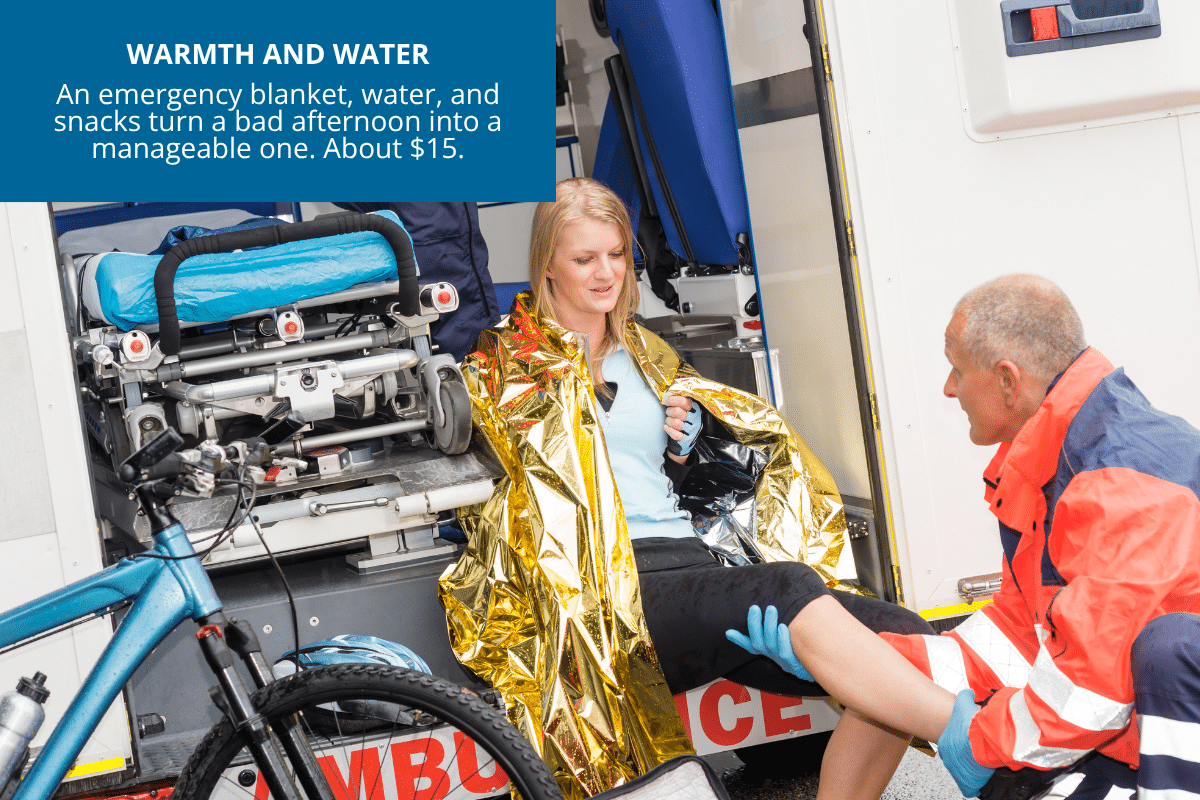
For the times you’re stuck longer than you’d like. A cheap emergency blanket folds down to wallet size, costs about $5, and can be the difference in a winter breakdown. Add water and a few granola bars and a rough afternoon becomes a manageable one.
What to Buy:
Two Mylar blankets, four to six water bottles, a small stash of snacks that won’t melt or freeze. Rotate the water twice a year.

(Disclosure: This post includes an Amazon Creator Connections product. I may earn a small commission if you purchase through the link, at no additional cost to you.)
What to Leave Out
Most pre-made roadside kits include things you’ll never realistically use:
- Cheap tow straps. Usually rated for something smaller than your car. If you actually need a tow, call for one.
- Reflective triangles. Fine in theory, flimsy in the box. Flares do the job better.
- Poncho and gloves. Sounds useful until you realize “one size fits all” means “fits no one.”
- Whistle and matches. Filler. Not roadside gear.
- The tiny hammer. Marketed as a window breaker, too small to actually break one. If that’s a real concern for you, buy a proper automotive escape tool instead.
Where to Keep It
A duffel bag, backpack, or plastic bin in the trunk holds everything except the jumper cables, which usually live in the spare tire well or a side pocket.
Keep the flashlight, tire gauge, and jump starter where you can grab them fast, not buried under a stroller and three reusable grocery bags. You won’t want to dig for it when you actually need it.
Twice a year (clock-change weekends work great for this) pull the kit out. Check the batteries, swap out anything expired, rotate the water. Ten minutes, and it keeps the kit useful instead of decorative.
Question: So tell me… what’s the one thing that’s saved you on the side of the road? I want to hear it. Drop it in the comments. Somebody reading this is going to need exactly that tip someday.
EverydayCheapskate™ is reader-supported. We participate in the Amazon Services LLC Associates Program and other affiliate advertising programs, designed to provide a means for us to earn from qualifying purchases, at no cost to you.

More from Everyday Cheapskate
 https://www.everydaycheapskate.com/wp-content/uploads/20260913-how-to-winterize-your-home-snowy-driveway-suburban-home.png
800
1200
Mary Hunt
https://www.everydaycheapskate.com/wp-content/uploads/EC-Logo-by-Mary-Hunt-Tagline-Trimmed.png
Mary Hunt2026-09-13 15:32:142026-09-28 22:48:55The Complete Guide to Winterizing Your Home This Fall
https://www.everydaycheapskate.com/wp-content/uploads/20260913-how-to-winterize-your-home-snowy-driveway-suburban-home.png
800
1200
Mary Hunt
https://www.everydaycheapskate.com/wp-content/uploads/EC-Logo-by-Mary-Hunt-Tagline-Trimmed.png
Mary Hunt2026-09-13 15:32:142026-09-28 22:48:55The Complete Guide to Winterizing Your Home This Fall https://www.everydaycheapskate.com/wp-content/uploads/20260829-fall-yard-projects-to-tackle-before-the-first-frost-foilage-front-yard-home.png
800
1200
Mary Hunt
https://www.everydaycheapskate.com/wp-content/uploads/EC-Logo-by-Mary-Hunt-Tagline-Trimmed.png
Mary Hunt2026-08-29 17:25:422026-09-28 22:49:2010 Fall Yard Tasks to Complete Before First Frost Hits
https://www.everydaycheapskate.com/wp-content/uploads/20260829-fall-yard-projects-to-tackle-before-the-first-frost-foilage-front-yard-home.png
800
1200
Mary Hunt
https://www.everydaycheapskate.com/wp-content/uploads/EC-Logo-by-Mary-Hunt-Tagline-Trimmed.png
Mary Hunt2026-08-29 17:25:422026-09-28 22:49:2010 Fall Yard Tasks to Complete Before First Frost Hits https://www.everydaycheapskate.com/wp-content/uploads/20260822-central-AC-maintenance-air-condenser-outdoors.png
800
1200
Mary Hunt
https://www.everydaycheapskate.com/wp-content/uploads/EC-Logo-by-Mary-Hunt-Tagline-Trimmed.png
Mary Hunt2026-08-22 14:19:562026-09-28 22:49:43How to Extend the Life of Your Central AC (5 Late-Summer Tune-Up Tips)
https://www.everydaycheapskate.com/wp-content/uploads/20260822-central-AC-maintenance-air-condenser-outdoors.png
800
1200
Mary Hunt
https://www.everydaycheapskate.com/wp-content/uploads/EC-Logo-by-Mary-Hunt-Tagline-Trimmed.png
Mary Hunt2026-08-22 14:19:562026-09-28 22:49:43How to Extend the Life of Your Central AC (5 Late-Summer Tune-Up Tips) https://www.everydaycheapskate.com/wp-content/uploads/20260820-how-to-keep-ants-away-after-youve-killed-the-ant-hill.png
800
1200
Mary Hunt
https://www.everydaycheapskate.com/wp-content/uploads/EC-Logo-by-Mary-Hunt-Tagline-Trimmed.png
Mary Hunt2026-08-20 14:17:552026-09-28 22:49:46How to Keep Ants Away After You Treat the Ant Hill
https://www.everydaycheapskate.com/wp-content/uploads/20260820-how-to-keep-ants-away-after-youve-killed-the-ant-hill.png
800
1200
Mary Hunt
https://www.everydaycheapskate.com/wp-content/uploads/EC-Logo-by-Mary-Hunt-Tagline-Trimmed.png
Mary Hunt2026-08-20 14:17:552026-09-28 22:49:46How to Keep Ants Away After You Treat the Ant Hill https://www.everydaycheapskate.com/wp-content/uploads/20260808-emergency-flashlight-multi-day-power-outage-prep.png
800
1200
Mary Hunt
https://www.everydaycheapskate.com/wp-content/uploads/EC-Logo-by-Mary-Hunt-Tagline-Trimmed.png
Mary Hunt2026-08-08 12:30:072026-09-28 22:50:10How to Prep Your Home for a Multi-Day Power Outage
https://www.everydaycheapskate.com/wp-content/uploads/20260808-emergency-flashlight-multi-day-power-outage-prep.png
800
1200
Mary Hunt
https://www.everydaycheapskate.com/wp-content/uploads/EC-Logo-by-Mary-Hunt-Tagline-Trimmed.png
Mary Hunt2026-08-08 12:30:072026-09-28 22:50:10How to Prep Your Home for a Multi-Day Power Outage https://www.everydaycheapskate.com/wp-content/uploads/20260722-easy-home-repairs-slow-sink-drain-squeaky-hinges-sticky-drawer.png
800
1200
Mary Hunt
https://www.everydaycheapskate.com/wp-content/uploads/EC-Logo-by-Mary-Hunt-Tagline-Trimmed.png
Mary Hunt2026-07-22 13:04:022026-09-28 22:50:4910 Small Home Annoyances You Can Fix in Under 15 Minutes Each
https://www.everydaycheapskate.com/wp-content/uploads/20260722-easy-home-repairs-slow-sink-drain-squeaky-hinges-sticky-drawer.png
800
1200
Mary Hunt
https://www.everydaycheapskate.com/wp-content/uploads/EC-Logo-by-Mary-Hunt-Tagline-Trimmed.png
Mary Hunt2026-07-22 13:04:022026-09-28 22:50:4910 Small Home Annoyances You Can Fix in Under 15 Minutes Each https://www.everydaycheapskate.com/wp-content/uploads/20260717-how-to-read-your-water-bill-sprinklers-on-a-residential-lawn.png
800
1200
Mary Hunt
https://www.everydaycheapskate.com/wp-content/uploads/EC-Logo-by-Mary-Hunt-Tagline-Trimmed.png
Mary Hunt2026-07-18 10:46:312026-09-28 22:50:57How to Read Your Water Bill and Lower Your Monthly Costs Now
https://www.everydaycheapskate.com/wp-content/uploads/20260717-how-to-read-your-water-bill-sprinklers-on-a-residential-lawn.png
800
1200
Mary Hunt
https://www.everydaycheapskate.com/wp-content/uploads/EC-Logo-by-Mary-Hunt-Tagline-Trimmed.png
Mary Hunt2026-07-18 10:46:312026-09-28 22:50:57How to Read Your Water Bill and Lower Your Monthly Costs Now https://www.everydaycheapskate.com/wp-content/uploads/20260716-woman-on-phone-with-flat-tire-spare-roadside-car-emergency-kit.png
800
1200
Mary Hunt
https://www.everydaycheapskate.com/wp-content/uploads/EC-Logo-by-Mary-Hunt-Tagline-Trimmed.png
Mary Hunt2026-07-16 21:10:152026-09-28 22:50:59The 7-Item Emergency Car Kit Every Driver Needs (Cheaper Than One Tow)
https://www.everydaycheapskate.com/wp-content/uploads/20260716-woman-on-phone-with-flat-tire-spare-roadside-car-emergency-kit.png
800
1200
Mary Hunt
https://www.everydaycheapskate.com/wp-content/uploads/EC-Logo-by-Mary-Hunt-Tagline-Trimmed.png
Mary Hunt2026-07-16 21:10:152026-09-28 22:50:59The 7-Item Emergency Car Kit Every Driver Needs (Cheaper Than One Tow) https://www.everydaycheapskate.com/wp-content/uploads/20260714-car-dashboard-diy-car-interior-cleaning-wipes.png
800
1200
Mary Hunt
https://www.everydaycheapskate.com/wp-content/uploads/EC-Logo-by-Mary-Hunt-Tagline-Trimmed.png
Mary Hunt2026-07-14 13:45:172026-09-28 22:51:05DIY Car Interior Cleaning Wipes That Actually Work Well
https://www.everydaycheapskate.com/wp-content/uploads/20260714-car-dashboard-diy-car-interior-cleaning-wipes.png
800
1200
Mary Hunt
https://www.everydaycheapskate.com/wp-content/uploads/EC-Logo-by-Mary-Hunt-Tagline-Trimmed.png
Mary Hunt2026-07-14 13:45:172026-09-28 22:51:05DIY Car Interior Cleaning Wipes That Actually Work WellPlease keep your comments positive, encouraging, helpful, brief,
and on-topic in keeping with EC Commenting Guidelines
Last update on 2026-10-07 / Affiliate links / Images from Amazon Product Advertising API


Back in the day coffee came in large tin coffee cans. We always had one in the car with some fat candles and a box of matches. Safely heats up a room in an emergency ️
oh, and a wire coat hanger. you’d be surprised at how versatile that can be. my son once crawled under my van and rehung my exhaust system with a hanger.
a book. i was rear-ended and had to wait four hours for a tow truck. a car charger for my phone. my car still ran, so i could charge it with no problems. my first aid kit has aspirin, which is the only otc pain relief i can take. i have a regular blanket but that lives in the back seat. i have a few friends who can’t handle the cold and my car heater does not reach the back seat. hand sanitizer in case i have to move a turtle out of the road or work on my car. rope in case i need to make it into a harness and leash. plastic bags. a small case with a change of underwear, deodorant, toothbrush and paste. you never know when you will have to stay somewhere else overnight
Thank you, Mary! I heard installing a plug voids a tire warranty. Alas. But the tire is repaired.
Elaine
Patching a tire does not void a manufacturer warranty as long as it’s done by a professional, and generally, done from the inside of the tire. That’s why I put the word “emergency” in the title of this post. These are situations where it’s either spend a load of cash, face being stranded, or worse. These types of quick repair patches are designed to get you on the road and after, you can take the tire to a pro to address the warranty repair. Thanks for bringing that up!