
How to Remove That Stubborn Toilet Ring (No Scrubbing Required)


I get more questions about toilet rings than just about anything else I write about, and I get it. You’ve scrubbed, you’ve bought the blue stuff, and that ring is still sitting there mocking you. Good news: it’s not a housekeeping failure, it’s a hard water problem. And I’ve got six ways to fix it, most using stuff you already have in your kitchen right now.
(Disclosure: This post includes an Amazon Creator Connections product. I may earn a small commission if you purchase through the link, at no additional cost to you.)
I get a lot of questions in this job. Few are as urgent, or as embarrassing to ask out loud, as this one: “Why won’t this toilet ring go away?”
You’ve scrubbed. You’ve bought the blue stuff with the exclamation point on the label. And that ring is still sitting there, mocking you every time you walk in the bathroom. I want you to know something first: this isn’t a housekeeping problem. It’s a chemistry problem. Big difference.
Toilet rings show up because of hard water, standing water, or a bathroom that doesn’t get used every day (hello, guest bath). None of that is on you. Now let’s get rid of it.
What’s actually causing that stain?
Not all toilet rings are the same stain wearing a disguise, and knowing which one you’re dealing with saves you a lot of wasted scrubbing.
- Rust-colored rings are mineral deposits from hard water. Iron and manganese, mostly.
- Green, orange, or black streaks are usually mold.
- Pink or reddish rings come from a bacteria called Serratia marcescens. Not dangerous to touch, but it multiplies fast in a damp bowl that doesn’t get flushed often enough.
- Yellow stains are just neglect. Urine sitting in a bowl too long. The fix is embarrassingly simple: flush every time, every visit.
Weekly cleaning heads off most of this before it ever becomes a “why won’t this go away” situation. But if you’re past that point, here’s where I start.
Solution #1: Baking soda and vinegar
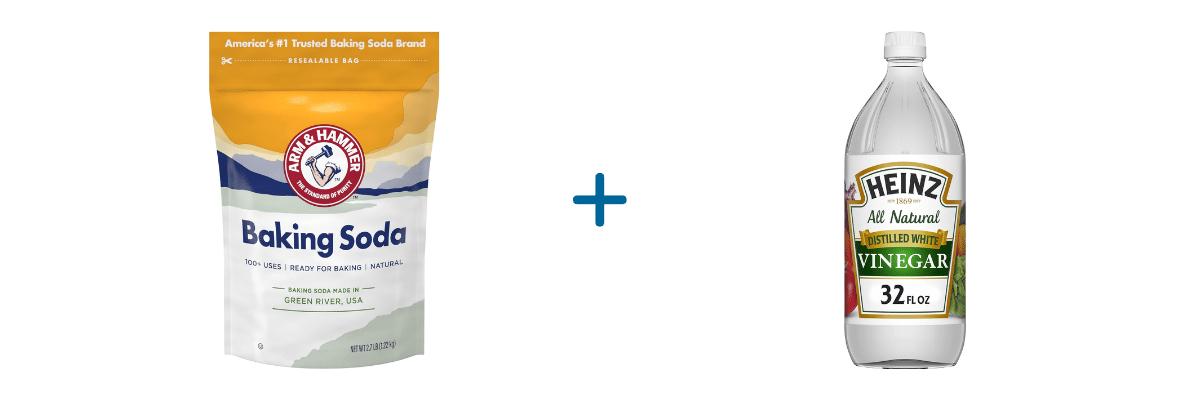
This is my go-to, and it costs about a dime a treatment. You already have both ingredients sitting in your kitchen right now.
- Pour 1 cup of white vinegar into the bowl and swish it around with a toilet brush. Let it sit a minute.
- Sprinkle in 1 cup of baking soda, then add 2 more cups of vinegar. It’s going to fizz like a science fair volcano. Let it work for 10 minutes.
- Swish again, making sure it reaches up under the rim, where the worst stains hide. Don’t flush yet.
- Let it sit another 30 minutes, swishing occasionally. Scrub any stubborn spots with the brush, then flush.
Keep in Mind
Baking soda is a base. Vinegar is an acid. Mix them and you get a genuine chemical reaction, not just a satisfying show: sodium acetate, water, and carbon dioxide, which is where all that fizzing comes from. The two don’t fully cancel each other out, but they get close, and that reaction is what loosens mineral buildup without you having to scrub it off by brute force.
Source: Chemistry Cachet
Solution #2: Borax and vinegar
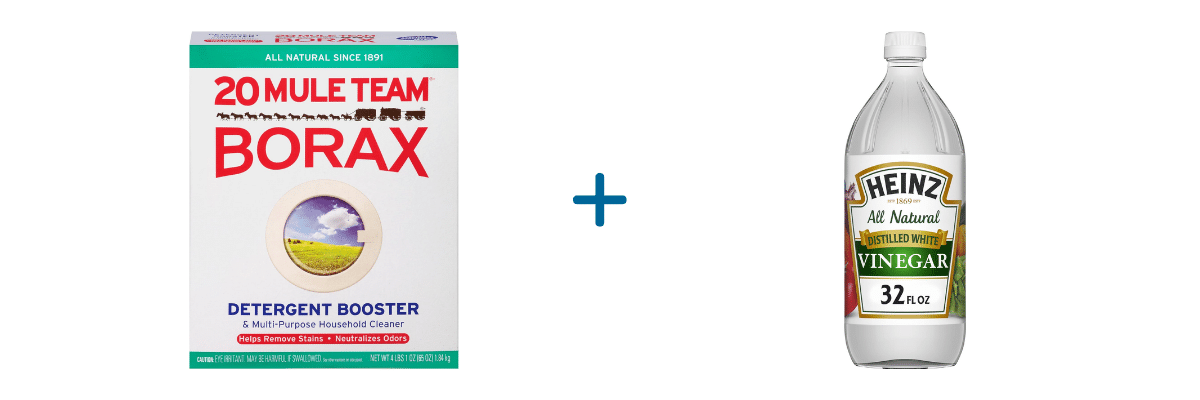
When plain vinegar and baking soda aren’t cutting it, I reach for borax. You’ll find it in the laundry aisle, or at Home Depot and Lowe’s if your grocery store doesn’t carry it.
- Sprinkle ¼ cup of borax into the bowl and swish with a toilet brush.
- Add 1 cup of vinegar, swish again, and let it sit for 20 minutes.
- Scrub, then flush.
Solution #3: A dishwasher pod

This one surprised me the first time I tried it. Drop an automatic dishwasher pod, any brand, straight into the bowl. Let it sit a few minutes, then scrub. The pod dissolves right there in room-temperature water, which I did not expect the first time I tried it. I also tried dishwasher powder thinking it would work the same way. It didn’t dissolve well enough to bother.
Solution #4: A denture tablet

Porcelain and denture tablets get along surprisingly well. Drop one in, let it fizzle for 30 minutes (or overnight, if you’d rather sleep on it), then scrub and flush. Easy, and you probably have a spare tablet in the medicine cabinet already.
Solution #5: Bleach, but only as a last resort

If nothing above worked, bleach can finish the job. But go easy. Porcelain is more delicate than people think, and bleach should be your last stop, not your first.
- Pour 1 cup of liquid chlorine bleach into the bowl water, never into the tank.
- Let it sit no more than 10 minutes.
- Skip cleaners that already contain bleach mixed in. They’re missing the surfactants that actually break down a stain, and can make it permanent instead of removing it. I learned that one the hard way.
- Scrub thoroughly, especially up under the rim, then flush.
Solution #6: The mother of all solutions

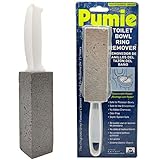
If you’ve tried everything and that ring is still staring back at you, it’s time for the big gun: a pumice stone. This is what I reach for when a stain has flat out won.
Go easy here. Use it too often, or use the wrong kind, and you can scratch the vitreous china your toilet bowl is made of. Used sparingly, though, it works like nothing else I’ve tried.
I recommend the Pumie Toilet Bowl Ring Remover. It’s a softer pumice than most, gentle enough for occasional use, and it comes with a handle so you’re not dunking your hand in the bowl. This is the one I keep under my own sink.
The habit that makes all of this unnecessary
Here’s the part nobody wants to hear: you don’t need harsh, expensive chemicals if you just stay ahead of the stain. Borax, baking soda, and vinegar handle both cleaning and prevention when you use them regularly. Weekly is good. Daily is better.
Keep a decent toilet brush somewhere visible, not hidden away in a closet you forget exists, and give the bowl a quick swish once a day. You don’t need cleaner every time, just the swish. That habit alone keeps rings from forming in the first place.

My weekly routine
This is what I actually do, not just what I tell you to do:
- Before bed, sprinkle 1 cup of borax around the bowl, getting it up under the rim and along the sides.
- In the morning, scrub quickly and flush. The borax has already done the hard work overnight, so this takes seconds. Rings, odors, and stains rinse away with almost no effort.
A note on septic systems
If you’re on a septic system, you’re in luck. Vinegar (white or apple cider), borax, OxiClean, and baking soda are all septic-safe in normal amounts. Ammonia products are fine too, in reasonable quantities. If you want a chlorine bleach alternative, look for an oxidized bleach instead.
A word of caution
Wear rubber gloves. And never, ever mix bleach with anything containing vinegar or ammonia. That combination creates dangerous fumes, not a stronger cleaner. Keep those two worlds separate, always.
FAQ
Why do I have a pink or reddish ring in my toilet?
That's almost always a bacteria called Serratia marcescens. It's not something you need to panic over, but it can cause problems if it gets into a wound or your lungs, so it's worth taking seriously. Regular cleaning with a chlorine bleach solution keeps it from settling in.
What causes stubborn toilet rings in the first place?
Standing water. When water sits in the bowl too long, the hard water minerals in it, mainly iron and manganese, settle out and form a ring right at the waterline.
How often should I actually clean my toilet bowl?
Daily prevention takes about 30 seconds: a quick swish with a good brush along the waterline, then rinse the brush in hot water. Once a week, follow up with a real cleaning product to knock out any bacteria trying to move in. Stick with that, and you'll never meet that stubborn, immovable ring again.
Question: Which of these have you actually tried, and did it work for you? I want to know if I’m missing your go-to trick.
EverydayCheapskate™ is reader-supported. We participate in the Amazon Services LLC Associates Program and other affiliate advertising programs, designed to provide a means for us to earn from qualifying purchases, at no cost to you.

More from Everyday Cheapskate
 https://www.everydaycheapskate.com/wp-content/uploads/20260829-fall-yard-projects-to-tackle-before-the-first-frost-foilage-front-yard-home.png
800
1200
Mary Hunt
https://www.everydaycheapskate.com/wp-content/uploads/EC-Logo-by-Mary-Hunt-Tagline-Trimmed.png
Mary Hunt2026-08-29 17:25:422026-08-29 17:25:4210 Fall Yard Tasks to Complete Before First Frost Hits
https://www.everydaycheapskate.com/wp-content/uploads/20260829-fall-yard-projects-to-tackle-before-the-first-frost-foilage-front-yard-home.png
800
1200
Mary Hunt
https://www.everydaycheapskate.com/wp-content/uploads/EC-Logo-by-Mary-Hunt-Tagline-Trimmed.png
Mary Hunt2026-08-29 17:25:422026-08-29 17:25:4210 Fall Yard Tasks to Complete Before First Frost Hits https://www.everydaycheapskate.com/wp-content/uploads/20260826-DIY-cat-litter-deodorizer-kitten-looking-up-at-camera-from-box.png
800
1200
Mary Hunt
https://www.everydaycheapskate.com/wp-content/uploads/EC-Logo-by-Mary-Hunt-Tagline-Trimmed.png
Mary Hunt2026-08-25 21:17:362026-08-25 21:17:36The One-Ingredient Litter Box Trick That Costs Pennies
https://www.everydaycheapskate.com/wp-content/uploads/20260826-DIY-cat-litter-deodorizer-kitten-looking-up-at-camera-from-box.png
800
1200
Mary Hunt
https://www.everydaycheapskate.com/wp-content/uploads/EC-Logo-by-Mary-Hunt-Tagline-Trimmed.png
Mary Hunt2026-08-25 21:17:362026-08-25 21:17:36The One-Ingredient Litter Box Trick That Costs Pennies https://www.everydaycheapskate.com/wp-content/uploads/20260824-house-rules-for-adult-children.png
800
1200
Mary Hunt
https://www.everydaycheapskate.com/wp-content/uploads/EC-Logo-by-Mary-Hunt-Tagline-Trimmed.png
Mary Hunt2026-08-24 12:21:382026-08-24 12:23:50House Rules for Adult Children Living at Home (Without Losing Your Mind or Your Garage)
https://www.everydaycheapskate.com/wp-content/uploads/20260824-house-rules-for-adult-children.png
800
1200
Mary Hunt
https://www.everydaycheapskate.com/wp-content/uploads/EC-Logo-by-Mary-Hunt-Tagline-Trimmed.png
Mary Hunt2026-08-24 12:21:382026-08-24 12:23:50House Rules for Adult Children Living at Home (Without Losing Your Mind or Your Garage) https://www.everydaycheapskate.com/wp-content/uploads/20260822-central-AC-maintenance-air-condenser-outdoors.png
800
1200
Mary Hunt
https://www.everydaycheapskate.com/wp-content/uploads/EC-Logo-by-Mary-Hunt-Tagline-Trimmed.png
Mary Hunt2026-08-22 14:19:562026-08-22 14:19:59How to Extend the Life of Your Central AC (5 Late-Summer Tune-Up Tips)
https://www.everydaycheapskate.com/wp-content/uploads/20260822-central-AC-maintenance-air-condenser-outdoors.png
800
1200
Mary Hunt
https://www.everydaycheapskate.com/wp-content/uploads/EC-Logo-by-Mary-Hunt-Tagline-Trimmed.png
Mary Hunt2026-08-22 14:19:562026-08-22 14:19:59How to Extend the Life of Your Central AC (5 Late-Summer Tune-Up Tips) https://www.everydaycheapskate.com/wp-content/uploads/20260820-how-to-keep-ants-away-after-youve-killed-the-ant-hill.png
800
1200
Mary Hunt
https://www.everydaycheapskate.com/wp-content/uploads/EC-Logo-by-Mary-Hunt-Tagline-Trimmed.png
Mary Hunt2026-08-20 14:17:552026-08-20 14:17:57How to Keep Ants Away After You Treat the Ant Hill
https://www.everydaycheapskate.com/wp-content/uploads/20260820-how-to-keep-ants-away-after-youve-killed-the-ant-hill.png
800
1200
Mary Hunt
https://www.everydaycheapskate.com/wp-content/uploads/EC-Logo-by-Mary-Hunt-Tagline-Trimmed.png
Mary Hunt2026-08-20 14:17:552026-08-20 14:17:57How to Keep Ants Away After You Treat the Ant Hill https://www.everydaycheapskate.com/wp-content/uploads/20260817-thrift-store-sign-with-blue-cloudy-sky-in-background.png
800
1200
Mary Hunt
https://www.everydaycheapskate.com/wp-content/uploads/EC-Logo-by-Mary-Hunt-Tagline-Trimmed.png
Mary Hunt2026-08-17 09:17:472026-08-17 09:17:47The Donation Box Mistakes Thrift Stores Wish We’d Skip
https://www.everydaycheapskate.com/wp-content/uploads/20260817-thrift-store-sign-with-blue-cloudy-sky-in-background.png
800
1200
Mary Hunt
https://www.everydaycheapskate.com/wp-content/uploads/EC-Logo-by-Mary-Hunt-Tagline-Trimmed.png
Mary Hunt2026-08-17 09:17:472026-08-17 09:17:47The Donation Box Mistakes Thrift Stores Wish We’d Skip https://www.everydaycheapskate.com/wp-content/uploads/20260815-how-to-water-your-lawn-without-wasting-money.png
800
1200
Mary Hunt
https://www.everydaycheapskate.com/wp-content/uploads/EC-Logo-by-Mary-Hunt-Tagline-Trimmed.png
Mary Hunt2026-08-15 12:45:022026-08-15 12:45:02How to Water Your Lawn Without Wasting Money This Summer
https://www.everydaycheapskate.com/wp-content/uploads/20260815-how-to-water-your-lawn-without-wasting-money.png
800
1200
Mary Hunt
https://www.everydaycheapskate.com/wp-content/uploads/EC-Logo-by-Mary-Hunt-Tagline-Trimmed.png
Mary Hunt2026-08-15 12:45:022026-08-15 12:45:02How to Water Your Lawn Without Wasting Money This Summer https://www.everydaycheapskate.com/wp-content/uploads/20260813-real-hourly-wage-for-a-second-income.png
800
1200
Mary Hunt
https://www.everydaycheapskate.com/wp-content/uploads/EC-Logo-by-Mary-Hunt-Tagline-Trimmed.png
Mary Hunt2026-08-13 21:16:562026-08-13 21:18:10What’s the Real Hourly Wage of Your Second Income Job?
https://www.everydaycheapskate.com/wp-content/uploads/20260813-real-hourly-wage-for-a-second-income.png
800
1200
Mary Hunt
https://www.everydaycheapskate.com/wp-content/uploads/EC-Logo-by-Mary-Hunt-Tagline-Trimmed.png
Mary Hunt2026-08-13 21:16:562026-08-13 21:18:10What’s the Real Hourly Wage of Your Second Income Job? https://www.everydaycheapskate.com/wp-content/uploads/20260809-how-to-get-the-smell-out-of-towels-stack-of-towels-sitting-with-candle-in-bright-natural-light.png
800
1200
Mary Hunt
https://www.everydaycheapskate.com/wp-content/uploads/EC-Logo-by-Mary-Hunt-Tagline-Trimmed.png
Mary Hunt2026-08-08 16:48:552026-08-08 16:50:57How to Get Smell Out of Towels: The 2-Wash Fix That Works
https://www.everydaycheapskate.com/wp-content/uploads/20260809-how-to-get-the-smell-out-of-towels-stack-of-towels-sitting-with-candle-in-bright-natural-light.png
800
1200
Mary Hunt
https://www.everydaycheapskate.com/wp-content/uploads/EC-Logo-by-Mary-Hunt-Tagline-Trimmed.png
Mary Hunt2026-08-08 16:48:552026-08-08 16:50:57How to Get Smell Out of Towels: The 2-Wash Fix That WorksPlease keep your comments positive, encouraging, helpful, brief,
and on-topic in keeping with EC Commenting Guidelines
Last update on 2026-09-10 / Affiliate links / Images from Amazon Product Advertising API


I had terrible hard water rings in my toilet. I used a paste of citric acid and water and it made them all disappear. It also worked on an extremely dirty toilet. Soaked it in citric acid and water(added 1/2 cup citric acid and 2 cups VERY hot water to a drained toilet bowl and let set for 24 hours) and stains just released from the bowl and flushed away. Amazing stuff!
In your first solution, do you drain the toilet bowl first before pouring in the white vinegar. I did not that mentioned and wanted to make sure i do it correctly.
Just add it to the water already in the bowl and then the baking soda.
Just wanted to say there is very hard water in my area and I had black lines coming down the inside toilet rim that I could hardly get out. Did some googling and someone said to pour vinegar down into the open tube (not sure what it’s called) in the tank and leave it sit several hours without flushing. Evidently it gets into the top rim of the toilet where mold grows and kills it. I did it and it worked really well. I repeat it every couple months and no more black lines!!
A group of women who volunteer to do cleaning at our church were discussing the ugly stains in many of the toilets in the restrooms. They lamented that they had tried every method with no luck.
I assured them that I knew the trick to fix that problem. I showed up on the next cleaning day with a bucket, two disposable cups (one large, one small) a hand held scrub pad and my favorite cleanser called Barkeepers’ Friend. Donning gloves, I proceeded to remove ALL of the water from the bowl using the two cups and pouring it into the bucket. Next I poured in some of the cleanser, swished it all around with my scrub pad, dumped the bucket full of water back into the toilet and flushed leaving a beautiful, shiny toilet bowl for the ladies to admire. As a cleaning lady for many years I ‘invented’ this method a long time ago. Try it ….. you will be amazed!
My toilet stain is blue. I have tried most of your suggestions and none work. Any idea what causes blue stains?
What brush do you recommend? The bristles on those have used seem to flatten out on the top. Is there a choice out there that stands up to frequent use?
I have https://amzn.to/47k6gZh in each of my bathrooms. I turn them so the brush is at the front and that makes them about as attractive as this kind of thing can be. Very happy with them. I just checked, and they’re nearly 5 years old now. Look like new and trust me they get used regularly.
My problem is the bowl has etched at the water line, so no amount of scrubbing will fix that, as far as I know. It always looks like a stain, but it is really just that the minerals in the water has etched the bowl. Would the pumice stone help, or only make it worse? Thanks.
I suggest you try it. Pumice is a perfect product for what you describe. For sure, it won’t make it any worse.
I have brown stains in my toilet bowl below the water line. No issue above the water. I clean the toilet daily so not an issue of not cleaning.
Strangely, the only thing that I have found (have not tried pumice stone yet) is hydrogen pyroxide. I add about a tblsp each night and the brown staining in the bowl under the water is slowly disappearing. Not quick, but only thing that has had any impact on the staining at all.
I really wonder if the “porcelain”/”ceramic” used in modern toilets are the issue. I never had this issue until I had to replace my toilet 2 years ago.
Hydrogen peroxide also removes stains from toilets.
Every day, almost, I put a few pumps of hand soap and swish the brush around. I’ve never felt the need for heavy duty cleaners. Ordinary soap bursts the cell walls of most bacteria and viruses. And when needed the pumice stone. I didn’t know it was best to use the pumice stone every now and then, I’ll start with Bar Keepers Friend more often.
In an area with water restrictions? Think about ways to capture every drop of clean water instead of letting your $ flow down the drain.
While waiting for my shower water to warm before climbing in, I place a bucket under the tap until it runs warm enough to shower. This water can be used for flushing the toilet, watering plants or even adding to the clothes washer so now it uses less water.
Toilet bowl stains? Pour a small capful of mouthwash, generic Listerine works well, into the toilet bowl. I pour some in once or twice a week just before going to bed so that it can work overnight. Much less scrubbing!
When I was in college, I worked on the cleaning crew. They actually trained us to use a pumice stone the correct way. The key is to keep your stone and surface wet. As long as both are wet, the pumice stone will not scratch the porcelain.
Thanks Wendy
Mary…I can’t seem to remember how to print just certain portions from your post. Please give us all the “how to” instructions once again. Thank You
Scroll to the bottom of any post. You will see a large orange PRINT button. Click on it. Now hover over any paragraph and you’ll see a tiny trash can. Click it to remove that portion, sentence, paragraph, word from what you want to print. For images, photos, pictures—click on them one at a time to removed them. Just keep doing that until only what you want to print, remains. Again, you eliminate what you don’t want (rather than select what you do want). Try it. If you mess it up, just start over. You cannot break anything!
the base for most toilet cleaners is diluted hydrochloric acid plus something to make it smell nice,
hydrocloric acid can be purchased at hardware stores for as little as $10 per gallon and half a cup poured into toilet and left a few hours will remove all stains old and new it is cheap no work involved and does not damage the toilet vitreous china
Citric acid is amazing and is very environmentally friendly. It may take a few goes but it works. I had the worst limescale stain and it is completely gone. Now using it regularly it has never returned.
Thank you so much Mary Hunt for all that you share with us! You are so very helpful and I appreciate this post and all that I have read from you!!! You make my life better! Have a wonderful year ahead! Sincerely, Gail.
Ah, thank you Gail!
CITRIC ACID and hot water is the easy solution no one is really talking about it’s amazingly strong, while still safe.
Extremely thick urine scale from someone trying to save water came off in sheets like magic here.
Left it for a few hours. It was astonishing.
For maintenance pcs of ‘bath’bombs would be a great way to clean a toilet with less scrubbing .
Hi Mary, I was very sick for over a year and the hubs had to do EVERYTHING in the house plus provide my care. Needless to say, cleaning the toilets was at the bottom of his to do list. The rust stains and the toilet ring were beyond description due to infrequent cleaning and the hard water from our well. I tried all your solutions and finally settled on ordering the Pumie cleaner. I held out little hope for success. Low and behold, the Pumie worked like magic! The bowls look like new again and I am one happy healthy camper. Thank you for your column and all your great suggestions!!
Pumie is a kind of last resort, and a good one, as you’ve proven! So happy to know you are recovering well and back on your feet. Stay well …
I live in California where most counties are experiencing severe drought and wildfires. There are even areas here where homes don’t even have water enough to drink or bathe, let alone flush! Flushing the toilet is one of the biggest users of water in the home, especially if your toilet/s are not low flow.
While I agree with most of the responses for products for cleaning, I completely disagree with your suggestion to flush after each use. Remember the saying, “if it’s yellow let it mellow, if it’s brown flush it down?” So what if your toilet bowl gets a bit icky. Get over it! With the IPCC’s paper just issued yesterday, saying the planet and humanity are in a “code red” state of emergency I say everything is connected, even our toilets and water use. It’s high time we start to think differently about how we live and the resources we use.
I use Clorox Toilet Bowl Cleaner. I squirt it under the lip of the toilet when the whole bowl needs to be cleaned or on a spot if there is only a small stain. I rarely have to use the brush. The cleaner takes care of everything.
I poured some Blue Dawn liquid into my toilet bowl when I was going to be gone all day and it did a fantastic job of getting the bowl clean. First time I’d tried it but it worked. Ran the toilet brush around the inside and was pleased with the result….
Hi Mary, I am seeking information/recommendations for a personal alarm; these can usually be put on a key ring; there are quite a few available, but many are useless. I hope this e-mail reaches you. Terri Printz
a related question- how do I clean the toilet brush and container? I used to use disposable scrubber pads and am trying to reduce plastic usage, so I bought a brush but not sure how, or how often to clean it. thanks for all you do!
I keep my toilet brush in a gallon mason jar half full of water with a table spoon of polmolive dish soap. My brush stays clean. I use the soapy water to clean the bowl on the toilet every day and change the soapy water in the mason jar out every two weeks. I never have toilet rings or dirty brush. Dawn would work too but I’m allergic to it to wash my dishes with. Gives me a rash. Polmolive is what I buy, the clear colored one with no scent.
The maintenance instructions to keep the toilet bowl clean are really funny.
I personally don’t know ANYONE whose toilet doesn’t get flushed several times a night.
I know people with only one bathroom and small children. Guess what the odds are that would ever work…..but I do appreciate the good laugh I had when I read it.
A small amount of Lime-away spray works for me. Brush and flush, rinse brush. (we have very hard water)
Are all these cleaners safe for all septic systems?
Thanks in advance!
Nothing but water should go down the drain when you have a septic system -BUT, in small amounts vinegar, baking soda and/or Dr Bronner’s soaps are safe.The goal with septic systems should be to have them work so efficiently that they NEVER need to be pumped!
Kind of on a similar note. even with a soft water system, I see the rust trying to creep in. I use Bar keeper’s Friend every couple of weeks (and clean with comet cleanser afterward) and it works very well. So grateful to know these other great tips too. Thanks, Mary.
I discovered a wonderful product for this problem. It’s called Iron Out. It is available in a spray gel or granular format. I use the concentrated powder. Just pour (or spray) into the bowl and let it sit for 10-20 minutes or so and then use a toilet bowl brush to clean the whole bowl.
BE CAREFUL though it is really strong. I wear gloves and a mask (we all have plenty of those now) and I open a window when I apply it, then close the door and leave to let it work its magic. It works fast and you will be amazed at the result.
Hi Michelle … Your comment proves the purpose of this post, that you can do the same job for a lot less $ and no chemicals or toxic fumes 🙂
Thank you, Mary, for all the wonderful tips. I have a question about vinegar which because of you I use for many cleaning tasks. I get 9% acid vinegar at H-E-B. My husband gets 25% as vinegar for Killing weeds. Is that vinegar too strong for me to use in my toilets?
You can use 25%, often labeled as cleaning vinegar for stubborn stains and mineral deposits but you probably won’t need to and would be better off diluting anyway. Here’s a rundown of the different dilutions and what they can be used for. Any remember, when using vinegar at these dilution levels, gear up. Personal Protective Equipment is a must. https://www.everydaycheapskate.com/how-to-clean-with-vinegar/