

The One Cleaning Habit That Keeps Summer Smells From Taking Over

There’s something about summer that makes smells louder. A trash can that seemed perfectly innocent yesterday suddenly greets you at the door like it has an announcement to make. Dishcloths turn suspicious overnight. And somewhere in the fridge, a container you forgot existed is quietly evolving into its next life form. If you’ve ever wandered through the kitchen sniffing the air like a detective in flip-flops wondering, What on earth is that smell? …you’re definitely not alone. Keeping a home smelling fresh usually has less to do with deep cleaning and more to do with staying ahead of tiny odor problems before summer heat turns them dramatic.

One thing I’ve noticed over the years is that warm weather has a way of waking smells up. In fact, entire Reddit threads exist with homeowners trying to solve mysteries like, “Why does this room only smell weird in summer?” Suddenly everyone becomes part detective, part meteorologist, part HVAC expert. One person blames humidity. Another suspects old insulation. Someone inevitably mentions a dead animal in the attic.
Meanwhile, most everyday summer odors come from much smaller things: damp sponges, sleepy sink drains, overconfident leftovers, or trash that crossed the line from “fine” to “absolutely not” overnight.
And there’s actually a reason all of this seems worse once temperatures climb.
Why Summer Smells Build Up Faster
Summer creates the perfect environment for smells to thrive. Heat speeds up bacteria growth, moisture hangs around longer, and warm air helps odor molecules travel faster and farther through your home. In other words, the second temperatures rise, your kitchen turns into prime working conditions for every smell you hoped would quietly mind its own business.
Humidity makes it even worse. Moist air tends to trap odors instead of letting them dissipate naturally, which is why the same trash can or sink drain that barely bothered you in February suddenly smells like it’s demanding your full attention in July.
There’s also a reason we notice these smells more in summer: our noses actually detect odors better in warm, humid air. Add closed windows, running air conditioning, damp towels, sweaty laundry, and faster food spoilage into the mix, and little smells suddenly become impossible to ignore.
The funny thing is most summer odor problems don’t start with anything dramatic. They usually come from tiny bits of buildup:
- Food residue hiding in the sink
- A sponge that stayed damp too long
- Produce quietly aging in the fridge drawer
- Recycling that technically “isn’t full yet”
Individually, none of these seem like a big deal. Together? Your kitchen starts smelling like it lost an argument with a compost bin.
The trick is interrupting the buildup before it reaches that point.
The One Habit That Prevents It
Once a week, do a quick “odor sweep” before smells have a chance to settle in and unpack their bags. That’s it.
Not a deep clean. Not one of those exhausting “everything must sparkle” Saturdays that somehow leaves you questioning your life choices by noon. Just a fast walk-through of the handful of places where heat, moisture, and food tend to quietly team up against you.
Think of it like taking the trash out before the lid starts opening with attitude.
I started doing this almost accidentally after realizing I was spending more time reacting to smells than preventing them. One week I’d attack the sink drain because something smelled “off.” The next week it was the fridge. Then the trash can. It felt endless because I was always behind the problem.
Now I spend about 15 minutes once a week staying ahead of it, and honestly, it saves me far more time than it takes. Small problems stay small. The kitchen stays fresher. And I’m no longer wandering around sniffing corners like a bloodhound with unresolved trust issues.
The goal here isn’t perfection. It’s interruption.
You’re stopping odors while they’re still small and manageable, which is much easier than trying to rescue an entire kitchen after something has gone sideways in July heat.
And over time, something interesting happens: your home starts staying consistently fresh without much effort at all.
The 5 Areas to Focus On Each Week
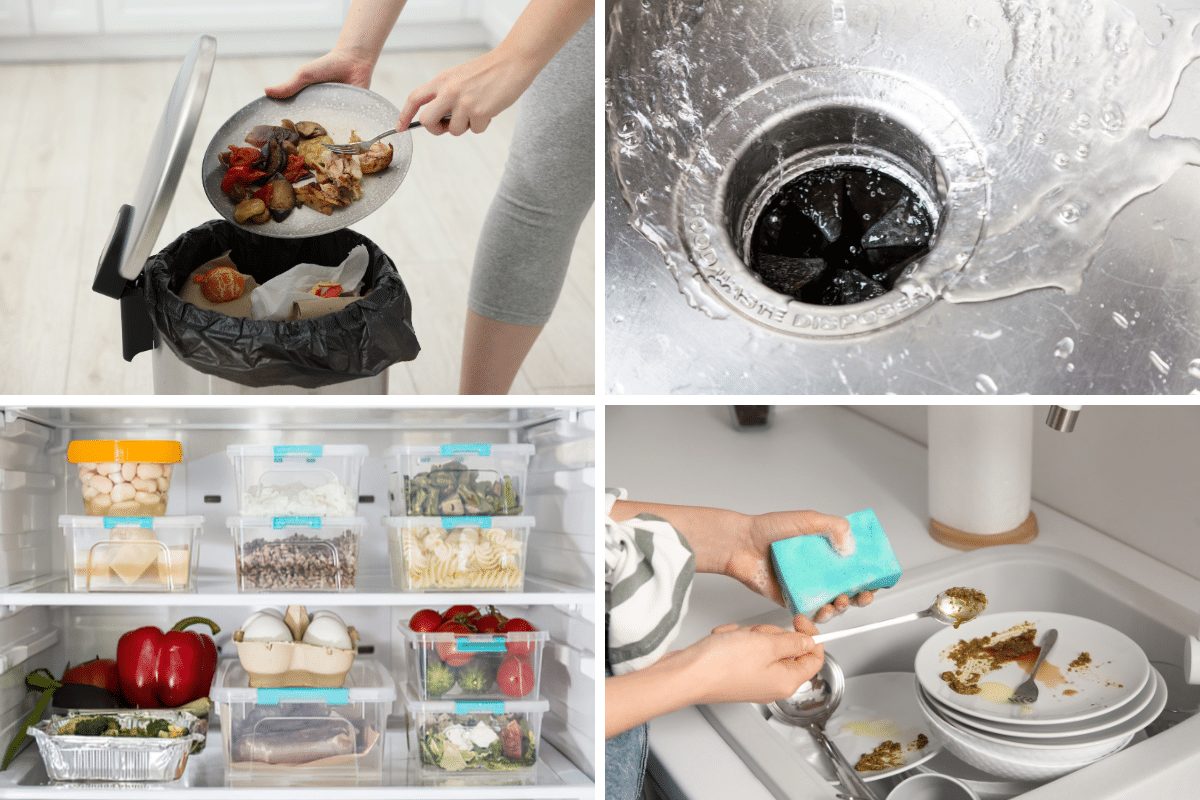
These are the spots that quietly cause most summer odor problems.
1. Trash + Recycling
Even when it’s not technically full, it can still smell. Summer heat turns tiny drips and food residue into a full announcement within a day or two.
Quick fix:
- Empty both regularly
- Wipe the lid or rim if needed
- Sprinkle a little baking soda in the bottom if odors linger
The goal here: stay ahead of the buildup before the trash can starts acting like the main character.
2. Sink + Disposal
This one sneaks up fast. Tiny food particles collect underneath the splash guard and inside the disposal where you can’t see them. Warm temperatures make the smell stronger almost overnight.
What most people don’t realize is that the real problem usually isn’t the metal disposal itself. It’s the slimy buildup hiding around the rubber splash guard and inside the crevices where bacteria love to settle in and multiply.
Quick fix:
- Flush the drain with hot water
- Run the disposal with cold water for about 30 seconds
- Toss in a few ice cubes occasionally to help knock loose buildup
- Add a little baking soda and vinegar when odors start creeping in
If you have lemon peels, those can help freshen things up too, though they’re best used occasionally and in small amounts.
And every now and then, take a minute to lift the splash guard and scrub underneath it. That hidden area is responsible for far more mysterious kitchen smells than most people realize.
3. The Fridge “Front Row”
Not the entire fridge. Just the items closest to becoming a problem. I call this the “front row” because it’s usually:
- Leftovers nearing retirement
- Berries hiding one fuzzy troublemaker underneath
- Produce bought with optimistic intentions
Quick fix:
- Do a fast shelf scan
- Toss what’s clearly past saving
- Move “eat this next” foods where you’ll actually see them
This tiny habit also cuts down on food waste because you catch things while they’re still salvageable.
4. Dishcloths + Sponges
These go downhill fast in summer. A damp sponge sitting overnight can create a smell strong enough to make you question every life decision that led to this moment. Kitchen sponges are one of the germiest items in most homes because they stay warm, damp, and full of tiny food particles, which is basically a luxury resort for bacteria.
Quick fix:
- Swap dishcloths more often in warm weather
- Let sponges dry fully between uses
- Run sponges through the dishwasher regularly if possible
- Keep a couple of extras in rotation so one can dry while another is being used
And honestly? Sometimes the best solution is simply retiring one with dignity.
5. One Hidden Spot (Rotate Weekly)
This is where smells like to hide quietly until the exact moment company comes over. Pick one area each week:
- Bathroom drains
- Laundry hampers
- Pet areas
- Entryway shoes
- Inside the microwave
- Reusable grocery bags
You don’t need to tackle all of them at once. Rotating keeps small issues from becoming giant ones that have you wandering through the house sniffing the air like a confused raccoon.
The 15-Minute Habit That Keeps Summer Smells Under Control
The easiest way to make this habit stick is to attach it to something you already do anyway. Maybe it’s Friday evening before the weekend starts. Maybe it’s your Sunday reset. Maybe it’s right before grocery shopping or the night before trash pickup.
And this is important: keep it simple. This is not the moment to empty every cabinet, scrub baseboards with a toothbrush, or pull the entire refrigerator onto the counter.
Set a timer for 15 minutes and move fast:
- Minutes 1–3: Empty trash + recycling
- Minutes 4–6: Rinse the sink + disposal
- Minutes 7–9: Quick fridge scan
- Minutes 10–12: Swap dishcloths + freshen sponges
- Minutes 13–15: Tackle one hidden spot
Done.
What makes this work so well is that you’re preventing buildup instead of fighting it later after the smell has fully established residency. It’s one of those small habits that quietly removes an entire category of annoyance from daily life.
And in the middle of summer? That’s a pretty good return on 15 minutes.
Question: What’s the ONE spot in your kitchen that seems to cause the fastest mystery smell in summer? Share in the comments below.
EverydayCheapskate™ is reader-supported. We participate in the Amazon Services LLC Associates Program and other affiliate advertising programs, designed to provide a means for us to earn from qualifying purchases, at no cost to you.

More from Everyday Cheapskate
 https://www.everydaycheapskate.com/wp-content/uploads/20261012-Woman-using-smartphone-while-checking-monthly-cellular-data-usage-on-laptop.png
800
1200
Mary Hunt
https://www.everydaycheapskate.com/wp-content/uploads/EC-Logo-by-Mary-Hunt-Tagline-Trimmed.png
Mary Hunt2026-10-12 10:51:112026-10-12 10:51:11Do You Really Need Unlimited Data? Check Before You Pay
https://www.everydaycheapskate.com/wp-content/uploads/20261012-Woman-using-smartphone-while-checking-monthly-cellular-data-usage-on-laptop.png
800
1200
Mary Hunt
https://www.everydaycheapskate.com/wp-content/uploads/EC-Logo-by-Mary-Hunt-Tagline-Trimmed.png
Mary Hunt2026-10-12 10:51:112026-10-12 10:51:11Do You Really Need Unlimited Data? Check Before You Pay https://www.everydaycheapskate.com/wp-content/uploads/20261011-Woman-Adjusting-Smart-Home-Device-on-the-Wall-how-to-lower-your-electric-bill.png
800
1200
Mary Hunt
https://www.everydaycheapskate.com/wp-content/uploads/EC-Logo-by-Mary-Hunt-Tagline-Trimmed.png
Mary Hunt2026-10-11 23:01:562026-10-11 23:01:56Stop Chasing Pennies on Your Electric Bill. Do This
https://www.everydaycheapskate.com/wp-content/uploads/20261011-Woman-Adjusting-Smart-Home-Device-on-the-Wall-how-to-lower-your-electric-bill.png
800
1200
Mary Hunt
https://www.everydaycheapskate.com/wp-content/uploads/EC-Logo-by-Mary-Hunt-Tagline-Trimmed.png
Mary Hunt2026-10-11 23:01:562026-10-11 23:01:56Stop Chasing Pennies on Your Electric Bill. Do This https://www.everydaycheapskate.com/wp-content/uploads/20261007-red-present-sitting-in-autumn-leaves-Amazon-Prime-Big-Deal-Days-gifts.png
800
1200
Mary Hunt
https://www.everydaycheapskate.com/wp-content/uploads/EC-Logo-by-Mary-Hunt-Tagline-Trimmed.png
Mary Hunt2026-10-06 23:09:432026-10-06 23:09:43Christmas Shopping in October? These Prime Day Gifts Make Sense
https://www.everydaycheapskate.com/wp-content/uploads/20261007-red-present-sitting-in-autumn-leaves-Amazon-Prime-Big-Deal-Days-gifts.png
800
1200
Mary Hunt
https://www.everydaycheapskate.com/wp-content/uploads/EC-Logo-by-Mary-Hunt-Tagline-Trimmed.png
Mary Hunt2026-10-06 23:09:432026-10-06 23:09:43Christmas Shopping in October? These Prime Day Gifts Make Sense https://www.everydaycheapskate.com/wp-content/uploads/20261006-prime-big-deal-days-have-landed.png
800
1200
Mary Hunt
https://www.everydaycheapskate.com/wp-content/uploads/EC-Logo-by-Mary-Hunt-Tagline-Trimmed.png
Mary Hunt2026-10-05 11:01:432026-10-07 09:02:53EC’s Top Picks from Amazon Prime Big Deal Days 2026
https://www.everydaycheapskate.com/wp-content/uploads/20261006-prime-big-deal-days-have-landed.png
800
1200
Mary Hunt
https://www.everydaycheapskate.com/wp-content/uploads/EC-Logo-by-Mary-Hunt-Tagline-Trimmed.png
Mary Hunt2026-10-05 11:01:432026-10-07 09:02:53EC’s Top Picks from Amazon Prime Big Deal Days 2026 https://www.everydaycheapskate.com/wp-content/uploads/20261004-reduce-healthcare-costs-with-three-habits-healthy-couple-walking-in-autumn-leaves.png
800
1200
Mary Hunt
https://www.everydaycheapskate.com/wp-content/uploads/EC-Logo-by-Mary-Hunt-Tagline-Trimmed.png
Mary Hunt2026-10-04 23:08:572026-10-04 23:09:47How to Reduce Healthcare Costs With 3 Free Daily Habits
https://www.everydaycheapskate.com/wp-content/uploads/20261004-reduce-healthcare-costs-with-three-habits-healthy-couple-walking-in-autumn-leaves.png
800
1200
Mary Hunt
https://www.everydaycheapskate.com/wp-content/uploads/EC-Logo-by-Mary-Hunt-Tagline-Trimmed.png
Mary Hunt2026-10-04 23:08:572026-10-04 23:09:47How to Reduce Healthcare Costs With 3 Free Daily Habits https://www.everydaycheapskate.com/wp-content/uploads/20241004-news-you-can-use-october-everyday-cheapskate-top-news-articles.png
800
1200
Mary Hunt
https://www.everydaycheapskate.com/wp-content/uploads/EC-Logo-by-Mary-Hunt-Tagline-Trimmed.png
Mary Hunt2026-10-04 01:04:052026-10-16 16:24:53News You Can Use • October 2026
https://www.everydaycheapskate.com/wp-content/uploads/20241004-news-you-can-use-october-everyday-cheapskate-top-news-articles.png
800
1200
Mary Hunt
https://www.everydaycheapskate.com/wp-content/uploads/EC-Logo-by-Mary-Hunt-Tagline-Trimmed.png
Mary Hunt2026-10-04 01:04:052026-10-16 16:24:53News You Can Use • October 2026 https://www.everydaycheapskate.com/wp-content/uploads/20261003-woman-hugging-elderly-mother-sandwich-generation-caring-for-aging-parents.png
800
1200
Mary Hunt
https://www.everydaycheapskate.com/wp-content/uploads/EC-Logo-by-Mary-Hunt-Tagline-Trimmed.png
Mary Hunt2026-10-03 10:47:222026-10-03 10:47:25Sandwiched Between Aging Parents and Adult Children
https://www.everydaycheapskate.com/wp-content/uploads/20261003-woman-hugging-elderly-mother-sandwich-generation-caring-for-aging-parents.png
800
1200
Mary Hunt
https://www.everydaycheapskate.com/wp-content/uploads/EC-Logo-by-Mary-Hunt-Tagline-Trimmed.png
Mary Hunt2026-10-03 10:47:222026-10-03 10:47:25Sandwiched Between Aging Parents and Adult Children https://www.everydaycheapskate.com/wp-content/uploads/20260927-impossible-lasagna-pie-recipe-with-wooden-serving-spoon-in-white-casserole-dish.png
800
1200
Mary Hunt
https://www.everydaycheapskate.com/wp-content/uploads/EC-Logo-by-Mary-Hunt-Tagline-Trimmed.png
Mary Hunt2026-09-28 09:38:592026-09-28 22:48:34Impossible Lasagna Pie: All the Flavor, None of the Noodles
https://www.everydaycheapskate.com/wp-content/uploads/20260927-impossible-lasagna-pie-recipe-with-wooden-serving-spoon-in-white-casserole-dish.png
800
1200
Mary Hunt
https://www.everydaycheapskate.com/wp-content/uploads/EC-Logo-by-Mary-Hunt-Tagline-Trimmed.png
Mary Hunt2026-09-28 09:38:592026-09-28 22:48:34Impossible Lasagna Pie: All the Flavor, None of the Noodles https://www.everydaycheapskate.com/wp-content/uploads/20260925-best-inexpensive-coffee-grinders-burr-manual-and-electric.png
800
1200
Mary Hunt
https://www.everydaycheapskate.com/wp-content/uploads/EC-Logo-by-Mary-Hunt-Tagline-Trimmed.png
Mary Hunt2026-09-25 11:06:342026-10-10 15:49:09The Best Coffee Grinder Upgrade That’s Actually Worth It
https://www.everydaycheapskate.com/wp-content/uploads/20260925-best-inexpensive-coffee-grinders-burr-manual-and-electric.png
800
1200
Mary Hunt
https://www.everydaycheapskate.com/wp-content/uploads/EC-Logo-by-Mary-Hunt-Tagline-Trimmed.png
Mary Hunt2026-09-25 11:06:342026-10-10 15:49:09The Best Coffee Grinder Upgrade That’s Actually Worth It

I attach a grocery store plastic bag inside my trash can and put smelly stuff in there to take out before trash day. ie. Banana peels.
you must have been spying on my house today!!! have someone coming over to replace kitchen faucet & so pulled everything out…. stinky! so garbage can sitting in laundry/litter box room. even with windows open…. so forced myself to do the box & garbage & amazingly it smells so much better :). thank you for your tips & fun sense of writing!