

Mastering Your Cast Iron Skillet: How to Season and Clean for Longevity

Navigating the world of cast iron skillets can be tricky, but the rewards are worth the effort. From my own journey of frustration to triumph, I’ve learned how to turn a rusted, sticky pan into a kitchen treasure. Join me as I share tips and tricks on how to season and clean your cast iron skillet for a lifetime of great cooking.
The Struggles and Triumphs with My Cast Iron Skillet
I really don’t know when I got it. It was part of a set. What I know is that I tried to use that cast iron skillet without success, and I mean not even a little bit. Food would become hopelessly stuck to it and burned beyond recognition. If it wasn’t turning out charred fare, it was growing a fine coat of rust.
Things got so bad with my that I once threw it, along with its sorry charred contents, into the trash. The guilt hit me almost immediately. I dug it out, chiseled off the burnt food, put it through the dishwasher (which is the worst thing ever for cast iron), and then banished it to the back of a closet.
Years later—okay, decades—I decided to give it another chance. I’d been hearing about how seasoned cooks revered their cast iron skillets, and I was determined to take on the challenge. I’m proud to say I won that battle.
This skillet (pictured below), now more than 40 years old, was once my nemesis. But after a lot of TLC and learning how to season cast iron properly, it’s become one of my most prized possessions. All is forgiven, and now my skillet and I have quite a bond.
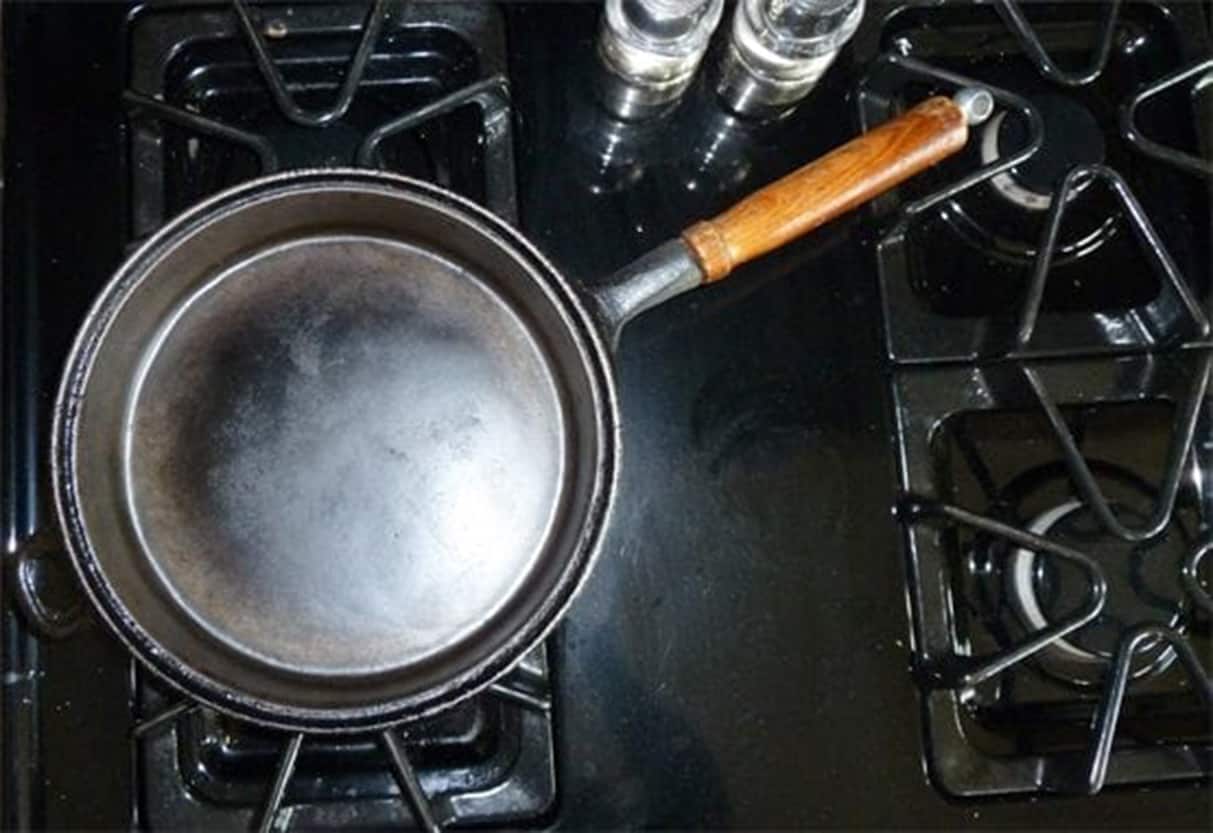
Restoring this baby to better-than-new condition was a process that didn’t happen overnight. But now, every time I use it, which is almost daily, it just keeps getting better. Can you feel the love?
The thing about a cast iron skillet is that it must be “seasoned.” It needs a lovely coat of patina to make it gloriously non-stick, prevent rusting, and give it a shiny finish. There’s something magical about a well-seasoned cast iron skillet that makes food taste better. Apparently, it’s called “seasoning” for a reason!
How to Season Cast Iron: Step-by-Step Guide
Seasoning a cast iron skillet is the secret to its non-stick magic and long-lasting durability. It’s all about creating that classic black patina through a process called polymerization, where oil is baked onto the cast iron. This forms a natural, easy-release cooking surface that keeps rust at bay. It might take a bit of extra care, but a well-seasoned pan will last for generations, turning into a kitchen heirloom with every use.
Here’s how to season cast iron:
- Rub with Oil: Start by rubbing a thin coat of vegetable oil all over your skillet—inside and out if it’s the first seasoning.
- Bake It: Place the skillet in a 350°F oven for an hour. This will produce the first “non-stick” layer.
- Repeat: Every time you use and clean your skillet properly, another layer of seasoning builds up.
You can season your cast iron skillet as many times as necessary throughout its life. Honestly, it can never have too many layers of seasoning. My skillet must have a thousand layers by now, and I’m still adding more. More is always better!
How to Clean Cast Iron Skillet
Cleaning your cast iron skillet might seem tricky, but it’s actually quite simple once you know the tricks.
Use Soap if You Want
Surprised? You’ve probably heard, “never use soap on cast iron,” but it turns out you can. For many years, I avoided dishwashing liquid like the plague when it came to my beloved skillet. However, the myth that you shouldn’t wash your cast iron skillet with soap is just that—a myth. Here are the theories behind it:
- Theory #1: Soap washes away the seasoning. Since oil is used to season the skillet and create a non-stick surface, soap would supposedly wash away the cure you worked so hard to build.
- Theory #2: Soap isn’t effective for cast iron. The belief is that oil, not soap, is responsible for the slick-hard surface of a well-seasoned cast iron pan. Polymerization is what actually creates that hard surface, making it difficult for soap to remove the seasoning.
Other Methods
While it’s perfectly okay to use soap on your cast iron skillet occasionally, most cast iron enthusiasts prefer to skip it. Instead, they just wipe their skillet clean after cooking or use the methods below:
- Oil and Kosher Salt: For a thorough clean, grab a few tablespoons of vegetable oil and kosher salt. With the skillet still warm, pour in the oil and salt, then scrub with a paper towel. Keep scrubbing until the pan is shiny and the salt is nearly black. Rinse out the salt, dry the skillet thoroughly, and give it a light coat of oil before storing.
- Hard-Bristle Brush or Stainless Steel Scrubber: For tougher spots, a chainmail scrubber like the Ringer Cast Iron Cleaner is fantastic. It’s gentle enough to keep the seasoning intact but tough enough to clean effectively. For those stubborn bits, use coarse salt and oil as a scrub—it’s like using sandpaper but without damaging your skillet’s patina.
Everyday Tips for Maintaining Your Cast Iron Skillet
From cleaning hacks to seasoning secrets, mastering these simple practices will ensure your skillet remains a culinary workhorse:
1. No Soaking
Never allow a cast iron skillet to soak in water. It will only lead to rust—the arch-enemy of cast iron cooking. If rust does develop, simply scrub it away with salt and oil, then re-season the pan.
2. Dry Immediately
After washing, dry your skillet over low heat on the stovetop. Once dry, give the inside a light coat of vegetable oil, and it’s ready for its next use.
3. No Metal Utensils
Avoid using metal utensils, as they can scrape off the seasoning. Stick to wood or other non-metal utensils to preserve the seasoning.
4. Restoring a Neglected Cast Iron Skillet
If your pan needs re-seasoning, don’t worry. You can never have too much seasoning on a cast iron skillet. Always err on the side of re-seasoning too often.
5. Use Often
Use your cast iron skillet to fry, sear, cook, and bake as often as possible. Cooking at home not only helps you eat better but also saves money. I recommend “The New Cast Iron Skillet Cookbook” for recipes ideal for cast iron cooking.
The Timeless Value of a Cast Iron Skillet: From Heirlooms to Thrift Store Treasures
A great cast-iron skillet is a thing of value—becoming more valuable with age. I’ve seen vintage skillets selling for thousands of dollars and read stories about skillets being named in wills and family members fighting over who will get Grandma’s skillet.
Cast iron cookware is making quite a comeback and I could not be happier about that. Don’t worry that the price of an excellent cast-iron skillet might be out of your budget. You can get a fabulous skillet for under $20.
Or scout out the local thrift store or junk collector. It would not be at all unusual to find a horribly abused, rusty pile of cast iron pots and skillets just waiting to be rescued.
Restoration is not particularly difficult, but it can be time-consuming. This tutorial might inspire you to make a rescue or two—provided the price is right.
Take care of your cast iron and it will repay the favor by turning you into a fabulous cook. As a bonus, your skillet is sure to become the envy of your friends and family.
Must-Have Tools and Products for Cast Iron Cooking
From reliable cleaning solutions to invaluable cooking aids, these must-have items ensure your cast iron skillet remains a cherished kitchen companion for generations to come.


Lodge 10.25 Inch Cast Iron Pre-Seasoned Skillet
If you’re looking for an affordable and reliable cast iron skillet, the Lodge 10.25 Inch Cast Iron Skillet is a fantastic choice. This skillet is the perfect size for most cooking tasks, and with proper care, it will become more valuable over time—your heirs might even fight over it someday!
One of the standout features of this Lodge skillet is its weight. At about 5 pounds, it’s lighter than many other cast iron skillets of the same size, making it easier to handle without sacrificing durability.
The skillet comes pre-seasoned, giving you a head start on the seasoning process. However, for the best results, it’s recommended to season it at least once before the first use—four times if you can manage it. This will help create that perfect non-stick surface that cast iron lovers rave about.
Lodge has been crafting cast iron cookware for nearly 125 years. Their commitment to quality is evident in their state-of-the-art 127,000 sq. ft. foundry in South Pittsburg, Tennessee, where they’ve been based since 1896. Supporting a brand that proudly manufactures in the USA is always a plus!
Whether you’re frying, searing, or baking, this 10.25-inch skillet is versatile enough for almost any cooking task. Unless you regularly cook for a large group, this skillet will meet your needs perfectly.
While you can find Lodge products in many retail stores like Target and Williams-Sonoma, the best deals are often at Walmart and Amazon, especially with Prime shipping.

The New Cast Iron Skillet Cookbook
If you’re ready to take your cast iron cooking to the next level, “The New Cast Iron Skillet Cookbook: 150 Fresh Ideas for America’s Favorite Pan” is a must-have addition to your kitchen library. As cast iron skillets surge in popularity for their versatility, affordability, and non-toxic cooking surfaces, this cookbook offers a modern twist on a classic tool. Featuring 150 innovative recipes, you’ll find everything from traditional favorites like Seared Chicken Hash and pan-seared steaks to unexpected delights such as Italian-inspired cornbread, brie and papaya quesadillas, and gingerbread cake with fresh pears. Each recipe is designed to make the most of your cast iron skillet, ensuring you enjoy delicious, wholesome meals that your grandma would be proud of.

The Ringer – The Original Stainless Steel Cast Iron Cleaner
This nifty tool makes cleaning cast iron a breeze. Just ball it up and scrub away! It effortlessly removes grime without stripping away that precious seasoning. Made from premium-grade, never-rusting stainless steel, The Ringer is machine-soldered for unbeatable strength. With The Ringer, you can wash off the grit while preserving the flavor, all without soap or detergent. Just warm water and a bit of scrubbing, and your skillet is good to go. Beware of imitations—there’s only one original Ringer, and it’s worth every penny! Just remember, keep it out of the garbage disposal!
Question: What’s your biggest cast iron skillet challenge? Share your tips and tricks with us.
EverydayCheapskate™ is reader-supported. We participate in the Amazon Services LLC Associates Program and other affiliate advertising programs, designed to provide a means for us to earn from qualifying purchases, at no cost to you.

More from Everyday Cheapskate
 https://www.everydaycheapskate.com/wp-content/uploads/20260830-best-sound-machine-for-better-sleep-woman-hiding-under-comforter.png
800
1200
Mary Hunt
https://www.everydaycheapskate.com/wp-content/uploads/EC-Logo-by-Mary-Hunt-Tagline-Trimmed.png
Mary Hunt2026-09-10 09:51:452026-09-10 09:51:45Best Sound Machine for Better Sleep: 3 Honest Picks
https://www.everydaycheapskate.com/wp-content/uploads/20260830-best-sound-machine-for-better-sleep-woman-hiding-under-comforter.png
800
1200
Mary Hunt
https://www.everydaycheapskate.com/wp-content/uploads/EC-Logo-by-Mary-Hunt-Tagline-Trimmed.png
Mary Hunt2026-09-10 09:51:452026-09-10 09:51:45Best Sound Machine for Better Sleep: 3 Honest Picks https://www.everydaycheapskate.com/wp-content/uploads/20260906-best-can-openers-manual-electric-luxury.png
800
1200
Mary Hunt
https://www.everydaycheapskate.com/wp-content/uploads/EC-Logo-by-Mary-Hunt-Tagline-Trimmed.png
Mary Hunt2026-09-06 18:07:432026-09-06 18:10:39The Best Can Openers That Actually Work (And Won’t Quit on You)
https://www.everydaycheapskate.com/wp-content/uploads/20260906-best-can-openers-manual-electric-luxury.png
800
1200
Mary Hunt
https://www.everydaycheapskate.com/wp-content/uploads/EC-Logo-by-Mary-Hunt-Tagline-Trimmed.png
Mary Hunt2026-09-06 18:07:432026-09-06 18:10:39The Best Can Openers That Actually Work (And Won’t Quit on You) https://www.everydaycheapskate.com/wp-content/uploads/20260902-pumpkin-spice-latte-recipe-homemade-diy.png
800
1200
Mary Hunt
https://www.everydaycheapskate.com/wp-content/uploads/EC-Logo-by-Mary-Hunt-Tagline-Trimmed.png
Mary Hunt2026-09-02 16:16:022026-09-02 16:18:35Homemade Pumpkin Spice Latte Recipe (Cheaper, Better, Faster)
https://www.everydaycheapskate.com/wp-content/uploads/20260902-pumpkin-spice-latte-recipe-homemade-diy.png
800
1200
Mary Hunt
https://www.everydaycheapskate.com/wp-content/uploads/EC-Logo-by-Mary-Hunt-Tagline-Trimmed.png
Mary Hunt2026-09-02 16:16:022026-09-02 16:18:35Homemade Pumpkin Spice Latte Recipe (Cheaper, Better, Faster) https://www.everydaycheapskate.com/wp-content/uploads/20260831-Portrait-of-a-Pitbull-on-a-yellow-background-homemade-dog-treat-recipes.png
800
1200
Mary Hunt
https://www.everydaycheapskate.com/wp-content/uploads/EC-Logo-by-Mary-Hunt-Tagline-Trimmed.png
Mary Hunt2026-08-31 13:06:072026-08-31 13:06:073 Homemade Dog Treats Recipes Your Dog Will Love Most
https://www.everydaycheapskate.com/wp-content/uploads/20260831-Portrait-of-a-Pitbull-on-a-yellow-background-homemade-dog-treat-recipes.png
800
1200
Mary Hunt
https://www.everydaycheapskate.com/wp-content/uploads/EC-Logo-by-Mary-Hunt-Tagline-Trimmed.png
Mary Hunt2026-08-31 13:06:072026-08-31 13:06:073 Homemade Dog Treats Recipes Your Dog Will Love Most https://www.everydaycheapskate.com/wp-content/uploads/20260826-DIY-cat-litter-deodorizer-kitten-looking-up-at-camera-from-box.png
800
1200
Mary Hunt
https://www.everydaycheapskate.com/wp-content/uploads/EC-Logo-by-Mary-Hunt-Tagline-Trimmed.png
Mary Hunt2026-08-25 21:17:362026-08-25 21:17:36The One-Ingredient Litter Box Trick That Costs Pennies
https://www.everydaycheapskate.com/wp-content/uploads/20260826-DIY-cat-litter-deodorizer-kitten-looking-up-at-camera-from-box.png
800
1200
Mary Hunt
https://www.everydaycheapskate.com/wp-content/uploads/EC-Logo-by-Mary-Hunt-Tagline-Trimmed.png
Mary Hunt2026-08-25 21:17:362026-08-25 21:17:36The One-Ingredient Litter Box Trick That Costs Pennies https://www.everydaycheapskate.com/wp-content/uploads/20260824-house-rules-for-adult-children.png
800
1200
Mary Hunt
https://www.everydaycheapskate.com/wp-content/uploads/EC-Logo-by-Mary-Hunt-Tagline-Trimmed.png
Mary Hunt2026-08-24 12:21:382026-08-24 12:23:50House Rules for Adult Children Living at Home (Without Losing Your Mind or Your Garage)
https://www.everydaycheapskate.com/wp-content/uploads/20260824-house-rules-for-adult-children.png
800
1200
Mary Hunt
https://www.everydaycheapskate.com/wp-content/uploads/EC-Logo-by-Mary-Hunt-Tagline-Trimmed.png
Mary Hunt2026-08-24 12:21:382026-08-24 12:23:50House Rules for Adult Children Living at Home (Without Losing Your Mind or Your Garage) https://www.everydaycheapskate.com/wp-content/uploads/20260822-central-AC-maintenance-air-condenser-outdoors.png
800
1200
Mary Hunt
https://www.everydaycheapskate.com/wp-content/uploads/EC-Logo-by-Mary-Hunt-Tagline-Trimmed.png
Mary Hunt2026-08-22 14:19:562026-08-22 14:19:59How to Extend the Life of Your Central AC (5 Late-Summer Tune-Up Tips)
https://www.everydaycheapskate.com/wp-content/uploads/20260822-central-AC-maintenance-air-condenser-outdoors.png
800
1200
Mary Hunt
https://www.everydaycheapskate.com/wp-content/uploads/EC-Logo-by-Mary-Hunt-Tagline-Trimmed.png
Mary Hunt2026-08-22 14:19:562026-08-22 14:19:59How to Extend the Life of Your Central AC (5 Late-Summer Tune-Up Tips) https://www.everydaycheapskate.com/wp-content/uploads/20260817-thrift-store-sign-with-blue-cloudy-sky-in-background.png
800
1200
Mary Hunt
https://www.everydaycheapskate.com/wp-content/uploads/EC-Logo-by-Mary-Hunt-Tagline-Trimmed.png
Mary Hunt2026-08-17 09:17:472026-08-17 09:17:47The Donation Box Mistakes Thrift Stores Wish We’d Skip
https://www.everydaycheapskate.com/wp-content/uploads/20260817-thrift-store-sign-with-blue-cloudy-sky-in-background.png
800
1200
Mary Hunt
https://www.everydaycheapskate.com/wp-content/uploads/EC-Logo-by-Mary-Hunt-Tagline-Trimmed.png
Mary Hunt2026-08-17 09:17:472026-08-17 09:17:47The Donation Box Mistakes Thrift Stores Wish We’d Skip https://www.everydaycheapskate.com/wp-content/uploads/20260815-how-to-water-your-lawn-without-wasting-money.png
800
1200
Mary Hunt
https://www.everydaycheapskate.com/wp-content/uploads/EC-Logo-by-Mary-Hunt-Tagline-Trimmed.png
Mary Hunt2026-08-15 12:45:022026-08-15 12:45:02How to Water Your Lawn Without Wasting Money This Summer
https://www.everydaycheapskate.com/wp-content/uploads/20260815-how-to-water-your-lawn-without-wasting-money.png
800
1200
Mary Hunt
https://www.everydaycheapskate.com/wp-content/uploads/EC-Logo-by-Mary-Hunt-Tagline-Trimmed.png
Mary Hunt2026-08-15 12:45:022026-08-15 12:45:02How to Water Your Lawn Without Wasting Money This SummerPlease keep your comments positive, encouraging, helpful, brief,
and on-topic in keeping with EC Commenting Guidelines
Last update on 2026-09-16 / Affiliate links / Images from Amazon Product Advertising API


I use cast iron for a lot of cooking but can’t seem to fry an egg in it without sticking. Any suggestions?
Hi Kelly. The key is a well-seasoned and maintained cast iron skillet that gives a natural non-stick surface. Check out this article I wrote: https://www.everydaycheapskate.com/my-hate-love-relationship-with-a-cast-iron-skilet/
HELP!
I just oiled and put into the oven … I think the oven was too hot 350 degrees? Smoke in the WHOLE house.
What did I do wrong?
I JUST snapped up two … TWO … cast iron oval pans (looks like fajita pans) at Goodwill for $4.99 each! This article was so timely
Woo-hoo!! Let’s hear it for the burgeoning secondary market throughout the U.S.A!
My cast iron skillet gives a metallic flavor to anything I cook in it. What am I doing wrong? Please advise.
I can’t be certain about this “metallic flavor” but I do know that one of the benefits of cast iron cooking is that it adds nutritious iron mineral to your food. Could that be it?
Can you use cast iron frying skillets on a glass top stove. thanks for your help
Yes, I use cast iron on my induction cooktops, which is glass. Just dont drag it across the surface, always life away. That means no shaking the skillet back and forth, too. Set it down very carefully, as well!
Hi Mary,
I had a used one and tried to clean it. On Youtube there is lots and I mean Lots of videos on how to clean and season it (to the point, that it’s non stick!) Well, it never happened to me. So, I bought a Lodge preseasoned cast iron skillet and it’s not non stick. So the company told me to season it with a little bit of oil on the stovetop. But it is still not NON STICK.
So, your # 3. Once I cleaned it, Do I need to reseason it in the oven or stovetop?
My experience is that you need to season, season, and seaason some more. The first few should be long and slow in a 250 F. oven. After that, and after every use, just give it a good wipe with oil and put it back where you store your pots/pans. If you have occasion to really burn something or it gets so gunky you need to scrape it, take the time to reseason. Non=stick comes after thick buildup of proper seasoning.
Thank you Mary. I will season and season it everyday for 4-5 days (in the morning.)
Many thanks for your reply. I truly apprecate it.
How do you season the pan if it has a wooden handle?
Great question. I wrap that wood handle in several layers of foil to protect it, when using the skillet in the oven.
My 50-year-old cast iron skillets were fine, but when I read your last article on them, I decided I might as well re-season them in the oven. I used a very light coat of vegetable oil, wiped off all I could, and followed directions. But they came out all covered with little bumps I couldn’t remove. I bought the Ringer and tried that with oil and salt, then with soap – nothing could remove the bumps. Then I read in other places to put them UPSIDE DOWN in the oven to prevent that problem.
Hi Mary,
jI have a cast Iron skillet that I haven’t used for about 3 yrs. Now it have a stale smell to it. I just bought a Cast Iron stainless steel ring cleaner and I will get it tomorrow.
If I clean it with the ring cleaner, will that make it smell better? I
I don’t want to cook anything in it with that smell. It’s not rusted. It’s just the treatments now stink.
I bought a new cast iron pan about 6 months ago. I rub a light covering of oil on the pan (inside and out) after using. Every time I use the pan to cook there is a small amount of black on the food. I am not sure if it is safe to eat. Does anyone know what I am doing wrong? I want to love my pan but I can’t get past the residue.
read your article, great. saw a cast iron fryer at habitat the other day….$60! looked like the pic you showed of those pans. why buy that one, when you can buy new one for way under that, depending on size? problem…..glass top stove….hate the things….but could you put one on a glass top? cant do canning for that reason……
I use mine on glasstop (induction) … and you have to be careful to never slide it back and forth across the glasstop. It requires caution.
It is a love hate relationship for me as well. If I cook porkchops on Friday and want pancakes on Saturday, it seems like I can still taste the porkchops. I have some great waterless cookware that I also use and pancakes taste like pancakes. What am I doing wrong?
Is there any legitimately good lightweight cast iron out there?
One of the good things about cast iron is the thickness- weight. When one throws a thick steak in a HOT cast iron pan, it doesn’t instantly cool because of it’s thickness. Therefore, the steak doesn’t stick. Just quickly slide the steak back and forth a few times and it’s good to go. It won’t stick and leave a crust on the pan.
I love my cast iron, and I have converted my husband. Once he learned to let the skillet pre-heat, it was the first pan he’d reach for when cooking. When we were dating, long-distance, I mistakenly entrusted him with my Dutch Oven. After running it through the dishwasher, it was stored under his sink. Talk about a rust-bucket! I am embarrassed to admit that I donated it to some azaleas and dogwoods. I’m sure they’re still thriving. It was my grandmother’s, and now I have my mom’s. He’ll never do that again!
We use our cast iron daily. We have some prized cast iron pans that are over 100 years old. We have a chain mail sponge we use to clean our pans with, made by Lodge. It is a silicon bar wrapped in chain mail. We dry them immediately then put them on the burner to heat, then wipe them with oil. It keeps them well seasoned and non stick.
Cast iron? Sorry – too much
t-r-o-u-b-l-e! Season the food, not the pan. You can’t eat the pan.
I’m not so sure about that, Tom! My cast iron is my best source of Iron, and my hemoglobin numbers are always excellent. Meat eaters would add – for a vegetarian!
I inherited my 4 cast iron frying pans that are now about a hundred years old. They are used regularly for browning, frying, baking etc., and maintained as you outlined. They don’t stick any more than any other pans, remain attractive and indestructible with cooking surfaces smooth as silk. I wash and wipe them out with vegetable oil as needed. Though a klutz I won’t be acquiring a glass top when my stove needs replacing.
Once I forgot to take my long used cast iron skillet out of the oven before i used the self clean feature. That skillet looked like brand new when it was cool enough to take out of the oven. Years of carbon had fallen off and it was like brand new. I wondered about a skillet like in your pictures above if the self clean oven would clean it up like new….
CAUTION on putting cast iron pans in the oven on self clean!
Using self clean on a cast iron skillet sounded like a good idea. We were leaving, so I turned the oven off early. I was devastated to find that it damaged the porcelain lining in our 3-month old oven, especially the door. The pan looked great , but I will never do that again.
The BEST cast iron trick I learned from Mary is using a cast iron skillet for pie baking! The added bonus is the handle to safely take the pie out of the oven. Thank-you, Mary!
Yes, Gina!! Hands Down This is The Best Apple Pie in The Whole World
I never thought of this! Thanks Gina and Mary. I was thinking the other day that it has been YEARS since making a Pineapple Upside Down Cake, though.
My mother used to make the best pineapple upside down cakes in a cast iron skillet.
My dad used to throw the cast iron pans in a roaring hot fire to clean off crud (this cannot be done if you have a wooden handle, obviously, but mine don’t). So when I find a rusty abused cast iron pan for cheap, I buy it and throw it in my oven when I do a self-clean, then season it to it’s previous glory!
…and now you have… 508 cast iron pans??? LOL
I really tried to love my cast iron skillet, but the pans were just too heavy for me to use!
Barbara, I’m with you! I tried lugging that thing around for a bit, but I’m just not strong enough. Plus for me, it was just way too much work. My husband washes the dishes, and he wouldn’t do it either.
I was under the impression that flax oil, or linseed oil was best for seasoning? Am I mistaken on this?
Any vegetable oil will season cast iron including olive oil. The oil used by artists and woodturners is linseed oil. The food-grade equivalent is called flaxseed oil, which is ideal for seasoning cast iron for the same reason it’s an ideal base for oil paint and wood finishes. It’s a “drying oil”, which means it can transform into a hard, tough film.
I use Pam olive oil and give my pans a spritz and wipe it down with a paper towel. No ill effects so far
Thank you for clarifying. I was assuming you meant to use only the product labeled “vegetable oil”. Since I am allergic to some of the oils in the mix, I only buy certain oils like olive, avocado, etc. Good post today, thank you.