
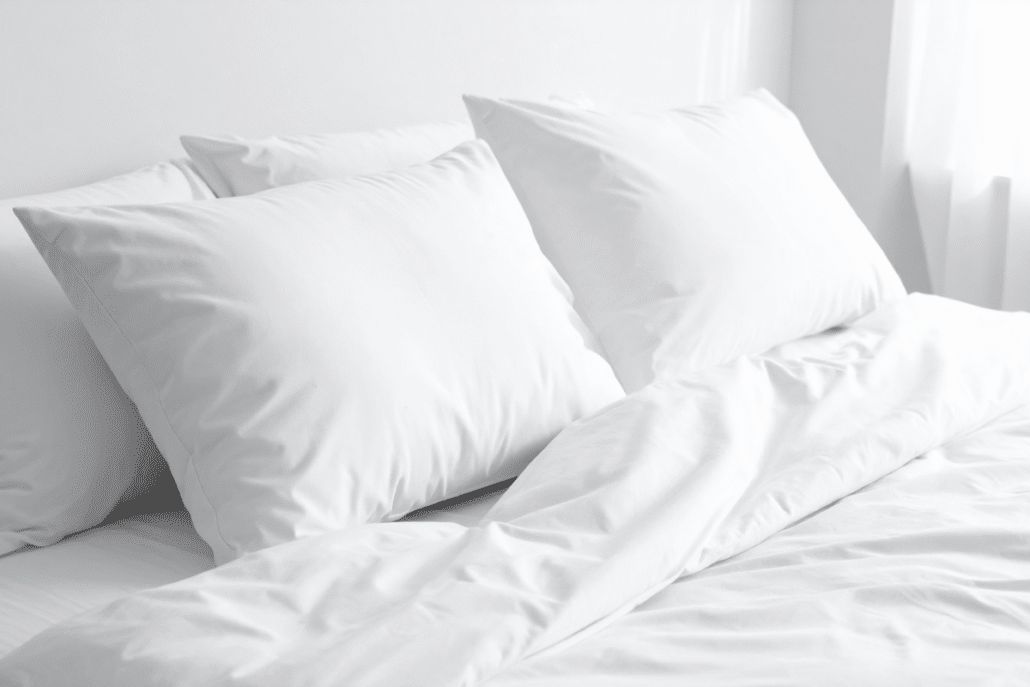
How to Get Yellow Pillows White Again (It Really Works)


When was the last time you actually looked at your pillow, not the pillowcase? Mine had gone from white to a blotchy yellow-brown, and I almost gave up and bought new ones. Turns out most stained pillows aren’t ruined at all. They just need the right soak. Here’s exactly how I got mine looking brand new again, no new pillows required.
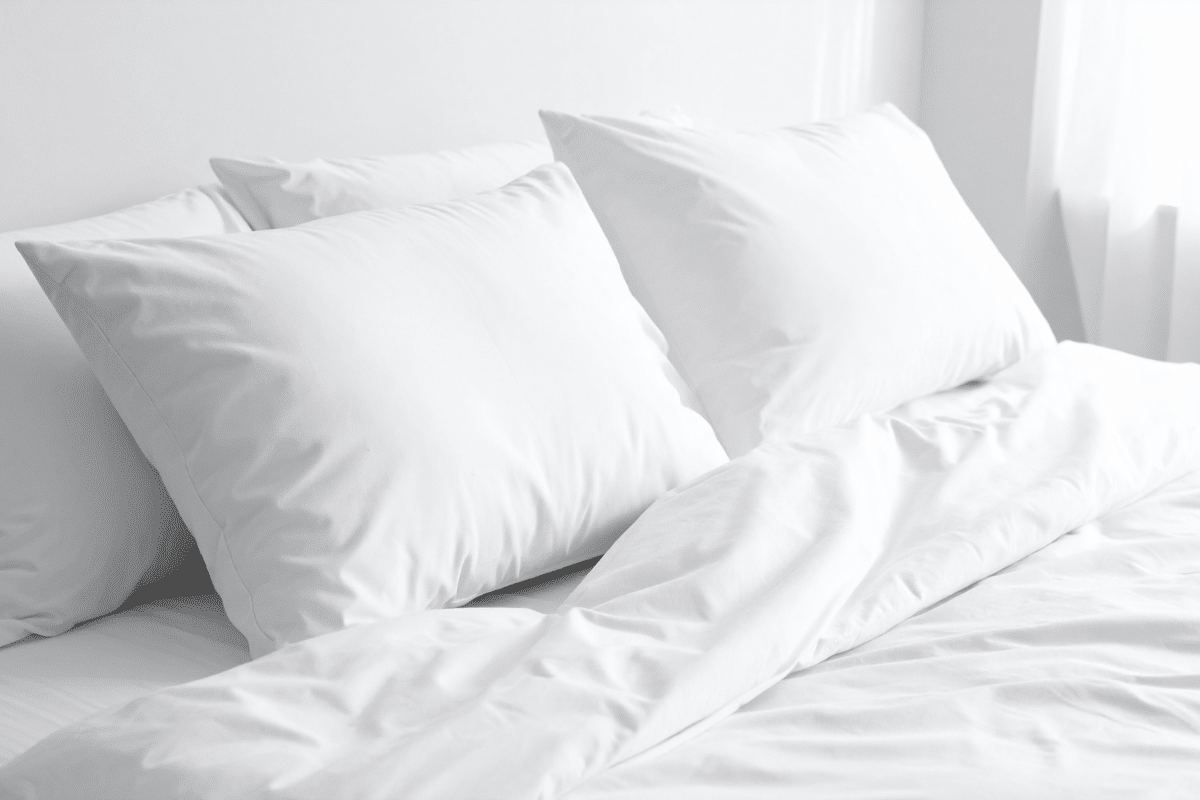
When was the last time you actually looked at your pillow? Not the pillowcase. The pillow.
Go ahead. I’ll wait.
Yeah. That’s not “vintage charm.” Those are stains, and probably in a lovely gradient from yellow to something closer to brown. Most of us handle this the same way: stuff the offender into a fresh pillowcase, fluff it up, and pretend we didn’t see anything. I did that for years. Turns out you don’t have to.
What’s actually going on here
It’s not gross, exactly. It’s just biology.
Sweat, drool, body oils, whatever’s left in your hair after a shower, the makeup you meant to wash off. Every night, all of it lands on your pillow, and every night it soaks a little further in. Your pillowcase gets the first hit, which is why it stays white. You wash it constantly. Your pillow? It just sits there absorbing everything, year after year, while nobody’s laundering it on any kind of schedule.
And yes, you sweat in your sleep even if you swear you don’t. If your pillow’s gone dingy, that’s your proof. Welcome to being a normal, functioning human body.
Some people sweat more than others, too, which is why your husband’s pillow might look like a crime scene next to yours, or why one kid’s pillow is somehow worse than his brother’s. Same house, same detergent, wildly different pillows. Nobody said biology was fair.
The good news: you can fix this
Here’s the part that surprised me the first time I tried it. Most bed pillows aren’t ruined. They’re just dirty, and dirty comes out.
Check the tag first. If it says washable, you’re in business. (Memory foam is its own animal. Don’t put it through this. That’s a different method.) Wash one king-size pillow, or two smaller ones, at a time. Crowding the load just means nothing gets properly clean.
If your pillow has a zippered protective liner, unzip it and check underneath. Sometimes the stains never made it past that liner, and you’ve got an easy win. If the pillow itself is stained, wash the liner and the pillow both.
Here’s what you’ll need:
An enzyme laundry pretreatment
Sweat and body oils are protein-based, and plain detergent just pushes protein stains around instead of breaking them down. The protease in an enzyme pretreatment breaks those protein molecules into smaller pieces so the detergent’s surfactants can actually lift them out in the wash. That’s why this step goes first. Soilove is the one I reach for, though Shout Active Enzyme and Zout Triple Enzyme do the same job.
Powdered laundry detergent
This is your base cleaner, doing the everyday work of lifting dirt and oil out of the fabric. Powder over liquid here, since powder tends to have more cleaning agents packed in per scoop and holds up better in hot water.
Powdered dishwasher detergent
Sounds odd in a laundry recipe, I know. But dishwasher detergent is formulated to fight the kind of greasy, filmy residue you get on dishes, and body oils are more or less the same category of grime. Cascade Complete Powder is what’s in my cabinet.
Borax
This is your water softener and stain-fighter combined. It boosts what the detergent can do, especially in hard water, and it’s been quietly doing this job in laundry rooms for over a century.
Liquid bleach or a bleach alternative
This is the whitening step. Bleach breaks apart the molecules that give stains their color, which is different from removing the stain itself. Use an oxygen-based alternative if you’d rather skip chlorine, though it’ll work a bit more slowly.
White vinegar
Added at the very end, this softens fabric naturally and helps rinse away any leftover detergent residue, which is part of what keeps pillows from graying out again down the road.
Step-By-Step Breakdown
Step 1: Pretreat
Work the enzyme stain remover into the worst of the stains and let it sit for about 20 minutes. This is doing more work than it looks like. Enzymes break down the protein in sweat and body oils in a way plain detergent just can’t touch.
Step 2: Soak
Fill a large container with the hottest tap water you can stand to touch, and get the pillows soaking.
Top-loading washer with a soak setting? Use it. Fill it with hot water, then pause the cycle. Front loader? Grab a storage bin or use the bathtub instead.
Step 3: Build your solution
While the pillows soak, fill your biggest cooking pot with water and bring it to a full boil on the stove. Kill the heat, then stir in the powdered detergent, the dishwasher detergent, and the borax until everything dissolves.
Step 4: Combine, carefully
Pour that hot mixture into wherever your pillows are soaking, then stir in the bleach. Pillows float. It’s what they’re built to do, so you’ll need to push them under and turn them so they get saturated evenly. A broom handle works fine for this. Let them soak at least an hour. Longer won’t hurt anything.
Step 5: Wash
Run the pillows through your washer’s longest, hottest cycle, with an extra rinse if your machine offers one. Add a cup of white vinegar to the fabric softener compartment for the final rinse. It’ll brighten things further, and keeping it separate from the bleach step means you’re never mixing the two, which you absolutely do not want to do.
Step 6: Dry them right
Toss the pillows in the dryer on medium heat with wool dryer balls, or a couple of tennis balls each knotted into a sock, to keep them tumbling and prevent lumps. Down pillows get the air-only or fluff setting. Synthetic fill gets low heat.
Step 7: Admire your work
This is the fun part. Pull them out and look. That’s not a new pillow. That’s your old one, minus about a decade of grime.
How to never do this again
Buy zippered pillow protectors and put them on every pillow in the house. It’s a five-minute chore that saves you an afternoon of boiling water and broom handles later, and it costs a lot less than replacing pillows every couple of years.
Beyond that, just build in a peek. Next time you strip the bed, pull the pillowcase all the way off and actually look at what’s underneath before you put it back on. Catch a spot early, wash it right then, and you’ll never be staring down a pillow this far gone again.

(Disclosure: This post includes an Amazon Creator Connections product. I may earn a small commission if you purchase through the link, at no additional cost to you.)
Yellow Pillow Stain-Removal Method
Materials
- Enzyme laundry stain pretreatment Soilove, Shout Active Enzyme, or Zout Triple Enzyme
- 1 cup powdered laundry detergent
- 1 cup powdered dishwasher detergent such as Cascade Complete Powder
- ½ cup borax
- 1 cup liquid bleach or bleach alternative
- 1 cup white vinegar
Instructions
- Treat the stains with the enzyme pretreatment and let sit about 20 minutes.
- Soak the pillows in the hottest tap water you can manage. Top-loader with a soak setting: use it, then pause the cycle. Front-loader: use a storage bin or the bathtub instead.
- While the pillows soak, bring a large pot of water to a full boil on the stovetop. Turn off the heat, then stir in the laundry detergent, dishwasher detergent, and borax until fully dissolved.
- Carefully pour the hot solution into the water where your pillows are soaking. Stir in the bleach. Submerge the pillows fully. A broom handle helps, since pillows tend to float, and let soak at least 1 hour.
- Launder on your machine's longest, hottest cycle with an extra rinse if available. Add 1 cup white vinegar to the fabric softener compartment for the final rinse, keeping it separate from the bleach step.
- Dry on medium heat with wool dryer balls or sock-tied tennis balls to keep pillows tumbling. Down pillows: air-only or fluff. Synthetic: low heat.
Notes
Question: What’s grosser: finally looking at your pillow, or admitting how long it’s been since you did? Join the conversation in the comments below.
EverydayCheapskate™ is reader-supported. We participate in the Amazon Services LLC Associates Program and other affiliate advertising programs, designed to provide a means for us to earn from qualifying purchases, at no cost to you.

More from Everyday Cheapskate
 https://www.everydaycheapskate.com/wp-content/uploads/20260826-DIY-cat-litter-deodorizer-kitten-looking-up-at-camera-from-box.png
800
1200
Mary Hunt
https://www.everydaycheapskate.com/wp-content/uploads/EC-Logo-by-Mary-Hunt-Tagline-Trimmed.png
Mary Hunt2026-08-25 21:17:362026-09-28 22:49:26The One-Ingredient Litter Box Trick That Costs Pennies
https://www.everydaycheapskate.com/wp-content/uploads/20260826-DIY-cat-litter-deodorizer-kitten-looking-up-at-camera-from-box.png
800
1200
Mary Hunt
https://www.everydaycheapskate.com/wp-content/uploads/EC-Logo-by-Mary-Hunt-Tagline-Trimmed.png
Mary Hunt2026-08-25 21:17:362026-09-28 22:49:26The One-Ingredient Litter Box Trick That Costs Pennies https://www.everydaycheapskate.com/wp-content/uploads/20260819-dry-clean-only.png
800
1200
Mary Hunt
https://www.everydaycheapskate.com/wp-content/uploads/EC-Logo-by-Mary-Hunt-Tagline-Trimmed.png
Mary Hunt2026-08-19 23:38:122026-09-28 22:49:48The Truth About “Dry Clean Only” (And When I Actually Listen to It)
https://www.everydaycheapskate.com/wp-content/uploads/20260819-dry-clean-only.png
800
1200
Mary Hunt
https://www.everydaycheapskate.com/wp-content/uploads/EC-Logo-by-Mary-Hunt-Tagline-Trimmed.png
Mary Hunt2026-08-19 23:38:122026-09-28 22:49:48The Truth About “Dry Clean Only” (And When I Actually Listen to It) https://www.everydaycheapskate.com/wp-content/uploads/20260809-how-to-get-the-smell-out-of-towels-stack-of-towels-sitting-with-candle-in-bright-natural-light.png
800
1200
Mary Hunt
https://www.everydaycheapskate.com/wp-content/uploads/EC-Logo-by-Mary-Hunt-Tagline-Trimmed.png
Mary Hunt2026-08-08 16:48:552026-08-08 16:50:57How to Get Smell Out of Towels: The 2-Wash Fix That Works
https://www.everydaycheapskate.com/wp-content/uploads/20260809-how-to-get-the-smell-out-of-towels-stack-of-towels-sitting-with-candle-in-bright-natural-light.png
800
1200
Mary Hunt
https://www.everydaycheapskate.com/wp-content/uploads/EC-Logo-by-Mary-Hunt-Tagline-Trimmed.png
Mary Hunt2026-08-08 16:48:552026-08-08 16:50:57How to Get Smell Out of Towels: The 2-Wash Fix That Works https://www.everydaycheapskate.com/wp-content/uploads/20260729-the-problem-with-fabric-softener-sitting-on-a-washer.png
800
1200
Mary Hunt
https://www.everydaycheapskate.com/wp-content/uploads/EC-Logo-by-Mary-Hunt-Tagline-Trimmed.png
Mary Hunt2026-07-29 13:45:412026-07-29 13:47:50Fabric Softener Is Wrecking Your Laundry. Here’s What Actually Works.
https://www.everydaycheapskate.com/wp-content/uploads/20260729-the-problem-with-fabric-softener-sitting-on-a-washer.png
800
1200
Mary Hunt
https://www.everydaycheapskate.com/wp-content/uploads/EC-Logo-by-Mary-Hunt-Tagline-Trimmed.png
Mary Hunt2026-07-29 13:45:412026-07-29 13:47:50Fabric Softener Is Wrecking Your Laundry. Here’s What Actually Works. https://www.everydaycheapskate.com/wp-content/uploads/20260703-home-decor.png
800
1200
Mary Hunt
https://www.everydaycheapskate.com/wp-content/uploads/EC-Logo-by-Mary-Hunt-Tagline-Trimmed.png
Mary Hunt2026-07-03 20:46:552026-09-28 22:51:4110 Everyday Items You Never Think to Wash (But Should)
https://www.everydaycheapskate.com/wp-content/uploads/20260703-home-decor.png
800
1200
Mary Hunt
https://www.everydaycheapskate.com/wp-content/uploads/EC-Logo-by-Mary-Hunt-Tagline-Trimmed.png
Mary Hunt2026-07-03 20:46:552026-09-28 22:51:4110 Everyday Items You Never Think to Wash (But Should) https://www.everydaycheapskate.com/wp-content/uploads/20260626-homemade-stain-paste-sitting-on-wooden-countertop-in-laundry-room-with-washer-and-dryer.png
800
1200
Mary Hunt
https://www.everydaycheapskate.com/wp-content/uploads/EC-Logo-by-Mary-Hunt-Tagline-Trimmed.png
Mary Hunt2026-06-26 17:41:192026-09-28 22:52:13Homemade Laundry Stain Paste That Works for Pennies
https://www.everydaycheapskate.com/wp-content/uploads/20260626-homemade-stain-paste-sitting-on-wooden-countertop-in-laundry-room-with-washer-and-dryer.png
800
1200
Mary Hunt
https://www.everydaycheapskate.com/wp-content/uploads/EC-Logo-by-Mary-Hunt-Tagline-Trimmed.png
Mary Hunt2026-06-26 17:41:192026-09-28 22:52:13Homemade Laundry Stain Paste That Works for Pennies https://www.everydaycheapskate.com/wp-content/uploads/20260625-striped-two-piece-and-red-one-piece-bathing-suit-how-to-make-swimsuits-last-longer.png
800
1200
Mary Hunt
https://www.everydaycheapskate.com/wp-content/uploads/EC-Logo-by-Mary-Hunt-Tagline-Trimmed.png
Mary Hunt2026-06-25 22:28:472026-09-28 22:52:31How to Care for Swimsuits and Make Them Last Years
https://www.everydaycheapskate.com/wp-content/uploads/20260625-striped-two-piece-and-red-one-piece-bathing-suit-how-to-make-swimsuits-last-longer.png
800
1200
Mary Hunt
https://www.everydaycheapskate.com/wp-content/uploads/EC-Logo-by-Mary-Hunt-Tagline-Trimmed.png
Mary Hunt2026-06-25 22:28:472026-09-28 22:52:31How to Care for Swimsuits and Make Them Last Years https://www.everydaycheapskate.com/wp-content/uploads/20260624-why-does-my-ice-taste-weird-soda-tea-lemonade-juice.png
800
1200
Mary Hunt
https://www.everydaycheapskate.com/wp-content/uploads/EC-Logo-by-Mary-Hunt-Tagline-Trimmed.png
Mary Hunt2026-06-24 17:10:532026-09-28 22:52:34Why Does My Ice Taste Weird? Here’s the Answer
https://www.everydaycheapskate.com/wp-content/uploads/20260624-why-does-my-ice-taste-weird-soda-tea-lemonade-juice.png
800
1200
Mary Hunt
https://www.everydaycheapskate.com/wp-content/uploads/EC-Logo-by-Mary-Hunt-Tagline-Trimmed.png
Mary Hunt2026-06-24 17:10:532026-09-28 22:52:34Why Does My Ice Taste Weird? Here’s the Answer https://www.everydaycheapskate.com/wp-content/uploads/20260618-retriever-labrador-on-white-rug-in-bright-contemporary-living-room-pet-stains-and-odors.png
800
1200
Mary Hunt
https://www.everydaycheapskate.com/wp-content/uploads/EC-Logo-by-Mary-Hunt-Tagline-Trimmed.png
Mary Hunt2026-06-18 23:08:332026-09-28 22:54:04Homemade Pet Stain Remover That Stops Repeat Accidents
https://www.everydaycheapskate.com/wp-content/uploads/20260618-retriever-labrador-on-white-rug-in-bright-contemporary-living-room-pet-stains-and-odors.png
800
1200
Mary Hunt
https://www.everydaycheapskate.com/wp-content/uploads/EC-Logo-by-Mary-Hunt-Tagline-Trimmed.png
Mary Hunt2026-06-18 23:08:332026-09-28 22:54:04Homemade Pet Stain Remover That Stops Repeat AccidentsPlease keep your comments positive, encouraging, helpful, brief,
and on-topic in keeping with EC Commenting Guidelines
Last update on 2026-10-27 / Affiliate links / Images from Amazon Product Advertising API


This works!! I was ready to throw my pillows away but followed this process and they turned out great and a month later still smell wonderful!
How can I get old stains out of a white cotton apron that is beautifully embroidered with many colors? The fabric is old. I made it in 1955.
I did this today! I didn’t have powdered dishwasher detergent, so I took a chance and threw a cascade pod in. Other than that I did exactly as you wrote. It worked beautifully! My pillows not only look great; they smell wonderful too! Thank you!
I have really good luck just soaking all my whites in Iron Out and very hot water overnight following directions on container. Then I wash them in my favorite laundry detergent and rinse twice. I’m not fond of the smell of Iron Out but the process is easy and the results are awesome. It has taken out stains that were over a year old. Don’t use on colors.
I use liquid Tide laundry soap.I live in a apt complex and when people use the machine and then I go and use it, the hot water is gone and my clothes are in very cold water. Powder does not dissolve good. In the times I have used it.
Will liquid Tide work?
My pillow is pink. Should I use a bleach alternative instead of the bleach?
I have not tested this. If you try, please let us know your results. My sense is that a bleach alternative will not be as effective in the final analysis, but I will be very interested to learn how that works for you.