
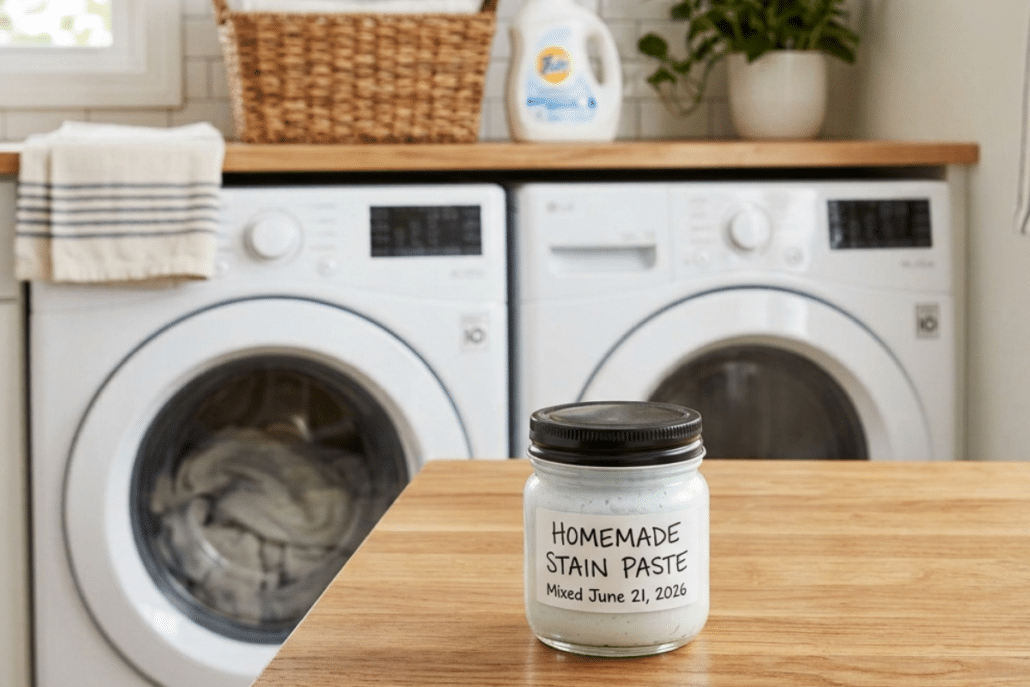
Homemade Laundry Stain Paste That Works for Pennies

The window of time between when a stain happens and when you actually do laundry is where most lost clothes go to die. The shirt with the spaghetti sauce dot. The kid’s pants with the grass stain that turned brown by Tuesday. The work blouse with the coffee spot you didn’t notice until it was already dried in. The good news? You don’t need an expensive commercial pre-treater to rescue most everyday stains. This homemade stain paste takes just a few minutes to mix, costs pennies per batch, and works remarkably well on everything from greasy food splatters to muddy knees and fresh grass stains.
Stains have a settling-in period, and it’s not in your favor.
The first few minutes after a spill, the stain is easiest to lift. A few hours later, it starts bonding with the fabric fibers. After a wash-and-dry cycle? Good luck. You may be looking at a permanent souvenir.
The trick is having an effective stain treatment ready when you need it… not three days later when you’re finally tackling the laundry basket.
Why This Works So Well
Many commercial stain pens are designed for one specific job: cleaning up small, fresh stains while you’re away from home. They do that well.
This homemade paste is a different kind of cleaner. It’s designed as a laundry pre-treatment that can be worked into the fabric before washing. Because it’s thicker, it stays where you put it, making it especially useful for greasy food stains, larger stained areas, and many common household stains that benefit from a little extra time before laundering.
While enzyme-based commercial stain removers may still have the edge on certain protein-heavy stains like dairy, egg, or baby formula, this simple homemade version handles an impressive variety of everyday messes using ingredients you probably already have on hand.
What You’ll Need
Three things. Maybe four.
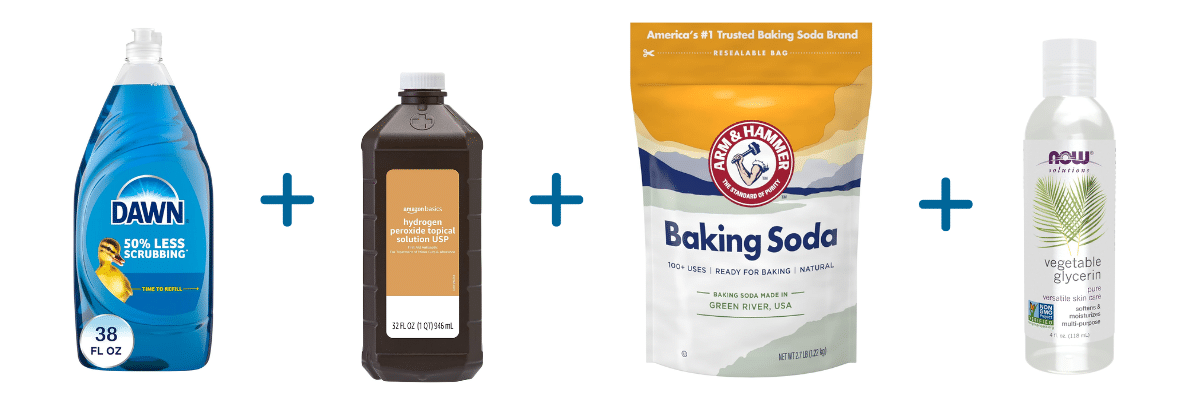
Original Blue Dawn Dish Soap
The grease-cutting workhorse. Original blue Dawn does an excellent job breaking down oily stains like cooking grease, makeup, sunscreen, and motor oil. Stick with the original blue formula rather than scented or specialty versions.
Hydrogen Peroxide (3%)
The brightener. Hydrogen peroxide helps lift many organic stains such as blood, grass, fruit juice, wine, and sweat. It’s inexpensive, easy to find, and a little goes a long way.
Baking Soda
Baking soda thickens the paste so it clings to fabric instead of running off. It also provides a little extra cleaning power and mild scrubbing action when gently worked into the stain.
Optional: A Little Vegetable Glycerin
One teaspoon of vegetable glycerin helps keep the paste from drying out quite as quickly. If you don’t have it, simply leave it out.


How to Make the Stain Paste
In a small clean glass jar, combine:
- 2 tablespoons Original Blue Dawn dish soap
- 2 tablespoons 3% hydrogen peroxide
- 3 tablespoons baking soda
- 1 teaspoon vegetable glycerin (optional)
Stir gently until you have a thick, smooth paste similar to toothpaste. If it’s too thick, add a few drops of peroxide. If it’s too thin, stir in a little more baking soda.
Because hydrogen peroxide gradually loses strength once it’s mixed with other ingredients, this paste works best when it’s fresh. I like making a small batch that lasts a week or two, then mixing another when needed. It only takes a couple of minutes.
Store the jar tightly covered in a cool, dark place between uses.
How to Use It
1. Blot First
Remove as much of the spill as possible with a clean cloth. Blot. Don’t rub, which only pushes the stain deeper into the fibers.
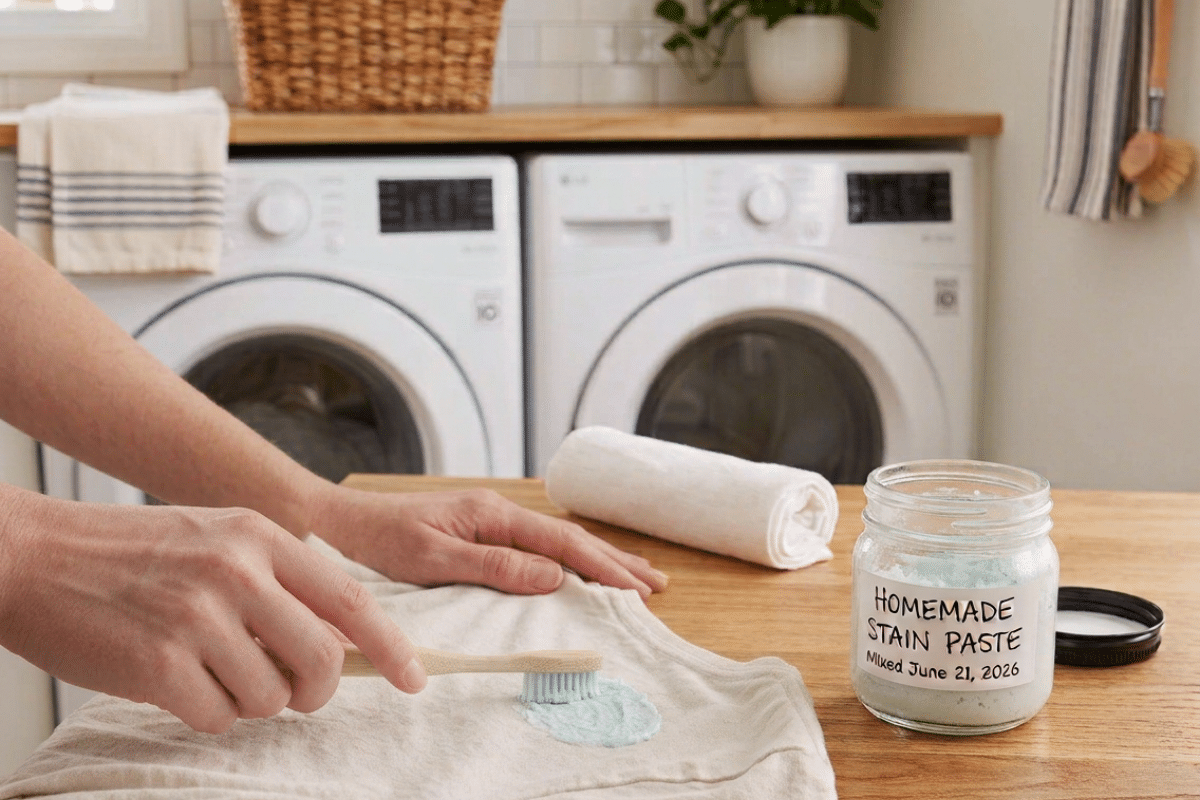
2. Apply the Paste
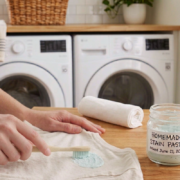
Using your finger or an old soft toothbrush, work a small amount of paste directly into the stain. You don’t need a thick layer… just enough to coat the stained area.
3. Let It Work
Fresh stains usually need only 10 to 15 minutes.
Older or tougher stains can sit for 30 to 60 minutes before washing. If the stain is especially stubborn, it’s generally better to repeat the treatment than leave peroxide on colored fabrics overnight.
4. Gently Agitate
Use the toothbrush to work the paste into the fibers with light circular motions.
5. Wash Normally
Wash according to the garment’s care label.
Before tossing it into the dryer, make sure the stain is completely gone. Dryer heat can permanently set whatever remains. If needed, repeat the treatment and wash again before drying.
What This Paste Works On
- Grass stains: Excellent, especially when treated promptly.
- Blood: Very good. Rinse first with cold water whenever possible, then apply the paste.
- Coffee, tea, and wine: Usually very good, especially if you catch the stain early.
- Tomato sauce, ketchup, and mustard: Very good. The sooner you treat them, the better the results.
- Grease, sunscreen, and makeup: Excellent. This is where Dawn really shines.
- Sweat and underarm stains: Very good on fresh stains. Older yellowing may require more than one treatment.
- Ballpoint ink: Fair. Start by blotting with rubbing alcohol, then follow with the paste.
- Old set-in stains: Results vary. Some disappear completely. Others improve with repeated treatments.
What to Avoid
Skip this on silk, wool, leather, suede, and anything labeled dry-clean only.
Because hydrogen peroxide can lighten some dyes, always test an inconspicuous area first before treating brightly colored or dark fabrics.
And never mix hydrogen peroxide with chlorine bleach.
A Word About On-the-Go Stains
For everyday laundry stains at home, this paste is hard to beat. But if you’re out to dinner or sitting in a meeting when disaster strikes, a commercial stain pen wins that round. It’s compact, clean, and ready immediately. Carry one in your bag, do first aid on the spot, then give the stain a thorough treatment with this paste once you’re back home.
Best of both worlds.
DIY Heavy-Duty Laundry Stain Paste
Materials
- 2 tablespoons Original Blue Dawn dish soap
- 2 tablespoons 3% hydrogen peroxide
- 3 tablespoons baking soda
- 1 teaspoon vegetable glycerin optional
Instructions
- Combine Dawn, hydrogen peroxide, baking soda, and vegetable glycerin (if using) in a small glass jar.
- Stir gently until fully combined and the mixture forms a smooth, thick paste similar in consistency to toothpaste.
- If paste is too thick, add a few drops of hydrogen peroxide. If too thin, stir in a little more baking soda.
- To use: blot the stain first to remove excess. Apply a small amount of paste directly to the stained area using a finger or soft toothbrush.
- Work the paste gently into the fabric using light circular motions.
- Allow to dwell 10–15 minutes for fresh stains, or 30–60 minutes for older or tougher stains.
- Wash according to the garment's care label.
- Check the stain before placing the item in the dryer. If the stain remains, repeat treatment and wash again before drying.
Notes
Question: What’s the stain you finally gave up on? Grass? Red wine? Grease? Tell us where it landed and how long it sat. Chances are someone here has fought that same battle and won.
EverydayCheapskate™ is reader-supported. We participate in the Amazon Services LLC Associates Program and other affiliate advertising programs, designed to provide a means for us to earn from qualifying purchases, at no additional cost to you.

More from Everyday Cheapskate
 https://www.everydaycheapskate.com/wp-content/uploads/20261019-Skeleton-with-sunglasses-in-closet.png
800
1200
Mary Hunt
https://www.everydaycheapskate.com/wp-content/uploads/EC-Logo-by-Mary-Hunt-Tagline-Trimmed.png
Mary Hunt2026-10-19 11:42:432026-10-19 11:42:4310 Easy Last-Minute Halloween Costumes From Your Closet
https://www.everydaycheapskate.com/wp-content/uploads/20261019-Skeleton-with-sunglasses-in-closet.png
800
1200
Mary Hunt
https://www.everydaycheapskate.com/wp-content/uploads/EC-Logo-by-Mary-Hunt-Tagline-Trimmed.png
Mary Hunt2026-10-19 11:42:432026-10-19 11:42:4310 Easy Last-Minute Halloween Costumes From Your Closet https://www.everydaycheapskate.com/wp-content/uploads/20261015-Sweet-pepper-and-onion-relish-in-a-white-bowl-with-crackers-and-fresh-red-bell-peppers.png
800
1200
Mary Hunt
https://www.everydaycheapskate.com/wp-content/uploads/EC-Logo-by-Mary-Hunt-Tagline-Trimmed.png
Mary Hunt2026-10-15 13:14:022026-10-15 13:14:02Sweet Pepper Onion Relish (Perfect Over Cream Cheese)
https://www.everydaycheapskate.com/wp-content/uploads/20261015-Sweet-pepper-and-onion-relish-in-a-white-bowl-with-crackers-and-fresh-red-bell-peppers.png
800
1200
Mary Hunt
https://www.everydaycheapskate.com/wp-content/uploads/EC-Logo-by-Mary-Hunt-Tagline-Trimmed.png
Mary Hunt2026-10-15 13:14:022026-10-15 13:14:02Sweet Pepper Onion Relish (Perfect Over Cream Cheese) https://www.everydaycheapskate.com/wp-content/uploads/20260917-fall-cleaning-checklist.png
800
1200
Mary Hunt
https://www.everydaycheapskate.com/wp-content/uploads/EC-Logo-by-Mary-Hunt-Tagline-Trimmed.png
Mary Hunt2026-09-17 17:11:012026-09-28 22:48:45Fall Cleaning Checklist: 15 Overlooked Spots to Clean
https://www.everydaycheapskate.com/wp-content/uploads/20260917-fall-cleaning-checklist.png
800
1200
Mary Hunt
https://www.everydaycheapskate.com/wp-content/uploads/EC-Logo-by-Mary-Hunt-Tagline-Trimmed.png
Mary Hunt2026-09-17 17:11:012026-09-28 22:48:45Fall Cleaning Checklist: 15 Overlooked Spots to Clean https://www.everydaycheapskate.com/wp-content/uploads/20260902-pumpkin-spice-latte-recipe-homemade-diy.png
800
1200
Mary Hunt
https://www.everydaycheapskate.com/wp-content/uploads/EC-Logo-by-Mary-Hunt-Tagline-Trimmed.png
Mary Hunt2026-09-02 16:16:022026-09-02 16:18:35Homemade Pumpkin Spice Latte Recipe (Cheaper, Better, Faster)
https://www.everydaycheapskate.com/wp-content/uploads/20260902-pumpkin-spice-latte-recipe-homemade-diy.png
800
1200
Mary Hunt
https://www.everydaycheapskate.com/wp-content/uploads/EC-Logo-by-Mary-Hunt-Tagline-Trimmed.png
Mary Hunt2026-09-02 16:16:022026-09-02 16:18:35Homemade Pumpkin Spice Latte Recipe (Cheaper, Better, Faster) https://www.everydaycheapskate.com/wp-content/uploads/20260831-Portrait-of-a-Pitbull-on-a-yellow-background-homemade-dog-treat-recipes.png
800
1200
Mary Hunt
https://www.everydaycheapskate.com/wp-content/uploads/EC-Logo-by-Mary-Hunt-Tagline-Trimmed.png
Mary Hunt2026-08-31 13:06:072026-09-28 22:49:173 Homemade Dog Treats Recipes Your Dog Will Love Most
https://www.everydaycheapskate.com/wp-content/uploads/20260831-Portrait-of-a-Pitbull-on-a-yellow-background-homemade-dog-treat-recipes.png
800
1200
Mary Hunt
https://www.everydaycheapskate.com/wp-content/uploads/EC-Logo-by-Mary-Hunt-Tagline-Trimmed.png
Mary Hunt2026-08-31 13:06:072026-09-28 22:49:173 Homemade Dog Treats Recipes Your Dog Will Love Most https://www.everydaycheapskate.com/wp-content/uploads/20260826-DIY-cat-litter-deodorizer-kitten-looking-up-at-camera-from-box.png
800
1200
Mary Hunt
https://www.everydaycheapskate.com/wp-content/uploads/EC-Logo-by-Mary-Hunt-Tagline-Trimmed.png
Mary Hunt2026-08-25 21:17:362026-09-28 22:49:26The One-Ingredient Litter Box Trick That Costs Pennies
https://www.everydaycheapskate.com/wp-content/uploads/20260826-DIY-cat-litter-deodorizer-kitten-looking-up-at-camera-from-box.png
800
1200
Mary Hunt
https://www.everydaycheapskate.com/wp-content/uploads/EC-Logo-by-Mary-Hunt-Tagline-Trimmed.png
Mary Hunt2026-08-25 21:17:362026-09-28 22:49:26The One-Ingredient Litter Box Trick That Costs Pennies https://www.everydaycheapskate.com/wp-content/uploads/20260822-central-AC-maintenance-air-condenser-outdoors.png
800
1200
Mary Hunt
https://www.everydaycheapskate.com/wp-content/uploads/EC-Logo-by-Mary-Hunt-Tagline-Trimmed.png
Mary Hunt2026-08-22 14:19:562026-09-28 22:49:43How to Extend the Life of Your Central AC (5 Late-Summer Tune-Up Tips)
https://www.everydaycheapskate.com/wp-content/uploads/20260822-central-AC-maintenance-air-condenser-outdoors.png
800
1200
Mary Hunt
https://www.everydaycheapskate.com/wp-content/uploads/EC-Logo-by-Mary-Hunt-Tagline-Trimmed.png
Mary Hunt2026-08-22 14:19:562026-09-28 22:49:43How to Extend the Life of Your Central AC (5 Late-Summer Tune-Up Tips) https://www.everydaycheapskate.com/wp-content/uploads/20260819-dry-clean-only.png
800
1200
Mary Hunt
https://www.everydaycheapskate.com/wp-content/uploads/EC-Logo-by-Mary-Hunt-Tagline-Trimmed.png
Mary Hunt2026-08-19 23:38:122026-09-28 22:49:48The Truth About “Dry Clean Only” (And When I Actually Listen to It)
https://www.everydaycheapskate.com/wp-content/uploads/20260819-dry-clean-only.png
800
1200
Mary Hunt
https://www.everydaycheapskate.com/wp-content/uploads/EC-Logo-by-Mary-Hunt-Tagline-Trimmed.png
Mary Hunt2026-08-19 23:38:122026-09-28 22:49:48The Truth About “Dry Clean Only” (And When I Actually Listen to It) https://www.everydaycheapskate.com/wp-content/uploads/20260809-how-to-get-the-smell-out-of-towels-stack-of-towels-sitting-with-candle-in-bright-natural-light.png
800
1200
Mary Hunt
https://www.everydaycheapskate.com/wp-content/uploads/EC-Logo-by-Mary-Hunt-Tagline-Trimmed.png
Mary Hunt2026-08-08 16:48:552026-08-08 16:50:57How to Get Smell Out of Towels: The 2-Wash Fix That Works
https://www.everydaycheapskate.com/wp-content/uploads/20260809-how-to-get-the-smell-out-of-towels-stack-of-towels-sitting-with-candle-in-bright-natural-light.png
800
1200
Mary Hunt
https://www.everydaycheapskate.com/wp-content/uploads/EC-Logo-by-Mary-Hunt-Tagline-Trimmed.png
Mary Hunt2026-08-08 16:48:552026-08-08 16:50:57How to Get Smell Out of Towels: The 2-Wash Fix That WorksPlease keep your comments positive, encouraging, helpful, brief,
and on-topic in keeping with EC Commenting Guidelines
Last update on 2026-10-27 / Affiliate links / Images from Amazon Product Advertising API


Used this just last week on a white cotton t-shirt to remove blood stains and it worked wonderfully. Thanks for the recipe!
I can’t wait to try this on a coffee stain on my favorite mint green t-shirt!
I am curious that you specifically listed Original Blue Dawn dish soap. At our house we stock Dawn Platinum which I buy thinking that it is an overall better performer than original. Is there a disadvantage to using the original formula?
Platinum is just a more concentrated version of Dawn. The ratios are geared toward dawn original (and it’s cheaper!)