
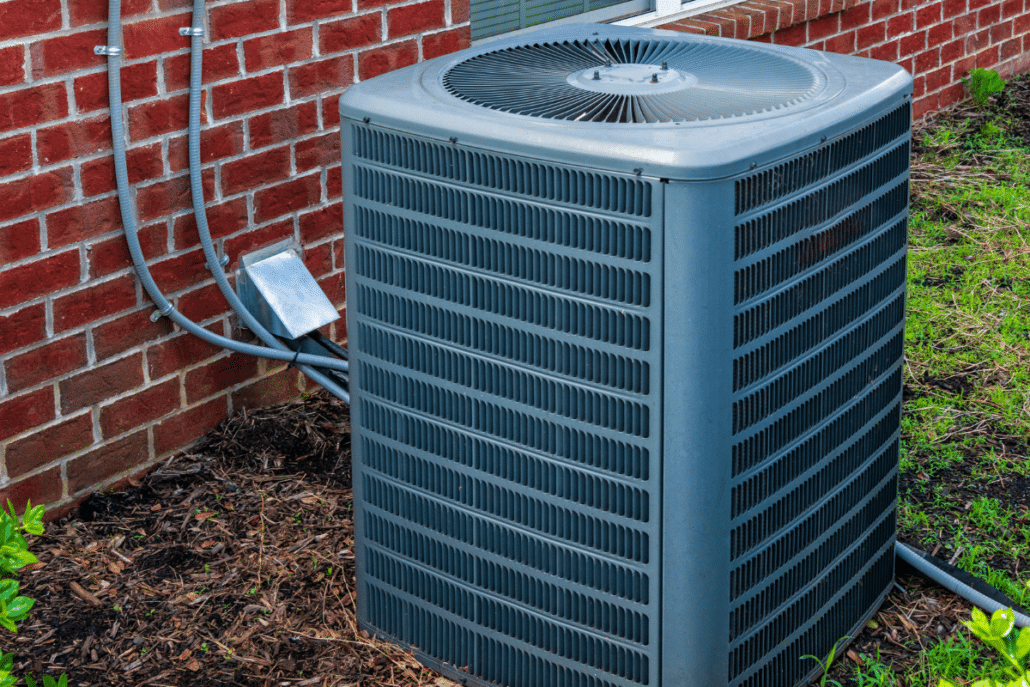
How to Extend the Life of Your Central AC (5 Late-Summer Tune-Up Tips)

Nobody thinks about their central AC until the day it quits, and that day always seems to land during the worst heat wave of the summer. Here’s what most homeowners never hear: a system that gets a little basic care every year can outlast a neglected one by 5 to 8 years. These five late-summer tasks take about two hours, and every one of them, you can do yourself.
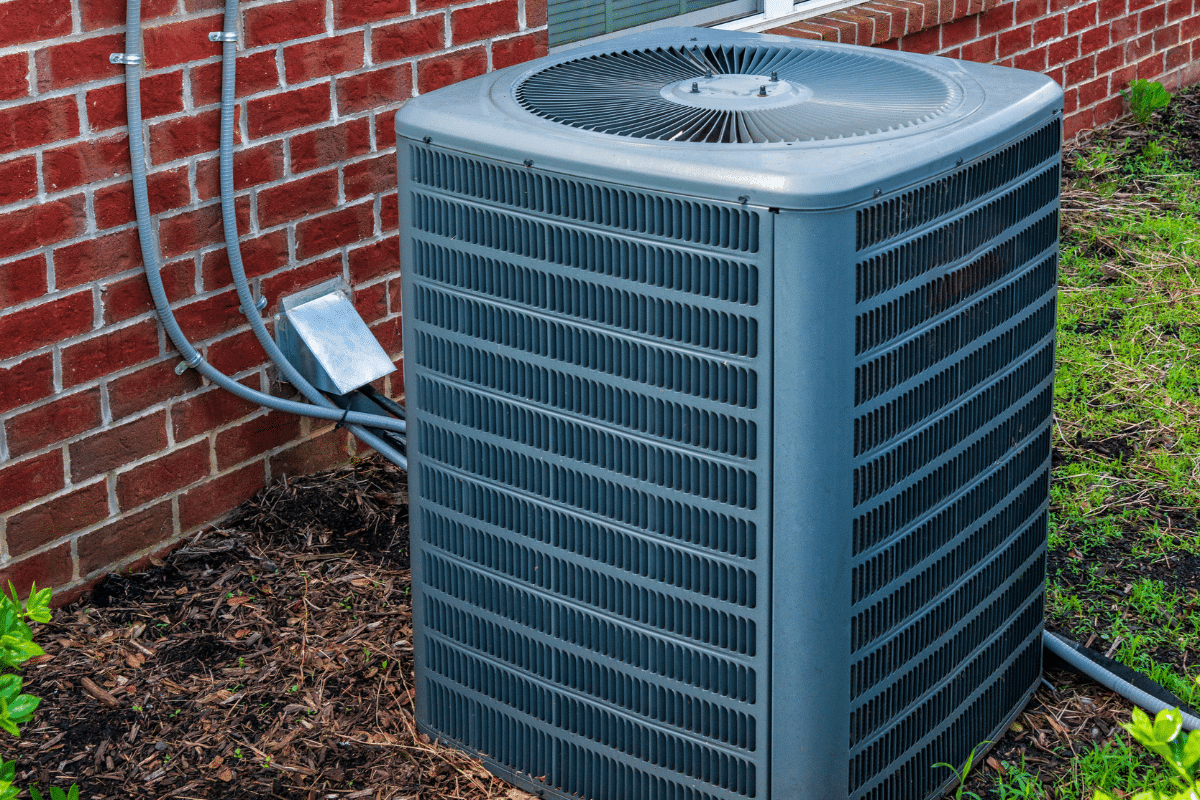
Quick question: do you know what a new central air system costs?
I do, because I made the mistake of finding out the hard way. $6,000 to $11,500, depending on the size of your house and how badly the HVAC guy thinks you need to be upsold that day. And the wild part is, most of us never think about our AC until the exact moment it stops working, which is always the hottest day of the year. Funny how that works.
Here’s the thing nobody tells you at the appliance store: a system that gets basic yearly maintenance can outlast a neglected one by 5 to 8 years. That’s not a rounding error. That’s the difference between replacing your AC once in a decade and replacing it twice.
And the maintenance? It’s not complicated. Five jobs, one Saturday morning, no license required. Do these before the last big heat wave rolls through, and your unit keeps humming along while your neighbor’s, the one who’s never once looked at his outdoor unit, starts making that death rattle sound.
Why these systems actually fail
Nothing dramatic. That’s what gets me. Clogged filters. Dirty coils. Bent fins. A blocked drain line. None of it sounds like a big deal on its own. But it all adds up quietly, squeezing the life out of your system a little at a time, until one August afternoon it just gives up.
Late summer is the sweet spot for catching this stuff. Your AC has been working overtime all season, so the wear is showing. And there’s still enough hot weather left that fixing it now pays you back immediately, in a lower electric bill. Here’s the order I’d do these in.
1. Replace the air filter. Today, not “this weekend”
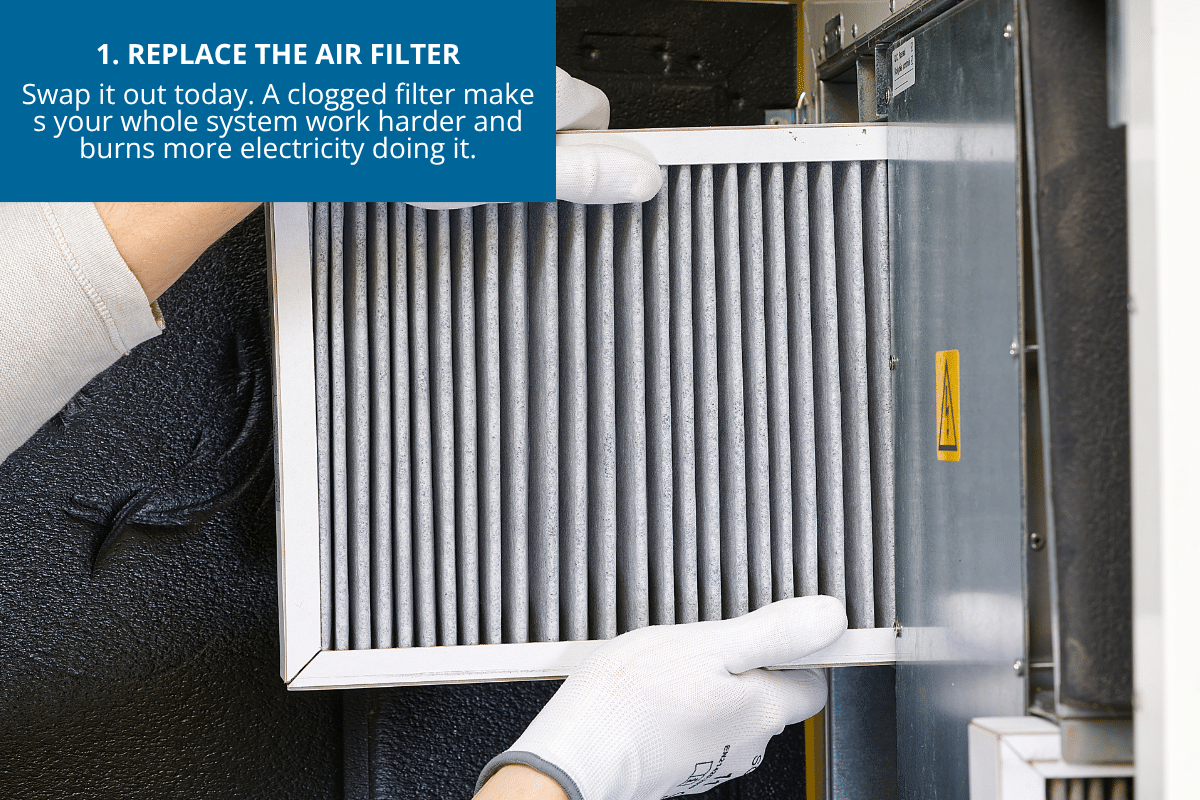
This one’s the biggest bang for your buck, and it’s the one people put off the longest. Your filter is the only thing standing between your system and every dust bunny in the house. When it’s clogged, the whole unit has to strain to pull air through it, which burns more electricity, wears out the blower motor faster, and can eventually freeze the whole system solid.
- Find the filter. It’s usually in the return-air duct or the air handler.
- Check the size printed on the old one (something like 16x25x1).
- Buy the same size. MERV 8 to 11 is the sweet spot for most homes. Higher isn’t automatically better here. If your system wasn’t built for it, a high-MERV filter can actually choke the airflow.
- Slide the new one in with the arrow pointing toward the air handler.
How often: every 1 to 3 months in summer. If you’ve got a dog shedding like it’s their job, make that monthly.
2. Hose down the outdoor unit
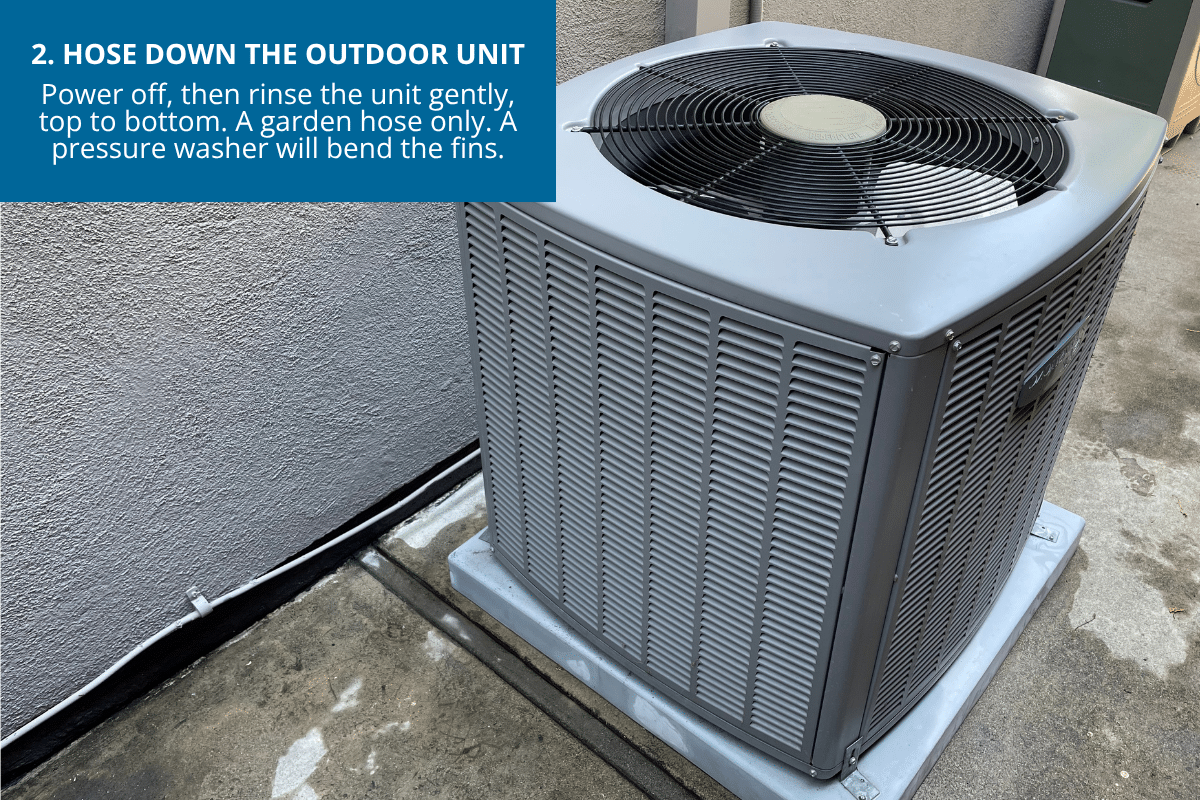
That big metal box sitting outside your house is working hard to dump the heat pulled from inside. If it’s caked in grass clippings, leaves, and whatever that fluffy stuff is that cottonwoods launch at us every June, it can’t breathe. And a unit that can’t breathe can’t cool your house.
- Flip the shutoff switch near the unit. Power off, always.
- Clear out any big debris on top and around the base: twigs, leaves, a stray grocery bag.
- Hose it down gently, top to bottom, all sides. A garden hose, not a pressure washer. Pressure washers will bend the fins right out of shape.
- Let it dry an hour before you flip the power back on.
- Trim anything growing nearby. Two feet clear on every side, five feet above. An overgrown hedge is basically asking your compressor to work through a pillow.
3. Straighten the fins
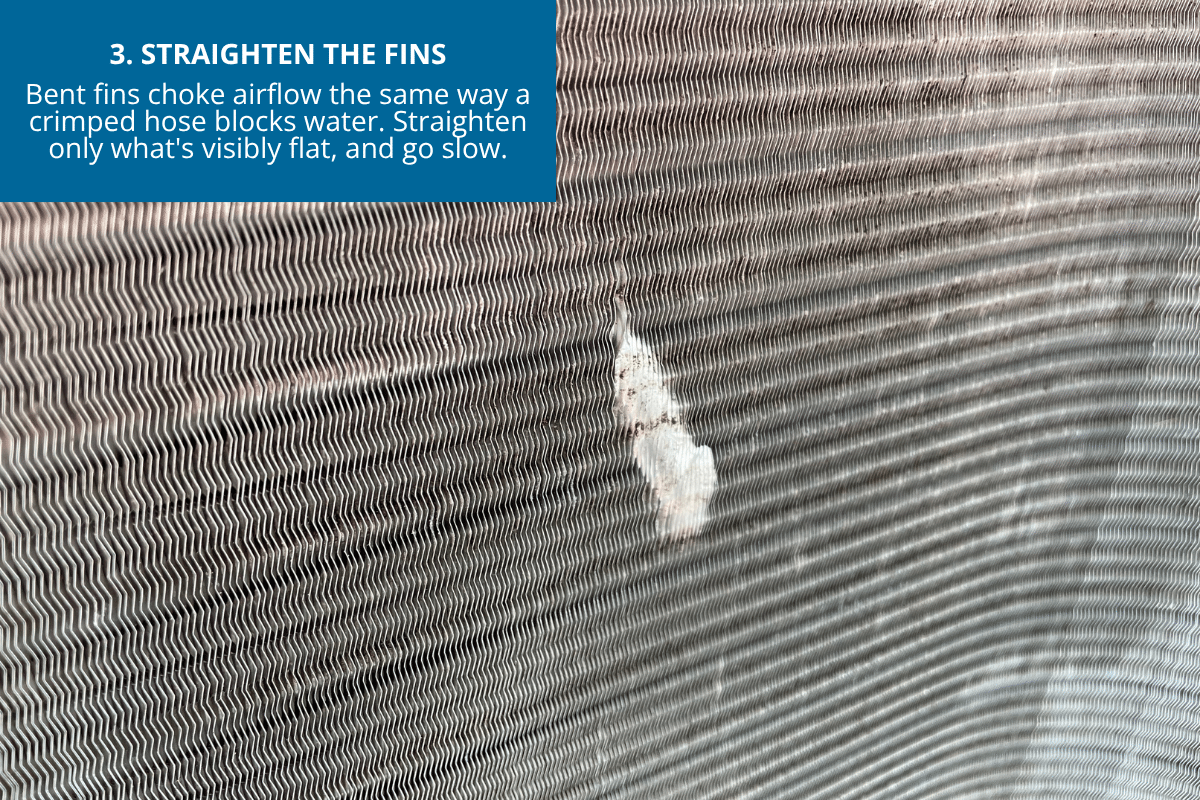
Your condenser has hundreds of thin aluminum fins, and over the years, weed whackers and hail and the occasional kid’s stray baseball bend them flat. Bent fins block airflow the same way a crimped garden hose blocks water. The system just works harder to compensate.
- With the power off, eyeball the fins from a few angles.
- Anything obviously bent flat, gently straighten it with a fin comb. They run $5 to $10 at any hardware store. No fin comb handy? A butter knife or the edge of a plastic ruler works fine. Just go slow. These things bend if you look at them wrong.
- Only fix what’s actually bent. Don’t go poking at fins that look fine. You’ll make it worse.
Small job. Noticeable payoff if your unit’s been neglected a while.
4. Clear the condensate drain line
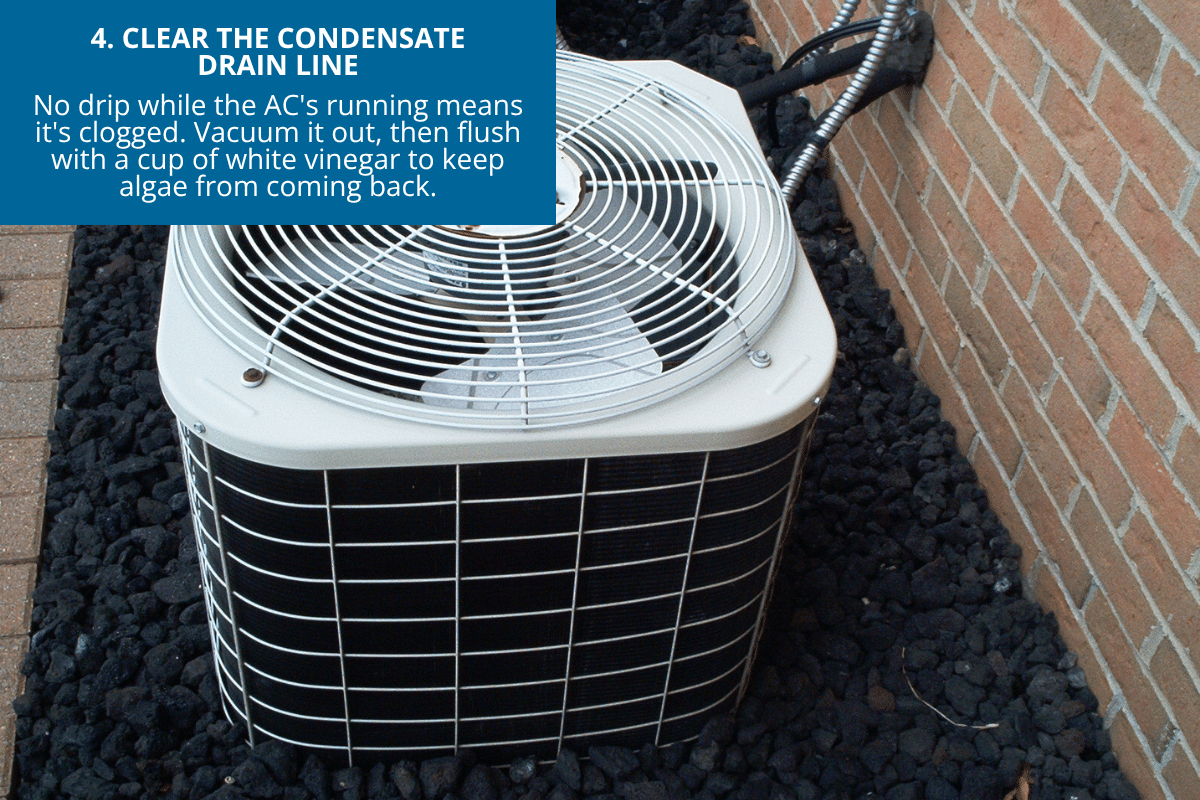
Your AC is pulling water straight out of the air, which is exactly why the house feels less sticky when it’s running. That water has to go somewhere, and it drains out through a thin PVC line. When that line clogs, usually with algae, the water backs up. Best case, a safety switch shuts your AC off. Worst case, and this is the one that keeps people up at night, it floods your ceiling if the unit lives in the attic.
- Find the outdoor end of the drain line. Small white PVC pipe, usually dripping while the AC runs. Not dripping? That’s your sign it’s clogged.
- Grab a wet/dry shop vac, seal the hose against the drain opening with a rag, and run it for a minute or two to pull the clog out.
- Once it’s clear, pour a cup of white vinegar into the cleanout access near the air handler (look for a small T-shaped fitting). Vinegar kills the algae before it comes back.
How often: a full clear once a year, in mid to late summer. A vinegar flush every few months keeps it from getting bad in the first place.
5. Rewrap the refrigerant line
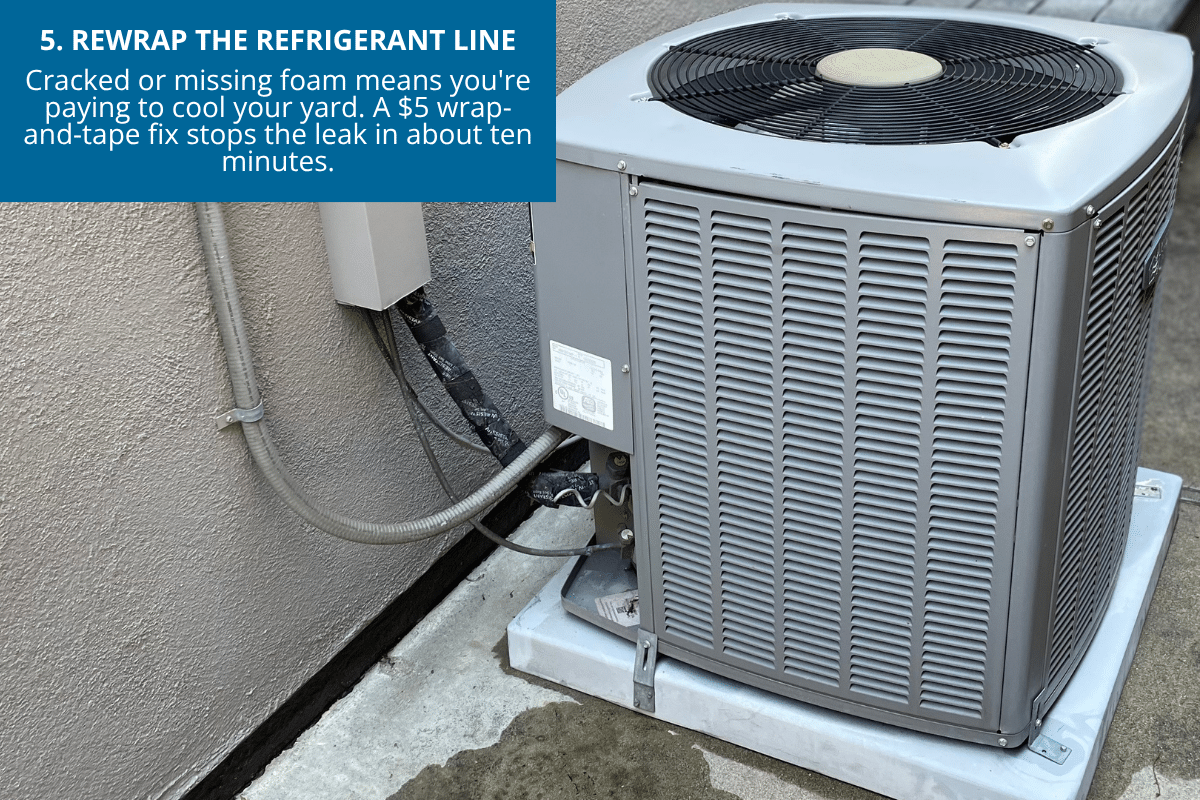
There’s a copper line running between your outdoor and indoor units, and it’s supposed to be wrapped in black foam insulation. Years of sun exposure and that foam cracks and crumbles right off, which means cold air is escaping before it ever makes it into your house. You’re paying to cool your yard.
- Look at the copper line coming out of the outdoor unit. Cracked, missing, or crumbly foam? Time for new insulation.
- Grab a length of foam pipe insulation at the hardware store. About five bucks for six feet.
- Slit it lengthwise, wrap it around the line, and seal it with electrical tape or the adhesive strip built into most of these.
Ten minutes. Real savings, every month, for as long as it lasts.
What to leave to a professional
I’m all for doing what you can yourself. I am not all for playing HVAC technician with anything involving refrigerant or live wiring. Some things belong to a pro:
- Refrigerant recharge. This requires certification, and if your system is low, that means there’s a leak somewhere that needs finding, not just topping off.
- Electrical work. Wiring, capacitors, anything inside the unit that could shock you.
- Compressor trouble. Strange noises, or the outdoor unit not running at all? Don’t go digging around. Call someone.
- Deep-cleaning the indoor evaporator coil. It means pulling panels apart, and it’s easy to damage if you don’t know what you’re doing.
A yearly professional tune-up runs $75 to $200. Pair that with the five things above, and your system is about as covered as it gets. Spring is the best time to book it, before everyone else remembers they own an air conditioner and the good appointment slots disappear.
What this is actually worth
A well-maintained AC uses 10 to 15 percent less electricity than a neglected one, lasts 5 to 8 years longer, and saves you thousands over its lifetime just by pushing the replacement date back. It’s also a lot less likely to quit on the one day you really need it, which, if you’ve ever lived through a AC failure in a heat wave, you know is worth something no spreadsheet can capture.
Two hours on a Saturday. That’s the whole ask. Go check that filter.
Question: How old is your AC, and what’s the one maintenance trick you swear by? Tell me in the comments. I collect these.
EverydayCheapskate™ is reader-supported. We participate in the Amazon Services LLC Associates Program and other affiliate advertising programs, designed to provide a means for us to earn from qualifying purchases, at no cost to you.

More from Everyday Cheapskate
 https://www.everydaycheapskate.com/wp-content/uploads/20261019-Skeleton-with-sunglasses-in-closet.png
800
1200
Mary Hunt
https://www.everydaycheapskate.com/wp-content/uploads/EC-Logo-by-Mary-Hunt-Tagline-Trimmed.png
Mary Hunt2026-10-19 11:42:432026-10-19 11:42:4310 Easy Last-Minute Halloween Costumes From Your Closet
https://www.everydaycheapskate.com/wp-content/uploads/20261019-Skeleton-with-sunglasses-in-closet.png
800
1200
Mary Hunt
https://www.everydaycheapskate.com/wp-content/uploads/EC-Logo-by-Mary-Hunt-Tagline-Trimmed.png
Mary Hunt2026-10-19 11:42:432026-10-19 11:42:4310 Easy Last-Minute Halloween Costumes From Your Closet https://www.everydaycheapskate.com/wp-content/uploads/20261017-Woman-opening-refrigerator-stocked-with-fresh-food-and-condiments.png
800
1200
Mary Hunt
https://www.everydaycheapskate.com/wp-content/uploads/EC-Logo-by-Mary-Hunt-Tagline-Trimmed.png
Mary Hunt2026-10-17 12:16:242026-10-17 12:16:24What Temperature Should a Refrigerator and Freezer Be?
https://www.everydaycheapskate.com/wp-content/uploads/20261017-Woman-opening-refrigerator-stocked-with-fresh-food-and-condiments.png
800
1200
Mary Hunt
https://www.everydaycheapskate.com/wp-content/uploads/EC-Logo-by-Mary-Hunt-Tagline-Trimmed.png
Mary Hunt2026-10-17 12:16:242026-10-17 12:16:24What Temperature Should a Refrigerator and Freezer Be? https://www.everydaycheapskate.com/wp-content/uploads/20261015-Sweet-pepper-and-onion-relish-in-a-white-bowl-with-crackers-and-fresh-red-bell-peppers.png
800
1200
Mary Hunt
https://www.everydaycheapskate.com/wp-content/uploads/EC-Logo-by-Mary-Hunt-Tagline-Trimmed.png
Mary Hunt2026-10-15 13:14:022026-10-15 13:14:02Sweet Pepper Onion Relish (Perfect Over Cream Cheese)
https://www.everydaycheapskate.com/wp-content/uploads/20261015-Sweet-pepper-and-onion-relish-in-a-white-bowl-with-crackers-and-fresh-red-bell-peppers.png
800
1200
Mary Hunt
https://www.everydaycheapskate.com/wp-content/uploads/EC-Logo-by-Mary-Hunt-Tagline-Trimmed.png
Mary Hunt2026-10-15 13:14:022026-10-15 13:14:02Sweet Pepper Onion Relish (Perfect Over Cream Cheese) https://www.everydaycheapskate.com/wp-content/uploads/20261012-Woman-using-smartphone-while-checking-monthly-cellular-data-usage-on-laptop.png
800
1200
Mary Hunt
https://www.everydaycheapskate.com/wp-content/uploads/EC-Logo-by-Mary-Hunt-Tagline-Trimmed.png
Mary Hunt2026-10-12 10:51:112026-10-12 10:51:11Do You Really Need Unlimited Data? Check Before You Pay
https://www.everydaycheapskate.com/wp-content/uploads/20261012-Woman-using-smartphone-while-checking-monthly-cellular-data-usage-on-laptop.png
800
1200
Mary Hunt
https://www.everydaycheapskate.com/wp-content/uploads/EC-Logo-by-Mary-Hunt-Tagline-Trimmed.png
Mary Hunt2026-10-12 10:51:112026-10-12 10:51:11Do You Really Need Unlimited Data? Check Before You Pay https://www.everydaycheapskate.com/wp-content/uploads/20261011-Woman-Adjusting-Smart-Home-Device-on-the-Wall-how-to-lower-your-electric-bill.png
800
1200
Mary Hunt
https://www.everydaycheapskate.com/wp-content/uploads/EC-Logo-by-Mary-Hunt-Tagline-Trimmed.png
Mary Hunt2026-10-11 23:01:562026-10-11 23:01:56Stop Chasing Pennies on Your Electric Bill. Do This
https://www.everydaycheapskate.com/wp-content/uploads/20261011-Woman-Adjusting-Smart-Home-Device-on-the-Wall-how-to-lower-your-electric-bill.png
800
1200
Mary Hunt
https://www.everydaycheapskate.com/wp-content/uploads/EC-Logo-by-Mary-Hunt-Tagline-Trimmed.png
Mary Hunt2026-10-11 23:01:562026-10-11 23:01:56Stop Chasing Pennies on Your Electric Bill. Do This https://www.everydaycheapskate.com/wp-content/uploads/20261007-red-present-sitting-in-autumn-leaves-Amazon-Prime-Big-Deal-Days-gifts.png
800
1200
Mary Hunt
https://www.everydaycheapskate.com/wp-content/uploads/EC-Logo-by-Mary-Hunt-Tagline-Trimmed.png
Mary Hunt2026-10-06 23:09:432026-10-06 23:09:43Christmas Shopping in October? These Prime Day Gifts Make Sense
https://www.everydaycheapskate.com/wp-content/uploads/20261007-red-present-sitting-in-autumn-leaves-Amazon-Prime-Big-Deal-Days-gifts.png
800
1200
Mary Hunt
https://www.everydaycheapskate.com/wp-content/uploads/EC-Logo-by-Mary-Hunt-Tagline-Trimmed.png
Mary Hunt2026-10-06 23:09:432026-10-06 23:09:43Christmas Shopping in October? These Prime Day Gifts Make Sense https://www.everydaycheapskate.com/wp-content/uploads/20261006-prime-big-deal-days-have-landed.png
800
1200
Mary Hunt
https://www.everydaycheapskate.com/wp-content/uploads/EC-Logo-by-Mary-Hunt-Tagline-Trimmed.png
Mary Hunt2026-10-05 11:01:432026-10-07 09:02:53EC’s Top Picks from Amazon Prime Big Deal Days 2026
https://www.everydaycheapskate.com/wp-content/uploads/20261006-prime-big-deal-days-have-landed.png
800
1200
Mary Hunt
https://www.everydaycheapskate.com/wp-content/uploads/EC-Logo-by-Mary-Hunt-Tagline-Trimmed.png
Mary Hunt2026-10-05 11:01:432026-10-07 09:02:53EC’s Top Picks from Amazon Prime Big Deal Days 2026 https://www.everydaycheapskate.com/wp-content/uploads/20261004-reduce-healthcare-costs-with-three-habits-healthy-couple-walking-in-autumn-leaves.png
800
1200
Mary Hunt
https://www.everydaycheapskate.com/wp-content/uploads/EC-Logo-by-Mary-Hunt-Tagline-Trimmed.png
Mary Hunt2026-10-04 23:08:572026-10-04 23:09:47How to Reduce Healthcare Costs With 3 Free Daily Habits
https://www.everydaycheapskate.com/wp-content/uploads/20261004-reduce-healthcare-costs-with-three-habits-healthy-couple-walking-in-autumn-leaves.png
800
1200
Mary Hunt
https://www.everydaycheapskate.com/wp-content/uploads/EC-Logo-by-Mary-Hunt-Tagline-Trimmed.png
Mary Hunt2026-10-04 23:08:572026-10-04 23:09:47How to Reduce Healthcare Costs With 3 Free Daily Habits https://www.everydaycheapskate.com/wp-content/uploads/20241004-news-you-can-use-october-everyday-cheapskate-top-news-articles.png
800
1200
Mary Hunt
https://www.everydaycheapskate.com/wp-content/uploads/EC-Logo-by-Mary-Hunt-Tagline-Trimmed.png
Mary Hunt2026-10-04 01:04:052026-10-23 09:46:06News You Can Use • October 2026
https://www.everydaycheapskate.com/wp-content/uploads/20241004-news-you-can-use-october-everyday-cheapskate-top-news-articles.png
800
1200
Mary Hunt
https://www.everydaycheapskate.com/wp-content/uploads/EC-Logo-by-Mary-Hunt-Tagline-Trimmed.png
Mary Hunt2026-10-04 01:04:052026-10-23 09:46:06News You Can Use • October 2026

Instead of buying filters when on sale, you can purchase one which you can hose/clean once a month.