
DIY Car Interior Cleaning Wipes That Actually Work Well


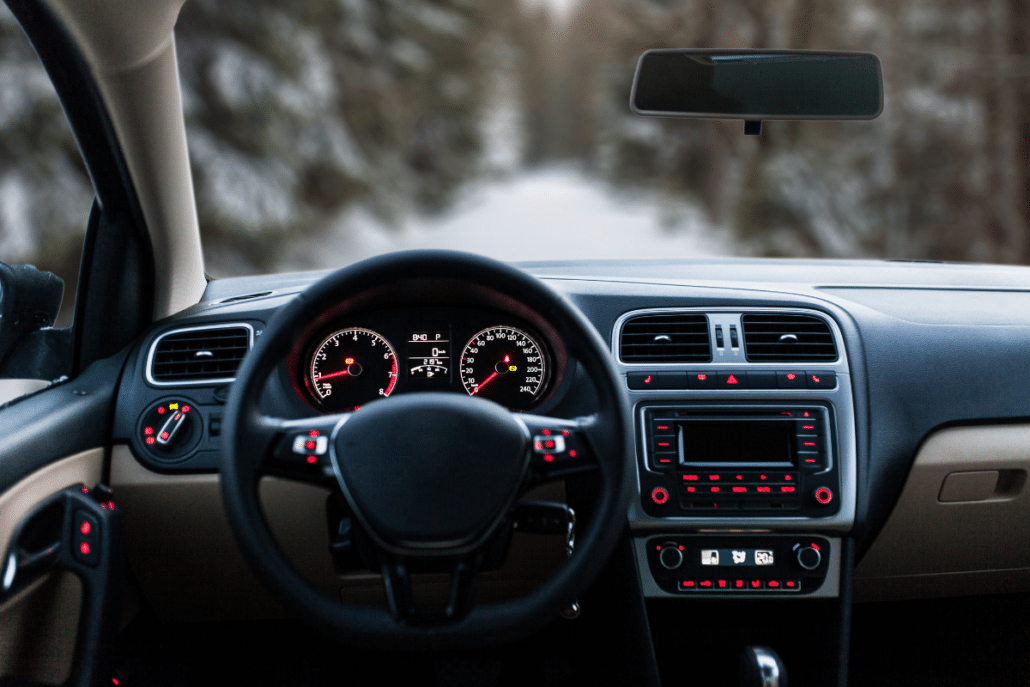
Let’s talk about your dashboard. Go ahead, run a finger across it. Gross, right? It’s one of the dirtiest surfaces you touch every day, and keeping it clean feels like a losing battle. Commercial wipes help, but they cost a small fortune and dry into a crusty brick within a month. Ask me how I know. So a few years ago I made my own. Two ingredients, a jar, some microfiber cloths. Costs pennies, never turns into a hockey puck. Here’s the version I’ve used for years, plus where it should hand off to the real stuff.
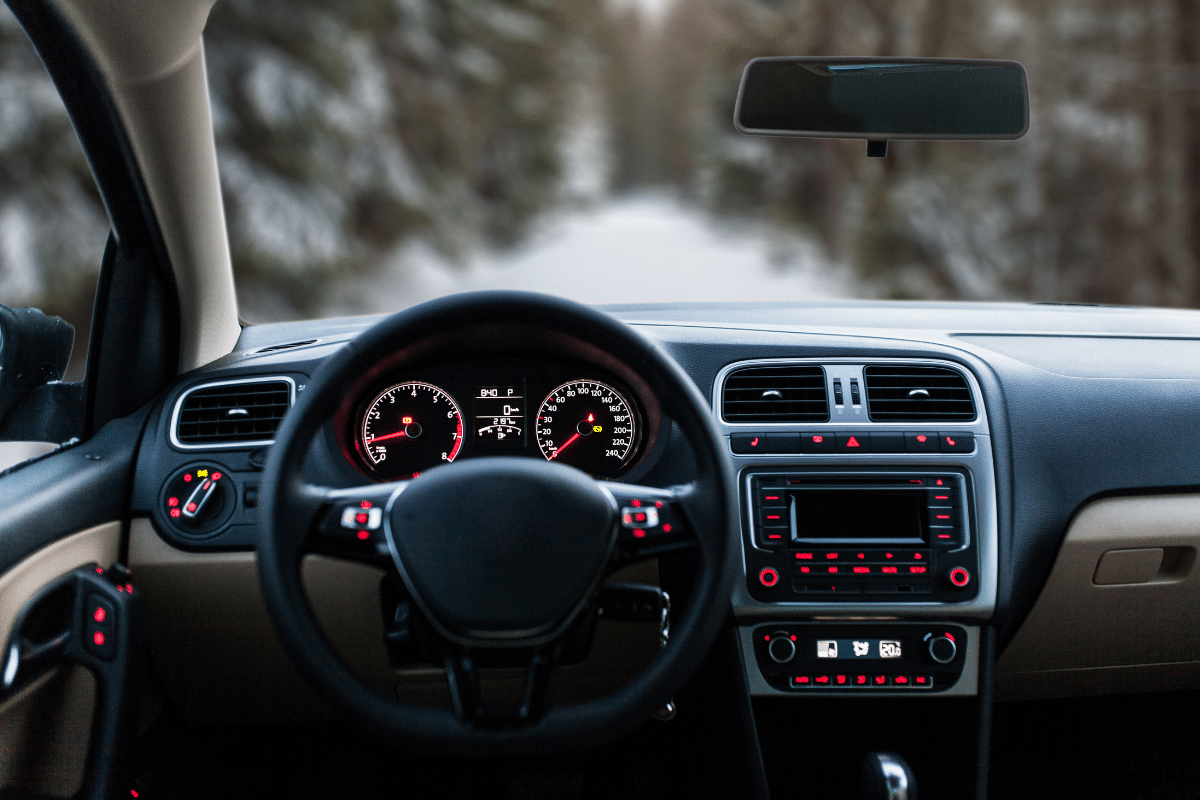
Plastic gets sticky. Vinyl fades and cracks if you use the wrong thing on it, mostly from sun and heat over time. Leather wants completely different treatment than cloth. The vent slots and cup holders hoard crumbs no vacuum on earth can reach. And you’re doing all of this hunched into a space roughly the size of a phone booth.
Here’s something worth knowing: those commercial wipe brands aren’t hiding some secret formula. Most are mostly water and a mild cleaner at their core. What you’re paying extra for is everything built around that: UV protectants, anti-static agents, and preservatives that keep the tub from turning into a swamp before you’ve used half of it.
A simple homemade version covers the everyday cleaning part just fine. It’s just not going to give you the UV protection or the finish a dedicated product will. More on that in a minute.
Why the Homemade Version Wins
A few honest reasons:
- It’s cheaper. Pennies a session versus $2 to $3 for the store stuff, for routine wiping.
- The cloths get reused. Wash them, use them again, do that for years. Disposable wipes are one-and-done and straight into the trash.
- No mystery ingredients. No propylene glycol. No unlisted fragrance. No ammonia hiding in the fine print.
- You make exactly what you need. No half-used tub drying out in your glove box until next summer.
- It’s honest about its limits. This isn’t trying to replace every product in your garage. It’s for the everyday wipe-down. Save the specialty stuff for the specialty jobs.
What You’ll Need
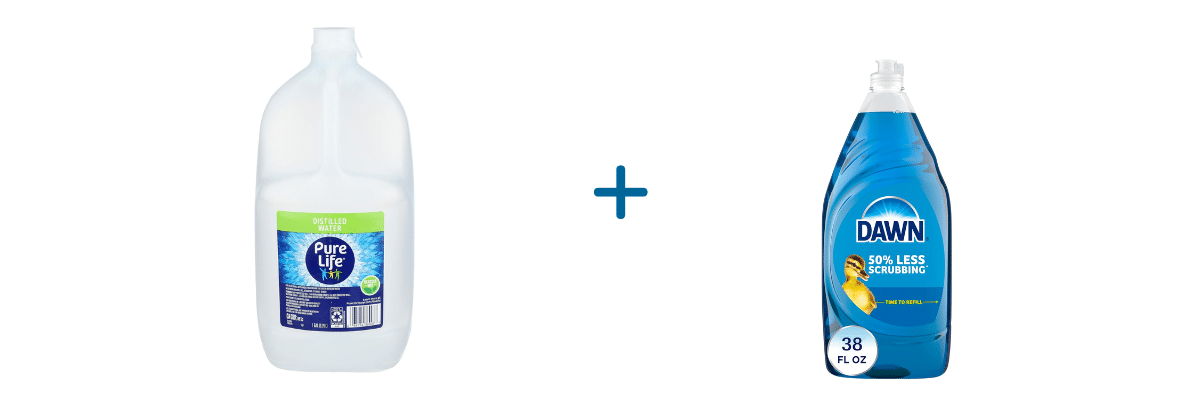
Two ingredients. Plus some cloths you already own, or should.
Water, distilled if you can
Distilled water skips the mineral spots and streaks that tap water sometimes leaves on darker surfaces. A gallon runs under $2 and lasts months.
Original Blue Dawn dish soap
The gentle degreaser that cuts through sticky spills, fingerprints, sunscreen residue, and everyday grime. A little goes a long way here, more on the exact amount below.
Optional: a few drops of essential oil. Purely for scent, nothing more. Skip it if you’d rather not risk any residue or if anyone riding with you is sensitive to fragrance. It doesn’t add cleaning power.
That’s it. No oil in this one. I used to add olive oil for shine, and I’ll be straight with you: I was wrong about that. It looks nice for about a day, then it starts attracting dust, can turn slightly sticky, and it doesn’t actually protect anything from cracking or fading, that’s a UV and heat issue, not a moisture one. Professional detailers steer clear of kitchen oils on dashboards for good reason. If you want real UV protection or a conditioned finish, that’s what a dedicated automotive interior protectant is for. Use one once or twice a year and let this cleaner handle the in-between.
How to Mix It Up
In a clean small jar or spray bottle, combine:
- 1 cup distilled water
- 2 to 3 drops Original Blue Dawn dish soap
- A few drops essential oil (optional, scent only)
Shake it up. Store it in the car in something leak-proof.
Want the real wipe experience? Grab an old container, an empty wipe tub, or whatever you’ve got, and roll up 3 to 4 folded microfiber cloths inside. Pour the solution over them until they’re damp, not dripping. Congratulations, you’ve just made your own tub of wipes for pennies.
One thing to know: this has no preservative in it, unlike the store version. Mix a small batch and use it up within a couple of weeks rather than letting it sit for months. It’s cheap enough that this isn’t a hardship.
How to Actually Clean the Thing
1. Vacuum first.
The wipes handle grime, not crumbs. A small handheld vacuum takes care of seats, floors, and the console before you touch a cloth.
2. Work top to bottom.
Dashboard, then steering wheel, then door panels, then console, then cup holders. Anything that drips lands on something you’re about to clean anyway. Efficient, if I do say so myself.
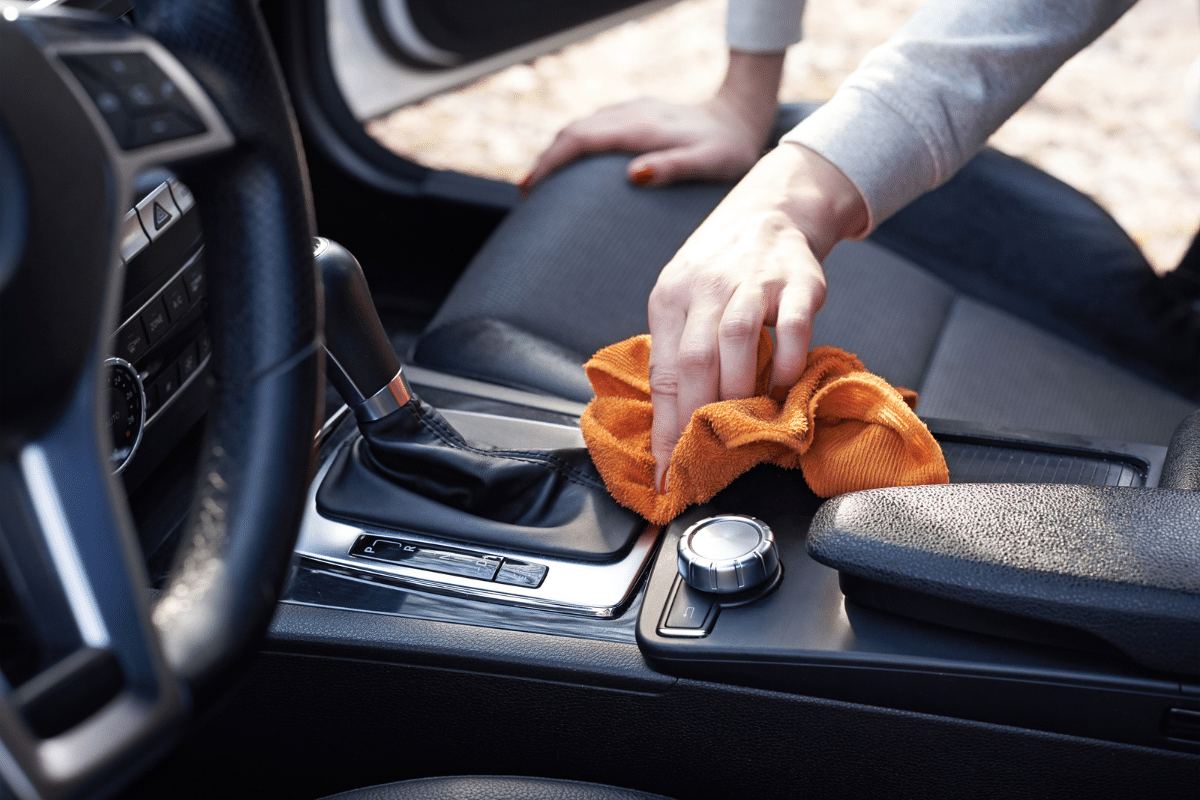
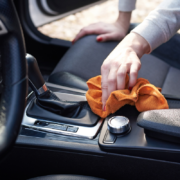
3. Wipe the dashboard and vinyl.
Long, gentle strokes with a damp cloth. You’re wiping, not scrubbing. Follow up with a dry cloth to buff it out.
4. Get into the vents.
A small paintbrush or an car detailing brush beats any cloth here. Dip it in the solution, brush the dust out, then wipe with a damp cloth to catch whatever you just loosened.
5. Steering wheel and gear shift.
The two dirtiest spots in the entire car, hands down, because your hands are on them constantly. A damp wipe followed by a dry buff makes an embarrassing difference.
6. Cup holders get their own moment.
Coffee drips, sticky soda residue, dust, all of it pools right there. Use a small brush with the solution. For the truly stubborn stuff, make a paste of baking soda and water, let it sit a few minutes, then scrub and wipe clean.
What This Solution is Safe On
- Vinyl and hard plastic dashboards
- Steering wheels, whether rubber, vinyl, or leather
- Painted plastic trim
- Cup holders and console surfaces
- Door panels
- Vent slots
A couple of surfaces need a little more care than a general-purpose cleaner:
Genuine Leather
For routine wiping, use plain water on a lightly damp cloth. When it needs a real clean, reach for a leather cleaner made for the job. Dish soap isn’t what leather manufacturers recommend for regular use, even diluted.
Touchscreens
Many newer displays have a coating that resists fingerprints and glare, and that coating doesn’t love soap of any strength. Play it safe: use a microfiber cloth dampened with water only, never spray directly on the screen, and check your owner’s manual for anything it specifically recommends or warns against.
What to Leave Out
Vinegar
I skip vinegar inside the car. It’s not that one splash will ruin your dashboard on the spot, but a lot of interior materials aren’t designed for acidic cleaners, and vinegar can dull certain finishes with repeated use. Leather especially shouldn’t see it as a regular routine.
Rubbing Alcohol
No rubbing alcohol on leather or wood. Dries both out fast. It’s fine on hard plastic in small amounts, but keep it away from anything soft.
Essential Oils
Skip essential oils if you’re not set on the scent. They don’t add any cleaning power, and some can leave a residue or bother anyone with sensitivities. Citrus is the gentlest choice if you do use one.
Never spray anything directly onto electronics. Onto the cloth first, always.
Don’t eyeball the dish soap. More isn’t better here. Too much and you’re left with a filmy residue you’ll spend the next cleaning session trying to wipe away.
How Often You Actually Need to Do This
A five-minute wipe-down every couple of weeks keeps things from ever spiraling. A full 15-minute detail every 2 to 3 months keeps the car looking close to new. And a deeper clean at the seasonal swap, spring and fall, when you’re already pulling out floor mats or digging out winter gear, rounds it out nicely. If you want real UV protection on top of all that, that’s when a proper interior protectant earns its spot, once or twice a year is plenty.
Get into that rhythm and your car interior more or less takes care of itself. You’ll also dodge the $8-a-month store-wipe habit for good. That adds up faster than you’d think.
DIY Car Interior Cleaning Wipes
Materials
- 1 cup distilled water
- 2 to 3 drops Original Blue Dawn dish soap
- A few drops essential oil optional, for scent only
Instructions
- Combine the distilled water and Dawn in a clean jar or spray bottle. Add essential oil if using.
- Shake to combine.
- Fold 6 to 8 microfiber cloths and roll them into your empty container.
- Pour the solution over the cloths until damp, not dripping.
- Store in the car in a leak-proof spot.
Notes
Question: So, what’s the one spot in your car you can never quite get clean? Mine’s the seatbelt buckle area. I have no idea how it collects as much as it does, but it does, every time. Tell me yours in the comments. Misery loves company, and so do I.
EverydayCheapskate™ is reader-supported. We participate in the Amazon Services LLC Associates Program and other affiliate advertising programs, designed to provide a means for us to earn from qualifying purchases, at no cost to you.

More from Everyday Cheapskate
 https://www.everydaycheapskate.com/wp-content/uploads/20260831-Portrait-of-a-Pitbull-on-a-yellow-background-homemade-dog-treat-recipes.png
800
1200
Mary Hunt
https://www.everydaycheapskate.com/wp-content/uploads/EC-Logo-by-Mary-Hunt-Tagline-Trimmed.png
Mary Hunt2026-08-31 13:06:072026-08-31 13:06:073 Homemade Dog Treats Recipes Your Dog Will Love Most
https://www.everydaycheapskate.com/wp-content/uploads/20260831-Portrait-of-a-Pitbull-on-a-yellow-background-homemade-dog-treat-recipes.png
800
1200
Mary Hunt
https://www.everydaycheapskate.com/wp-content/uploads/EC-Logo-by-Mary-Hunt-Tagline-Trimmed.png
Mary Hunt2026-08-31 13:06:072026-08-31 13:06:073 Homemade Dog Treats Recipes Your Dog Will Love Most https://www.everydaycheapskate.com/wp-content/uploads/20260826-DIY-cat-litter-deodorizer-kitten-looking-up-at-camera-from-box.png
800
1200
Mary Hunt
https://www.everydaycheapskate.com/wp-content/uploads/EC-Logo-by-Mary-Hunt-Tagline-Trimmed.png
Mary Hunt2026-08-25 21:17:362026-08-25 21:17:36The One-Ingredient Litter Box Trick That Costs Pennies
https://www.everydaycheapskate.com/wp-content/uploads/20260826-DIY-cat-litter-deodorizer-kitten-looking-up-at-camera-from-box.png
800
1200
Mary Hunt
https://www.everydaycheapskate.com/wp-content/uploads/EC-Logo-by-Mary-Hunt-Tagline-Trimmed.png
Mary Hunt2026-08-25 21:17:362026-08-25 21:17:36The One-Ingredient Litter Box Trick That Costs Pennies https://www.everydaycheapskate.com/wp-content/uploads/20260822-central-AC-maintenance-air-condenser-outdoors.png
800
1200
Mary Hunt
https://www.everydaycheapskate.com/wp-content/uploads/EC-Logo-by-Mary-Hunt-Tagline-Trimmed.png
Mary Hunt2026-08-22 14:19:562026-08-22 14:19:59How to Extend the Life of Your Central AC (5 Late-Summer Tune-Up Tips)
https://www.everydaycheapskate.com/wp-content/uploads/20260822-central-AC-maintenance-air-condenser-outdoors.png
800
1200
Mary Hunt
https://www.everydaycheapskate.com/wp-content/uploads/EC-Logo-by-Mary-Hunt-Tagline-Trimmed.png
Mary Hunt2026-08-22 14:19:562026-08-22 14:19:59How to Extend the Life of Your Central AC (5 Late-Summer Tune-Up Tips) https://www.everydaycheapskate.com/wp-content/uploads/20260722-easy-home-repairs-slow-sink-drain-squeaky-hinges-sticky-drawer.png
800
1200
Mary Hunt
https://www.everydaycheapskate.com/wp-content/uploads/EC-Logo-by-Mary-Hunt-Tagline-Trimmed.png
Mary Hunt2026-07-22 13:04:022026-07-22 13:04:0210 Small Home Annoyances You Can Fix in Under 15 Minutes Each
https://www.everydaycheapskate.com/wp-content/uploads/20260722-easy-home-repairs-slow-sink-drain-squeaky-hinges-sticky-drawer.png
800
1200
Mary Hunt
https://www.everydaycheapskate.com/wp-content/uploads/EC-Logo-by-Mary-Hunt-Tagline-Trimmed.png
Mary Hunt2026-07-22 13:04:022026-07-22 13:04:0210 Small Home Annoyances You Can Fix in Under 15 Minutes Each https://www.everydaycheapskate.com/wp-content/uploads/20260716-woman-on-phone-with-flat-tire-spare-roadside-car-emergency-kit.png
800
1200
Mary Hunt
https://www.everydaycheapskate.com/wp-content/uploads/EC-Logo-by-Mary-Hunt-Tagline-Trimmed.png
Mary Hunt2026-07-16 21:10:152026-07-16 21:10:15The 7-Item Emergency Car Kit Every Driver Needs (Cheaper Than One Tow)
https://www.everydaycheapskate.com/wp-content/uploads/20260716-woman-on-phone-with-flat-tire-spare-roadside-car-emergency-kit.png
800
1200
Mary Hunt
https://www.everydaycheapskate.com/wp-content/uploads/EC-Logo-by-Mary-Hunt-Tagline-Trimmed.png
Mary Hunt2026-07-16 21:10:152026-07-16 21:10:15The 7-Item Emergency Car Kit Every Driver Needs (Cheaper Than One Tow)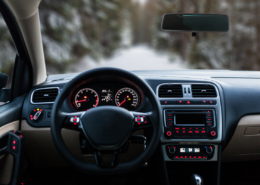 https://www.everydaycheapskate.com/wp-content/uploads/20260714-car-dashboard-diy-car-interior-cleaning-wipes.png
800
1200
Mary Hunt
https://www.everydaycheapskate.com/wp-content/uploads/EC-Logo-by-Mary-Hunt-Tagline-Trimmed.png
Mary Hunt2026-07-14 13:45:172026-07-14 13:45:17DIY Car Interior Cleaning Wipes That Actually Work Well
https://www.everydaycheapskate.com/wp-content/uploads/20260714-car-dashboard-diy-car-interior-cleaning-wipes.png
800
1200
Mary Hunt
https://www.everydaycheapskate.com/wp-content/uploads/EC-Logo-by-Mary-Hunt-Tagline-Trimmed.png
Mary Hunt2026-07-14 13:45:172026-07-14 13:45:17DIY Car Interior Cleaning Wipes That Actually Work Well https://www.everydaycheapskate.com/wp-content/uploads/20260710-luxury-car-driving-down-mountain-highway-how-to-lower-car-insurance-premium-.png
800
1200
Mary Hunt
https://www.everydaycheapskate.com/wp-content/uploads/EC-Logo-by-Mary-Hunt-Tagline-Trimmed.png
Mary Hunt2026-07-10 17:46:132026-07-10 17:46:13How to Knock $200+ Off Your Car Insurance Bill (Without Switching Companies)
https://www.everydaycheapskate.com/wp-content/uploads/20260710-luxury-car-driving-down-mountain-highway-how-to-lower-car-insurance-premium-.png
800
1200
Mary Hunt
https://www.everydaycheapskate.com/wp-content/uploads/EC-Logo-by-Mary-Hunt-Tagline-Trimmed.png
Mary Hunt2026-07-10 17:46:132026-07-10 17:46:13How to Knock $200+ Off Your Car Insurance Bill (Without Switching Companies) https://www.everydaycheapskate.com/wp-content/uploads/20260705-how-to-keep-a-cooler-cold.png
800
1200
Mary Hunt
https://www.everydaycheapskate.com/wp-content/uploads/EC-Logo-by-Mary-Hunt-Tagline-Trimmed.png
Mary Hunt2026-07-05 13:19:502026-07-05 13:19:50How to Pack a Cooler That Stays Cold for 48 Hours
https://www.everydaycheapskate.com/wp-content/uploads/20260705-how-to-keep-a-cooler-cold.png
800
1200
Mary Hunt
https://www.everydaycheapskate.com/wp-content/uploads/EC-Logo-by-Mary-Hunt-Tagline-Trimmed.png
Mary Hunt2026-07-05 13:19:502026-07-05 13:19:50How to Pack a Cooler That Stays Cold for 48 Hours https://www.everydaycheapskate.com/wp-content/uploads/20260630-a-lit-sparkler-with-an-american-flag-in-the-background-4th-of-july-hacks-tips-and-recipes.png
800
1200
Mary Hunt
https://www.everydaycheapskate.com/wp-content/uploads/EC-Logo-by-Mary-Hunt-Tagline-Trimmed.png
Mary Hunt2026-06-30 21:44:502026-06-30 21:44:5034 Fourth of July Recipes and DIY Hacks for a Stress-Free Holiday
https://www.everydaycheapskate.com/wp-content/uploads/20260630-a-lit-sparkler-with-an-american-flag-in-the-background-4th-of-july-hacks-tips-and-recipes.png
800
1200
Mary Hunt
https://www.everydaycheapskate.com/wp-content/uploads/EC-Logo-by-Mary-Hunt-Tagline-Trimmed.png
Mary Hunt2026-06-30 21:44:502026-06-30 21:44:5034 Fourth of July Recipes and DIY Hacks for a Stress-Free Holiday

What is the secret to getting my WeatherTech mats clean? For the life of me I cannot get the dirt stains out of them no matter what I try. Help!
IT could be a few things. You might actually have some organics causing the staining. Try a mild (3%) bleach solution. You might also need some more aggressive scrubbing. Blue scotchbright sponge or a stiff nylon brush. Let us know how it goes!
For the life of me I’ve never been able to clean any spots/stains on the headliner of any vehicle I’ve ever owned. When I do try to clean it, it never fails to leave a water mark and that’s using alcohol, distilled water, you name it I’ve tried it. And then there’s the whole you gotta be extremely careful getting the headliner wet because you don’t want it to loosen the glue and then have to use (the wonderful and not at all tacky) thumb tacks to stick it back up there lol I’ve just came to the conclusion I’ll never have a clean headliner haha
Hi Mary, thank you for all you do! You’re a wonderful resource for all household things. I wanted to add about cleaning with microfiber cloths. I have learned that there are different grades just like sandpaper. I have a Toyota Rav 4. As with most Toyota models, the dash surface is very easily scratched. You must use a damp warm cloth with a very small grain of cloth. If you use a standard microfiber cloth it will scratch the surface and make a bigger mess than the spots you’re trying to clean. Just thought I would share.
the dashboard and the floor. you may have solved the former for me, but i have one of those car-vacs and it is not at all efficient. it’s far easier to drag my shark navigator out to the bench pull the car up to it and have at it. since that is quite a nuisance, i don’t do it often. sadly, we are starting a heat wave today, so any car cleaning will have to wait. i don’t handle heat very well