

Keep Your Dog (or Cat) Cool This Summer Without Spending a Fortune

The minute the thermometer climbs, our pets notice before we do. The dog who normally barrels to the back door suddenly stalls on the threshold. The cat finds the one cool tile in the bathroom and won’t leave it. And somewhere in there, we start wondering if we really need that $80 “premium” cooling mat from the pet store. Spoiler: we do not. Knowing how to keep pets cool in summer is mostly about simple habits and almost none of them cost a thing.

Here’s something most pet owners don’t fully appreciate until a hot day catches them off guard: dogs and cats can’t sweat the way we do. They cool themselves mainly through panting and through small amounts of evaporation from their paws. That works fine on a warm day, but on a genuinely hot one, it can fall apart fast. The American Veterinary Medical Association warns that heatstroke in pets can set in within minutes when conditions go wrong, especially for older dogs, flat-faced breeds (pugs, bulldogs, Persian cats), and overweight animals.
The good news is that most heat trouble is completely preventable. You don’t need expensive gear. You need awareness and a few simple habits.
The Pavement Test That Saves Paws
Before you take the dog out for an afternoon walk, put the back of your hand on the pavement and hold it there for seven seconds. If it’s uncomfortable for you, it’s dangerous for them.
Asphalt and concrete absorb heat like a frying pan. On an 85-degree day, blacktop can hit 135 degrees. That’s hot enough to burn paw pads in under a minute, and the burns are no joke… blistering, peeling, sometimes infection.
Two free solutions:
- Walk early or late. Pre-7 a.m. and post-7 p.m. are your friends in summer. The pavement has either not warmed up yet or has had time to cool off.
- Stick to grass. If you have to walk midday, route the dog through grass, dirt paths, or shade as much as possible. It’s surprising how much cooler natural surfaces stay.
The DIY Cooling Mat That Actually Works
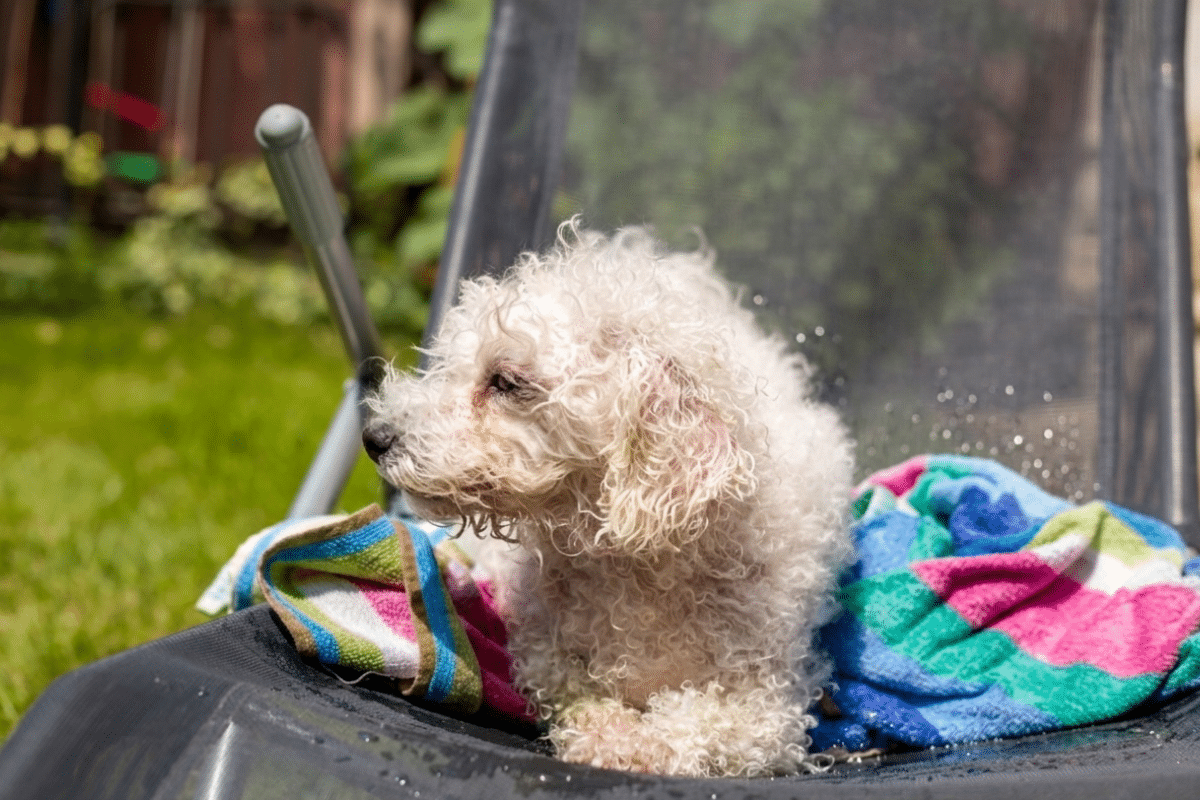
Pet stores have cooling mats. Some are $40. Some are $80. The fancy ones use cooling gel that activates when your pet lies on it.
Here’s what works just as well: a wet bath towel. That’s the whole secret.
Wet a regular cotton bath towel, wring it out so it’s damp but not dripping, fold it in thirds, and lay it on a tile floor in a cool room. Your dog or cat will find it, lie on it, and stay there. As the towel evaporates, it pulls heat off them. Rewet every couple of hours.
If you want to take it up a notch, you can stick a damp folded towel in a zip-top bag and freeze it for an hour first. Or freeze a few water bottles, wrap them in dish towels, and tuck them into your pet’s bed. Cats especially seem to love a chilled water-bottle-in-a-sock setup.
The key with any cooling tool: make sure your pet can move off of it. They self-regulate better than we give them credit for, and the worst thing you can do is force them to stay on something cold.
Water: The Cheapest Lifesaver You Have
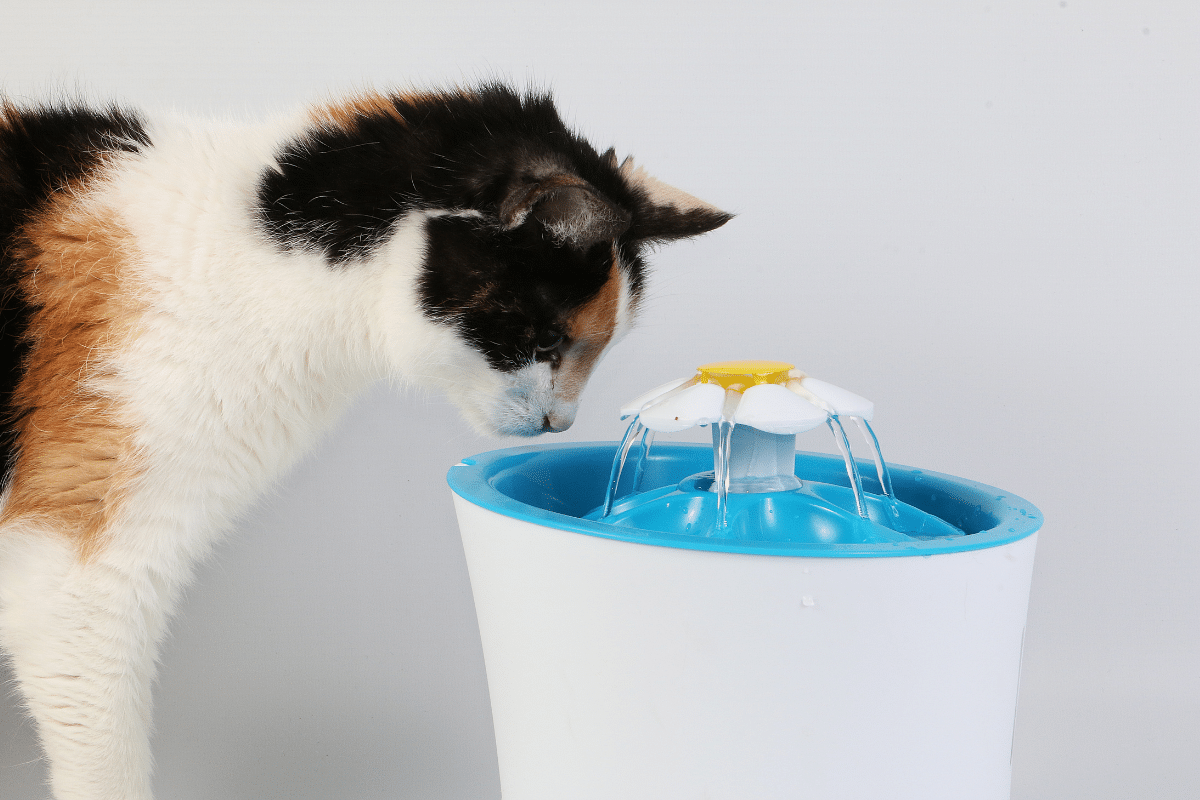
It sounds basic. But the number of pet emergencies that trace back to an empty bowl or water that’s been sitting warm in the sun all afternoon is genuinely alarming.
A few small tweaks dramatically increase how much your pet drinks:
- Ice cubes in the bowl. Most dogs love the novelty. Some will play with the cubes before drinking. Either way, the water stays cooler longer.
- Two bowls, two locations. One inside, one outside in shade. Refresh both at least twice a day in summer.
- Wet food, even if you usually feed dry. Mixing a spoonful of wet food into the dry, or just adding a splash of water, sneaks in extra hydration without changing the routine.
- Fresh, not stale. Water that’s been sitting in a metal bowl in the sun for six hours is unappealing to pets too. Dump and refill.
For cats, who are famously bad about drinking enough, a small pet fountain (around $25 on sale) often doubles their intake. Worth it if you have an older cat or one with any kidney history.
The Car Rule That Has No Exceptions
I shouldn’t have to write this section, but every summer the news fills up with stories that say otherwise.
Never leave a pet in a parked car. Not for “a minute.” Not “with the windows cracked.” Not “in the shade.” On a 70-degree day, the inside of a parked car can hit 99 degrees within twenty minutes. On a 90-degree day, it’s well past 120. There is no version of this that is safe.
If you’re running an errand and the dog can’t come inside with you, the dog stays home. That’s it. That’s the rule.
While we’re here: if you ever see a pet trapped in a hot car, call local non-emergency police or animal control immediately. Many areas have laws now that protect Good Samaritans who intervene, but a quick call brings the right people fast.
Signs of Overheating Every Owner Should Know
Heatstroke moves fast. But catch it early and you can almost always turn it around before it becomes serious. Watch for:
- Heavy, frantic panting that doesn’t slow down when they rest
- Bright red gums and tongue (a dog’s gums should be pink, not crimson)
- Drooling more than usual, sometimes thick or ropy
- Wobbling, stumbling, or collapsing
- Vomiting or diarrhea
- Glassy eyes or unresponsiveness
If you see any of those, get your pet to shade immediately, offer cool (not ice cold) water, drape wet towels on their belly and paws, and call your vet. Ice water and ice baths sound helpful but can actually constrict blood vessels and trap heat. Cool, not cold, is the rule.
A healthy dog’s temperature runs 101 to 102.5°F. Once a pet hits 104°F, you’re in dangerous territory and need to act. Above 106°F is an emergency.
The Cheap Habits That Add Up to a Safe Summer
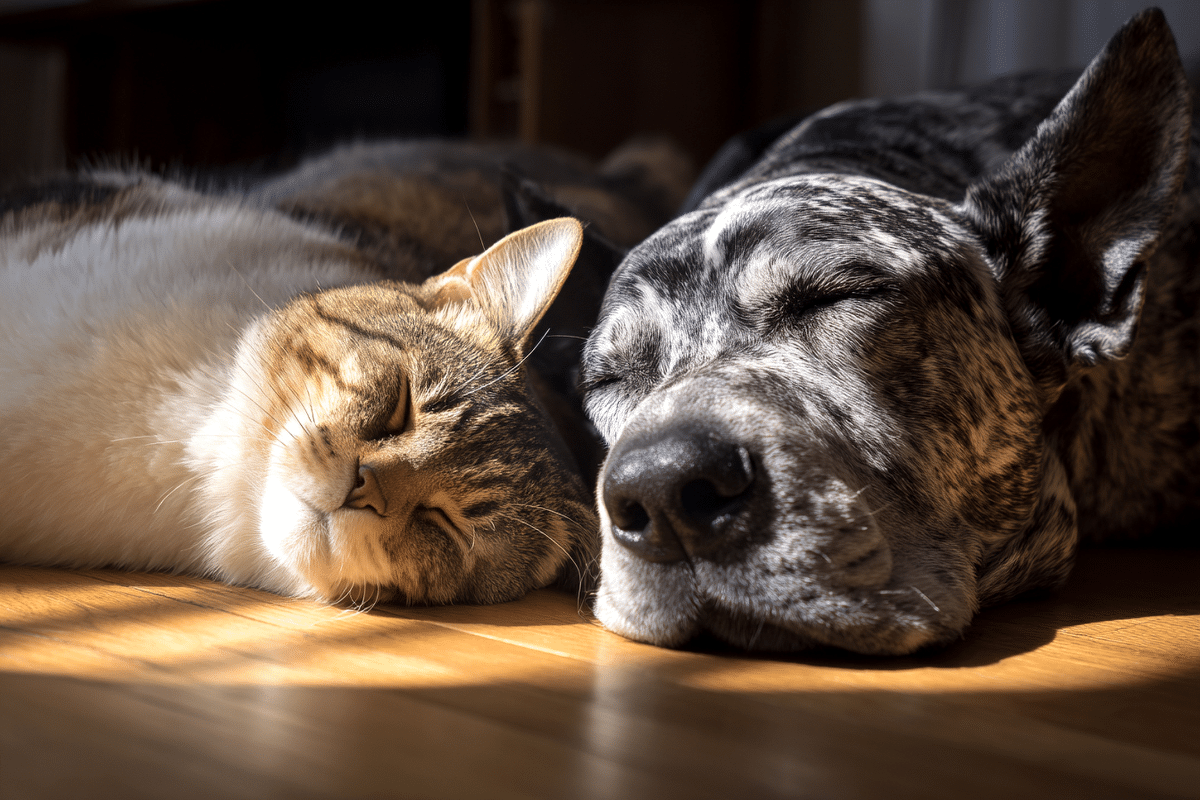
The whole game here is small adjustments that, taken together, make the season uneventful. Walk earlier. Keep a bowl inside and one out. Wet a towel before you leave the house. Skip the errands that mean leaving them in the car.
None of this costs more than a few dollars. And all of it spares you the kind of emergency vet bill that turns a regular summer into a financial disaster… not to mention the heartbreak of an avoidable scare.
Your pet doesn’t need a $200 cooling vest. They need you paying attention to the thermometer.
That’s a pretty good deal for both of you.
Question: What’s your go-to trick for keeping pets cool in summer? Drop your low-cost wins in the comments. You might just save someone else’s fur baby.
EverydayCheapskate™ is reader-supported. We participate in the Amazon Services LLC Associates Program and other affiliate advertising programs, designed to provide a means for us to earn from qualifying purchases, at no cost to you.

More from Everyday Cheapskate
 https://www.everydaycheapskate.com/wp-content/uploads/20260917-fall-cleaning-checklist.png
800
1200
Mary Hunt
https://www.everydaycheapskate.com/wp-content/uploads/EC-Logo-by-Mary-Hunt-Tagline-Trimmed.png
Mary Hunt2026-09-17 17:11:012026-09-17 17:11:01Fall Cleaning Checklist: 15 Overlooked Spots to Clean
https://www.everydaycheapskate.com/wp-content/uploads/20260917-fall-cleaning-checklist.png
800
1200
Mary Hunt
https://www.everydaycheapskate.com/wp-content/uploads/EC-Logo-by-Mary-Hunt-Tagline-Trimmed.png
Mary Hunt2026-09-17 17:11:012026-09-17 17:11:01Fall Cleaning Checklist: 15 Overlooked Spots to Clean https://www.everydaycheapskate.com/wp-content/uploads/20260913-how-to-winterize-your-home-snowy-driveway-suburban-home.png
800
1200
Mary Hunt
https://www.everydaycheapskate.com/wp-content/uploads/EC-Logo-by-Mary-Hunt-Tagline-Trimmed.png
Mary Hunt2026-09-13 15:32:142026-09-13 15:32:14The Complete Guide to Winterizing Your Home This Fall
https://www.everydaycheapskate.com/wp-content/uploads/20260913-how-to-winterize-your-home-snowy-driveway-suburban-home.png
800
1200
Mary Hunt
https://www.everydaycheapskate.com/wp-content/uploads/EC-Logo-by-Mary-Hunt-Tagline-Trimmed.png
Mary Hunt2026-09-13 15:32:142026-09-13 15:32:14The Complete Guide to Winterizing Your Home This Fall https://www.everydaycheapskate.com/wp-content/uploads/20260830-best-sound-machine-for-better-sleep-woman-hiding-under-comforter.png
800
1200
Mary Hunt
https://www.everydaycheapskate.com/wp-content/uploads/EC-Logo-by-Mary-Hunt-Tagline-Trimmed.png
Mary Hunt2026-09-10 09:51:452026-09-10 09:51:45Best Sound Machine for Better Sleep: 3 Honest Picks
https://www.everydaycheapskate.com/wp-content/uploads/20260830-best-sound-machine-for-better-sleep-woman-hiding-under-comforter.png
800
1200
Mary Hunt
https://www.everydaycheapskate.com/wp-content/uploads/EC-Logo-by-Mary-Hunt-Tagline-Trimmed.png
Mary Hunt2026-09-10 09:51:452026-09-10 09:51:45Best Sound Machine for Better Sleep: 3 Honest Picks https://www.everydaycheapskate.com/wp-content/uploads/20260908-how-to-stop-puppy-biting-White-And-Black-Border-Collie-Puppy.png
800
1200
Mary Hunt
https://www.everydaycheapskate.com/wp-content/uploads/EC-Logo-by-Mary-Hunt-Tagline-Trimmed.png
Mary Hunt2026-09-07 12:05:572026-09-07 12:05:57How to Train a Puppy Not to Bite (Without Buying a Single Thing)
https://www.everydaycheapskate.com/wp-content/uploads/20260908-how-to-stop-puppy-biting-White-And-Black-Border-Collie-Puppy.png
800
1200
Mary Hunt
https://www.everydaycheapskate.com/wp-content/uploads/EC-Logo-by-Mary-Hunt-Tagline-Trimmed.png
Mary Hunt2026-09-07 12:05:572026-09-07 12:05:57How to Train a Puppy Not to Bite (Without Buying a Single Thing) https://www.everydaycheapskate.com/wp-content/uploads/20260906-best-can-openers-manual-electric-luxury.png
800
1200
Mary Hunt
https://www.everydaycheapskate.com/wp-content/uploads/EC-Logo-by-Mary-Hunt-Tagline-Trimmed.png
Mary Hunt2026-09-06 18:07:432026-09-06 18:10:39The Best Can Openers That Actually Work (And Won’t Quit on You)
https://www.everydaycheapskate.com/wp-content/uploads/20260906-best-can-openers-manual-electric-luxury.png
800
1200
Mary Hunt
https://www.everydaycheapskate.com/wp-content/uploads/EC-Logo-by-Mary-Hunt-Tagline-Trimmed.png
Mary Hunt2026-09-06 18:07:432026-09-06 18:10:39The Best Can Openers That Actually Work (And Won’t Quit on You) https://www.everydaycheapskate.com/wp-content/uploads/20260831-Portrait-of-a-Pitbull-on-a-yellow-background-homemade-dog-treat-recipes.png
800
1200
Mary Hunt
https://www.everydaycheapskate.com/wp-content/uploads/EC-Logo-by-Mary-Hunt-Tagline-Trimmed.png
Mary Hunt2026-08-31 13:06:072026-08-31 13:06:073 Homemade Dog Treats Recipes Your Dog Will Love Most
https://www.everydaycheapskate.com/wp-content/uploads/20260831-Portrait-of-a-Pitbull-on-a-yellow-background-homemade-dog-treat-recipes.png
800
1200
Mary Hunt
https://www.everydaycheapskate.com/wp-content/uploads/EC-Logo-by-Mary-Hunt-Tagline-Trimmed.png
Mary Hunt2026-08-31 13:06:072026-08-31 13:06:073 Homemade Dog Treats Recipes Your Dog Will Love Most https://www.everydaycheapskate.com/wp-content/uploads/20260826-DIY-cat-litter-deodorizer-kitten-looking-up-at-camera-from-box.png
800
1200
Mary Hunt
https://www.everydaycheapskate.com/wp-content/uploads/EC-Logo-by-Mary-Hunt-Tagline-Trimmed.png
Mary Hunt2026-08-25 21:17:362026-08-25 21:17:36The One-Ingredient Litter Box Trick That Costs Pennies
https://www.everydaycheapskate.com/wp-content/uploads/20260826-DIY-cat-litter-deodorizer-kitten-looking-up-at-camera-from-box.png
800
1200
Mary Hunt
https://www.everydaycheapskate.com/wp-content/uploads/EC-Logo-by-Mary-Hunt-Tagline-Trimmed.png
Mary Hunt2026-08-25 21:17:362026-08-25 21:17:36The One-Ingredient Litter Box Trick That Costs Pennies https://www.everydaycheapskate.com/wp-content/uploads/20260824-house-rules-for-adult-children.png
800
1200
Mary Hunt
https://www.everydaycheapskate.com/wp-content/uploads/EC-Logo-by-Mary-Hunt-Tagline-Trimmed.png
Mary Hunt2026-08-24 12:21:382026-08-24 12:23:50House Rules for Adult Children Living at Home (Without Losing Your Mind or Your Garage)
https://www.everydaycheapskate.com/wp-content/uploads/20260824-house-rules-for-adult-children.png
800
1200
Mary Hunt
https://www.everydaycheapskate.com/wp-content/uploads/EC-Logo-by-Mary-Hunt-Tagline-Trimmed.png
Mary Hunt2026-08-24 12:21:382026-08-24 12:23:50House Rules for Adult Children Living at Home (Without Losing Your Mind or Your Garage) https://www.everydaycheapskate.com/wp-content/uploads/20260822-central-AC-maintenance-air-condenser-outdoors.png
800
1200
Mary Hunt
https://www.everydaycheapskate.com/wp-content/uploads/EC-Logo-by-Mary-Hunt-Tagline-Trimmed.png
Mary Hunt2026-08-22 14:19:562026-08-22 14:19:59How to Extend the Life of Your Central AC (5 Late-Summer Tune-Up Tips)
https://www.everydaycheapskate.com/wp-content/uploads/20260822-central-AC-maintenance-air-condenser-outdoors.png
800
1200
Mary Hunt
https://www.everydaycheapskate.com/wp-content/uploads/EC-Logo-by-Mary-Hunt-Tagline-Trimmed.png
Mary Hunt2026-08-22 14:19:562026-08-22 14:19:59How to Extend the Life of Your Central AC (5 Late-Summer Tune-Up Tips)

Just wanted to leave a thank you. I really appreciate everyday cheapskate and enjoy reading it. I have picked up lots of good information and have recommended it to lots of people. Thanks again for doing this