

Your Consumer Behaviors Are Keeping You Broke!


Do you know what I love? Walking into my supermarket the day after Thanksgiving and hearing the best Christmas music ever. Yeah! And if I wasn’t in the mood to bake Christmas cookies and shop my brains out before I got there, just hearing that lovely music can change everything.

Right there, that proves I am a quintessential, typical, impulsive consumer. That retailer’s got my number. And quite possibly yours, too!
Listen, it’s our consumer behaviors—the ways that we allow retailers to wrap around their little fingers that can unwittingly keep us broke!
While I don’t want to stop loving music (I swoon to the Beach Boys during the summer months because this store has an uncanny way of knowing what I like) what I have changed is the way I hear it while loading up on groceries.
Retailers are doing this on purpose—by intentional design—because retailers have irrefutable evidence that the right music can result in increased sales of targeted products to impulse buyers. To put it bluntly, retailers are doing all they can to get as much of our hard-earned money as they can—to keep us broke!

The American Psychological Association suggests that loud music gets people to move through a store more quickly where slower and quieter music makes them stay longer and spend more money.
Classical music at a restaurant makes people buy more than does pop music or no music at all. Music is like tasty bait that retailers purposely thread onto the end of a sharp hook.
Playing the “right” music isn’t all that retailers do to manipulate us into dropping more money than we’d ever intended to spend before walking in their stores. Retailers manipulate all of our senses so we will spend more money.
Subtle, psychological cues are worth paying attention to when you’re shopping. If you know about them, you can take steps to avoid their effects.
Sight
There are lots of cues in a store that have a big impact on what we decide to buy. Color is one of them. Retailers use color on the walls, the floor, and display tables to their advantage. Red, for example, is always associated with sales because it inspires people to take action. Red is stimulating.
One study concluded that waitresses who wear red get better tips. Red even makes us spend more online. Start noticing how retailers use red in ads, especially. By simply noticing, you reduce the likelihood that the retailer will be able to manipulate your spending decision.
Scents
Think you’re the only one who detected that amazingly subtle yet delicious scent as you strolled in? Richard Axel and Linda Buck won a Nobel Prize for their work in understanding our olfactory system, which allows us to identify and categorize 10,000 scents, all of which can trigger powerful nostalgia-laced memories.
No wonder a specific fragrance reminds you of your grandmother or the smell of pine trees floods your mind with childhood camp experiences.
Scents can subconsciously affect the way we spend. Theaters, bakeries, and countless other retailers know this and capitalize on it big time.
Impulse
Many retailers create “rest areas” where they know you will be prompted to stop and just look around. It might be at the checkout or in an area that just screams cozy place to stop and look around. It might be a welcoming bench or well-placed bistro table strategically placed near a sweet shop or unique boutique.
Once they have that nailed, they load up the area with impulse buys—small things, lovely things they know you won’t resist. Mostly they’ll put them at eye level to aid you in your sweet moment of rest.
- MORE: 4 Ways to Stop Wasting Money
Sneaky tricks
We’ve come to expect that a sale comes with a sign. Most of the time it is a red sign with big black numbers and smaller words that don’t really matter. We’ve seen it so much, now we are like Pavlov’s dogs. We react without thinking about it.
And what if the word “Sale!” is replaced by “Hot!” or “Bargain!”? We don’t notice that subtle replacement. We grab and go because it’s gotta’ be a great bargain. Retailers capitalize on what they’ve learned from Dr. Pavlov.
Numbers
This one is so crazy, I still have trouble wrapping my head around it. Why is it that humans stop and more thoughtfully consider the price when it ends in with .00, but if it ends in .99 or .95, somehow our brains shut down, automatically registering it as a good price? Why, oh why? I don’t know, but the truth is that it does. It’s called the “left-digit effect.”
Subtracting 1 cent from a round price, such as $9.00, not only changes the rightmost digit but also decreases the left-most digit of the price (e.g., $8.99).
If we’re not totally aware of what’s going on, we see that $8.99 item as $8. Retailers count on the “just below price” all the time because they know we’ll fall for it. All the time.
Beat ‘em
The best way to win when we go up against retailers—which of course we do every day—is to be aware.
- Figure it out.
- Stop being a mindless, impulsive, broke consumer
- Go in with a plan, a list, cash, and a strong mind
- Make a note of the sounds and smells
- Look at the pricing structure
- Do a mental, “Ah-ha! I know why you’re doing that!” when you see prices ending with .95 or .99.
Then take control. Don’t give in to those silly ploys. Resist the impulse displays, get what you need at the price you can afford. And then get out of there!
That’s how to nibble at the bait without getting reeled in—hook, line, and sinker!

More from Everyday Cheapskate
 https://www.everydaycheapskate.com/wp-content/uploads/20261006-prime-big-deal-days-have-landed.png
800
1200
Mary Hunt
https://www.everydaycheapskate.com/wp-content/uploads/EC-Logo-by-Mary-Hunt-Tagline-Trimmed.png
Mary Hunt2026-10-05 11:01:432026-10-07 09:02:53EC’s Top Picks from Amazon Prime Big Deal Days 2026
https://www.everydaycheapskate.com/wp-content/uploads/20261006-prime-big-deal-days-have-landed.png
800
1200
Mary Hunt
https://www.everydaycheapskate.com/wp-content/uploads/EC-Logo-by-Mary-Hunt-Tagline-Trimmed.png
Mary Hunt2026-10-05 11:01:432026-10-07 09:02:53EC’s Top Picks from Amazon Prime Big Deal Days 2026 https://www.everydaycheapskate.com/wp-content/uploads/20261004-reduce-healthcare-costs-with-three-habits-healthy-couple-walking-in-autumn-leaves.png
800
1200
Mary Hunt
https://www.everydaycheapskate.com/wp-content/uploads/EC-Logo-by-Mary-Hunt-Tagline-Trimmed.png
Mary Hunt2026-10-04 23:08:572026-10-04 23:09:47How to Reduce Healthcare Costs With 3 Free Daily Habits
https://www.everydaycheapskate.com/wp-content/uploads/20261004-reduce-healthcare-costs-with-three-habits-healthy-couple-walking-in-autumn-leaves.png
800
1200
Mary Hunt
https://www.everydaycheapskate.com/wp-content/uploads/EC-Logo-by-Mary-Hunt-Tagline-Trimmed.png
Mary Hunt2026-10-04 23:08:572026-10-04 23:09:47How to Reduce Healthcare Costs With 3 Free Daily Habits https://www.everydaycheapskate.com/wp-content/uploads/20261004-woman-dreaming-about-her-financial-and-life-goals.png
800
1200
Mary Hunt
https://www.everydaycheapskate.com/wp-content/uploads/EC-Logo-by-Mary-Hunt-Tagline-Trimmed.png
Mary Hunt2026-10-04 12:50:422026-10-04 12:50:42She Lived in a Basement for $100 a Month. Here’s Why.
https://www.everydaycheapskate.com/wp-content/uploads/20261004-woman-dreaming-about-her-financial-and-life-goals.png
800
1200
Mary Hunt
https://www.everydaycheapskate.com/wp-content/uploads/EC-Logo-by-Mary-Hunt-Tagline-Trimmed.png
Mary Hunt2026-10-04 12:50:422026-10-04 12:50:42She Lived in a Basement for $100 a Month. Here’s Why. https://www.everydaycheapskate.com/wp-content/uploads/20261001-prime-big-deal-days-are-coming.png
800
1200
Mary Hunt
https://www.everydaycheapskate.com/wp-content/uploads/EC-Logo-by-Mary-Hunt-Tagline-Trimmed.png
Mary Hunt2026-10-01 09:25:072026-10-01 11:45:25Prime Big Deal Days 2026: Your Cheapskate Game Plan
https://www.everydaycheapskate.com/wp-content/uploads/20261001-prime-big-deal-days-are-coming.png
800
1200
Mary Hunt
https://www.everydaycheapskate.com/wp-content/uploads/EC-Logo-by-Mary-Hunt-Tagline-Trimmed.png
Mary Hunt2026-10-01 09:25:072026-10-01 11:45:25Prime Big Deal Days 2026: Your Cheapskate Game Plan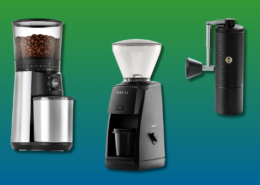 https://www.everydaycheapskate.com/wp-content/uploads/20260925-best-inexpensive-coffee-grinders-burr-manual-and-electric.png
800
1200
Mary Hunt
https://www.everydaycheapskate.com/wp-content/uploads/EC-Logo-by-Mary-Hunt-Tagline-Trimmed.png
Mary Hunt2026-09-25 11:06:342026-10-10 15:49:09The Best Coffee Grinder Upgrade That’s Actually Worth It
https://www.everydaycheapskate.com/wp-content/uploads/20260925-best-inexpensive-coffee-grinders-burr-manual-and-electric.png
800
1200
Mary Hunt
https://www.everydaycheapskate.com/wp-content/uploads/EC-Logo-by-Mary-Hunt-Tagline-Trimmed.png
Mary Hunt2026-09-25 11:06:342026-10-10 15:49:09The Best Coffee Grinder Upgrade That’s Actually Worth It https://www.everydaycheapskate.com/wp-content/uploads/20260920-small-money-mistakes-woman-sitting-at-her-laptop-reviewing-bills.png
800
1200
Mary Hunt
https://www.everydaycheapskate.com/wp-content/uploads/EC-Logo-by-Mary-Hunt-Tagline-Trimmed.png
Mary Hunt2026-09-20 11:34:162026-09-28 22:48:40Small Money Mistakes: How to Fix Them Before They Grow
https://www.everydaycheapskate.com/wp-content/uploads/20260920-small-money-mistakes-woman-sitting-at-her-laptop-reviewing-bills.png
800
1200
Mary Hunt
https://www.everydaycheapskate.com/wp-content/uploads/EC-Logo-by-Mary-Hunt-Tagline-Trimmed.png
Mary Hunt2026-09-20 11:34:162026-09-28 22:48:40Small Money Mistakes: How to Fix Them Before They Grow https://www.everydaycheapskate.com/wp-content/uploads/20260918-man-and-woman-signing-an-extended-warranty-in-a-car-dealership.png
800
1200
Mary Hunt
https://www.everydaycheapskate.com/wp-content/uploads/EC-Logo-by-Mary-Hunt-Tagline-Trimmed.png
Mary Hunt2026-09-18 15:23:432026-09-18 15:25:43Is an Extended Warranty Ever Worth It? The Truth for 2026
https://www.everydaycheapskate.com/wp-content/uploads/20260918-man-and-woman-signing-an-extended-warranty-in-a-car-dealership.png
800
1200
Mary Hunt
https://www.everydaycheapskate.com/wp-content/uploads/EC-Logo-by-Mary-Hunt-Tagline-Trimmed.png
Mary Hunt2026-09-18 15:23:432026-09-18 15:25:43Is an Extended Warranty Ever Worth It? The Truth for 2026 https://www.everydaycheapskate.com/wp-content/uploads/20260915-overspending-habits-man-opening-empty-wallet.png
800
1200
Mary Hunt
https://www.everydaycheapskate.com/wp-content/uploads/EC-Logo-by-Mary-Hunt-Tagline-Trimmed.png
Mary Hunt2026-09-15 20:24:412026-09-28 22:48:50How to Stop Overspending Habits for Good, Starting Today
https://www.everydaycheapskate.com/wp-content/uploads/20260915-overspending-habits-man-opening-empty-wallet.png
800
1200
Mary Hunt
https://www.everydaycheapskate.com/wp-content/uploads/EC-Logo-by-Mary-Hunt-Tagline-Trimmed.png
Mary Hunt2026-09-15 20:24:412026-09-28 22:48:50How to Stop Overspending Habits for Good, Starting Today https://www.everydaycheapskate.com/wp-content/uploads/20260914-101010-rule-gold-numbers-on-teal-background.png
800
1200
Mary Hunt
https://www.everydaycheapskate.com/wp-content/uploads/EC-Logo-by-Mary-Hunt-Tagline-Trimmed.png
Mary Hunt2026-09-14 11:31:532026-09-28 22:48:53The 10/10/10 Rule Every Overthinker Needs to Try Today
https://www.everydaycheapskate.com/wp-content/uploads/20260914-101010-rule-gold-numbers-on-teal-background.png
800
1200
Mary Hunt
https://www.everydaycheapskate.com/wp-content/uploads/EC-Logo-by-Mary-Hunt-Tagline-Trimmed.png
Mary Hunt2026-09-14 11:31:532026-09-28 22:48:53The 10/10/10 Rule Every Overthinker Needs to Try Today
