
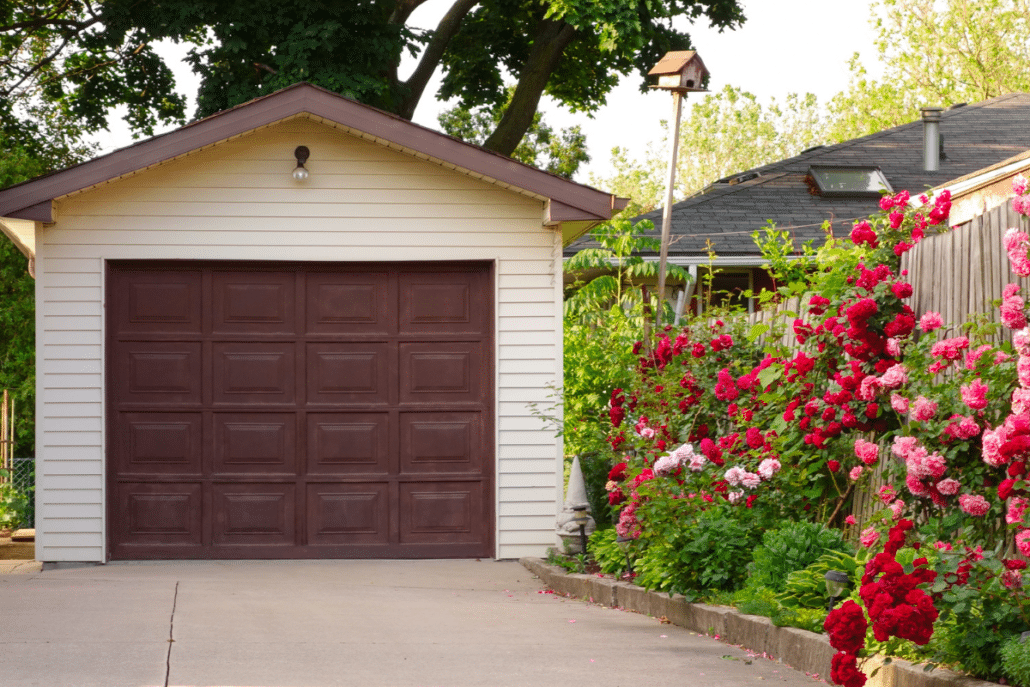
25 Things Summer Heat Can Ruin in Your Garage

If your garage is anything like mine, it’s where good intentions go to retire. There’s a half-used can of paint. Spare batteries. That giant bag of birdseed you bought because the price was just too good to pass up. Holiday candles. Cleaning supplies. A mystery box labeled “Important Stuff” with a layer of dust that tells its own story.
Here’s the thing nobody warns you about: your garage turns into an oven every summer.
Even when it’s a perfectly pleasant 85 degrees outside, the temperature inside a closed garage can blow past 100 and keep climbing. Your lawn mower doesn’t care. But a surprising number of things you’ve stashed out there absolutely do. Some lose their effectiveness. Some warp, melt, leak, or spoil. A few can become genuine safety hazards.
Ask me how I know.
Actually, don’t. Let’s just say that one summer I opened a cabinet to find a melted candle had permanently bonded itself to the shelf like it was trying to become one with the wood. It was not one of my finer moments. But it was a very effective lesson.
Here are 25 things you’ll want to rescue before the heat gets there first.
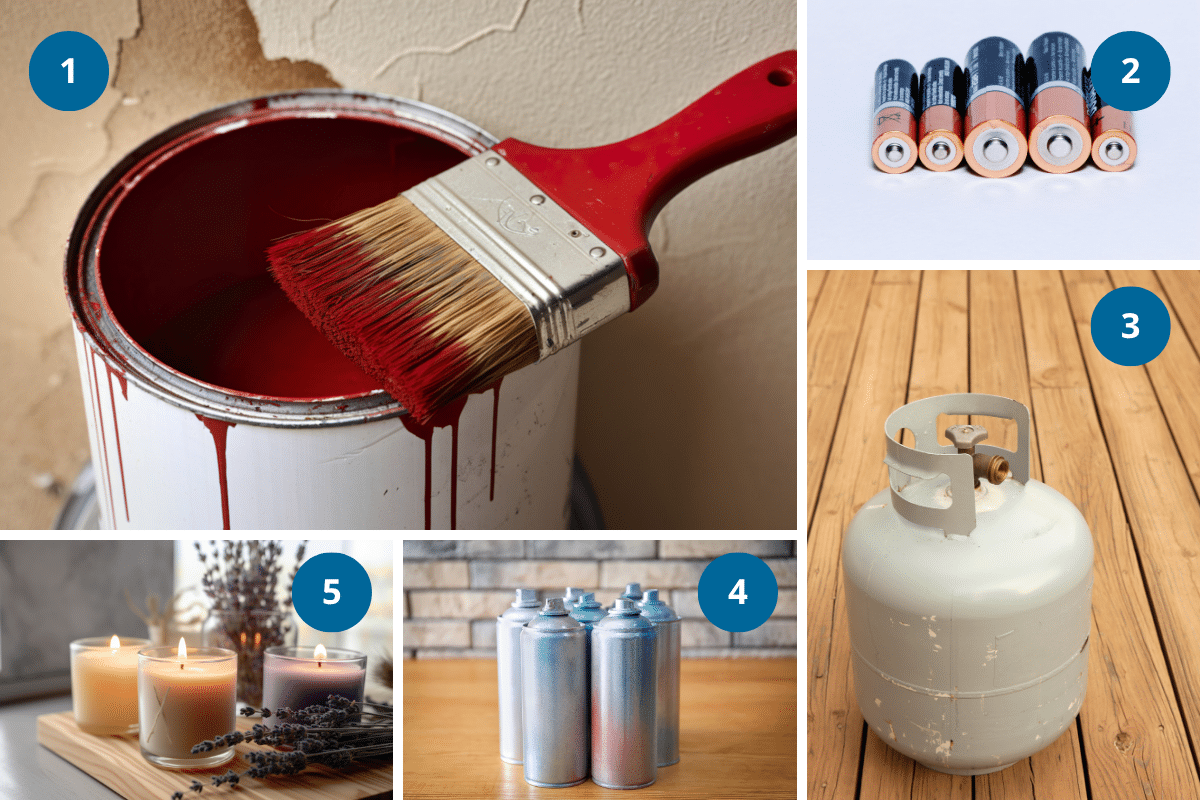
1. Paint
Heat causes paint to separate, thicken, and turn into something you couldn’t roll onto a wall if your life depended on it. If a can is even halfway useful, it deserves better than a July garage.
2. Batteries
High temperatures drain battery life and increase the odds of leaking. Keep them in a cool, dry drawer inside. They’ll last so much longer.
3. Propane Cylinders
Propane cylinders don’t belong in your garage, not primarily because of heat, but because propane is heavier than air. A slow leak in an enclosed space doesn’t dissipate. It accumulates. Add the fact that pressure relief valves can vent when temperatures hit around 120°F, and “store outside in a well-ventilated area” starts to make a lot of sense.

4. Aerosol Cans
Spray paint, air freshener, dry shampoo, WD-40… these cans are not designed to sit in 110-degree heat. Pressure builds. Things burst. It’s not pretty.
5. Candles
This one seems obvious until you discover a waxy puddle where your favorite pillar candle used to be. The jar survived. The candle did not.
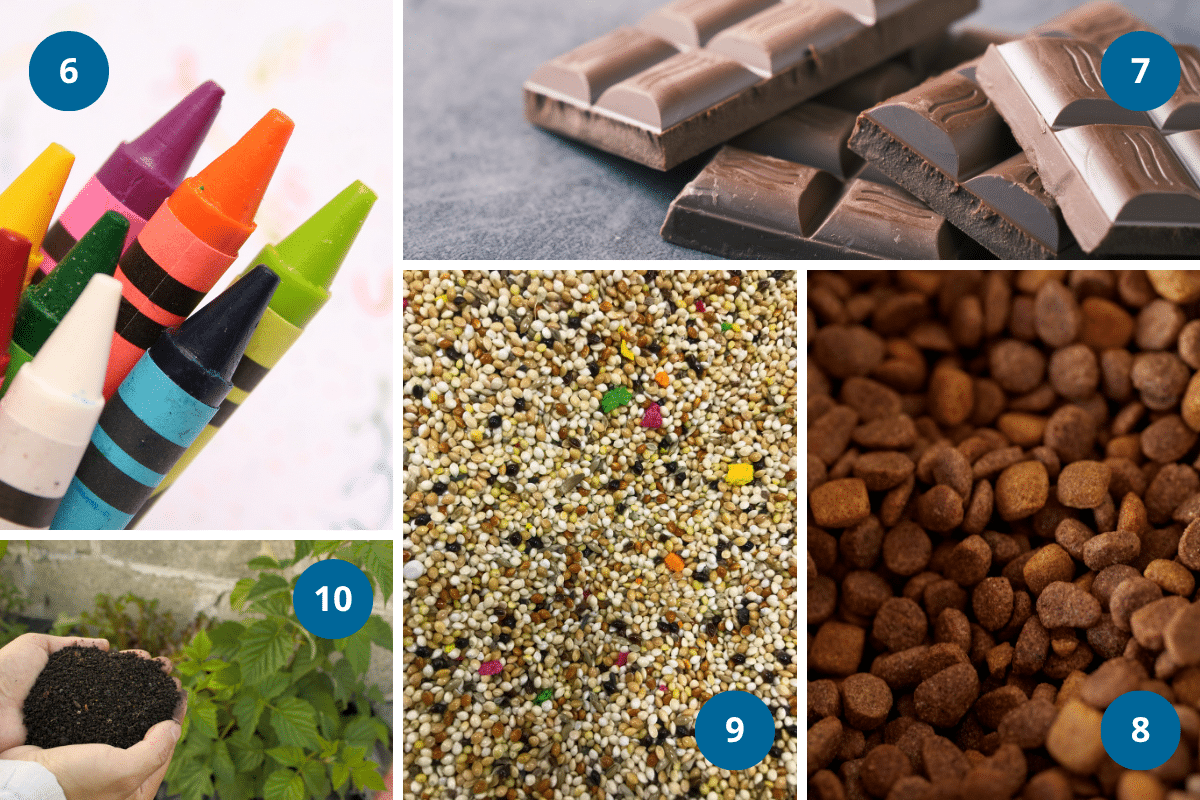
6. Crayons
Every parent and grandparent has learned this lesson the hard way. Usually in the car. But the garage is just as unforgiving.
7. Chocolate
Unless you’re intentionally making fondue, in which case, carry on.
8. Pet Food
Heat speeds up spoilage and degrades the nutritional quality. If you buy in bulk (and I know you do), store it inside.
9. Birdseed
Warmth attracts moisture, and moisture attracts insects, mold, and rodents. That 40-pound bag you got on sale is not worth the trouble it’s about to cause you.
10. Fertilizer
Heat and humidity can cause some fertilizers to lose effectiveness or, worse, clump into a rock-solid mass you can’t get out of the bag. Check the label for storage guidance and take it seriously.
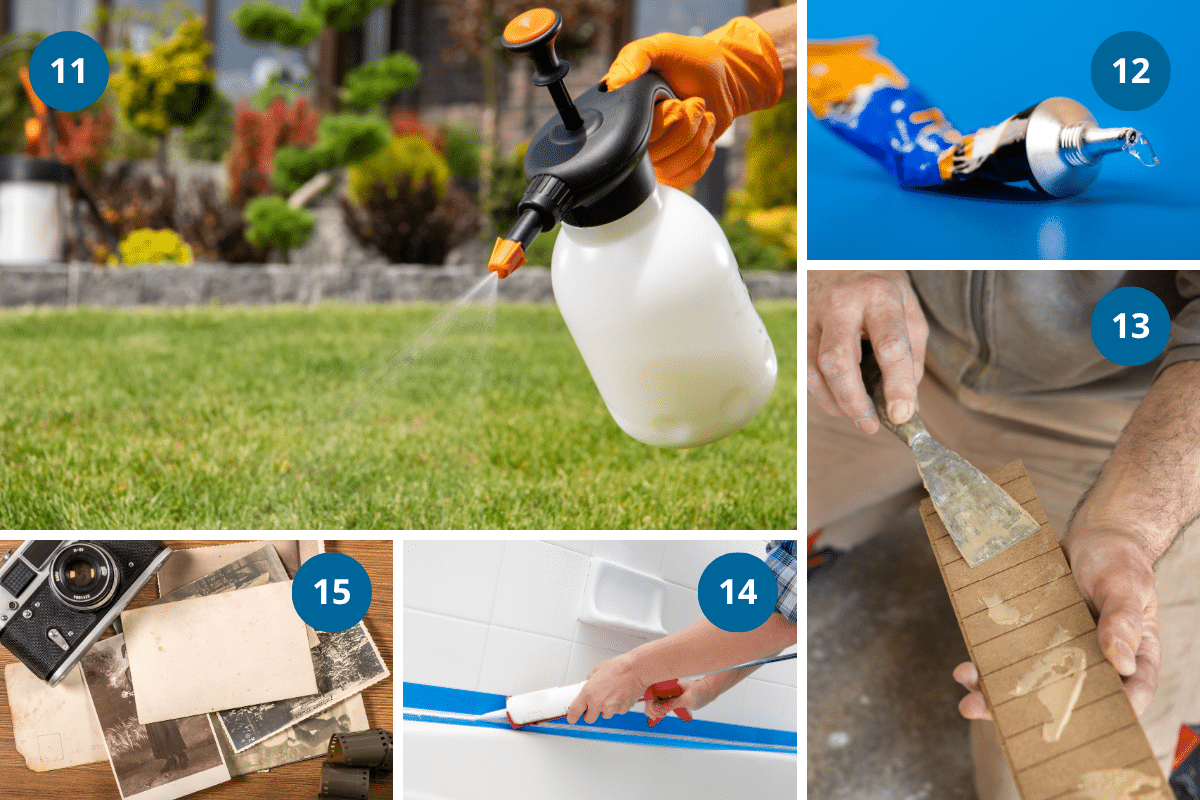
11. Lawn Chemicals
Herbicides, pesticides, fungicides… these are formulated to work within a certain temperature range. Storing them in a hot garage can reduce their effectiveness or, in some cases, cause them to break down in ways you really don’t want. Follow the label.
12. Glue
Super glue, wood glue, epoxy… heat breaks them down or causes them to cure prematurely inside the container. You’ll reach for the bottle and find a solid brick.
13. Wood Filler
Same story. Heat dries it out long before you ever get around to that project you’ve been meaning to start since spring.
14. Caulk
The tube may survive the summer just fine. The product inside? That’s a different story. Extreme heat degrades caulk’s ability to seal, which is, you know, the whole point.
15. Photographs
Heat and humidity are the sworn enemies of printed photos. If you have boxes of old prints stored in the garage, this is your sign to bring them in.
- MORE: What to Do with Hundreds of Family Photos: A Practical Guide to Organizing and Preserving Memories
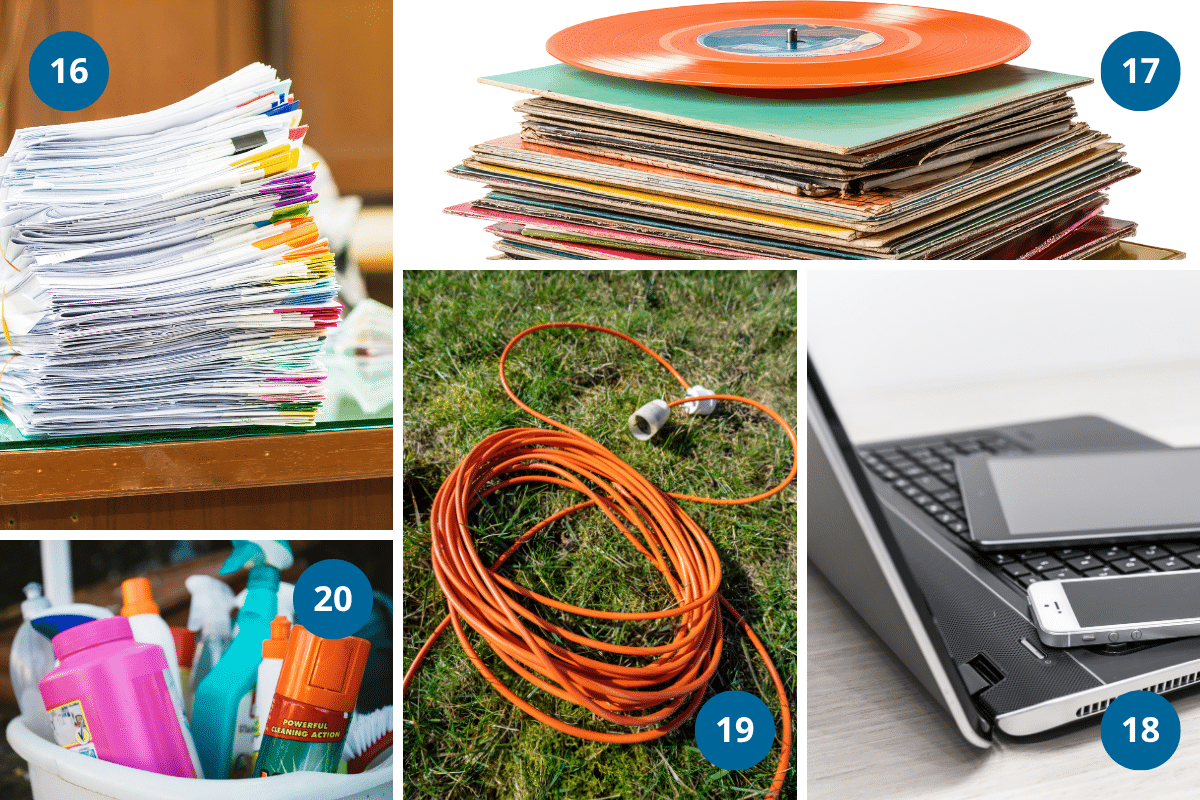
16. Important Documents
Birth certificates. Passports. Tax records. Social Security cards. These belong in a cool, dry place, ideally a fireproof box inside your home. Not in a box in the garage that may or may not be labeled “Important Stuff.”
17. Vinyl Records
One hot afternoon is all it takes to warp your favorite album into something that now qualifies as modern art. Beautiful, maybe. Playable, no.
18. Electronics
Old laptops, tablets, cameras, gaming consoles… prolonged heat exposure damages batteries and degrades internal components. If it plugs in or takes batteries, it doesn’t belong in a summer garage.
19. Extension Cords
Heat damages the insulation over time, which creates a fire hazard you won’t discover until you plug something in next fall. Bring them inside.
20. Cleaning Products
Bleach is the big one here. Heat causes it to break down and lose its disinfecting power faster than you’d expect. Many other cleaners and concentrates are more heat-tolerant, but “cool, dry location” is the standard recommendation for a reason. When in doubt, check the label. Your garage in August is rarely either of those things.

21. Medicines
Most medications, prescription and over-the-counter, should be stored at room temperature in a temperature-controlled environment. A hot garage is the opposite of that.
22. Bottled Water
Water doesn’t spoil, but hot-garage water has a way of tasting like warm plastic and that’s reason enough to store it somewhere better. Some research also suggests heat may cause plastic bottles to leach trace compounds over time, though the amounts are generally considered safe. Still, if you’re building an emergency supply, a cool, dark closet beats a sweltering garage shelf.
23. Cosmetics and Skincare
Sunscreen, lotions, makeup… heat causes them to separate, melt, and lose effectiveness. Especially sunscreen, which you’re counting on to actually work.
24. Sports Drinks
The electrolytes are fine. The flavor is not. Heat degrades taste and can shorten shelf life if seals aren’t airtight. If you buy by the case, bring them inside.
25. Family Heirlooms
If you would be heartbroken to lose it, don’t trust it to a garage in July. Full stop. Quilts, old letters, handmade items, anything irreplaceable… none of it belongs out there.
A Quick Garage Reality Check
Here’s a fast way to evaluate anything you’ve got stored out there: *Would I leave this sitting in a parked car all summer?*
If the answer is no, it probably doesn’t belong in your garage either. The temperatures are comparable, and the risks are the same.
You don’t have to turn your garage into a showroom or empty it out completely. Just rescue the things that heat can actually harm. Spend twenty minutes this weekend walking through, and I promise you’ll find at least three or four items that deserve a better home than a sweltering garage shelf.
And if you happen to stumble across that mystery box labeled “Important Stuff” while you’re at it, maybe this is the summer you finally open it.
Just wear gloves. Trust me on that one.
Question: Has summer heat ever ruined something you had stored in your garage? I’d love to know what it was and whether it was a lesson learned the hard way like mine!

More from Everyday Cheapskate
 https://www.everydaycheapskate.com/wp-content/uploads/20261024-A-cup-of-coffee-notebook-and-pen-on-a-table.png
800
1200
Mary Hunt
https://www.everydaycheapskate.com/wp-content/uploads/EC-Logo-by-Mary-Hunt-Tagline-Trimmed.png
Mary Hunt2026-10-24 13:13:592026-10-24 13:13:59What Is Frugal Living? It’s Probably Not What You Think
https://www.everydaycheapskate.com/wp-content/uploads/20261024-A-cup-of-coffee-notebook-and-pen-on-a-table.png
800
1200
Mary Hunt
https://www.everydaycheapskate.com/wp-content/uploads/EC-Logo-by-Mary-Hunt-Tagline-Trimmed.png
Mary Hunt2026-10-24 13:13:592026-10-24 13:13:59What Is Frugal Living? It’s Probably Not What You Think https://www.everydaycheapskate.com/wp-content/uploads/20261023-Paper-calendar-and-digital-calendar-on-a-smartphone-side-by-side.png
800
1200
Mary Hunt
https://www.everydaycheapskate.com/wp-content/uploads/EC-Logo-by-Mary-Hunt-Tagline-Trimmed.png
Mary Hunt2026-10-23 11:55:302026-10-23 11:55:30Paper or Digital Calendar? Turns Out, You May Need Both
https://www.everydaycheapskate.com/wp-content/uploads/20261023-Paper-calendar-and-digital-calendar-on-a-smartphone-side-by-side.png
800
1200
Mary Hunt
https://www.everydaycheapskate.com/wp-content/uploads/EC-Logo-by-Mary-Hunt-Tagline-Trimmed.png
Mary Hunt2026-10-23 11:55:302026-10-23 11:55:30Paper or Digital Calendar? Turns Out, You May Need Both https://www.everydaycheapskate.com/wp-content/uploads/20261017-Woman-opening-refrigerator-stocked-with-fresh-food-and-condiments.png
800
1200
Mary Hunt
https://www.everydaycheapskate.com/wp-content/uploads/EC-Logo-by-Mary-Hunt-Tagline-Trimmed.png
Mary Hunt2026-10-17 12:16:242026-10-17 12:16:24What Temperature Should a Refrigerator and Freezer Be?
https://www.everydaycheapskate.com/wp-content/uploads/20261017-Woman-opening-refrigerator-stocked-with-fresh-food-and-condiments.png
800
1200
Mary Hunt
https://www.everydaycheapskate.com/wp-content/uploads/EC-Logo-by-Mary-Hunt-Tagline-Trimmed.png
Mary Hunt2026-10-17 12:16:242026-10-17 12:16:24What Temperature Should a Refrigerator and Freezer Be? https://www.everydaycheapskate.com/wp-content/uploads/20261012-Woman-using-smartphone-while-checking-monthly-cellular-data-usage-on-laptop.png
800
1200
Mary Hunt
https://www.everydaycheapskate.com/wp-content/uploads/EC-Logo-by-Mary-Hunt-Tagline-Trimmed.png
Mary Hunt2026-10-12 10:51:112026-10-12 10:51:11Do You Really Need Unlimited Data? Check Before You Pay
https://www.everydaycheapskate.com/wp-content/uploads/20261012-Woman-using-smartphone-while-checking-monthly-cellular-data-usage-on-laptop.png
800
1200
Mary Hunt
https://www.everydaycheapskate.com/wp-content/uploads/EC-Logo-by-Mary-Hunt-Tagline-Trimmed.png
Mary Hunt2026-10-12 10:51:112026-10-12 10:51:11Do You Really Need Unlimited Data? Check Before You Pay https://www.everydaycheapskate.com/wp-content/uploads/20261011-Woman-Adjusting-Smart-Home-Device-on-the-Wall-how-to-lower-your-electric-bill.png
800
1200
Mary Hunt
https://www.everydaycheapskate.com/wp-content/uploads/EC-Logo-by-Mary-Hunt-Tagline-Trimmed.png
Mary Hunt2026-10-11 23:01:562026-10-11 23:01:56Stop Chasing Pennies on Your Electric Bill. Do This
https://www.everydaycheapskate.com/wp-content/uploads/20261011-Woman-Adjusting-Smart-Home-Device-on-the-Wall-how-to-lower-your-electric-bill.png
800
1200
Mary Hunt
https://www.everydaycheapskate.com/wp-content/uploads/EC-Logo-by-Mary-Hunt-Tagline-Trimmed.png
Mary Hunt2026-10-11 23:01:562026-10-11 23:01:56Stop Chasing Pennies on Your Electric Bill. Do This https://www.everydaycheapskate.com/wp-content/uploads/20261007-red-present-sitting-in-autumn-leaves-Amazon-Prime-Big-Deal-Days-gifts.png
800
1200
Mary Hunt
https://www.everydaycheapskate.com/wp-content/uploads/EC-Logo-by-Mary-Hunt-Tagline-Trimmed.png
Mary Hunt2026-10-06 23:09:432026-10-06 23:09:43Christmas Shopping in October? These Prime Day Gifts Make Sense
https://www.everydaycheapskate.com/wp-content/uploads/20261007-red-present-sitting-in-autumn-leaves-Amazon-Prime-Big-Deal-Days-gifts.png
800
1200
Mary Hunt
https://www.everydaycheapskate.com/wp-content/uploads/EC-Logo-by-Mary-Hunt-Tagline-Trimmed.png
Mary Hunt2026-10-06 23:09:432026-10-06 23:09:43Christmas Shopping in October? These Prime Day Gifts Make Sense https://www.everydaycheapskate.com/wp-content/uploads/20261006-prime-big-deal-days-have-landed.png
800
1200
Mary Hunt
https://www.everydaycheapskate.com/wp-content/uploads/EC-Logo-by-Mary-Hunt-Tagline-Trimmed.png
Mary Hunt2026-10-05 11:01:432026-10-07 09:02:53EC’s Top Picks from Amazon Prime Big Deal Days 2026
https://www.everydaycheapskate.com/wp-content/uploads/20261006-prime-big-deal-days-have-landed.png
800
1200
Mary Hunt
https://www.everydaycheapskate.com/wp-content/uploads/EC-Logo-by-Mary-Hunt-Tagline-Trimmed.png
Mary Hunt2026-10-05 11:01:432026-10-07 09:02:53EC’s Top Picks from Amazon Prime Big Deal Days 2026 https://www.everydaycheapskate.com/wp-content/uploads/20261004-reduce-healthcare-costs-with-three-habits-healthy-couple-walking-in-autumn-leaves.png
800
1200
Mary Hunt
https://www.everydaycheapskate.com/wp-content/uploads/EC-Logo-by-Mary-Hunt-Tagline-Trimmed.png
Mary Hunt2026-10-04 23:08:572026-10-04 23:09:47How to Reduce Healthcare Costs With 3 Free Daily Habits
https://www.everydaycheapskate.com/wp-content/uploads/20261004-reduce-healthcare-costs-with-three-habits-healthy-couple-walking-in-autumn-leaves.png
800
1200
Mary Hunt
https://www.everydaycheapskate.com/wp-content/uploads/EC-Logo-by-Mary-Hunt-Tagline-Trimmed.png
Mary Hunt2026-10-04 23:08:572026-10-04 23:09:47How to Reduce Healthcare Costs With 3 Free Daily Habits https://www.everydaycheapskate.com/wp-content/uploads/20241004-news-you-can-use-october-everyday-cheapskate-top-news-articles.png
800
1200
Mary Hunt
https://www.everydaycheapskate.com/wp-content/uploads/EC-Logo-by-Mary-Hunt-Tagline-Trimmed.png
Mary Hunt2026-10-04 01:04:052026-10-26 12:58:02News You Can Use • October 2026
https://www.everydaycheapskate.com/wp-content/uploads/20241004-news-you-can-use-october-everyday-cheapskate-top-news-articles.png
800
1200
Mary Hunt
https://www.everydaycheapskate.com/wp-content/uploads/EC-Logo-by-Mary-Hunt-Tagline-Trimmed.png
Mary Hunt2026-10-04 01:04:052026-10-26 12:58:02News You Can Use • October 2026

Christmas lights in the garage are a no-go as well. I live in the frozen tundra and the vast temperature changes from season to season will kill all those perfectly functioning strings of lights you put back in the garage the previous January. Same goes for any folks still hanging on to incandescent light bulbs. Bring them inside for best performance.
Great tips Mary. I have a few in my garage. 🙁