
How to Train a Puppy Not to Bite (Without Buying a Single Thing)

Puppy teeth are tiny, sharp, and somehow everywhere at once. If your new puppy has decided your fingers, ankles, and shoelaces are all fair game, take a breath. It’s normal, and it’s fixable. No special training system required, just consistent timing and a little patience. Today I’m walking through the exact method that teaches a puppy to keep those teeth to themselves for good.
Nobody warns you about the teeth.
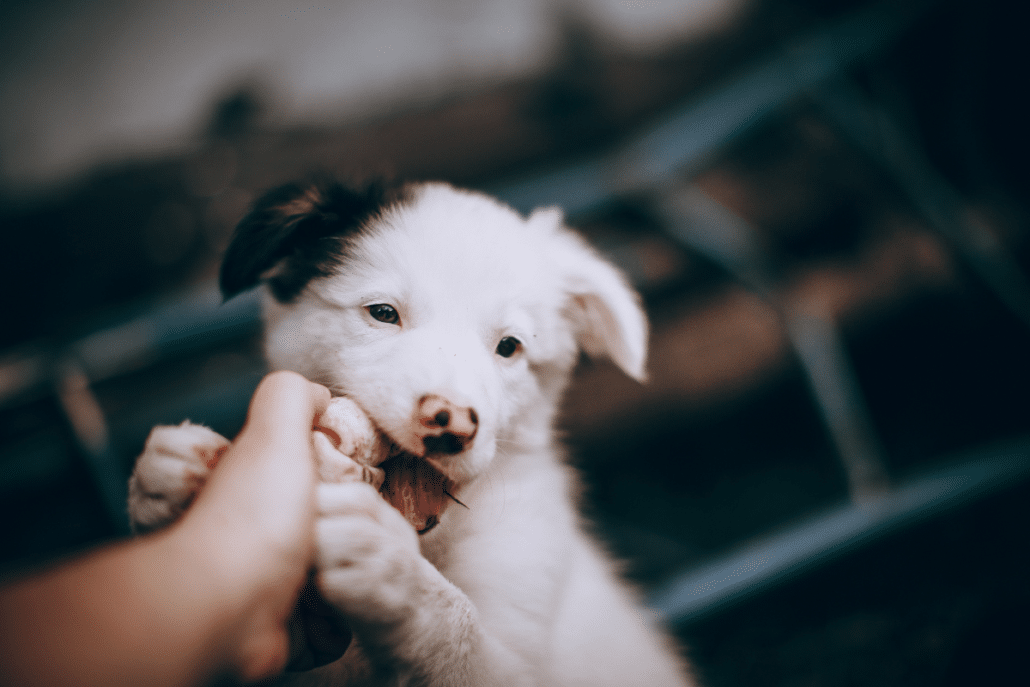
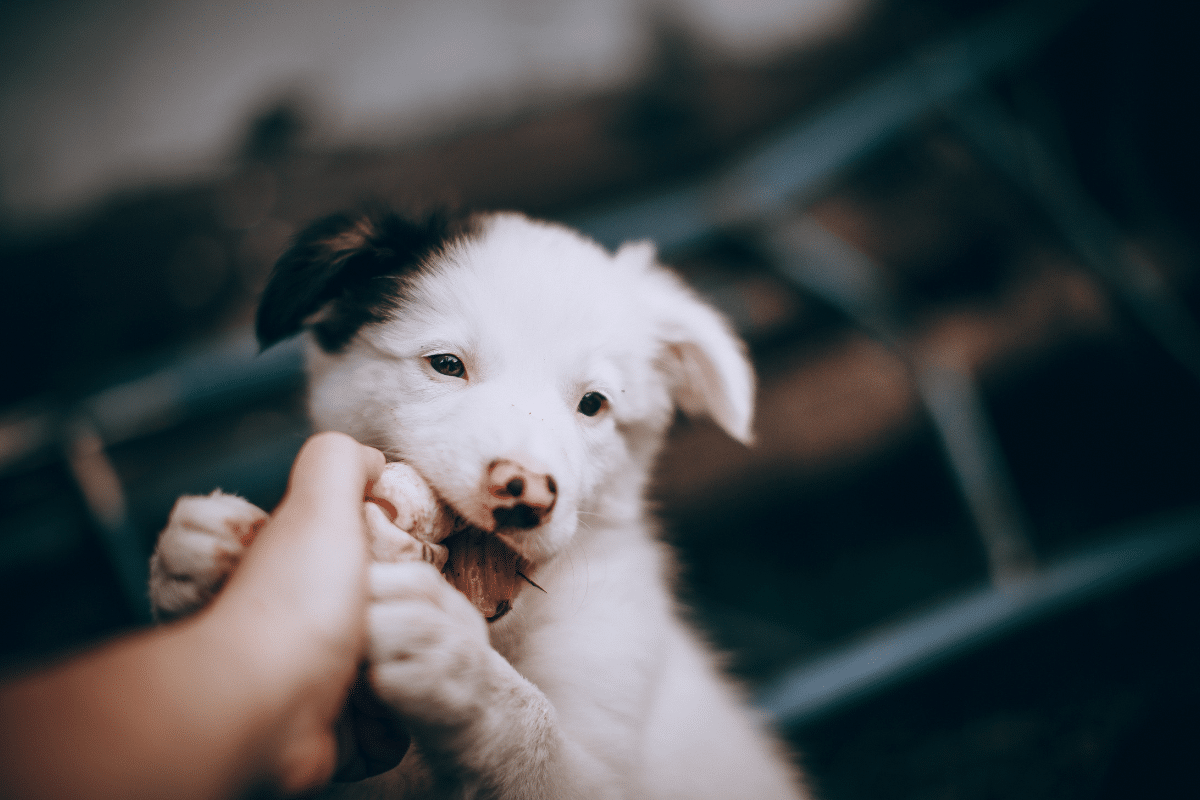
You bring home eight pounds of fluff, and within about six hours, that fluff has locked onto your finger like a tiny, determined alligator. Ankles, sleeves, shoelaces, the hem of your favorite bathrobe… nothing is safe. It’s alarming the first time. It’s still a little alarming the fortieth time.
Here’s the part nobody tells you at the shelter: this is completely normal. Puppy mouthing isn’t a character flaw. It’s just what puppies do. Your job isn’t to break the habit through sheer force of will. It’s to teach your puppy, patiently and consistently, that human skin is off the menu.
The good news? You don’t need an expensive trainer, a “correction collar” or special equipment. You need consistency, timing, patience and a plan that makes sense to your puppy.
Why puppies bite in the first place
Puppies use their mouths to explore the world, play and communicate. Teething adds another reason to chew, and an excited or overtired puppy can turn into a little land shark in a hurry.
Three common reasons:
- Play and exploration. Puppies use their mouths to interact with almost everything, including you.
- Teething. As permanent teeth begin coming in, generally between about 3 and 6 months, chewing can become especially appealing.
- Overstimulation. An excited or overtired puppy may nip harder, faster and more often.
None of that makes your puppy bad. It makes your puppy a puppy. The goal isn’t punishment. It’s teaching the difference between what’s fine to bite (toys, appropriate chews) and what isn’t (you, your kids, the couch cushion, your favorite shoes).
The one lesson that changes everything
This is the big lesson you want your puppy to learn:
Biting people makes the fun disappear. Appropriate behavior makes good things happen.
When your puppy puts teeth on your skin or clothes:
- Stay calm. Don’t squeal, yell or push the puppy away. Some puppies find a squealing human even more exciting.
- Stop the interaction immediately. Freeze and remove your attention.
- Turn away or briefly step behind a baby gate if the puppy keeps coming after you. Ten to 30 seconds is plenty.
- Return calmly.
- Offer an appropriate toy or chew and praise the puppy for choosing it.
If the biting starts again, repeat the process. That’s it. No drama. No wrestling match. No lecture.
Teeth on people, game over. Puppies figure this out faster than you’d think.
Why it actually works
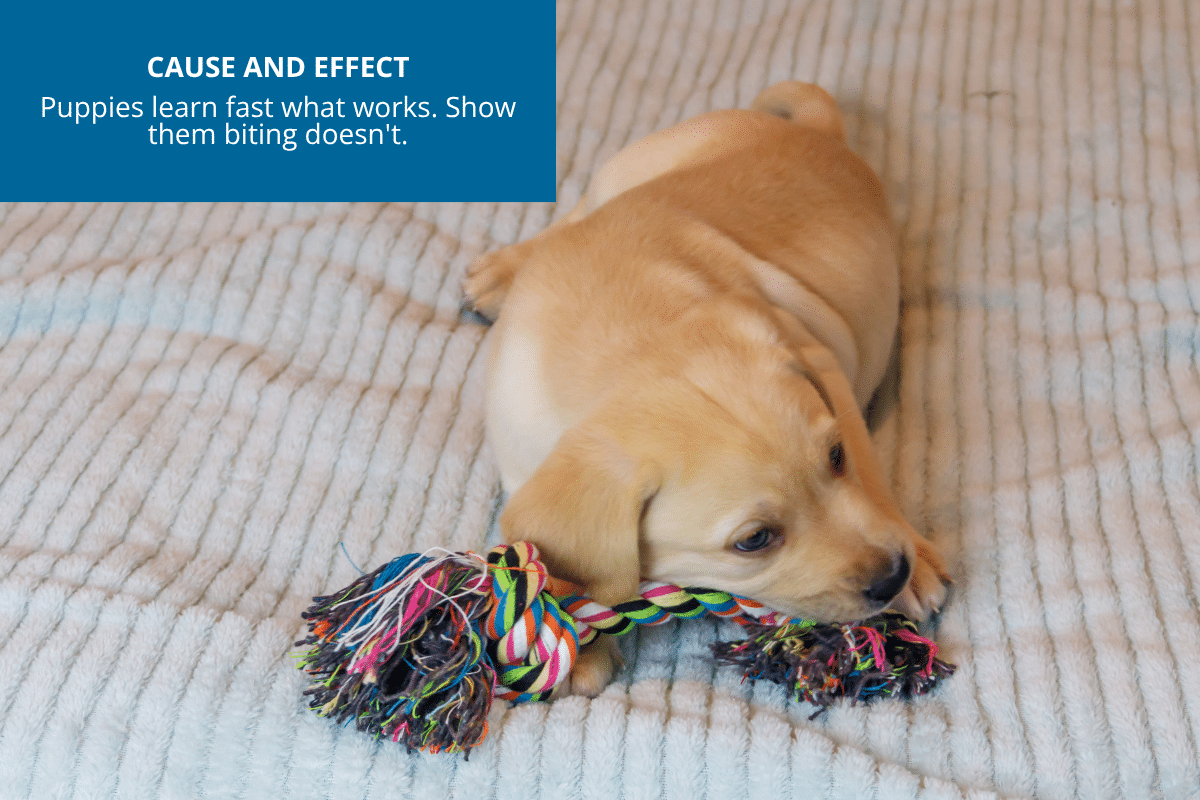
Puppies quickly learn which behaviors get them what they want. If biting makes your attention and play disappear, while sitting calmly or grabbing a toy keeps the good stuff coming, you’re giving your puppy a pretty obvious choice.
You aren’t trying to scare the puppy into obedience. You’re teaching cause and effect.
Everyone in the house has to play along
Consistency isn’t just important here. It’s the whole ballgame.
If one person in the family laughs off hand biting because “he’s just playing” while everyone else shuts the game down immediately, your puppy gets a confusing, mixed message. And puppies are smart enough to know exactly who lets them get away with it.
Sit everyone down. Agree on the plan. Stick to it, even when the puppy is being extra cute about the whole thing.
Keep a toy within arm’s reach
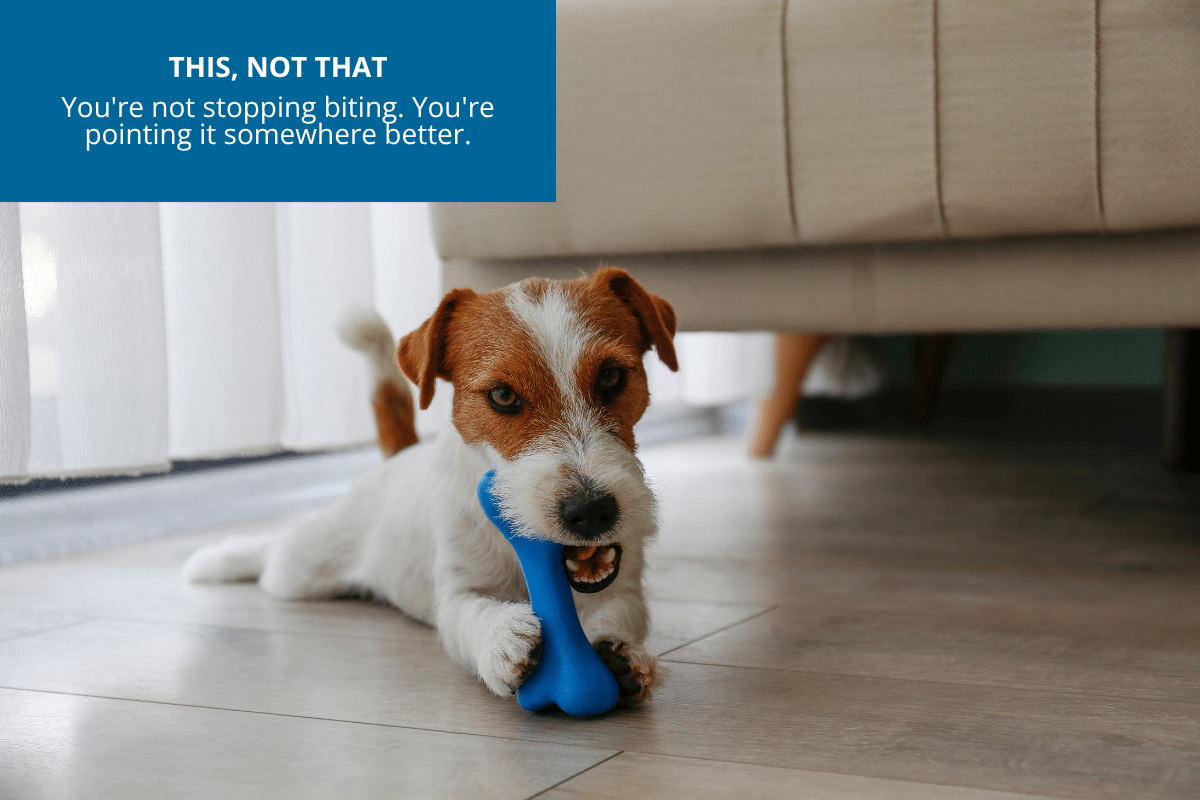
Don’t wait for the puppy to become a full-blown ankle shark.
Keep a few appropriate toys within easy reach. When your puppy starts getting mouthy, offer a toy and encourage the puppy to bite that instead. A rope toy, rubber toy or appropriate puppy chew can all work. The point isn’t which toy you buy. The point is teaching, “This is what you can put your teeth on.”
And when your puppy takes the toy instead of your hand? That’s the moment. Praise it like they just did something amazing. Because in puppy terms, they kind of did.
Notice the good behavior, not just the bad
Here’s the part most people skip entirely: you can’t spend all your energy correcting what you don’t want and expect your puppy to figure out what you do want.
When your puppy approaches you without nipping, settles down beside you, licks instead of bites, or picks up a toy on their own, give them attention, praise, play or a little piece of their regular kibble.
You’re teaching more than “don’t bite.” You’re teaching what to do instead.
If the biting keeps happening, walk away
Sometimes puppies don’t get the memo the first 47 times.
If your puppy keeps biting after you’ve redirected to a toy, calmly remove yourself from the game. Step behind a baby gate or leave the room briefly. Then return and try again.
An exercise pen can also be useful if your puppy already views it as a pleasant, familiar space.
One thing I wouldn’t do: use the crate as a punishment. A crate needs to stay a place your puppy actually wants to go. Turn it into a timeout spot, and you’ve just made bedtime a lot harder on both of you.
And don’t worry about saying “Time out.” Your puppy doesn’t need a vocabulary lesson. The disappearing human is the message.
A tired puppy is a bitey puppy
A puppy who has had appropriate exercise, play, mental stimulation and sleep is generally easier to live with. But there’s an important wrinkle: overtired puppies can become extremely mouthy.
Sometimes the “wild puppy” you think needs more exercise actually needs a nap.
One commonly used rule of thumb for leash walks is about five minutes of walking per month of age, once or twice a day. But that’s only a starting point. Puppies vary by age, breed, size, health and the type of activity they’re doing.
Don’t focus only on tiring your puppy out physically. Sniffing, exploring, training and simple food puzzles provide valuable mental stimulation, too.
Give teething teeth something better to do
The puppy will chew during teething. That’s not a failure of training. It’s a puppy being a puppy.
Give your dog appropriate things to chew and supervise.
- A clean, damp washcloth that has been chilled or briefly frozen can feel soothing on sore gums if your puppy doesn’t shred or swallow fabric. Remove it if pieces begin coming loose.
- If you use a stuffed rubber toy with peanut butter, make sure the peanut butter is xylitol-free. Xylitol is toxic to dogs.
- Bully sticks and other edible chews can be options, too, but they’re not automatically risk-free. Supervise your puppy and remove a chew when it becomes small enough to swallow or break into large pieces.
The goal is simple: Give the puppy something appropriate to chew before your favorite chair starts looking like a chew toy.
End playtime before things go full land shark
Puppies often become extra mouthy when they’re overstimulated.
Watch for signs such as:
- Play becoming rougher
- Running around wildly
- Nipping harder or faster
- Having trouble settling down
When you see the escalation, don’t try to squeeze another 20 minutes of play out of the puppy. Calmly switch to a chew, quiet activity or nap.
Sometimes the best training tool in the house is a sleeping puppy.
What not to do, no matter how tempting
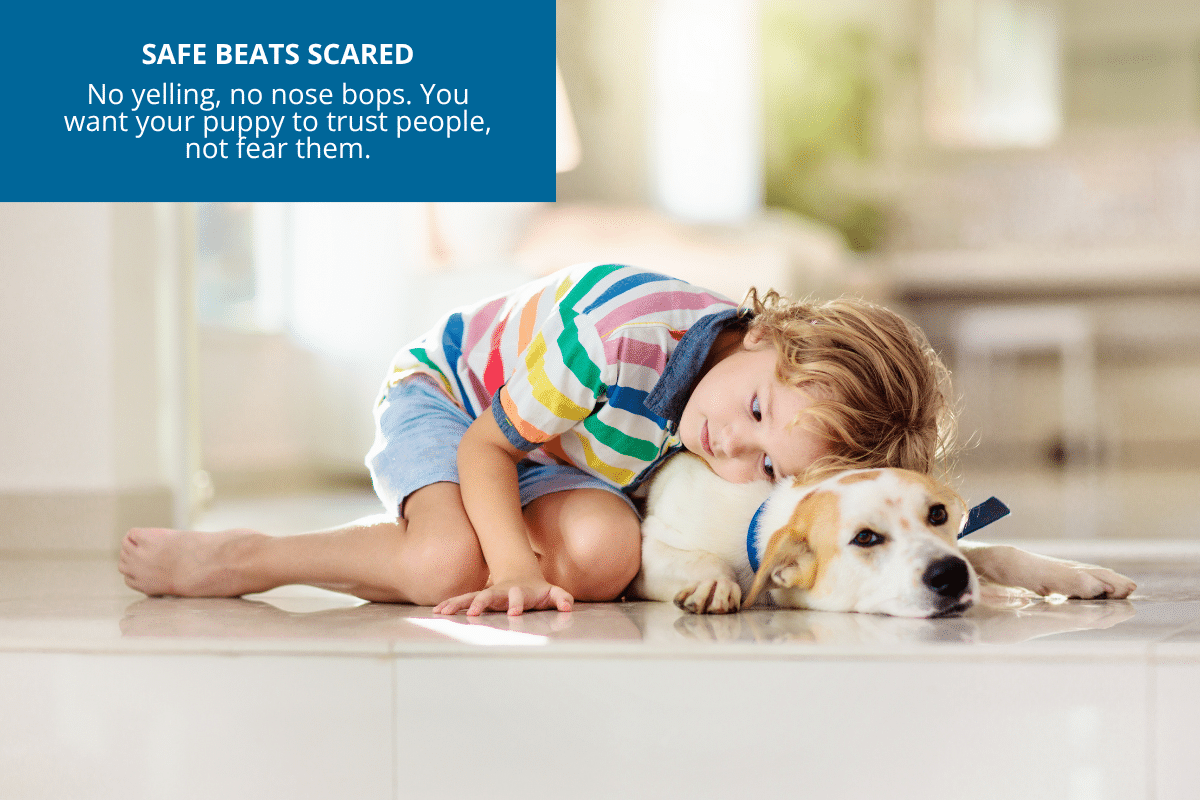
Some old-school puppy advice deserves to stay in the old school.
- Don’t hit, tap or squeeze the puppy’s mouth. Physical punishment can create fear and may make defensive behavior worse.
- Don’t hold the puppy’s mouth closed. It doesn’t teach the lesson you want, and it can make handling unpleasant or frightening.
- Don’t use your hands as chew toys. I get it, wrestling a puppy with your bare fingers is adorable for about five minutes. It’s also teaching your puppy that skin is fair game. Put a toy between you instead.
- Don’t yell. An angry voice can frighten or further excite an already wound-up puppy.
- Don’t shake or bop the nose. Physical intimidation doesn’t teach the behavior you actually want.
- Don’t use shock, prong or other aversive corrections for puppy biting. You want your puppy to learn that people are safe and predictable, not that people are something to fear.
And don’t worry about whether you need to ban tug-of-war. You don’t. Tug can be a perfectly good game when played appropriately. Just keep a toy between your hands and those little teeth.
The timeline: what to expect
Here’s where I want to save you some frustration: Don’t put your puppy’s progress on a stopwatch.
Some puppies improve noticeably within a few weeks. Others continue to mouth for months, especially during teething or when they’re excited.
- First few weeks: You’re teaching the basic rule: Human skin ends the game. Appropriate toys keep it going.
- 1–3 months: With consistent responses, many puppies become easier to redirect and their biting becomes less frequent or less intense.
- 3–6 months: Teething and excitement can still trigger plenty of chewing and mouthing. That’s not necessarily a training failure.
- Around 6 months and beyond: Many puppies are substantially easier to manage, but occasional mouthing can continue, particularly during excitement.
The goal was never perfection by a certain date. It’s steady, boring, unglamorous improvement. If you’re seeing no improvement after several weeks of consistent training, or the biting is becoming more intense, that’s your cue to call in professional help rather than crack down harder on your own.
When to call in backup
Puppy mouthing is normal. But some behavior deserves a closer look.
Seek professional guidance if:
- Bites regularly break skin or cause significant bruising
- Biting is escalating rather than improving
- Your puppy stiffens, freezes, growls, snarls or shows other signs of fear or discomfort before biting
- Biting occurs during handling or appears related to pain
- Your puppy guards food, toys or other resources
- The behavior seems directed toward particular family members
- You’re simply concerned and aren’t sure what’s normal
If biting may be connected to pain, fear, guarding or another behavior problem, start by talking with your veterinarian. For more complex behavior issues, your veterinarian can help you find a qualified behavior professional.
When choosing a trainer, look for someone who uses reward-based methods and can clearly explain how they’ll address the behavior. Credentials such as CPDT-KA or KPA-CTP can be useful, but the training methods matter, too.
You’re not looking for someone who promises to dominate your puppy into submission. You’re looking for someone who knows how to teach.
The long view
Puppy biting is temporary, even when it feels like you’re living with a tiny, furry crocodile.
Your puppy isn’t trying to be bad. They’re learning how to live in a human household, and you’re teaching them the rules. Calm, consistent responses, appropriate things to chew, plenty of sleep and lots of reinforcement for good behavior will take you a long way.
You don’t need to buy anything special. You don’t need a complicated training system. You need a plan and everybody in the household needs to stick with it.
A few months from now, you’ll look at those little teeth and wonder how something so small could possibly have caused so much commotion. But you’ll also be glad you taught the lesson.
Question: What finally worked when your puppy went through the biting phase? Share what did or didn’t work for you in the comments below.
EverydayCheapskate™ is reader-supported. We participate in the Amazon Services LLC Associates Program and other affiliate advertising programs, designed to provide a means for us to earn from qualifying purchases, at no cost to you.

More from Everyday Cheapskate
 https://www.everydaycheapskate.com/wp-content/uploads/20260831-Portrait-of-a-Pitbull-on-a-yellow-background-homemade-dog-treat-recipes.png
800
1200
Mary Hunt
https://www.everydaycheapskate.com/wp-content/uploads/EC-Logo-by-Mary-Hunt-Tagline-Trimmed.png
Mary Hunt2026-08-31 13:06:072026-09-28 22:49:173 Homemade Dog Treats Recipes Your Dog Will Love Most
https://www.everydaycheapskate.com/wp-content/uploads/20260831-Portrait-of-a-Pitbull-on-a-yellow-background-homemade-dog-treat-recipes.png
800
1200
Mary Hunt
https://www.everydaycheapskate.com/wp-content/uploads/EC-Logo-by-Mary-Hunt-Tagline-Trimmed.png
Mary Hunt2026-08-31 13:06:072026-09-28 22:49:173 Homemade Dog Treats Recipes Your Dog Will Love Most https://www.everydaycheapskate.com/wp-content/uploads/20260826-DIY-cat-litter-deodorizer-kitten-looking-up-at-camera-from-box.png
800
1200
Mary Hunt
https://www.everydaycheapskate.com/wp-content/uploads/EC-Logo-by-Mary-Hunt-Tagline-Trimmed.png
Mary Hunt2026-08-25 21:17:362026-09-28 22:49:26The One-Ingredient Litter Box Trick That Costs Pennies
https://www.everydaycheapskate.com/wp-content/uploads/20260826-DIY-cat-litter-deodorizer-kitten-looking-up-at-camera-from-box.png
800
1200
Mary Hunt
https://www.everydaycheapskate.com/wp-content/uploads/EC-Logo-by-Mary-Hunt-Tagline-Trimmed.png
Mary Hunt2026-08-25 21:17:362026-09-28 22:49:26The One-Ingredient Litter Box Trick That Costs Pennies https://www.everydaycheapskate.com/wp-content/uploads/20260731-young-girl-holding-brand-new-bulldog-puppy.png
800
1200
Mary Hunt
https://www.everydaycheapskate.com/wp-content/uploads/EC-Logo-by-Mary-Hunt-Tagline-Trimmed.png
Mary Hunt2026-07-31 17:40:122026-09-28 22:50:28How Much Does It Really Cost to Adopt a Pet Today?
https://www.everydaycheapskate.com/wp-content/uploads/20260731-young-girl-holding-brand-new-bulldog-puppy.png
800
1200
Mary Hunt
https://www.everydaycheapskate.com/wp-content/uploads/EC-Logo-by-Mary-Hunt-Tagline-Trimmed.png
Mary Hunt2026-07-31 17:40:122026-09-28 22:50:28How Much Does It Really Cost to Adopt a Pet Today? https://www.everydaycheapskate.com/wp-content/uploads/20260618-retriever-labrador-on-white-rug-in-bright-contemporary-living-room-pet-stains-and-odors.png
800
1200
Mary Hunt
https://www.everydaycheapskate.com/wp-content/uploads/EC-Logo-by-Mary-Hunt-Tagline-Trimmed.png
Mary Hunt2026-06-18 23:08:332026-09-28 22:54:04Homemade Pet Stain Remover That Stops Repeat Accidents
https://www.everydaycheapskate.com/wp-content/uploads/20260618-retriever-labrador-on-white-rug-in-bright-contemporary-living-room-pet-stains-and-odors.png
800
1200
Mary Hunt
https://www.everydaycheapskate.com/wp-content/uploads/EC-Logo-by-Mary-Hunt-Tagline-Trimmed.png
Mary Hunt2026-06-18 23:08:332026-09-28 22:54:04Homemade Pet Stain Remover That Stops Repeat Accidents https://www.everydaycheapskate.com/wp-content/uploads/20260521-How-to-Keep-Pets-Cool-in-Summer-Without-Overspending.png
800
1200
Mary Hunt
https://www.everydaycheapskate.com/wp-content/uploads/EC-Logo-by-Mary-Hunt-Tagline-Trimmed.png
Mary Hunt2026-05-21 16:09:462026-09-28 22:55:00Keep Your Dog (or Cat) Cool This Summer Without Spending a Fortune
https://www.everydaycheapskate.com/wp-content/uploads/20260521-How-to-Keep-Pets-Cool-in-Summer-Without-Overspending.png
800
1200
Mary Hunt
https://www.everydaycheapskate.com/wp-content/uploads/EC-Logo-by-Mary-Hunt-Tagline-Trimmed.png
Mary Hunt2026-05-21 16:09:462026-09-28 22:55:00Keep Your Dog (or Cat) Cool This Summer Without Spending a Fortune https://www.everydaycheapskate.com/wp-content/uploads/20260311-woman-snuggling-adult-dog-emergency-plan-for-pets.png
800
1200
Mary Hunt
https://www.everydaycheapskate.com/wp-content/uploads/EC-Logo-by-Mary-Hunt-Tagline-Trimmed.png
Mary Hunt2026-03-11 09:57:142026-03-11 09:59:16Emergency Plan for Pets: 5 Smart Ways to Prepare
https://www.everydaycheapskate.com/wp-content/uploads/20260311-woman-snuggling-adult-dog-emergency-plan-for-pets.png
800
1200
Mary Hunt
https://www.everydaycheapskate.com/wp-content/uploads/EC-Logo-by-Mary-Hunt-Tagline-Trimmed.png
Mary Hunt2026-03-11 09:57:142026-03-11 09:59:16Emergency Plan for Pets: 5 Smart Ways to Prepare https://www.everydaycheapskate.com/wp-content/uploads/20260131-valentines-day-gift-card-and-box-with-pink-heart-and-bow.png
800
1200
Mary Hunt
https://www.everydaycheapskate.com/wp-content/uploads/EC-Logo-by-Mary-Hunt-Tagline-Trimmed.png
Mary Hunt2026-01-31 17:37:172026-09-28 22:57:47The Valentine’s Gifts Your Loved Ones Won’t Expect
https://www.everydaycheapskate.com/wp-content/uploads/20260131-valentines-day-gift-card-and-box-with-pink-heart-and-bow.png
800
1200
Mary Hunt
https://www.everydaycheapskate.com/wp-content/uploads/EC-Logo-by-Mary-Hunt-Tagline-Trimmed.png
Mary Hunt2026-01-31 17:37:172026-09-28 22:57:47The Valentine’s Gifts Your Loved Ones Won’t Expect https://www.everydaycheapskate.com/wp-content/uploads/20250828-how-to-get-pet-hair-out-of-clothes-laundry-pug-in-basket-towels.png
800
1200
Mary Hunt
https://www.everydaycheapskate.com/wp-content/uploads/EC-Logo-by-Mary-Hunt-Tagline-Trimmed.png
Mary Hunt2025-08-28 10:42:072026-09-28 23:04:43Struggling With Pet Hair in Laundry? Try These Tricks
https://www.everydaycheapskate.com/wp-content/uploads/20250828-how-to-get-pet-hair-out-of-clothes-laundry-pug-in-basket-towels.png
800
1200
Mary Hunt
https://www.everydaycheapskate.com/wp-content/uploads/EC-Logo-by-Mary-Hunt-Tagline-Trimmed.png
Mary Hunt2025-08-28 10:42:072026-09-28 23:04:43Struggling With Pet Hair in Laundry? Try These Tricks https://www.everydaycheapskate.com/wp-content/uploads/20250627-pet-safe-house-plants-woman-on-laptop-kitten.png
800
1200
Mary Hunt
https://www.everydaycheapskate.com/wp-content/uploads/EC-Logo-by-Mary-Hunt-Tagline-Trimmed.png
Mary Hunt2025-06-17 23:12:272025-06-17 23:14:167 Pet Safe House Plants (and 12 to Avoid Completely)
https://www.everydaycheapskate.com/wp-content/uploads/20250627-pet-safe-house-plants-woman-on-laptop-kitten.png
800
1200
Mary Hunt
https://www.everydaycheapskate.com/wp-content/uploads/EC-Logo-by-Mary-Hunt-Tagline-Trimmed.png
Mary Hunt2025-06-17 23:12:272025-06-17 23:14:167 Pet Safe House Plants (and 12 to Avoid Completely)

Puppies and toddlers have a lot in common 🙂
Great ideas. I prefer to wait to adopt till the pup is at least 4 months of age. Puppies learn the rules of play by growing up and playing with siblings, and Mom will put a stop to it when things get out of hand. I find that housebreaking is much easier after Mom has taught them to do their business away from where they eat and sleep.
Trust is imperative (for all types of critters) and takes a while to establish. Puppies are a LOT of work, but so worth the task. Good article Mary. As a life long critter rescuer I appreciate this insight.