
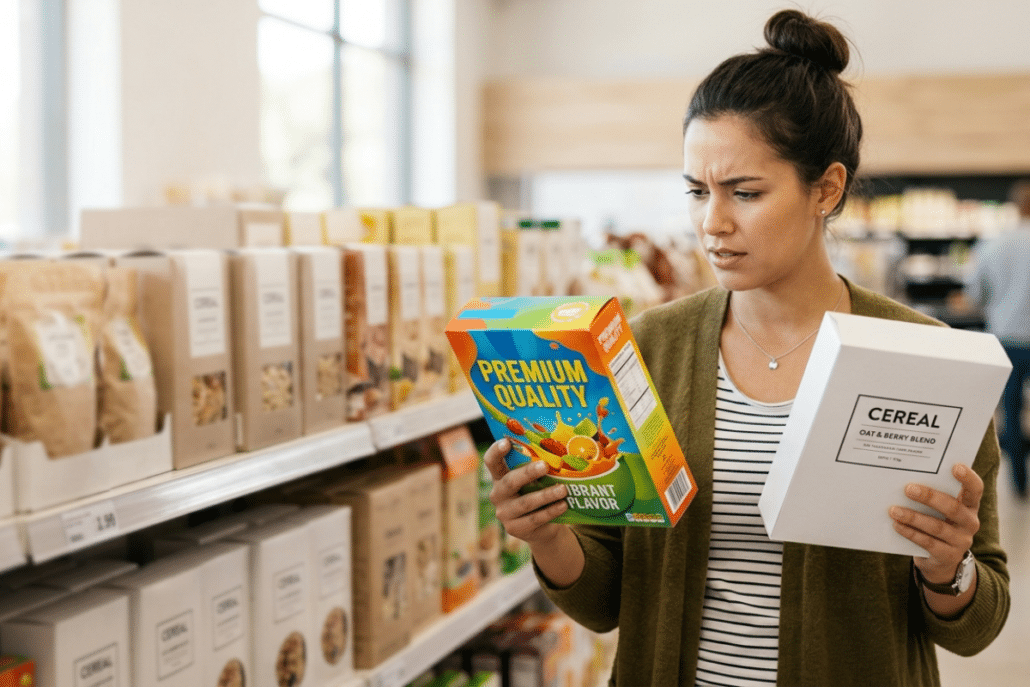
6 Winners in the Generic vs. Name-Brand Showdown

Ever stand in the store holding two nearly identical products, one twice the price, and wonder what you’re actually paying for? The gap between generic and name-brand has never been more obvious… or more misunderstood. With grocery prices still doing their thing, it makes sense to question old assumptions and keep more money in your pocket without sacrificing quality. The truth is, many generics aren’t just “good enough.” They’re often identical where it counts. Let’s walk through a few smart swaps that quietly save a surprising amount over time.
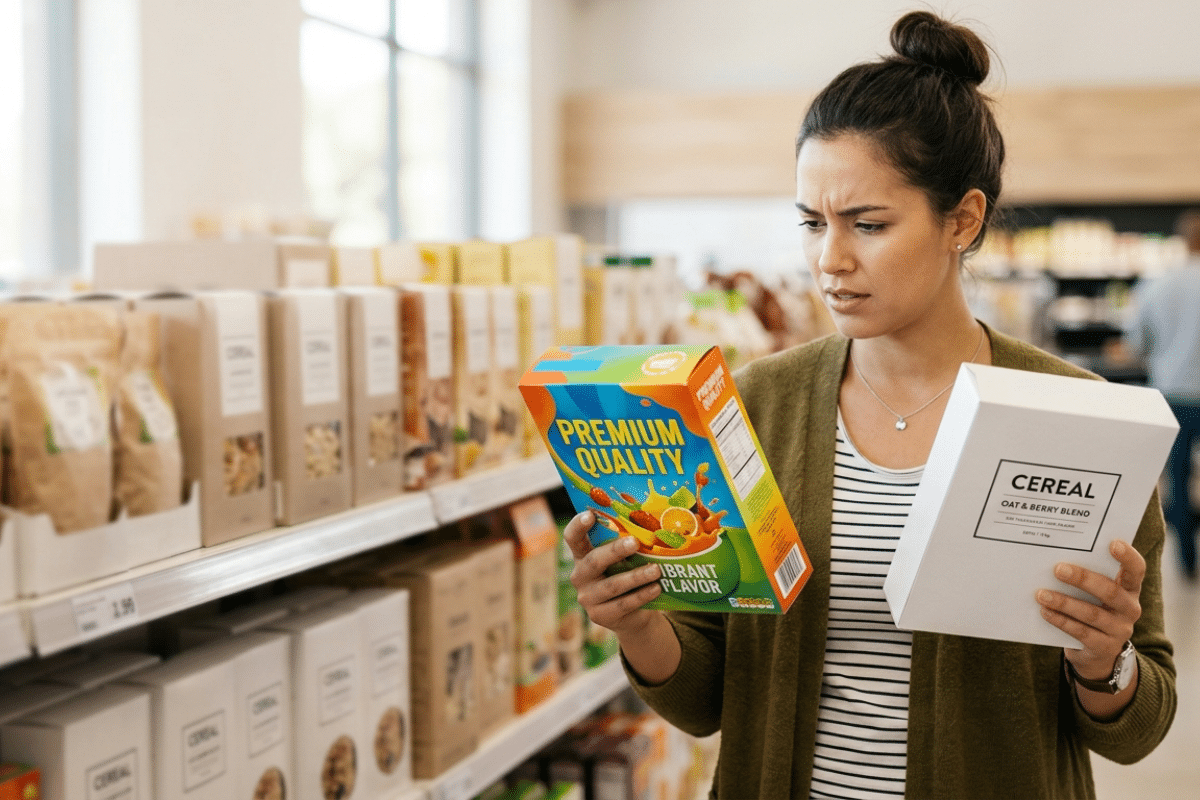
What do you picture when you hear the word “generic”? Something bland? Lower quality? Maybe even a little “second best”? A lot of people still carry that assumption. It’s been around for decades.
But here’s the reality: in many cases, that thinking is outdated. Generics today are often made to the exact same standards as their name-brand counterparts. In some categories, they’re even produced in the same facilities, using nearly identical ingredients. The biggest differences usually come down to packaging, marketing, and a slightly different look on the shelf… not what you’re actually getting at home.
And the price difference? It’s not small. Generics are often 25% to 75% less, depending on the category.
That doesn’t mean every generic is perfect. There are exceptions (we’ll get to those). But for everyday items, the kind you toss in your cart without much thought, there’s a good chance you’re paying extra for a label, not better results.
Here are six categories where going generic isn’t cutting corners:
1. Medication
If you are buying name brands like Advil, Tylenol, Bayer Aspirin, Prilosec, Zyrtec, Claritin, and Sudafed, you are almost certainly overpaying.
By law, all medications sold in the U.S., both over-the-counter and prescription, must meet the same standards for quality, strength, purity, and effectiveness as their brand-name counterparts. That means the generic version contains the same active ingredients and works the same way in your body.
What you’re really paying extra for? Marketing, packaging, and brand recognition.
Switching to generics for common medications can save hundreds per year for a typical household without changing a thing about how well they work.
2. Pantry Staples
Flour, sugar, salt, milk, eggs… these are about as straightforward as it gets.
Government regulations require consistent manufacturing and storage standards across the board, which means the generic version is often produced under the same conditions as the name brand.
Simple rule: If it’s a single-ingredient (or close to it), generic is almost always the smarter buy.
The only time to pause? When a name brand goes on a deep sale and dips below generic pricing, which does happen if you keep an eye out.
3. Infant Formula
This one surprises people. Infant formula is tightly regulated, with strict nutritional and safety requirements. Generic formulas must meet the exact same standards as name brands, including nutrient content and manufacturing practices.
That means your baby is getting the same essential nutrition without the premium price tag. This is one of those categories where the savings add up fast during a stage of life that’s already expensive.
4. Breakfast Cereal
Cereal is one of the easiest places to test your assumptions. Generic versions are often 20–30% cheaper, and in blind taste tests, many families genuinely can’t tell the difference.
If you’ve got brand-loyal eaters at home, here’s a simple workaround: Mix half generic and half name brand in a container. Over time, shift the ratio. Most people never notice the change.
If the label shows both products were made in the same town, or even the same facility. that’s a strong hint they’re more alike than different.
5. Cleaning Products
This category is a bit more nuanced and that’s where smart shopping pays off. Many generic cleaners perform just as well, especially:
- Scouring powders
- Disinfecting wipes
- Bathroom cleaners
But there are a few areas where spending a little more can still make sense:
- Paper towels (strength matters)
- Glass cleaner (streaking can be an issue)
Take a balanced approach: go generic where performance is equal, and be selective where it’s not. You’ll still come out ahead.
6. Non-Perishables
Pasta, canned goods, crackers, bottled water… these are often produced to very similar standards regardless of label. In many cases, the ingredient lists are nearly identical.
Here’s a good rule of thumb as you make the decision: The fewer ingredients you see in the list of ingredients, the more likely it is that the generic brand tastes just as good as the name brand. And if something misses the mark? Most stores will refund it. Trying a generic option is low risk and often worth it.
When Generic Isn’t the Best Choice
Let’s keep this honest. Not every generic deserves a spot in your cart. Most are great. Some are… not worth the savings. And you usually don’t need more than one disappointing experience to figure that out.
There are a few situations where sticking with the name brand can actually make life easier:
- When strength matters. Think paper towels, toilet paper, or trash bags. If it falls apart or leaks, you didn’t save money. You just bought frustration.
- When the formula really counts. Certain skincare products, specialty cleaners, or anything you rely on for a specific result can be hit or miss.
- When you’ve already tested it. If you gave the generic a fair shot and it didn’t hold up, that’s your answer. No need to keep experimenting.
Here’s the simple way to look at it: buy generic where it works, and don’t overthink the rest.
A 30-Second Label Check That Pays Off
If you’ve got half a minute in the aisle (and you do), this little habit can save you more than any coupon ever will. Here’s what to look at:
- Start with the active ingredients. If they match, especially for medications, you’re done. No need to overthink it.
- Glance at the ingredient list. Short and simple? You’re usually safe going generic.
- Check the unit price. That tiny number on the shelf tag tells the real story, not the big bold price on the front.
- Peek at where it’s made. Same town or same manufacturer? That’s often a quiet clue they’re more alike than different.
This takes less than a minute and can quietly shave dollars off every shopping trip.
Why This Matters Today
Prices have crept up, packages have quietly shrunk, and brands are working overtime to convince you they’re worth the extra cost. But underneath all that? Many of the products themselves haven’t changed much at all.
Choosing generic when it makes sense isn’t about settling. It’s about paying attention. Those small decisions? They stack up over weeks and months into real breathing room in your budget.
Name brands will always have better packaging and bigger marketing budgets. That’s their job.
Yours? To decide if what’s inside is actually worth paying more for.
Question: Your turn: Which generic products have earned a permanent spot in your home? And which ones didn’t make the cut?

More from Everyday Cheapskate
 https://www.everydaycheapskate.com/wp-content/uploads/20261006-prime-big-deal-days-have-landed.png
800
1200
Mary Hunt
https://www.everydaycheapskate.com/wp-content/uploads/EC-Logo-by-Mary-Hunt-Tagline-Trimmed.png
Mary Hunt2026-10-05 11:01:432026-10-07 09:02:53EC’s Top Picks from Amazon Prime Big Deal Days 2026
https://www.everydaycheapskate.com/wp-content/uploads/20261006-prime-big-deal-days-have-landed.png
800
1200
Mary Hunt
https://www.everydaycheapskate.com/wp-content/uploads/EC-Logo-by-Mary-Hunt-Tagline-Trimmed.png
Mary Hunt2026-10-05 11:01:432026-10-07 09:02:53EC’s Top Picks from Amazon Prime Big Deal Days 2026 https://www.everydaycheapskate.com/wp-content/uploads/20261004-reduce-healthcare-costs-with-three-habits-healthy-couple-walking-in-autumn-leaves.png
800
1200
Mary Hunt
https://www.everydaycheapskate.com/wp-content/uploads/EC-Logo-by-Mary-Hunt-Tagline-Trimmed.png
Mary Hunt2026-10-04 23:08:572026-10-04 23:09:47How to Reduce Healthcare Costs With 3 Free Daily Habits
https://www.everydaycheapskate.com/wp-content/uploads/20261004-reduce-healthcare-costs-with-three-habits-healthy-couple-walking-in-autumn-leaves.png
800
1200
Mary Hunt
https://www.everydaycheapskate.com/wp-content/uploads/EC-Logo-by-Mary-Hunt-Tagline-Trimmed.png
Mary Hunt2026-10-04 23:08:572026-10-04 23:09:47How to Reduce Healthcare Costs With 3 Free Daily Habits https://www.everydaycheapskate.com/wp-content/uploads/20261004-woman-dreaming-about-her-financial-and-life-goals.png
800
1200
Mary Hunt
https://www.everydaycheapskate.com/wp-content/uploads/EC-Logo-by-Mary-Hunt-Tagline-Trimmed.png
Mary Hunt2026-10-04 12:50:422026-10-04 12:50:42She Lived in a Basement for $100 a Month. Here’s Why.
https://www.everydaycheapskate.com/wp-content/uploads/20261004-woman-dreaming-about-her-financial-and-life-goals.png
800
1200
Mary Hunt
https://www.everydaycheapskate.com/wp-content/uploads/EC-Logo-by-Mary-Hunt-Tagline-Trimmed.png
Mary Hunt2026-10-04 12:50:422026-10-04 12:50:42She Lived in a Basement for $100 a Month. Here’s Why. https://www.everydaycheapskate.com/wp-content/uploads/20241004-news-you-can-use-october-everyday-cheapskate-top-news-articles.png
800
1200
Mary Hunt
https://www.everydaycheapskate.com/wp-content/uploads/EC-Logo-by-Mary-Hunt-Tagline-Trimmed.png
Mary Hunt2026-10-04 01:04:052026-10-11 14:34:17News You Can Use • October 2026
https://www.everydaycheapskate.com/wp-content/uploads/20241004-news-you-can-use-october-everyday-cheapskate-top-news-articles.png
800
1200
Mary Hunt
https://www.everydaycheapskate.com/wp-content/uploads/EC-Logo-by-Mary-Hunt-Tagline-Trimmed.png
Mary Hunt2026-10-04 01:04:052026-10-11 14:34:17News You Can Use • October 2026 https://www.everydaycheapskate.com/wp-content/uploads/20261003-woman-hugging-elderly-mother-sandwich-generation-caring-for-aging-parents.png
800
1200
Mary Hunt
https://www.everydaycheapskate.com/wp-content/uploads/EC-Logo-by-Mary-Hunt-Tagline-Trimmed.png
Mary Hunt2026-10-03 10:47:222026-10-03 10:47:25Sandwiched Between Aging Parents and Adult Children
https://www.everydaycheapskate.com/wp-content/uploads/20261003-woman-hugging-elderly-mother-sandwich-generation-caring-for-aging-parents.png
800
1200
Mary Hunt
https://www.everydaycheapskate.com/wp-content/uploads/EC-Logo-by-Mary-Hunt-Tagline-Trimmed.png
Mary Hunt2026-10-03 10:47:222026-10-03 10:47:25Sandwiched Between Aging Parents and Adult Children https://www.everydaycheapskate.com/wp-content/uploads/20261002-cake-mix-chocolate-chip-cookies.png
800
1200
Mary Hunt
https://www.everydaycheapskate.com/wp-content/uploads/EC-Logo-by-Mary-Hunt-Tagline-Trimmed.png
Mary Hunt2026-10-02 19:44:302026-10-02 19:44:30Cake Mix Chocolate Chip Cookies That Taste Homemade
https://www.everydaycheapskate.com/wp-content/uploads/20261002-cake-mix-chocolate-chip-cookies.png
800
1200
Mary Hunt
https://www.everydaycheapskate.com/wp-content/uploads/EC-Logo-by-Mary-Hunt-Tagline-Trimmed.png
Mary Hunt2026-10-02 19:44:302026-10-02 19:44:30Cake Mix Chocolate Chip Cookies That Taste Homemade https://www.everydaycheapskate.com/wp-content/uploads/20260930-cheap-Halloween-party-snacks-for-kids-punch-bowl-mummy-dogs-ghost-bananas.png
800
1200
Mary Hunt
https://www.everydaycheapskate.com/wp-content/uploads/EC-Logo-by-Mary-Hunt-Tagline-Trimmed.png
Mary Hunt2026-10-01 11:08:582026-10-01 11:08:59These Cheap Halloween Snacks Are Almost Too Easy to Make
https://www.everydaycheapskate.com/wp-content/uploads/20260930-cheap-Halloween-party-snacks-for-kids-punch-bowl-mummy-dogs-ghost-bananas.png
800
1200
Mary Hunt
https://www.everydaycheapskate.com/wp-content/uploads/EC-Logo-by-Mary-Hunt-Tagline-Trimmed.png
Mary Hunt2026-10-01 11:08:582026-10-01 11:08:59These Cheap Halloween Snacks Are Almost Too Easy to Make https://www.everydaycheapskate.com/wp-content/uploads/20261001-prime-big-deal-days-are-coming.png
800
1200
Mary Hunt
https://www.everydaycheapskate.com/wp-content/uploads/EC-Logo-by-Mary-Hunt-Tagline-Trimmed.png
Mary Hunt2026-10-01 09:25:072026-10-01 11:45:25Prime Big Deal Days 2026: Your Cheapskate Game Plan
https://www.everydaycheapskate.com/wp-content/uploads/20261001-prime-big-deal-days-are-coming.png
800
1200
Mary Hunt
https://www.everydaycheapskate.com/wp-content/uploads/EC-Logo-by-Mary-Hunt-Tagline-Trimmed.png
Mary Hunt2026-10-01 09:25:072026-10-01 11:45:25Prime Big Deal Days 2026: Your Cheapskate Game Plan https://www.everydaycheapskate.com/wp-content/uploads/20260927-impossible-lasagna-pie-recipe-with-wooden-serving-spoon-in-white-casserole-dish.png
800
1200
Mary Hunt
https://www.everydaycheapskate.com/wp-content/uploads/EC-Logo-by-Mary-Hunt-Tagline-Trimmed.png
Mary Hunt2026-09-28 09:38:592026-09-28 22:48:34Impossible Lasagna Pie: All the Flavor, None of the Noodles
https://www.everydaycheapskate.com/wp-content/uploads/20260927-impossible-lasagna-pie-recipe-with-wooden-serving-spoon-in-white-casserole-dish.png
800
1200
Mary Hunt
https://www.everydaycheapskate.com/wp-content/uploads/EC-Logo-by-Mary-Hunt-Tagline-Trimmed.png
Mary Hunt2026-09-28 09:38:592026-09-28 22:48:34Impossible Lasagna Pie: All the Flavor, None of the Noodles

Costco’s Kirkland brand has their batteries made the same place as Duracell. That’s an easy choice!
I find that Aldis brand of cream cheese is superior to the Big Brand name: smooth vs. crumbly!
My mayonnaise has to be Duke’s.
I do use a lot of generic brands, mostly Equate for drugs. Now soup, take Campbells Tomato & it can’t be beat as I have tried many others so we buy that by the case at Costco business stores & mix 1 generic can with the each can of Campbells with milk(1 1/2 cans milk only, heaven forbid water, NO. Campbells Bean with bacon I buy 1 generic & 1 Campbells & mix them but I don’t add all the water called for as the generic is not as tasty & I find doing it that way I maintain the taste I’m looking for for so a bit of experimenting gets the job done. At my age I seem to be a bit picky, now “Mayo” the only one for me is Best Foods which I buy when on sale @ Costco. Excellent advice & help you dish out to all. Thank You.
Obviously stores don’t actually make products, and store brands are often a great way to get the same product at lower prices.
I agree completely with using house brands where possible. My favorite supermarket has a policy of double money back on their own brands. I very rarely have to use it but when I do they happily double back the cost. I bought the store brand American cheese recently and when I went to use it less than a week later it had blue mold on parts of it. My husband took it back and was surprised and pleased to learn the policy works for deli items as well as staples. It makes trying the store brand much easier and this is one of the reasons that the chain is my go to favority.
We also try store brands. Most are OK but some are not. We recently tried Walmart’s Great Value saltine crackers and they were not as good as Premium saltines.
The same is true for Kirkland (CostCo brand) saltine type crackers. They can’t hold a candle to Premium Saltines.
Mary,
I tried a generic brand of flour and tried to make a pie crust using my favorite recipe.
Oops, it was a disaster.
I guess not all flour is the same.
Your pictures from New England look like painting.
Keep sending them, please.
Carol
In my area of Texas, I’ve found that HEB store brand items are almost always equal to or better quality than name brands. Cheaper, too. I rarely buy anything else.
When my kids were little I used to buy generic cereal and pour it into a brand name box (and use that box over and over). They never knew the difference!
I started buying only store-brand canned green beans when I got tired of having to fish out all the stems from the big-name brands and realized I rarely, if ever, found stems in the store brand.
I use a lot of generic items and yes, most are as good as the brand names. I have two exceptions to this and perhaps it is just me as in the prescription comment above but Claritin D does not work as well as the store brand. This confused my pharmacist and my doctor but I stick with the brand name on this one. Secondly, I purchased store brand canned pineapple for a dessert for a function years ago and regretted it. The pineapple tasted like the can it came in and almost ruined the dessert. Keep up the good work Mary! You are a blessing!
When it comes to canned vegetables, you will generally find more product and less liquid in the generic cans! More food for less money!
When my oldest sister got married and started housekeeping her husband drank Tang orange drink, and ONLY Tang. She tried to compromise but he flat out refused. My Mom and her were shopping at Aldi and Mom suggested trying their brand and not telling him. And, of course, he had no idea! She kept the original Tang package and would refill with the Aldi brand.
I do buy brand name and generic with certain exceptions. My son requires Allegra and not the generic because he does get sick, probably due to its binding agent, I am very careful with Aldi canned foods as some are not the quality I want.
My mother worked green bean season at the local factory. When Green Giant or other name brand came in to the factory, they were of a better quality bean from off the field and the whole machine system had to be changed and more workers were added to the line, to include those cleaning out debris as the beans came in.
Also my favorite cereal, Cheerios has a better texture (not into crisp and crunchy Os) than the generic carried in the big bags. I do try other brands to get the best quality for the best price.
Imogene, I agree 100%!!!! There is NO substitute for Cheerios. I’ve tried them all and there’s absolutely no comparison. None! That is one thing we won’t switch to generic on. Costco has sold them as double pack at reasonable price for as long as we’ve been members. We mix Cheerios at our house with all sugared (mostly generic) cereals. Loved your comments.
Take care everyone! Continue to shop smartly. Thanks for all the great articles through the years, Mary at EC. 🙂
I use MANY generic brands, but must admit I am a pasta snob. I have found that most of generic brands are just too starchy. Must be my Italian heritage!
I totally agree with you and I’m not Italian!
This is not quite on point, but has to do with “expiration dates” of pharmaceuticals. As a retired chemistry professor, I have a number of former students who work in the pharmaceutical industry. More than one of them has told me that the “expiration date” of a generic pharmaceutical is based on it being stored in a poor place: a bathroom medicine chest which has high heat and humidity. If you store in a low humidity location (such as a kitchen cabinet), it won’t expire as quickly. (You can tell if aspirin has degraded if you smell vinegar when you open the bottle.)
if i’m in shop rite and want chocolate chips i make sure to get shop rite chocolate chips, not nestles. shop rite is made with real vanilla. nestles uses vanillin, an artificial flavoring. the only thing i won’t get generic is batteries. i have found them to be very short-lived.
I have found that Targets Up and Up vitamins are not necessarily the same. I was taking D3 and my bloodwork showed no change in D3. I switched to a name brand and there was a noticeable change. I contacted Target and they basically said “to bad”. However on the positive side the Publix brand of spaghetti sauce is far better than Ragu or Classico.
I always buy the store brand (I shop at Jewel Osco and Berkots in IL) on staples like salt, pepper, flour, sugar, baking soda, baking powder, brown and confectioners sugar, canned tomatoes, white vinegar, etc. A recent find was Osco’s Signature Care Migraine Relief OTC. Works just as well as Excedrin Migraine for half the cost. When I save money on basics, I can indulge in other items where I prefer the brand name like Better Than Bouillion (but always with a coupon, of course!) It does pay to compare. Some things work, some don’t.
I agree that store brands can be equal to or in some cases, even better than name-brand items – but some are more equal than others. I’m on the east coast. In my trying all the supermarket brands in my area, I found that Wegman’s has overall the best store brands of any supermarket items I’ve tried (their paper products are even better than Scott.) The worst I found was A&P (which was good for coffee, and not much else.)
Just a word of caution with generic drugs. The ingredients may be identical but we found out that the binding agents and makeup of coatings may not be. My daughter had been taking a medication for some time when her insurance change to a generic. She noticed it was causing some shortness of breath and stomach issues that she had never had before. Fortunately a family member is a pharmacist and said the reaction was probably due to the binder/coating. Her doctor wrote the insurance and asked for a blind study and was told that they would change back to brand name because of reports of sensitivity to those agents. Very few people had problems, but for those that did it was awful.
Sounds like that is a very infrequent occurrence. Glad you got help.
Thanks for adding to my knowledge base.
I had the same experience, but the generic seemed to be a placebo.
Fortunately, the University had a go-between who fought for me to be able to receive the brand name. It had the desired effect.
The law in Canada regarding generic medications, both over-the-counter and prescription is the same as the US. They must be absolutely identical to the brand name item. Someone once said that to them, the telling thing was that doctors and pharmacists buy the generic version, not the brand name, for their personal use.
Many health insurance providers will only pay for generic option when there is one