

How to Get Rid of Silverfish for Good

You flip on the bathroom light and something small, silver, and shockingly fast darts across the floor. That’s your welcome committee. Silverfish may not bite or spread disease, but they can quietly damage books, wallpaper, clothing, and cardboard while you sleep. If you’re wondering how to get rid of silverfish without turning your home into a chemistry experiment, you’re in the right place. The good news? You can get ahead of them. The better news? You don’t need anything extreme to do it.

And when they start showing up often enough to make you question your sanity, the emails begin to sound like this:
Dear Mary: I have a silverfish problem in my home. Nothing I have tried works to get rid of them. Please help. Helene
Helene, first let me say this: you’re not failing, you’re just fighting the wrong battle. Silverfish are stubborn, secretive, and built to survive almost anything except a dry, well-managed home. Most advice on how to get rid of silverfish focuses on killing them, when the smarter approach is removing what keeps them comfortable.
Let’s walk through this calmly and practically. You can tackle most silverfish problems in a single focused weekend and finally understand how to get rid of silverfish in a way that actually lasts.
What Silverfish Are and Why They’re in Your Home
Silverfish are slender, wingless insects with a metallic sheen and a wiggle that makes them look faster than they probably are. They’ve been around for millions of years, which explains their stubborn staying power.
Here’s what they love:
- Moisture
- Dark, undisturbed spaces
- Starches and cellulose (paper, glue, cardboard, wallpaper paste, book bindings, even some fabrics)
They’re not interested in your dinner scraps. They’re after the glue in your old book spines, the back of your wallpaper, and that stack of shipping boxes in the closet.
They often show up in bathrooms, basements, laundry rooms, under sinks, closets with poor airflow, and attics with humidity issues
If they’ve moved in, they’re telling you something about the environment.
Signs You Have a Silverfish Infestation
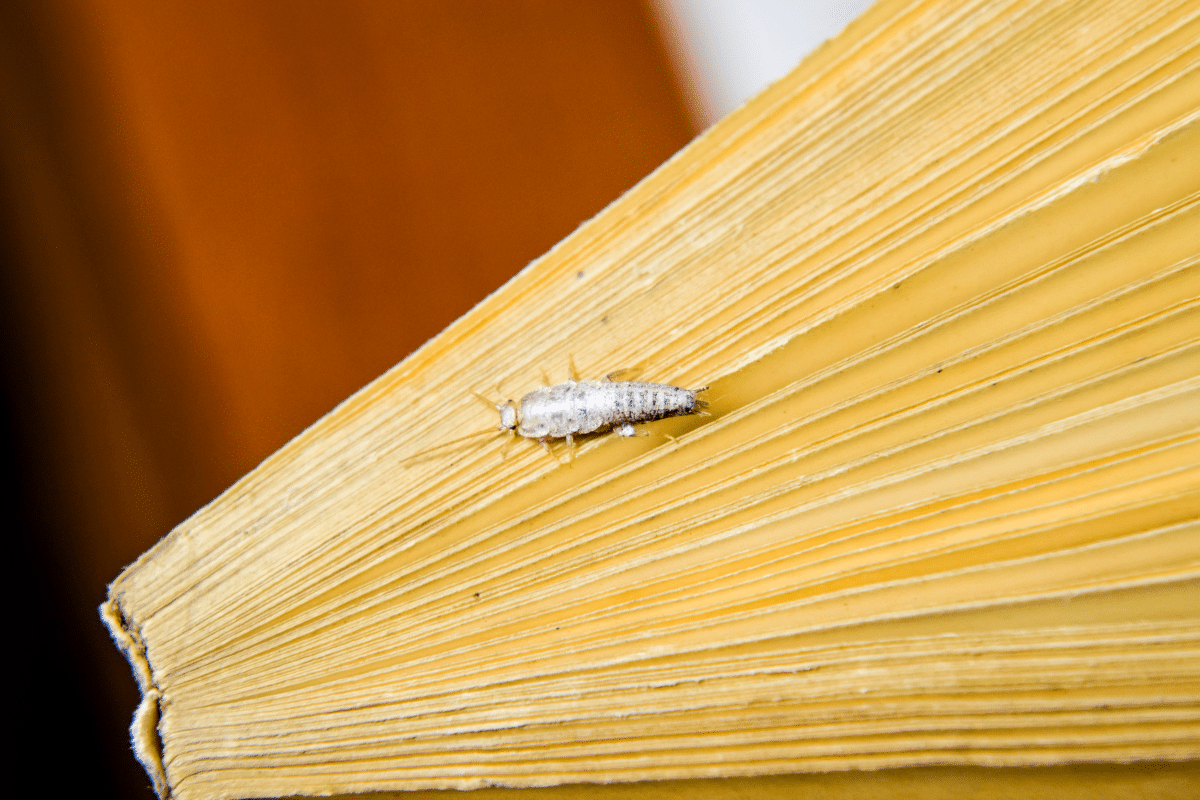
Seeing one occasionally doesn’t mean you’re overrun. But consistent sightings? That’s a clue. Look for:
- Small irregular holes in paper, wallpaper, or clothing
- Yellowish stains on fabrics or paper
- Pepper-like droppings
- Shed skins
- Sightings at night when you turn on the light
If you’re spotting them several times a week, it’s time to move from annoyed to proactive.
The Real Problem: Moisture and Hidden Humidity
This is where most people miss the mark. Silverfish can survive up to a year without food. But they cannot live without moisture. If you remove humidity, you remove their comfort zone.
Before you sprinkle a single powder, do this:
1. Check for Leaks
Look under sinks. Check around toilets. Inspect washing machine hoses. Examine basement walls after rain. Even a slow drip creates a five-star resort for silverfish.
2. Measure Humidity
A simple hygrometer will tell you the truth. You want indoor humidity below 50%, ideally closer to 40–45%.
3. Improve Airflow
Run bathroom fans during and after showers. Leave closet doors slightly open. Avoid storing cardboard directly on basement floors. Use a dehumidifier in damp areas. This step alone often reduces sightings dramatically.
How to Get Rid of Silverfish Naturally
If you prefer a lower-tox approach (and I generally do), start here.
1. Declutter Their Food Source
Replace cardboard storage boxes with plastic bins. Store important papers and photos in sealed containers. Rotate old magazines and donate what you don’t need. Vacuum baseboards and closet floors thoroughly. This removes both food and hiding spots.
2. Try the Glass Jar Trap
This is a simple DIY method. Wrap masking tape around the outside of a small glass jar. Place a small piece of bread or a sprinkle of flour inside. Set the jar upright near baseboards or closets. They can climb up the taped exterior but can’t escape the smooth glass interior.
When to Use Diatomaceous Earth (And How to Do It Safely)

Food-grade diatomaceous earth (DE) is one of the most effective natural tools available. DE is a fine powder made from fossilized algae. When insects crawl through it, it damages their outer coating, causing them to dehydrate.
How to Apply It
Use a small hand duster or spoon. Apply a thin layer along baseboards, under appliances, behind toilets, and under sinks. Leave it undisturbed for several days. More is not better. A light dusting works best.
Safety Notes
Only use food-grade DE. The type used for swimming pools is chemically treated and not appropriate for pest control.
Avoid inhaling the dust. Wear a mask during application. Keep pets and children away while dust is airborne. Wipe up visible excess after treatment. DE is low-toxicity, but it’s still a fine particulate. Respect it.

Do Traps, Boric Acid, or Bait Really Work?
Let’s break this down simply.
- Sticky Traps: Glue traps are good for monitoring. They help you gauge whether the population is shrinking. They won’t solve the root problem.
- Boric Acid: Yes, boric acid works. It’s toxic to insects. But here’s what you need to know. It must be kept away from pets and children. It should never be applied in open, accessible areas. Avoid using it in kitchens or food prep zones. Wear gloves and avoid inhalation. If you use boric acid, apply it in wall voids or deep cracks where exposure risk is minimal. This is a targeted tool… not something to sprinkle casually.
- Store-Bought Baits: Some store-bought baits can help, but many rely on similar active ingredients. They’re typically more useful for roaches than silverfish.
If you prefer minimal chemicals in your home, moisture control plus DE usually wins.
What About Ozone Machines?
You may see ozone generators marketed for odor and pest control.
Here’s the honest truth:
- Ozone can be harmful to lungs.
- It should never be used in occupied spaces.
- It does not address the moisture source.
- It’s not a primary solution for silverfish.
I don’t recommend ozone for this problem. Solve the environment instead.
Should You Call Pest Control?
Call a professional if:
- You’re seeing heavy daytime activity.
- The infestation is widespread across multiple floors.
- You’ve corrected moisture and still see no improvement after several weeks.
- You suspect hidden structural dampness.
A good pest professional will focus on moisture management as much as treatment. If someone proposes heavy chemical fogging without discussing humidity, ask questions. You deserve solutions… not just a bill.
How to Prevent Silverfish from Coming Back
This is where you win for good. Anyone can scatter powder and hope for the best. The real victory comes from changing the conditions that made your home attractive in the first place.
Because once you understand how to get rid of silverfish, prevention becomes simple maintenance.
Your Weekend Silverfish Reset
- Friday evening: Walk through your home with a notepad (or your phone if that’s easier) and look for damp spots, cluttered corners, cardboard stacks, and anything stored directly on basement floors. Peek under sinks. Check around toilets. Notice the air. Does it feel humid? If you need supplies like food-grade diatomaceous earth, a simple hygrometer, or a few plastic storage bins, make the list now.
- Saturday morning: Vacuum along baseboards, inside closets, and under sinks. Pull things away from walls if you can. Declutter old magazines, excess cardboard, and paper piles that have been sitting untouched. Replace cardboard storage with sealed plastic bins where it makes sense. Then set a few simple jar traps in areas where you’ve seen activity. You’re removing food sources and hiding places at the same time.
- Saturday afternoon: Apply a light dusting of food-grade diatomaceous earth in hidden areas behind appliances, under sinks, along baseboards. Keep it thin and out of reach of pets and children. If humidity has been high, start running a dehumidifier and aim to bring moisture levels below 50 percent. Tighten a loose pipe fitting or fix a small drip if you’re able. Even minor moisture corrections make a big difference.
- Sunday: Check your humidity reading again. If it’s coming down, you’re on the right track. Use caulk to seal cracks along baseboards or around plumbing openings where silverfish may be slipping through. Elevate anything stored in basements or closets so it’s not sitting directly on the floor. Small adjustments now prevent repeat problems later.
After that, shift into maintenance mode. A quick weekly glance under sinks and along baseboards is usually enough to stay ahead of things.
Simple Habits That Keep Them Gone
Keep humidity under 50 percent. Store papers and keepsakes in sealed containers. Vacuum along baseboards and closet edges. Skip long-term cardboard storage. Run the fan during and after showers. Check plumbing twice a year, even when nothing seems wrong.
Silverfish don’t thrive in dry, well-managed homes. They thrive in damp, ignored spaces.
And here’s the real payoff: when you control moisture and clutter, you’re not just stopping bugs. You’re protecting books, photos, clothing, and the quiet order of your home.
Helene, and anyone else tired of that late-night silver streak, this is fixable.
You don’t need to panic. You don’t need extreme measures. You need moisture control, a little strategic dusting, and consistent follow-through… the real formula for how to get rid of silverfish once and for all.
Take a focused weekend. Get ahead of it. And the next time you flip on the light, the only thing greeting you should be a quiet, silverfish-free floor.
Question: Be honest… when you turn on the bathroom light at night, are you expecting to see one… or hoping you don’t? Share in the comments below.
EverydayCheapskate™ is reader-supported. We participate in the Amazon Services LLC Associates Program and other affiliate advertising programs, designed to provide a means for us to earn from qualifying purchases, at no cost to you.

More from Everyday Cheapskate
 https://www.everydaycheapskate.com/wp-content/uploads/20261011-Woman-Adjusting-Smart-Home-Device-on-the-Wall-how-to-lower-your-electric-bill.png
800
1200
Mary Hunt
https://www.everydaycheapskate.com/wp-content/uploads/EC-Logo-by-Mary-Hunt-Tagline-Trimmed.png
Mary Hunt2026-10-11 23:01:562026-10-11 23:01:56Stop Chasing Pennies on Your Electric Bill. Do This
https://www.everydaycheapskate.com/wp-content/uploads/20261011-Woman-Adjusting-Smart-Home-Device-on-the-Wall-how-to-lower-your-electric-bill.png
800
1200
Mary Hunt
https://www.everydaycheapskate.com/wp-content/uploads/EC-Logo-by-Mary-Hunt-Tagline-Trimmed.png
Mary Hunt2026-10-11 23:01:562026-10-11 23:01:56Stop Chasing Pennies on Your Electric Bill. Do This https://www.everydaycheapskate.com/wp-content/uploads/20261007-red-present-sitting-in-autumn-leaves-Amazon-Prime-Big-Deal-Days-gifts.png
800
1200
Mary Hunt
https://www.everydaycheapskate.com/wp-content/uploads/EC-Logo-by-Mary-Hunt-Tagline-Trimmed.png
Mary Hunt2026-10-06 23:09:432026-10-06 23:09:43Christmas Shopping in October? These Prime Day Gifts Make Sense
https://www.everydaycheapskate.com/wp-content/uploads/20261007-red-present-sitting-in-autumn-leaves-Amazon-Prime-Big-Deal-Days-gifts.png
800
1200
Mary Hunt
https://www.everydaycheapskate.com/wp-content/uploads/EC-Logo-by-Mary-Hunt-Tagline-Trimmed.png
Mary Hunt2026-10-06 23:09:432026-10-06 23:09:43Christmas Shopping in October? These Prime Day Gifts Make Sense https://www.everydaycheapskate.com/wp-content/uploads/20261006-prime-big-deal-days-have-landed.png
800
1200
Mary Hunt
https://www.everydaycheapskate.com/wp-content/uploads/EC-Logo-by-Mary-Hunt-Tagline-Trimmed.png
Mary Hunt2026-10-05 11:01:432026-10-07 09:02:53EC’s Top Picks from Amazon Prime Big Deal Days 2026
https://www.everydaycheapskate.com/wp-content/uploads/20261006-prime-big-deal-days-have-landed.png
800
1200
Mary Hunt
https://www.everydaycheapskate.com/wp-content/uploads/EC-Logo-by-Mary-Hunt-Tagline-Trimmed.png
Mary Hunt2026-10-05 11:01:432026-10-07 09:02:53EC’s Top Picks from Amazon Prime Big Deal Days 2026 https://www.everydaycheapskate.com/wp-content/uploads/20261004-reduce-healthcare-costs-with-three-habits-healthy-couple-walking-in-autumn-leaves.png
800
1200
Mary Hunt
https://www.everydaycheapskate.com/wp-content/uploads/EC-Logo-by-Mary-Hunt-Tagline-Trimmed.png
Mary Hunt2026-10-04 23:08:572026-10-04 23:09:47How to Reduce Healthcare Costs With 3 Free Daily Habits
https://www.everydaycheapskate.com/wp-content/uploads/20261004-reduce-healthcare-costs-with-three-habits-healthy-couple-walking-in-autumn-leaves.png
800
1200
Mary Hunt
https://www.everydaycheapskate.com/wp-content/uploads/EC-Logo-by-Mary-Hunt-Tagline-Trimmed.png
Mary Hunt2026-10-04 23:08:572026-10-04 23:09:47How to Reduce Healthcare Costs With 3 Free Daily Habits https://www.everydaycheapskate.com/wp-content/uploads/20241004-news-you-can-use-october-everyday-cheapskate-top-news-articles.png
800
1200
Mary Hunt
https://www.everydaycheapskate.com/wp-content/uploads/EC-Logo-by-Mary-Hunt-Tagline-Trimmed.png
Mary Hunt2026-10-04 01:04:052026-10-11 14:34:17News You Can Use • October 2026
https://www.everydaycheapskate.com/wp-content/uploads/20241004-news-you-can-use-october-everyday-cheapskate-top-news-articles.png
800
1200
Mary Hunt
https://www.everydaycheapskate.com/wp-content/uploads/EC-Logo-by-Mary-Hunt-Tagline-Trimmed.png
Mary Hunt2026-10-04 01:04:052026-10-11 14:34:17News You Can Use • October 2026 https://www.everydaycheapskate.com/wp-content/uploads/20261003-woman-hugging-elderly-mother-sandwich-generation-caring-for-aging-parents.png
800
1200
Mary Hunt
https://www.everydaycheapskate.com/wp-content/uploads/EC-Logo-by-Mary-Hunt-Tagline-Trimmed.png
Mary Hunt2026-10-03 10:47:222026-10-03 10:47:25Sandwiched Between Aging Parents and Adult Children
https://www.everydaycheapskate.com/wp-content/uploads/20261003-woman-hugging-elderly-mother-sandwich-generation-caring-for-aging-parents.png
800
1200
Mary Hunt
https://www.everydaycheapskate.com/wp-content/uploads/EC-Logo-by-Mary-Hunt-Tagline-Trimmed.png
Mary Hunt2026-10-03 10:47:222026-10-03 10:47:25Sandwiched Between Aging Parents and Adult Children https://www.everydaycheapskate.com/wp-content/uploads/20260927-impossible-lasagna-pie-recipe-with-wooden-serving-spoon-in-white-casserole-dish.png
800
1200
Mary Hunt
https://www.everydaycheapskate.com/wp-content/uploads/EC-Logo-by-Mary-Hunt-Tagline-Trimmed.png
Mary Hunt2026-09-28 09:38:592026-09-28 22:48:34Impossible Lasagna Pie: All the Flavor, None of the Noodles
https://www.everydaycheapskate.com/wp-content/uploads/20260927-impossible-lasagna-pie-recipe-with-wooden-serving-spoon-in-white-casserole-dish.png
800
1200
Mary Hunt
https://www.everydaycheapskate.com/wp-content/uploads/EC-Logo-by-Mary-Hunt-Tagline-Trimmed.png
Mary Hunt2026-09-28 09:38:592026-09-28 22:48:34Impossible Lasagna Pie: All the Flavor, None of the Noodles https://www.everydaycheapskate.com/wp-content/uploads/20260925-best-inexpensive-coffee-grinders-burr-manual-and-electric.png
800
1200
Mary Hunt
https://www.everydaycheapskate.com/wp-content/uploads/EC-Logo-by-Mary-Hunt-Tagline-Trimmed.png
Mary Hunt2026-09-25 11:06:342026-10-10 15:49:09The Best Coffee Grinder Upgrade That’s Actually Worth It
https://www.everydaycheapskate.com/wp-content/uploads/20260925-best-inexpensive-coffee-grinders-burr-manual-and-electric.png
800
1200
Mary Hunt
https://www.everydaycheapskate.com/wp-content/uploads/EC-Logo-by-Mary-Hunt-Tagline-Trimmed.png
Mary Hunt2026-09-25 11:06:342026-10-10 15:49:09The Best Coffee Grinder Upgrade That’s Actually Worth It https://www.everydaycheapskate.com/wp-content/uploads/20260918-man-and-woman-signing-an-extended-warranty-in-a-car-dealership.png
800
1200
Mary Hunt
https://www.everydaycheapskate.com/wp-content/uploads/EC-Logo-by-Mary-Hunt-Tagline-Trimmed.png
Mary Hunt2026-09-18 15:23:432026-09-18 15:25:43Is an Extended Warranty Ever Worth It? The Truth for 2026
https://www.everydaycheapskate.com/wp-content/uploads/20260918-man-and-woman-signing-an-extended-warranty-in-a-car-dealership.png
800
1200
Mary Hunt
https://www.everydaycheapskate.com/wp-content/uploads/EC-Logo-by-Mary-Hunt-Tagline-Trimmed.png
Mary Hunt2026-09-18 15:23:432026-09-18 15:25:43Is an Extended Warranty Ever Worth It? The Truth for 2026Please keep your comments positive, encouraging, helpful, brief,
and on-topic in keeping with EC Commenting Guidelines
Last update on 2026-10-15 / Affiliate links / Images from Amazon Product Advertising API


I reread this article and I continue to
follow through with your suggestions. Especially using the bathroom fan during and after showers. I see an occasional silverfish and then go back to using the DE. Something I should just continuously use I suppose. Thanks again for ALL your useful information.
I’m hoping I do t see ANYTHING moving but those silverfish give me the creepy crawlies! I try to keep a really dry bathroom usually where I see them. I use DE outside under the bathroom wall. I dry the floor after showers. When I picked up my hooked hanging towel and saw one. That was it. I check everything. Do you suppose my dusting powder that falls on the floor is helpful? Also, they seem to hang around the lightswitches. Whats up with that! Eeeech!