

How to Get Rid of Wasps Safely: 7 Effective Methods to Try

Dealing with wasps can be a challenge, especially with misleading and dangerous DIY hacks circulating online. If you’re wondering how to get rid of wasps safely and effectively, you’re in the right place. This guide covers seven practical and proven methods to eliminate wasps from your space, ensuring your home and yard remain wasp-free without compromising safety.
Have you run into the viral trend making a big splash on TikTok that involves getting rid of wasps at home using gasoline? Our friends over at ServiceMaster Restore confirm that is extremely unsafe, if not really stupid!
“We strongly discourage this particular practice of getting rid of wasps near and around your home as it is extremely unsafe. It’s crucial to be aware that gas fumes from any source can pose a very serious fire hazard.
“While the gasoline hack [making all kinds of noise on TikTok] may seem easy, there are several simple and safe methods to remove wasps, many of which do not involve the use of pesticides or other dangerous, flammable chemicals not meant for the home.”
–Pete Duncanson, Sr. Director of Training & Development at ServiceMaster Restore
While wasps do play a role in nature by controlling other pests, they can quickly become a real headache when they invade your home, garage, or outdoor space. If swatting them isn’t your style and you’re wondering how to get rid of wasps effectively, you’re in luck! There are some simple, effective methods you can use, and you might already have the supplies at home.
Check out these seven easy ways to get rid of wasps and keep them from coming near your home:

1. Use Wasp Traps to Get Rid of Wasps
Wasp traps are a great way to tackle these pests, and you’ve got options. You can buy pre-made traps or even make your own if you’re into DIY projects.
Commercial Wasp Traps

RESCUE! Reusable Yellowjacket Trap, 2-Pack
For those seeking a hassle-free approach on how to get rid of wasps, commercial traps are a solid choice. These traps come with attractants specifically designed to lure wasps inside, where they become trapped. They often use substances that mimic the scents wasps are drawn to, ensuring they effectively reduce the number of pests around your home.

DIY Wasp Traps
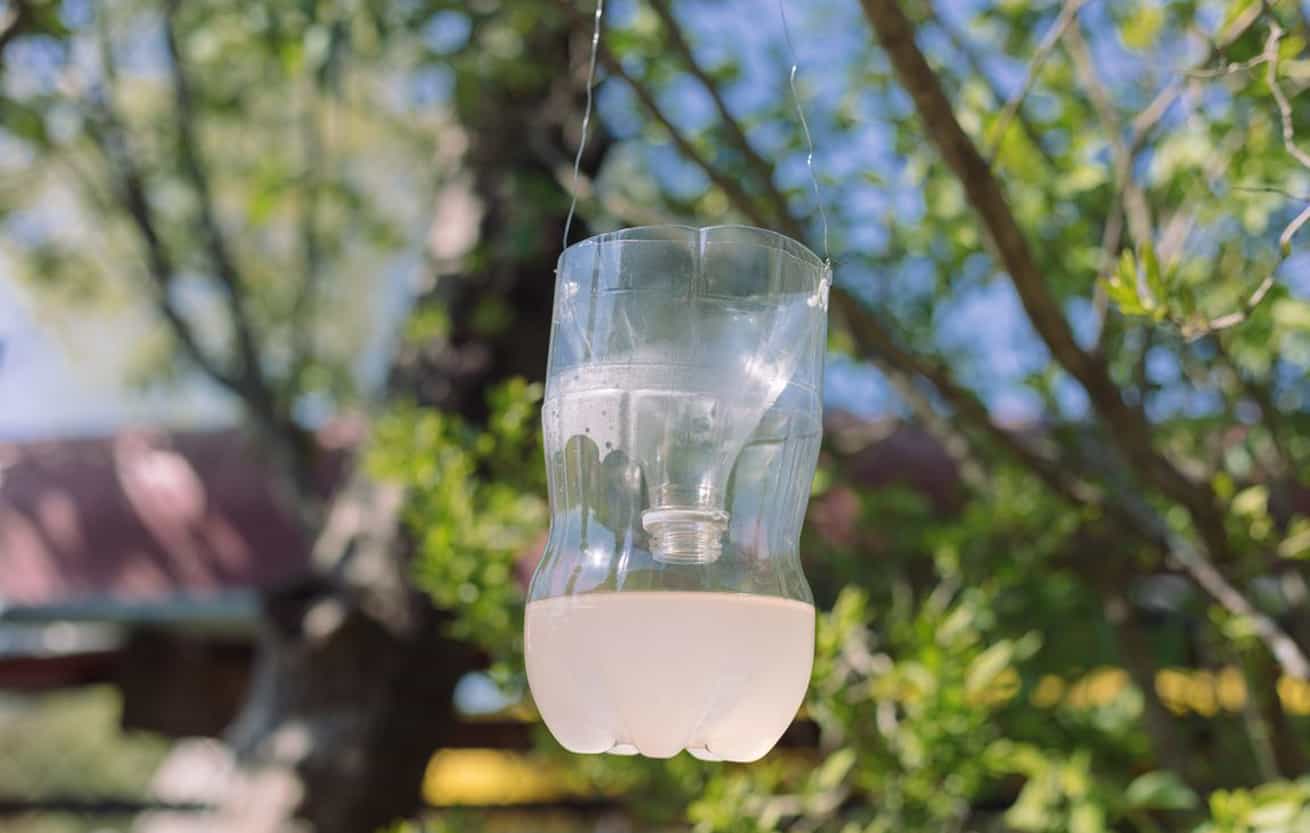
If you prefer a cost-effective solution, making your own wasp trap is simple and nearly free. Here’s how EC Reader Marshall does it: Take an empty plastic bottle, cut off the top just below where it tapers, and invert it into the bottom part of the bottle to create a funnel. For bait, mix 3/4 cup white vinegar, 2 tablespoons sugar, and 1 teaspoon salt, and pour it into the bottle. Place or hang the trap where you’ve seen wasps. The wasps are attracted to the mixture, enter the bottle, and can’t escape. When the trap fills up, just toss it and make a new one.
2. Deter Wasps with Fake Wasp Nests

Fake Wasp Nests, 4-Pack
Want to keep wasps from making themselves at home in your yard? Hanging a fake wasp nest is a surprisingly effective trick! Wasps are territorial and tend to avoid areas where they think another colony is already settled. By placing a decoy nest in your yard, you can trick them into believing the area is occupied, making them less likely to set up their own nest. You can find a variety of these fake nests online.

3. Eliminate Nests with Soapy Water
For a natural and effective way to tackle wasp nests, try using soapy water. Just mix a few tablespoons of dish soap with water in a spray bottle. When you spray this mixture directly onto the nest, the soap disrupts the wasps’ ability to breathe and helps break down the nest itself. It’s a gentle yet powerful method that avoids harsh chemicals, making it a great option for those looking to keep their environment safe and eco-friendly. Just be sure to apply it in the evening or early morning when wasps are less active to minimize the risk of getting stung.
4. Vacuum Smaller Wasps Nests Effectively
Got a smaller wasp nest that’s causing trouble? Use a vacuum with a long attachment to carefully suck up the wasps and their nest. It’s important to use a vacuum with a removable bag or a bagless model to ensure the wasps don’t escape. Once you’ve finished, seal the bag tightly or empty the canister carefully to dispose of the contents. This method can help you manage wasps without resorting to chemicals, but remember to take precautions and wear protective clothing to stay safe during the process.
5. Repel Wasps Using Essential Oils
If you’re looking for a natural method on how to get rid of wasps, essential oils can be surprisingly effective. Wasps dislike the scents of peppermint, lemongrass, and citronella. If you have any of these oils on hand, simply mix a few drops with water in a spray bottle and apply it to areas where wasps tend to gather. This creates an unpleasant environment for them and encourages them to move on. Just remember to reapply the solution periodically, especially after rain or heavy use, to maintain its effectiveness.


6. Apply Wasp Bug Spray Safely

Hot Shot Wasp & Hornet Killer Spray, 2-Pack
When it comes to learning how to get rid of wasps with bug spray, safety is key. Wasp pesticides are readily available at stores like Walmart, Home Depot, or Lowe’s. For best results, carefully follow the label instructions and apply the spray during the evening or early morning when the wasps are less active and more likely to be in the nest. Don’t forget to wear protective clothing—cover as much skin as possible to reduce the risk of stings. This method can be effective for larger nests, but always use it as a last resort and take necessary precautions to ensure your safety.

7. When to Seek Professional Help for Wasp Removal
Handling a wasp nest can be daunting, and if you’re unsure about how to get rid of wasps yourself, it’s perfectly okay to call in the experts. Professional pest control services come equipped with the experience and tools needed to tackle wasp nests safely and efficiently. They’ll assess the situation, remove the nest, and ensure your home is safeguarded against future invasions. If the nest is large, difficult to reach, or you’re simply not up for the task, reaching out to a professional can provide peace of mind and ensure a thorough job.
How Much Does Professional Wasp Extermination Cost?
If you’re considering hiring a professional to handle your wasp problem, it’s helpful to know what to expect in terms of cost. According to This Old House, wasp extermination typically ranges from $100 to $1,300, with an average cost of about $375.
Costs can vary based on factors like the type of wasp, nest location, infestation severity, and treatment type. While DIY methods can be cheaper, professional services offer expertise and equipment that can ensure a safer, more thorough removal, especially for larger or hidden nests.
If you choose to handle the wasp nest yourself, safety should be your top priority. Always dress in long sleeves, pants, gloves, and a hat to minimize the risk of stings. Consider wearing a face shield or protective eyewear for added security. Be mindful of your surroundings, and have an escape plan ready in case things don’t go as planned. Taking these precautions can help protect you while you address the issue.
Question: What’s your go-to method for getting rid of wasps? Share your tips or any interesting stories about wasp control in the comments.
EverydayCheapskate™ is reader-supported. We participate in the Amazon Services LLC Associates Program and other affiliate advertising programs, designed to provide a means for us to earn from qualifying purchases, at no cost to you.

More from Everyday Cheapskate
 https://www.everydaycheapskate.com/wp-content/uploads/20261006-prime-big-deal-days-have-landed.png
800
1200
Mary Hunt
https://www.everydaycheapskate.com/wp-content/uploads/EC-Logo-by-Mary-Hunt-Tagline-Trimmed.png
Mary Hunt2026-10-05 11:01:432026-10-07 09:02:53EC’s Top Picks from Amazon Prime Big Deal Days 2026
https://www.everydaycheapskate.com/wp-content/uploads/20261006-prime-big-deal-days-have-landed.png
800
1200
Mary Hunt
https://www.everydaycheapskate.com/wp-content/uploads/EC-Logo-by-Mary-Hunt-Tagline-Trimmed.png
Mary Hunt2026-10-05 11:01:432026-10-07 09:02:53EC’s Top Picks from Amazon Prime Big Deal Days 2026 https://www.everydaycheapskate.com/wp-content/uploads/20261004-reduce-healthcare-costs-with-three-habits-healthy-couple-walking-in-autumn-leaves.png
800
1200
Mary Hunt
https://www.everydaycheapskate.com/wp-content/uploads/EC-Logo-by-Mary-Hunt-Tagline-Trimmed.png
Mary Hunt2026-10-04 23:08:572026-10-04 23:09:47How to Reduce Healthcare Costs With 3 Free Daily Habits
https://www.everydaycheapskate.com/wp-content/uploads/20261004-reduce-healthcare-costs-with-three-habits-healthy-couple-walking-in-autumn-leaves.png
800
1200
Mary Hunt
https://www.everydaycheapskate.com/wp-content/uploads/EC-Logo-by-Mary-Hunt-Tagline-Trimmed.png
Mary Hunt2026-10-04 23:08:572026-10-04 23:09:47How to Reduce Healthcare Costs With 3 Free Daily Habits https://www.everydaycheapskate.com/wp-content/uploads/20241004-news-you-can-use-october-everyday-cheapskate-top-news-articles.png
800
1200
Mary Hunt
https://www.everydaycheapskate.com/wp-content/uploads/EC-Logo-by-Mary-Hunt-Tagline-Trimmed.png
Mary Hunt2026-10-04 01:04:052026-10-11 14:34:17News You Can Use • October 2026
https://www.everydaycheapskate.com/wp-content/uploads/20241004-news-you-can-use-october-everyday-cheapskate-top-news-articles.png
800
1200
Mary Hunt
https://www.everydaycheapskate.com/wp-content/uploads/EC-Logo-by-Mary-Hunt-Tagline-Trimmed.png
Mary Hunt2026-10-04 01:04:052026-10-11 14:34:17News You Can Use • October 2026 https://www.everydaycheapskate.com/wp-content/uploads/20261003-woman-hugging-elderly-mother-sandwich-generation-caring-for-aging-parents.png
800
1200
Mary Hunt
https://www.everydaycheapskate.com/wp-content/uploads/EC-Logo-by-Mary-Hunt-Tagline-Trimmed.png
Mary Hunt2026-10-03 10:47:222026-10-03 10:47:25Sandwiched Between Aging Parents and Adult Children
https://www.everydaycheapskate.com/wp-content/uploads/20261003-woman-hugging-elderly-mother-sandwich-generation-caring-for-aging-parents.png
800
1200
Mary Hunt
https://www.everydaycheapskate.com/wp-content/uploads/EC-Logo-by-Mary-Hunt-Tagline-Trimmed.png
Mary Hunt2026-10-03 10:47:222026-10-03 10:47:25Sandwiched Between Aging Parents and Adult Children https://www.everydaycheapskate.com/wp-content/uploads/20260927-impossible-lasagna-pie-recipe-with-wooden-serving-spoon-in-white-casserole-dish.png
800
1200
Mary Hunt
https://www.everydaycheapskate.com/wp-content/uploads/EC-Logo-by-Mary-Hunt-Tagline-Trimmed.png
Mary Hunt2026-09-28 09:38:592026-09-28 22:48:34Impossible Lasagna Pie: All the Flavor, None of the Noodles
https://www.everydaycheapskate.com/wp-content/uploads/20260927-impossible-lasagna-pie-recipe-with-wooden-serving-spoon-in-white-casserole-dish.png
800
1200
Mary Hunt
https://www.everydaycheapskate.com/wp-content/uploads/EC-Logo-by-Mary-Hunt-Tagline-Trimmed.png
Mary Hunt2026-09-28 09:38:592026-09-28 22:48:34Impossible Lasagna Pie: All the Flavor, None of the Noodles https://www.everydaycheapskate.com/wp-content/uploads/20260925-best-inexpensive-coffee-grinders-burr-manual-and-electric.png
800
1200
Mary Hunt
https://www.everydaycheapskate.com/wp-content/uploads/EC-Logo-by-Mary-Hunt-Tagline-Trimmed.png
Mary Hunt2026-09-25 11:06:342026-10-10 15:49:09The Best Coffee Grinder Upgrade That’s Actually Worth It
https://www.everydaycheapskate.com/wp-content/uploads/20260925-best-inexpensive-coffee-grinders-burr-manual-and-electric.png
800
1200
Mary Hunt
https://www.everydaycheapskate.com/wp-content/uploads/EC-Logo-by-Mary-Hunt-Tagline-Trimmed.png
Mary Hunt2026-09-25 11:06:342026-10-10 15:49:09The Best Coffee Grinder Upgrade That’s Actually Worth It https://www.everydaycheapskate.com/wp-content/uploads/20260918-man-and-woman-signing-an-extended-warranty-in-a-car-dealership.png
800
1200
Mary Hunt
https://www.everydaycheapskate.com/wp-content/uploads/EC-Logo-by-Mary-Hunt-Tagline-Trimmed.png
Mary Hunt2026-09-18 15:23:432026-09-18 15:25:43Is an Extended Warranty Ever Worth It? The Truth for 2026
https://www.everydaycheapskate.com/wp-content/uploads/20260918-man-and-woman-signing-an-extended-warranty-in-a-car-dealership.png
800
1200
Mary Hunt
https://www.everydaycheapskate.com/wp-content/uploads/EC-Logo-by-Mary-Hunt-Tagline-Trimmed.png
Mary Hunt2026-09-18 15:23:432026-09-18 15:25:43Is an Extended Warranty Ever Worth It? The Truth for 2026 https://www.everydaycheapskate.com/wp-content/uploads/20260917-fall-cleaning-checklist.png
800
1200
Mary Hunt
https://www.everydaycheapskate.com/wp-content/uploads/EC-Logo-by-Mary-Hunt-Tagline-Trimmed.png
Mary Hunt2026-09-17 17:11:012026-09-28 22:48:45Fall Cleaning Checklist: 15 Overlooked Spots to Clean
https://www.everydaycheapskate.com/wp-content/uploads/20260917-fall-cleaning-checklist.png
800
1200
Mary Hunt
https://www.everydaycheapskate.com/wp-content/uploads/EC-Logo-by-Mary-Hunt-Tagline-Trimmed.png
Mary Hunt2026-09-17 17:11:012026-09-28 22:48:45Fall Cleaning Checklist: 15 Overlooked Spots to Clean https://www.everydaycheapskate.com/wp-content/uploads/20260913-how-to-winterize-your-home-snowy-driveway-suburban-home.png
800
1200
Mary Hunt
https://www.everydaycheapskate.com/wp-content/uploads/EC-Logo-by-Mary-Hunt-Tagline-Trimmed.png
Mary Hunt2026-09-13 15:32:142026-09-28 22:48:55The Complete Guide to Winterizing Your Home This Fall
https://www.everydaycheapskate.com/wp-content/uploads/20260913-how-to-winterize-your-home-snowy-driveway-suburban-home.png
800
1200
Mary Hunt
https://www.everydaycheapskate.com/wp-content/uploads/EC-Logo-by-Mary-Hunt-Tagline-Trimmed.png
Mary Hunt2026-09-13 15:32:142026-09-28 22:48:55The Complete Guide to Winterizing Your Home This FallPlease keep your comments positive, encouraging, helpful, brief,
and on-topic in keeping with EC Commenting Guidelines
Last update on 2026-10-11 / Affiliate links / Images from Amazon Product Advertising API


two out of three people in my house are deathly allergic to wasps. i don’t take chances. i bought a can of wasp spray and sprayed the living daylights out of the nest i could reach. sadly, there is another nest behind the siding. there was a third in the ceiling on the porch. i stuffed that opening with steel wool after aiming a can of spray into the opening. this year i’m making a ‘nest’ out of a balloon and paper mache. i’d rather not use sprays if i can avoid it, because i don’t want to poison any birds. i like your diy wasp traps and plan on doing that this year, too. i hope to make this a poison free year.
Brake parts cleaner will bring them to their knees.
For the past 5 years i have used medium size brown paper bags stuffed with newspaper or plastic bags and hung on our deck. The wasps seem to be fooled by this and amazingly they last through rain and storms.
They don’t help with ground wasps, which make a hole and then move in by th dozens. We’ve tried all kinds of things on their nests, but they are survivors. But every fall they get dug up, destroyed and eaten by a wandering skunk!
I don’t know about where you live, but here in northern California the black ground wasps are not a threat to anyone. They come out of there hole when we water the lawn but keep their distance and have never stung anyone I know.
We had yellow jackets going into the soffit by the garage door. Also, under the front porch behind the trellis. We called an exterminator to get rid of them. In doing some research on how to deter the yellow jackets from coming back, I found they do not like the smell of spearmint. So we planted some spearmint right by the garage door and also in the flower bed in front of the porch. So far this has worked to keep them away from the house. They also do not like the smell of the herb thyme so we also planted some thyme. The rabbits also do not like the smell of either so we do not have to worry about them eating those plants. Plus I can go out and pick some spearmint or thyme when I need them for a recipe.
Thank you. Your remedies really help. Keep up this awesome work.
Just thought I would share another way I got rid of wasps in my yard. We had two wasp nests in the ground. In the late afternoon or early evening after the wasps were in their nests, I hurriedly put an upended plastic bucket over the nests/holes in the ground and left them in place for awhile. Voila, I have not had wasps since!