

Poor Man’s Prime Rib: A Chuck Roast Worth Serving

Prime rib is wonderful. The price tag? Not so much. That’s what makes the idea of turning an ordinary chuck roast into something resembling prime rib so appealing. Imagine serving a beautiful beef roast, sliced thin and arranged on a platter, without having to recover financially from the trip to the meat counter.

I’ve been calling this poor man’s prime rib for years. And while I’m not about to tell you that chuck roast and prime rib are the same thing (they most certainly are not), a good chuck eye roast, properly seasoned and carefully cooked, can make a mighty fine substitute.
There are a few things you need to know before you get started, beginning with which cut of beef to buy.
First, let’s talk about that chuck roast
This matters more than you might think.
The chuck section of the cow gives us several different cuts of beef. Some are particularly good for pot roast, where hours of slow, moist cooking turn tough meat into something you can pull apart with a fork.
But that’s not what we’re after here.
For this recipe, look for a boneless chuck eye roast, sometimes labeled America’s Beef Roast or chuck center roast. It has plenty of beefy flavor and is well suited to oven roasting.
You may also see a cross-rib roast, sometimes sold as an English roast. That’s another cut from the chuck area, but it isn’t identical to chuck eye. Ask your butcher whether the particular roast is suitable for uncovered roasting and thin slicing.
And that familiar flat chuck pot roast with thick seams of connective tissue? Save it for the slow cooker or Dutch oven.
No amount of wishful thinking will turn every cut of chuck into prime rib.
One more thing about the price: Chuck roast isn’t necessarily the bargain it used to be. I’ve heard from readers who are downright astonished by what their grocery stores are charging. Compare prices with other beef roasts before you buy, and think about how many servings you’ll actually get. If chuck isn’t a good deal this week, there’s no prize for buying it anyway.
The secret is in the salt (and a little patience)
This is where the preparation begins.
Season the roast with kosher salt, then refrigerate it overnight, preferably for 24 hours before cooking. It’s a process called dry-brining, although that sounds considerably more complicated than what we’re actually doing.
The salt draws some moisture to the surface, dissolves in it, and gradually makes its way back into the meat. The result is beef that’s more evenly seasoned and better able to retain moisture during cooking.
Does salt magically dissolve all the tough connective tissue in a chuck roast? No. That’s why choosing the right cut matters.
There’s also no reason to bury the poor thing under a mountain of salt. A measured amount will do the job, and kosher salt brands aren’t all equally salty by volume.
For a 3-pound roast, about 9 to 10 grams of salt is a reasonable starting point. That’s approximately 1 tablespoon of Diamond Crystal kosher salt or 2 teaspoons of Morton kosher salt.
You can add black pepper, garlic powder, or another favorite seasoning if you like. Personally, I think a good beef roast needs very little fuss.
How long does a 3-pound chuck roast take?
Now we come to a question I’ve heard before.
Years ago, faithful reader Mary B. wrote to me just before having company. She was planning to prepare a 3-pound chuck roast using my original method and wanted to know how long it would take.
Dear Mary:
Having guests tomorrow so hope you can answer quickly! I am planning to make a chuck roast using the method you describe in your article, but wondering if you can give me a ballpark figure on how long this may take for a 3-pound chuck roast? I need to make the rest of the meal to finish at about the same time! Roasting it at 250°F, will it take approximately two hours? Four hours?
Thank you for your wonderful newsletter, posts and columns. I am a faithful reader!
—Mary B.
A perfectly sensible question. Nobody wants to serve mashed potatoes at six and discover the roast won’t be ready until eight.
For a 3-pound roast cooked at 250°F, I generally allow approximately 2 to 2½ hours, plus another 20 minutes for resting. But that’s a planning estimate, not a promise. The cut, thickness, shape, and actual oven temperature can all make a difference. A roast may need considerably longer to reach its target internal temperature.
And please, use a meat thermometer to check the roast and an oven thermometer to verify the oven temperature. Your oven’s dial may have an opinion about its temperature, but that doesn’t mean it’s correct.
What you’ll need for Poor Man’s Prime Rib

Nothing especially fancy, although two thermometers will make your life considerably easier.
- Boneless chuck eye roast: About 3 pounds, preferably with good marbling and a reasonably uniform shape.
- Kosher salt: For dry-brining and seasoning the beef.
- Black pepper and garlic powder: Optional, but nice if you enjoy a little extra seasoning.
- Cotton kitchen twine: Useful for tying an uneven roast into a compact shape so it cooks more evenly.
- Plastic wrap: For wrapping the seasoned roast during its overnight stay in the refrigerator.
- Roasting pan: A shallow pan with a rack works well. No lid necessary.
- Oven thermometer: To confirm that your oven is actually holding at 250°F.
- Meat thermometer: An oven-safe leave-in probe is especially convenient because you can monitor the roast without repeatedly opening the oven door.
- Aluminum foil: For tenting the roast while it rests.
If you already have a reliable instant-read meat thermometer, you can use that instead of buying another gadget. Just remember that checking the meat requires opening the oven, so try not to do it every few minutes.



How to make Poor Man’s Prime Rib
The preparation is simple. Most of the time is spent waiting for the salt to do its work and the roast to cook.
1. Tie it up and season
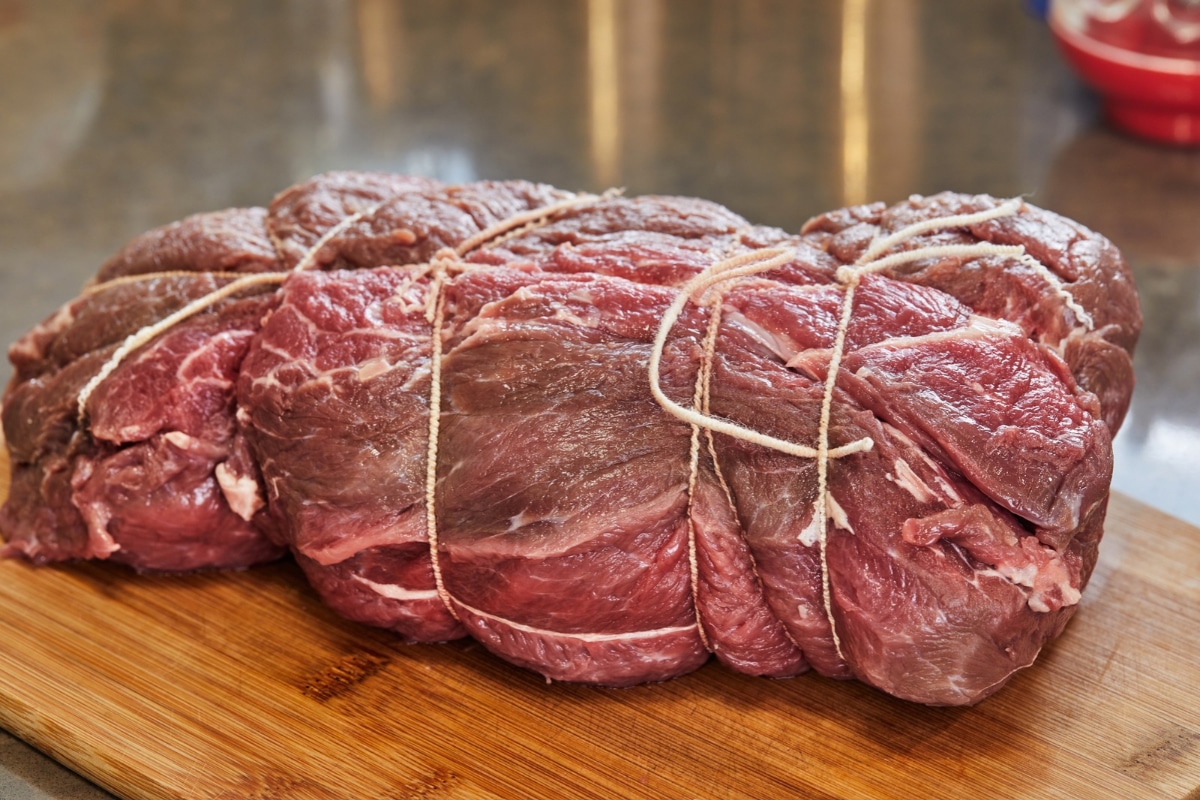
If the roast is unevenly shaped, tie it with cotton kitchen twine to make it more compact. This helps it cook more uniformly and hold together when it’s time to carve.
Rub the kosher salt over every surface of the roast. Add black pepper or garlic powder if you like.
Don’t be shy about seasoning, but don’t confuse generous with excessive. More salt isn’t necessarily better.
2. Wrap it and refrigerate
Wrap the seasoned roast tightly in plastic wrap and place it on a tray in the refrigerator for 12 to 24 hours. I prefer to give it the full 24 hours when possible.
This is the beauty of preparing a roast for company. You can get an important part of dinner out of the way the day before anyone shows up.
3. Roast low and slow
Preheat your oven to 250°F, using an oven thermometer to verify the temperature.
Unwrap the roast, pat the surface dry, and place it on a rack in a shallow roasting pan, uncovered. Insert an ovenproof meat thermometer into the thickest part, with the tip centered in the meat.
Now comes the part where patience pays off.
Let the roast cook gently, keeping an eye on the internal temperature rather than opening the oven every 15 minutes to see how things are coming along.
For a 3-pound roast, plan on approximately 2 to 2½ hours, but don’t assume it will be finished on schedule. The shape and thickness of the meat can make a substantial difference.
The USDA recommends an internal temperature of at least 145°F for whole beef roasts, measured before removing them from the oven, followed by a minimum three-minute rest. It also recommends an oven temperature of at least 325°F for home roasting. This traditional 250°F method differs from that guidance.
Whatever cooking method you choose, pay attention to the thermometer, not just the clock.
4. Want a beautifully browned crust? (optional)
Low-temperature roasting doesn’t always produce the deeply browned exterior you might expect from a prime rib roast.
If you’d like more color, you can give the roast a quick sear in a very hot skillet or under the broiler before resting it. Watch it closely and monitor the internal temperature so you don’t overcook the meat. Remember that searing will continue to raise the temperature inside the roast.
This is entirely optional. There’s nothing wrong with skipping the sear and moving straight to the resting step.
5. Let it rest for 20 minutes
Once the roast is finished, transfer it to a cutting board and cover it loosely with aluminum foil. Let it rest for 20 minutes before carving.
I know. Twenty minutes can feel like an eternity when dinner is ready and everybody’s hungry. But give that roast a chance to rest.
Resting allows the juices to settle so more of that wonderful beefy moisture stays in the meat instead of running all over your cutting board. The internal temperature may rise a little more during this time.
If you’ve seared the roast, a loose foil tent will also help preserve that browned exterior.
6. Slice thinly against the grain
Remove the kitchen twine and look for the direction the muscle fibers run through the meat. Slice across those fibers rather than along them.
Keep the slices fairly thin. This is especially important with a less-tender cut like chuck.
Arrange everything on a platter, spoon over any collected juices, and bring it to the table.
Not prime rib. But a very respectable roast beef dinner.
Wondering what to serve alongside it? My make-ahead mashed potatoes and gravy will take some of the last-minute scrambling out of dinner.

Poor Man’s Prime Rib: Questions worth answering
Will chuck roast really taste like prime rib?
A properly prepared chuck eye roast can deliver wonderful beef flavor and a beautiful roast beef presentation. But prime rib comes from a naturally more tender part of the animal, so don’t expect identical texture.
Think of this as a delicious alternative, not an identical replacement.
Can I use an ordinary chuck pot roast?
You can roast different cuts of chuck, but they won’t all give you the same result. A conventional chuck pot roast often contains more connective tissue and generally benefits from long, moist cooking.
For the sliceable roast we’re after here, I recommend boneless chuck eye.
Got a traditional chuck pot roast instead? Don’t return it! Make my slow cooker pot roast with gravy and let that slow, moist heat do its thing.
Why did my chuck roast turn out tough?
Start by checking the cut you purchased. A roast intended for braising may remain chewy when cooked to a sliceable doneness.
Slicing against the grain also matters. Cutting with the grain leaves long muscle fibers that can make even a nicely cooked roast harder to chew.
And remember, salt improves seasoning and moisture retention. It doesn’t turn a tough pot roast into tender prime rib overnight.
Should I cover the roast while it cooks?
Not for this method. Roast it uncovered so the beef isn’t stewing in its own juices.
Save the aluminum foil for the resting period after cooking.
Can I cook two chuck roasts at the same time?
Yes, provided you leave enough room for heat to circulate around them.
Use a thermometer to check each roast individually. Even two roasts of identical weight may finish at different times.
Can I skip the overnight salt rub?
You can season the roast shortly before cooking, but the salt won’t have the same opportunity to work its way into the meat.
Even 12 hours in the refrigerator is helpful. If you can manage 24, all the better.
Whatever you do, don’t compensate for a shorter wait by adding twice as much salt.
How should I store leftover roast beef?
Refrigerate leftovers within two hours of cooking in shallow, covered containers. Use refrigerated leftovers within three to four days, or freeze them for longer storage.
And if you happen to have leftover slices, you’re already halfway to my 15-minute French dip sandwiches. That’s tomorrow’s lunch taken care of.

Poor Man's Prime Rib Chuck Roast
Ingredients
- 3 pound boneless chuck eye roast
- 9 to 10 grams kosher salt approximately 1 tablespoon Diamond Crystal or 2 teaspoons Morton
- 1 teaspoon freshly ground black pepper optional
- 1 teaspoon garlic powder optional
Instructions
- Season: Tie the roast with cotton kitchen twine if necessary to create a compact, even shape. Rub kosher salt over all sides. Add black pepper or garlic powder if desired.
- Refrigerate: Wrap the seasoned roast tightly in plastic wrap. Place it on a tray and refrigerate for 12 to 24 hours, preferably the full 24 hours.
- Preheat: Set the oven to 250°F and verify the temperature with an oven thermometer. Unwrap the roast, pat it dry, and place it on a rack in a shallow roasting pan, uncovered.
- Roast: Insert an ovenproof meat thermometer into the thickest part of the roast, making sure the tip is centered. Roast uncovered, without adding water. Allow approximately 2 to 2½ hours for a 3-pound roast, but continue cooking as needed to reach the intended internal temperature. USDA recommends at least 145°F for whole beef roasts, with a minimum three-minute rest, and an oven temperature of at least 325°F for home roasting. This traditional 250°F method differs from that guidance.
- Sear (Optional): For a more deeply browned exterior, briefly sear the roast in a very hot skillet or under the broiler. Monitor the internal temperature, as searing will cook the roast further.
- Rest: Transfer the roast to a cutting board and tent loosely with aluminum foil. Let rest for 20 minutes before carving.
- Slice: Remove the twine and carve thinly against the grain. Serve with any collected juices.
Notes
Nutrition
A Fine Dinner Without the Fancy Price
Remember Mary B., who was trying to get her roast and the rest of dinner ready for company?
She wrote back afterward:
Thanks again for your help on the prep for the meat. It turned out fabulous! I will definitely use this method again and again. And thanks for your column. I have read it for years and love my daily newsletters from Everyday Cheapskate!
—Mary B.
Her note came after using my original recipe, and it still makes me smile.
There’s something especially satisfying about serving a meal that feels like an occasion without spending money as though every dinner guest were royalty.
And Mary B., should that dinner invitation ever include me, I’ll bring dessert.
Question: What’s your favorite inexpensive meal that looks like you spent a fortune? Tell us in the comments. I’m always happy to add another idea to my collection.
EverydayCheapskate™ is reader-supported. We participate in the Amazon Services LLC Associates Program and other affiliate advertising programs, designed to provide a means for us to earn from qualifying purchases, at no cost to you.

More from Everyday Cheapskate
 https://www.everydaycheapskate.com/wp-content/uploads/20261121-Thanksgiving-turkey-in-a-home-kitchen-ready-to-be-timed-using-a-one-oven-Thanksgiving-cooking-schedule.jpg
800
1200
Mary Hunt
https://www.everydaycheapskate.com/wp-content/uploads/EC-Logo-by-Mary-Hunt-Tagline-Trimmed.png
Mary Hunt2026-11-21 11:49:402026-11-21 11:49:40The Thanksgiving Oven Schedule: How to Get Everything Hot at Once
 https://www.everydaycheapskate.com/wp-content/uploads/20261116-Assortment-of-homemade-Christmas-cookies-arranged-on-a-table-for-a-holiday-cookie-exchange-party.jpg
800
1200
Mary Hunt
https://www.everydaycheapskate.com/wp-content/uploads/EC-Logo-by-Mary-Hunt-Tagline-Trimmed.png
Mary Hunt2026-11-17 10:32:042026-11-17 10:32:04How to Host a Cookie Exchange Party Without the Fuss
 https://www.everydaycheapskate.com/wp-content/uploads/20261113-everyday-cheapskate-holiday-gift-guide-2026-for-young-adults-and-college-students-him-her.jpg
800
1200
Mary Hunt
https://www.everydaycheapskate.com/wp-content/uploads/EC-Logo-by-Mary-Hunt-Tagline-Trimmed.png
Mary Hunt2026-11-14 17:40:592026-11-16 20:45:30Best Christmas Gifts for College Students & Young Adults 2026
 https://www.everydaycheapskate.com/wp-content/uploads/20261113-everyday-cheapskate-holiday-gift-guide-2026-for-teachers-instructors-him-her-principal-school.jpg
800
1200
Mary Hunt
https://www.everydaycheapskate.com/wp-content/uploads/EC-Logo-by-Mary-Hunt-Tagline-Trimmed.png
Mary Hunt2026-11-13 18:29:492026-11-13 18:31:50Best Christmas Gifts for Teachers 2026: What They Truly Want
 https://www.everydaycheapskate.com/wp-content/uploads/20261112-everyday-cheapskate-holiday-gift-guide-2026-for-homechefs-foodies-cooks-food-lovers.jpg
800
1200
Mary Hunt
https://www.everydaycheapskate.com/wp-content/uploads/EC-Logo-by-Mary-Hunt-Tagline-Trimmed.png
Mary Hunt2026-11-12 15:31:372026-11-12 15:37:52Best Christmas Gifts for Foodies & Home Cooks in 2026
 https://www.everydaycheapskate.com/wp-content/uploads/20261110-everyday-cheapskate-holiday-gift-guide-2026-for-grandparents-grandma-grandpa-seniors-him-her.jpg
800
1200
Mary Hunt
https://www.everydaycheapskate.com/wp-content/uploads/EC-Logo-by-Mary-Hunt-Tagline-Trimmed.png
Mary Hunt2026-11-11 15:17:182026-11-11 15:19:29Best Christmas Gifts for Grandparents 2026: Thoughtful Ideas
 https://www.everydaycheapskate.com/wp-content/uploads/20261110-everyday-cheapskate-holiday-gift-guide-2026-for-teens-boys-girls.jpg
800
1200
Mary Hunt
https://www.everydaycheapskate.com/wp-content/uploads/EC-Logo-by-Mary-Hunt-Tagline-Trimmed.png
Mary Hunt2026-11-10 11:23:432026-11-11 15:29:57Shopping for Teens? These Christmas Gifts Get It Right
 https://www.everydaycheapskate.com/wp-content/uploads/20261108-everyday-cheapskate-holiday-gift-guide-2026-for-kids-toddlers-children-tweens.jpg
800
1200
Mary Hunt
https://www.everydaycheapskate.com/wp-content/uploads/EC-Logo-by-Mary-Hunt-Tagline-Trimmed.png
Mary Hunt2026-11-08 18:27:222026-11-08 18:29:13Best Christmas Gifts for Kids 2026: Fun for Every Age
 https://www.everydaycheapskate.com/wp-content/uploads/20261108-everyday-cheapskate-holiday-gift-guide-2026-for-women-her-mom-grandma-sister-woman.jpg
800
1200
Mary Hunt
https://www.everydaycheapskate.com/wp-content/uploads/EC-Logo-by-Mary-Hunt-Tagline-Trimmed.png
Mary Hunt2026-11-08 10:31:212026-11-08 10:35:39Best Christmas Gifts for Women 2026: Thoughtful Finds
Please keep your comments positive, encouraging, helpful, brief,
and on-topic in keeping with EC Commenting Guidelines
Last update on 2026-11-23 / Affiliate links / Images from Amazon Product Advertising API


Perfect. I used Kosher salt, but I used a lot more, so to crust the entire roast. After coming to room temp, after 36 hours, I unwrapped and brushed all the salt off prior to roasting. Not too salty this way. Unfortunately the price of chuck roast here, on sale, is $11.99 lb. It still is a good value. NY steak is $24.99 lb, rib eye steak is $27.99, Filet is $41.99, chuck burger is $8.58lb.
Mary, at $7.00 to $9.00 a pound, even at Walmart, chuck is not affordable. :(. I’d love to be able to eat beef again, but…
Hi Cate! I hear you and you’re absolutely right. Chuck roast prices have crept up, and at $7 to $9 a pound, it doesn’t feel like the budget buy it once was. That said, in the world of beef, it’s still one of the more affordable options when you compare it to ribeye ($12–$15/lb) or filet mignon (around $20/lb).
Compared to chicken or pork? Chuck definitely costs more. But if you’re craving the taste and texture of a fancy roast without paying premium steak prices, this method can still stretch your dollar a bit farther. One roast can go a long way, especially with leftovers.
Thanks for chiming in. It’s a tough time for meat lovers on a budget, and you’re not alone.
Hi Mary! This sounds delicious and frugal. We have a large family. Can two roasts be cooked at the same time? Would I need two leave in thermometers?
Also, smoking is slow and steady… could this be cooked in a smoker as well?
Thanks for always being my “go-to” for information and recipes!
yes, you could do two roasts as long as there is room for enough air circulation between the roasts. You’ll want to use two thermometers as hitting the correct temp is the key. As for smoking, I’ve never tried it but I dont see why not. If you give it a try, let us know how it turns out. Enjoy!
I actually grabbed two at 2.5 lbs and I’m gonna tie them together into one more uniform shape for a large dinner. Will report back. It will also give me the opportunity to season the “inside”
Sodium: 4576mg
WOW Mary, not sure I can use this brine due to the sodium content!
Do we use regular table salt or kosher salt?
Either! Whatever you have on hand 🙂
Recipe sounds great. However, any Chuck Roast I’ve ever seen is flat, so not sure how to tie it.
There are tutorials with photos online to show you how to use butcher’s twine to tie up any cut of roast including a chuck roast.