

Easy St. Patrick’s Day Corned Beef and Cabbage Recipe


Every year when St. Patrick’s Day rolls around, I start craving one thing: a big pot of corned beef and cabbage quietly simmering on the stove. This classic St. Patrick’s Day dinner looks impressive but is surprisingly simple to make. With just a few basic ingredients and a little patience, you’ll have tender corned beef, hearty potatoes, sweet carrots, and perfectly cooked cabbage ready to serve. It’s budget-friendly comfort food that turns an ordinary evening into a celebration.

Corned beef and cabbage has become one of the most recognizable St. Patrick’s Day food traditions in the United States.
But interestingly enough, the dish isn’t actually an old Irish tradition. It’s more of an Irish-American story… one shaped by practicality, affordability, and a little creativity in the kitchen.
The beauty of this meal is its simplicity. A single pot holds everything: flavorful beef, tender vegetables, and a broth that tastes like it simmered all day, because it did.
And if you like meals that practically cook themselves, this one checks a lot of boxes.
☑ It feeds a crowd without much effort
☑ Most of the cooking time is completely hands-off
☑ The ingredients are inexpensive and easy to find
☑ Leftovers are fantastic the next day
Now, that’s my kind of holiday cooking.
A Little History Behind Corned Beef and Cabbage
The name corned beef actually comes from the large grains of salt called “corns” used to cure the meat.
Ireland became known for exporting corned beef in the 1600s after cattle farming expanded under British landowners. Ironically, most Irish families rarely ate it themselves because beef was expensive. Instead, many households relied on salted pork along with hearty staples like potatoes.
Things changed when Irish immigrants arrived in the United States in the 1800s. Beef brisket was far more affordable here, especially in cities where many immigrant families settled. It quickly replaced the pork they had traditionally used.
Cabbage was cheap, nutritious, and widely available, making it the perfect companion for the simmering pot of beef.
Over time, the combination became a dependable meal for working families and eventually a centerpiece for St. Patrick’s Day celebrations.
In fact, according to market data from the United States Department of Agriculture, St. Patrick’s Day has historically been the biggest promotional period of the year for beef brisket and fresh cabbage.
A St. Patrick’s Day Tradition I Started at Work
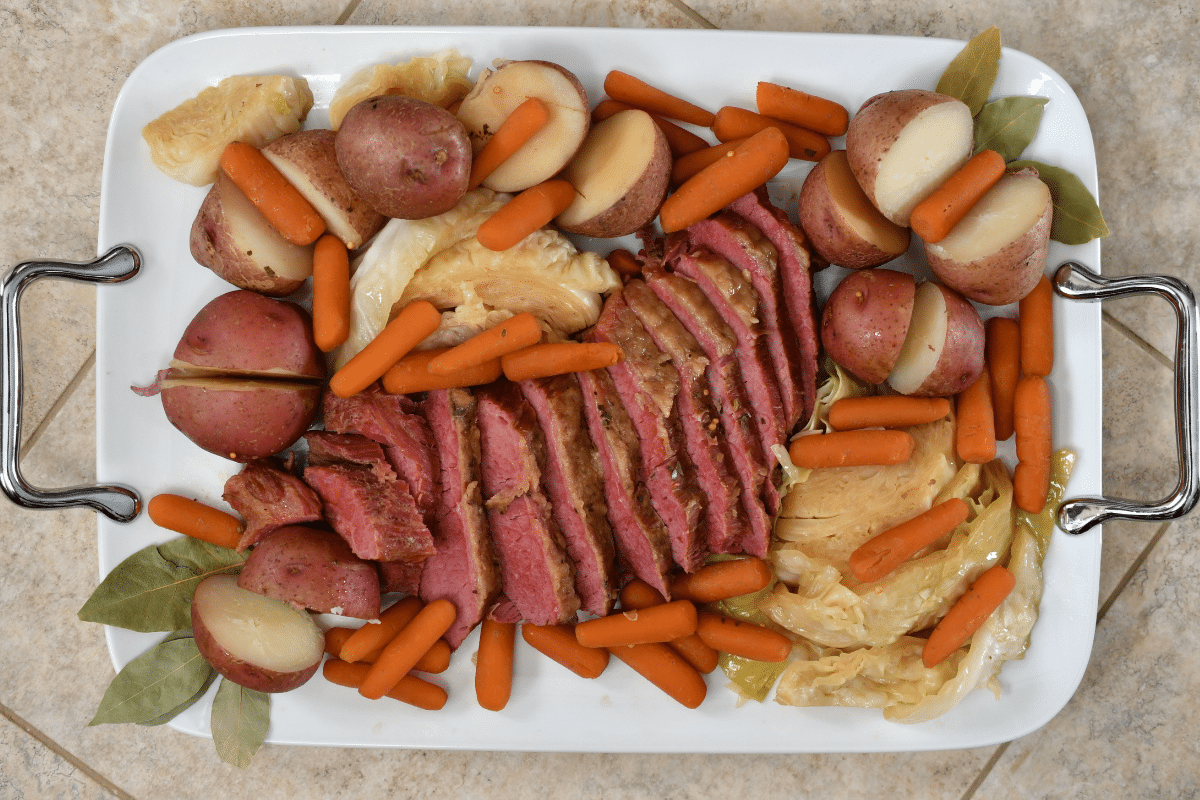
Years ago on March 17, I surprised my staff by bringing a homemade meal to the office to celebrate St. Patrick’s Day. I walked through the doors, carrying trays filled with the aroma of simmering corned beef, hearty potatoes, and tender cabbage. Their faces? Pure gold!
We pushed a few desks together, grabbed paper plates, and suddenly our ordinary break room felt like a celebration. There’s just something about sharing a meal, especially one you’ve poured your heart into, that brings people together, even in the chaos of a workday.
And so, like a determined leprechaun, I’ve made it a point to recreate this St. Patrick’s Day celebration annually. It’s evolved from a mere meal into a symbol of camaraderie, tradition, and the sheer joy of squeezing a little fun into our busy lives.
As time marched on, faces came and went around the table, but the spirit of togetherness and the mouthwatering flavors of corned beef and cabbage remained a constant. It’s a gentle nudge reminding us that amidst the daily grind, there’s always time to gather, share a meal, and sprinkle a little magic into the lives of those we cherish.
Why You’ll Love This Corned Beef and Cabbage Recipe
This recipe keeps things simple while still delivering that classic flavor everyone expects. You’ll get:
- Tender, flavorful beef: Slow simmering gives the meat that fall-apart texture everyone loves.
- Hearty vegetables: Potatoes, carrots, and cabbage soak up the savory broth.
- Minimal prep: Once the pot is going, most of the work is done.
- Budget-friendly comfort food: One brisket feeds several people, making it perfect for family dinners or casual gatherings.
Whether you’re planning a St. Patrick’s Day dinner or just want a cozy meal on a chilly evening, this recipe delivers.
What You’ll Need
To make this simple St. Patrick’s Day dinner, you only need a handful of ingredients.
- Large Stockpot: A roomy stockpot allows the corned beef to simmer gently while leaving space for vegetables later.
- Corned Beef (Brisket or Round): Look for a pre-marinated corned beef in a vacuum-sealed package in the meat section. Most packages include a spice packet that adds classic flavor. A 3–5 pound cut works perfectly for this recipe.
- Small Red Potatoes: Red potatoes hold their shape well when simmered. Cut them in halves or quarters so they cook evenly.
- Carrots: Peel and cut carrots into 2-inch pieces. Keeping them roughly the same size helps everything cook evenly.
- Green Cabbage: Cut the cabbage into wedges right before adding it to the pot. Adding it late in the cooking process keeps it tender rather than mushy.
How to Choose a Good Corned Beef
If you’ve ever stood in the grocery store staring at the meat case wondering which one to buy, you’re not alone. Here are a few simple tips:
- Flat cut vs. point cut: Flat cut brisket is leaner and slices neatly. Point cut has more fat and tends to be extra tender. Both work well in this recipe.
- Look for even thickness: A brisket that’s uniform in thickness cooks more evenly.
- Check the seasoning packet: Most corned beef packages include spices like mustard seed, peppercorns, and bay leaf that add traditional flavor.
How to Make Corned Beef and Cabbage
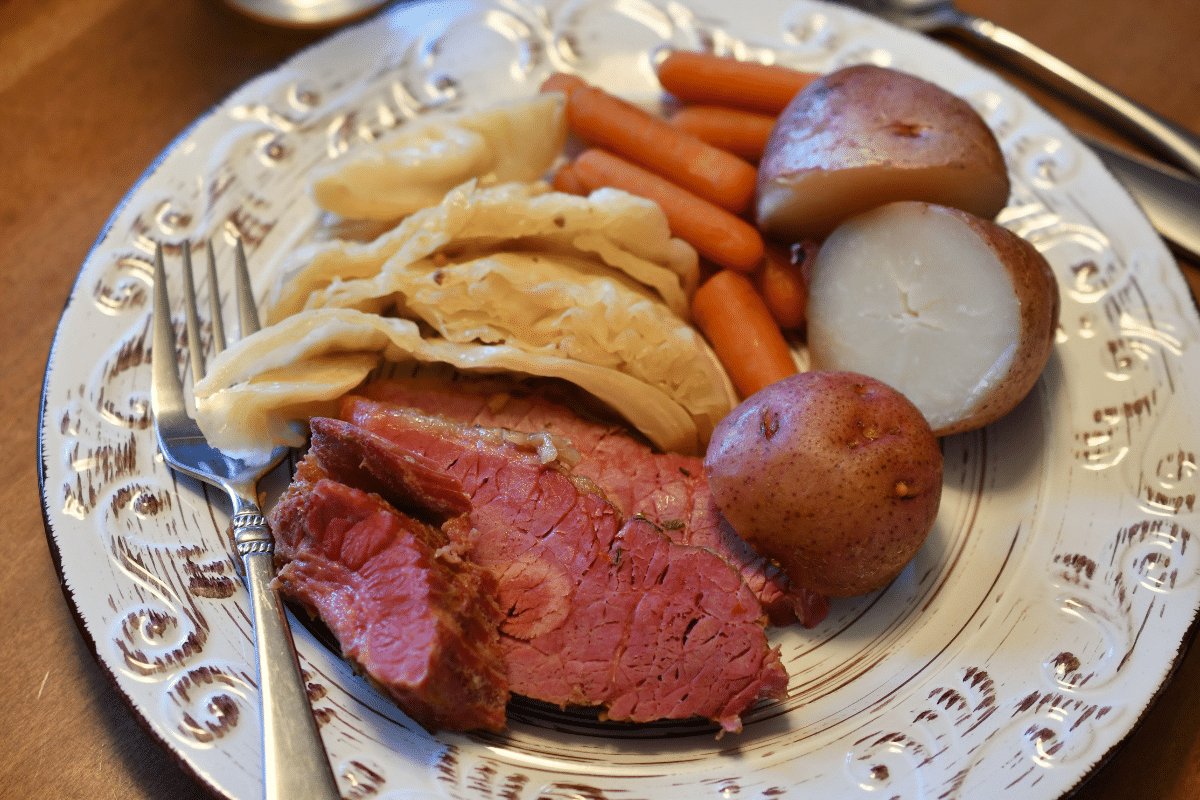
Stockpot Method
Place the corned beef in a large stockpot and cover it with water, leaving about two inches of space at the top. If your corned beef includes a spice packet, sprinkle it into the pot. Bring the water to a boil over high heat. Then immediately reduce the heat to the lowest simmer and cover the pot.
Let it cook gently for 5 to 6 hours. Avoid letting the pot reach a rolling boil, which can make the meat tough.
About one hour before serving, add the potatoes and carrots. Simmer until they’re fork-tender but not mushy.
About 15 minutes before serving, add cabbage wedges. Cook just until the cabbage is tender and still bright green.
Remove the vegetables to a serving platter. Slice the corned beef across the grain. It should be incredibly tender. Arrange the slices in the center of the vegetables and ladle a little broth over everything before serving.
Instant Pot Method (Quick Version)
Short on time? The Instant Pot makes this meal much faster.
Place the trivet in the Instant Pot and set the corned beef on top. Add 1 quart beef broth, seal the lid, and cook on High Pressure for 90 minutes. Do a quick pressure release and remove the beef. Cover it loosely with foil to keep warm.
Add the potatoes, carrots, and cabbage to the broth and cook on High Pressure for 4 minutes. Serve immediately.
Slow Cooker Option
If you prefer a true set-it-and-forget-it method, the slow cooker works beautifully.
Place the corned beef in the slow cooker with the spice packet and cover with water. Cook on Low for 8–9 hours or High for 5–6 hours.
Add potatoes and carrots during the last 2 hours. Add cabbage during the final 30 minutes.
Smart Ways to Use Leftover Corned Beef

If you ask me, leftover corned beef might be the best perk of making this meal in the first place.
A single brisket almost always leaves you with extra meat, and that’s a good thing. With a little creativity, those leftovers can turn into quick meals over the next few days. Here are a few easy ways to give that corned beef a second life:
- Corned Beef Hash and Eggs: Dice leftover corned beef and sauté it in a skillet with chopped potatoes and a little onion until everything gets crispy around the edges. Top it with a fried or poached egg and you’ve got a hearty breakfast that feels like it came straight from a diner.
- Reuben Sandwiches: Pile warm slices of corned beef onto rye bread with sauerkraut, Swiss cheese, and a swipe of Thousand Island dressing. Grill it in a skillet like a grilled cheese until the bread is golden and the cheese melts. Serve with a pickle and suddenly lunch feels a little special.
- Corned Beef Grilled Cheese: For a quick twist on a classic, layer chopped corned beef inside a grilled cheese sandwich. Swiss or sharp cheddar works especially well. Toast it slowly in a buttered pan so the bread crisps up and the cheese gets perfectly melty.
- Loaded Baked Potatoes: Split open a hot baked potato and top it with chopped corned beef, shredded cheese, sour cream, and a sprinkle of green onions. It’s an easy weeknight dinner that comes together in minutes.
- Quick Corned Beef Soup: If you still have broth from cooking the brisket, don’t toss it. Add diced corned beef, leftover vegetables, and a handful of potatoes or barley to create a simple soup that tastes like it simmered all day.
One more tip: leftover corned beef keeps well in the refrigerator for 3 to 4 days. If you won’t use it that quickly, portion it into freezer bags and freeze it for future sandwiches or hash.
Corned beef and cabbage may be a traditional St. Patrick’s Day meal, but it’s also one of the simplest ways to feed a crowd with minimal effort. A single pot, a handful of ingredients, and a slow simmer are all it takes to create a meal that feels festive and comforting at the same time.
And if the smell of it cooking brings people wandering into the kitchen asking when dinner will be ready… well, that’s just part of the magic.
Classic St. Patrick’s Day Corned Beef and Cabbage
Ingredients
- 1 3-pound pre-marinated corned beef (brisket or round) with seasoning packet
- 10 small red potatoes halved or quartered
- 5 medium carrots peeled and cut into 2-inch pieces
- 1 large head green cabbage cut into wedges
- Water enough to fully cover the beef
Instructions
- Place the corned beef in a large stockpot and cover it with water until the meat is fully submerged. Leave about 2 inches of space at the top of the pot. If your corned beef includes a spice packet, sprinkle it into the pot.
- Bring the pot to a boil over high heat.
- As soon as it reaches a boil, immediately reduce the heat to the lowest simmer. Cover and cook gently for 5 to 6 hours. The key here is a slow simmer, not a rolling boil. Slow cooking helps the brisket become tender and flavorful.
- About 1 hour before serving, add the potatoes and carrots to the pot. Keep the heat at a steady simmer and cook until the vegetables are fork-tender but not mushy. Check them occasionally during the last part of cooking.
- About 15–20 minutes before serving, add the cabbage wedges. Cover the pot and cook until the cabbage is just tender but still bright green.
- Remove the vegetables to a large bowl or serving platter.
- Lift the corned beef from the pot and let it rest for about 10 minutes before slicing. This helps the juices settle.
- Slice the beef across the grain (it should nearly fall apart) and arrange it in the center of the vegetables.
- Ladle a little of the flavorful broth over everything and serve immediately.
Notes
Instant Pot Method
- Place the trivet in the Instant Pot and set the corned beef on top. Add 1 quart beef broth to the pot.
- Seal the lid and cook on High Pressure for 90 minutes. Perform a quick release when finished.
- Remove the corned beef to a plate and cover loosely with foil to keep warm.
- Remove the trivet, then add the potatoes, carrots, and cabbage to the broth in the pot. Seal again and cook on High Pressure for 4 minutes.
- Serve immediately.
Slow Cooker Option
- Place the corned beef in a slow cooker with the seasoning packet and enough water to mostly cover the meat.
- Cook on Low for 8–9 hours or High for 5–6 hours.
- Add potatoes and carrots during the last 2 hours, and cabbage during the final 30 minutes.
Nutrition
Frequently Asked Questions About Corned Beef and Cabbage
Why is corned beef eaten on St. Patrick’s Day?
Corned beef and cabbage became popular in the United States among Irish immigrants in the 1800s. While traditional meals in Ireland often used salted pork, beef brisket was more affordable and widely available in American cities where many immigrants settled. Pairing that brisket with inexpensive, nutritious cabbage created a hearty, filling meal that worked well for large families. Over time, the dish became closely tied to St. Patrick’s Day celebrations in the U.S., and today it’s one of the most recognizable foods served for the holiday.
What cut of meat is best for corned beef?
Corned beef is usually made from brisket, and you’ll typically see two options at the grocery store: flat cut and point cut. Flat cut brisket is leaner and slices neatly, which makes it a good choice if you want tidy slices for serving. Point cut has more fat marbled throughout, which can make it extra tender and flavorful. Either one works well for this recipe. Personally, I tend to buy whichever one happens to be on sale that week.
How do you keep corned beef tender?
The secret is slow, gentle cooking. Corned beef should simmer at a low temperature rather than boil aggressively. A rolling boil can tighten the fibers in the meat and make it tough. Instead, bring the pot to a boil once, then immediately reduce the heat to a gentle simmer and let it cook slowly for several hours. That steady, low heat allows the meat to relax and become fork-tender. If your corned beef still seems tough, it usually just needs a little more time.
When should cabbage be added to corned beef?
Cabbage cooks quickly, so it’s best added near the end of the cooking time. Place the cabbage wedges into the pot about 15–20 minutes before serving. That gives them just enough time to soften while still staying bright green and slightly firm. Adding cabbage too early can cause it to overcook and turn mushy.
Can corned beef and cabbage be made ahead of time?
Yes, and many cooks prefer it that way. You can cook the corned beef a day in advance and store it in the refrigerator along with some of the cooking broth. The next day, gently reheat the meat and vegetables in that broth until warmed through. This method often makes the flavors even better, and it also takes some of the pressure off on the day you plan to serve it.
Can you cook corned beef in a slow cooker?
Yes, a slow cooker works beautifully for corned beef. Place the brisket in the slow cooker with the seasoning packet and enough water or broth to mostly cover the meat. Cook on low for 8–9 hours or high for about 5–6 hours until the beef is tender. Add the potatoes and carrots during the last couple of hours of cooking, and add the cabbage during the final 30 minutes so it doesn’t overcook.
Why is my corned beef still tough?
If your corned beef is still tough after cooking, the most common reason is that it simply needs more time. Brisket is a naturally tough cut of meat, but long, slow cooking breaks down the connective tissue and turns it tender. If it isn’t fork-tender yet, let it continue simmering gently and check again in 30–45 minutes. Patience usually solves the problem.
Can you freeze corned beef before cooking?
Yes, and it’s a great way to take advantage of seasonal sales. Simply pop your unopened package of corned beef into the freezer, and it'll be ready and waiting whenever you need it. When you're ready to enjoy it, just thaw it in the refrigerator overnight before cooking it as usual. It's a convenient and budget-friendly way to enjoy this classic dish year-round, without compromising on flavor or quality.
Question: Be honest… do you love corned beef and cabbage or just tolerate it on St. Patrick’s Day? Share in the comment below.

More from Everyday Cheapskate
 https://www.everydaycheapskate.com/wp-content/uploads/20260831-Portrait-of-a-Pitbull-on-a-yellow-background-homemade-dog-treat-recipes.png
800
1200
Mary Hunt
https://www.everydaycheapskate.com/wp-content/uploads/EC-Logo-by-Mary-Hunt-Tagline-Trimmed.png
Mary Hunt2026-08-31 13:06:072026-08-31 13:06:073 Homemade Dog Treats Recipes Your Dog Will Love Most
https://www.everydaycheapskate.com/wp-content/uploads/20260831-Portrait-of-a-Pitbull-on-a-yellow-background-homemade-dog-treat-recipes.png
800
1200
Mary Hunt
https://www.everydaycheapskate.com/wp-content/uploads/EC-Logo-by-Mary-Hunt-Tagline-Trimmed.png
Mary Hunt2026-08-31 13:06:072026-08-31 13:06:073 Homemade Dog Treats Recipes Your Dog Will Love Most https://www.everydaycheapskate.com/wp-content/uploads/20260830-homemade-sloppy-joe-mix-recipe.png
800
1200
Mary Hunt
https://www.everydaycheapskate.com/wp-content/uploads/EC-Logo-by-Mary-Hunt-Tagline-Trimmed.png
Mary Hunt2026-08-30 13:34:482026-08-30 13:34:48Homemade Sloppy Joe Mix: Skip the Store-Bought Packets
https://www.everydaycheapskate.com/wp-content/uploads/20260830-homemade-sloppy-joe-mix-recipe.png
800
1200
Mary Hunt
https://www.everydaycheapskate.com/wp-content/uploads/EC-Logo-by-Mary-Hunt-Tagline-Trimmed.png
Mary Hunt2026-08-30 13:34:482026-08-30 13:34:48Homemade Sloppy Joe Mix: Skip the Store-Bought Packets https://www.everydaycheapskate.com/wp-content/uploads/20260814-Slow-Cooker-Peach-Cobbler.png
800
1200
Mary Hunt
https://www.everydaycheapskate.com/wp-content/uploads/EC-Logo-by-Mary-Hunt-Tagline-Trimmed.png
Mary Hunt2026-08-14 22:48:112026-08-14 22:48:11Easy Slow Cooker Peach Cobbler with Boxed Cake Mix
https://www.everydaycheapskate.com/wp-content/uploads/20260814-Slow-Cooker-Peach-Cobbler.png
800
1200
Mary Hunt
https://www.everydaycheapskate.com/wp-content/uploads/EC-Logo-by-Mary-Hunt-Tagline-Trimmed.png
Mary Hunt2026-08-14 22:48:112026-08-14 22:48:11Easy Slow Cooker Peach Cobbler with Boxed Cake Mix https://www.everydaycheapskate.com/wp-content/uploads/20260812-zucchini-overload-what-to-do-with-a-bunch-of-zucchini.png
800
1200
Mary Hunt
https://www.everydaycheapskate.com/wp-content/uploads/EC-Logo-by-Mary-Hunt-Tagline-Trimmed.png
Mary Hunt2026-08-12 17:48:312026-08-12 17:48:31Zucchini Overload? 10 Ways to Use Up Your Garden Surplus
https://www.everydaycheapskate.com/wp-content/uploads/20260812-zucchini-overload-what-to-do-with-a-bunch-of-zucchini.png
800
1200
Mary Hunt
https://www.everydaycheapskate.com/wp-content/uploads/EC-Logo-by-Mary-Hunt-Tagline-Trimmed.png
Mary Hunt2026-08-12 17:48:312026-08-12 17:48:31Zucchini Overload? 10 Ways to Use Up Your Garden Surplus https://www.everydaycheapskate.com/wp-content/uploads/20260811-homemade-applesauce-recipe-in-a-bowl-with-apples-on-countertop.png
800
1200
Mary Hunt
https://www.everydaycheapskate.com/wp-content/uploads/EC-Logo-by-Mary-Hunt-Tagline-Trimmed.png
Mary Hunt2026-08-11 10:17:332026-08-11 10:17:35The Easiest Way to Turn Fall Apples Into Applesauce
https://www.everydaycheapskate.com/wp-content/uploads/20260811-homemade-applesauce-recipe-in-a-bowl-with-apples-on-countertop.png
800
1200
Mary Hunt
https://www.everydaycheapskate.com/wp-content/uploads/EC-Logo-by-Mary-Hunt-Tagline-Trimmed.png
Mary Hunt2026-08-11 10:17:332026-08-11 10:17:35The Easiest Way to Turn Fall Apples Into Applesauce https://www.everydaycheapskate.com/wp-content/uploads/20260806-leftover-pizza.png
800
1200
Mary Hunt
https://www.everydaycheapskate.com/wp-content/uploads/EC-Logo-by-Mary-Hunt-Tagline-Trimmed.png
Mary Hunt2026-08-05 21:11:162026-08-05 21:13:4134 Leftover Recipes That Use Up Every Last Bit of Food
https://www.everydaycheapskate.com/wp-content/uploads/20260806-leftover-pizza.png
800
1200
Mary Hunt
https://www.everydaycheapskate.com/wp-content/uploads/EC-Logo-by-Mary-Hunt-Tagline-Trimmed.png
Mary Hunt2026-08-05 21:11:162026-08-05 21:13:4134 Leftover Recipes That Use Up Every Last Bit of Food https://www.everydaycheapskate.com/wp-content/uploads/20260802-sweet-onion-salad-dressing.png
800
1200
Mary Hunt
https://www.everydaycheapskate.com/wp-content/uploads/EC-Logo-by-Mary-Hunt-Tagline-Trimmed.png
Mary Hunt2026-08-01 20:14:362026-08-01 20:16:30Sweet Onion Salad Dressing (You’ll Never Buy Bottled Again)
https://www.everydaycheapskate.com/wp-content/uploads/20260802-sweet-onion-salad-dressing.png
800
1200
Mary Hunt
https://www.everydaycheapskate.com/wp-content/uploads/EC-Logo-by-Mary-Hunt-Tagline-Trimmed.png
Mary Hunt2026-08-01 20:14:362026-08-01 20:16:30Sweet Onion Salad Dressing (You’ll Never Buy Bottled Again) https://www.everydaycheapskate.com/wp-content/uploads/20260730-homemade-bbq-sauce-recipe-with-peppercorn-and-a-spoon.png
800
1200
Mary Hunt
https://www.everydaycheapskate.com/wp-content/uploads/EC-Logo-by-Mary-Hunt-Tagline-Trimmed.png
Mary Hunt2026-07-30 13:41:582026-07-30 13:41:58Homemade BBQ Sauce Recipe That Beats Any Store Bottle
https://www.everydaycheapskate.com/wp-content/uploads/20260730-homemade-bbq-sauce-recipe-with-peppercorn-and-a-spoon.png
800
1200
Mary Hunt
https://www.everydaycheapskate.com/wp-content/uploads/EC-Logo-by-Mary-Hunt-Tagline-Trimmed.png
Mary Hunt2026-07-30 13:41:582026-07-30 13:41:58Homemade BBQ Sauce Recipe That Beats Any Store Bottle https://www.everydaycheapskate.com/wp-content/uploads/20260727-creamy-corn-chowder-with-bacon-and-potatoes-with-sliced-bread.png
800
1200
Mary Hunt
https://www.everydaycheapskate.com/wp-content/uploads/EC-Logo-by-Mary-Hunt-Tagline-Trimmed.png
Mary Hunt2026-07-27 21:20:402026-07-27 21:20:40Sweet Corn Chowder for Those Last Warm Summer Nights
https://www.everydaycheapskate.com/wp-content/uploads/20260727-creamy-corn-chowder-with-bacon-and-potatoes-with-sliced-bread.png
800
1200
Mary Hunt
https://www.everydaycheapskate.com/wp-content/uploads/EC-Logo-by-Mary-Hunt-Tagline-Trimmed.png
Mary Hunt2026-07-27 21:20:402026-07-27 21:20:40Sweet Corn Chowder for Those Last Warm Summer Nights

even the smell of it cooking nauseates me, yet my irish american husband told me my corned beef was even better than his mother’s. i put the meat, carrots and potatoes in the crockpot and add a can of beer. i cut a head of cabbage into quarters and keep it on top. i set it on high. after about 8 hours, i call home to tell them to push the cabbage down into the beer for a half hour. they call me when they are done eating, the dishes and crockpot are washed and all the windows are open. then i come back home. now that my sons are older and the younger one is a much better cook than i am, i let him do it and come home when everything is gone.
My favorite St.Patrick’s Day tradition is remembering my grandfather’s birthday that day (his mother was Irish) and wearing a pin of his – a plastic shamrock with a white pipe! Nothing to do with food 😉
A good way to use the left over potatoes and cabbage. Chop them up and fry in pan.Its called Colcannon. It was a favourite of mine growing up in Ireland.
I’m disappointed. I’m cooking the meat in the stock pot exactly as directed. It’s née cooking fir 7 hours & still tough. So glad my company had to cancel. Smells good though
You originally posted this recipe YEARS ago. I have made it nearly every year. My husband loves it! It is so easy and truly delicious – especially those potatoes and cabbage cooked in the juice! Thank you so much! And the bread – WOW!
Every couple years I cook a corned beef in a crock pot! Very easy to do – just follow package directions (water, spice packet) in the crock pot and cook on high 3 hrs or so OR
low up to 6 hrs. The last hour or so put your veggies in and Voila! Corned Beef! Love it!
Thanks for info. I love using crock pot and no info in post for it.
Thanks for the instructions. Do you use a flat cut or point corned beef? Does it make a difference?
I don’t think it really matters. I most prefer whatever is on sale at the time.
A flat cut is better because it is easier to slice across the grain. Also the difference between the round and brisket is they are from different ends of the animal and the brisket has more fat than the round. I personally prefer the brisket because turns out moister.