

How to Organize a Closet: 5 Easy Steps for a Clutter-Free Wardrobe


Tired of digging through piles of clothes to find your favorite sweater? With just five simple steps, you can transform your messy closet into an organized oasis. Best of all, you don’t need to spend a fortune—just a bit of time and effort. From decluttering to arranging with purpose, these practical tips will help you create a stress-free, functional space that makes getting dressed a breeze.

Want to make your life easier? Start by tackling your clothes closet. When your closet is organized, you can quickly see what you have, what fits, and what makes you feel fabulous. Even better—everything becomes easier to find, saving you time and frustration every single day!
Now, let’s be honest—what’s hiding behind your closet door? Is it a Pinterest-worthy display of neatly stacked t-shirts, perfectly paired shoes, and color-coordinated hangers? Or is it more like a small-scale disaster zone that could qualify for federal emergency relief?
Knowing you’d rather not compete with actual disaster victims for funding, here’s a better idea: organize it! The steps ahead will help you create order out of chaos—not just in your clothes closet but also in linen closets, utility closets, and even your food pantry.
And here’s the cherry on top: you can do it all without spending a single dime. With just a bit of effort and a few everyday items you already have, you’ll be on your way to a calmer, more functional space. Ready to get started?
Essential Tools for Organizing Your Closet
Having the right tools on hand can make your closet clean-out faster and more efficient. The good news? You likely already have everything you need.
1. Large Bags, Boxes, or Bins
You’ll need these to sort your clothes into categories: items that fit and bring you joy, things to consign or sell, pieces to donate, and the inevitable pile for the trash. Clear bins are ideal because you can see what’s inside, but plain cardboard boxes or reusable shopping bags work just as well.
2. Labels
If you have a label maker, fantastic! But don’t feel like you need to invest in one. Grab some plain paper, a marker, and tape to create simple labels for your sorting containers. Clear labeling will keep you organized and save you from accidentally mixing up your piles.
3. A Full-Length Mirror
This is non-negotiable—it’s time to face the music (or the mirror). A full-length mirror is your best friend for trying on questionable items and deciding if they truly deserve space in your closet. Be honest with yourself: Does it fit? Do you love it? Does it make you feel great?
4. A Trash Can
You’ll be amazed at what lurks in your pockets and the corners of your closet—receipts, rubber bands, price tags, stray buttons, and who knows what else! Keep a trash can nearby so you can toss these items as you go, keeping your workspace tidy and your momentum strong.
Pro Tip
If you’re feeling overwhelmed, set a timer for 15 minutes and tackle one category or section at a time. Little victories build big momentum!
Step 1: Empty Your Closet Completely
Yes, everything. I mean everything—every last hanger, belt, shoe, scarf, and sweater. Take it all out and lay it somewhere you can clearly see it, like your bed or the floor. Why? Because you can’t truly organize a space until you know what you’re working with.
This step also helps you rediscover how much space you actually have in your closet. Spoiler alert: It’s probably more than you think! Be prepared to gasp when you see the mountain of stuff that comes out—especially if it’s been a while since your last purge.
Pro Tip
As you pull things out, group similar items together (like all your shoes in one pile, shirts in another). This will make the next steps much easier and keep things feeling less chaotic.
Step 2: Deep Clean Your Closet Space
Now that your closet is completely empty and you can actually see the light of day, it’s time to roll up your sleeves and give it a thorough cleaning from top to bottom. Dust the shelves, wipe down the walls, sweep or vacuum the floor, and don’t forget those nooks and crannies that tend to collect mystery grime.
If your closet still looks a little tired after cleaning—stains, scuffs, or just a dingy vibe—consider giving it a fresh coat of white paint. Not only will this brighten up the space, but it’ll also make everything feel cleaner and more inviting. Plus, a blank slate is the perfect backdrop for an organized closet masterpiece.
Pro Tip
Add a scented sachet or a few cedar blocks to keep your newly cleaned closet smelling fresh and deterring moths. A little touch like this can make a big difference.
Step 3: Declutter with a Purpose
This step can feel like a challenge because it means making some tough decisions—but it’s also the most rewarding. Now that everything is out of the closet, it’s time to sort. The truth is, there’s no way all that stuff is going back in, so let’s buckle up and get it done!
Grab five containers (or bags, boxes, or bins—whatever you’ve got) and label them as follows:
Box #1: Keep
This is the hardest box because it forces you to be honest with yourself. The goal? Only keep items that fit well, bring you joy, and that you genuinely wear. What’s the test? Try it on. Stand in front of the mirror and ask yourself:
-
- Does it fit?
- Do I love it?
- Have I worn it at least twice in the past year?
If the answer to any of these is “no,” it doesn’t belong here. Be brutally honest—clutter starts when we hold onto things “just in case.”
Box #2: Maybe:
Ah, the Maybe Box—a genius idea from one of your fellow readers. It’s not easy to say goodbye permanently. You will come across items that you’re just not sure about. Putting them into the Maybe Box is an easy way to transition. It’s not so much procrastination as empathy and kindness. Trust me; this works. The Maybe Box may be the one thing that keeps you motivated and in charge of this process.
Once filled, place the box in your garage, basement, or another out-of-the-way spot. Set a calendar reminder for six months from now. If you haven’t thought about or needed anything in that box by then, donate or toss the whole thing. Spoiler: You won’t miss it.
Box #3: Consign or Sell
Clothes that don’t work for you anymore (but are in great condition) can have a second life with someone else. Name-brand items or pieces with tags are perfect for consignment stores, online resale platforms like Poshmark, or even a yard sale. And remember, if it’s ugly to you, someone else might adore it. Your trash could be their treasure!
Box #4: Donate
Donate gently used items that aren’t quite consignment-worthy but are still in good shape. Places like the Salvation Army, Goodwill, or local shelters are great options. And don’t forget animal shelters—they’ll gladly take worn towels or blankets for pet care.
Feel-Good Bonus: You might even qualify for a tax deduction. But more importantly, you’re helping someone in need!
Box #5: Throw away
This is for items beyond saving—think clothes that are hopelessly stained, torn, or damaged beyond repair. Work quickly to avoid second-guessing yourself, and empty this box often to keep the momentum going.
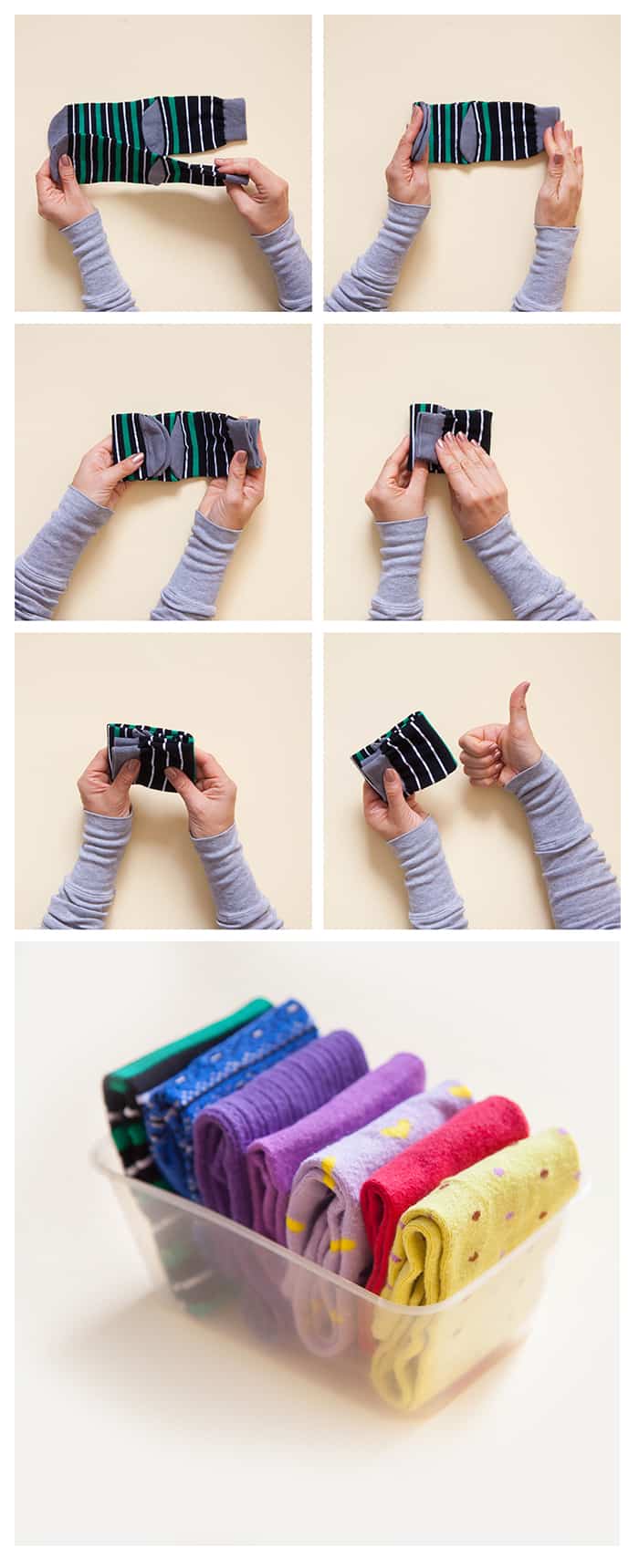
Step 4: Categorize and Arrange
Now that you’ve sorted and conquered, it’s time to bring order to your “Keep” pile. The key to a functional closet is smart categorization and arrangement.
1. Sort by Season, Type, and Use
Start by dividing everything by season (spring/summer vs. fall/winter) and type (shirts, pants, dresses, etc.). If possible, store out-of-season items elsewhere, like under the bed or in storage bins, to free up prime closet real estate.
2. Separate Workwear from Casual Clothes
Next, create two main categories: work/professional and casual attire. Within each category, group like items together: shirts, pants, sweaters, and so on.
3. Prioritize Accessibility
Now, within each group, divide by frequency of use. Keep the items you wear most often front and center, so you’re not digging for that favorite pair of jeans or go-to blazer every morning. Infrequently worn items can go toward the back or on higher shelves.
4. Group Like Items Together
For the ultimate organized closet, take it a step further:
-
- Hang clothes by type and color for a clean, cohesive look (think all your white shirts together, then your blues, and so on).
- Fold items like T-shirts, sweaters, and jeans neatly. Use a vertical “file folding” method for drawers—it not only saves space but also makes everything easier to see at a glance.
- Use small bins or dividers to corral socks, belts, and accessories.
Use Smart Folding Hacks
Filing socks, for example, beats rolling them into a ball. Lay them flat, fold them in thirds, and stack vertically in a bin or drawer. It’s simple, effective, and—you guessed it—saves space.
Organizing doesn’t have to feel overwhelming. Think of this step as creating a system that makes your life easier every single day. Small tweaks here can make a huge difference!
Step 5: Add Organizational Helpers
While you don’t need fancy gadgets to get your closet under control, a few well-chosen organizational items can take your space from good to great. Think of these tools as the finishing touches that make staying organized easier and more enjoyable.
Shoe rack

Kitsure Premium Non-Woven Shoe Rack Organizer
Shoes can be one of the trickiest things to manage in a closet. If you’re tight on space, consider a sturdy and compact shoe rack that fits your needs. A tiered rack is a great option for maximizing vertical space, and it’s budget-friendly, too.
Pro Tip: If closet space is limited, an over-the-door shoe organizer can save the day. Use it for shoes or even accessories like scarves and small bags.

Hangers

Zober Velvet Heavy Duty Black Hangers, 50 Pack
Matching hangers may seem like a small detail, but trust me—it’s a game-changer. Uniform hangers not only make your closet look neat but also save space and keep clothes from slipping. My personal favorite? Velvet hangers. They’re durable, slim, and oh-so-elegant.

Shelves

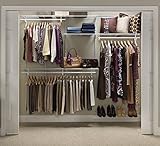
ClosetMaid ShelfTrack Wire Closet Organizer System
Adding shelves can completely transform your closet by giving you more storage options. Whether it’s for folded sweaters, bins, or bags, shelves help you maximize vertical space.
One excellent option is the ClosetMaid ShelfTrack system, which allows you to customize the setup to fit your needs. It even comes with a small shoe rack to make the most of every square inch.
I know—it’s easy for me to tell you to do all this! But trust me, I’ve been through the chaos of a cluttered closet myself. And while these steps take effort, the payoff is absolutely worth it. There’s something so satisfying about opening your closet and feeling calm, not chaos.
And remember: This isn’t a one-and-done deal. Staying organized takes regular upkeep—I do this at least twice a year. But once you’ve put in the work, keeping your space tidy becomes so much easier. So go ahead—take the plunge and start reaping the rewards of a beautifully organized closet!
- MORE: The Chair
Question: What’s your biggest closet-cleaning struggle—letting go of clothes or figuring out where to put everything? Share your tips or woes.
EverydayCheapskate™ is reader-supported. We participate in the Amazon Services LLC Associates Program and other affiliate advertising programs, designed to provide a means for us to earn from qualifying purchases, at no cost to you.

More from Everyday Cheapskate
 https://www.everydaycheapskate.com/wp-content/uploads/20260703-home-decor.png
800
1200
Mary Hunt
https://www.everydaycheapskate.com/wp-content/uploads/EC-Logo-by-Mary-Hunt-Tagline-Trimmed.png
Mary Hunt2026-07-03 20:46:552026-07-03 20:46:5510 Everyday Items You Never Think to Wash (But Should)
https://www.everydaycheapskate.com/wp-content/uploads/20260703-home-decor.png
800
1200
Mary Hunt
https://www.everydaycheapskate.com/wp-content/uploads/EC-Logo-by-Mary-Hunt-Tagline-Trimmed.png
Mary Hunt2026-07-03 20:46:552026-07-03 20:46:5510 Everyday Items You Never Think to Wash (But Should) https://www.everydaycheapskate.com/wp-content/uploads/20260630-a-lit-sparkler-with-an-american-flag-in-the-background-4th-of-july-hacks-tips-and-recipes.png
800
1200
Mary Hunt
https://www.everydaycheapskate.com/wp-content/uploads/EC-Logo-by-Mary-Hunt-Tagline-Trimmed.png
Mary Hunt2026-06-30 21:44:502026-06-30 21:44:5034 Fourth of July Recipes and DIY Hacks for a Stress-Free Holiday
https://www.everydaycheapskate.com/wp-content/uploads/20260630-a-lit-sparkler-with-an-american-flag-in-the-background-4th-of-july-hacks-tips-and-recipes.png
800
1200
Mary Hunt
https://www.everydaycheapskate.com/wp-content/uploads/EC-Logo-by-Mary-Hunt-Tagline-Trimmed.png
Mary Hunt2026-06-30 21:44:502026-06-30 21:44:5034 Fourth of July Recipes and DIY Hacks for a Stress-Free Holiday https://www.everydaycheapskate.com/wp-content/uploads/20260629-wooden-die-spell-july-with-patriotic-decor-in-background.png
800
1200
Mary Hunt
https://www.everydaycheapskate.com/wp-content/uploads/EC-Logo-by-Mary-Hunt-Tagline-Trimmed.png
Mary Hunt2026-06-29 21:07:092026-06-29 21:10:297 Best Things to Buy in July for Huge Summer Savings
https://www.everydaycheapskate.com/wp-content/uploads/20260629-wooden-die-spell-july-with-patriotic-decor-in-background.png
800
1200
Mary Hunt
https://www.everydaycheapskate.com/wp-content/uploads/EC-Logo-by-Mary-Hunt-Tagline-Trimmed.png
Mary Hunt2026-06-29 21:07:092026-06-29 21:10:297 Best Things to Buy in July for Huge Summer Savings https://www.everydaycheapskate.com/wp-content/uploads/20260628-Grilled-Peaches-with-Balsamic-and-Blue-Cheese-1.png
800
1200
Mary Hunt
https://www.everydaycheapskate.com/wp-content/uploads/EC-Logo-by-Mary-Hunt-Tagline-Trimmed.png
Mary Hunt2026-06-29 09:38:342026-06-29 09:38:34Summer Grilled Peaches with Balsamic and Blue Cheese
https://www.everydaycheapskate.com/wp-content/uploads/20260628-Grilled-Peaches-with-Balsamic-and-Blue-Cheese-1.png
800
1200
Mary Hunt
https://www.everydaycheapskate.com/wp-content/uploads/EC-Logo-by-Mary-Hunt-Tagline-Trimmed.png
Mary Hunt2026-06-29 09:38:342026-06-29 09:38:34Summer Grilled Peaches with Balsamic and Blue Cheese https://www.everydaycheapskate.com/wp-content/uploads/20260626-homemade-stain-paste-sitting-on-wooden-countertop-in-laundry-room-with-washer-and-dryer.png
800
1200
Mary Hunt
https://www.everydaycheapskate.com/wp-content/uploads/EC-Logo-by-Mary-Hunt-Tagline-Trimmed.png
Mary Hunt2026-06-26 17:41:192026-06-26 17:41:19Homemade Laundry Stain Paste That Works for Pennies
https://www.everydaycheapskate.com/wp-content/uploads/20260626-homemade-stain-paste-sitting-on-wooden-countertop-in-laundry-room-with-washer-and-dryer.png
800
1200
Mary Hunt
https://www.everydaycheapskate.com/wp-content/uploads/EC-Logo-by-Mary-Hunt-Tagline-Trimmed.png
Mary Hunt2026-06-26 17:41:192026-06-26 17:41:19Homemade Laundry Stain Paste That Works for Pennies https://www.everydaycheapskate.com/wp-content/uploads/20260625-a-rustic-wooden-christmas-tree-in-the-sand-on-the-beach.png
800
1200
Mary Hunt
https://www.everydaycheapskate.com/wp-content/uploads/EC-Logo-by-Mary-Hunt-Tagline-Trimmed.png
Mary Hunt2026-06-26 11:34:132026-06-26 11:36:44Christmas in June? Try This Amazon Prime Day Gift Guide
https://www.everydaycheapskate.com/wp-content/uploads/20260625-a-rustic-wooden-christmas-tree-in-the-sand-on-the-beach.png
800
1200
Mary Hunt
https://www.everydaycheapskate.com/wp-content/uploads/EC-Logo-by-Mary-Hunt-Tagline-Trimmed.png
Mary Hunt2026-06-26 11:34:132026-06-26 11:36:44Christmas in June? Try This Amazon Prime Day Gift Guide https://www.everydaycheapskate.com/wp-content/uploads/20260624-why-does-my-ice-taste-weird-soda-tea-lemonade-juice.png
800
1200
Mary Hunt
https://www.everydaycheapskate.com/wp-content/uploads/EC-Logo-by-Mary-Hunt-Tagline-Trimmed.png
Mary Hunt2026-06-24 17:10:532026-06-24 17:10:53Why Does My Ice Taste Weird? Here’s the Answer
https://www.everydaycheapskate.com/wp-content/uploads/20260624-why-does-my-ice-taste-weird-soda-tea-lemonade-juice.png
800
1200
Mary Hunt
https://www.everydaycheapskate.com/wp-content/uploads/EC-Logo-by-Mary-Hunt-Tagline-Trimmed.png
Mary Hunt2026-06-24 17:10:532026-06-24 17:10:53Why Does My Ice Taste Weird? Here’s the Answer https://www.everydaycheapskate.com/wp-content/uploads/20260622-a-single-car-garaged-with-beautiful-flowers-along-landscape-beds-things-ruined-by-heat-in-the-garage.png
800
1200
Mary Hunt
https://www.everydaycheapskate.com/wp-content/uploads/EC-Logo-by-Mary-Hunt-Tagline-Trimmed.png
Mary Hunt2026-06-22 20:24:432026-06-22 20:24:4325 Things Summer Heat Can Ruin in Your Garage
https://www.everydaycheapskate.com/wp-content/uploads/20260622-a-single-car-garaged-with-beautiful-flowers-along-landscape-beds-things-ruined-by-heat-in-the-garage.png
800
1200
Mary Hunt
https://www.everydaycheapskate.com/wp-content/uploads/EC-Logo-by-Mary-Hunt-Tagline-Trimmed.png
Mary Hunt2026-06-22 20:24:432026-06-22 20:24:4325 Things Summer Heat Can Ruin in Your Garage https://www.everydaycheapskate.com/wp-content/uploads/20260621-amazon-prime-day-2026-is-coming-everyday-cheapskate-mary-hunt-guide-for-cheapskates.png
800
1200
Mary Hunt
https://www.everydaycheapskate.com/wp-content/uploads/EC-Logo-by-Mary-Hunt-Tagline-Trimmed.png
Mary Hunt2026-06-21 15:48:502026-06-21 15:48:50The Cheapskate’s Guide to Winning Prime Day 2026
https://www.everydaycheapskate.com/wp-content/uploads/20260621-amazon-prime-day-2026-is-coming-everyday-cheapskate-mary-hunt-guide-for-cheapskates.png
800
1200
Mary Hunt
https://www.everydaycheapskate.com/wp-content/uploads/EC-Logo-by-Mary-Hunt-Tagline-Trimmed.png
Mary Hunt2026-06-21 15:48:502026-06-21 15:48:50The Cheapskate’s Guide to Winning Prime Day 2026Please keep your comments positive, encouraging, helpful, brief,
and on-topic in keeping with EC Commenting Guidelines
Last update on 2026-07-12 / Affiliate links / Images from Amazon Product Advertising API


I took your advice and did the backward hanging hangers and it has helped me get rid of items that I don’t wear no matter how much I like them. I do this every season and if I haven’t worn it that season, I obviously don’t “need” it. I also do the one item in/ one out. My local church thrift store also takes any clothing. If they don’t think it is “sell” worthy they have an organization that takes them and “recycles” them.
The day my closet looks that neat is the day I move to the beach and stop getting dressed up for church! Cut off-off jeans, sandals and a tank top are acceptable at our church, unless you are in snow country. Then you are something of an enigma.
Truthfully, a lot of our clothing has a lot of meaning – a dinner & dance, a Gala for some noteworthy cause, a memorable birthday party … I have taken pictures of the clothes (at your suggestion, I believe), so I have the memories, but not the stuff taking up space. Not likely to be worn again but definitely loved.
When I change seasonal clothes in my closet I put all the hanger hooks forwards. When I’ve worn something, I return it with the hanger facing backwards (the normal way we hang things). At the end of the season, if I have not worn something it needs to be gotten rid of. (or at least put in that “maybe” box).
Clothing beyond repair or worn out cut up for cleaning rags. Old sheets and towels that have seen better days to the pet shelter they love them!
I keep my shoes in the boxes they came in and write on the front what pair it is. Then I use a “stand alone” shelf on the closet floor to keep them on.
Check with your local hospital to see if there is a ‘clothes closet or clothes room’ where clothing, new underwear, slippers, a sweater or jacket, etc. (in various sizes for men and women) are kept…..because there are some patients being discharged from the hospital who have nothing to wear home. Perhaps their clothing was so damaged on admission to the hospital that it could not be salvaged to wear home. A robe and slippers would be helpful too for the person who is ‘challenged’ to wear regular clothing home from the hospital.
This article should point out that the items in box#5 should not be throw into a landfill. Big metal boxes are present in parking lots all over every community take these stained, worn, etc. textiles and recycle them. Whoever owns this box profits from this, often it is a charity. More importantly keeps all of these unusable items out of landfills.
Box #5: “Clothes and shoes worn out, hopelessly stained, broken, or in some other state of calamity go into this bin.” These days thrift stores and donation bins clearly state they accept only serviceable items. That means they can be resold. “State of calamity” should be understood that they are not serviceable. They are worn out, stained, have reached their useful end.
Where I live the city council is now recycling textile fibres. There are containers in which to leave textile for actual recycling of the material.
There are drop off boxes in ou parking lots with lettering implying they are our country. I was told by a pick up man that they are shipped out of the country and sold. I know where’s best places to donate I’ve checked out
Does anyone have an easy, inexpensive way to store photos? I have a bin full and have already shared many picture with my family. Now what?
Before you store photos…………..Write on the back, who, what, where……..I’ve gotten kids photos mixed up because there wasn’t a name on the back.
Some of us have weight that varies with time. That makes it really difficult.
I, too, have that issue. I have bins on the top shelf for clothes I can’t wear right now and only keep out what fits. I like these because they can be stacked and have zippered openings (and clear windows) on the front so I can see what’s in there. Furnhome Clothes Storage Organizer Bins Containers, Stackable Storage Bins-Foldable Oxford Cloth Steel Frame Storage Box for Clothing Storage with Clear Window & Reinforced Handles (Navy Dots, 22L,3PCS)
As always, thanks for the useful info. I know what I should do, now I just need to do it! I’ve been working on my kids’ closets, and it feels so good to get stuff out of the house. I did an online search for a place to recycle textiles that cannot be donated or sold (used socks, underwear, t-shirts with logos or names, items that are torn or stained, etc.) and I make regular drop-offs at their bin. They also take sheets, towels, fabric, shoes, etc. I am totally willing to get rid of this stuff if I know it isn’t going in the trash, as they will give usable items to charity and recycle the rest into insulation. Also, the bin locations get a donation for a charity, so this all seems like a win-win situation. Towels that can still be used go to the animal shelter.
I always donate my clothes to The Rescue Mission, our local homeless shelter. They have a similar style retail store like the Salvation Army. They take ripped, stained, any type of clothes. What they can’t sell in the retail store they sell for rags
Thanks, Mary. You might add a reminder that textiles can go to the Goodwill to be recycled – that has helped me a lot since I hate to add fabric items to the garbage stream. They should be bagged up, labeled as textiles, and can be dropped off separately from other donations.
When I was growing up, my mom would dump the contents of my closet and chest of drawers on my bed if she felt everything was too messy. I had to clean it all up before I could go to bed that night! Also, my dad had the rule one thing in, one thing out. I went to Catholic school and wore a uniform but always felt I never had enough clothes! My closet is very neat and clothes are color coordinated, but I definitely could get rid of a few things, and the cooler weather is very motivating.