

The Ultimate Guide to Microfiber Towels: Cleaning Tips, Uses, and Care


Microfiber towels have revolutionized the way we clean our homes. These versatile and efficient tools make tackling dirt and grime a breeze. If you’re new to using microfiber or looking to optimize your cleaning routine, you’re in the right place. In this guide, we’ll explore the benefits of microfiber towels, how to clean with microfiber cloths effectively, and the best practices for keeping them in top condition.
There’s nothing like microfiber towels for cleaning just about any surface in and about the house. If you’ve never used a microfiber towel, you will be amazed by how fast and efficiently you can clean. But there are a few tips and tricks for the best success.
Housecleaning and car washing are chores that most of us love to hate. Who would have thought there could be a better way to scrub things clean than using good old soap and water and an old, ratty cotton cloth?
If you’ve tried the latest microfiber cleaning cloths, you know that technology really can make life easier. Not only are microfiber towels more hygienic, but they also avoid the need for expensive cleaning products, which are often laden with strong chemicals that, for some, cause allergic reactions and skin problems.
Microfiber towels get things looking far cleaner in a lot less time. Especially windows, mirrors, and stainless steel. And drying dishes. It’s not really magic—it’s science.
Why Microfiber Towels Are a Cleaning Game-Changer
Microfibers, made of polyester and polyamide, are able to attach themselves to even the smallest, most microscopic dirt particles—ones that standard cloth fibers (gigantic in comparison) rudely brush past. If these forces were visible, you’d see an “adhesive” attraction between those tiny fibers and dirt. And even though you cannot see the microfibers, you can feel them.
Good quality microfiber will feel unpleasantly “prickly” against your skin—the reason you may have shied away from microfiber in the past. If you are especially sensitive to that feeling, wearing latex gloves will solve the problem.
How to Clean with Microfiber Cloths for Different Surfaces
Dusting magnet
Use a microfiber cloth as you would a traditional dusting rag for household dusting. But look how differently it works. A regular rag moves dust from one spot to another. But a microfiber cloth? It acts like a magnet. You have to see this.
Damp cleaning
For more general cleaning, you always want microfiber to be damp, even when using it to dry a surface. Always get a microfiber cloth soaking wet and then wring it out so that it feels slightly damp. Don’t add soap, which only reduces the cloth’s effectiveness.
Use a slightly damp microfiber cloth to clean virtually any hard surface. Try it on your bathroom and kitchen surfaces. You’ll be amazed at the results.
Dirty situations
If you’re dealing with a fairly dirty situation, follow this two-step practice: Use a regular cloth, soapy water, or your favorite all-purpose cleaner to first wash off all the dirt. Rinse. Now, polish over it with your damp microfiber cloth.
Notice the smear-free, sparkling finish. Sorry to sound like a bad TV commercial, but these things are excellent! I think you’ll agree once you hear things getting squeaky clean and shiny with so little effort.
How to Clean a Microfiber Towel
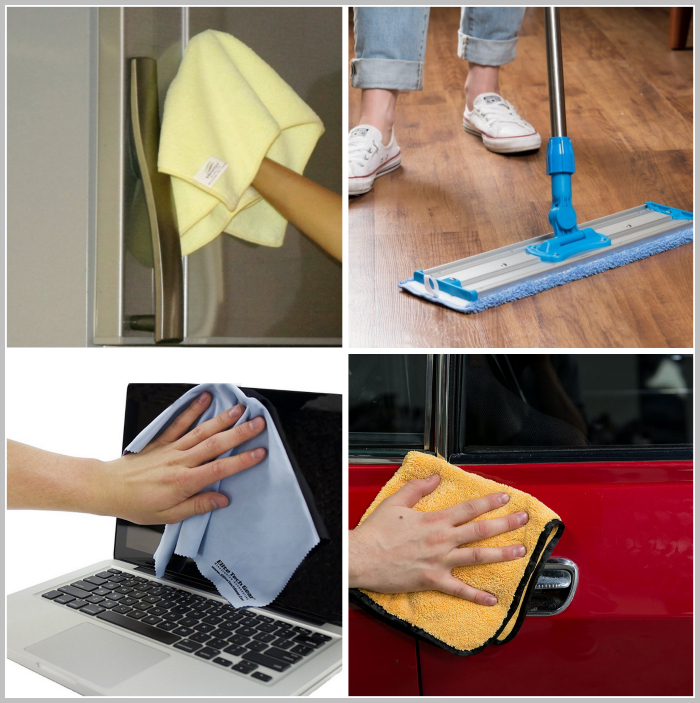
Microfiber cloths come in varying sizes and grades to clean every surface imaginable, from eyeglasses to countertops, windows, and cars.
Be warned: Plenty of fakes or poor-quality microfiber cloths are out there, so it’s good to know what to look for to know you’re not wasting your money on junk.
The best microfiber cloths are made of 70 percent polyester and 30 percent polyamide, or 70/30 for short.
Because microfiber picks up dust, dirt, and germs so effectively, it is mandatory that you remove everything that gets stuck in those magnet-like tiny fibers—much of which is not visible to the naked eye. Never launder microfiber with any other items other than microfiber. Lint for other fabrics will stick to them like crazy and microscopic bits will eventually render microfiber completely ineffective!
Thoroughly clean microfiber cloths after you’ve used them. Follow the manufacturer’s washing instructions.
Surprisingly, perhaps, the best way is to boil a microfiber cloth in a saucepan on the stovetop to avoid washing with regular detergents. In this way, by “washing” with water only, you will kill bacteria, germs, viruses without leaving any residues behind.
Never put microfiber through the clothes dryer—that place teems with microscopic bits of lint! Instead, hang to air dry.
Pro Tip
Never, ever use any kind of laundry softener on microfiber. Laundry softeners ruin microfiber. And if you use detergent or soap of any kind, make sure it is thoroughly rinsed out so that no residue remains.
Best Inexpensive Microfiber Products
Microfiber cloths come in varying sizes and grades to clean every surface imaginable, from eyeglasses to countertops, windows, and cars.
Be warned: Plenty of fakes or poor-quality microfiber cloths are out there, so it’s good to know what to look for to know you’re not wasting your money on junk.
The best microfiber cloths are made of 70 percent polyester and 30 percent polyamide, or 70/30 for short.
- Best for General Cleaning
- Best for Hard Flooring
- Best for Eyeglasses & Electronics
- Best for Automotive


Best for General Cleaning

The Rag Company Edgeless 365 Microfiber Towels, 10-Pack
I’ve put a lot of microfiber cloths to the test, and for general house cleaning, The Rag Company’s Edgeless 365 towels are my go-to. These cloths hit the sweet spot in size—not too big, not too small—making them super easy to handle and clean.
What sets these apart? They’re edgeless and tagless, which means no annoying hems or tags to get in the way. Plus, they don’t fray around the edges, shed bits of microfiber, stain easily, shrink, or lose their dust-busting power over time. The low-pile design is perfect for dusting and general cleaning.
I’m pretty tough on my household linens because I expect a lot from them. This pack of 10 from The Rag Company has stood up to my rigorous use for years, and they still look and perform like new. I especially love the dark-colored ones—they always look clean and neat, even after tackling the toughest messes.
Best for Hard Flooring

18″ Professional Microfiber Mop
Finding a good microfiber mop can be a game-changer for your floors, and this 18-inch Professional Microfiber Mop fits the bill perfectly. With its swivel head and removable cleaning pads, it’s designed to make floor cleaning a breeze. The adjustable stainless steel handle is a nice touch, allowing you to customize the length for comfort. This set even includes three mop pads and three bonus microfiber cloths—talk about value!
I’ve relied on this mop for years. The thick microfiber pads are fantastic for dusting hardwood floors, while the mop pad handles damp cleaning effortlessly. Whether you have wood, laminate, vinyl, or tile floors, this mop system is unbeatable for keeping them looking pristine. For the price, it’s hands down the best investment you can make for your floors.
Best for Eyeglasses & Electronics
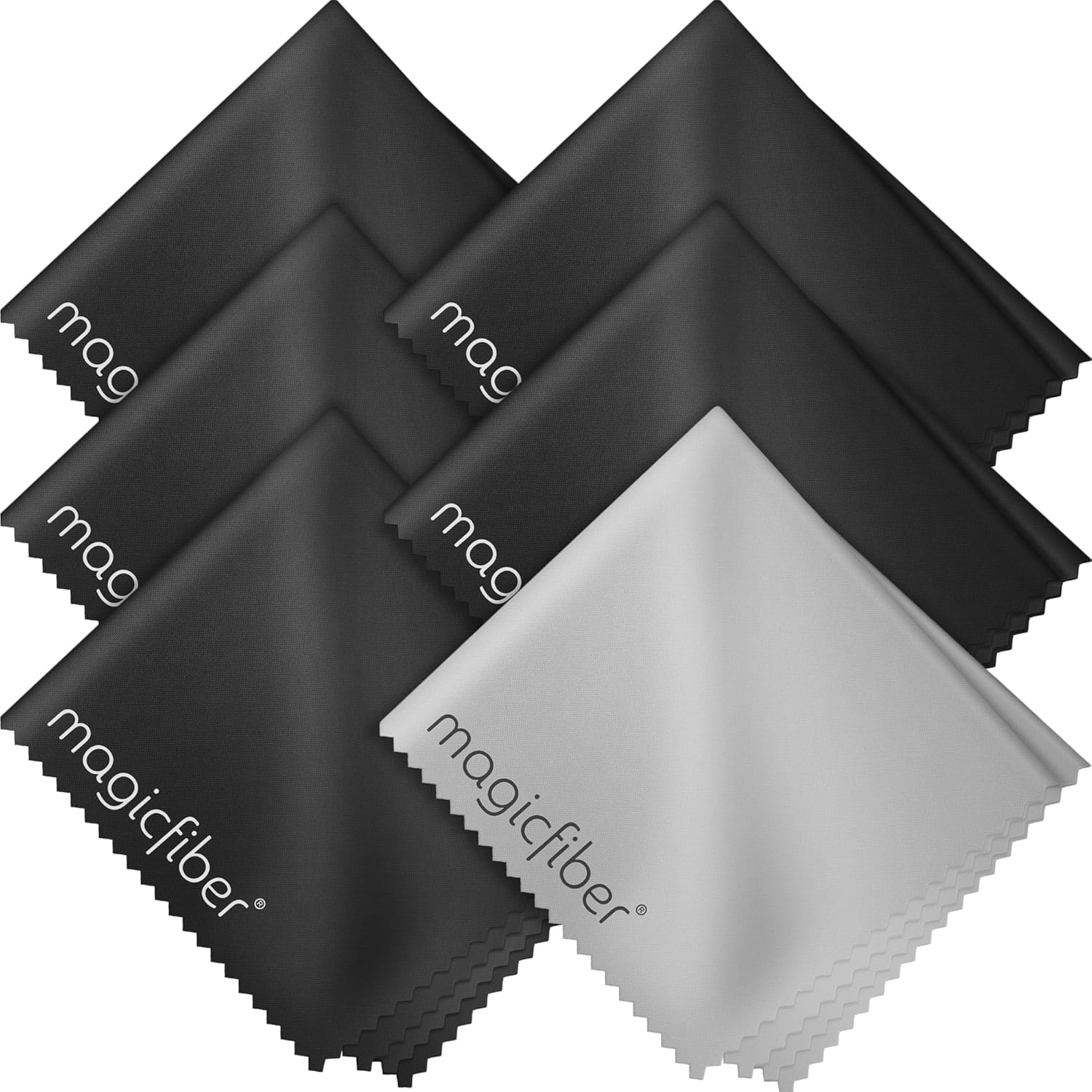
MagicFiber Microfiber Cleaning Cloth, 6 Pack
A good microfiber cloth can make all the difference when you’re cleaning eyeglasses, phone screens, tablets, or laptops. I’ve tried plenty over the years, and one thing I’ve learned is that not all microfiber cloths are created equal. Some just push smudges around. Others leave behind lint that defeats the whole purpose.
These MagicFiber microfiber cloths are soft, reusable, and gentle enough for delicate lenses and screens. They do an excellent job lifting away fingerprints, dust, and oily residue without scratching surfaces or leaving streaks behind. I also appreciate that each cloth comes individually packaged, so it’s clean and ready to use right out of the package.
Keep one near your computer, tuck another into your purse or glove compartment, and stash a few where you tend to use your devices most. Once you get in the habit of using a quality microfiber cloth, you’ll wonder how you ever tolerated all those smudges.
(Disclosure: This post includes an Amazon Creator Connections product. I may earn a small commission if you purchase through the link, at no additional cost to you.)
Reminder
Quality microfiber cloths are at their peak of performance when they are slightly damp. Thoroughly wet a dry microfiber cloth in water. At first it will appear to repel the water, but give it a few seconds. Once completely wet, wring it out really well so it is just slightly damp to the touch.
Best for Automotive

Chemical Guys MIC 507 06 Professional Grade Premium Microfiber Towel, 6-Pack
Using old household towels to wash and detail your car might seem like a good idea, but it often leads to scratches and more work. Enter the Chemical Guys Professional Grade Premium Microfiber Towels. These microfiber towels are a total game-changer for car care. They won’t harm your paint, halve your drying time, and leave no streaks or scratches behind.
For those big car-cleaning jobs, you need a towel that’s up to the task. These 16” x 24” Chemical Guys towels, made from the finest 70/30 lint-free materials, are perfect. They’re just the right size to fold into fourths, like the pros do. The super thick pile is the secret sauce for mopping up standing water on any surface, especially your car’s exterior. They even work like magic on windows and windshields, leaving them sparkling clean.
Question: What’s your favorite cleaning hack that saves you time and makes your home sparkle? Share your tips below.
EverydayCheapskate™ is reader-supported. We participate in the Amazon Services LLC Associates Program and other affiliate advertising programs, designed to provide a means for us to earn from qualifying purchases, at no cost to you.

More from Everyday Cheapskate
 https://www.everydaycheapskate.com/wp-content/uploads/20261024-A-cup-of-coffee-notebook-and-pen-on-a-table.png
800
1200
Mary Hunt
https://www.everydaycheapskate.com/wp-content/uploads/EC-Logo-by-Mary-Hunt-Tagline-Trimmed.png
Mary Hunt2026-10-24 13:13:592026-10-24 13:13:59What Is Frugal Living? It’s Probably Not What You Think
https://www.everydaycheapskate.com/wp-content/uploads/20261024-A-cup-of-coffee-notebook-and-pen-on-a-table.png
800
1200
Mary Hunt
https://www.everydaycheapskate.com/wp-content/uploads/EC-Logo-by-Mary-Hunt-Tagline-Trimmed.png
Mary Hunt2026-10-24 13:13:592026-10-24 13:13:59What Is Frugal Living? It’s Probably Not What You Think https://www.everydaycheapskate.com/wp-content/uploads/20261023-Paper-calendar-and-digital-calendar-on-a-smartphone-side-by-side.png
800
1200
Mary Hunt
https://www.everydaycheapskate.com/wp-content/uploads/EC-Logo-by-Mary-Hunt-Tagline-Trimmed.png
Mary Hunt2026-10-23 11:55:302026-10-23 11:55:30Paper or Digital Calendar? Turns Out, You May Need Both
https://www.everydaycheapskate.com/wp-content/uploads/20261023-Paper-calendar-and-digital-calendar-on-a-smartphone-side-by-side.png
800
1200
Mary Hunt
https://www.everydaycheapskate.com/wp-content/uploads/EC-Logo-by-Mary-Hunt-Tagline-Trimmed.png
Mary Hunt2026-10-23 11:55:302026-10-23 11:55:30Paper or Digital Calendar? Turns Out, You May Need Both https://www.everydaycheapskate.com/wp-content/uploads/20261017-Woman-opening-refrigerator-stocked-with-fresh-food-and-condiments.png
800
1200
Mary Hunt
https://www.everydaycheapskate.com/wp-content/uploads/EC-Logo-by-Mary-Hunt-Tagline-Trimmed.png
Mary Hunt2026-10-17 12:16:242026-10-17 12:16:24What Temperature Should a Refrigerator and Freezer Be?
https://www.everydaycheapskate.com/wp-content/uploads/20261017-Woman-opening-refrigerator-stocked-with-fresh-food-and-condiments.png
800
1200
Mary Hunt
https://www.everydaycheapskate.com/wp-content/uploads/EC-Logo-by-Mary-Hunt-Tagline-Trimmed.png
Mary Hunt2026-10-17 12:16:242026-10-17 12:16:24What Temperature Should a Refrigerator and Freezer Be? https://www.everydaycheapskate.com/wp-content/uploads/20261012-Woman-using-smartphone-while-checking-monthly-cellular-data-usage-on-laptop.png
800
1200
Mary Hunt
https://www.everydaycheapskate.com/wp-content/uploads/EC-Logo-by-Mary-Hunt-Tagline-Trimmed.png
Mary Hunt2026-10-12 10:51:112026-10-12 10:51:11Do You Really Need Unlimited Data? Check Before You Pay
https://www.everydaycheapskate.com/wp-content/uploads/20261012-Woman-using-smartphone-while-checking-monthly-cellular-data-usage-on-laptop.png
800
1200
Mary Hunt
https://www.everydaycheapskate.com/wp-content/uploads/EC-Logo-by-Mary-Hunt-Tagline-Trimmed.png
Mary Hunt2026-10-12 10:51:112026-10-12 10:51:11Do You Really Need Unlimited Data? Check Before You Pay https://www.everydaycheapskate.com/wp-content/uploads/20261011-Woman-Adjusting-Smart-Home-Device-on-the-Wall-how-to-lower-your-electric-bill.png
800
1200
Mary Hunt
https://www.everydaycheapskate.com/wp-content/uploads/EC-Logo-by-Mary-Hunt-Tagline-Trimmed.png
Mary Hunt2026-10-11 23:01:562026-10-11 23:01:56Stop Chasing Pennies on Your Electric Bill. Do This
https://www.everydaycheapskate.com/wp-content/uploads/20261011-Woman-Adjusting-Smart-Home-Device-on-the-Wall-how-to-lower-your-electric-bill.png
800
1200
Mary Hunt
https://www.everydaycheapskate.com/wp-content/uploads/EC-Logo-by-Mary-Hunt-Tagline-Trimmed.png
Mary Hunt2026-10-11 23:01:562026-10-11 23:01:56Stop Chasing Pennies on Your Electric Bill. Do This https://www.everydaycheapskate.com/wp-content/uploads/20261007-red-present-sitting-in-autumn-leaves-Amazon-Prime-Big-Deal-Days-gifts.png
800
1200
Mary Hunt
https://www.everydaycheapskate.com/wp-content/uploads/EC-Logo-by-Mary-Hunt-Tagline-Trimmed.png
Mary Hunt2026-10-06 23:09:432026-10-06 23:09:43Christmas Shopping in October? These Prime Day Gifts Make Sense
https://www.everydaycheapskate.com/wp-content/uploads/20261007-red-present-sitting-in-autumn-leaves-Amazon-Prime-Big-Deal-Days-gifts.png
800
1200
Mary Hunt
https://www.everydaycheapskate.com/wp-content/uploads/EC-Logo-by-Mary-Hunt-Tagline-Trimmed.png
Mary Hunt2026-10-06 23:09:432026-10-06 23:09:43Christmas Shopping in October? These Prime Day Gifts Make Sense https://www.everydaycheapskate.com/wp-content/uploads/20261006-prime-big-deal-days-have-landed.png
800
1200
Mary Hunt
https://www.everydaycheapskate.com/wp-content/uploads/EC-Logo-by-Mary-Hunt-Tagline-Trimmed.png
Mary Hunt2026-10-05 11:01:432026-10-07 09:02:53EC’s Top Picks from Amazon Prime Big Deal Days 2026
https://www.everydaycheapskate.com/wp-content/uploads/20261006-prime-big-deal-days-have-landed.png
800
1200
Mary Hunt
https://www.everydaycheapskate.com/wp-content/uploads/EC-Logo-by-Mary-Hunt-Tagline-Trimmed.png
Mary Hunt2026-10-05 11:01:432026-10-07 09:02:53EC’s Top Picks from Amazon Prime Big Deal Days 2026 https://www.everydaycheapskate.com/wp-content/uploads/20261004-reduce-healthcare-costs-with-three-habits-healthy-couple-walking-in-autumn-leaves.png
800
1200
Mary Hunt
https://www.everydaycheapskate.com/wp-content/uploads/EC-Logo-by-Mary-Hunt-Tagline-Trimmed.png
Mary Hunt2026-10-04 23:08:572026-10-04 23:09:47How to Reduce Healthcare Costs With 3 Free Daily Habits
https://www.everydaycheapskate.com/wp-content/uploads/20261004-reduce-healthcare-costs-with-three-habits-healthy-couple-walking-in-autumn-leaves.png
800
1200
Mary Hunt
https://www.everydaycheapskate.com/wp-content/uploads/EC-Logo-by-Mary-Hunt-Tagline-Trimmed.png
Mary Hunt2026-10-04 23:08:572026-10-04 23:09:47How to Reduce Healthcare Costs With 3 Free Daily Habits https://www.everydaycheapskate.com/wp-content/uploads/20241004-news-you-can-use-october-everyday-cheapskate-top-news-articles.png
800
1200
Mary Hunt
https://www.everydaycheapskate.com/wp-content/uploads/EC-Logo-by-Mary-Hunt-Tagline-Trimmed.png
Mary Hunt2026-10-04 01:04:052026-10-23 09:46:06News You Can Use • October 2026
https://www.everydaycheapskate.com/wp-content/uploads/20241004-news-you-can-use-october-everyday-cheapskate-top-news-articles.png
800
1200
Mary Hunt
https://www.everydaycheapskate.com/wp-content/uploads/EC-Logo-by-Mary-Hunt-Tagline-Trimmed.png
Mary Hunt2026-10-04 01:04:052026-10-23 09:46:06News You Can Use • October 2026Please keep your comments positive, encouraging, helpful, brief,
and on-topic in keeping with EC Commenting Guidelines
Last update on 2026-10-26 / Affiliate links / Images from Amazon Product Advertising API


Can microfiber cloths be used to wipe over decorative pillows and upholstered furniture? It seems to me to be an easy way to clean such things, but I wondered if “lint” from doing that would mess up my microfiber cloths.
That’s a perfect use, Diane! Just make sure the microfiber is a fresh/clean. What it picks up can be shaken (outdoors!) to release dirts and debris. I’d do that while that debris is still loose and before laundering.
I’m a gentle lady and find that a microfiber cloth used on a Swiffer mop fits the bill better than using a larger (wider) mop, plus the Swiffer mop fits in smaller spaces and is so easy to attach the microfiber cloth into the slits in the mop head. I even flip the microfiber cloth over, using the other side so get 2 uses from one cloth, so I’m not spreading dirt around. Plus having multiple microfiber cloths handy is really easy to swap new cloths on the Swiffer head. Apologies to Swiffer’s mfr — don’t know how to add the trademark– you do have a great product.
.
Do not purchase the
Professional Premium 70/30 Microfiber Cloths 10-Pak, I did and they are still turning items blue. I have washed numerous times, and are still bleeding blue.
This should not be happening, so I suggest you contact the seller for a refund or replacement. Not sure what your experience is with “bleeding blue” but if you mean turning other items blue, remember never wash your microfiber cloths with other items other than microfiber cloths
How do you wash both the dust and the wet microfiber pads for the floor mop that you recommended?
I throw them into the washing machine with other microfiber cloths. Take a look at this post where I offer more details. The Magic of Microfiber Cloths Plus How to Use and Care for Them
Pretty article! I found some useful information in your blog, it was awesome to read, thanks for sharing this great content to my vision, keep sharing..
Mary,
Do you wash the “blue microfiber cloths” in cold water and hang dry or put them in the dryer on low?
I treat them the same as any color in the washer, as in the post. Never in the dryer.
Mary: I have the 10-pack of microfiber cloths you recommended and it clearly states to not use water hotter than 140°. You say to follow the mfr’s instructions, but boiling works best. Are you just ignoring the 140° limit?
I do wash them on my washer’s hot cycle. I have boiled them as referenced in the post. Not problems. But of course use your own judgment!
Thank you for sharing this useful information, I will regularly follow your blog. Excellent post!
Hello, This is wealth of information shared. I am appreciative. Thank you.
Is there anyway to remove softener from microfiber?
Hi Mary, I stopped using soap many years ago and use Norwex microfiber cloths. I don’t know why they work so well, but my skin is much better and I have much less body odor. Do you know of any other similar cloths for a more economical price. Thank you in advance.
I discovered using my microfiber mop pad was the easiest and best way to get my windows dried fast and streak-free. I use a microfiber cloth to wipe down my shower faucets, trim, and door to eliminate water spots. I have always thrown them in with my regular laundry and haven’t noticed lint on them – just don’t use fabric softener! Thanks to your tips, I’ll use them on many other surfaces too.
Cars and windows, wonderful. But what do you recommend for shiny and/or non-reflective TV SCREENS? Thank you, as always.
The best cleaning cloths I’ve ever used are wipe and glow cleaning cloths. I’ve been using the same one for months and it’s still going strong. I just keep washing it and using it. Makes cleaning glass a breeze!
So do you boil your floor microfiber mops?