
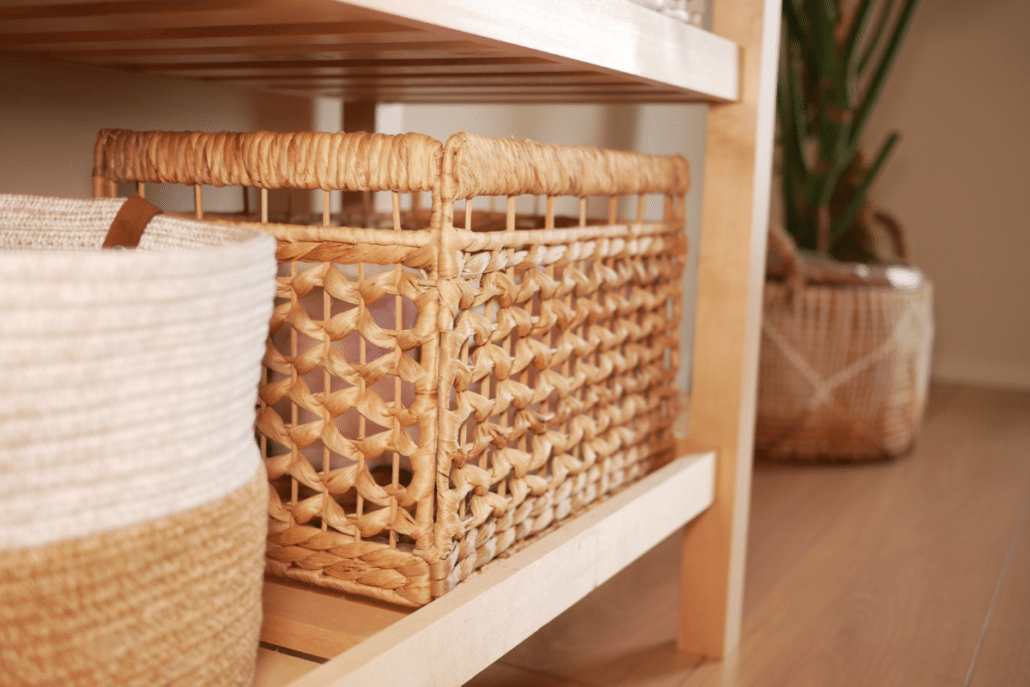
Secret Storage Spots in Your Home You May Be Overlooking

Before you spend another dollar on bins, baskets or shelving, take a good look around. Your home may already be hiding useful storage space in places you walk past every day. A few smart adjustments can free up room, reduce clutter and help you avoid buying organizers you never really needed in the first place.
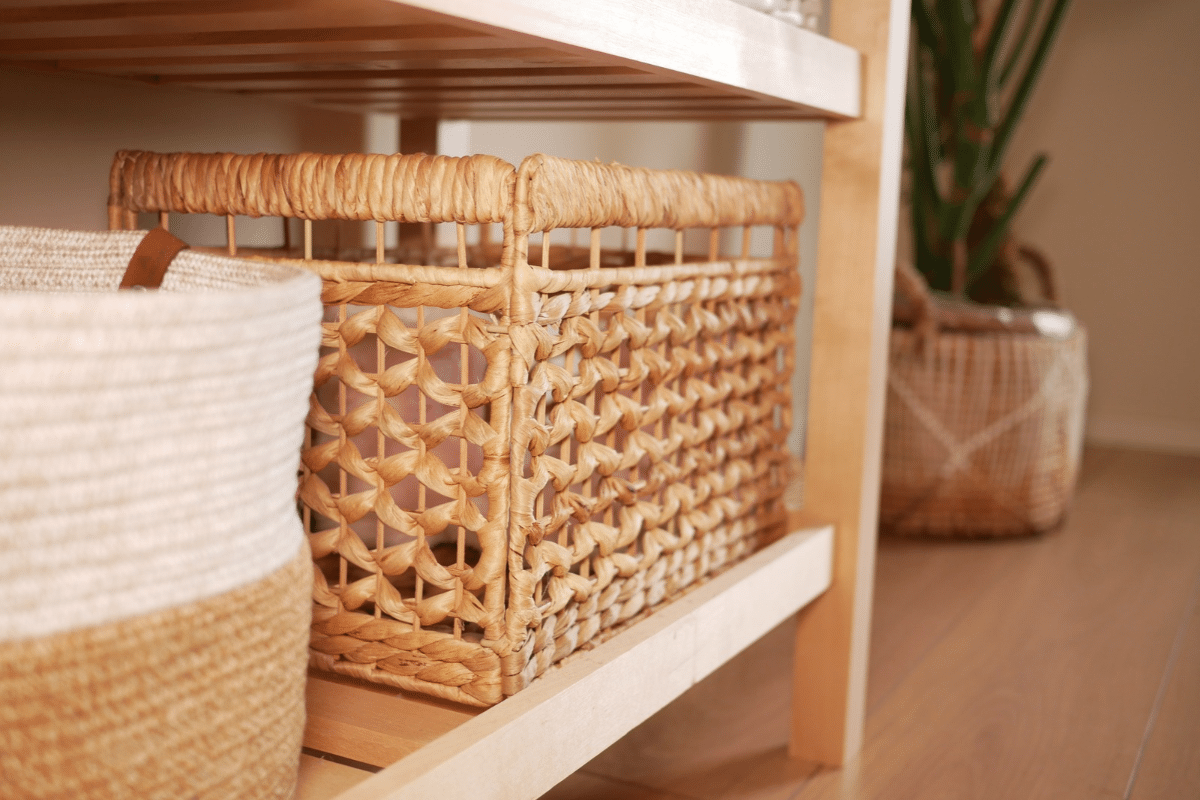
Before you buy another storage cabinet, shelving unit, plastic tote or, heaven forbid, rent a storage unit, I have a challenge for you: Go shopping for storage space in your own house. Seriously.
Most homes contain little pockets of unused space that we walk past every day without seeing them. They’re above us, below us, behind things and sometimes hiding inside things we already own.
And unlike that attractive collection of matching baskets you’ve been eyeing, this storage space is free.
The trick is to stop looking at your house as a collection of rooms and start looking at it as a collection of cubic feet. That sounds terribly mathematical. It isn’t.
You’re simply looking for empty space that’s already there and asking, “Could this be useful?” Quite often, the answer is yes.
Look up
Start with the tops of your kitchen cabinets.
If your cabinets don’t go all the way to the ceiling, there’s potentially valuable real estate up there. It’s not the place for the waffle maker you use every Saturday, but it can be terrific for seldom-used serving pieces, holiday dishes, cake stands and other lightweight things you need only occasionally.
One caution: Kitchen grease and dust have an astonishing ability to find one another. If you’re storing something up there for months at a time, put it in a washable container or covered box.
If the area is visible, matching baskets or simple boxes can keep things looking orderly.
If nobody can see it, congratulations. You have my permission not to make your storage containers Instagram-worthy.
Look up in closets, too. Many closets have a ridiculous amount of unused space between the top shelf and the ceiling. Depending on the closet, adding one inexpensive shelf can practically create another floor.
That’s excellent territory for things such as:
- Extra blankets
- Off-season clothing
- Holiday decorations
- Guest-room linens
- Seldom-used handbags
- Empty travel bags
Just keep the heavy stuff lower. A bowling ball stored six feet in the air is less “clever storage” and more “future emergency-room story.”
Look under
Space under a bed is hardly a secret, but are you actually using all of it?
Those few inches can hold off-season clothing, extra linens, wrapping paper, shoes and flat containers of things you don’t need every day.
Before buying special under-bed bins, measure the clearance and look around the house for containers you already own. A shallow box may work perfectly. So might an old suitcase. If dust is an issue, use something with a lid or slip the whole thing into a zippered storage bag you already have.
And don’t stop with the bed. Look under sofas, dressers, desks, cribs and other furniture. Measure first. You may have several square feet of perfectly good storage space sitting there collecting nothing but dust bunnies.
There’s another underused spot hiding in many closets: the floor.
If your hanging clothes stop three feet above it, that’s storage space begging for a small dresser, shoe rack, basket or stackable bins.
You may not need a bigger closet at all. You may simply need to use the bottom half of the one you already have.
Look behind
Here’s one I love because most of us never think about it: drawers.
Pull a drawer completely out of a dresser, desk or cabinet and look behind it. Depending on the construction, there may be unused space between the back of the drawer and the back of the furniture.
I’m not suggesting you stuff your winter wardrobe back there. But a small, flat item may fit nicely.
And before you hide anything important in a spot like that, consider whether you’ll remember where you put it six months from now. Storage isn’t terribly useful when it becomes an archaeological dig.
That advice may become increasingly important as this article continues.
Also look behind freestanding furniture. A narrow space behind a dresser or bookcase may accommodate folding chairs, an ironing board or another slim item, provided it doesn’t interfere with airflow, electrical outlets or the furniture itself.
Put your suitcases to work
Suitcases are empty boxes. Unless you travel constantly, luggage spends most of its life taking up storage space while storing absolutely nothing.
That seems rather lazy of it. It may be time to put those cases to work.
Large suitcases can hold:
- Out-of-season clothing
- Extra blankets
- Travel pillows
- Beach towels
- Travel accessories
- Seldom-used seasonal items
Smaller travel bags can go inside larger suitcases, too. Think of it as luggage nesting.
Obviously, don’t fill your suitcase with something you’ll have to spend two hours relocating the night before a trip. The idea is to gain storage, not create a new problem.
A good rule: Store things inside luggage that can be moved quickly as one group. And put a label inside or on the luggage telling you what’s there. Future You will be grateful.
Don’t ignore the backs of doors
The backs of doors are wonderfully underused.
An over-the-door organizer can turn a pantry door into storage for snacks, spices, foil, plastic bags and lightweight kitchen supplies.
A bedroom closet door can hold shoes, scarves, belts or handbags.
A linen closet door might hold toiletries or cleaning cloths.
And here’s where I want you to resist the urge to immediately buy an organizer. First ask whether something you already own will work. A few sturdy hooks may be all you need.
Inside cabinet doors, small hooks or narrow racks can sometimes hold measuring spoons, pot lids, cutting boards, oven mitts or lightweight cleaning tools.
The space was already there. You just persuaded it to get a job.
One word of caution: Make sure anything mounted inside a cabinet door clears the shelves when the door closes. Otherwise you’ll create a very efficient system for slamming one household object into another. Ask me how I know.
Give furniture two jobs
Whenever you’re short on storage, look for furniture that’s already capable of doing double duty.
A bench can hold blankets. An ottoman can hide games. A window seat may have a large empty cavity underneath. A nightstand with drawers can replace a decorative table that stores nothing.
Even an ordinary end table may have room underneath for a basket containing magazines, knitting supplies, children’s toys or whatever tends to migrate around that room.
This doesn’t mean you should run out and replace all your furniture with “storage furniture.” That rather defeats our purpose.
Start with what you already own. Open things. Look underneath them. You may discover storage that has been sitting there waiting for an assignment.
Look for skinny spaces
Now look for the narrow spots.
Beside the refrigerator. Between the washer and dryer. Next to a bathroom vanity. Between a dresser and the wall.
That skinny space may not be useful for much, but “not much” is sometimes exactly what you need. A narrow gap might hold a folding step stool, ironing board, broom, mop, wrapping paper or serving tray.
And again, don’t buy a special rolling contraption until you’ve decided what actually needs to live there.
I’ve seen us humans do this backward many times. We buy the organizer first. Then we wander around looking for enough stuff to justify owning it.
Use the space above the washer and dryer
Laundry rooms are famous for wasting vertical space.
Look above your washer and dryer. If the area is open and accessible, a shelf or existing cabinet can hold lightweight laundry supplies, extra paper goods or household items you don’t need constantly.
But don’t crowd appliance controls, hoses, vents or anything that needs airflow or maintenance access.
Investigate the space under the stairs
If your home has stairs, there may be useful space underneath them. Sometimes that’s already a closet. Sometimes it’s an awkward little cubby. Sometimes it’s simply unused.
Depending on how the area is constructed and accessible, it can work well for seasonal decorations, luggage, sports equipment, household supplies or things you use only occasionally.
The operative word here is accessible.
If retrieving the Christmas decorations requires removing 14 boxes, a vacuum cleaner and something you haven’t seen since 1998, we may need to rethink the system.
Don’t forget the garage walls
If your garage floor is disappearing beneath boxes, bicycles and garden equipment, look at the walls before deciding you need more floor space.
Wall-mounted hooks and shelves can move lightweight items up and out of the way. Pegboard you already own can corral tools. Existing rafters or overhead areas may appear tempting, too, but don’t store things overhead unless the structure is designed to support them safely.
And please don’t block electrical panels, utility equipment or anything you might need to reach quickly.
The goal is usable storage. Not a household obstacle course.
Look inside things that are already taking up space
This may be my favorite category.
Sometimes the best storage spot isn’t beside, behind or underneath something. It’s inside it.
Empty coolers can hold picnic supplies. Large stockpots can hold smaller pots or rarely used kitchen pieces. Decorative baskets can hold table linens. A picnic basket can hold outdoor dining supplies. A roasting pan you use twice a year can hold other lightweight kitchen items between appearances.
You already gave these things permission to occupy space in your home. They may as well earn their keep.
Before you buy a storage container, ask these questions
Once you start noticing unused space, it’s very easy to get excited and head straight for the storage aisle. Not yet.
Before buying anything, ask:
- What exactly am I trying to store? Don’t buy a container for an unnamed category called “stuff.”
- Do I actually want to keep these things? A prettier box does not transform clutter into treasure.
- Do I already own something that will work? Suitcases, baskets, boxes and bins count.
- Where will the container live? Measure that space before buying.
- Can I get to the contents when I need them? Storage that requires moving six other things isn’t nearly as clever as it looked in the store.
Use the space first. Buy the container only if the space truly needs one.
Storage space that should stay empty
Not every empty cavity should become storage.
Stay away from electrical panels, working air vents, furnaces, water heaters and other equipment that requires ventilation, clearance or quick access.
Don’t cover heating or cooling vents.
Don’t pile belongings against appliances or utility equipment.
And don’t put heavy things overhead where gravity could eventually make you regret your enthusiasm.
Also think about temperature and moisture. Attics, garages, basements and other unfinished spaces may not be appropriate for photographs, important papers, electronics, candles, medications or anything else that can be damaged by heat, cold or humidity.
Sometimes the smartest storage decision is deciding that a particular space should remain empty.
Shop your house before you shop the store
Take 15 minutes and walk through your house with a completely different goal.
Don’t look at the clutter. Look at the empty space. Look up. Look under. Look behind. Look inside.
You may discover your house has far more storage than you thought.
And if, after all of that, you genuinely need another shelf or storage bin? Fine. Buy the one that fits the space and solves the problem.
But at least now you’re buying it because you need it. Not because the storage aisle convinced you that matching baskets are the answer to all of life’s problems.
They are lovely. But they are not that powerful.
Question: What’s the most unexpected storage spot you’ve found in your own home? Tell us in the comments below.
EverydayCheapskate™ is reader-supported. We participate in the Amazon Services LLC Associates Program and other affiliate advertising programs, designed to provide a means for us to earn from qualifying purchases, at no cost to you.

More from Everyday Cheapskate
 https://www.everydaycheapskate.com/wp-content/uploads/when-to-file-an-insurance-claim.png
800
1200
Mary Hunt
https://www.everydaycheapskate.com/wp-content/uploads/EC-Logo-by-Mary-Hunt-Tagline-Trimmed.png
Mary Hunt2026-10-29 12:47:092026-10-29 12:49:44Small Insurance Claim? 5 Questions to Ask Before You File
 https://www.everydaycheapskate.com/wp-content/uploads/20261025-Simple-anti-aging-skincare-routine-with-cleanser-vitamin-C-moisturizer-and-sunscreen.png
800
1200
Mary Hunt
https://www.everydaycheapskate.com/wp-content/uploads/EC-Logo-by-Mary-Hunt-Tagline-Trimmed.png
Mary Hunt2026-10-25 17:06:382026-10-25 21:22:53A Simple Anti-Aging Skincare Routine That Makes Sense
 https://www.everydaycheapskate.com/wp-content/uploads/20261024-A-cup-of-coffee-notebook-and-pen-on-a-table.png
800
1200
Mary Hunt
https://www.everydaycheapskate.com/wp-content/uploads/EC-Logo-by-Mary-Hunt-Tagline-Trimmed.png
Mary Hunt2026-10-24 13:13:592026-10-24 13:13:59What Is Frugal Living? It’s Probably Not What You Think
 https://www.everydaycheapskate.com/wp-content/uploads/20261023-Paper-calendar-and-digital-calendar-on-a-smartphone-side-by-side.png
800
1200
Mary Hunt
https://www.everydaycheapskate.com/wp-content/uploads/EC-Logo-by-Mary-Hunt-Tagline-Trimmed.png
Mary Hunt2026-10-23 11:55:302026-10-23 11:55:30Paper or Digital Calendar? Turns Out, You May Need Both
 https://www.everydaycheapskate.com/wp-content/uploads/20261017-Woman-opening-refrigerator-stocked-with-fresh-food-and-condiments.png
800
1200
Mary Hunt
https://www.everydaycheapskate.com/wp-content/uploads/EC-Logo-by-Mary-Hunt-Tagline-Trimmed.png
Mary Hunt2026-10-17 12:16:242026-10-17 12:16:24What Temperature Should a Refrigerator and Freezer Be?
 https://www.everydaycheapskate.com/wp-content/uploads/20261012-Woman-using-smartphone-while-checking-monthly-cellular-data-usage-on-laptop.png
800
1200
Mary Hunt
https://www.everydaycheapskate.com/wp-content/uploads/EC-Logo-by-Mary-Hunt-Tagline-Trimmed.png
Mary Hunt2026-10-12 10:51:112026-10-12 10:51:11Do You Really Need Unlimited Data? Check Before You Pay
 https://www.everydaycheapskate.com/wp-content/uploads/20261011-Woman-Adjusting-Smart-Home-Device-on-the-Wall-how-to-lower-your-electric-bill.png
800
1200
Mary Hunt
https://www.everydaycheapskate.com/wp-content/uploads/EC-Logo-by-Mary-Hunt-Tagline-Trimmed.png
Mary Hunt2026-10-11 23:01:562026-10-11 23:01:56Stop Chasing Pennies on Your Electric Bill. Do This
 https://www.everydaycheapskate.com/wp-content/uploads/20261007-red-present-sitting-in-autumn-leaves-Amazon-Prime-Big-Deal-Days-gifts.png
800
1200
Mary Hunt
https://www.everydaycheapskate.com/wp-content/uploads/EC-Logo-by-Mary-Hunt-Tagline-Trimmed.png
Mary Hunt2026-10-06 23:09:432026-10-06 23:09:43Christmas Shopping in October? These Prime Day Gifts Make Sense
 https://www.everydaycheapskate.com/wp-content/uploads/20261006-prime-big-deal-days-have-landed.png
800
1200
Mary Hunt
https://www.everydaycheapskate.com/wp-content/uploads/EC-Logo-by-Mary-Hunt-Tagline-Trimmed.png
Mary Hunt2026-10-05 11:01:432026-10-07 09:02:53EC’s Top Picks from Amazon Prime Big Deal Days 2026

I have a shoe organizer hanging on the basement door. It’s filled with snacks for the kids’ lunch. Refilled on Sundays.