

How to Make Soup From Leftovers (Plus 8 Easy Ideas)

A couple of carrots. A spoonful of rice. Half a chicken breast and a little gravy. Not much to look at, I know. But give me an onion, some broth and a soup pot, and dinner is well on its way.

Jump to printable recipes ↓
Soup is one of my favorite ways to practice waste-not, want-not. You’ve already paid for most of what goes into the pot, so what comes out amounts to a nearly free meal.
But I’m not talking about just dumping stuff in a pot willy-nilly. There’s a method here for making really great soup from the odds and ends you’ve gotten used to tossing.
And use a little wisdom. Soup is a good way to disguise certain foods, but if your family didn’t like something the first time, chances are slim they’ll like it any better floating in broth.
The five essential elements of homemade soup
Once you know what goes into a good pot of soup, you’ll rely less and less on recipes. Here’s the list.
1. Fat
Olive oil, vegetable oil, butter, bacon fat, or a little of the fat you saved from roasting a chicken. A tablespoon or two is plenty. It gives you something to sauté in, and that’s where the flavor starts.
2. Onion
Yellow onions, white onions, shallots or leeks. Celery and carrots belong here, too. Sauté them in the fat until they begin to soften.
It’s tempting to skip this step and dump everything straight into the broth. Don’t. Those few minutes make a big difference in the finished soup.
3. Liquid
Broth, stock, bouillon dissolved in water, tomato juice, or the cooking liquid from vegetables (as long as it’s been stored safely). Leftover gravy works too, thinned with a little water or broth. Milk, buttermilk and cream are good for creamy soups, but stir them in toward the end so they don’t curdle.
Plain water will do in a pinch. You’ll just need to pay more attention to the seasoning.
4. Seasonings
Salt, pepper, garlic, dried herbs, soy sauce, Tabasco, Worcestershire sauce, paprika, a splash of wine. Whatever makes sense with what’s in the pot.
Remember that your leftovers have already been seasoned. So has most store-bought broth. Taste before you reach for the salt shaker.
5. Fillings
Cooked beef, chicken, turkey, ham, fish, beans, pasta, rice, potatoes, and just about any vegetable you can name.
A good starting point is about 4 cups of broth to 2 cups of assorted leftovers. Add more of either until the soup is as hearty or as brothy as you like. This is soup, not chemistry class.
What goes into the soup pot first?
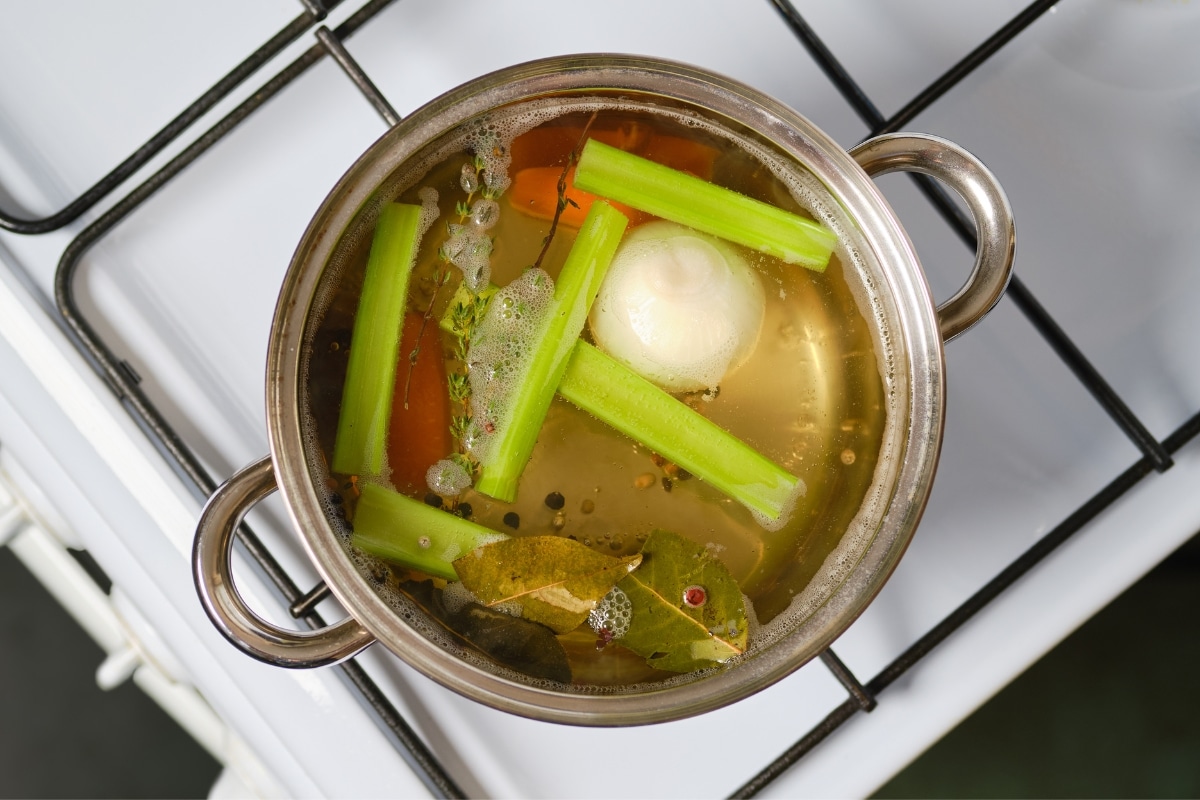
Here’s where a perfectly good idea for soup can go sideways. Everything in your refrigerator cooks at a different speed.
- Start with the onion. Sauté it and any other aromatic vegetables in a little fat until they begin to soften.
- Add the liquid, the seasonings, and any raw vegetables that need time to get tender, like potatoes and carrots.
- Add uncooked rice or pasta next. Give it the time the package calls for, and have extra broth handy because it will drink some.
- Add the cooked leftovers toward the end. Cooked vegetables, meat, rice and pasta don’t need another full cooking session. There’s no point in simmering yesterday’s perfectly good carrots into oblivion.
- Bring the soup to a boil and make sure everything reaches 165°F throughout. Take it off the heat before you stir in cream, sour cream or other dairy that might separate if boiled.
Thursday Night Soup
As the story goes, Friday was payday, so by Thursday night you were making dinner out of whatever was left in the house.
Not a bad practice today, no matter which day you get paid.
My recipe starts with onions sautéed in oil, a can of tomato paste, water, beef bouillon and a few simple seasonings. What goes in after that depends entirely on what you’ve got. Leftover beef stew goes right in. So do a spoonful of peas, a few cooked potatoes, the last of the green beans, or the end of a box of pasta. Extra liquid can come from milk, buttermilk, vegetable cooking water, tomato juice, gravy, a splash of wine, or leftover soup (as long as it isn’t “cabbagy”).
Think of the printable recipe at the end of this article as a starting point, not a set of rules to follow to the letter.
8 easy leftover soup ideas
Here are some combinations I like, along with a few ideas to get you thinking about what’s sitting in your own refrigerator.
1. Chicken noodle soup
A natural follow-up to a night of baked or roasted chicken. In fact, it’s a good reason to bake an extra breast or two in the first place.
Sauté chopped onion, carrots and celery in a little butter. Add chicken broth and egg noodles. When the noodles are tender, stir in the chopped chicken and any leftover vegetables, and heat it through. If you saved the drippings from the chicken, spoon some in for extra flavor.
2. Leftover turkey tortilla soup
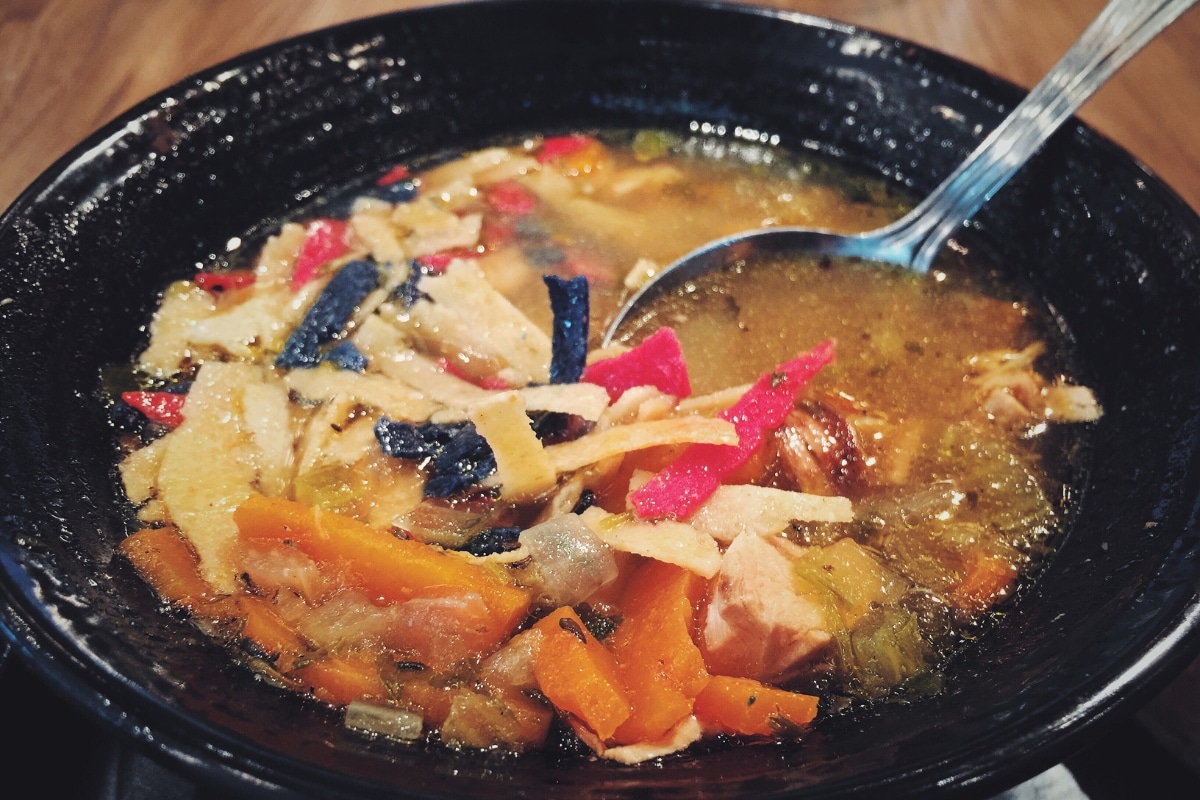
Had enough of Thanksgiving flavors for one year? Send that turkey in a different direction.
Combine about 4 cups of chicken or turkey broth with a can of diced tomatoes, a drained can of black beans, a little corn, and cumin and chili powder to taste. Simmer until it all comes together, then add chopped turkey and heat it through.
Top with crushed tortilla chips, a squeeze of lime and a little grated cheese. Nobody will guess it started out as Thanksgiving dinner.
3. Leftover meatloaf soup
Two slices of meatloaf in the refrigerator? You’ve done half the work on a pot of vegetable beef soup.
Sauté half a chopped onion in a little oil. Add 4 cups of beef broth, a can of diced tomatoes and a cup or two of assorted vegetables, and simmer until the vegetables are tender. Crumble or cube the meatloaf into the pot and heat it through.
Taste before you add any seasoning. If the meatloaf had a flavorful glaze, it may not need much more than a splash of Worcestershire sauce or a pinch of Italian seasoning.
4. Chili bean soup
Only a portion or two of chili left? Not enough to feed everybody again, but plenty to start a pot of soup.
Add a quart of beef, vegetable or chicken broth and a drained can of hominy or corn. Simmer together until piping hot. Serve with tortilla chips, salsa and grated cheese. Want it thicker? Start with less broth and add more as you go.
5. Corn and potato chowder
Leftover gravy, corn and mashed potatoes? You’re practically there.
Whisk the potatoes and gravy together with enough chicken broth to make a nice soup. Stir in the corn and simmer until hot. Season with dried dill weed, salt and pepper at the end. For a richer chowder, add a splash of cream after you take it off the heat. A little leftover ham or some crumbled bacon would be good here, too.
If potato soup is your thing, try my creamy slow cooker potato soup sometime. It’s a cold-weather favorite.
6. Beef stroganoff soup
Leftover beef stew? Thin it with beef broth and bring it to a boil. Stir in egg noodles and cook until they’re tender and everything is heated through. Then take the pot off the heat and stir in a little cream or sour cream.
Same beef, new dinner. Nobody has to know.
7. Italian pasta and vegetable soup
A little leftover spaghetti sauce, some cooked pasta and a few vegetables can turn into a pretty convincing minestrone.
Thin the sauce with chicken or vegetable broth, add a drained can of white beans and whatever vegetables you have, and simmer until any raw ones are tender. Stir in the cooked pasta last and heat it through. A sprinkle of Parmesan on top never hurts.
Got leftover Italian sausage? Toss it in. Or have a look at my Italian sausage vegetable soup recipe for more ideas.
8. Simple chicken and rice soup
A little leftover chicken and a cup of cooked rice make one of my favorite simple soups.
Sauté some chopped onion, carrots and celery in butter. Add chicken broth and a tablespoon of white miso, and simmer until the vegetables are tender. Stir in the cooked chicken and rice and heat it all through.
It’s that little bit of white miso that makes this soup particularly good.
Look for white miso in the international aisle of your supermarket, or in the refrigerated section. It’s a Japanese fermented soybean paste that adds a kind of sweet, amazing flavor to the broth. If you can’t find it, leave it out. The soup will still be good.
The printable Simple Chicken and Rice Soup recipe is at the end of this article.
Make your own chicken or turkey broth
Please don’t throw away that turkey carcass (assuming you’ve stored it safely). And the next time you bring home a rotisserie chicken, remember there’s more than one meal in that little bird.
Once the meat is off, the bones go in a big pot with some vegetables, herbs, peppercorns and cold water, and the whole thing simmers gently for about two hours. The printable Homemade Chicken Broth recipe at the end gives you the quantities.
What matters most is what happens after. Strain the broth, divide it into shallow containers and get it into the refrigerator promptly. An ice-water bath speeds up the cooling. Don’t leave a big hot pot sitting on the stove for hours. Once the broth is cold, skim off the fat.
Use it within three to four days, or freeze it for soups, gravies, sauces and cooking rice. I like to freeze mine in one- and two-cup portions, so I’m not opening an entire carton of store-bought broth for a recipe that calls for a little.
Scrap soup: Start a container in your freezer
Find yourself throwing out bits and pieces of meals? A few kernels of corn, a spoonful of green beans, three carrots? Not enough to bother saving?
Actually, it is.
Designate a freezer-safe container or zip-top bag for soup ingredients. After dinner, chill those little bits promptly and freeze them instead of scraping them into the trash. Label the container with the date you started it. You might even keep two, one for vegetables and one for cooked meats and other savory leftovers. Freeze each new addition separately before you combine it with what’s already in there.
An ice cube tray comes in handy for freezing little amounts of gravy, tomato paste or broth. Once frozen, pop the cubes into a freezer bag. Think of them as little flavor boosters for your next pot of soup.
When you’ve collected enough, you’ve got the start of Thursday Night Soup. Add broth, a few seasonings and whatever else seems right. The frozen bits can go straight into the pot, but give them enough time to heat all the way through.
Be selective about what goes in the container. A little cooked corn? Absolutely. A helping of marshmallow-topped sweet potato casserole? I’d find another use for that. The goal is a delicious soup, not making everything disappear.
Little habits like this make a real difference in what you spend at the grocery store. Here are 14 more creative ways to stretch your food budget.
How to fix homemade soup that isn’t quite right
Even with the best of intentions, a pot of soup doesn’t always turn out the way you’d hoped. Before you give up, try one of these fixes.
- If it’s too bland, add a squeeze of lemon juice or a splash of vinegar. Sometimes a soup needs acidity, not more salt. Worcestershire sauce, tomato paste or a little miso can add savory depth, too.
- If it’s too salty, add unsalted broth or water, plus more unsalted vegetables or beans, to dilute what’s already there. And no, dropping a raw potato into the pot won’t magically pull out the salt. That’s a myth.
- If it’s too thin, mash some of the beans or potatoes against the side of the pot and stir them back in. Or blend a portion of the soup and return it to the pot.
- If it’s too thick, which happens a lot with rice and pasta, add a little more broth or water until it looks right.
- If it’s not quite enough for dinner, add a drained can of beans, a handful of pasta or some frozen vegetables, and let anything uncooked cook until tender. Then serve it with biscuits, toast or a grilled cheese sandwich.
How long are leftovers safe to use in soup?
There’s a big difference between food worth saving and food that needs to go.
According to the U.S. Department of Agriculture (USDA), most properly refrigerated cooked leftovers should be used within three to four days. That includes cooked meat, poultry, rice and many vegetable dishes. A few more rules:
- Refrigerate perishable leftovers within two hours of cooking or removing them from hot holding (one hour if the temperature is above 90°F).
- Keep your refrigerator at 40°F or below.
- Freeze leftovers you won’t use within three to four days.
- When you reheat soup, bring it to a boil and use a food thermometer to make sure the leftovers reach 165°F throughout.
- Divide large batches into shallow containers for prompt refrigeration rather than leaving a big pot on the stove to cool for hours.
And please don’t toss questionable leftovers into the pot on the theory that boiling will fix everything. It won’t. Some toxins made by bacteria survive ordinary cooking temperatures, and food can be unsafe even when it looks and smells perfectly normal.
When in doubt, throw it out. There’s nothing frugal about food poisoning.
Can you freeze homemade soup?
Yes. Broth-based soups, bean soups and most vegetable soups freeze beautifully.
If you’re making a batch just for the freezer, leave out the pasta, rice and dairy until you’re ready to serve. Pasta and rice keep soaking up liquid as they sit, and creamy soups can separate after freezing.
Portion the soup into freezer-safe containers, leave room for expansion, and label each with the contents and date. For best quality, use frozen soup within two to three months. Thaw it in the refrigerator, or reheat it straight from frozen in a saucepan. Stir as it thaws, bring it to a boil and make sure it reaches 165°F throughout.
On some busy evening when delivery is starting to sound tempting, you’ll be glad that soup is waiting in the freezer.
If you want more ways to put that freezer to work, here’s my guide to the best foods to freeze for quick meals and easy savings. A few might surprise you.
Three recipes to get you started
Try this with what you’ve already got, before you make a grocery list. You may surprise yourself with how good a pot of soup you can make without spending another dime.
And if you’ve still got leftovers that don’t quite belong in a soup pot, here are 34 more ways to turn leftovers into delicious meals.
Below are three printable recipes to keep handy. Make them a time or two and you may not need the recipes at all.
Thursday Night Soup
Ingredients
- 3 medium onions chopped
- 3 tablespoons olive or vegetable oil or butter or bacon fat
- 1 6-ounce can tomato paste
- 4 cups water
- 4 beef bouillon cubes or equivalent bouillon concentrate according to package directions
- ¼ teaspoon black pepper
- 1 bay leaf
- ¼ teaspoon dried thyme
- ½ teaspoon sugar
- 1-2 cups assorted leftovers cooked meats, vegetables, rice, pasta or other suitable ingredients; see notes
- 1-2 cups additional liquid broth vegetable cooking liquid, tomato juice, gravy, milk or cream; see notes
- salt to taste
- additional seasonings optional, to taste
Instructions
- In a large soup pot over medium heat, sauté the onions in the oil until softened and lightly browned, about 10 minutes.
- Stir in the tomato paste. Reduce the heat and cook for 1 minute, stirring constantly. Add the water, bouillon, pepper, bay leaf, thyme and sugar. Bring to a simmer and cook for 5 minutes, uncovered.
- Add any uncooked vegetables, such as finely diced carrots, celery, potatoes or green beans. Simmer until tender. If you're adding uncooked rice, spaghetti or noodles, cook according to the package directions, adding more liquid as needed.
- Stir in your cooked leftovers. These might include cubed beef, chicken, turkey or ham, cooked vegetables, rice, pasta, leftover stew or even mashed potatoes. Frozen cooked leftovers and frozen vegetables work well, too. Add additional broth or other non-dairy liquid as needed to reach the consistency you like.
- Taste and adjust the seasonings. A little paprika, Worcestershire sauce, or dried oregano, basil or rosemary (about ¼ teaspoon each) can be particularly good in a tomato-based soup. Add salt only if needed.
- Bring the soup to a boil and make sure all leftovers reach 165°F throughout. Remove the bay leaf. If using milk, cream or buttermilk, warm it gently and stir it in off the heat to help prevent curdling. Serve hot.
Notes
Homemade Chicken Broth
Ingredients
- 2 pounds bony chicken pieces wing, backs, necks or a leftover chicken carcass with any remaining meat
- 2 ribs celery with leaves cut into chunks
- 2 medium carrots cut into chunks
- 2 medium onions quartered
- 2 bay leaves
- ½ teaspoon dried rosemary crushed
- ½ teaspoon dried thyme
- 8-10 whole black peppercorns
- 2 quarts cold water 8 cups
Instructions
- Place the chicken pieces, celery, carrots, onions, bay leaves, rosemary, thyme and peppercorns in a large stockpot. Add the cold water.
- Slowly bring to a boil, then reduce the heat to a gentle simmer. Skim off any foam that rises to the surface.
- Cover and simmer gently for 2 hours.
- Using tongs or a slotted spoon, remove the chicken pieces from the pot. Pick off any usable meat once the pieces are cool enough to handle. Save the meat for another meal and discard the bones.
- Pour the broth through a fine-mesh strainer, discarding the vegetables and seasonings.
- Divide the broth into smaller, shallow containers and refrigerate promptly. To speed up cooling, place the containers in an ice-water bath before refrigerating.
- Once thoroughly chilled, skim off the fat that has collected on the surface, if desired.
- Use within three to four days or freeze for future use. Yield: about 6 cups.
Notes
Nutrition

Simple Chicken and Rice Soup
Ingredients
- ½ medium onion finely diced
- 2 ribs celery finely diced
- 2 medium carrots finely diced
- 1 tablespoon butter or vegetable oil
- 3 cups chicken broth preferably low-sodium or homemade
- 1 tablespoon white miso optional; see notes
- 1 cup cooked chicken chopped
- 1 cup cooked rice
- salt to taste
- black pepper to taste
Instructions
- In a medium soup pot over medium heat, sauté the onion, carrots and celery in the butter or oil until they begin to soften, about 5 minutes.
- Add the chicken broth and white miso, stirring until the miso dissolves. Bring to a boil, reduce the heat and simmer for about 15 minutes, or until the vegetables are tender.
- Stir in the cooked chicken and rice. Return the soup to a boil and make sure the chicken and rice are heated to 165°F throughout.
- Taste and season with salt and pepper as needed. Serve hot.
Notes
Nutrition
Question: Do you have a favorite soup you make from leftovers? What’s the most unexpected ingredient you’ve ever added to a soup pot that turned out to be wonderful? I’d love to hear about it!

More from Everyday Cheapskate
 https://www.everydaycheapskate.com/wp-content/uploads/20261123-Woman-building-a-financial-safety-net-by-reviewing-household-expenses-and-savings-at-her-kitchen-table.jpg
800
1200
Mary Hunt
https://www.everydaycheapskate.com/wp-content/uploads/EC-Logo-by-Mary-Hunt-Tagline-Trimmed.png
Mary Hunt2026-11-23 19:41:092026-11-23 19:41:09Promote Yourself to CEO: Build a Financial Safety Net
 https://www.everydaycheapskate.com/wp-content/uploads/20261122-Store-bought-coffee-cake-brownies-and-mini-cheesecakes-dressed-up-with-whipped-cream-chocolate-and-fresh-berries.jpg
800
1200
Mary Hunt
https://www.everydaycheapskate.com/wp-content/uploads/EC-Logo-by-Mary-Hunt-Tagline-Trimmed.png
Mary Hunt2026-11-22 11:48:572026-11-22 11:48:579 Easy Ways to Dress Up Store-Bought Desserts for Less
 https://www.everydaycheapskate.com/wp-content/uploads/20261121-Thanksgiving-turkey-in-a-home-kitchen-ready-to-be-timed-using-a-one-oven-Thanksgiving-cooking-schedule.jpg
800
1200
Mary Hunt
https://www.everydaycheapskate.com/wp-content/uploads/EC-Logo-by-Mary-Hunt-Tagline-Trimmed.png
Mary Hunt2026-11-21 11:49:402026-11-21 11:49:40The Thanksgiving Oven Schedule: How to Get Everything Hot at Once
 https://www.everydaycheapskate.com/wp-content/uploads/20261116-Assortment-of-homemade-Christmas-cookies-arranged-on-a-table-for-a-holiday-cookie-exchange-party.jpg
800
1200
Mary Hunt
https://www.everydaycheapskate.com/wp-content/uploads/EC-Logo-by-Mary-Hunt-Tagline-Trimmed.png
Mary Hunt2026-11-17 10:32:042026-11-17 10:32:04How to Host a Cookie Exchange Party Without the Fuss
 https://www.everydaycheapskate.com/wp-content/uploads/20261112-everyday-cheapskate-holiday-gift-guide-2026-for-homechefs-foodies-cooks-food-lovers.jpg
800
1200
Mary Hunt
https://www.everydaycheapskate.com/wp-content/uploads/EC-Logo-by-Mary-Hunt-Tagline-Trimmed.png
Mary Hunt2026-11-12 15:31:372026-11-12 15:37:52Best Christmas Gifts for Foodies & Home Cooks in 2026
 https://www.everydaycheapskate.com/wp-content/uploads/20261103-Close-up-of-vacuum-roller-with-hair-wrapped-around-brush.jpg
800
1200
Mary Hunt
https://www.everydaycheapskate.com/wp-content/uploads/EC-Logo-by-Mary-Hunt-Tagline-Trimmed.png
Mary Hunt2026-11-03 10:39:102026-11-03 10:39:10The Cheapest Thing in Your House Is the Thing You Already Own
 https://www.everydaycheapskate.com/wp-content/uploads/20261031-master-muffin-mix-50-muffin-variations.png
800
1200
Mary Hunt
https://www.everydaycheapskate.com/wp-content/uploads/EC-Logo-by-Mary-Hunt-Tagline-Trimmed.png
Mary Hunt2026-10-31 11:49:252026-10-31 14:16:48The Master Muffin Mix That Makes Holiday Mornings Easy
 https://www.everydaycheapskate.com/wp-content/uploads/20261030-Woven-basket-container-hidden-on-low-entry-shelf.png
800
1200
Mary Hunt
https://www.everydaycheapskate.com/wp-content/uploads/EC-Logo-by-Mary-Hunt-Tagline-Trimmed.png
Mary Hunt2026-10-30 19:04:092026-10-30 19:13:58Secret Storage Spots in Your Home You May Be Overlooking
 https://www.everydaycheapskate.com/wp-content/uploads/when-to-file-an-insurance-claim.png
800
1200
Mary Hunt
https://www.everydaycheapskate.com/wp-content/uploads/EC-Logo-by-Mary-Hunt-Tagline-Trimmed.png
Mary Hunt2026-10-29 12:47:092026-10-29 12:49:44Small Insurance Claim? 5 Questions to Ask Before You File


What Notes? For the “Simple Chicken Soup”?
white miso SEE notes?
And what is white miso?
Maybe you missed this:
*Look for white miso in the ethnic foods aisle of your supermarket. Many major stores have caught on to the demand for this Japanese soybean product that looks a lot like paste and adds a kind of sweet, amazing flavor to the soup. It’s fine to omit if you cannot find it.
Can I add diced potatoes to the chicken soup recipe you have?
This sounds yummy. Bacon grease=liquid gold! I never throw it out-I save every drop. When, as a young bride and mother, I needed to stretch every meal to make as many meals as possible, I started making my homemade beef soup. I would make a beef roast one night, with a ton of carrots and potatoes. I used a huge roasting pot, and baked it in the oven. I used which ever cut of beef was on sale, as long as it was a good cut for a roast and then soup or stew as a leftover. I browned it well, deglazed the pan with some liquid, placed some onion slices on the bottom, added the seasoned roast, added the carrots and potatoes, and baked. I would then use the liquid in the pot to make a delicious and rich gravy. The first night I would portion out enough for dinner, add some homemade rolls and some corn. Then, the next night, I’d roast some broccoli, cauliflower, and usually more carrots, along with cooking some green beans-either fresh or frozen. I’d use the gravy as a base for soup or stew, add some beef stock, bring it to a simmer, add the leftover beef, which I cut into small chunks, add the leftover corn, simmer for a few minutes, then add the leftover potatoes and carrots which were also cut into largish chunks. Lastly, I’d add the new veggies to the stock and serve. I often added either tomatoes from our garden in the summer, or canned diced tomatoes, maybe some tomato paste, whatever I had on hand that was leftover, or would go well in vegetable beef soup; and then had two more dinners for our family of 8. Sometimes, I’d thicken the gravy and broth mixture first, then make it into a stew. I always had sourdough bread, homemade breads or rolls as a side, and sometimes a side salad. This not only saved money since we had three meals, (and sometimes there was enough for lunches for one more day) for a little more than the price of one meal. I love creative uses for leftovers as I hate to waste food. You posted some good ideas-I plan to try them as soon as summer finally fades and becomes fall/winter.
When we have a whole roasted chicken (turkey, standing rib of beef, other bony meat) I strip as much of the remaining meat from the carcass and throw it in a large stockpot with the other bony parts like the neck, wings etc. Then add the vegetables as you suggested (I save trimmings from celery, bits of onion and other similar vegetables in the freezer as I cook to be thrown in the stock pot). Add a tablespoon of vinegar and simmer for several days to make a very rich bone broth. Sometimes have to add additional water as it cooks off, but it makes wonderful broth to can and to use for soups. Don’t throw away that carcass after just two hours!
I make a big pot of soup, stew or chowder during the winter every Sunday night. It is frugal and makes dinner a no brainer on busy days after work. Some nights I add hot bread as a side, other nights get a side salad or crackers. My husband and I love it. My sister had a brilliant idea and it is yummy to boot. When she makes her meatloaf she makes 2 and one is made into a hearty meatloaf stew where she adds veggies from the fridge and potatoes. It is really good and even though her family hates to eat left overs no one feels like that is the case here. It is delicious.
Great idea! I like to use leftover meatloaf in spaghetti sauce.
I get a third meal from a rotisserie chicken. Hubby and I eat chicken the first two days then I toss the carcass into a quart of chicken broth from the dollar store, add some celery if I have it, onion and a bay leaf. The seasoning left from the chicken makes a terrific broth, there’s just enough meat left on the bones, and I add noodles or veggies to make a meal.
Been doing this for MANY years — never discard any leftover veggies. I do mine in crock pot — much easier than all the steps above. Potatoes, carrots and onions are cooked about 6 min in microwave and added to diced tomatoes in crock pot. After 2-3 hours, add the thawed leftovers. I also save leftover beef roast and chop it to include — give it great flavor. I have a friend who always requests some of my soup when she is sick — says it cures “anything”!