
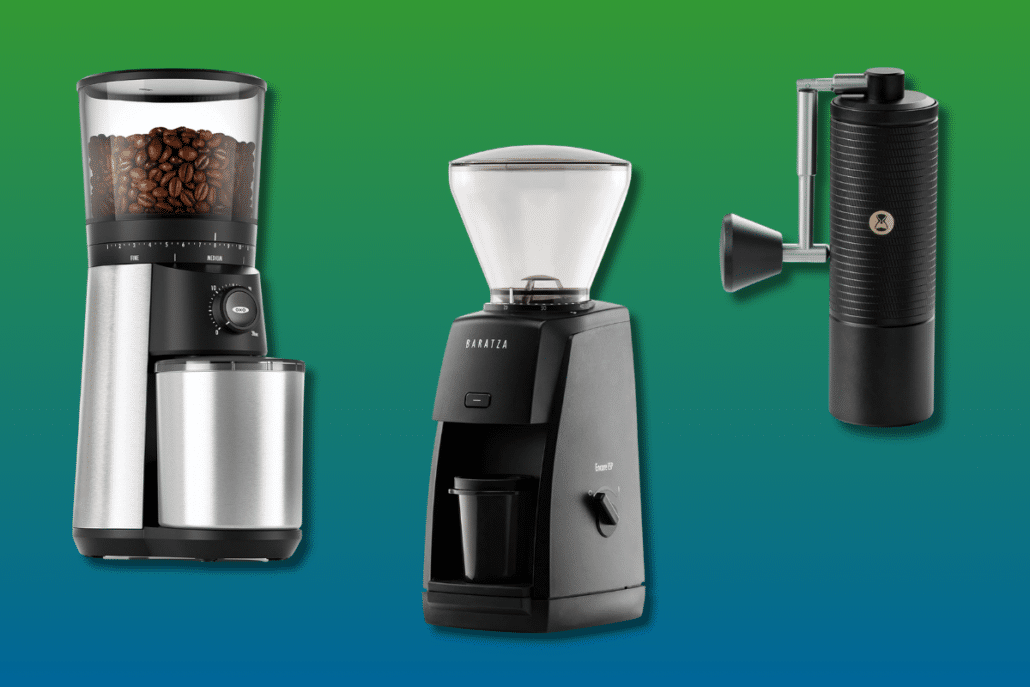
The Best Coffee Grinder Upgrade That’s Actually Worth It

Here’s something your favorite coffee shop will never tell you: it’s not the beans. It’s not the machine. It’s not even the barista with the sleeve tattoos and the strong opinions about oat milk. It’s the grind. Specifically, how fresh it is.
Pre-ground coffee starts dying the second it’s ground. Not dramatically… it doesn’t go bad, exactly. It just goes flat. Quietly. While you’re not looking. By the time that can’s been open a week, you’re drinking the ghost of what could’ve been a good cup.
I roast my own green beans at home (yes, really, I import them from a farm in Costa Rica, don’t ask), so I’ve made my peace with being a coffee snob a long time ago. But you don’t need to go that far to taste the difference a good grinder makes. You just need one that isn’t garbage.
And the good news? A grinder that’ll make you genuinely happy doesn’t have to cost what a fancy stand mixer costs. Let’s talk about what actually matters, and then I’ll hand you three I’d buy myself.
Burr vs. blade: this is the whole ballgame
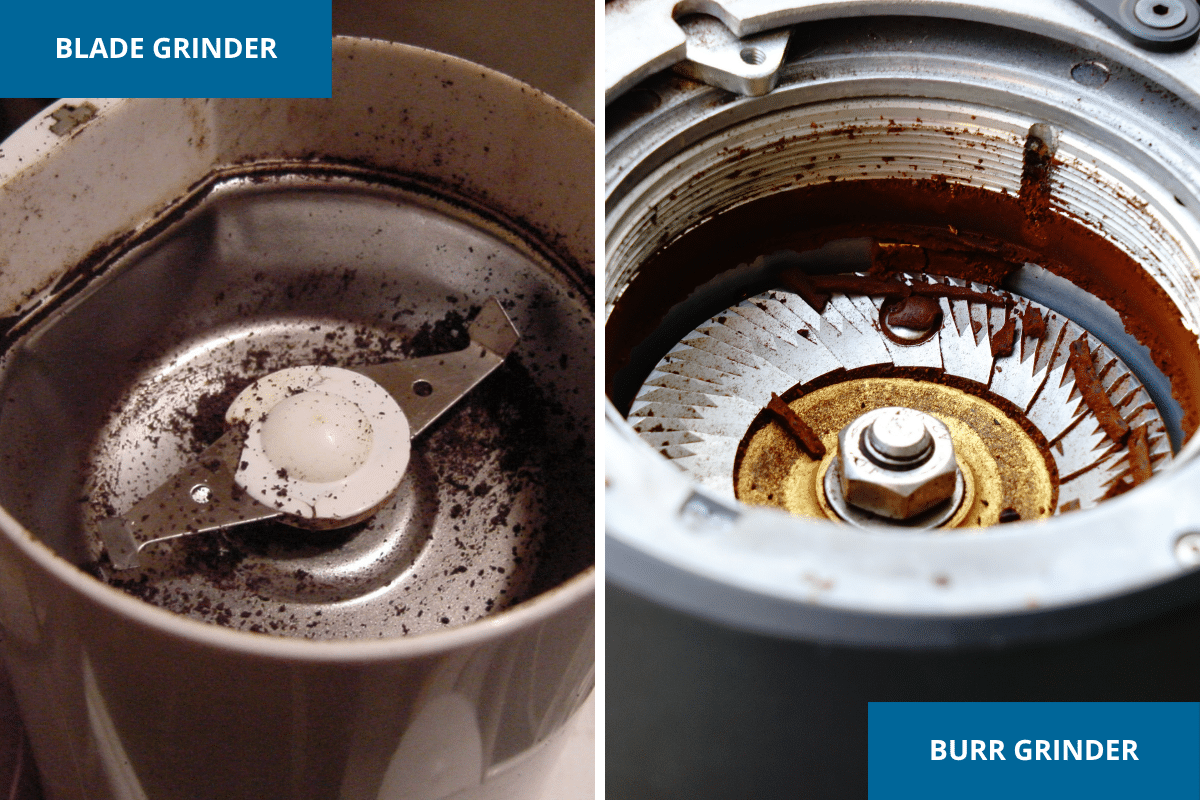
Coffee grinders come in two camps, and only one of them is worth your money.
Blade grinders
Blade grinders chop beans with a spinning propeller, basically a tiny food processor. They’re cheap, $15 to $30, and they’re also a mess. Some grounds come out fine as flour, some come out chunky as gravel, and your coffee tastes uneven because it is uneven.
Burr grinders
Burr grinders crush beans between two textured surfaces to a consistent size. Better extraction, better flavor, no exceptions. A decent burr grinder gives you a much more consistent grind than a blade grinder, and that’s what you’re paying for.
So: buy a burr grinder. That’s really the whole tip.
Manual or electric?
Manual, hand-crank burr grinders run $30 to $110ish. They’re silent, portable, and produce a lovely consistent grind, but you’ll spend a minute or so cranking by hand. Honestly? I kind of like that part. It’s the only exercise I get before 7 a.m.
Electric burr grinders are faster and easier, though some are louder than you’d want at 6 a.m. while everyone else is asleep. For most households, this is where you’ll land.
Grind size actually matters, and here’s why
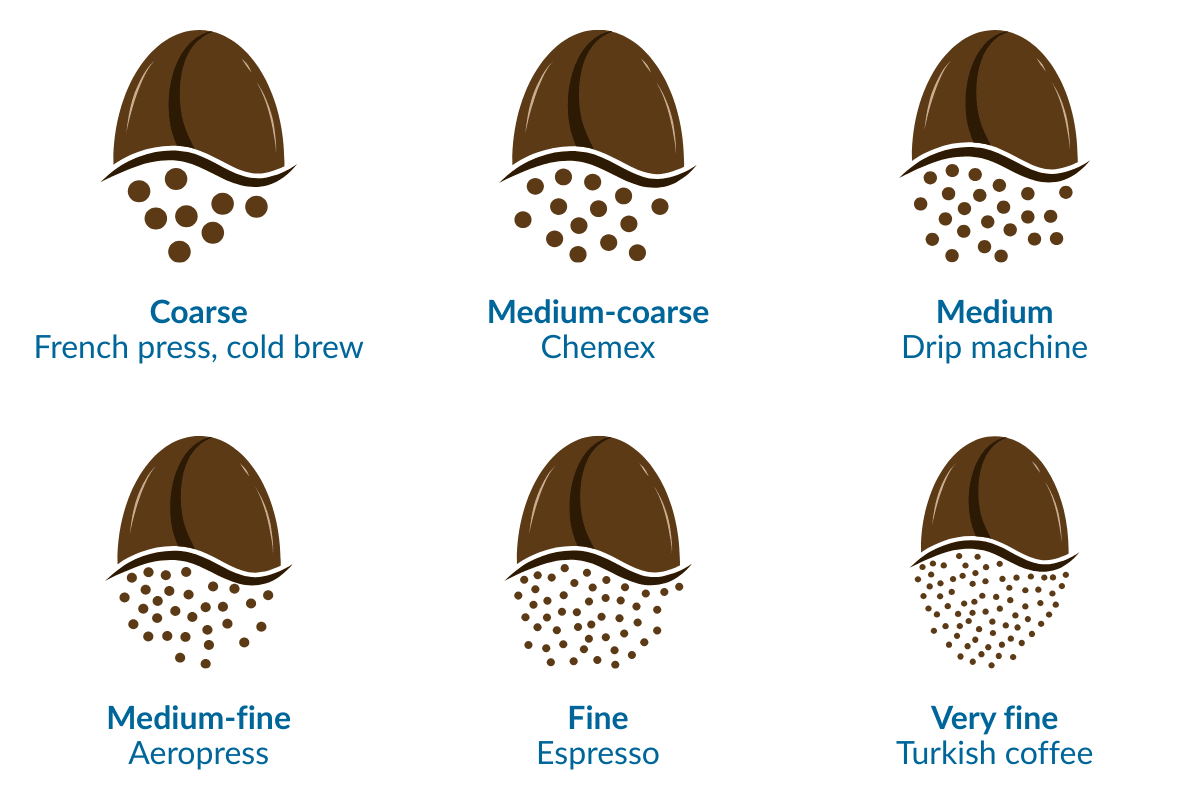
Different brewing methods want different textures, and getting this wrong is why your pour-over tastes bitter or your French press tastes like dishwater.
- Coarse, like kosher salt, for French press and cold brew
- Medium-coarse for a Chemex
- Medium for drip machines and standard pour-over
- Medium-fine for an AeroPress
- Fine for espresso
- Very fine for Turkish coffee, if you’re feeling ambitious
Look for a grinder with clear, labeled settings across that range. Most budget models offer 10 to 40-plus, which is plenty. You won’t use all of them, but you’ll be glad they’re there.
Hopper size and easy cleanup
The hopper holds your unground beans, match it to how much coffee your household actually drinks in a week so beans aren’t sitting around going stale before their turn. And check whether the grinder disassembles easily for cleaning. Coffee oils build up on burrs fast, and a grinder you can actually clean will outlast one you can’t by years.
The best coffee grinders for your money
I didn’t pick these because a spec sheet told me to. I picked them because they do the one job well: turn whole beans into consistent grounds without babysitting them or breaking down on you in year two.
How I chose these: I’m admittedly picky about coffee. I roast my own beans and brew with everything from an AeroPress and Chemex to my trusty BUNN, so I’ve had plenty of practice learning what a good grind should look (and taste) like. I tested these grinders across the brewing methods I actually use, paying attention to grind consistency, ease of adjustment, noise and cleanup. I wasn’t after the longest feature list. I wanted grinders I’d happily use every morning before I’ve had enough coffee to tolerate anything complicated.
Jump to:
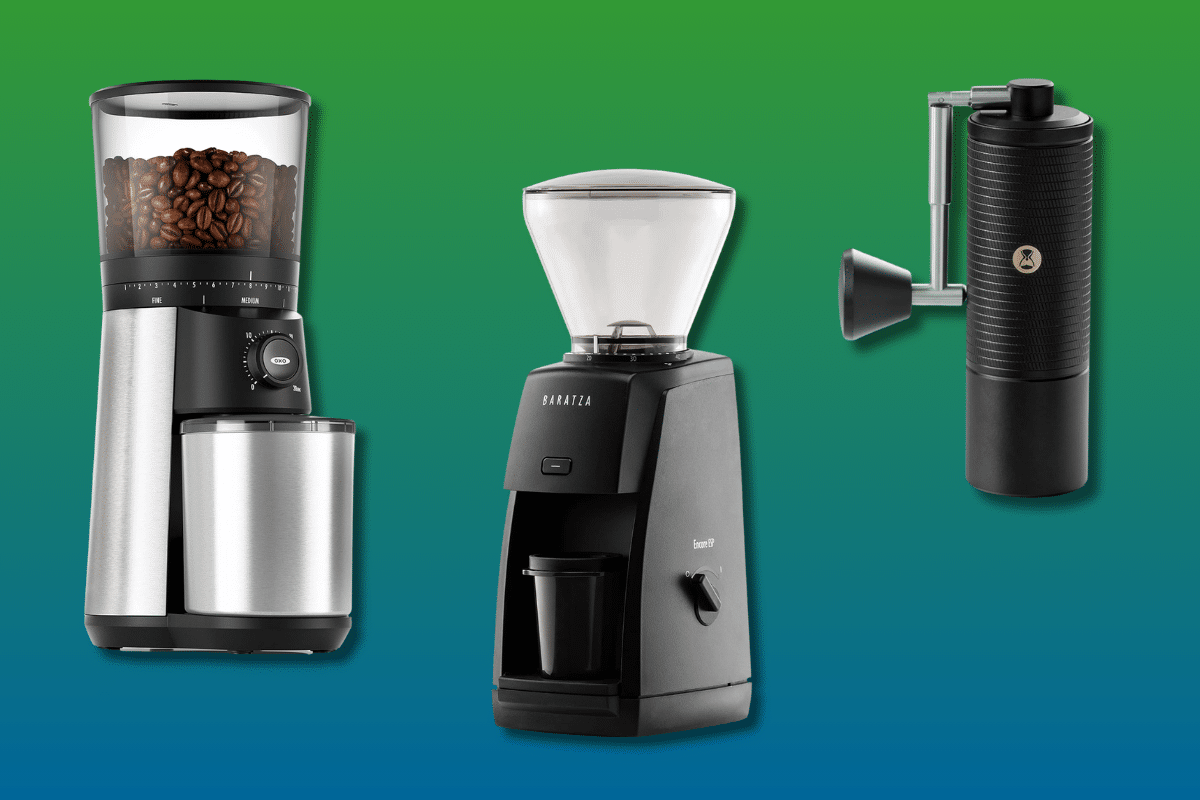
- Best inexpensive: OXO Brew Conical Burr Grinder
- Best upgrade: Baratza Encore ESP
- Best manual: Timemore C5 Pro


Best inexpensive: OXO Brew Conical Burr Grinder
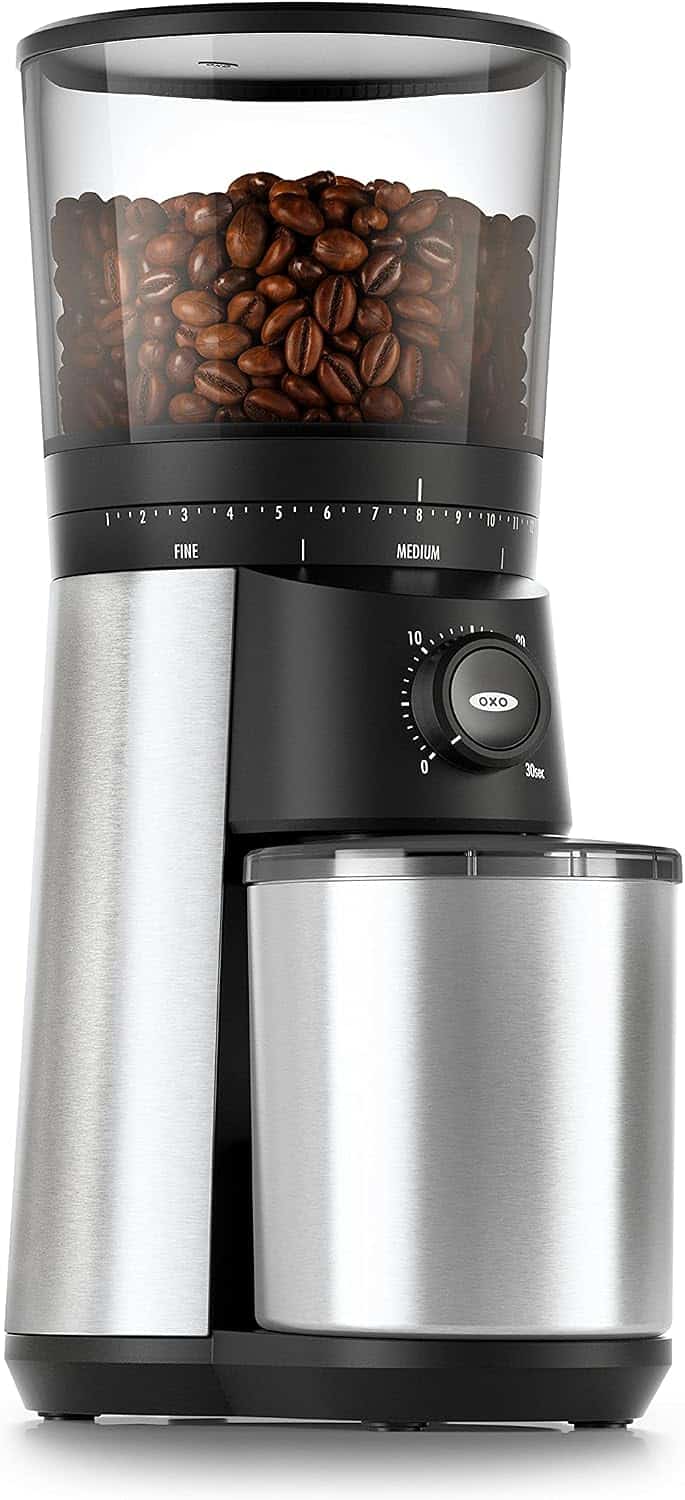
OXO Brew Conical Burr Grinder
This is the one I’d point a friend toward if she just wants great coffee without a learning curve. Stainless steel conical burrs, 15 grind settings plus micro-adjustments, and a one-touch button that remembers your last setting, so it’s not fussing with dials every single morning before you’ve had coffee (the irony of that would not be lost on me). The hopper’s UV-blocking, which matters more than people think if your kitchen gets sun. Quiet, consistent, and it just works.
Best upgrade: Baratza Encore ESP
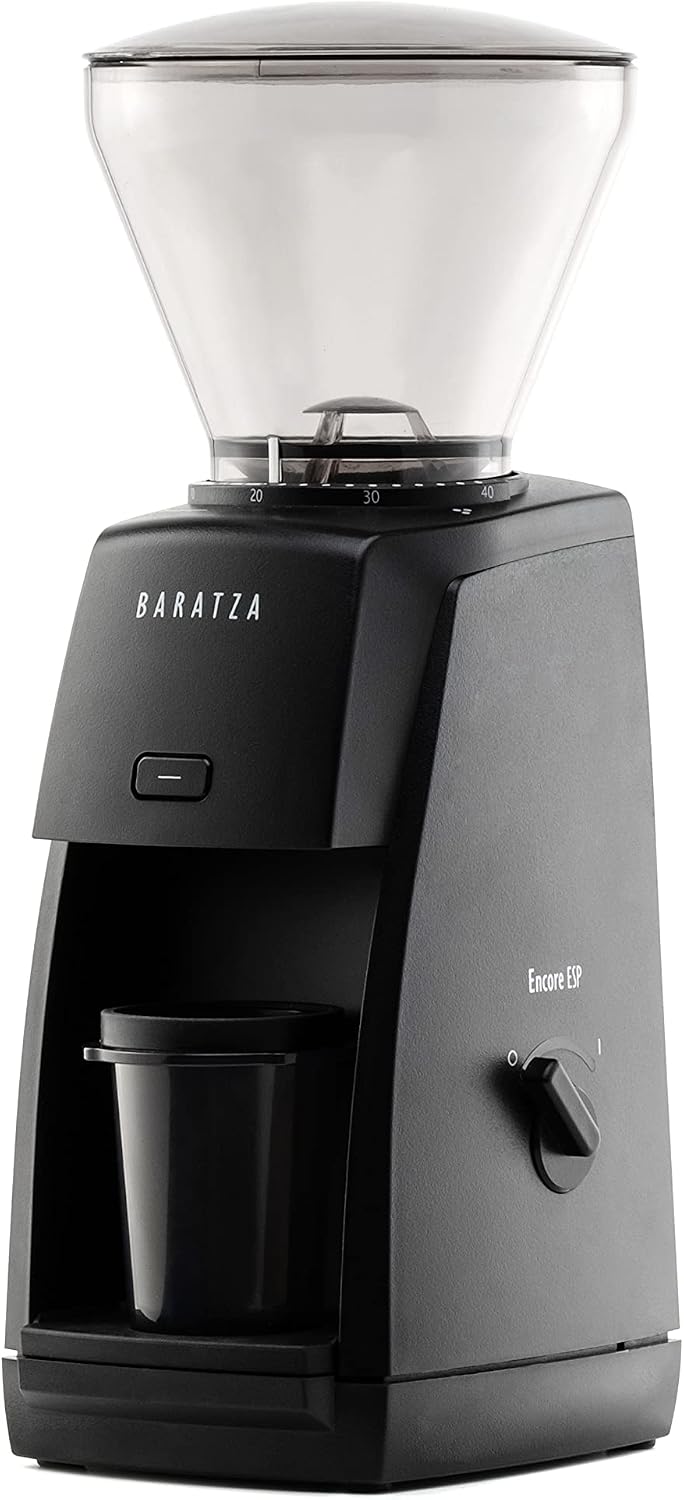
Baratza Encore ESP
If you want to spend a little more once and be done thinking about it for a decade, this is it. Baratza’s the brand actual coffee professionals reach for, and the Encore ESP earns that reputation with hardened steel burrs built in Europe and a quick-release system that makes cleaning painless. It handles everything from espresso to drip with one twist of the hopper. This is the “buy it for life” option, the kind of purchase that stops being an expense and starts being a decision you made once.
Best manual: Timemore C5 Pro
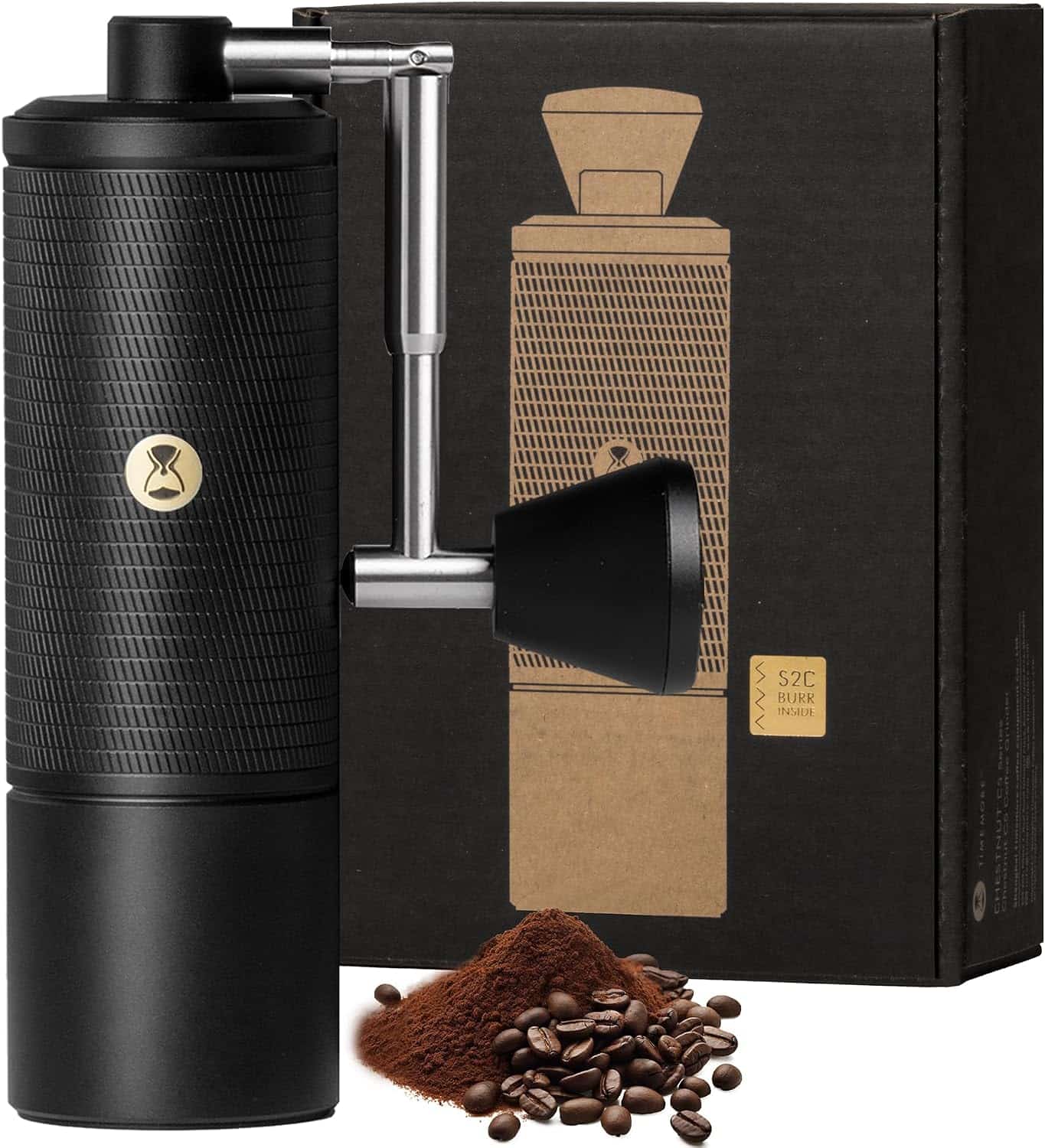
Timemore C5 Pro
For the slow-morning crowd, or anyone who wants dead-silent grinding, this one’s a beauty. Forty-two millimeter steel burrs, 48 adjustable settings, and a 30-gram chamber that’s just right for a Chemex pour-over for two. It grips well, it’s built like it means it, and yes, you’ll crank it by hand. I don’t mind that trade-off. Some mornings, a minute of quiet cranking is the calmest part of my whole day.
Grinders to skip
Any blade grinder, especially the “coffee/spice combo” ones sold at every grocery store. They can’t do what a burr grinder does, full stop.
Be wary of bargain-basement burr grinders, too. A cheap grinder that produces an inconsistent grind or gives up after a short run isn’t much of a bargain. Manual grinders under $25 often skip the “consistent grind” part entirely, which defeats the purpose. And grind-and-brew combo machines almost always hide a cheap grinder you can’t replace without replacing the whole machine.
Getting the best coffee out of whatever grinder you own
Grind right before you brew.
Not the night before, not while your coffee’s brewing on autopilot, right before.
Grind only what you need for that pot.
Store your whole beans in an airtight container at room temperature, away from light, and no, not the freezer, that just invites moisture in.
Buy beans with a roast date
Not just a sell-by date, ideally within two to three weeks of purchase. And clean your grinder monthly.
Is the difference really that noticeable?
Here’s the test I’d give anyone on the fence. Buy the same brand of coffee both ways, one bag pre-ground, one bag whole bean. Brew them identically. Taste them back to back.
You’ll know within one sip. The fresh-ground cup has an aroma and depth the pre-ground version just doesn’t, because it lost that battle days ago. If you taste them side by side and genuinely can’t tell the difference, save your money. But most people can. Easily.
What this upgrade actually costs you
A grinder runs $50 to $200, one time. Whole beans may cost about the same as pre-ground coffee from the same brand, although it varies. Check the unit price rather than assuming one is cheaper. The only real “cost” is 60 to 90 seconds added to your morning.
Will a coffee grinder save you money? Maybe not. That’s not really the point. If you’re already buying decent coffee, a good grinder can make the coffee you’re paying for taste noticeably better.
And that’s my favorite kind of upgrade: not buying something fancier over and over, but getting more enjoyment out of something I’m already buying.
Question: Did switching to fresh-ground coffee change your morning routine? Or are you still loyal to the can? Tell me where you land in the comments.
EverydayCheapskate™ is reader-supported. We participate in the Amazon Services LLC Associates Program and other affiliate advertising programs, designed to provide a means for us to earn from qualifying purchases, at no cost to you.

More from Everyday Cheapskate
 https://www.everydaycheapskate.com/wp-content/uploads/20261007-red-present-sitting-in-autumn-leaves-Amazon-Prime-Big-Deal-Days-gifts.png
800
1200
Mary Hunt
https://www.everydaycheapskate.com/wp-content/uploads/EC-Logo-by-Mary-Hunt-Tagline-Trimmed.png
Mary Hunt2026-10-06 23:09:432026-10-06 23:09:43Christmas Shopping in October? These Prime Day Gifts Make Sense
https://www.everydaycheapskate.com/wp-content/uploads/20261007-red-present-sitting-in-autumn-leaves-Amazon-Prime-Big-Deal-Days-gifts.png
800
1200
Mary Hunt
https://www.everydaycheapskate.com/wp-content/uploads/EC-Logo-by-Mary-Hunt-Tagline-Trimmed.png
Mary Hunt2026-10-06 23:09:432026-10-06 23:09:43Christmas Shopping in October? These Prime Day Gifts Make Sense https://www.everydaycheapskate.com/wp-content/uploads/20261006-prime-big-deal-days-have-landed.png
800
1200
Mary Hunt
https://www.everydaycheapskate.com/wp-content/uploads/EC-Logo-by-Mary-Hunt-Tagline-Trimmed.png
Mary Hunt2026-10-05 11:01:432026-10-07 09:02:53EC’s Top Picks from Amazon Prime Big Deal Days 2026
https://www.everydaycheapskate.com/wp-content/uploads/20261006-prime-big-deal-days-have-landed.png
800
1200
Mary Hunt
https://www.everydaycheapskate.com/wp-content/uploads/EC-Logo-by-Mary-Hunt-Tagline-Trimmed.png
Mary Hunt2026-10-05 11:01:432026-10-07 09:02:53EC’s Top Picks from Amazon Prime Big Deal Days 2026 https://www.everydaycheapskate.com/wp-content/uploads/20261001-prime-big-deal-days-are-coming.png
800
1200
Mary Hunt
https://www.everydaycheapskate.com/wp-content/uploads/EC-Logo-by-Mary-Hunt-Tagline-Trimmed.png
Mary Hunt2026-10-01 09:25:072026-10-01 11:45:25Prime Big Deal Days 2026: Your Cheapskate Game Plan
https://www.everydaycheapskate.com/wp-content/uploads/20261001-prime-big-deal-days-are-coming.png
800
1200
Mary Hunt
https://www.everydaycheapskate.com/wp-content/uploads/EC-Logo-by-Mary-Hunt-Tagline-Trimmed.png
Mary Hunt2026-10-01 09:25:072026-10-01 11:45:25Prime Big Deal Days 2026: Your Cheapskate Game Plan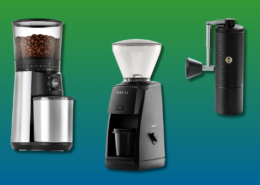 https://www.everydaycheapskate.com/wp-content/uploads/20260925-best-inexpensive-coffee-grinders-burr-manual-and-electric.png
800
1200
Mary Hunt
https://www.everydaycheapskate.com/wp-content/uploads/EC-Logo-by-Mary-Hunt-Tagline-Trimmed.png
Mary Hunt2026-09-25 11:06:342026-10-10 15:49:09The Best Coffee Grinder Upgrade That’s Actually Worth It
https://www.everydaycheapskate.com/wp-content/uploads/20260925-best-inexpensive-coffee-grinders-burr-manual-and-electric.png
800
1200
Mary Hunt
https://www.everydaycheapskate.com/wp-content/uploads/EC-Logo-by-Mary-Hunt-Tagline-Trimmed.png
Mary Hunt2026-09-25 11:06:342026-10-10 15:49:09The Best Coffee Grinder Upgrade That’s Actually Worth It https://www.everydaycheapskate.com/wp-content/uploads/20260919-air-purifier-in-living-room-1.png
800
1200
Mary Hunt
https://www.everydaycheapskate.com/wp-content/uploads/EC-Logo-by-Mary-Hunt-Tagline-Trimmed.png
Mary Hunt2026-09-19 11:36:552026-09-28 22:48:42The Best Inexpensive Air Purifiers for Small Homes
https://www.everydaycheapskate.com/wp-content/uploads/20260919-air-purifier-in-living-room-1.png
800
1200
Mary Hunt
https://www.everydaycheapskate.com/wp-content/uploads/EC-Logo-by-Mary-Hunt-Tagline-Trimmed.png
Mary Hunt2026-09-19 11:36:552026-09-28 22:48:42The Best Inexpensive Air Purifiers for Small Homes https://www.everydaycheapskate.com/wp-content/uploads/20260918-man-and-woman-signing-an-extended-warranty-in-a-car-dealership.png
800
1200
Mary Hunt
https://www.everydaycheapskate.com/wp-content/uploads/EC-Logo-by-Mary-Hunt-Tagline-Trimmed.png
Mary Hunt2026-09-18 15:23:432026-09-18 15:25:43Is an Extended Warranty Ever Worth It? The Truth for 2026
https://www.everydaycheapskate.com/wp-content/uploads/20260918-man-and-woman-signing-an-extended-warranty-in-a-car-dealership.png
800
1200
Mary Hunt
https://www.everydaycheapskate.com/wp-content/uploads/EC-Logo-by-Mary-Hunt-Tagline-Trimmed.png
Mary Hunt2026-09-18 15:23:432026-09-18 15:25:43Is an Extended Warranty Ever Worth It? The Truth for 2026 https://www.everydaycheapskate.com/wp-content/uploads/20260830-best-sound-machine-for-better-sleep-woman-hiding-under-comforter.png
800
1200
Mary Hunt
https://www.everydaycheapskate.com/wp-content/uploads/EC-Logo-by-Mary-Hunt-Tagline-Trimmed.png
Mary Hunt2026-09-10 09:51:452026-09-28 22:48:58Best Sound Machine for Better Sleep: 3 Honest Picks
https://www.everydaycheapskate.com/wp-content/uploads/20260830-best-sound-machine-for-better-sleep-woman-hiding-under-comforter.png
800
1200
Mary Hunt
https://www.everydaycheapskate.com/wp-content/uploads/EC-Logo-by-Mary-Hunt-Tagline-Trimmed.png
Mary Hunt2026-09-10 09:51:452026-09-28 22:48:58Best Sound Machine for Better Sleep: 3 Honest Picks https://www.everydaycheapskate.com/wp-content/uploads/20260906-best-can-openers-manual-electric-luxury.png
800
1200
Mary Hunt
https://www.everydaycheapskate.com/wp-content/uploads/EC-Logo-by-Mary-Hunt-Tagline-Trimmed.png
Mary Hunt2026-09-06 18:07:432026-09-06 18:10:39The Best Can Openers That Actually Work (And Won’t Quit on You)
https://www.everydaycheapskate.com/wp-content/uploads/20260906-best-can-openers-manual-electric-luxury.png
800
1200
Mary Hunt
https://www.everydaycheapskate.com/wp-content/uploads/EC-Logo-by-Mary-Hunt-Tagline-Trimmed.png
Mary Hunt2026-09-06 18:07:432026-09-06 18:10:39The Best Can Openers That Actually Work (And Won’t Quit on You) https://www.everydaycheapskate.com/wp-content/uploads/20260828-choice-overload-man-resting-head-on-table.png
800
1200
Mary Hunt
https://www.everydaycheapskate.com/wp-content/uploads/EC-Logo-by-Mary-Hunt-Tagline-Trimmed.png
Mary Hunt2026-08-28 10:57:162026-09-28 22:49:22How to Escape the Tyranny of Too Many Choices
https://www.everydaycheapskate.com/wp-content/uploads/20260828-choice-overload-man-resting-head-on-table.png
800
1200
Mary Hunt
https://www.everydaycheapskate.com/wp-content/uploads/EC-Logo-by-Mary-Hunt-Tagline-Trimmed.png
Mary Hunt2026-08-28 10:57:162026-09-28 22:49:22How to Escape the Tyranny of Too Many ChoicesPlease keep your comments positive, encouraging, helpful, brief,
and on-topic in keeping with EC Commenting Guidelines
Last update on 2026-10-16 / Affiliate links / Images from Amazon Product Advertising API


I have been using a burr grinder for years and live the morning grind. Here is my question for you. While you mentioned most brew types, you missed us old school peeps and didn’t say what the best grind is for a percolator. I switched from drip to perc about 15 years ago. I have an electric and stove top/grill (for emergency). Obviously a fine grind is out as it falls through the basket holes. I have been using a medium to medium course, but would love to hear your thoughts.
The best grind for percolator coffee is a coarse or medium-coarse grind. It would be similar in texture to coarse sea salt or rough sand. The smaller the grains the more surface area you would have and the more extraction so you’ll have to play withing those ranges to find your perfect taste but that’s a great place to start. Enjoy!
We purchased the Baratza Encore ESP about 15 years ago. My husband follows the instructions and cleans it once 100 cups. (He uses the filter to remind him, as the filter contains 100.) The Baratza consistently grinds well and never broke down or slowed down. It’s as good as it was new.
Dear Mary: I have a manual grinder, and an electric. They are both fine for individual batches. But not for grinding a full pound at a time for cold-brewing in my Toddy as I can not grind a full pound within the 3-minute time limit on the electric grinder before it has to shut down for 30 min. Manually grinding a pound is tiring. I purchased a medium-sized flour mill to mill barley flakes into flour. It does a great job on coffee beans. 5 short pulses will grind 1/3# of beans perfectly for my Oxo Cold Brewer. I grind the full pound. I store the majority in a large Mason jar in a dark closet. I use a jar vacuum to seal it. I vacuum some into a smaller jar for daily use, and revacuum it every morning. I use a coffee filter in my Oxo Cold Brewer to remove the Cafestol and Kahweol, oils which raise cholesterol. I use water from my Berkey, add half and half, and Splenda. Perfect. I have not noticed any drop-off in flavor over the time it takes to go through the grounds.