

Using Too Much Detergent? Here’s the Right Amount

Many people use way too much detergent, leading to dingy clothes, skin irritation, and even a funky washing machine. The good news? A little detergent goes a long way—if you know how much laundry detergent to use. I’ll walk you through exactly how much detergent you need, plus a simple trick to make sure you’re not overdoing it.

As you know (and only because I mention it from time to time), my inbox sees more action than a department store on Black Friday. If I responded to every email, I’d never sleep—let alone get any laundry done. So, I’ve developed a highly scientific method for sorting through the chaos: first, anything with a negative subject line? Instant delete. From there, I skim, sift, and shuffle until the most interesting and useful questions rise to the top.
Which brings me to this gem:
Dear Mary: I love all of your washing machine tips, but can you guide us on using the correct amount of detergent? I know you say small amounts, but I hate to do a load with too little or too much. It feels like a guessing game. I tried googling this, but the information I found was not helpful.
You are such an expert on these things that I thought you might have some additional tips—if you can bear the thought of another post about laundry, that is! Hugs to you for such fantastic work.
–Your Anonymous Fan
Dear A.F.: Great question. And yes, a little flattery never hurts—it certainly got your email to the top of my pile!
Are You Using Too Much Laundry Detergent?
If your whites are looking a little dingy, your towels feel like sandpaper, or your skin is suddenly itchy, your laundry detergent might be the culprit. The truth is, most of us are using way too much. And while it seems like more detergent should equal cleaner clothes, the opposite is true—leftover detergent residue can trap dirt, dull colors, and irritate skin.
The key? Using just the right amount and making sure it gets completely rinsed away. When done correctly, your laundry should come out fresh, soft, and brighter-than-bright—no stiff towels or mystery rashes included.
Finding the Right Amount
Several factors determine how much detergent you actually need, including your water type, washing machine, and load size.
- Soft Water: If your home has soft water, you need less detergent—just 1 tablespoon (1/16 cup) of high-efficiency (HE) detergent per load in a front-loading machine. For top-loaders, check your manual, but a good rule of thumb is about 1/4 cup.
- Hard Water: Hard water requires a bit more detergent to break through the minerals—2 tablespoons (1/8 cup) should do the trick.
How to Tell If You Have Hard or Soft Water
Not sure whether your water is soft or hard? Here are two easy ways to find out:
- Check with your water company: They can give you the exact grains per gallon (gpg) of hardness in your area.
- Soft water: 0 – 3.5 gpg
- Moderate water: 3.5 – 7.0 gpg
- Hard water: 7.0 – 10.5 gpg
- Very hard water: Over 10.5 gpg
- Do the soap test: Fill a clear bottle with water, add a few drops of liquid dish soap, and shake it. If it bubbles up with plenty of suds, you’ve got soft water. If it barely lathers, you’re dealing with hard water.
If you discover you have moderately hard water, try using 1.5 tablespoons of HE detergent per load for more precise results.
Knowing your water type is the first step to laundry success—because when it comes to detergent, less really is more!
How to Determine the Right Amount for Your Washer
Washing machine size matters! If you’ve got a super-duper-jumbo-sized machine, you’ll need to adjust your detergent accordingly. Your owner’s manual should have guidelines—assuming you know where it is (no judgment if you don’t).
Beyond size, the level of grime plays a role, too. A heavily soiled load (think muddy soccer uniforms or construction clothes) might need a little extra detergent, while a tiny load (like a few delicate items) calls for less. The key is balance—too much detergent can leave residue, and too little might not get things fully clean.
The Simple Test to See If You’re Using Too Much Detergent
Want to know if you’re overdoing it on detergent? Try this quick test:
After your next load of laundry, grab a clean washcloth and dunk it in a bowl of warm water. If the water stays clear, congrats—you’ve nailed the perfect amount. But if the water turns even slightly cloudy, that’s leftover detergent that didn’t rinse out. Translation? You’re using too much.
Still not convinced? Look at your laundry. If your whites are looking a little gray or your towels feel more like sandpaper than fluff, that’s detergent buildup at work. The fix? Cut back and let your washing machine do its job.
Dialing in the perfect amount of laundry detergent takes a little trial and error. Water hardness, machine type (front-loader vs. top-loader), load size—it all plays a role. But once you crack the code and find that sweet spot, clothes will be softer, colors brighter, and whites actually white—not that dingy gray that screams detergent overload. And the best part? You’ll be saving money and extending the life of your fabrics in the process.
Why White Vinegar Belongs in Your Laundry Routine
The most important thing about laundry detergent isn’t just how well it cleans—it’s whether it gets completely rinsed away by the end of the cycle.
That’s why I always add ½ cup of white vinegar to the final rinse. I pour it into the fabric softener compartment so it’s released at just the right time. Vinegar helps break down and remove every last bit of detergent, leaving clothes soft, fresh, and free from buildup—without the need for commercial fabric softeners, which can trigger skin irritation and even respiratory issues for some people.
DIY Laundry Detergent for a Better Clean

Not only is this homemade HE laundry detergent incredibly cost-effective (less than a nickel per load!), but it also works just as well—if not better—than the expensive name-brand stuff. And the best part? It’s ridiculously simple to make.
What You’ll Need:
- 1-gallon container with a lid
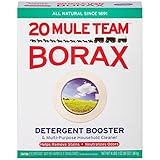
- 3/4 cup borax (found in the laundry aisle)
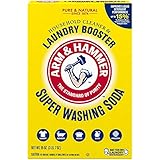
- 3/4 cup washing soda (or soda ash from a pool supply store)
- 3/4 cup Blue Dawn (Ultra Advanced Power works best)
- Water
To make your homemade laundry detergent, start by adding borax and washing soda to your container. Pour in 3 cups of warm water, secure the lid, and shake well to dissolve the powders. Next, fill the container almost to the top with more water, leaving some room for the Dawn. Slowly add 3/4 cup of Blue Dawn, being careful to avoid excessive suds. Finally, top off with water, leaving a small space at the top. Secure the lid and gently roll the container to mix—there’s no need to shake vigorously.
For HE machines, use 1 tablespoon per load. If you have an older, top-loading washer, use up to 1/4 cup per load. You can adjust the amount based on your water hardness and load size.
Jump to the full recipe and post here →

Question: Be honest: Do you measure your laundry detergent, or just pour and hope for the best? Let me know in the comments down below.

More from Everyday Cheapskate
 https://www.everydaycheapskate.com/wp-content/uploads/20260831-Portrait-of-a-Pitbull-on-a-yellow-background-homemade-dog-treat-recipes.png
800
1200
Mary Hunt
https://www.everydaycheapskate.com/wp-content/uploads/EC-Logo-by-Mary-Hunt-Tagline-Trimmed.png
Mary Hunt2026-08-31 13:06:072026-08-31 13:06:073 Homemade Dog Treats Recipes Your Dog Will Love Most
https://www.everydaycheapskate.com/wp-content/uploads/20260831-Portrait-of-a-Pitbull-on-a-yellow-background-homemade-dog-treat-recipes.png
800
1200
Mary Hunt
https://www.everydaycheapskate.com/wp-content/uploads/EC-Logo-by-Mary-Hunt-Tagline-Trimmed.png
Mary Hunt2026-08-31 13:06:072026-08-31 13:06:073 Homemade Dog Treats Recipes Your Dog Will Love Most https://www.everydaycheapskate.com/wp-content/uploads/20260826-DIY-cat-litter-deodorizer-kitten-looking-up-at-camera-from-box.png
800
1200
Mary Hunt
https://www.everydaycheapskate.com/wp-content/uploads/EC-Logo-by-Mary-Hunt-Tagline-Trimmed.png
Mary Hunt2026-08-25 21:17:362026-08-25 21:17:36The One-Ingredient Litter Box Trick That Costs Pennies
https://www.everydaycheapskate.com/wp-content/uploads/20260826-DIY-cat-litter-deodorizer-kitten-looking-up-at-camera-from-box.png
800
1200
Mary Hunt
https://www.everydaycheapskate.com/wp-content/uploads/EC-Logo-by-Mary-Hunt-Tagline-Trimmed.png
Mary Hunt2026-08-25 21:17:362026-08-25 21:17:36The One-Ingredient Litter Box Trick That Costs Pennies https://www.everydaycheapskate.com/wp-content/uploads/20260824-house-rules-for-adult-children.png
800
1200
Mary Hunt
https://www.everydaycheapskate.com/wp-content/uploads/EC-Logo-by-Mary-Hunt-Tagline-Trimmed.png
Mary Hunt2026-08-24 12:21:382026-08-24 12:23:50House Rules for Adult Children Living at Home (Without Losing Your Mind or Your Garage)
https://www.everydaycheapskate.com/wp-content/uploads/20260824-house-rules-for-adult-children.png
800
1200
Mary Hunt
https://www.everydaycheapskate.com/wp-content/uploads/EC-Logo-by-Mary-Hunt-Tagline-Trimmed.png
Mary Hunt2026-08-24 12:21:382026-08-24 12:23:50House Rules for Adult Children Living at Home (Without Losing Your Mind or Your Garage) https://www.everydaycheapskate.com/wp-content/uploads/20260822-central-AC-maintenance-air-condenser-outdoors.png
800
1200
Mary Hunt
https://www.everydaycheapskate.com/wp-content/uploads/EC-Logo-by-Mary-Hunt-Tagline-Trimmed.png
Mary Hunt2026-08-22 14:19:562026-08-22 14:19:59How to Extend the Life of Your Central AC (5 Late-Summer Tune-Up Tips)
https://www.everydaycheapskate.com/wp-content/uploads/20260822-central-AC-maintenance-air-condenser-outdoors.png
800
1200
Mary Hunt
https://www.everydaycheapskate.com/wp-content/uploads/EC-Logo-by-Mary-Hunt-Tagline-Trimmed.png
Mary Hunt2026-08-22 14:19:562026-08-22 14:19:59How to Extend the Life of Your Central AC (5 Late-Summer Tune-Up Tips) https://www.everydaycheapskate.com/wp-content/uploads/20260819-dry-clean-only.png
800
1200
Mary Hunt
https://www.everydaycheapskate.com/wp-content/uploads/EC-Logo-by-Mary-Hunt-Tagline-Trimmed.png
Mary Hunt2026-08-19 23:38:122026-08-19 23:38:12The Truth About “Dry Clean Only” (And When I Actually Listen to It)
https://www.everydaycheapskate.com/wp-content/uploads/20260819-dry-clean-only.png
800
1200
Mary Hunt
https://www.everydaycheapskate.com/wp-content/uploads/EC-Logo-by-Mary-Hunt-Tagline-Trimmed.png
Mary Hunt2026-08-19 23:38:122026-08-19 23:38:12The Truth About “Dry Clean Only” (And When I Actually Listen to It) https://www.everydaycheapskate.com/wp-content/uploads/20260817-thrift-store-sign-with-blue-cloudy-sky-in-background.png
800
1200
Mary Hunt
https://www.everydaycheapskate.com/wp-content/uploads/EC-Logo-by-Mary-Hunt-Tagline-Trimmed.png
Mary Hunt2026-08-17 09:17:472026-08-17 09:17:47The Donation Box Mistakes Thrift Stores Wish We’d Skip
https://www.everydaycheapskate.com/wp-content/uploads/20260817-thrift-store-sign-with-blue-cloudy-sky-in-background.png
800
1200
Mary Hunt
https://www.everydaycheapskate.com/wp-content/uploads/EC-Logo-by-Mary-Hunt-Tagline-Trimmed.png
Mary Hunt2026-08-17 09:17:472026-08-17 09:17:47The Donation Box Mistakes Thrift Stores Wish We’d Skip https://www.everydaycheapskate.com/wp-content/uploads/20260815-how-to-water-your-lawn-without-wasting-money.png
800
1200
Mary Hunt
https://www.everydaycheapskate.com/wp-content/uploads/EC-Logo-by-Mary-Hunt-Tagline-Trimmed.png
Mary Hunt2026-08-15 12:45:022026-08-15 12:45:02How to Water Your Lawn Without Wasting Money This Summer
https://www.everydaycheapskate.com/wp-content/uploads/20260815-how-to-water-your-lawn-without-wasting-money.png
800
1200
Mary Hunt
https://www.everydaycheapskate.com/wp-content/uploads/EC-Logo-by-Mary-Hunt-Tagline-Trimmed.png
Mary Hunt2026-08-15 12:45:022026-08-15 12:45:02How to Water Your Lawn Without Wasting Money This Summer https://www.everydaycheapskate.com/wp-content/uploads/20260813-real-hourly-wage-for-a-second-income.png
800
1200
Mary Hunt
https://www.everydaycheapskate.com/wp-content/uploads/EC-Logo-by-Mary-Hunt-Tagline-Trimmed.png
Mary Hunt2026-08-13 21:16:562026-08-13 21:18:10What’s the Real Hourly Wage of Your Second Income Job?
https://www.everydaycheapskate.com/wp-content/uploads/20260813-real-hourly-wage-for-a-second-income.png
800
1200
Mary Hunt
https://www.everydaycheapskate.com/wp-content/uploads/EC-Logo-by-Mary-Hunt-Tagline-Trimmed.png
Mary Hunt2026-08-13 21:16:562026-08-13 21:18:10What’s the Real Hourly Wage of Your Second Income Job? https://www.everydaycheapskate.com/wp-content/uploads/20260809-how-to-get-the-smell-out-of-towels-stack-of-towels-sitting-with-candle-in-bright-natural-light.png
800
1200
Mary Hunt
https://www.everydaycheapskate.com/wp-content/uploads/EC-Logo-by-Mary-Hunt-Tagline-Trimmed.png
Mary Hunt2026-08-08 16:48:552026-08-08 16:50:57How to Get Smell Out of Towels: The 2-Wash Fix That Works
https://www.everydaycheapskate.com/wp-content/uploads/20260809-how-to-get-the-smell-out-of-towels-stack-of-towels-sitting-with-candle-in-bright-natural-light.png
800
1200
Mary Hunt
https://www.everydaycheapskate.com/wp-content/uploads/EC-Logo-by-Mary-Hunt-Tagline-Trimmed.png
Mary Hunt2026-08-08 16:48:552026-08-08 16:50:57How to Get Smell Out of Towels: The 2-Wash Fix That WorksPlease keep your comments positive, encouraging, helpful, brief,
and on-topic in keeping with EC Commenting Guidelines
Last update on 2026-09-06 / Affiliate links / Images from Amazon Product Advertising API


Mary I have been with you since 1998!! I cherish all of your wisdom that you pass along to all of us!! I hope you and your family are well!! Keep up the good work!! XXOO
Thank you so much for the kind note and for being such a loyal reader!
I’m confused by your measurements. 1/4 is greater than 1/8. So, if you are using less, you should be using 1/8 cup. If you need more, it should be 1/4 cup.
I have used your homemade laundry detergent for years in my older top-loading washer, but I wasn’t sure how much to use. If I were to measure, how much should I use? 2 tablespoons?
For top-loaders use about 1/4 of a cup. For the first few cycles, do the testing I’ve outlined and adjust accordingly to find the perfect ammount for your capacity. Let us know how it goes!
Interesting article! We use the squishy one-color pods and just throw them in with our load. They have a thin skin and we have a fair size front loader. I have sensitive skin so we double rinse everything. We could probably get away with less on some fairly empty loads. If there is just a few clothes, I give a splash of liquid right into the machine. I was reading somewhere recently that you should never use vinegar in a washing machine or a dishwasher as it degrades the rubber seals. Can you comment on that? I have used it occasionally over the years for a really smelly load or to clean my dishwasher -but because of this warning I am know hesitant to use it at all! Thank you for all your great tips and advice!!
Yes, vinegar is slightly acidic. However, this is a generally small amount and is diluted further with the rinse. Washer seals are subjected to bleach, boiling water and a lot of other chemical compounds that they are designed to withstand. I’ve been using vinegar as detailed for decades and have never had a problem.
1TB wow ! i quit the’ recommended ‘amount from manufacture years ago. I’ve been making a very similar laundry soap recipe for over 15 years[1/4 bar fels napa 1/2 c each borax and washing soda. have hard water and find for my top loader 1-2 TB is usually right on the mark. however adding the white vinegar is hard. These newer machines have a self lock that requires 3-5 minute wait and messes up the sequence to add vinegar at the rinse time. I hate wasting water to simply ad in vinegar. I’ve tried adding at start of wash cycle, so far this appears to work(unless i forget an ad to much soap).Thankyou Mary for your Hints! you outdo Google every time. have a great day
Thank you for the kind words of support!
My new top loading washer doesn’t have a fabric softener dispenser. Does anyone have an idea for being able to add vinegar to the final rinse cycle. My machine ‘s lid locks until the cycle is complete.
A Downey Ball that normally holds fabric softener works well, just replace it with vinegar
The last time I saw a discussion of how much detergent to use (maybe here? can’t remember) I figured out how much to use for my machine for the various water/load levels. To get it right every time, I use the top of my usual liquid detergent bottle and put thin opaque tape on the outside of the bottle cap at the levels needed for small, medium and large loads, since my machine has variable water levels. The cap is translucent, so it’s easy to see how much detergent to put in the cap. Works great every time for me.
I have a top load washer. Are the measurements for the top machines good for regular detergent? Should I be using the HE detergent in my top loader?
Front-loading washing machines require high-efficiency (HE) laundry detergent because of their design and the way they operate compared to traditional top-loaders. Here’s why: Front-loaders use significantly less water than top-loading machines. HE detergents are specially formulated to produce fewer suds, which is crucial in a low-water environment. Too many suds can prevent proper rinsing and leave residue on clothes.
Your top loading machine does not require HE detergent. As for measurements my experience is that manufactures err on the side of recommeding way too much (hmmm, I wonder why). User experimentation leading to solid experience is the best idea. Use less than you think then adjust from there. And always make sure you are rinsing out all detergent.
I use the cap that comes with the carton. After reading this I know that I’m using way too much.
One tablespoon? Really?
Yes, along with borax. Really!
Hi, Mary,
On one of your earlier postings, I read how you had stopped using 1/4 cup of detergent in your (I believe) top-loading machine when you switched to the HE front-loader and about 1 tablespoon of detergent. Our laundry story is a little different, since we have an approximately 30 year old Kenmore top loader that works well, for the most part.
In July of last year, while bargain-hunting for laundry detergent in the store, we ran into an exceptionally good deal. There was a sale on the type and size I like, AND I had a coupon. I plonked the “192 wash loads” jug in my shopping cart and hubby and I continued our shopping. He discovered, in the “manager’s one-day deal bin”, the EXACT type AND size of what we already had in the cart, for a significant discount because the label was sticky and peeling off.
So we got a big deal — less than $6. The best part? We combined the deep discount with your “less is more”, and are still using tiny amounts of detergent for a cleaner wash. That means this big jug will likely last us until this upcoming July, or close to it.
Now if only there was some way of figuring out where all this mystery lint is coming from!
Mystery lint … hmmmm. When did you last clean out the lint tray—not just the top surface, but that deep cavern into which you replace the trap? And how about that long foil covered snake type thing that leads to the outside vent? Sounds to me like it may be harboring bunches of lint that have become stuck to the inside of that path from machine to vent. You may need to pull the dryer away from the wall to gain access, but it will be worth the effort. I suggest you get your vacuum out and use the most appropriate (skinny) attachments to clean out all of those areas. Take a look, too, at this post: This Ingenious Vacuum Attachment Solved My Cleaning Challenges
The lint has to be coming from the washer, as I hang laundry outdoors, even in winter.
I’ve had the washer’s agitator out, I’ve scrubbed every surface I could reach (including the top of the drum when hubby unscrewed the whole machine to see where we might need to clean!), he has cleaned out (and then replaced) that bendy-hose-gizmo AND the water lines, I’ve run a couple of hot water loads with vinegar for cleaning, and we’re still getting lint!
It’s worse than the “socks that vanish” and “where did that shirt come from?” problems!
Do you have a homemade for deicing the sidewalks? Everything is slick ice right now, and I guess I have to go to the store and buy some deicing stuff now. Thank you.
Homemade Ice Melt Recipes for Steps, Walkways, Windshields, Locks
I think she meant front-loader when she first said “top-loading” because she goes on to say that you should check your owner’s manual for top-loading. It confused me too as I have a top loading machine. I love my top loader and don’t envision ever getting a front-loader as long as my Speed Queen top-loader is being made.
Speed Queen is the bomb diggity! I am so glad to have stumbled over the information that a gentleman left in the comment section of a Consumer Reports article on washing machines. I was about to lose my mind trying to decide on a new washer when my old machine died on me. No matter the brand of machine, if 50 people said they loved it another 50 said they hated it with each side offering the reasons that informed their opinions. Then I read a comment about a Speed Queen machine. Consumer Reports didn’t have anything in any of their reviews about Speed Queen products. So, I did my due diligence and researched. Out of the hundreds of reviews I found on Speed Queen washing machines, the only complaints were things like “I’m short and have trouble reaching to the bottom of the tub” and “I can’t believe they only offer white machines and I want a red one”. No complaints about performance. I bought my Speed Queen about ten years ago. My appliance repair friend told me it should last just about forever, lol! Love my machine!
I use your suggestions like they’re Biblical! Happy Sunday, Mary!